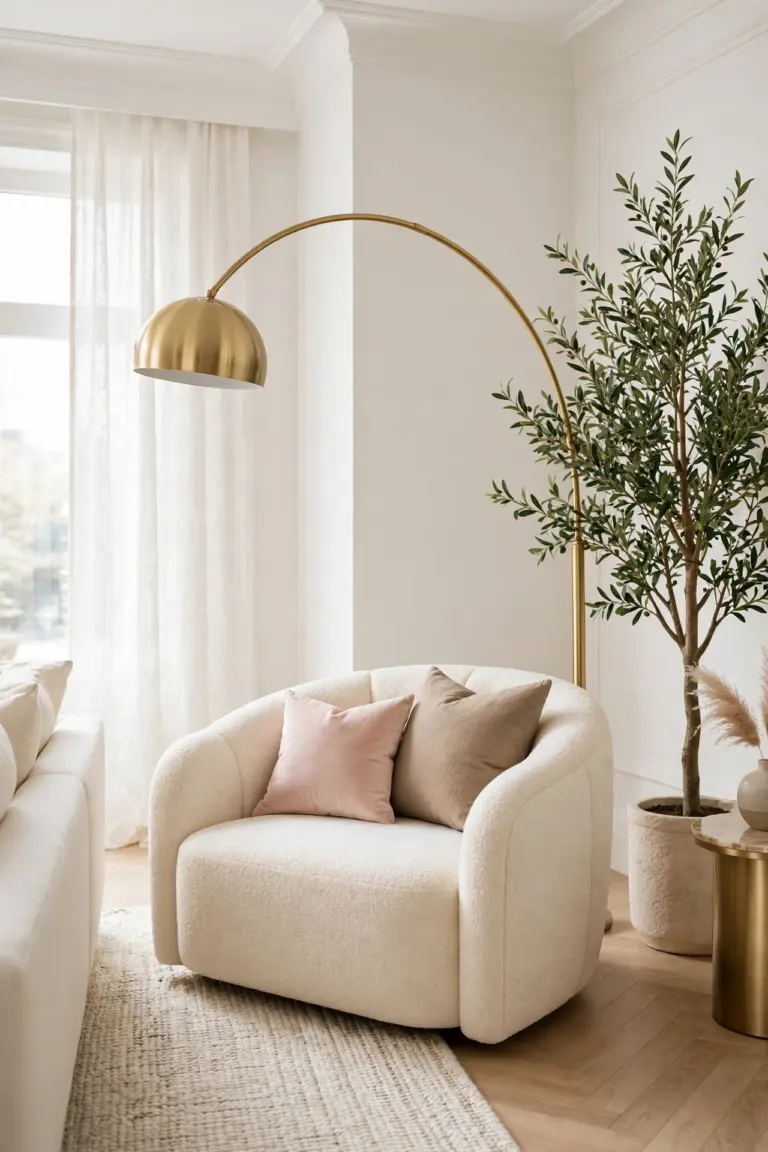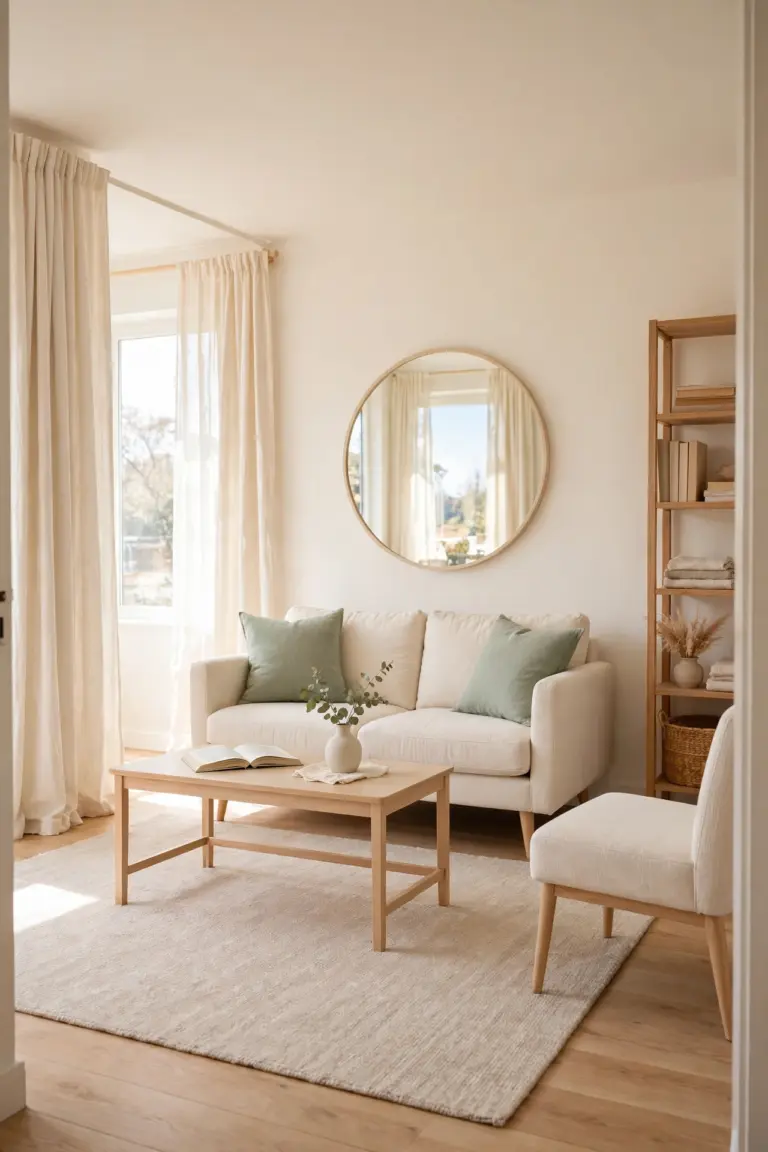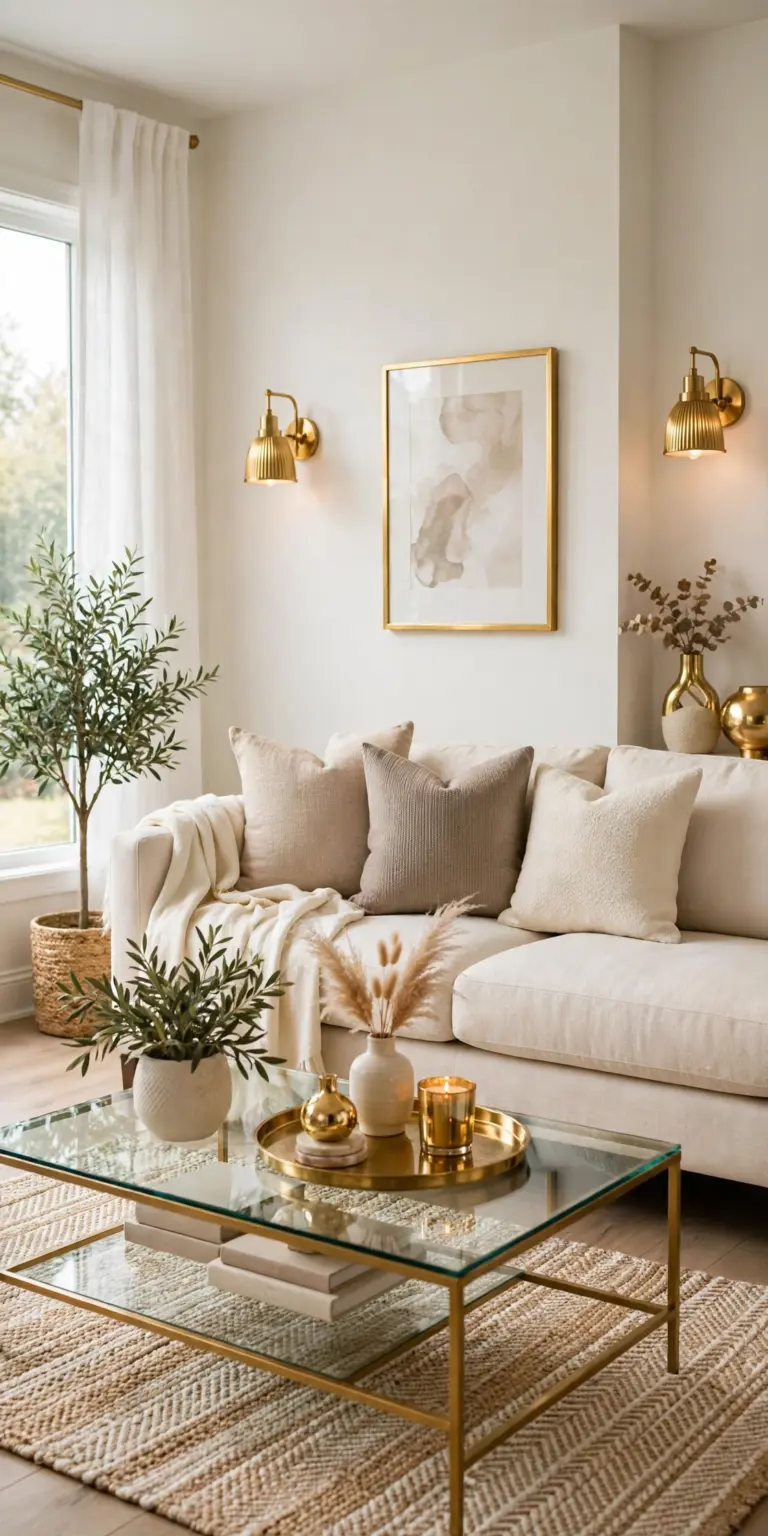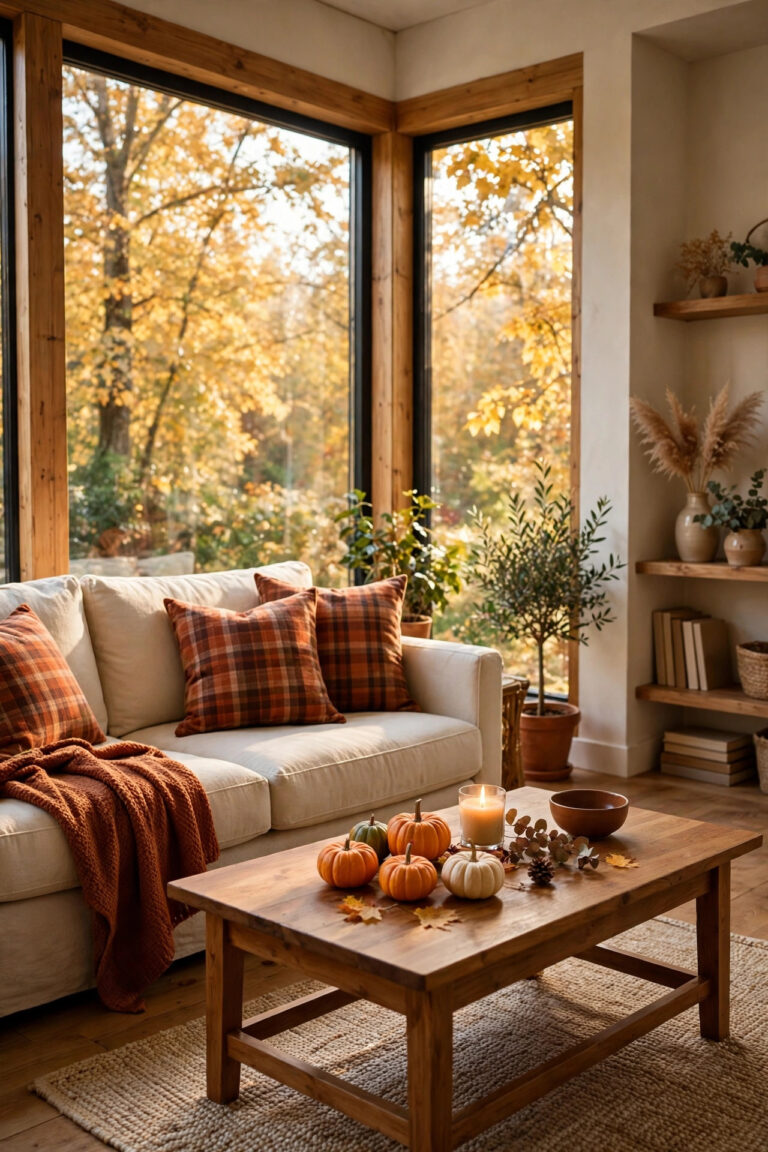
15 Affordable Ways to Make Your Living Room Look More Expensive
Expensive looking rooms are rarely expensive room by room. They are ordinary rooms where the sizing is right, the pairs match, the light is warm, and nothing cheap is left showing by accident. Interior designers repeat the same few moves because those moves work at every budget: scale up, pair up, tidy the edges, and let one or two rich materials carry the whole impression.
This guide collects the fifteen moves that give the biggest expensive feeling for the least money, in the order a designer would apply them. Each one is a renter safe, single purchase or free rearrangement, tested against one question: does this change make the room look planned? Planned is what expensive really means to the eye.
1. Fix the Rug Size First
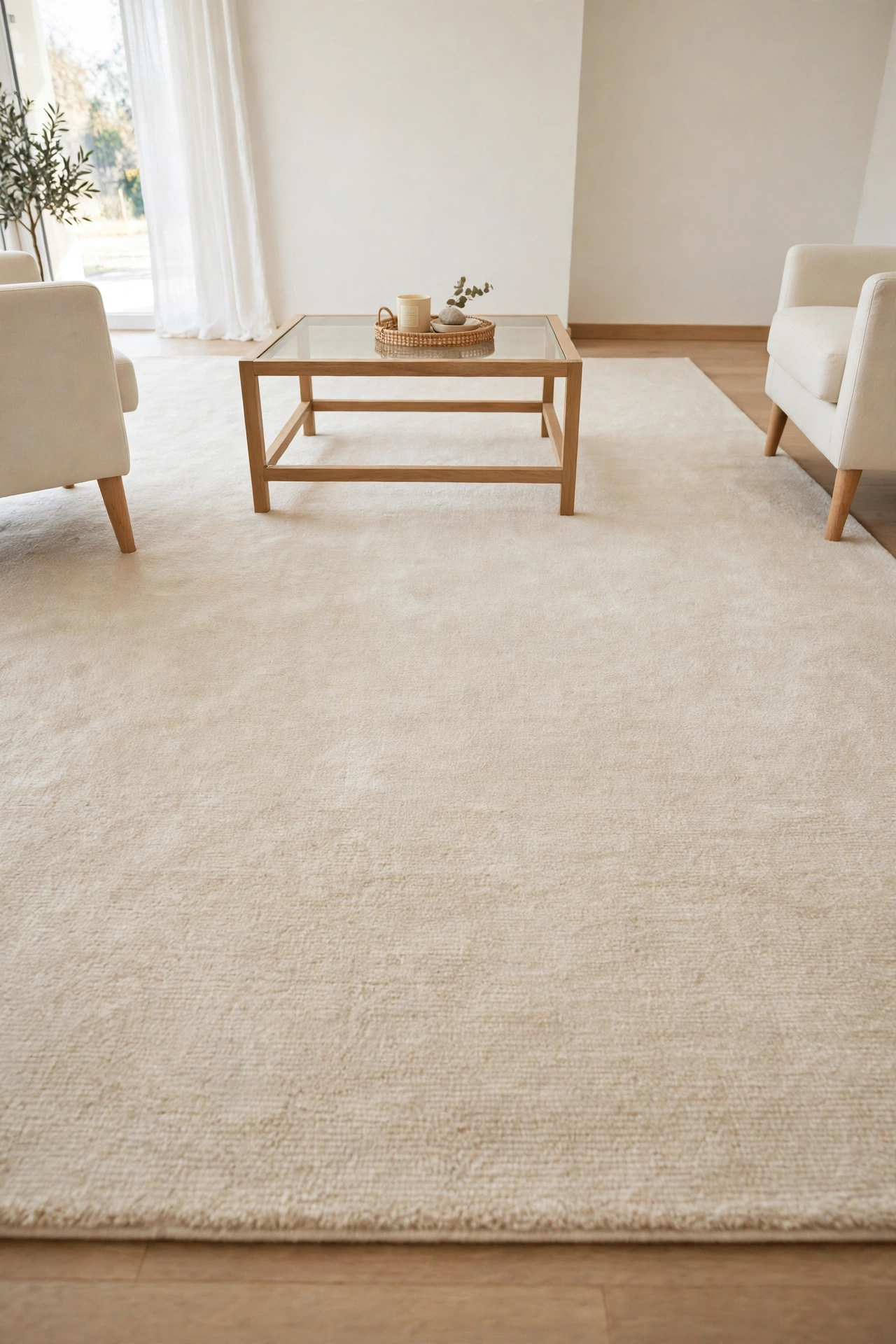
The fastest cheap look in any living room is a rug that is too small. It makes every piece of furniture look like it was bought separately and dropped in. One large rug, sized so the front legs of the sofa and chairs stand on it, joins the whole group into one designed island, and the room reads expensive before anything else changes.
How to do it: Measure the seating group and buy the rug to fit under all front legs with rug to spare on every side. Choose a low pile in cream, warm beige, or a quiet traditional pattern in faded tones. If a big rug is out of reach this month, this is the one purchase worth saving for first. Pro Tip: A large inexpensive flatweave under a smaller soft rug layers like a designer trick and costs less than one big plush rug. Common mistake: Centring a small rug under the coffee table only. That is a mat, and the eye reads the whole group as unfinished.
2. Hang Curtains High, Wide, and Full
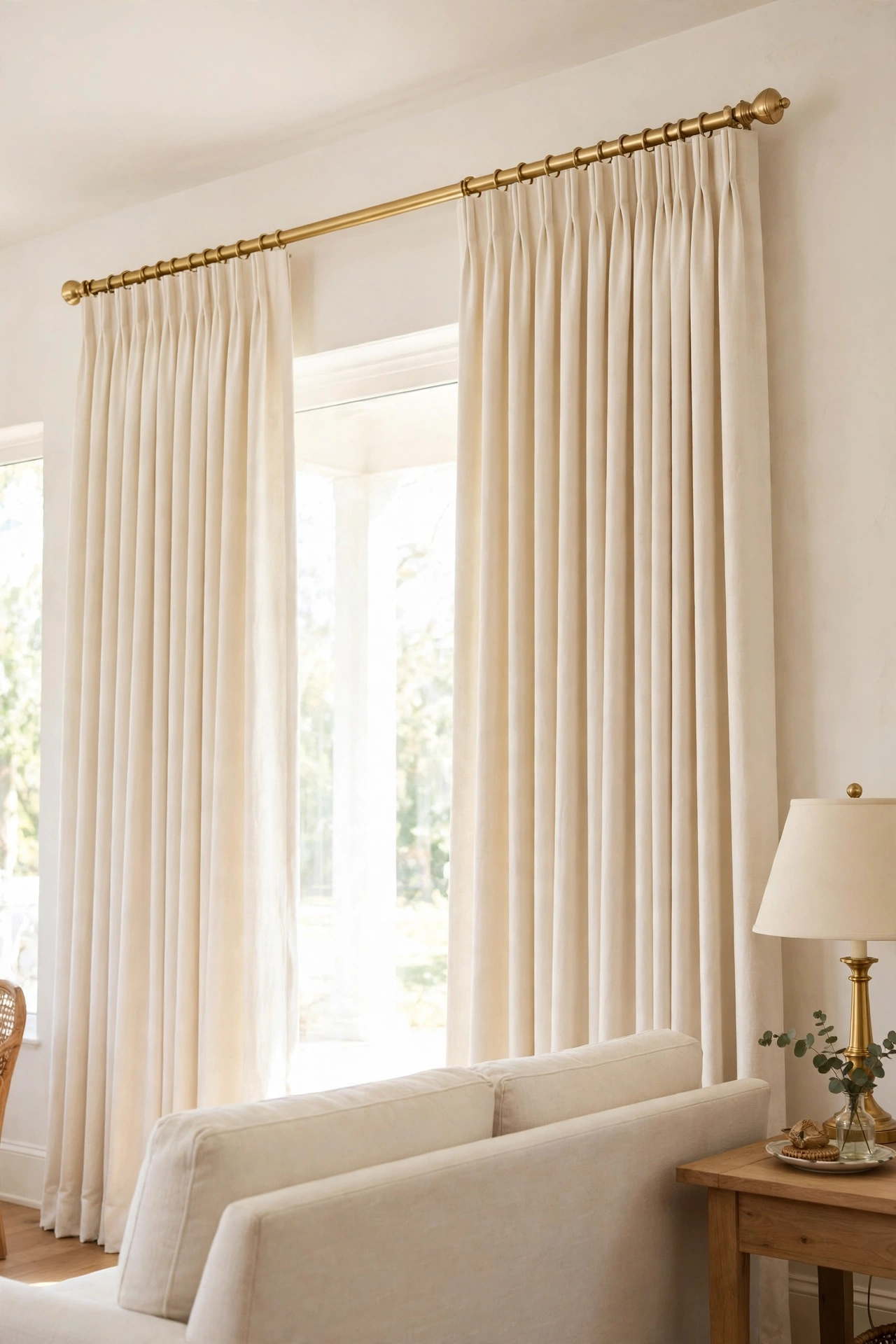
Curtains decide the height of the room in the eye. Hung just above the window frame, they announce the window’s real size. Hung near the ceiling and wider than the frame, with enough fabric to fall in deep folds, they announce a grander room that does not exist, and everyone believes the announcement.
How to do it: Fix the rod as close to the ceiling as possible and at least a hand wider than the frame on each side. Use two panels per side where budget allows, so the folds stay rich when open. Choose cream or warm white linen look fabric and let it just touch the floor. Pro Tip: Steam or iron the panels after hanging. Wrinkled curtains undo the whole trick in one glance. Common mistake: Curtains ending above the floor or squeezed to the frame width. Both are instant cheap signals.
3. Use Pairs and Symmetry
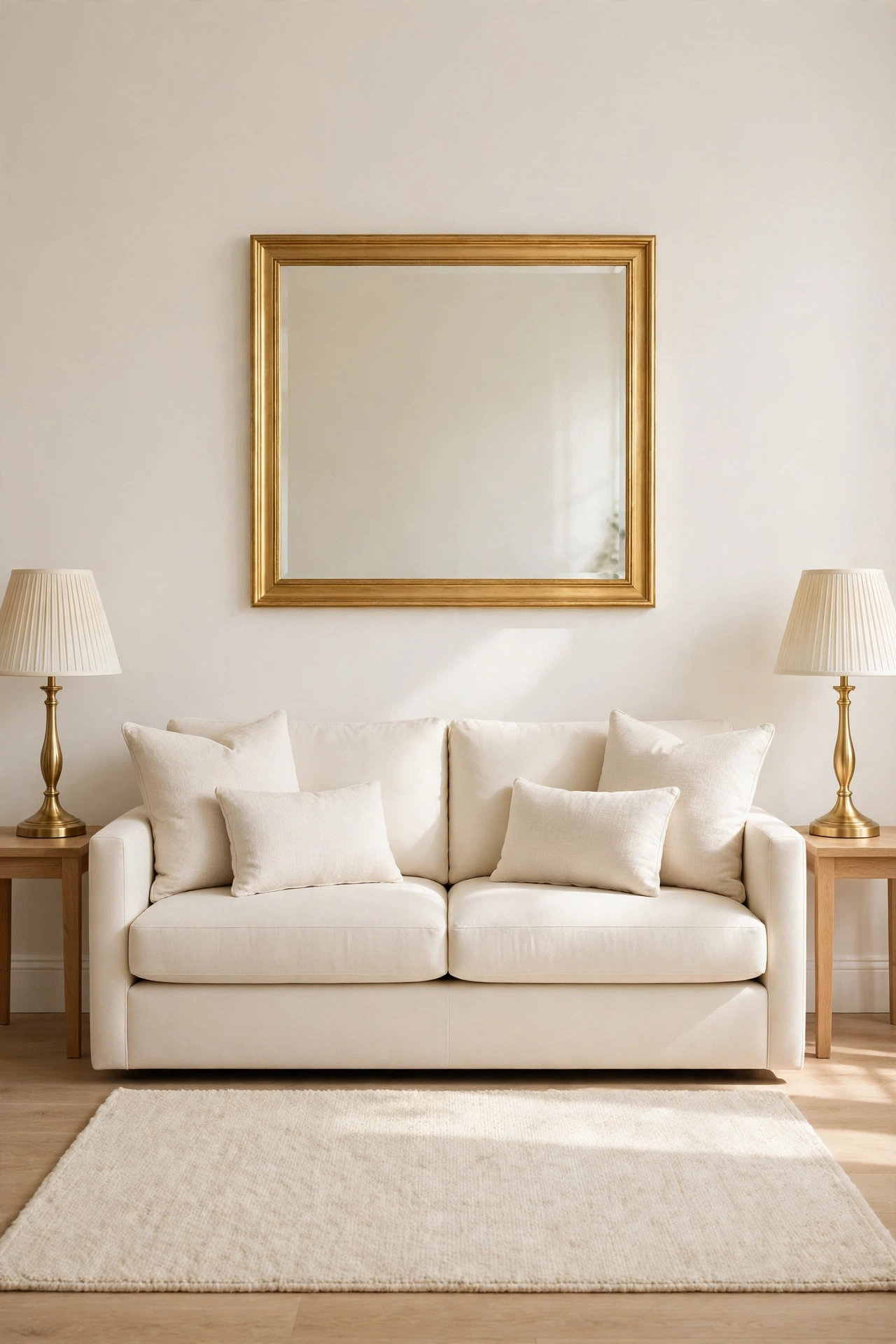
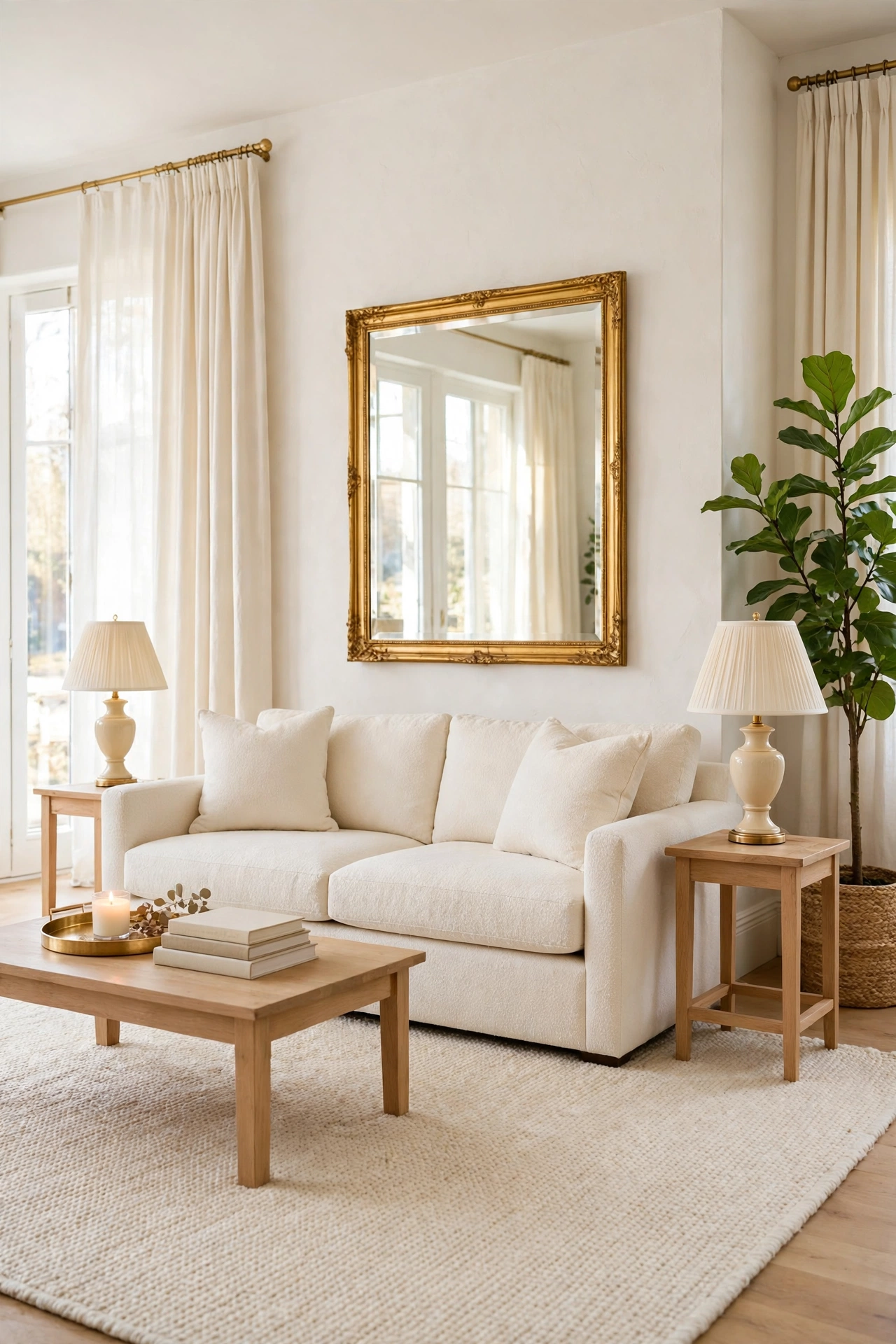
Expensive rooms are calm because the eye finds balance without working. Pairs are the shortcut: two matching lamps, two matching cushions, two chairs that agree. Symmetry costs nothing extra, the second lamp is the same price as a different one, but it pays like a designer’s fee.
How to do it: Match the two table lamps exactly, same base, same shade. Bookend the sofa with cushions in true pairs, same cover, same size, placed as mirror images. If you own two accent chairs, make them the same chair or upholster the pair alike with throws. Pro Tip: Symmetry at the sofa wall is enough. The rest of the room can relax and mix, the anchor wall does the convincing. Common mistake: Two almost matching lamps. Almost is worse than different, the eye hunts the difference forever.
4. Add One Large Mirror
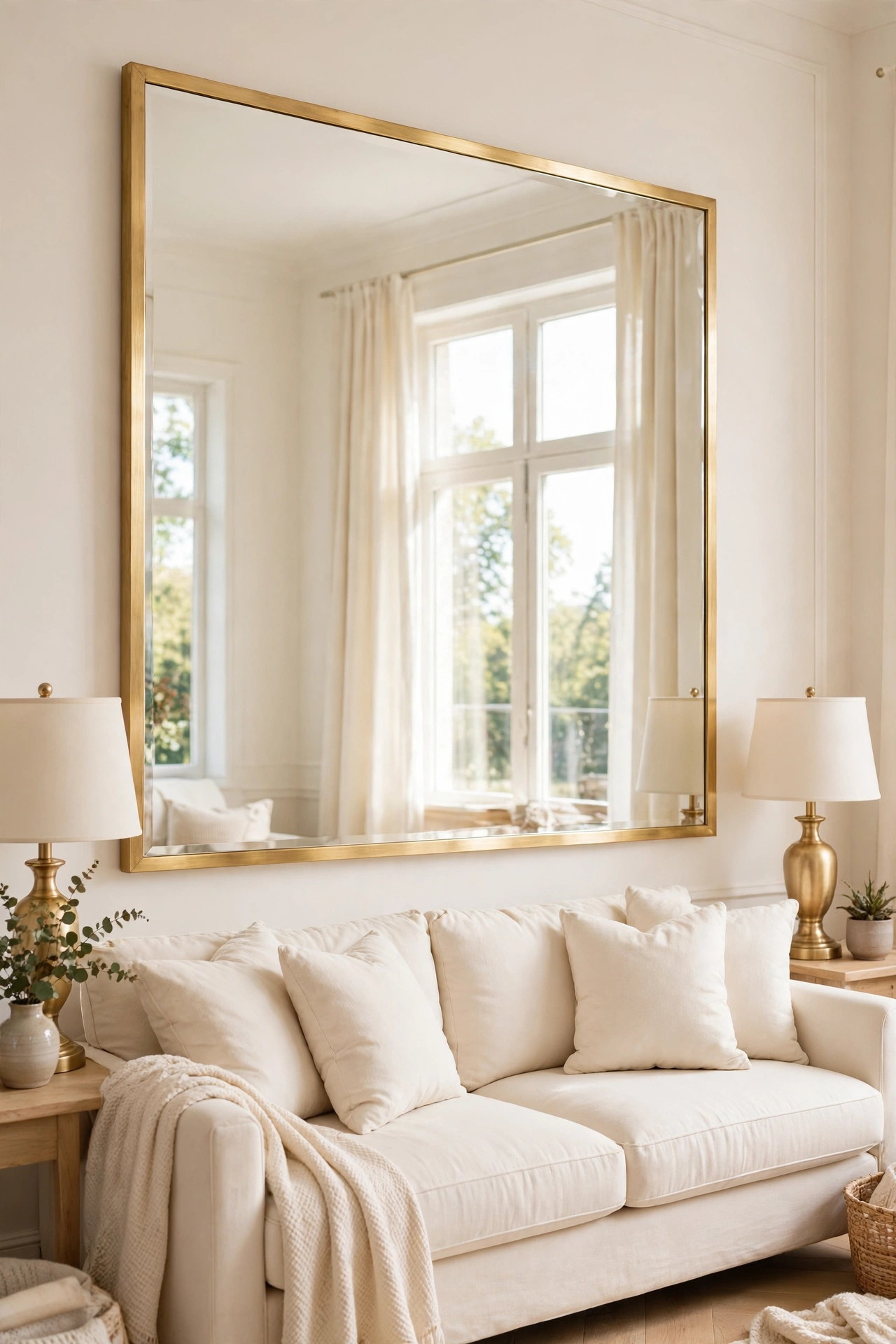
One large mirror in a thin gold or warm wood frame is the classic rich room device. It doubles the light, borrows the view, and its scale alone tells the eye the room was decorated on purpose. Several small mirrors never add up to the same effect, they read as a collection, not a decision.
How to do it: Choose the largest mirror the wall above the sofa or console honestly fits, ideally close to the sofa’s width. Hang it to reflect a window or the prettiest corner, never a door or clutter. Keep the frame one finish, brushed gold or warm oak, and repeat that finish only in small touches. Pro Tip: Second hand mirrors are the budget secret of this whole article. Big old mirrors sell cheap because they are heavy to move, and their frames often beat new ones. Common mistake: A mirror reflecting the television or a bare wall. It doubles the worst thing in the room instead of the best.
5. Hang One Oversized Piece of Art
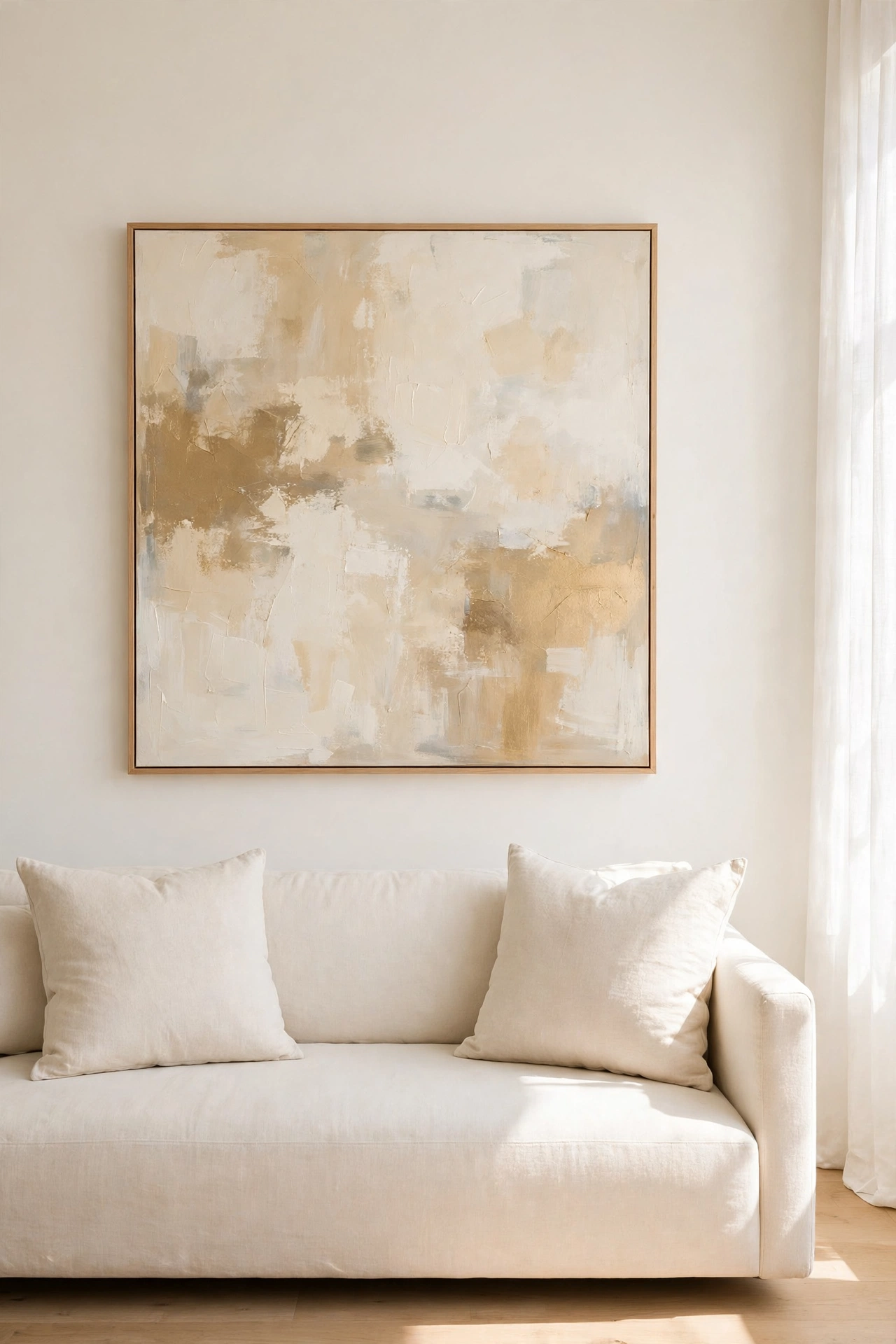
Walls confess budget faster than furniture. Many small prints say the art was gathered cautiously. One oversized canvas says it was chosen with nerve, and nerve reads as money. The art itself can be the cheapest thing in the room, a DIY texture canvas or a faded print in a big frame, scale is what the eye prices.
How to do it: Aim for a piece at least two thirds as wide as the sofa. Keep colours inside the room’s palette, cream, beige, soft gold, one deep note. Hang it low, a hand above the sofa back, and leave the rest of the wall empty. Pro Tip: Paint your own with leftover wall paint and a wide brush on a cheap large canvas. Abstract washes in the room’s tones look intentional and cost almost nothing. Common mistake: The nervous gallery wall of small frames at different heights. It is the single most common cheap signal in living rooms.
6. Keep Metal Accents to One Finish
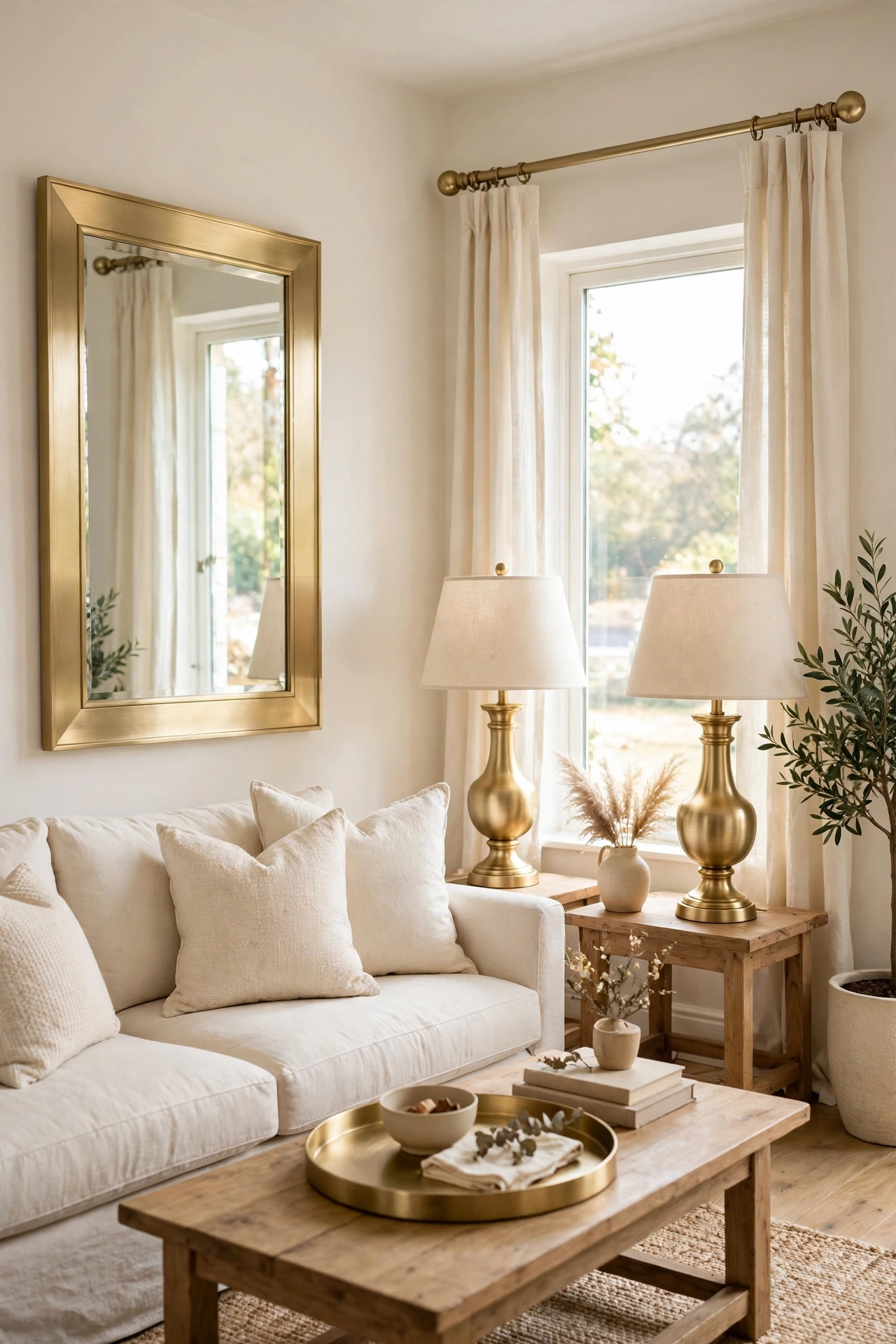
Mixed metals look collected by accident. One metal finish, repeated three or four times, looks collected by a designer. Brushed gold is the expensive classic for warm rooms, appearing in the mirror frame, the lamp bases, a tray, and small handles, always the same tone, never shiny yellow.
How to do it: Choose your finish, brushed gold for warm rooms, and audit the room for rebels: the chrome side table, the black lamp, the silver frame. Move rebels to other rooms rather than replacing everything at once. Repeat the chosen finish in at least three places so it reads as a scheme. Pro Tip: Rub and buff paste can warm up small chrome pieces, and gold craft paint on a frame is a one evening fix. Practice on the back first. Common mistake: Mirror polished gold everywhere. Cheap gold is shiny gold; the brushed, muted version is the believable one.
7. Light With Lamps, Not the Ceiling
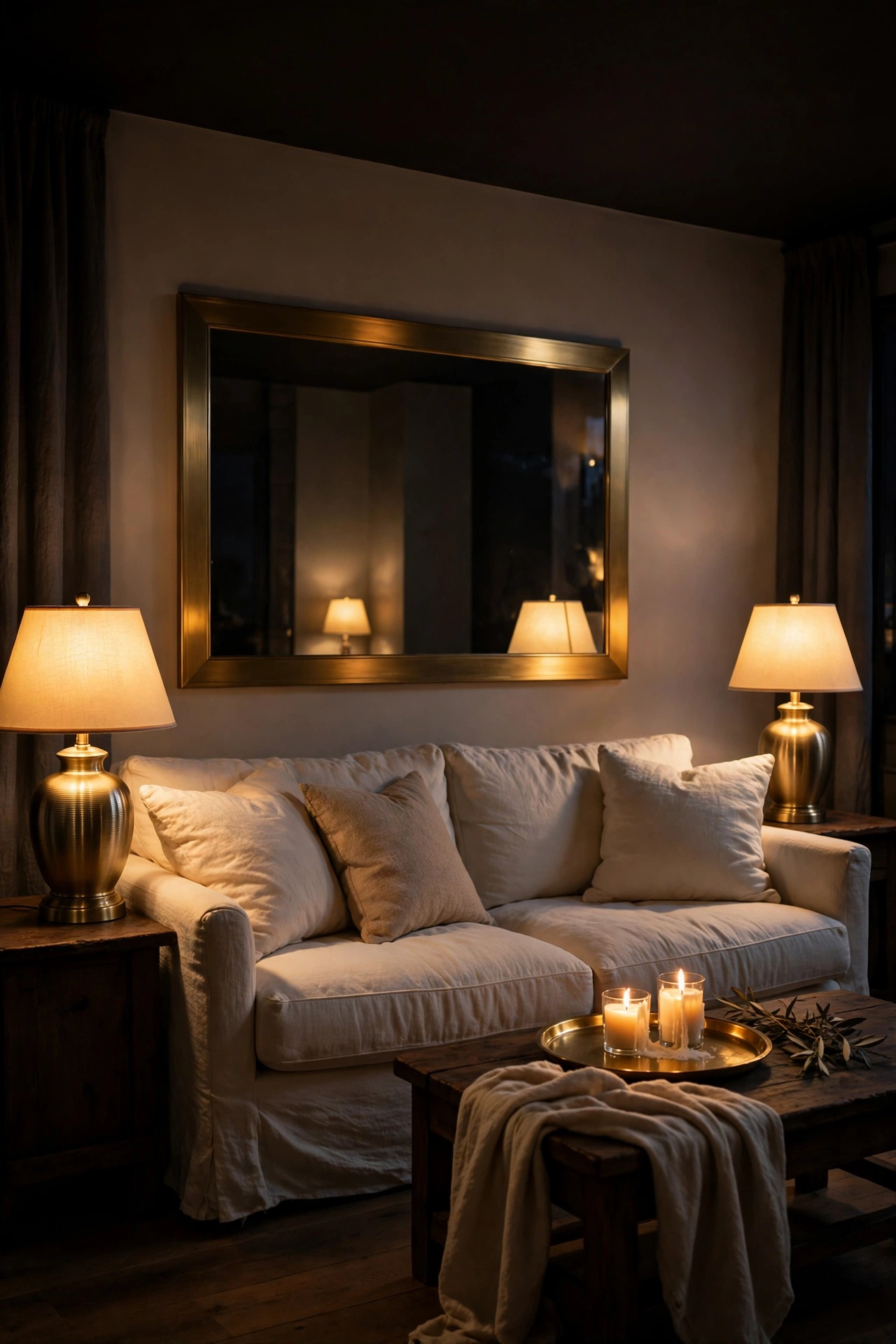
Overhead light is the lighting of offices and rentals. Expensive rooms glow from the sides, lamps at seat height pooling warm light where people sit, the ceiling left dark and forgotten. Two good lamps change the price feeling of a room more than a new sofa, and they cost a fraction of one.
How to do it: Place at least two lamps, one at each end of the seating, with warm bulbs of the same tone in both. Add one low light, candles or a small lamp on the coffee table level, for evenings. Switch the ceiling light off and judge the room honestly by lamplight. Pro Tip: Put the lamps on a single plug in timer. The room greets you already glowing, which feels like staff, and costs pennies. Common mistake: One bright lamp in one corner. It creates a stage and three caves, and the room feels smaller and cheaper.
8. Style One Tray Moment on the Coffee Table
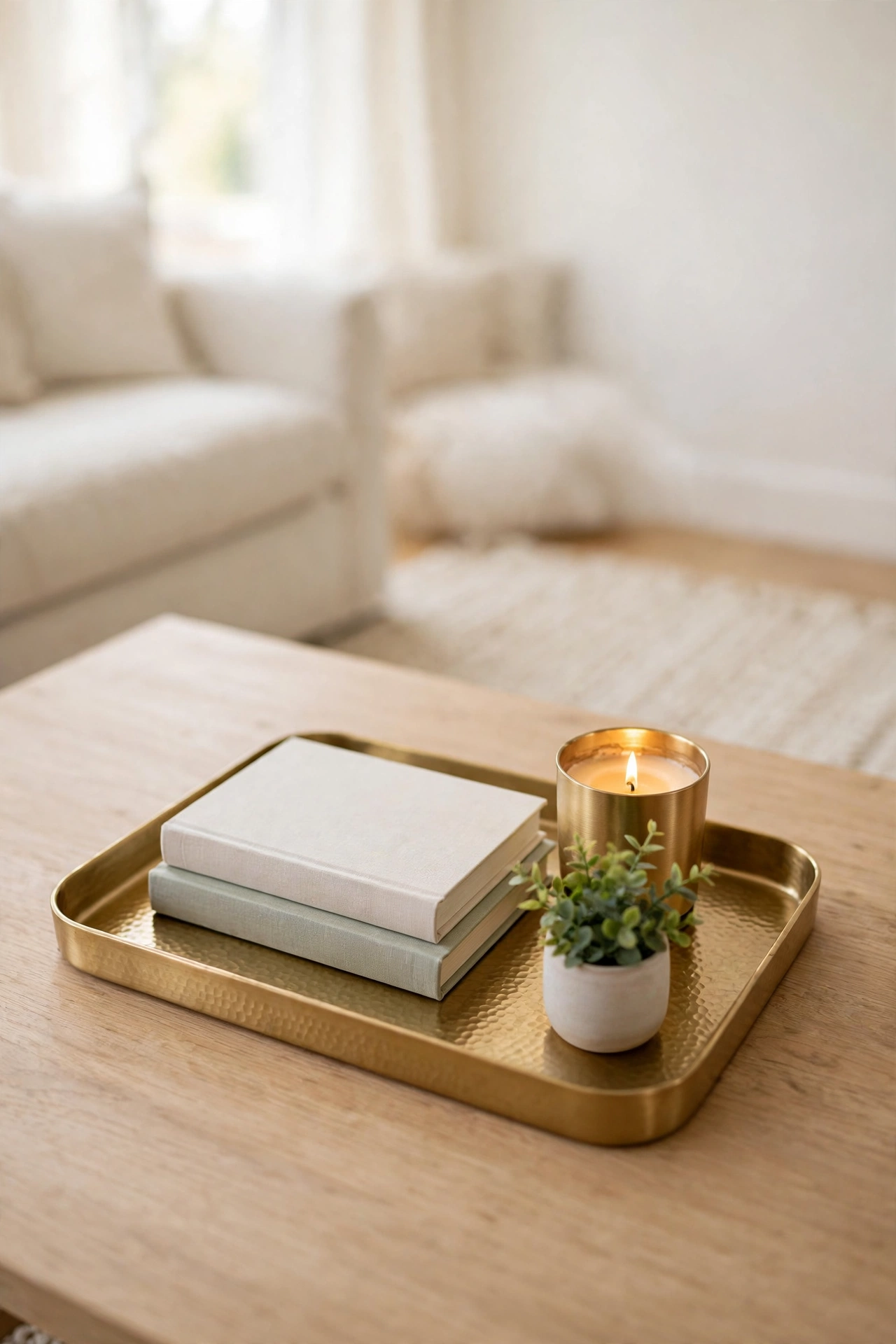
A styled tray is a designer’s signature because it turns everyday objects into a composition. Two books, a candle, and one small green or sculptural object, gathered on a tray in the room’s metal finish, give the eye a rich centre to land on, and the rest of the table stays calm and empty.
How to do it: Choose a tray in your one metal finish or in warm wood. Stack two large books with plain covers, add a candle in a holder, and one small plant or object with height. Leave at least half the table bare around the tray. Pro Tip: Turn book spines inward or cover books in plain paper if their covers fight the palette. It takes ten minutes and looks like a stylist did it. Common mistake: Filling the tray like a shelf. The moment it holds remotes and coasters, it stops being styling and becomes storage.
9. Make Pillows Plump and Covered Well
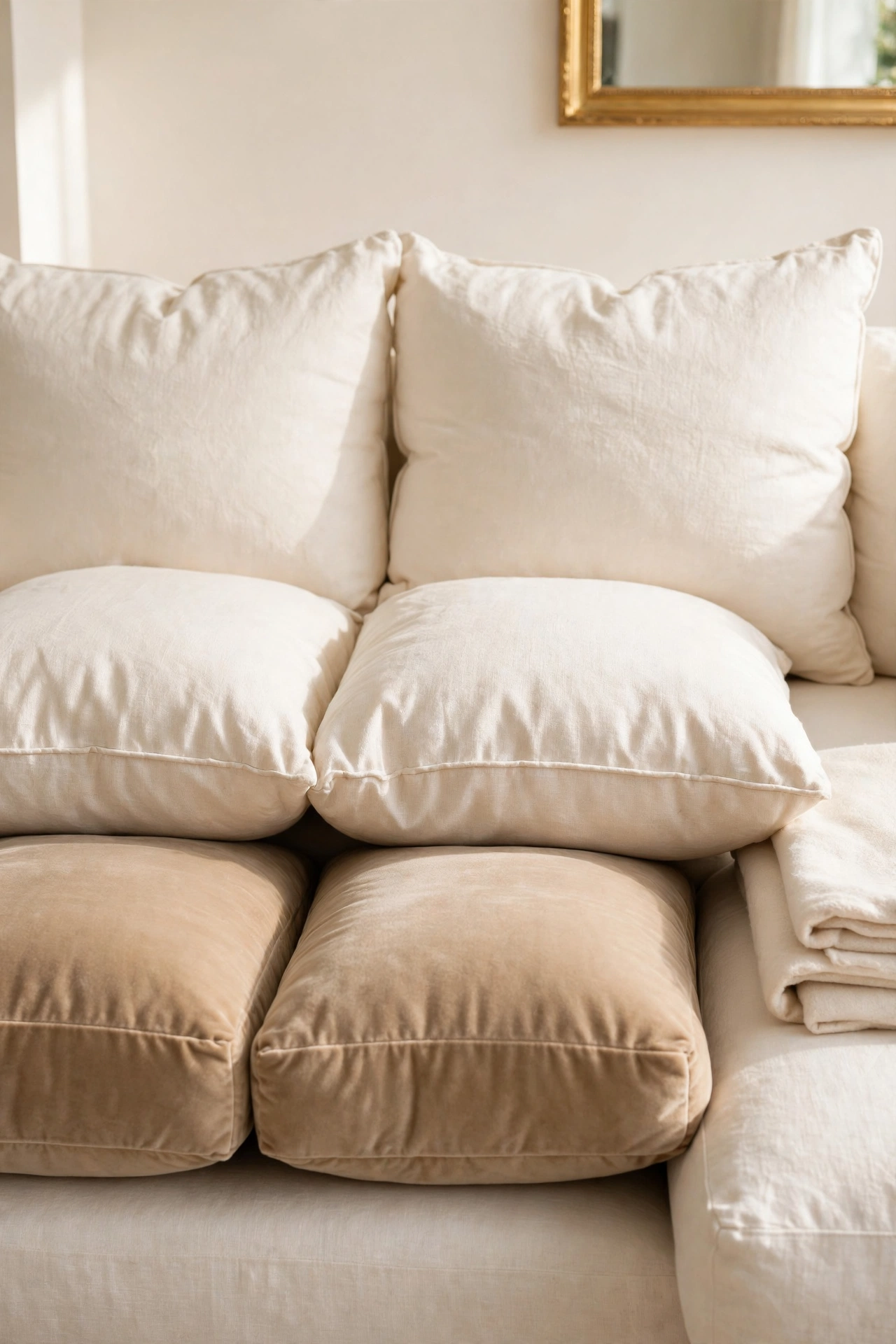
Flat pillows are a budget confession. Full, plump pillows in good covers read as custom upholstery, and the trick costs almost nothing: inserts one size larger than the cover, squeezed in, give any cushion a tailored, expensive body. Covers in linen, woven cotton, or one velvet pair carry the palette.
How to do it: Buy inserts two inches larger than your covers where possible. Keep covers in two or three palette fabrics, with zips so they wash and swap. Arrange in pairs, largest at the back, with the karate chop crease only if your fabric holds it softly. Pro Tip: One pair of covers in a slightly richer fabric, a warm velvet or a woven stripe, lifts all the cheaper cushions around it. Common mistake: The cushion rainbow, six different colours and patterns gathered over years. Beautiful individually, cheap together.
10. Bring in One Tall Plant
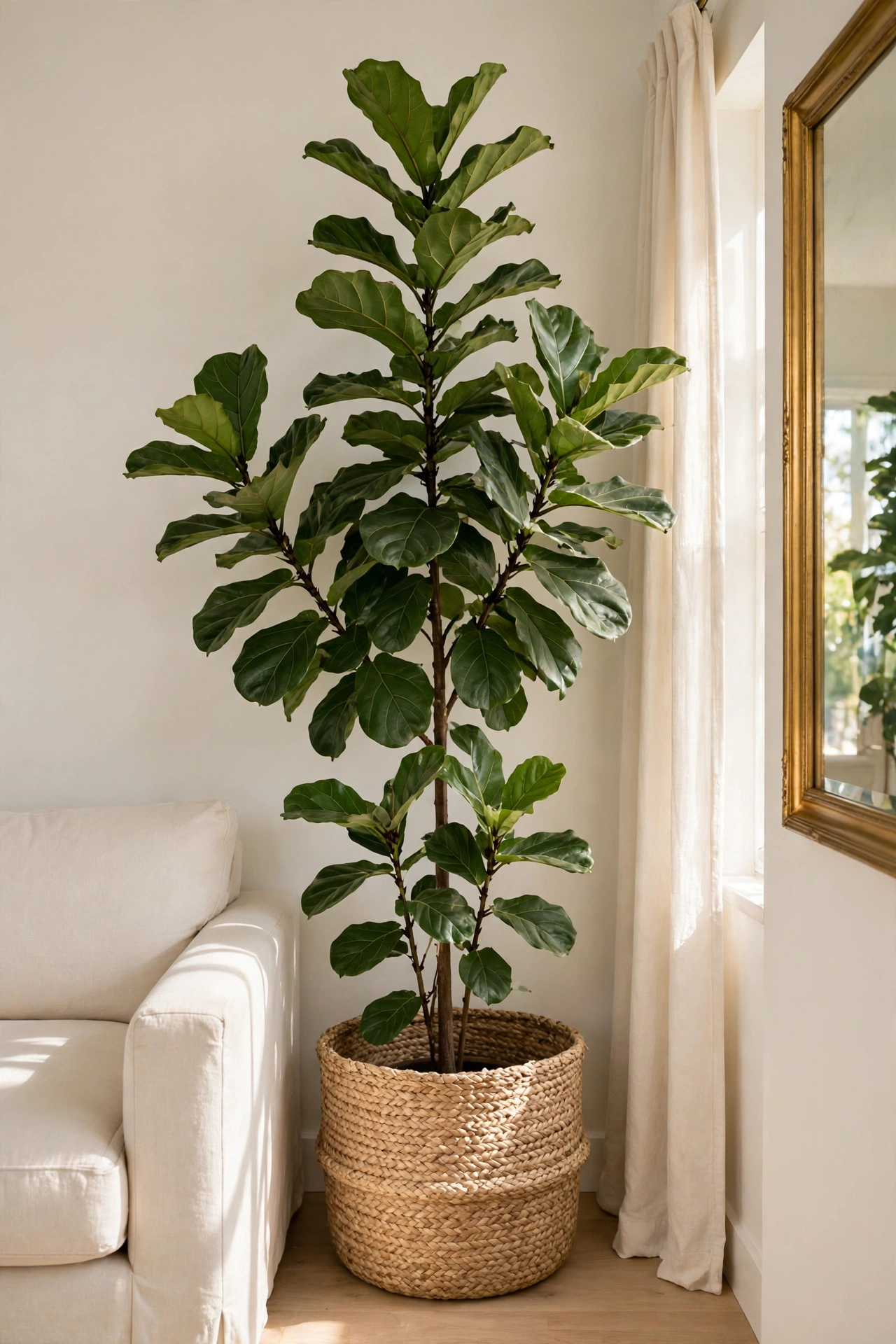
Height is luxury, and the cheapest height is a plant. One tall plant in the empty corner fills the vertical space that makes rooms feel designed, adds the living green every rich room has, and costs less than any piece of furniture that could stand in the same spot.
How to do it: Choose the tallest plant your light honestly supports, a fiddle leaf, olive, or tall palm style, and put it in a large woven basket or a plain heavy pot that hides the plastic nursery pot. Place it beside the sofa or the art wall, where its height joins the composition. Pro Tip: Group nothing with it. One confident plant is the designer move; a scatter of small pots is the garden centre look. Common mistake: A small plant on the coffee table as the room’s only green. It reads as an apology for the empty corner.
11. Hide Every Cord and Every Clutter Pile
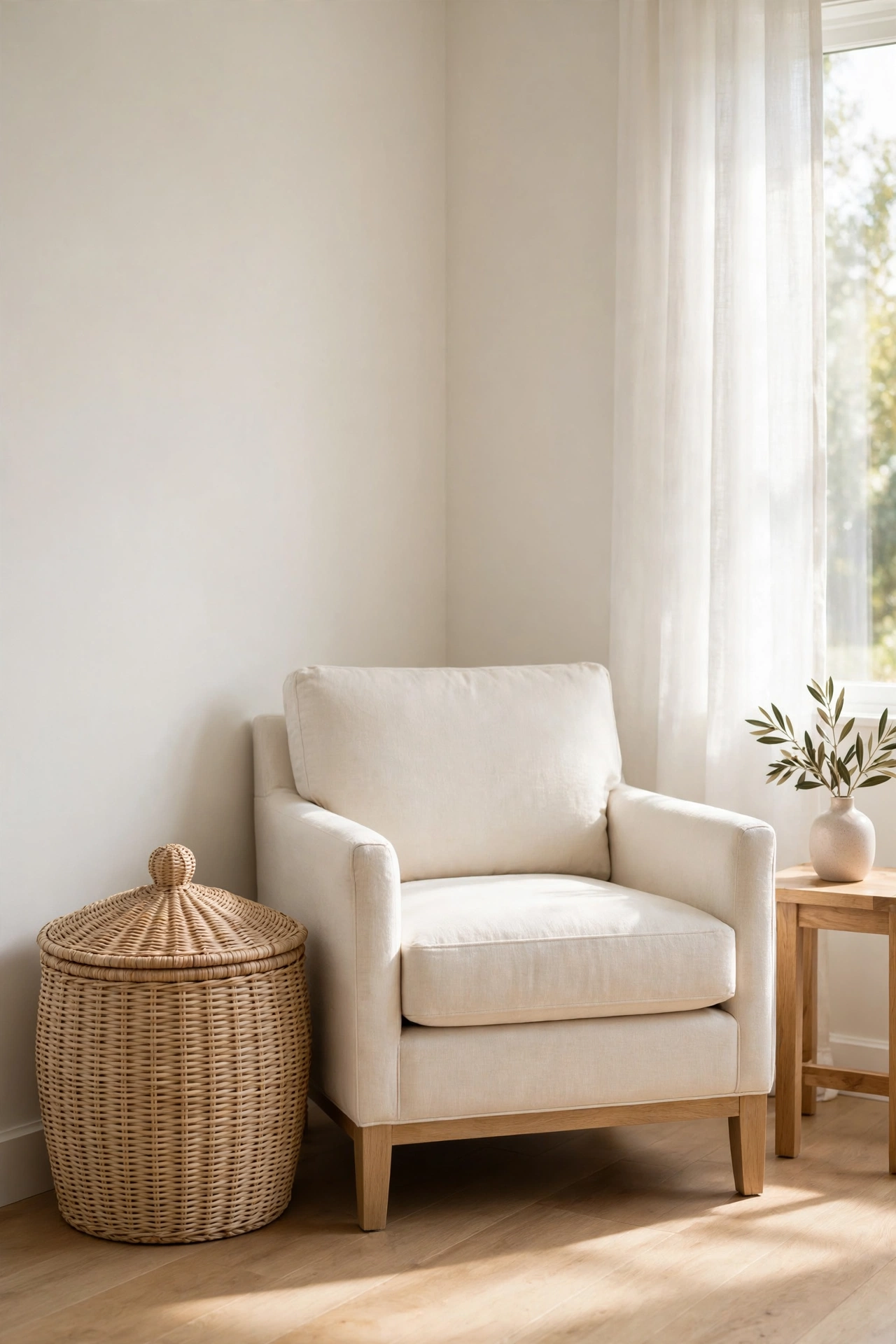
Nothing cheapens a room like evidence of its wiring and its mess. Visible cords, charger piles, and remote scatter tell the eye the room was never finished. Expensive rooms hide their machinery, and hiding costs almost nothing: one lidded basket, one cord box, and five honest minutes a day.
How to do it: Run cords behind furniture and into one covered box near the socket. Give the room one lidded basket for the daily pile, remotes, chargers, the things with nowhere to live. Clear every surface to its styled group and nothing more. Pro Tip: Photograph the room on your phone. Cords and clutter invisible to your daily eye shout from a photo, and the photo never learns to ignore them. Common mistake: A beautiful room with one glowing power strip in the middle of the wall. Hiding ninety percent is not hiding.
12. Pull the Furniture Into a Real Layout
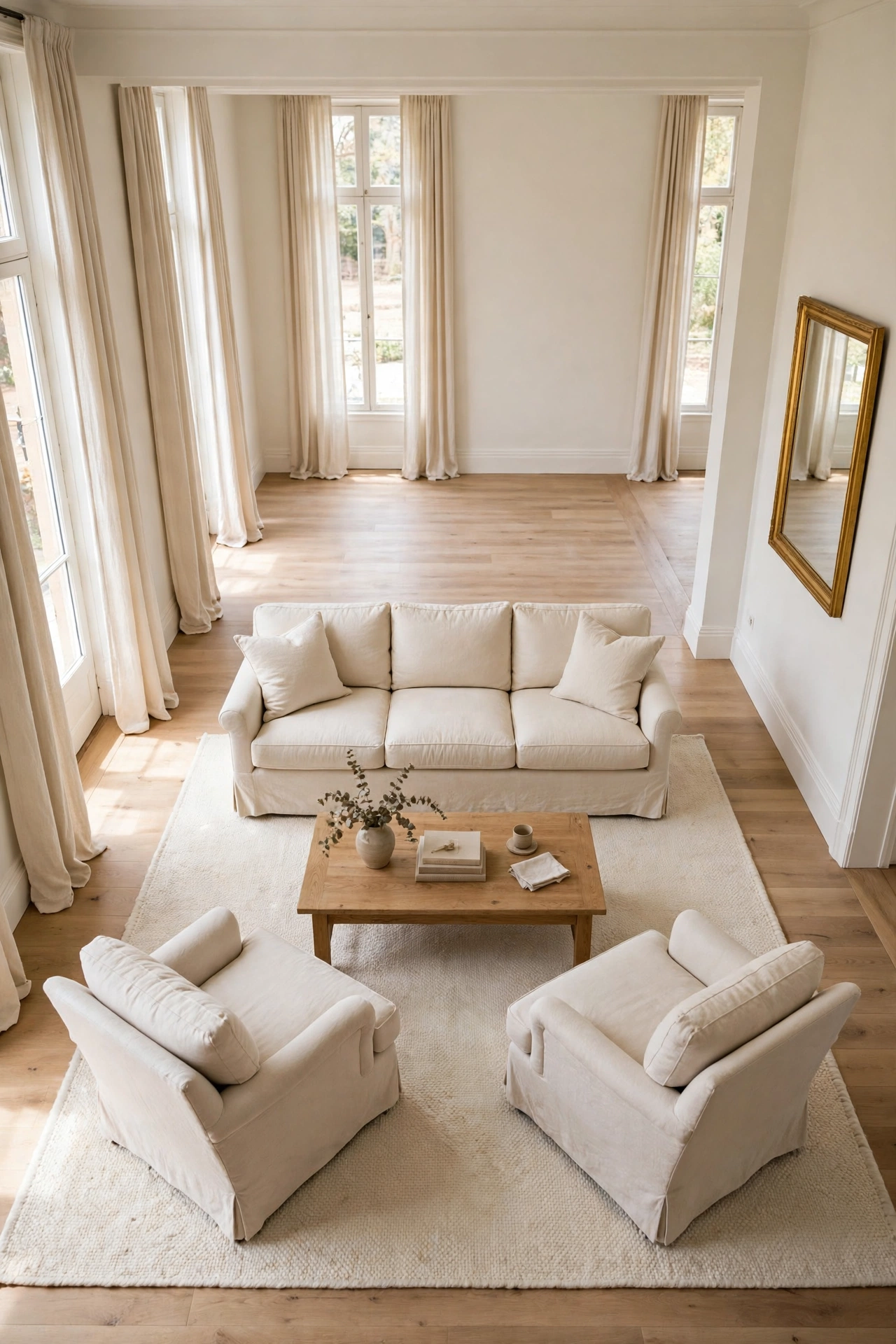
Furniture pushed against every wall is the layout of a waiting room, and it is free to fix. Expensive rooms gather: sofa and chairs pulled in around the rug, close enough for conversation, with breathing space behind them. The same furniture, rearranged in twenty minutes, can look like a different and richer set.
How to do it: Pull the sofa off the wall by at least a hand’s width. Angle or face the chairs toward the sofa so knees nearly meet across the coffee table. Anchor everything to the rug, front legs on, and leave one clear walking path, not four. Pro Tip: If the room is too small to float furniture, float only the sofa and keep the rest calm. One floated piece changes the whole reading. Common mistake: The television dictating a layout that faces a wall of chairs in a row. Conversation first, screen second, is the expensive order.
13. Paint One Warm White Over Everything
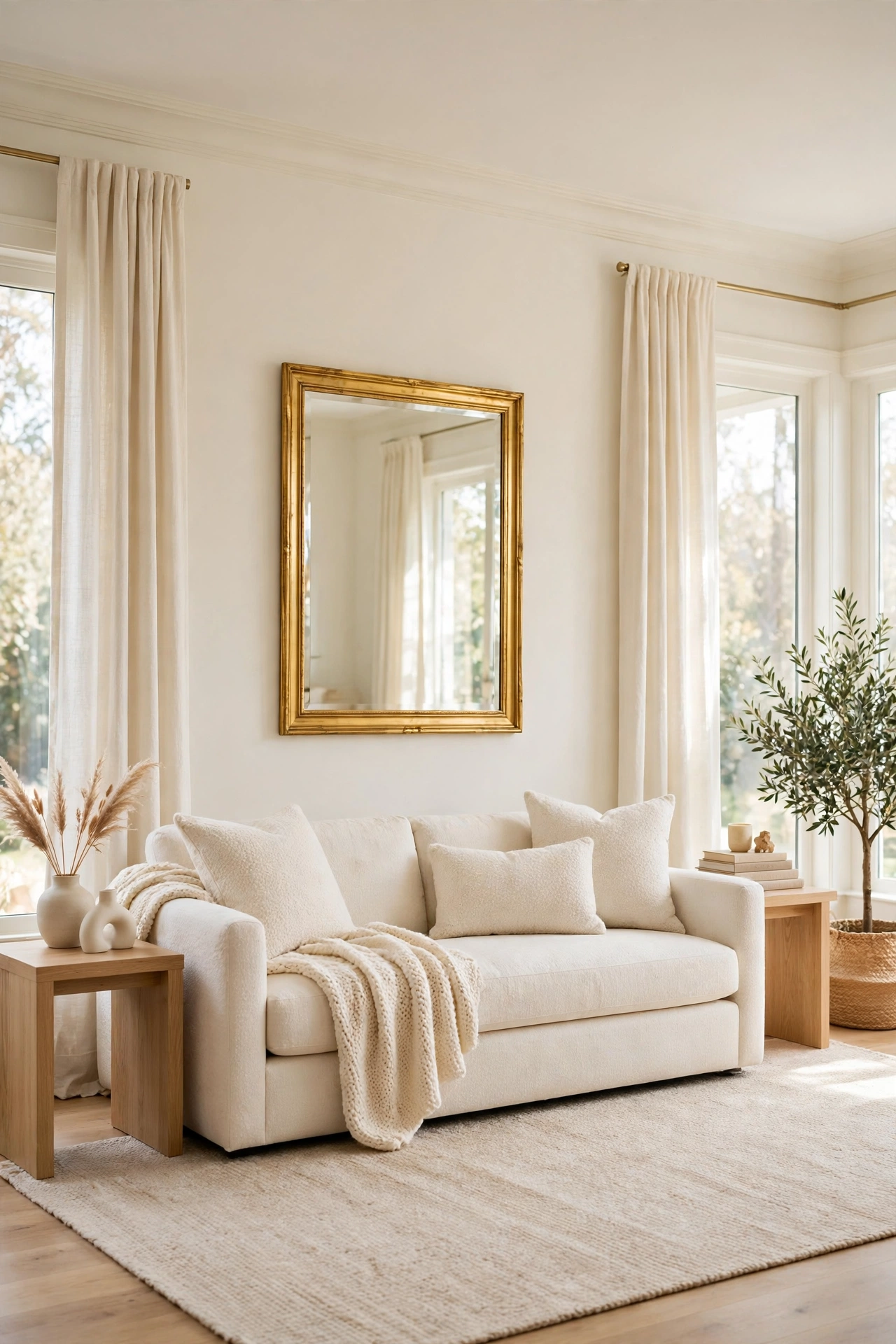
A single warm white over walls that carry patches, marks, and three generations of paint colours is the cheapest transformation in this whole list. Fresh paint makes old furniture look newer, joins mismatched pieces into one family, and gives the room the clean envelope every expensive interior starts from.
How to do it: Choose one warm white with a cream or greige base, never blue white, in a matte or eggshell finish. Paint walls and trim the same colour for the calm, carved look. Do the ceiling too if it is stained or grey, it is the room’s fifth wall and the most forgotten. Pro Tip: Paint is the one job to do before buying anything else on this list. Half the things you planned to replace will look fine against the new walls. Common mistake: Keeping a dark or bright accent wall from an older scheme. It dates the room on sight and argues with every calm piece in it.
14. Upgrade the Small Touch Points
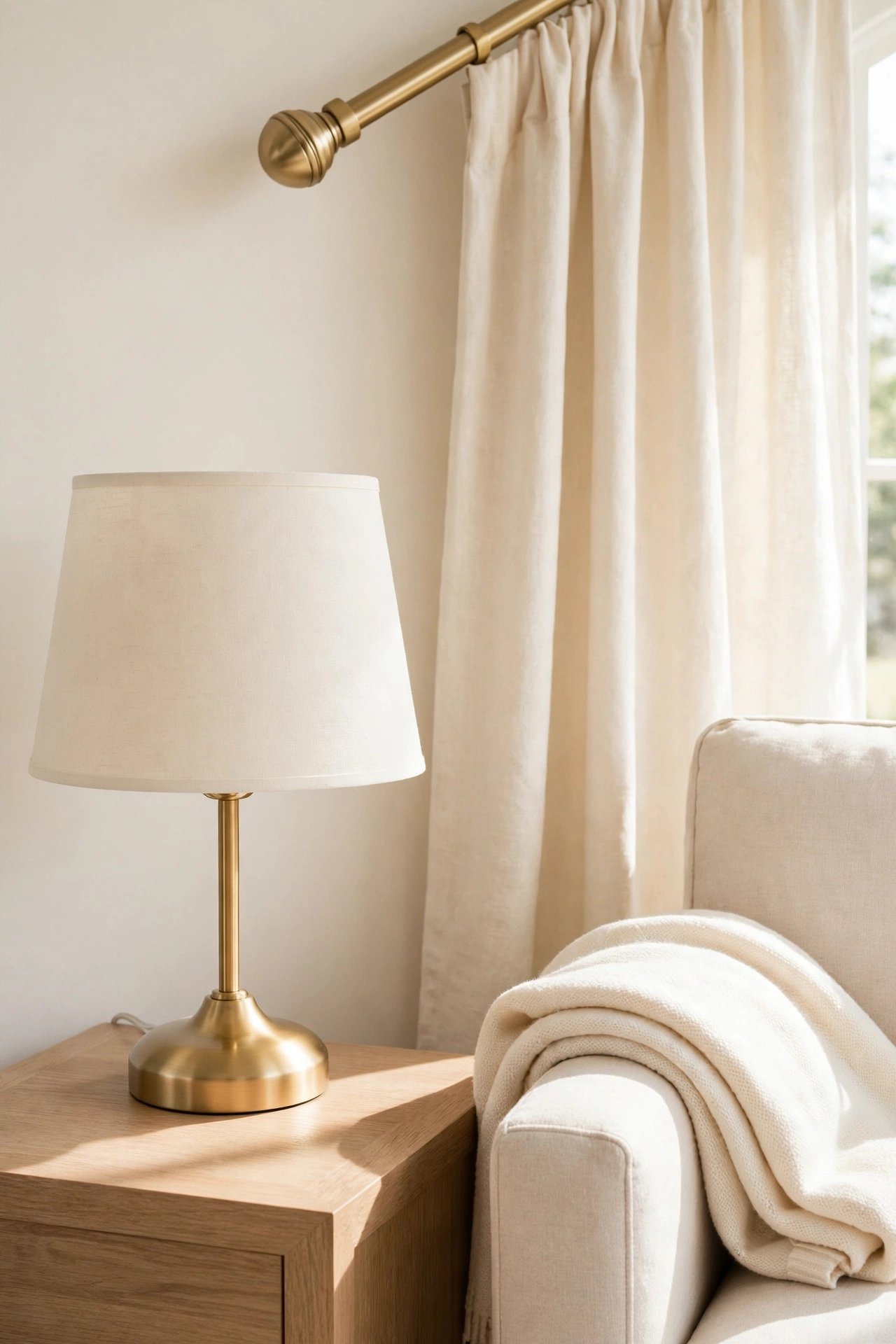
The eye prices a room by its smallest details. Yellowed lampshades, plastic curtain finials, and a tired throw are tiny confessions that undo big furniture. Swapping only the touch points, shades, finials, cushion covers, one throw, refreshes the whole room for the price of a single chair.
How to do it: Replace both lampshades with matching cream linen drum shades of the right width for their bases. Change curtain finials to your one metal finish. Retire the one most tired textile in the room, the throw or the rug runner, even if its replacement is simple. Pro Tip: Keep a small yearly touch point budget instead of dreaming of a new sofa. Rooms maintained at the edges never look tired. Common mistake: Upgrading one visible thing while its pair stays old, one new shade, one yellowed one. Pairs first, always.
15. Finish With the Hotel Routine
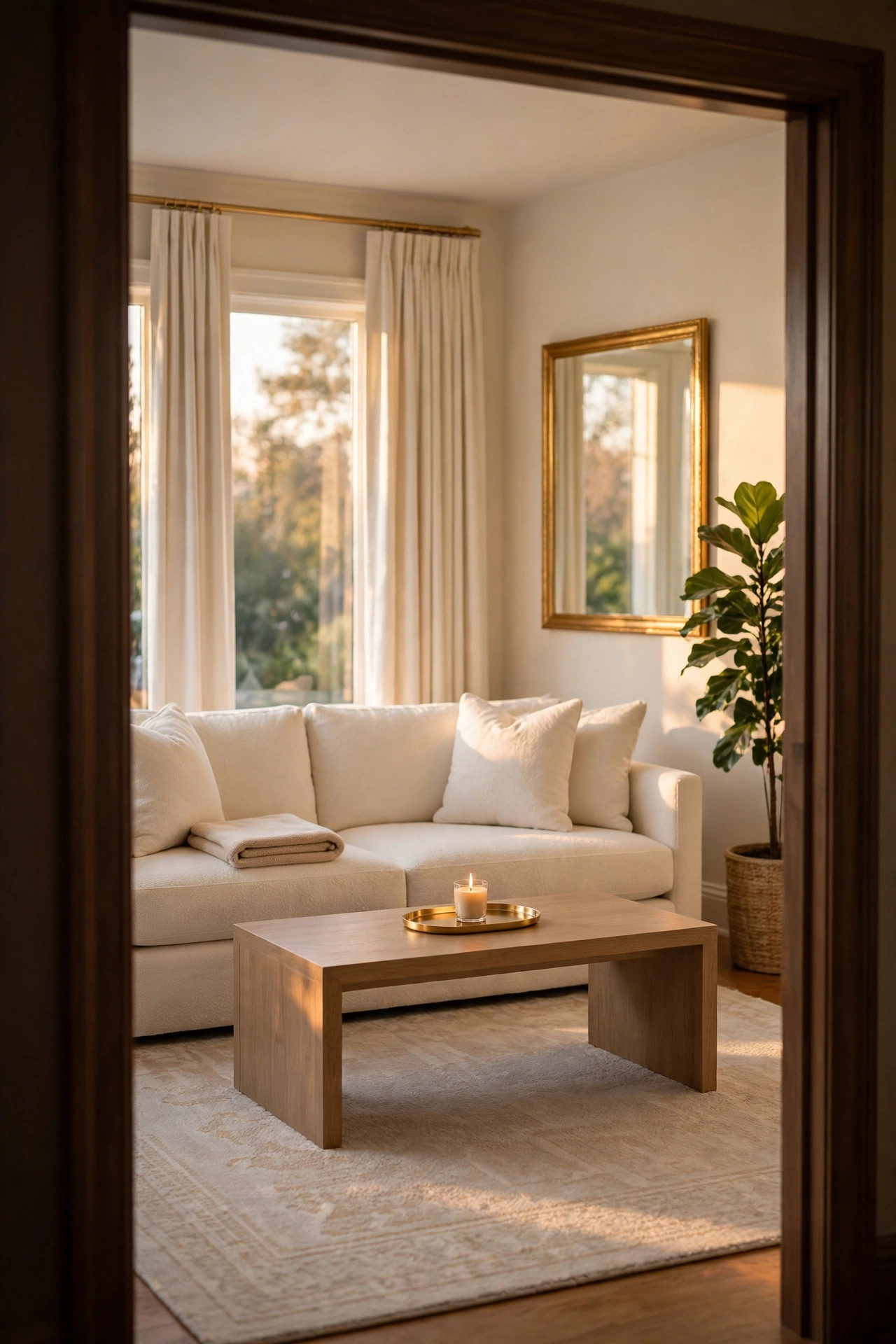
Fine hotels are not richer than your home, they are more finished. Every curtain steamed, every cushion plumped, surfaces clear, one scent in the air. That finish is a routine, not a purchase, and it is the difference between a room that looks styled in a photograph and one that looks styled when a friend walks in.
How to do it: Steam or press the curtains in place. Plump and pair the cushions, fold the throw once, the same way, every day. Set one candle or diffuser as the room’s single scent. Walk to the door, turn, and remove one thing that catches your eye for the wrong reason. Pro Tip: Do the routine before guests, not a deep clean. Guests read finish, not hygiene, and ten minutes of finish beats two hours of scrubbing. Common mistake: Styling only for photographs and living in the unstaged version. The routine is five minutes; make the photographed room the everyday one.
Quick Reference Table
| Affordable Move | Typical Cost Level | What It Fixes |
|---|---|---|
| Right size rug | One planned purchase | Furniture floating apart |
| Curtains high, wide, full | Fabric and a rod move | Low ceilings, small windows |
| Pairs and symmetry | Free to small | Collected by accident look |
| One large mirror | Second hand bargain | Dark, flat wall |
| Oversized art | DIY possible | Nervous small print walls |
| One metal finish | Small swaps | Mixed hardware noise |
| Lamps not ceiling light | Two lamps | Office lighting feeling |
| Tray moment | One tray | Scattered table objects |
| Plump pillows | New inserts | Flat budget cushions |
| One tall plant | One plant and basket | Empty corner, no height |
| Hide cords and clutter | One basket, one box | Unfinished room evidence |
| Real layout | Free | Waiting room walls |
| Warm white paint | Paint only | Patchy, dated walls |
| Touch point upgrades | Small yearly budget | Yellowed shades, tired details |
| Hotel routine | Free, five minutes | Styled only in photos |
The Expensive Look Checklist
- Rug holds all front legs of the seating group
- Curtains near the ceiling, wider than the frame, full length
- Lamps in a true matching pair
- Cushions paired, plump, palette only
- One large mirror reflecting something beautiful
- One oversized art piece, hung low
- One metal finish repeated three times
- Ceiling light off, lamps doing the evening
- Coffee table holds one tray moment, rest bare
- One tall plant in a proper pot or basket
- No cord visible from the doorway
- Sofa floated, chairs in conversation
- Walls one warm white, trim included
- Shades, finials, and the tired textile replaced
- Hotel routine done, one scent, one thing removed
Frequently Asked Questions
What is the single cheapest change that makes the biggest difference?
The layout, because it is free. Pulling the furniture off the walls and onto the rug in a conversation group changes the room’s reading in twenty minutes. After that, the hotel routine, steamed curtains, plumped cushions, clear surfaces, costs nothing but five minutes and keeps the room at its photographed best.
I can only afford one purchase. What should it be?
The rug, at the right size. It is the piece every other piece stands on, literally, and the wrong size rug undermines good furniture while the right size upgrades average furniture. If the rug is already right, put the money into the pair of lamps, because warm side light changes every evening in the room.
How do I keep budget buys from looking cheap?
Buy the calm version of everything: plain fabrics over patterns, matte finishes over shiny, one colour family over variety, and the largest size you can justify over the safe small one. Cheap looks come from shiny, small, and mismatched far more than from low prices. A plain large thing in the right tone beats a fancy small thing every time.
Conclusion
An expensive looking living room is a set of decisions, not a receipt total: the rug sized to the furniture, curtains hung like a taller room, pairs that let the eye rest, one mirror and one artwork with real scale, warm lamp light, hidden cords, and a five minute finishing routine. Work through the list in order, spend only where a purchase is named, and let the free moves do their share. The room will start reading as planned, and planned is the whole secret.