17 Coffee Table Decor Ideas for a Beautifully Styled Living Room
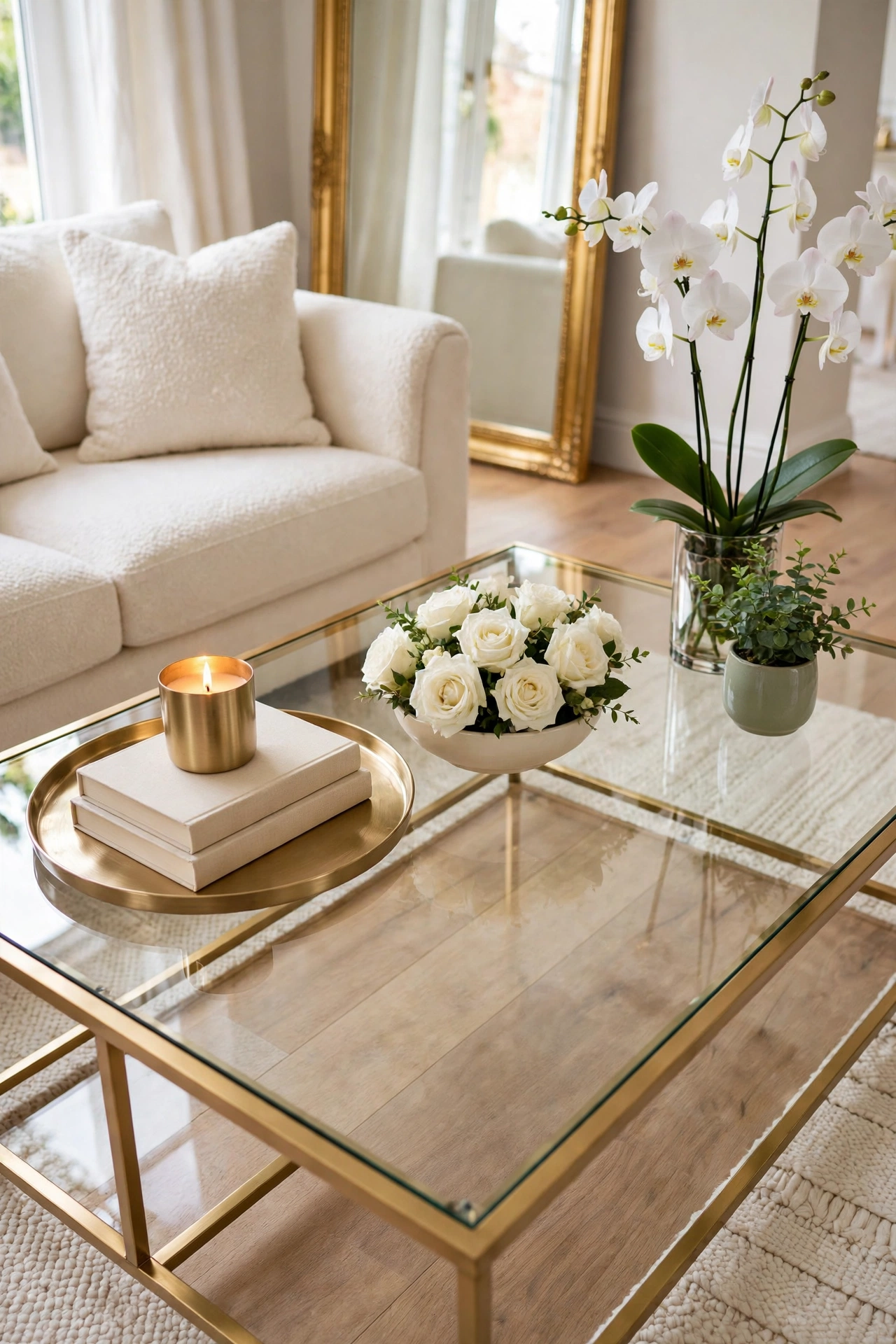
The coffee table is the most looked at surface in the living room and the most restyled, because it sits at the exact centre of every conversation and every photograph. Stylists treat it like a small stage with strict rules: group in threes, build one tall moment, repeat the room’s materials, and always leave empty space, because a table with nowhere to put a cup is a display, not a home.
These seventeen ideas move from the structure of a styled table to the details that make it feel personal, then to the checks that keep it beautiful on an ordinary Tuesday. Every arrangement uses the same calm glam palette, cream, warm white, gold, glass, and soft green, so the ideas stack together on one table without fighting.
1. Start With the Rule of Three
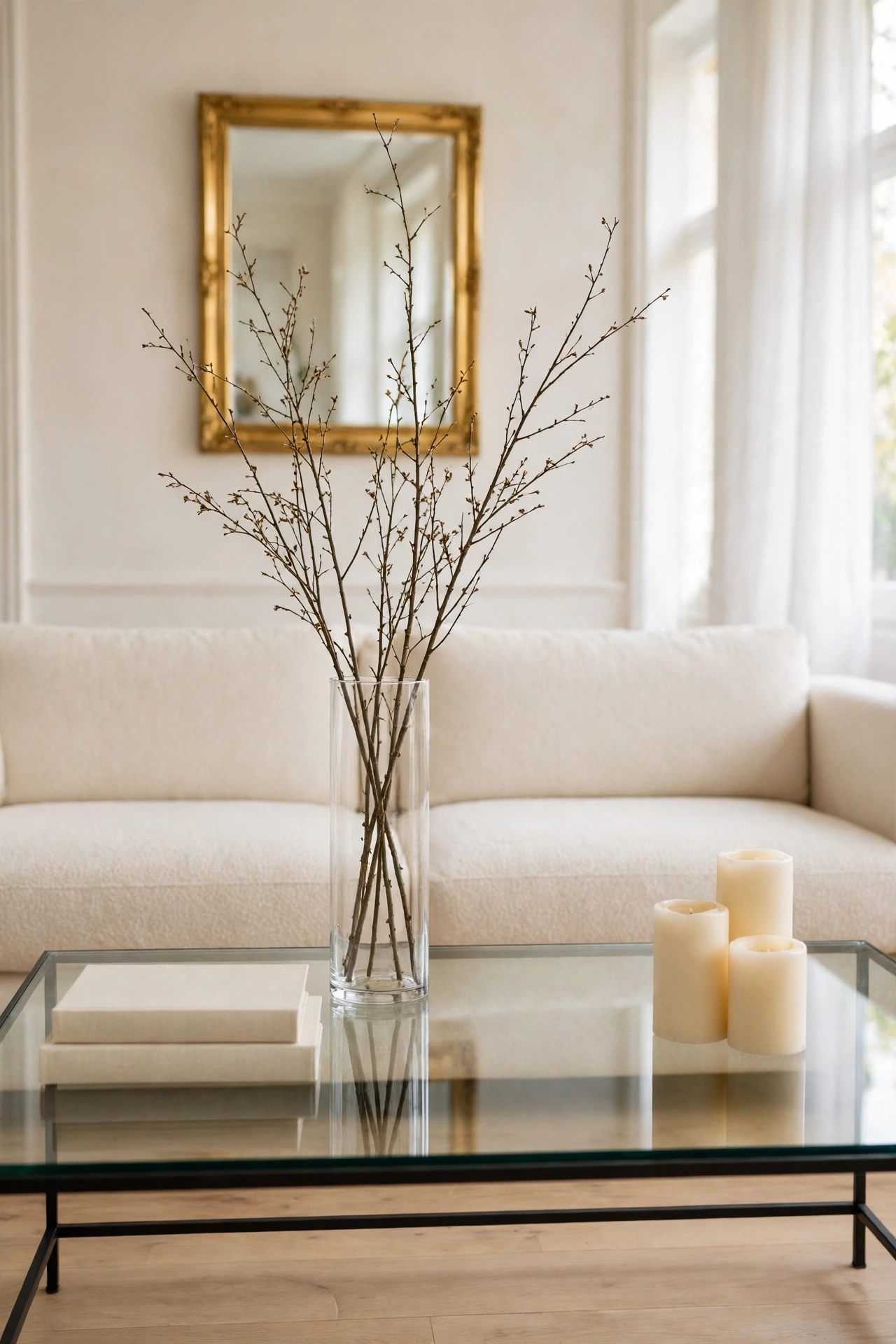
Every lasting coffee table arrangement is built from odd groups, and three is the number the eye loves most. Three groups, a stack, a vase, a candle cluster, or three objects within one group, give the table rhythm without symmetry’s stiffness. Even numbers look placed; odd numbers look composed.
How to do it: Divide the table into three zones by eye. Give each zone one job: something flat (books), something tall (a vase), something glowing or sculptural (candles or an object). Step back and check the triangle the three tops make, it should be uneven and interesting. Pro Tip: On a long table, three groups. On a small round table, one group of three objects. The rule scales, the count does not change. Common mistake: Three objects of the same height in a row. That is a shelf line, and it flattens the whole table.
2. Anchor Everything on One Low Tray
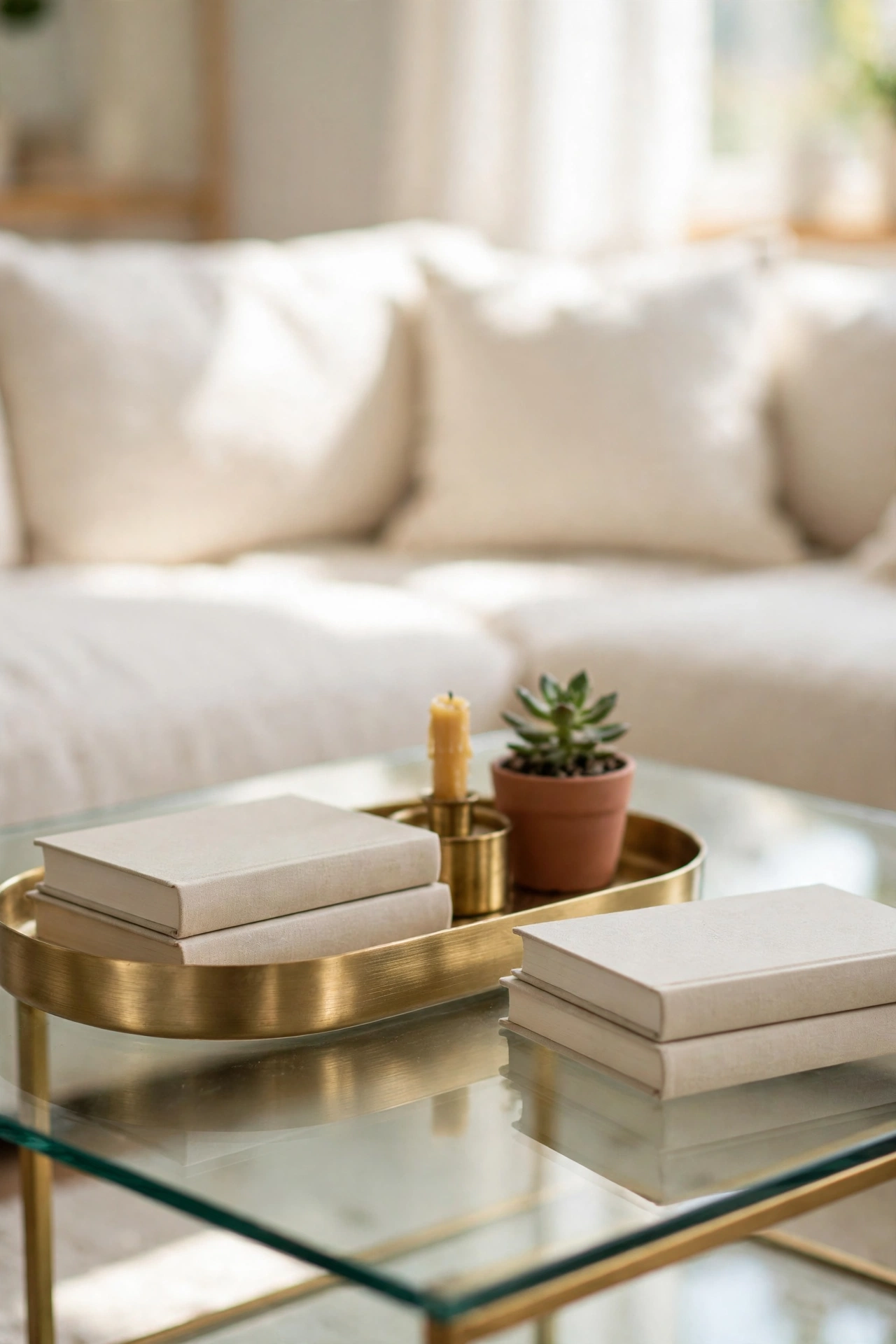
A tray turns scattered objects into one decision. It gives the styling a border, catches the candle wax and the water rings, and lets you lift the whole composition off in one move when the table is needed for games, feet, or a pizza night. Choose it in the room’s one metal finish or in warm wood or marble.
How to do it: Size the tray to hold your main group with margin to spare, roughly a third of the table’s length. Place it slightly off centre on long tables, truly centred on round ones. Keep everything inside its edges except one deliberate escapee, a book stack or a plant, for a relaxed edge. Pro Tip: A mirrored or marble tray does double duty at night, bouncing candlelight up into the room. Common mistake: A tray so small the objects hang off its edges. Crowding inside a border looks tighter than no border at all.
3. Stack Books Largest First
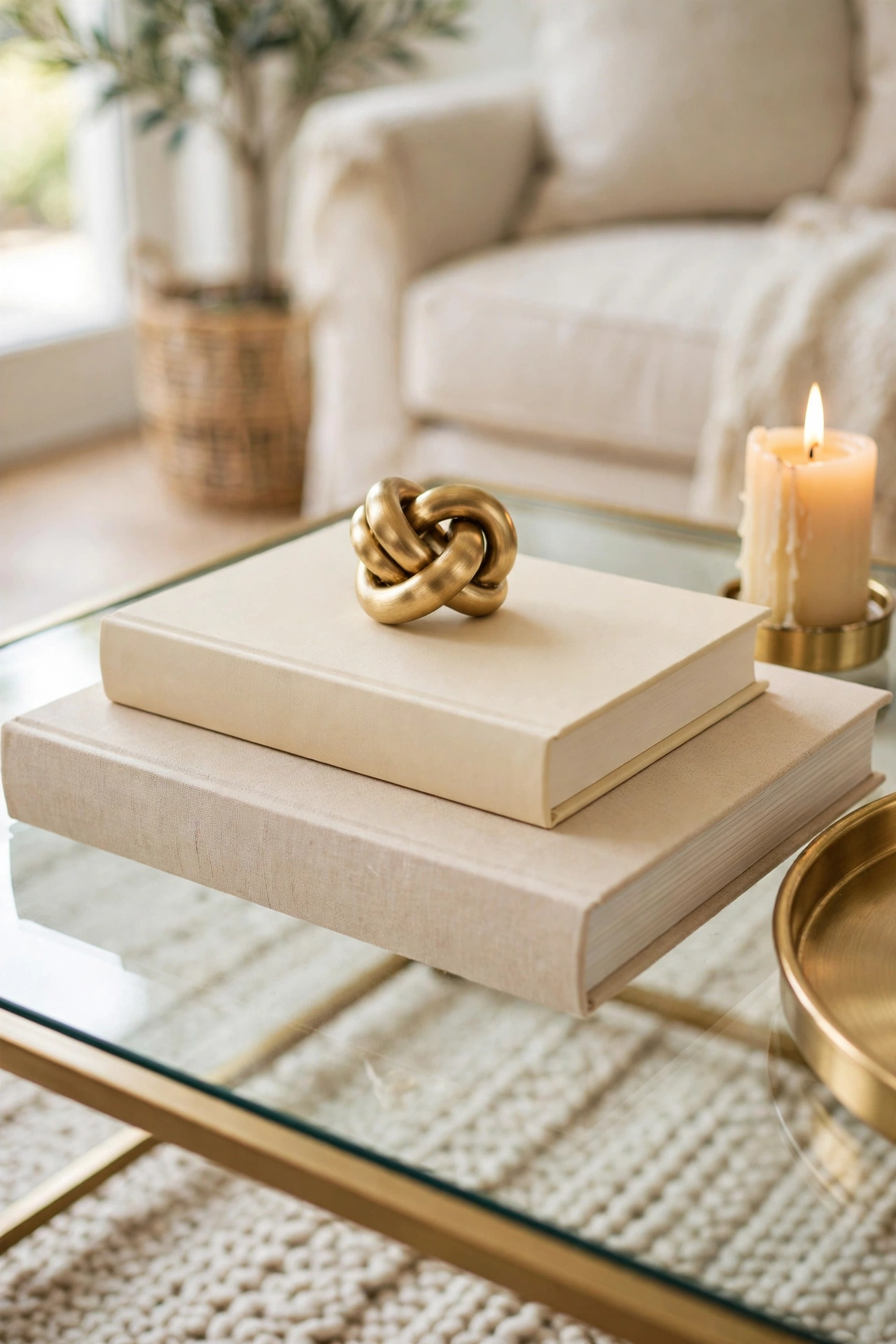
Book stacks are the stylist’s plinth: they give height to small objects, add the room’s colours in controlled doses, and signal the owner’s taste in one glance. The structure never changes, largest book at the bottom, two or three high at most, and something small and sculptural resting on top.
How to do it: Choose books with covers inside the room palette, cream, beige, soft gold, one deep tone allowed. Stack two, three only if the table is large, aligning the spines neatly or turning them for the quiet look. Finish with one object: a small gold knot, a stone, a tiny plant. Pro Tip: Wrap a loud covered book in plain linen paper. The stack keeps its height, the palette keeps its calm, and nobody misses the shouting cover. Common mistake: The leaning tower, five books high with nothing on top. It reads as a reading pile, not a composition.
4. Give the Table One Tall Moment
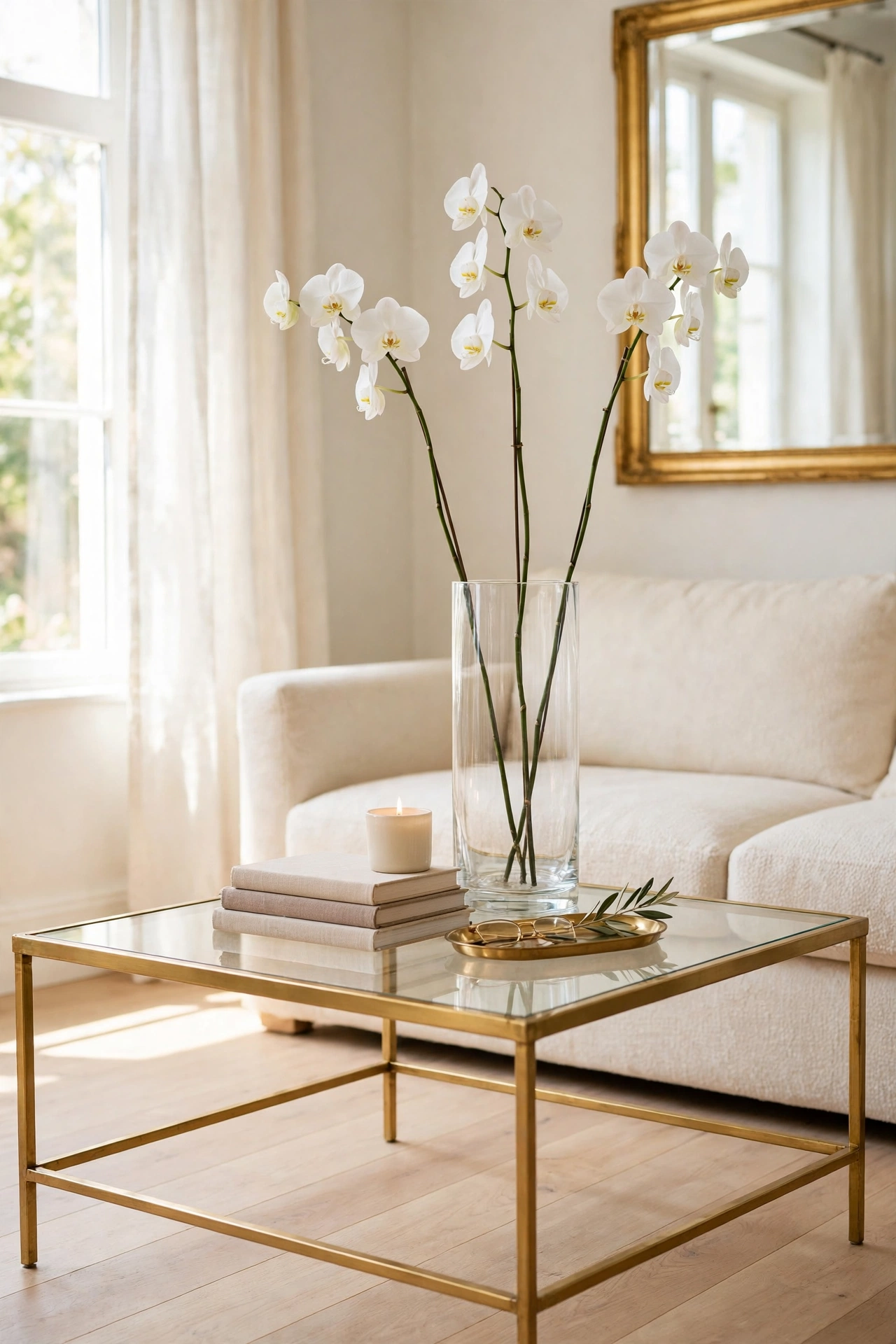
Height is what separates a styled table from a tidy one. One tall piece, a vase of branches, tall orchid stems, or pampas in a heavy vase, lifts the eye and gives the low table its vertical line. Everything else on the table stays below a hand’s height so the tall piece owns its role alone.
How to do it: Choose one vase with real weight so stems cannot tip it. Keep the arrangement airy, three to five stems with space between them, never a packed bouquet at table height. Place the tall piece at a back corner of the table’s composition, away from where arms reach across. Pro Tip: Bare branches cost nothing, last forever, and photograph like sculpture. A vase of branches in winter and blossom stems in spring keeps the tall moment seasonal for free. Common mistake: Two tall pieces competing. The eye bounces between them and the table feels restless.
5. Add One Sculptural Object
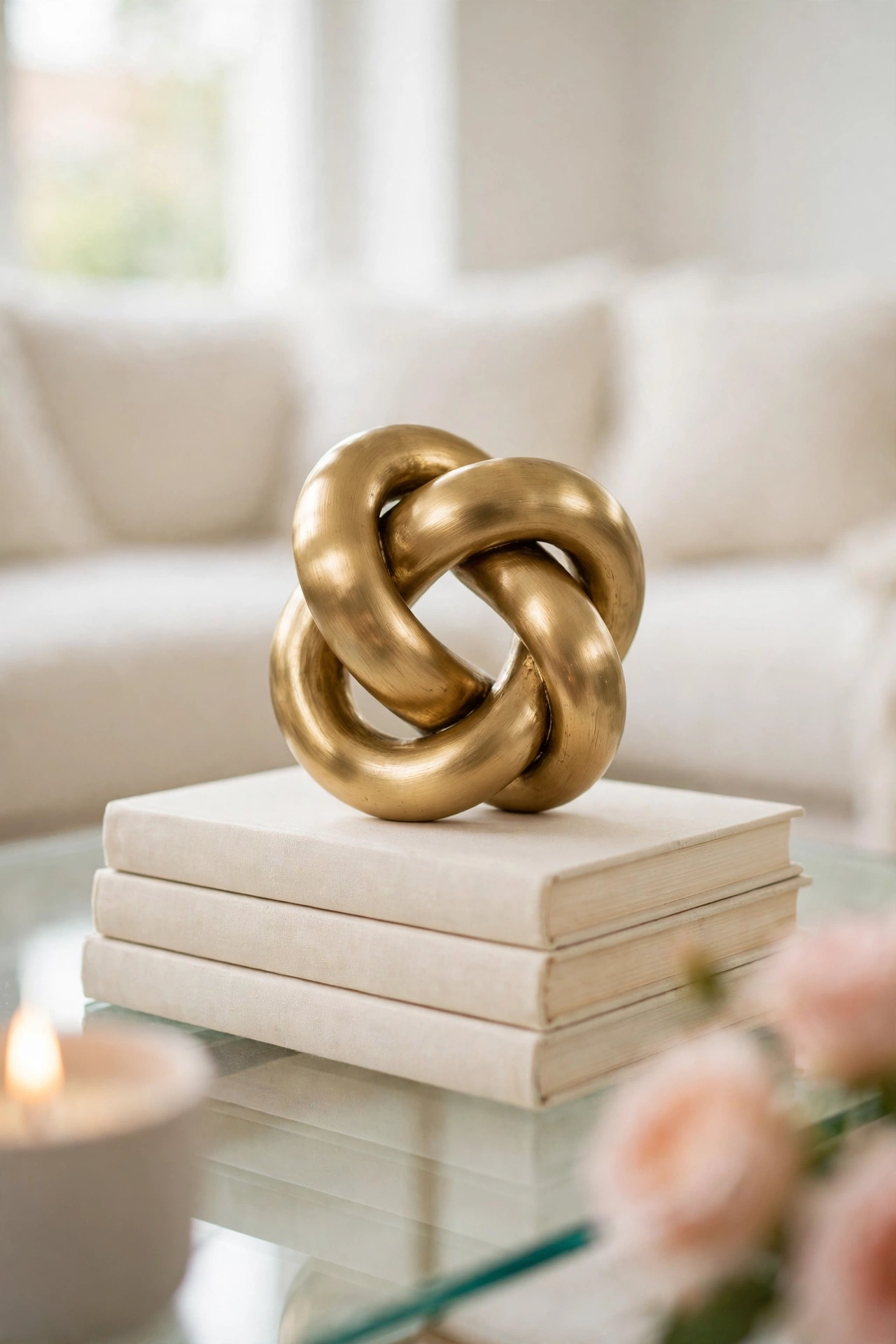
A sculptural object is the jewellery of the table: a gold knot, a marble sphere on a stand, a ceramic link chain, one piece with curves the eye can travel. It carries no function at all, which is exactly why it reads as art, and art is what lifts a table from arranged to styled.
How to do it: Choose one object in the room’s metal finish or in stone or ceramic. Give it the top of the book stack or its own clear zone, with empty space around it like a frame. Let its shape contrast the table: curves on a rectangular table, height on a flat one. Pro Tip: One beautiful object beats three small ornaments every time, and it is easier to dust around, which is the unglamorous reason styled homes stay styled. Common mistake: Souvenir scatter, many small treasures at once. Choose the best one for the table and give the rest a shelf.
6. Keep Fresh Flowers Low and Wide
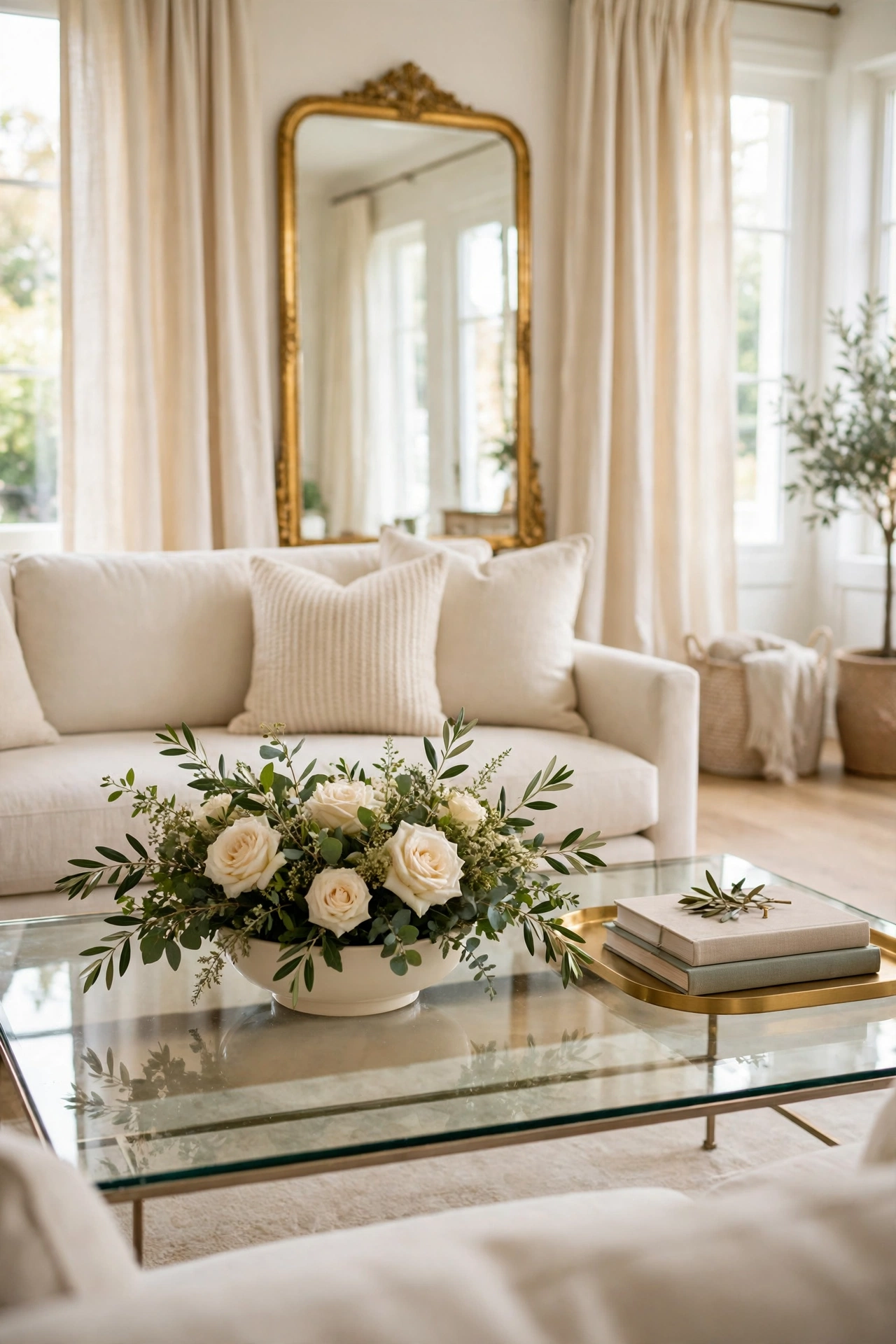
Flowers on a coffee table obey the conversation rule: guests must see each other over them. A low, wide arrangement in a bowl or a short vase gives the colour and life of fresh flowers without becoming a wall across the table. Cream and white blooms with greenery keep the glam palette calm.
How to do it: Choose a bowl or squat vase wider than it is tall. Cut stems short so heads sit just above the rim, a dome of blooms and leaves. One flower type in one colour reads most expensive; roses, hydrangea, or tulips in cream or blush. Pro Tip: A bowl of floating heads from a tired bouquet’s last days looks deliberate and lush, and stretches one bunch across the whole week. Common mistake: The tall supermarket bunch dropped in a tall vase mid table. It blocks faces, drips leaves, and cheapens the room in one move.
7. Cluster Candles at Different Heights
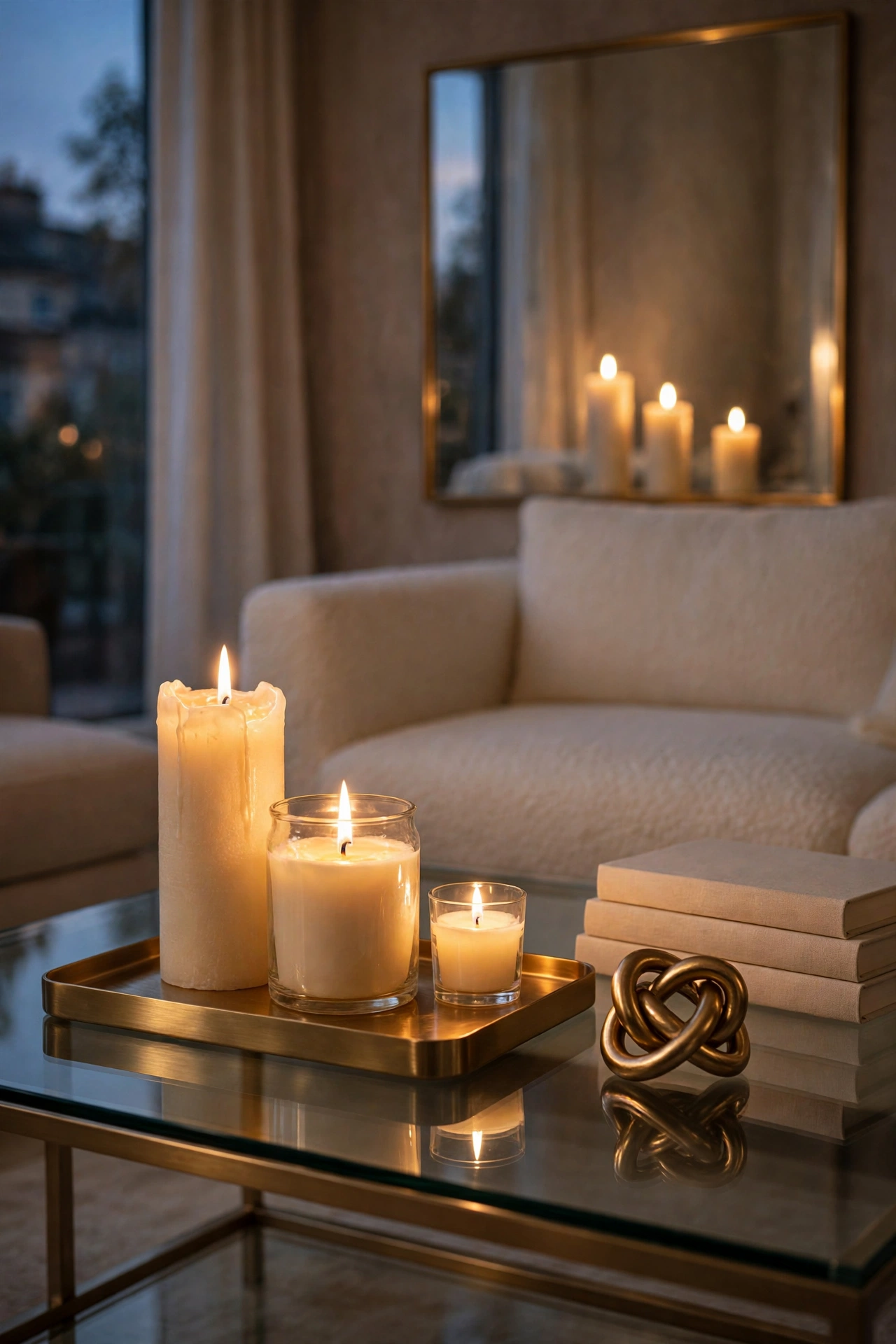
Candlelight is the cheapest luxury a table can hold, but one candle alone looks like a power cut. A cluster of three at different heights, on a tray or a small plate, creates the layered glow that makes every material on the table look richer: gold warms, glass sparkles, book covers glow.
How to do it: Group three candles, a pillar, a medium jar, a small votive, all in cream or white with holders in the room’s metal or glass. Keep the cluster inside the tray or on its own coaster plate to catch wax. Place it where its light crosses the sculptural object and the book stack. Pro Tip: Unscented at the table if food ever lands there; keep the scented candle for the side table, so dinner never tastes of vanilla. Common mistake: Candles of three different colours and scents from three different years. Unity is the whole trick, same colour family, same holder finish.
8. Bring One Small Plant for Life
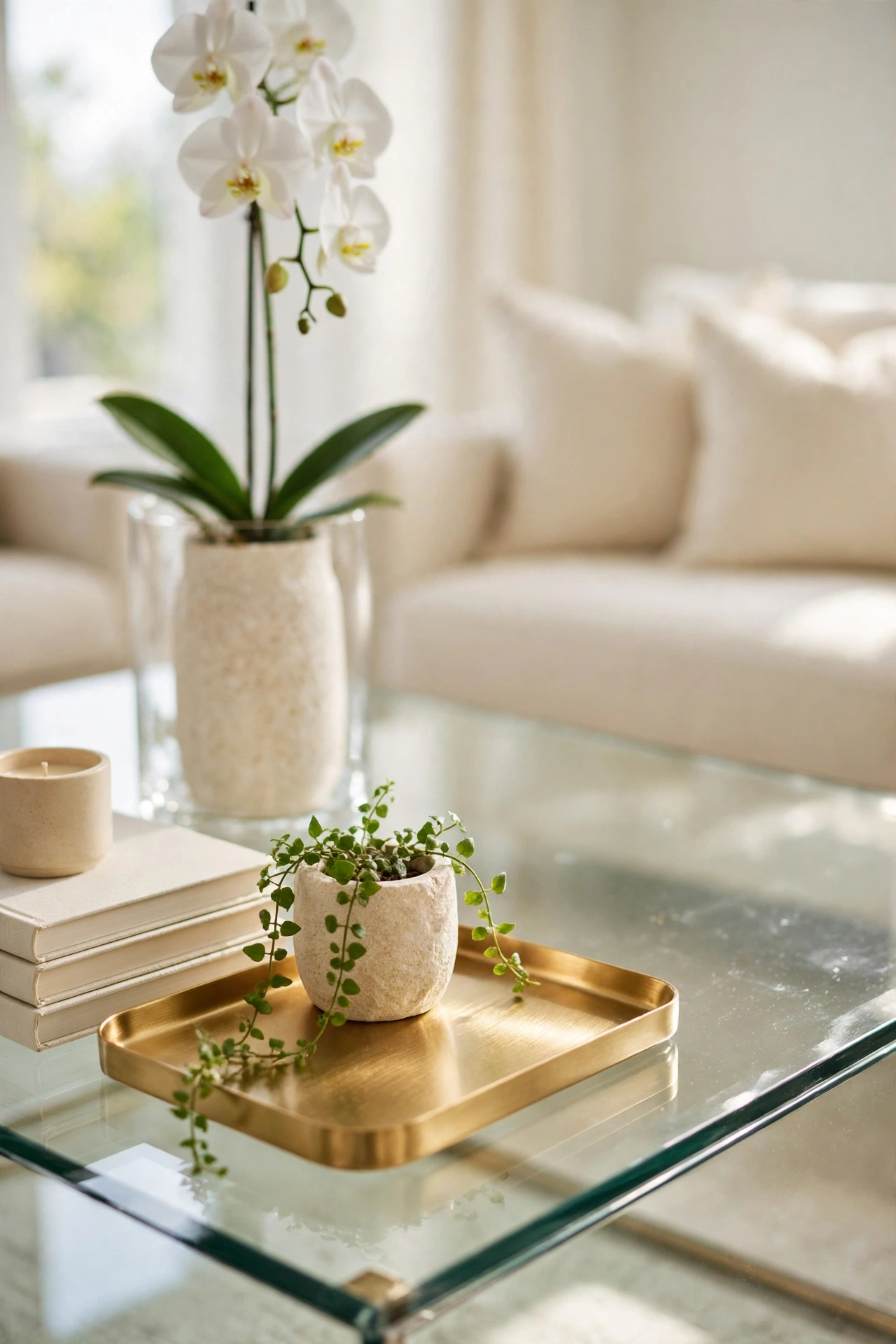
Every styled table needs one living thing that is not cut flowers, a small plant whose green connects the table to the room’s larger plants and keeps the composition from feeling like a shop display. A small trailing plant, a compact fern, or a tiny olive in a good pot does the job.
How to do it: Choose the pot as carefully as the plant: cream stone, woven texture, or the room’s metal, never the plastic nursery pot it came in. Keep the plant’s total height below the tall moment by half. Let a trailing type soften one edge of the tray or the book stack. Pro Tip: Rotate the table plant with one from a windowsill every week or two. Both stay healthy, and the table arrangement quietly changes, which is free restyling. Common mistake: A large plant centre table. It turns the table into a plant stand and steals the space every other idea needs.
9. Repeat the Room’s Finishes on the Table
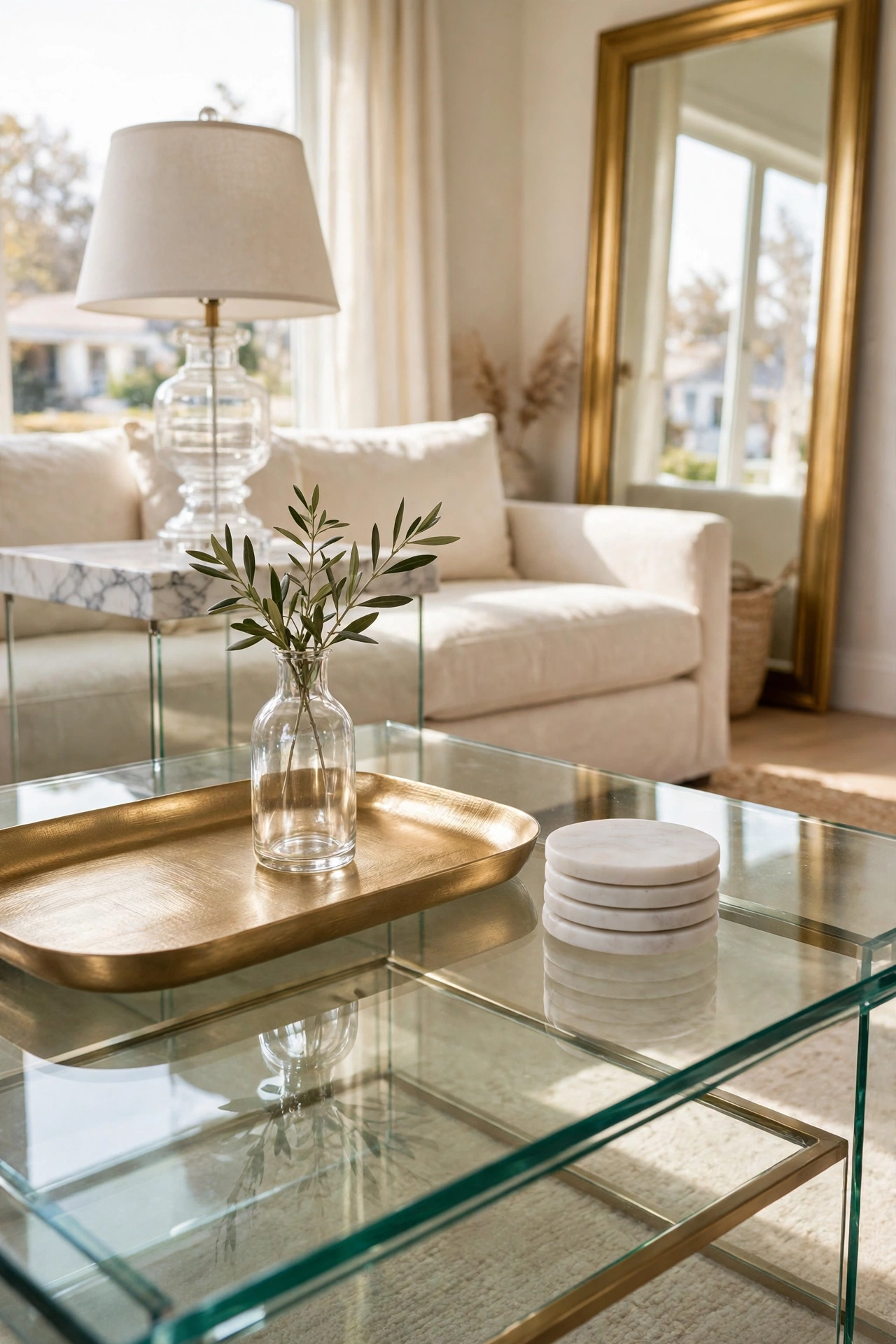
A coffee table looks styled when it quotes the room. The gold of the mirror frame returns in the tray, the marble of the side table returns in a coaster stack or a small bowl, the glass of the lamps returns in the vase. Three quiet quotations tie the centre of the room to its edges.
How to do it: List the room’s three main finishes, for this palette gold, glass, and stone or marble. Audit the table: each finish should appear once, in any role. Swap the odd one out item for one that quotes, rather than adding more objects. Pro Tip: This is the idea that stops random purchases. If a pretty object quotes nothing in the room, it belongs in another room, and the table stays calm. Common mistake: Introducing a brand new material only on the table, black plastic, bright chrome, rustic rope, where nothing else repeats it.
10. Hide the Remotes in a Decorative Box
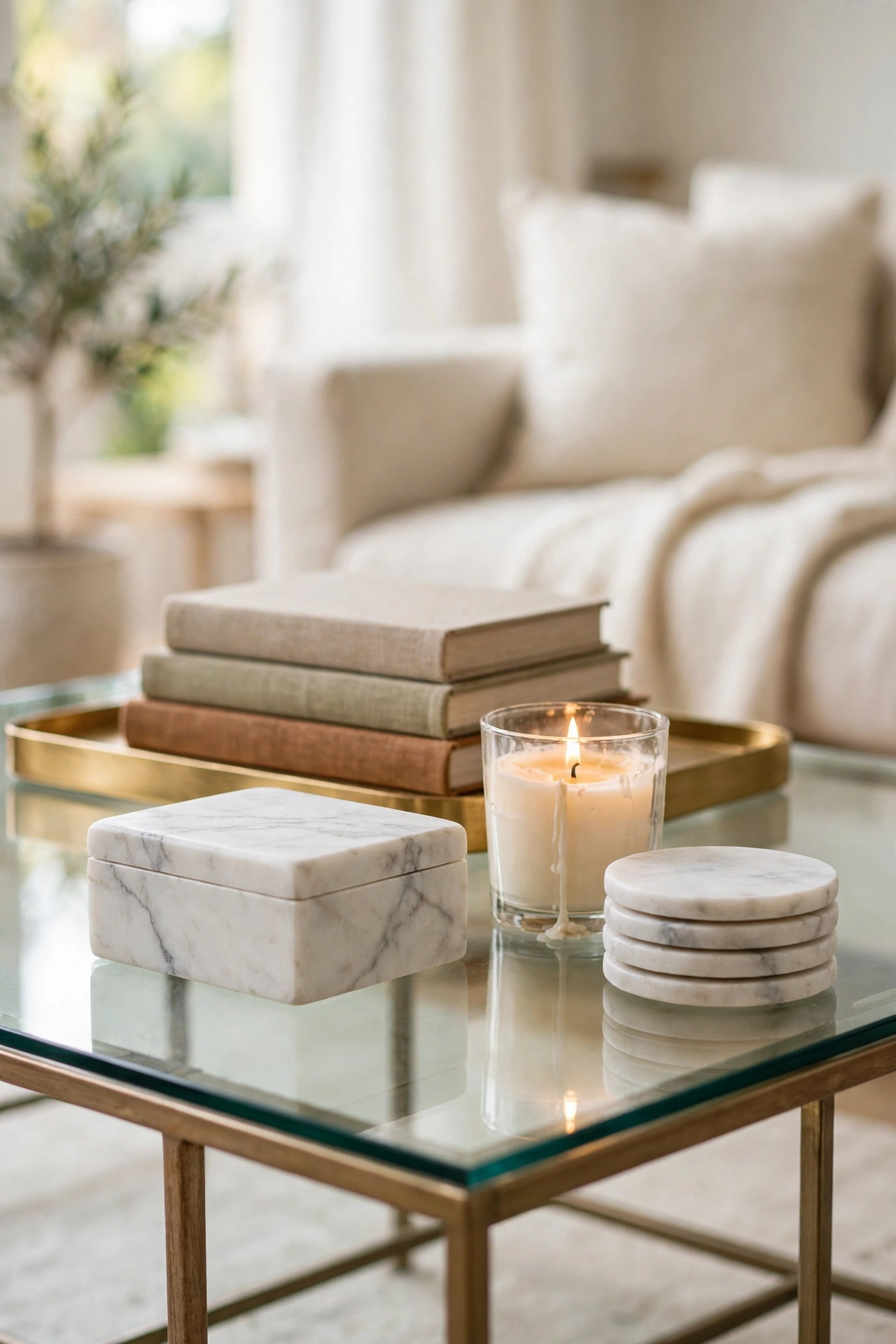
Real life lands on the coffee table: remotes, coasters in use, a phone charging. Styled homes do not banish real life, they box it. One lidded decorative box or a small covered basket swallows the remotes and chargers, and the table keeps its composition while staying honest to how the room is used.
How to do it: Choose a box with a lid in marble, woven texture, or the room’s metal, big enough for every remote with the lid fully closed. Give it a fixed home in the composition, usually the tray’s corner or opposite the book stack. Put a small coaster stack beside it so the in use items also have a planned place. Pro Tip: Run one charging cable into the box through a back gap if the style allows. Phones charge inside, the table surface stays clean, guests see a box, not a cable nest. Common mistake: The remote line up beside the sofa arm, four black rectangles in a row. It is the first thing the eye finds and the last thing a styled table allows.
11. Change One Element With the Seasons
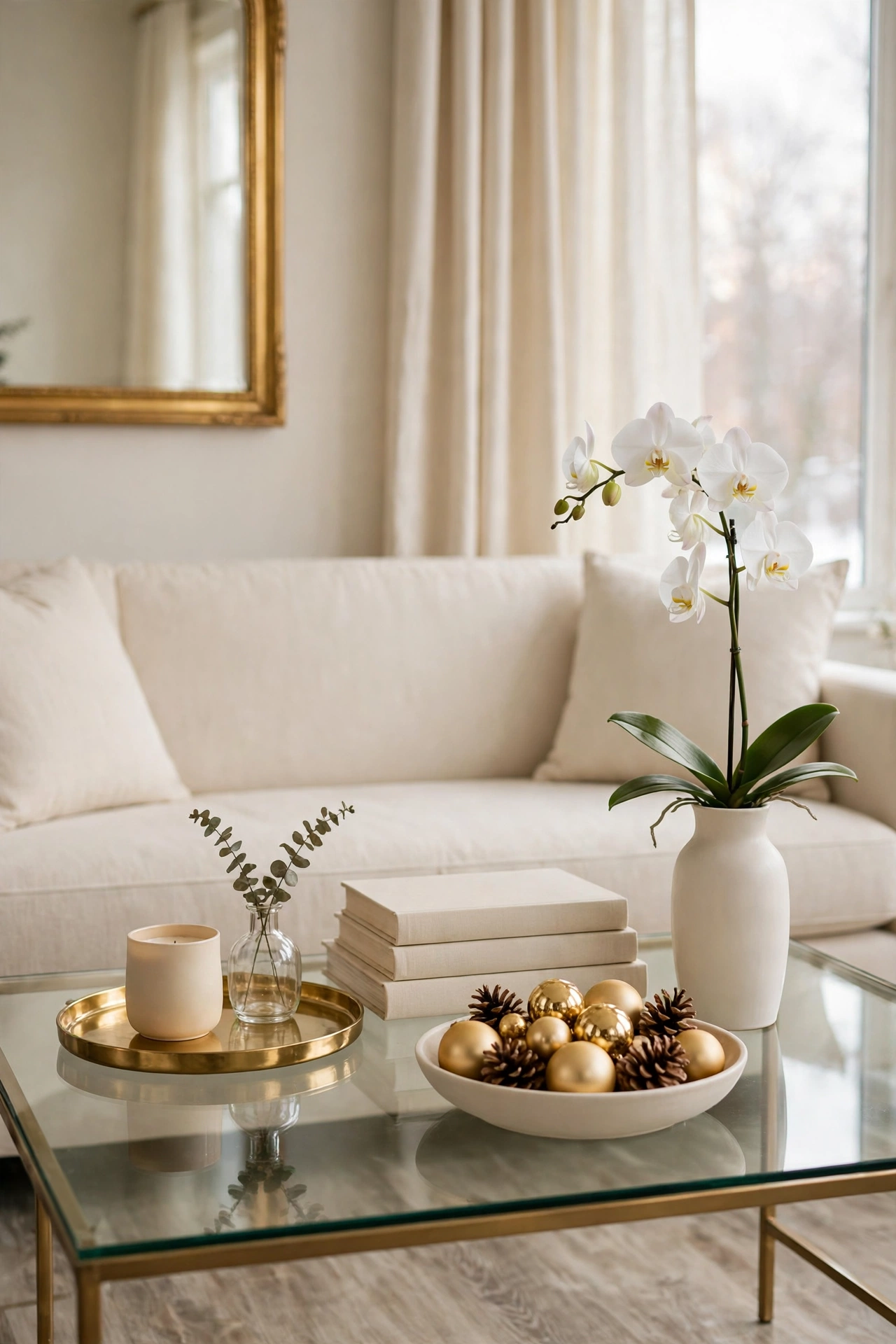
A styled table stays interesting because one element rotates with the year while the structure, tray, books, tall piece, holds steady. A bowl of pinecones and gold baubles in winter, shells in summer, a pumpkin toned candle in autumn, blossom stems in spring: one swap, five minutes, and the room feels newly decorated.
How to do it: Choose the bowl or the tall vase as your seasonal slot and change only it. Keep the seasonal item inside the room palette, gold and cream for winter, never novelty colours. Store each season’s piece in one labelled box so the swap stays a five minute pleasure, not a hunt. Pro Tip: Photograph each season’s version once. Next year the swap takes two minutes, copy the photograph, and the table improves slightly every year. Common mistake: A full seasonal takeover, themed cushions, throws, garlands, and table all at once. One element is styling; five is a shop window.
12. Match Book Covers to the Palette
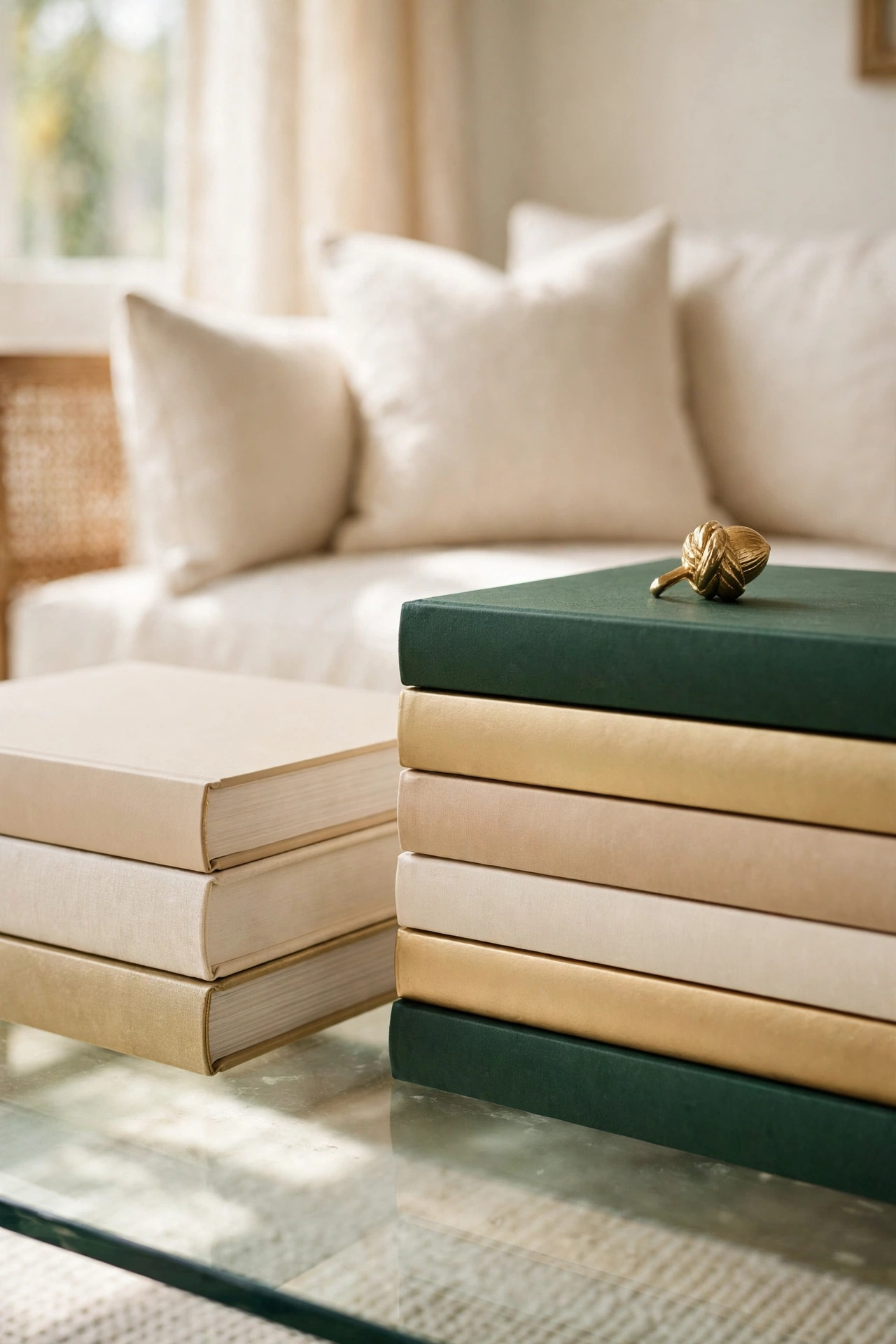
Books are the table’s largest flat colour blocks, and their covers argue or agree with the room at full volume. A stack chosen as a colour story, creams, warm beiges, one muted gold or deep green, becomes part of the palette. Random bright covers become noise the rest of the styling must fight.
How to do it: Shop your own shelves first: gather the large books whose covers sit inside the palette and rebuild the stack from them. Turn one book spine in or slip a plain cover over a favourite whose jacket shouts. Keep the table stack as the room’s books, and let bright jackets live on shelves. Pro Tip: Second hand art and garden books are the budget source of beautiful covers. Their muted jackets and large sizes are exactly what table stacks want. Common mistake: Fake decorative books with printed titles chosen only for looks. Real books with calm covers do the same job and survive a guest actually opening one.
13. Fill a Bowl With Natural Texture
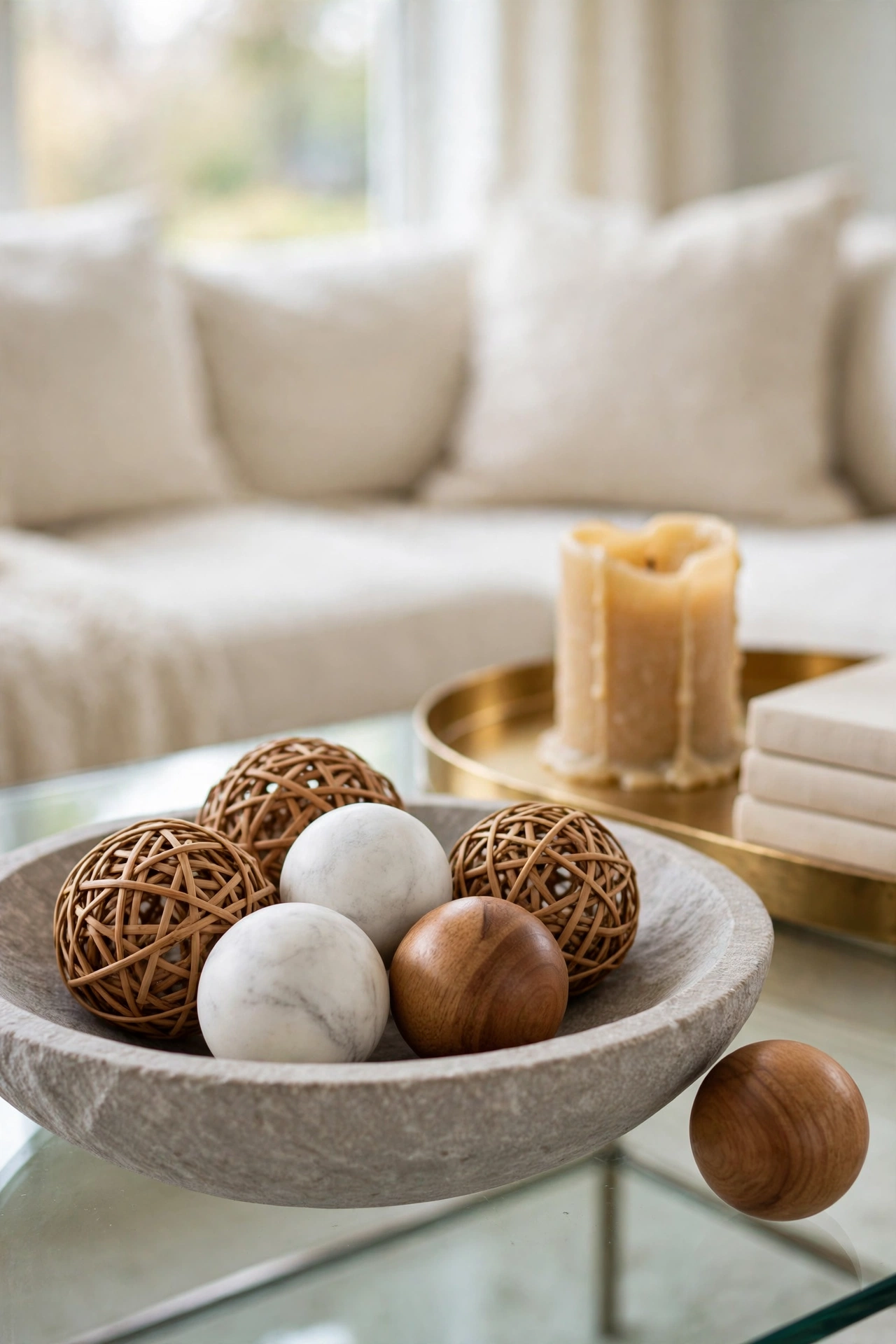
A shallow bowl of textured spheres, woven, marble, wood, ceramic, gives the table a resting place for the eye: no function, no message, just material and shadow. It is the quietest styling object there is, and it fills an awkward empty zone better than another book or candle ever could.
How to do it: Choose a bowl in stone, marble, or heavy ceramic, wide and low. Fill with an odd number of spheres, five or seven, in two or three natural materials that repeat the room. Let one sphere rest beside the bowl on the table for the styled, not stored, feeling. Pro Tip: In autumn swap two spheres for real pinecones or walnuts; in spring, for smooth pale stones. The bowl stays, the texture tells the season quietly, supporting Idea 11 without competing with it. Common mistake: A bowl of potpourri or plastic fruit. Both date instantly, and plastic shine breaks the natural material story of the whole table.
14. Leave Half the Table Empty
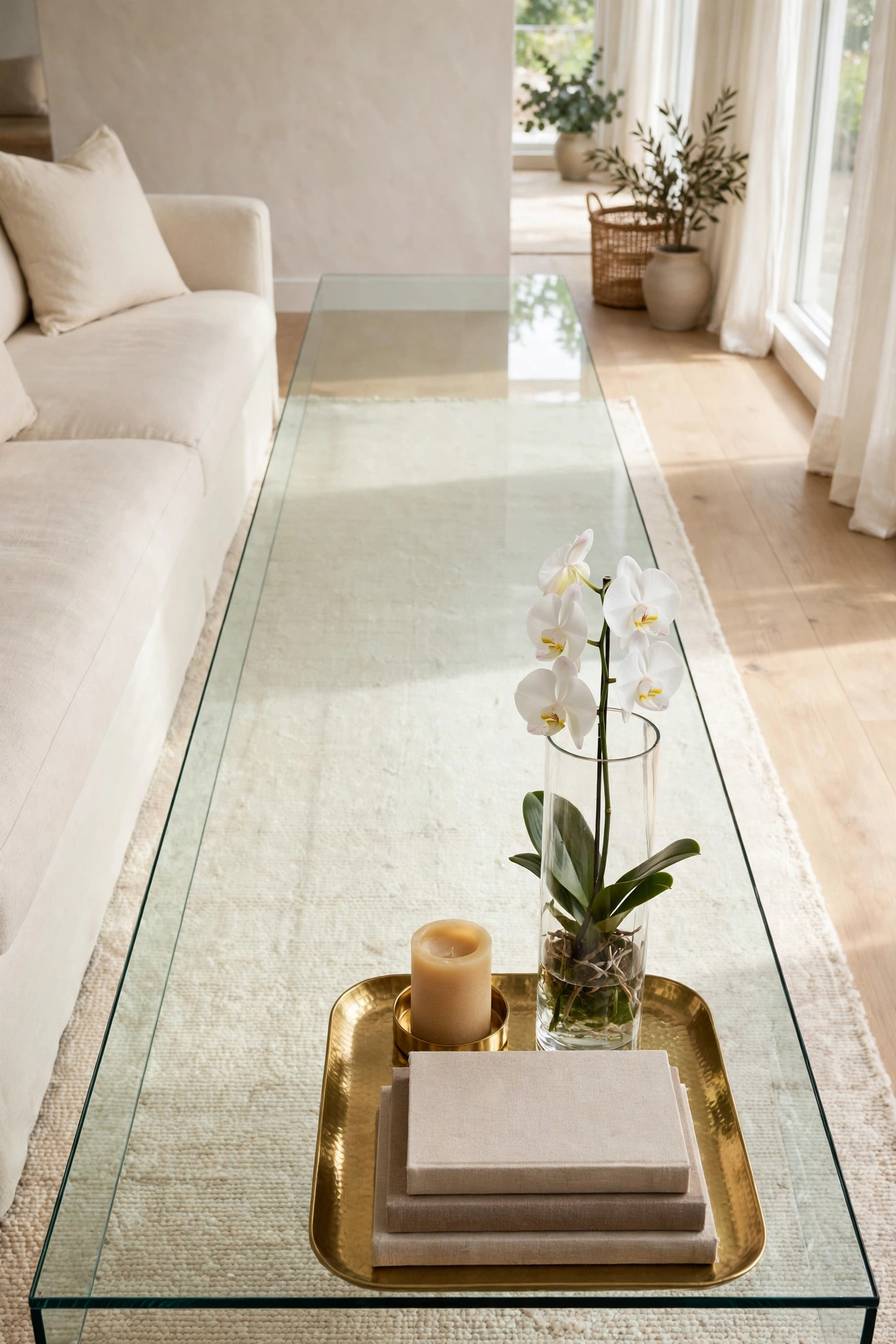
The bravest styling decision is the empty space. A composition gathered into half or two thirds of the table, with the rest left calm and bare, says the owner is confident, and it keeps the table usable: a mug, a laptop, a board game all have a home that does not destroy the styling.
How to do it: Slide the whole arrangement, tray, stack, tall piece, toward one end or corner of the table. Check that the empty zone is truly empty, no single orphan object drifting in it. Use the empty zone daily and return it to empty nightly, that rhythm is what keeps it beautiful. Pro Tip: On glass tables the empty zone does extra work, showing the rug through the glass and keeping the whole centre of the room feeling light. Common mistake: Spreading the same objects evenly across the whole table to fill it. Spread thin is the halfway look; gathered and confident is the styled one.
15. Style Coasters Like Decor
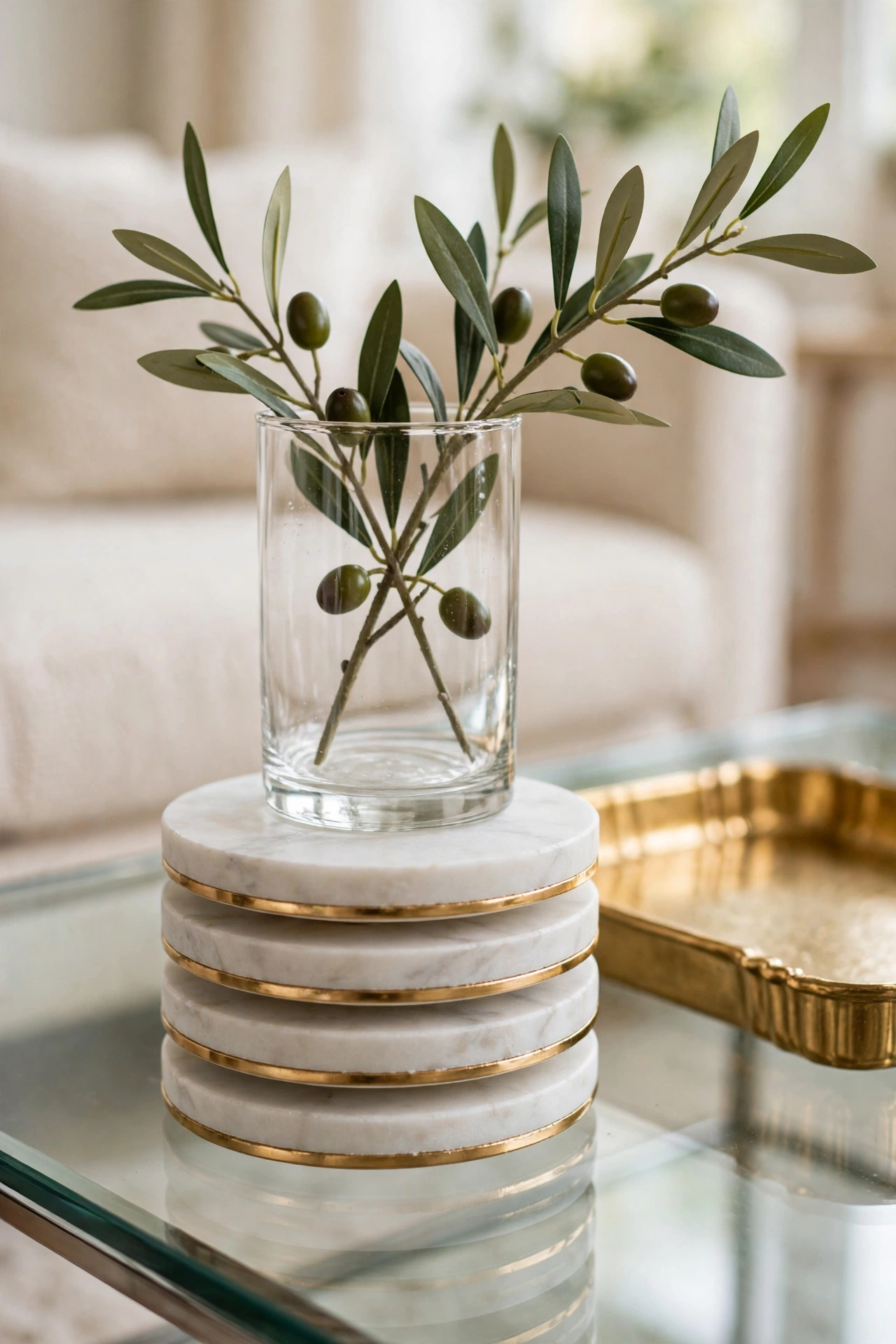
Coasters are the one table item every guest touches, so they are read as a quality signal up close. A neat stack of marble, stone, or gold edged coasters, placed as part of the composition rather than scattered in use positions, turns a practical object into a small piece of the styling.
How to do it: Choose four to six coasters in one material that quotes the room, marble for stone rooms, woven for relaxed ones, gold edged for glam. Stack them in one tidy pile inside or beside the tray. Replace the pile after use as part of the nightly reset, it takes ten seconds. Pro Tip: Keep one coaster permanently under the plant pot or the candle plate. It protects the table, looks planned, and anchors the group it sits under. Common mistake: The mixed coaster drawer emptied onto the table, cork, plastic, souvenir, and slate in one sad fan. One set, stacked, is the whole fix.
16. Shape the Styling to the Table
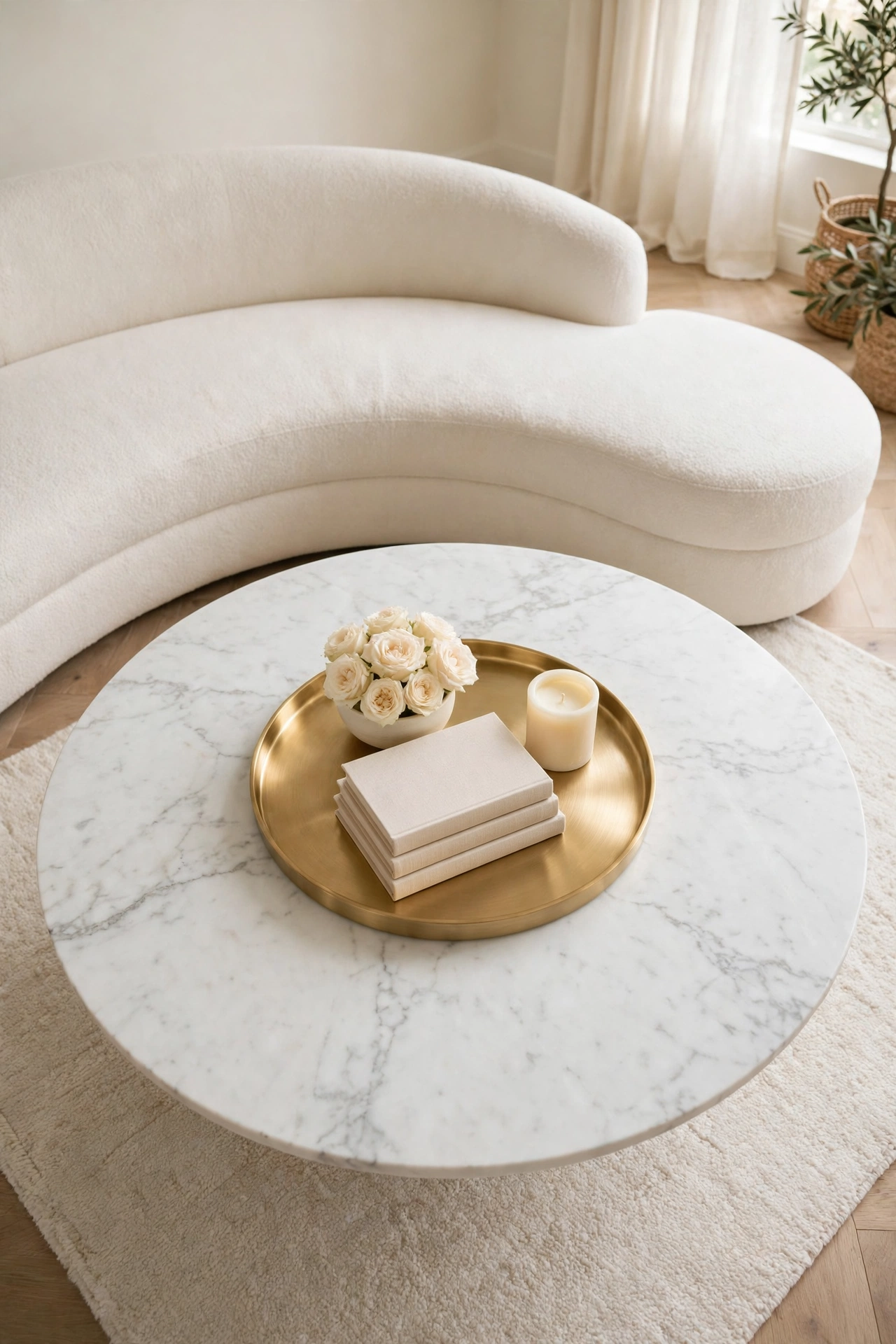
The same objects compose differently on every table shape. Round tables want one centred, round composition. Long rectangular tables want the three group journey of Idea 1. Square tables take a four zone grid with one zone left empty. Styling that respects the shape looks built in; styling that ignores it looks parked.
How to do it: Name your table’s shape and load its formula: round tray on round, long low tray or three groups on rectangular, grid on square, and a single diagonal line of two groups on an oval. Keep the composition’s own shape echoing the table’s, round on round, long on long. Pro Tip: A glass table doubles every decision, because the rug and floor join the composition from below. Check a glass table from standing height and from the sofa before calling it done. Common mistake: A long tray stranded across a round table, corners hanging over the curve. It fights the table in every photograph and from every seat.
17. Finish With the Photograph Test
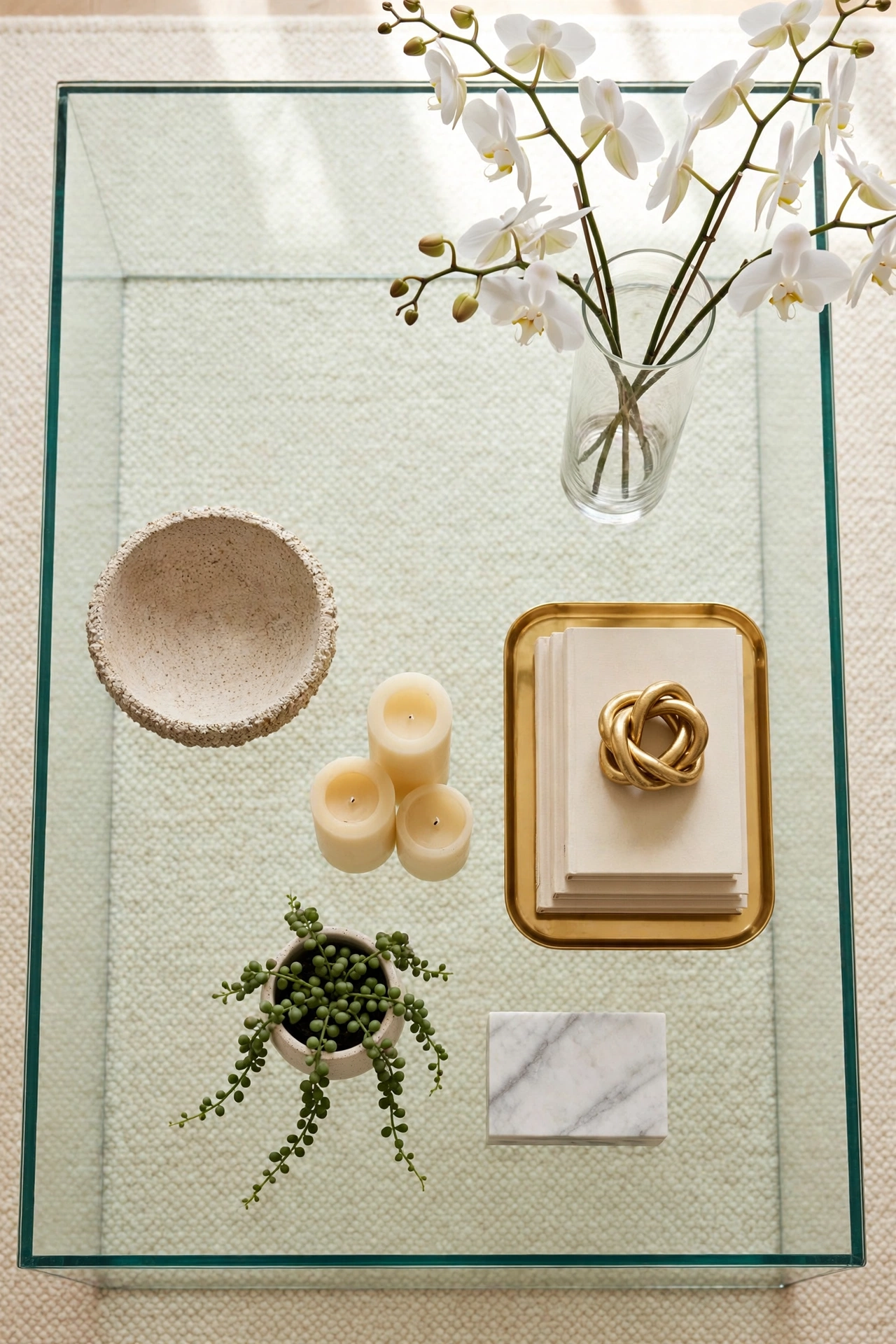
Stylists finish every table the same way: they photograph it. The camera finds what the fond eye forgives, the leaning stack, the label showing, the third candle drifting out of its group, the object too small to read. One photo from standing height and one from the sofa is the honest final check.
How to do it: Take two photographs, one standing over the table, one seated at sofa height. Fix the three things that jump out: usually one item too many, one height out of line, one object facing the wrong way. Remove rather than add when in doubt, styled tables are made by subtraction. Pro Tip: Save the finished photographs. They become the reset guide for the whole household, after parties, cleaners, and film nights, the table returns to its photograph in two minutes. Common mistake: Judging the table only from standing height. It is seen from the sofa ninety percent of its life, style it for the seated eye first.
Quick Reference Table
| Styling Idea | What It Adds | Key Rule |
|---|---|---|
| Rule of three | Rhythm | Odd groups, uneven heights |
| Low tray | One decision | Everything inside its edges |
| Book stack | Height and taste | Largest first, object on top |
| One tall vase | Vertical line | Only one tall piece |
| Sculptural object | Art | One piece, space around it |
| Low flowers | Life and colour | See faces over them |
| Candle cluster | Warm glow | Three heights, one colour family |
| Small plant | Living green | Half the tall piece height |
| Repeated finishes | Connection to room | Gold, glass, stone quoted once each |
| Remote box | Hidden function | Lid fully closed, fixed place |
| Seasonal swap | Freshness | One element only |
| Palette book covers | Colour calm | Covers inside the palette |
| Texture bowl | Quiet interest | Odd number of natural spheres |
| Half empty | Confidence and use | Gather, do not spread |
| Styled coasters | Quality signal | One set, stacked |
| Shape fit | Built in feeling | Composition echoes table shape |
| Photograph test | Honest finish | Two photos, remove not add |
The Styled Table Checklist
- Three groups or one group of three
- One tray anchoring the main group
- Books largest first with an object on top
- Exactly one tall piece
- One sculptural object with space around it
- Flowers low enough to see over
- Candles clustered at three heights
- One small plant in a proper pot
- Gold, glass, and stone each quoted once
- Remotes hidden in a lidded box
- One seasonal element, changed on time
- Book covers inside the palette
- Texture bowl with odd natural spheres
- Half the surface left empty
- Coasters stacked as one set
- Composition shaped to the table
- Photograph test passed from the sofa
Frequently Asked Questions
How many objects should be on a coffee table?
Fewer than instinct says: three groups, or one group of three, plus the practical box and coasters, is a full table. The exact count matters less than the empty space, at least a third of the surface should stay bare, and every object should belong to a group, a finish, or a function. If everything passes those tests, the count is right.
What if my coffee table is very small?
Use the small table formula from Idea 1 and Idea 16: one small tray holding three things, a tiny book stack, a candle, a small plant, and nothing else. Small tables fail by attempting the full system at miniature scale. One confident group, plus bare surface, styles a small table completely.
How do I keep the table styled with kids or pets?
Anchor everything heavier and lower: a low tray, a heavy vase for the tall moment placed at the table’s far corner, books as the main mass, and the remote box for everything grabbable. Move the single fragile sculptural object to a shelf for this season of life. The structure of the styling stays; only the breakables relocate.
Conclusion
A beautifully styled coffee table is a small system, not a shopping spree: three groups anchored on a tray, one tall vase, one sculptural piece, candles at three heights, living green kept low, the room’s finishes quoted, real life boxed, one seasonal swap, and half the surface calmly empty. Build it once, photograph it, and reset to the photograph each night. The centre of the room will hold its composition every day, not only on the day you styled it.