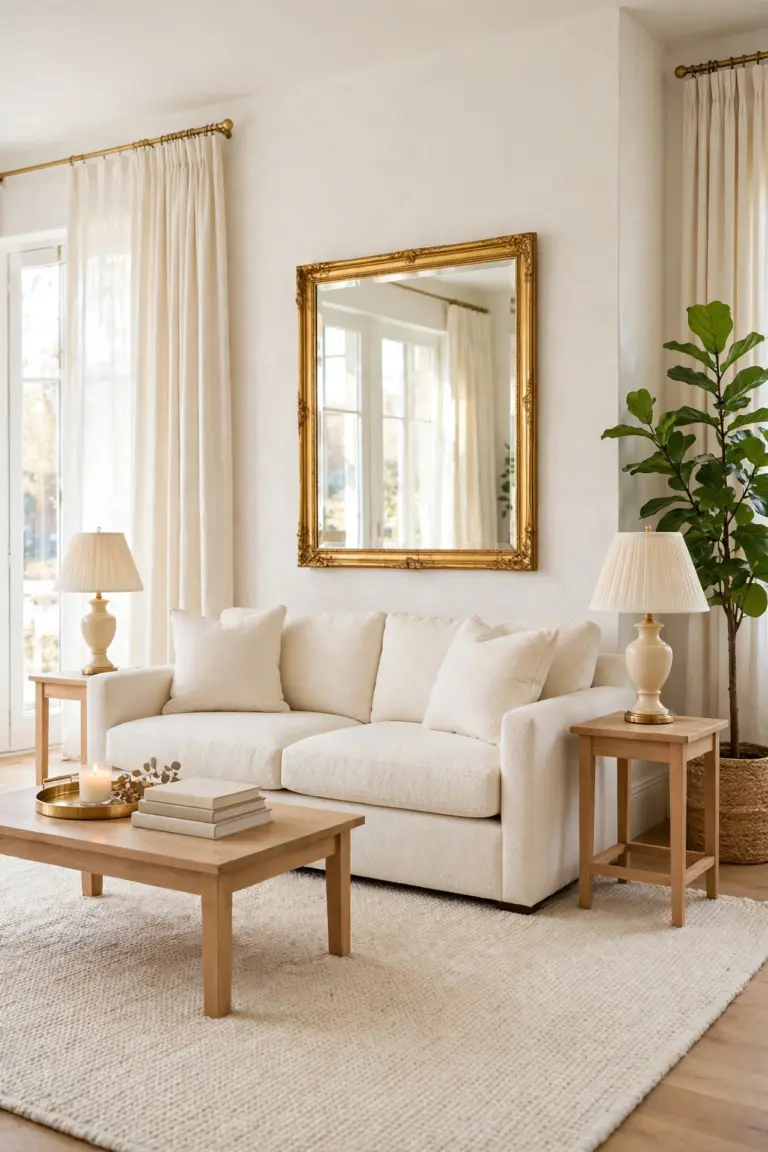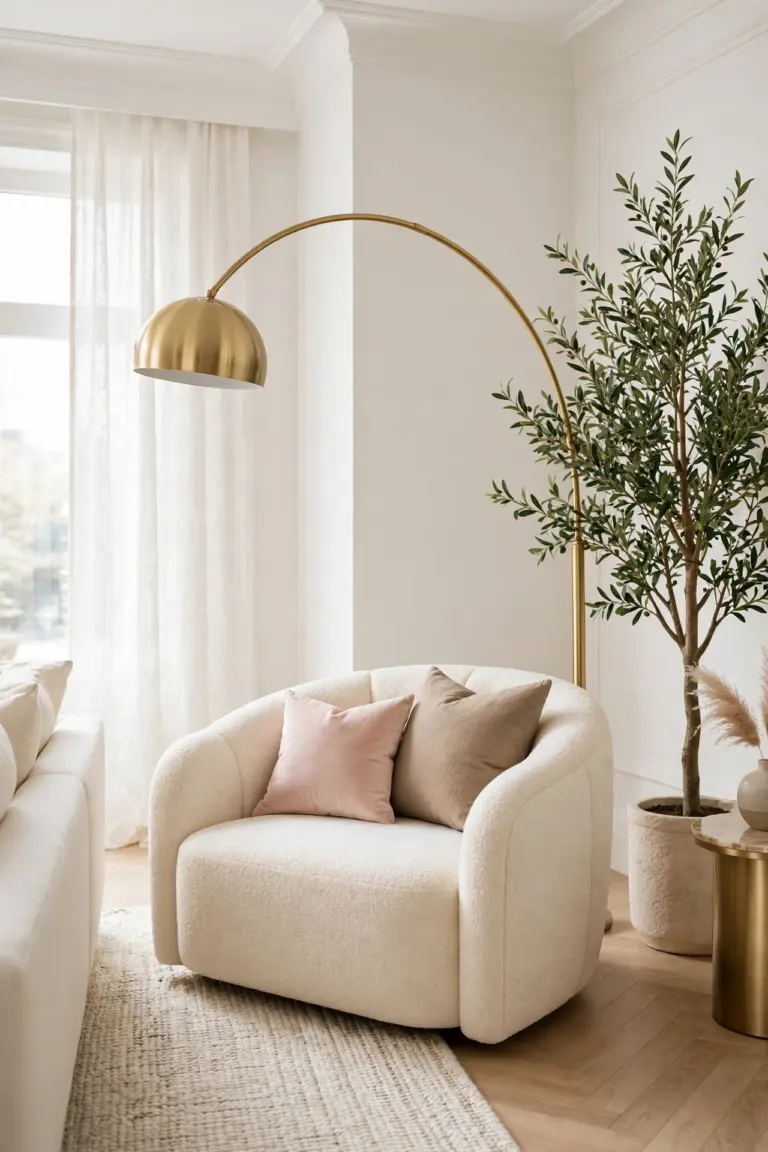
13 Neutral Sofa Styling Ideas That Look Designer-Approved
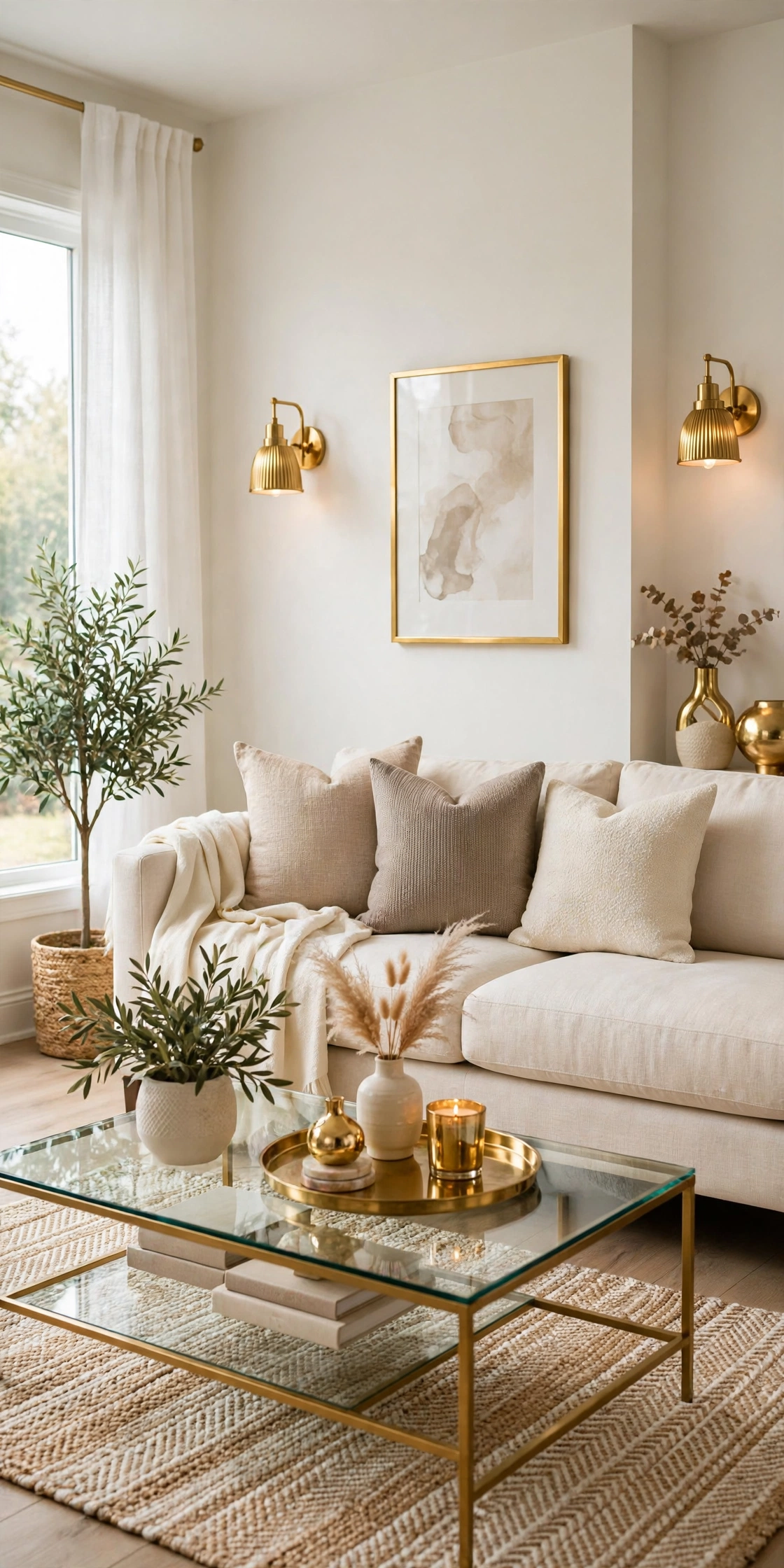
13 Neutral Sofa Styling Ideas That Look Designer-Approved
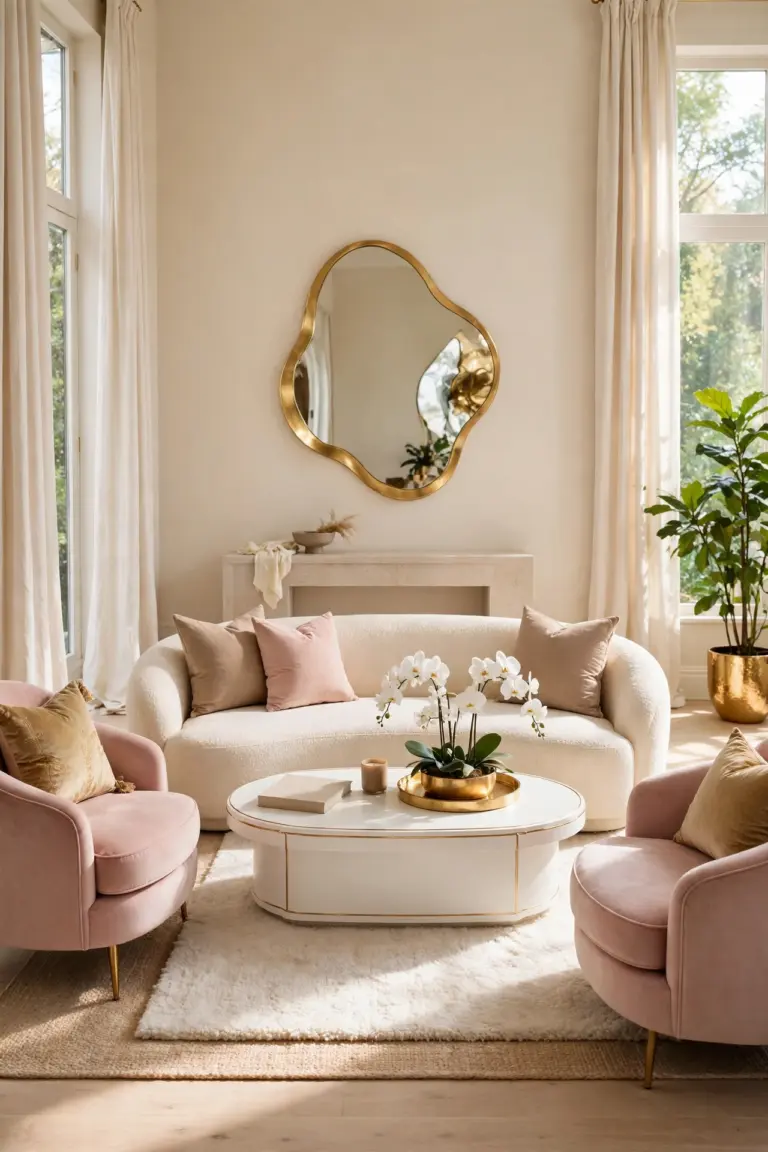
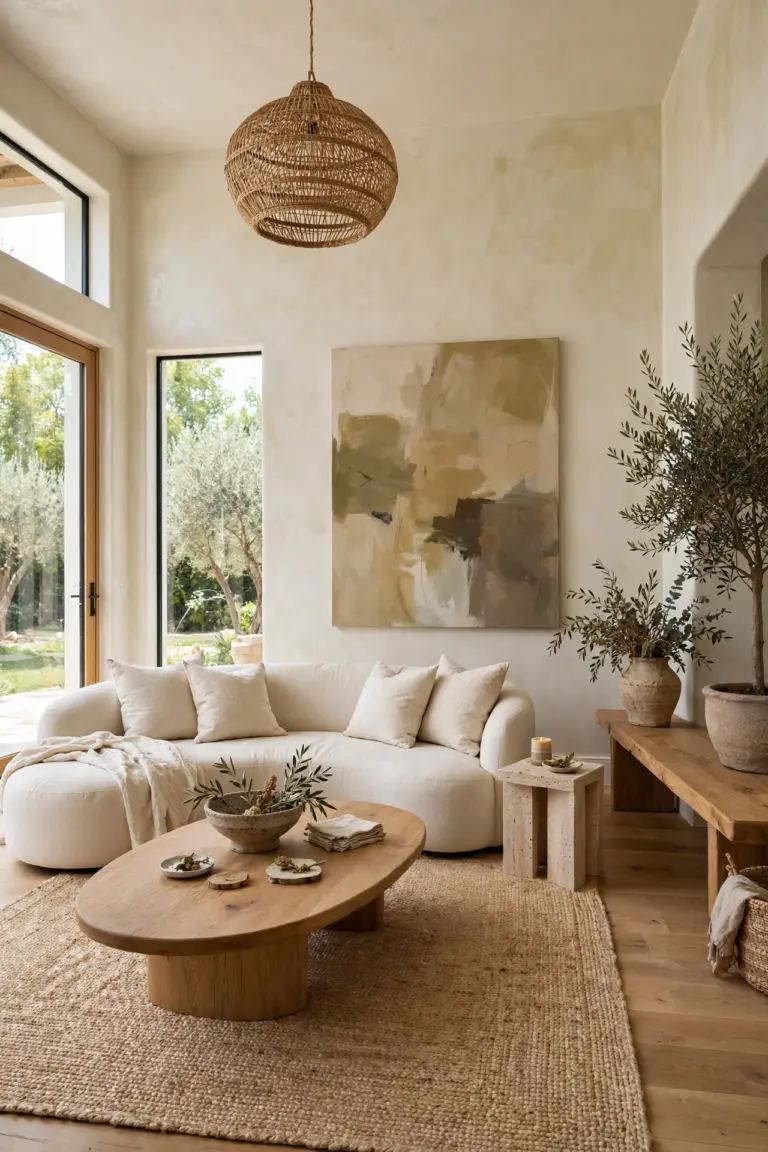
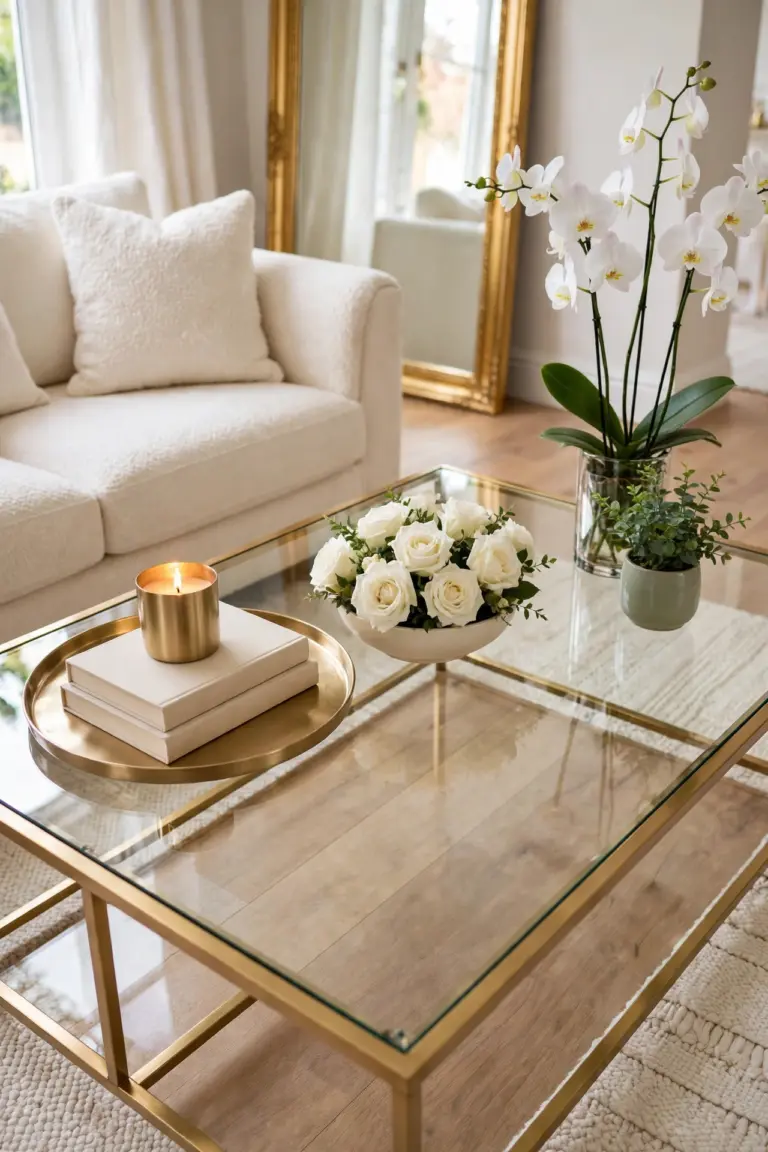
A neutral sofa is the hardest sofa to style well, because there is no colour to hide behind. When every cushion is beige, the difference between designer-approved and flat is not money, it is structure: how many cushions, which sizes, which textures, and where the throw actually lands. Designers treat a sofa like a small composition with a clear front, a clear back, and one quiet moment of contrast, and they leave enough of the sofa itself visible that it still looks like somewhere to sit.
These thirteen ideas work on one neutral sofa in one calm glam palette, cream, warm white, beige, taupe, soft grey, with gold, glass and a little green. They move from the base colour to cushions, texture, pattern, the throw, the floor around the sofa, and the daily reset that keeps it looking styled after real life has sat on it.
1. Let One Neutral Be the Boss
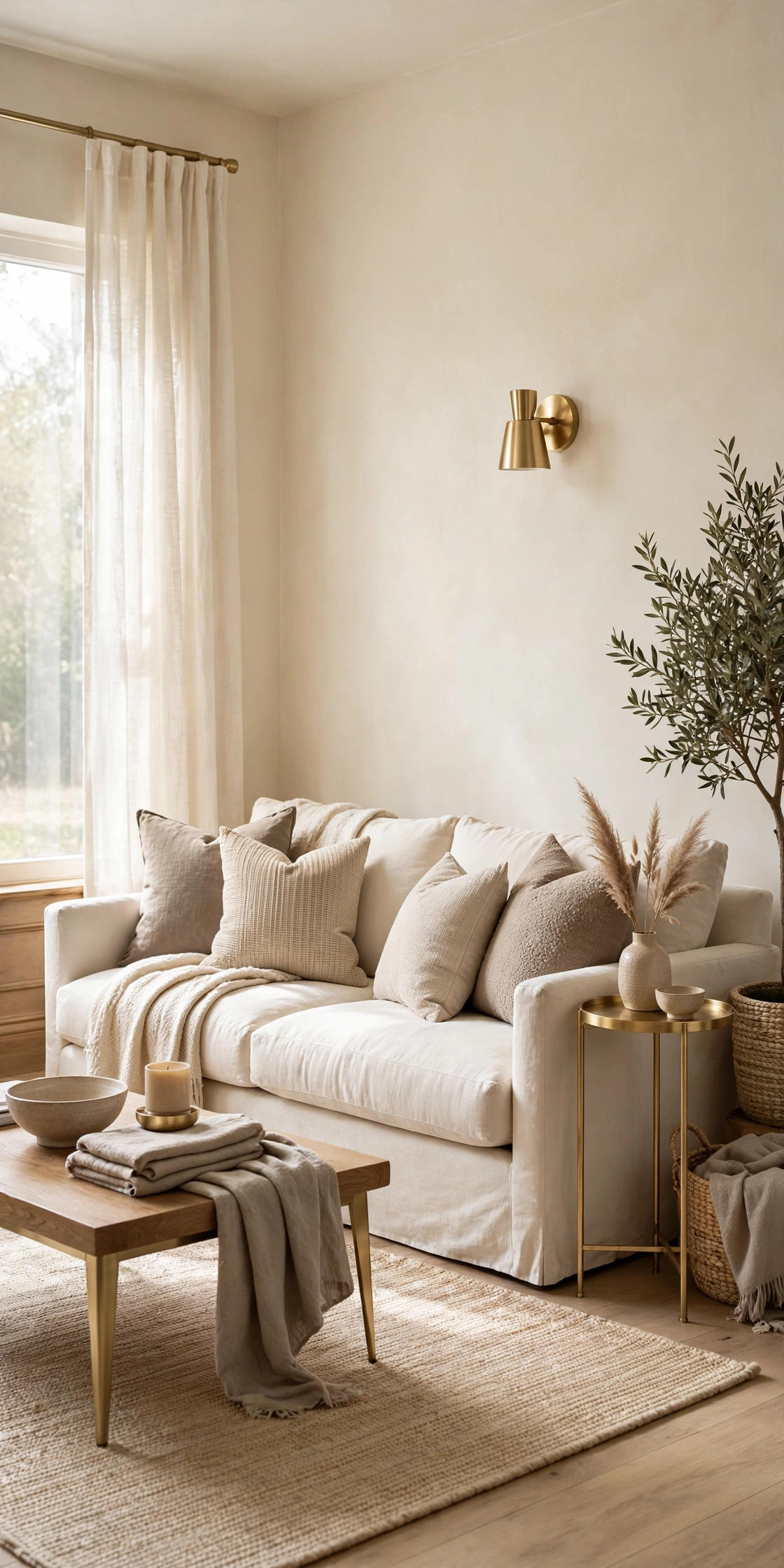
A sofa looks designer-approved when one neutral clearly leads and the others support it. If the sofa is cream, cream is the boss, and beige, taupe and soft grey are the supporting cast. When three neutrals fight at equal strength, the eye finds no resting place and the whole arrangement looks like a pile of samples.
How to do it: Name the sofa’s own colour first, then pick cushions one shade lighter and one shade darker than it, plus one warm mid-tone. Keep every other large item in the room, rug, curtains, throw, inside that same family. Pro Tip: Photograph the sofa in daylight and look at the photo, not the room. The boss colour is the one your eye lands on first; if nothing leads, remove the loudest cushion. Common mistake: Buying a “neutral set” of five cushions in five unrelated beiges. A set is not a palette, and unrelated beiges clash quietly but constantly.
2. Use an Odd Cushion Count
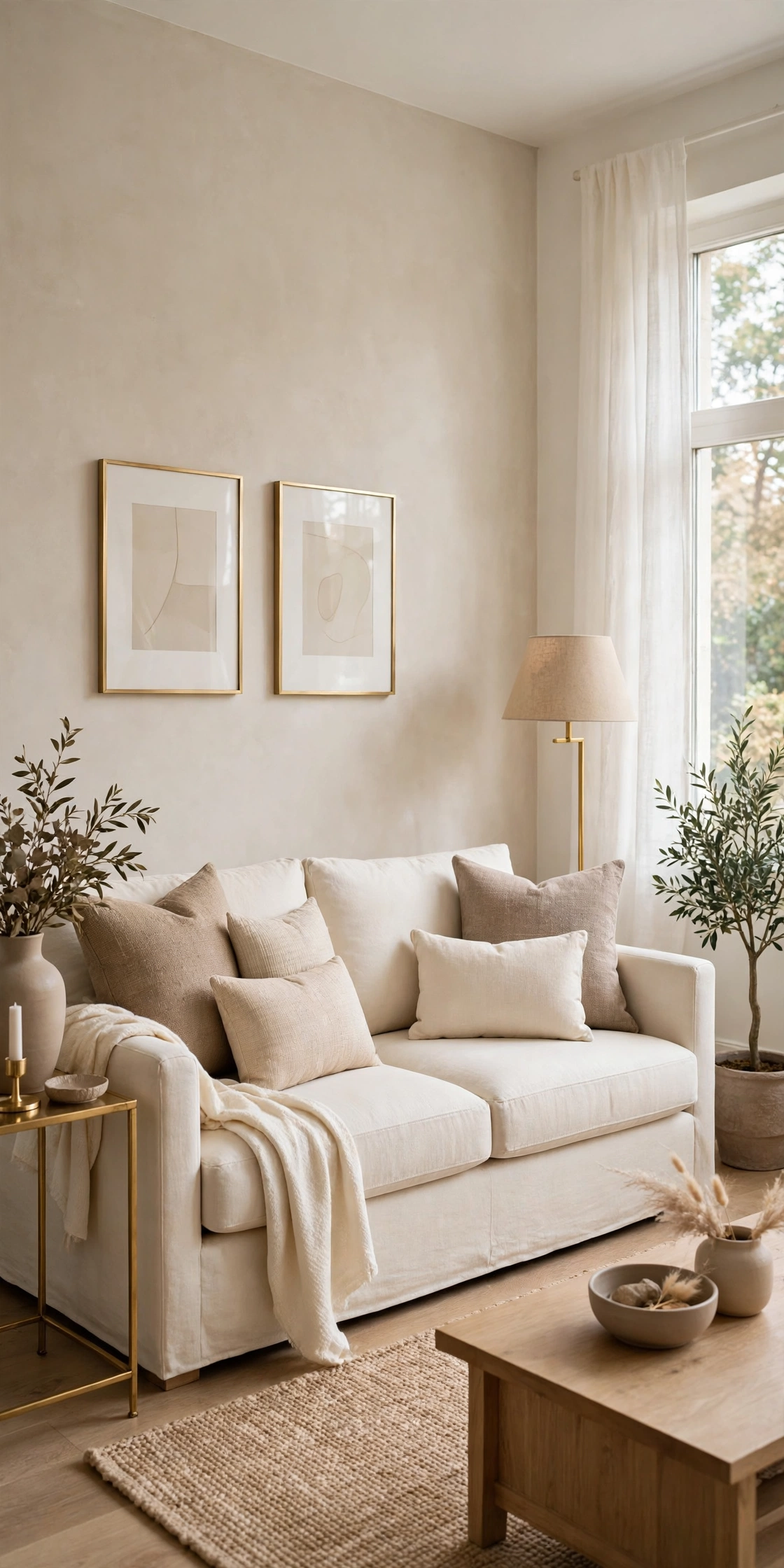
Pairs look tidy and a little stiff, like a hotel bed. Odd counts look composed, because the eye keeps moving instead of stopping at a mirror image. Three cushions suit a two-seater, five suit a standard three-seater, and seven only suit a very long sofa.
How to do it: For a three-seater, place three cushions on one side and two on the other, or two, two and one lumbar in the centre. Step back and check that the two sides are balanced in weight, not identical in layout. Pro Tip: If the sofa already came with two matching cushions, add one different cushion, a lumbar in a new texture, rather than buying a whole new set. One change breaks the pair. Common mistake: Six matching cushions in perfect pairs. It reads as a showroom, and it leaves nowhere comfortable to lean.
3. Layer Tones, Never One Flat Beige
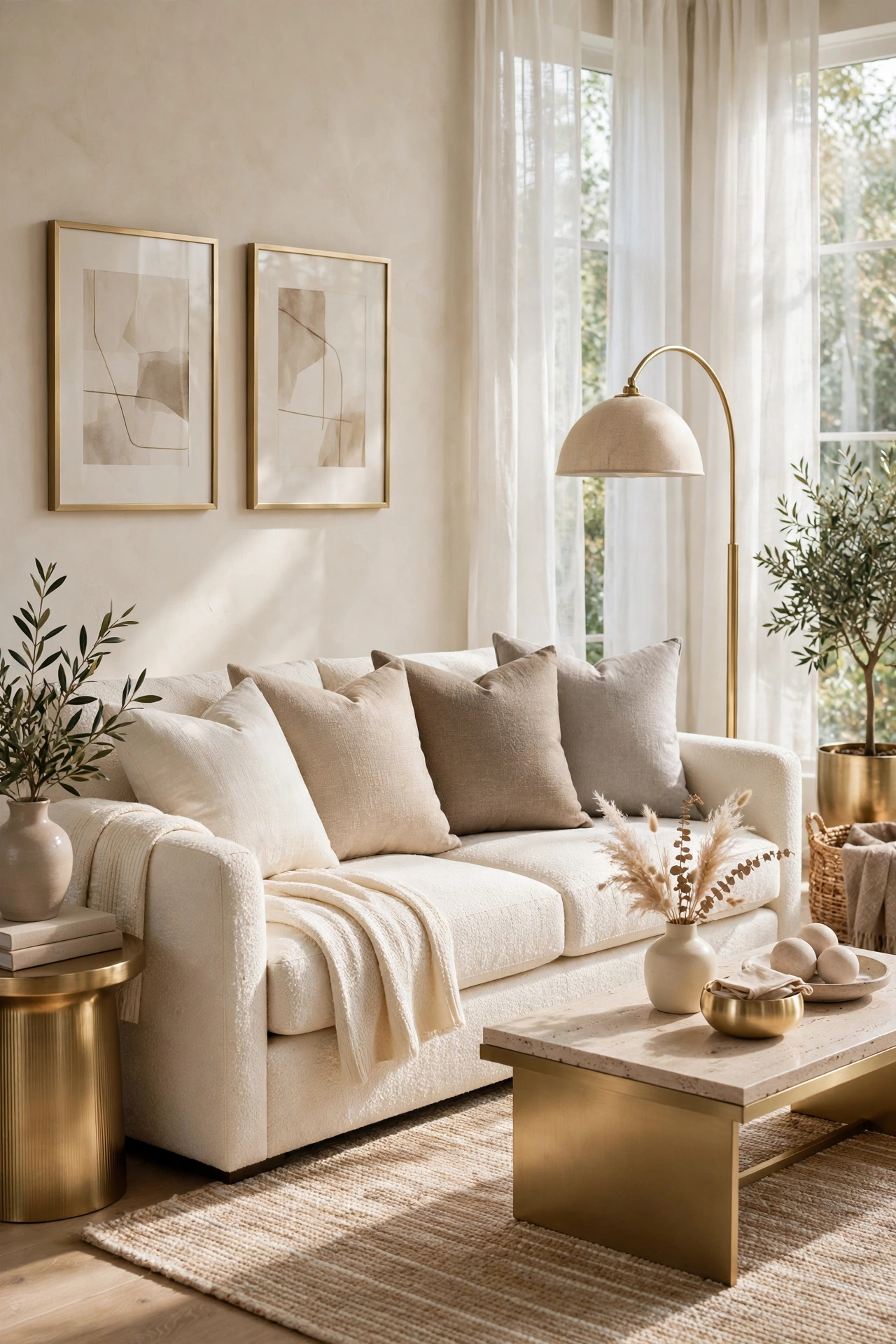
One flat beige on a beige sofa disappears. A gradient, cream at the front, beige in the middle, taupe or soft grey at the back, gives the sofa depth even before texture or pattern enters. Tone layering is the cheapest designer trick there is, because it uses colours you already own.
How to do it: Order the cushions from lightest at the front to darkest against the sofa back, or the reverse if the sofa itself is dark taupe. Keep the jumps small, one shade at a time, so no single cushion shouts. Pro Tip: Hold all the cushions together in a pile before placing them. If two look identical in the pile, they will look identical on the sofa, and one of them is not earning its place. Common mistake: All cushions in the exact shade of the sofa. That is not neutral styling, that is camouflage.
4. Mix Three Cushion Sizes
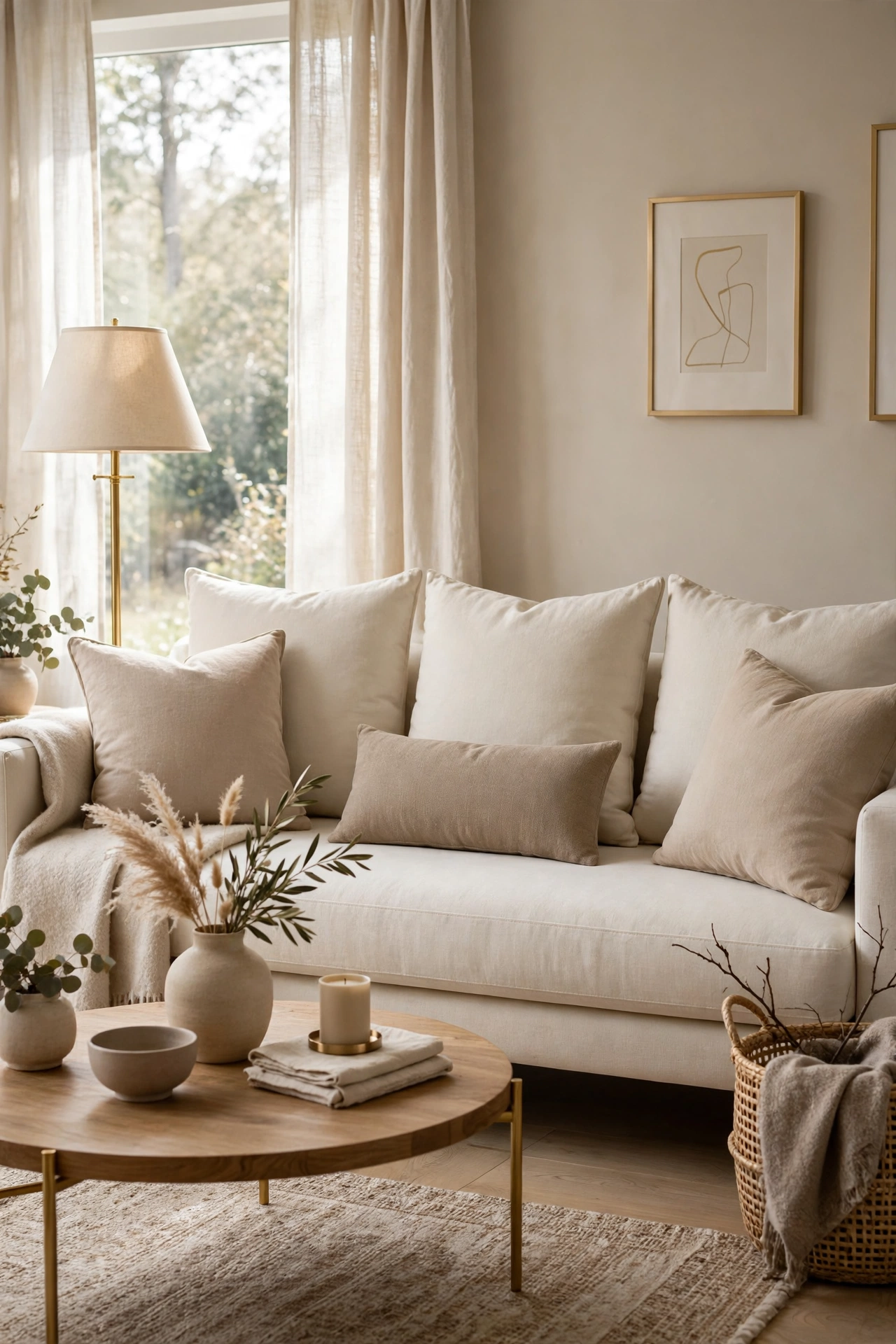
Same-size cushions make a flat wall. Three sizes make a landscape: large squares at the back for structure, medium squares in front for softness, and one lumbar, long and low, to finish the front. Size is what gives a sofa arrangement its height and its shape.
How to do it: Start with the largest cushions, 50 to 55 cm, leaning against the sofa arms and back. Add medium cushions, 45 cm, angled slightly forward. Finish with one lumbar, about 35 by 90 cm, centred or placed where someone actually leans. Pro Tip: A lumbar is the best first purchase for a sofa that feels unfinished. It costs less than a cushion set and it changes the whole front line. Common mistake: Five identical 45 cm cushions in a row. The sofa looks upholstered in cushions, not styled with them.
5. Give Each Cushion Group One Texture Hero
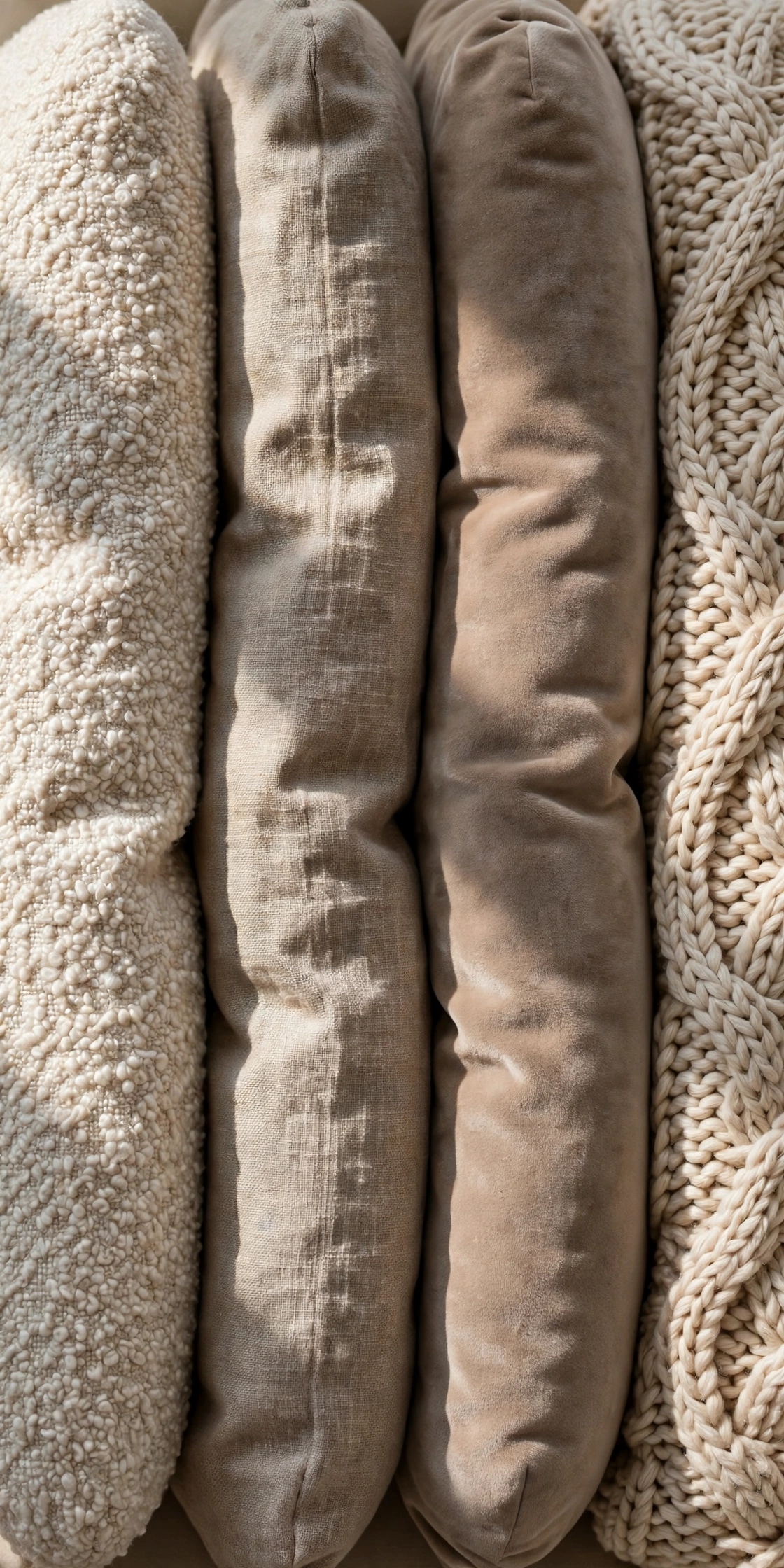
When colour stays quiet, texture has to do the talking. Bouclé, linen, velvet and chunky knit can all be cream, and still read as four completely different cushions, because light catches each one differently. Texture is how a neutral sofa avoids looking like one big beige block.
How to do it: In each group of three cushions, make one the texture hero, usually bouclé or velvet, and keep the other two quieter, linen or cotton. Repeat that hero texture once elsewhere in the room, a throw or a chair cushion, so it looks deliberate. Pro Tip: Run your hand over a cushion before buying it. If it feels the same as the sofa fabric, it will look the same in a photograph, and the photograph is how most people will first see the room. Common mistake: All cushions in the same smooth cotton. Smooth plus smooth plus smooth is not calm, it is blank.
6. Drape the Throw in Thirds, Not in a Square
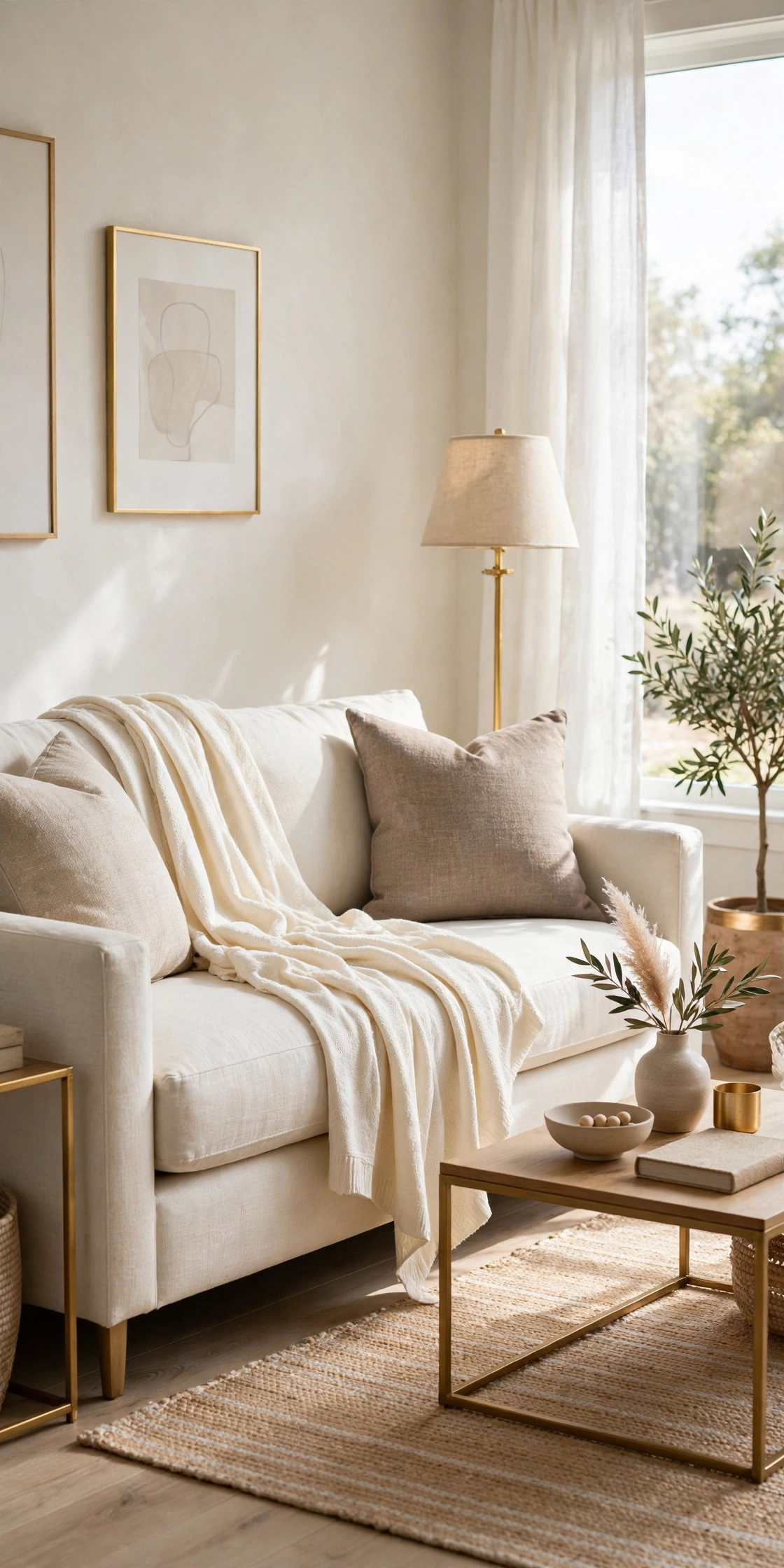
A folded throw in a neat square looks stored, not styled. A throw draped in thirds, one third over the sofa back or arm, one third falling down the front, one third pooled softly on the seat, looks used in the best way: inviting, a little undone, and easy to actually pick up.
How to do it: Drape the throw over one arm or one back corner only, never across the whole sofa. Let it fall naturally, then tug one fold forward so the edge is uneven. Keep the throw in the palette, ivory, cream or soft taupe, never a new colour. Pro Tip: A throw that is too short cannot drape in thirds. For a standard sofa, choose a throw at least 130 by 180 cm, so it has enough length to fall and pool. Common mistake: Spreading the throw flat across the entire seat like a bedspread. It hides the sofa, hides the cushions, and looks like protection, not styling.
7. Allow Exactly One Quiet Pattern
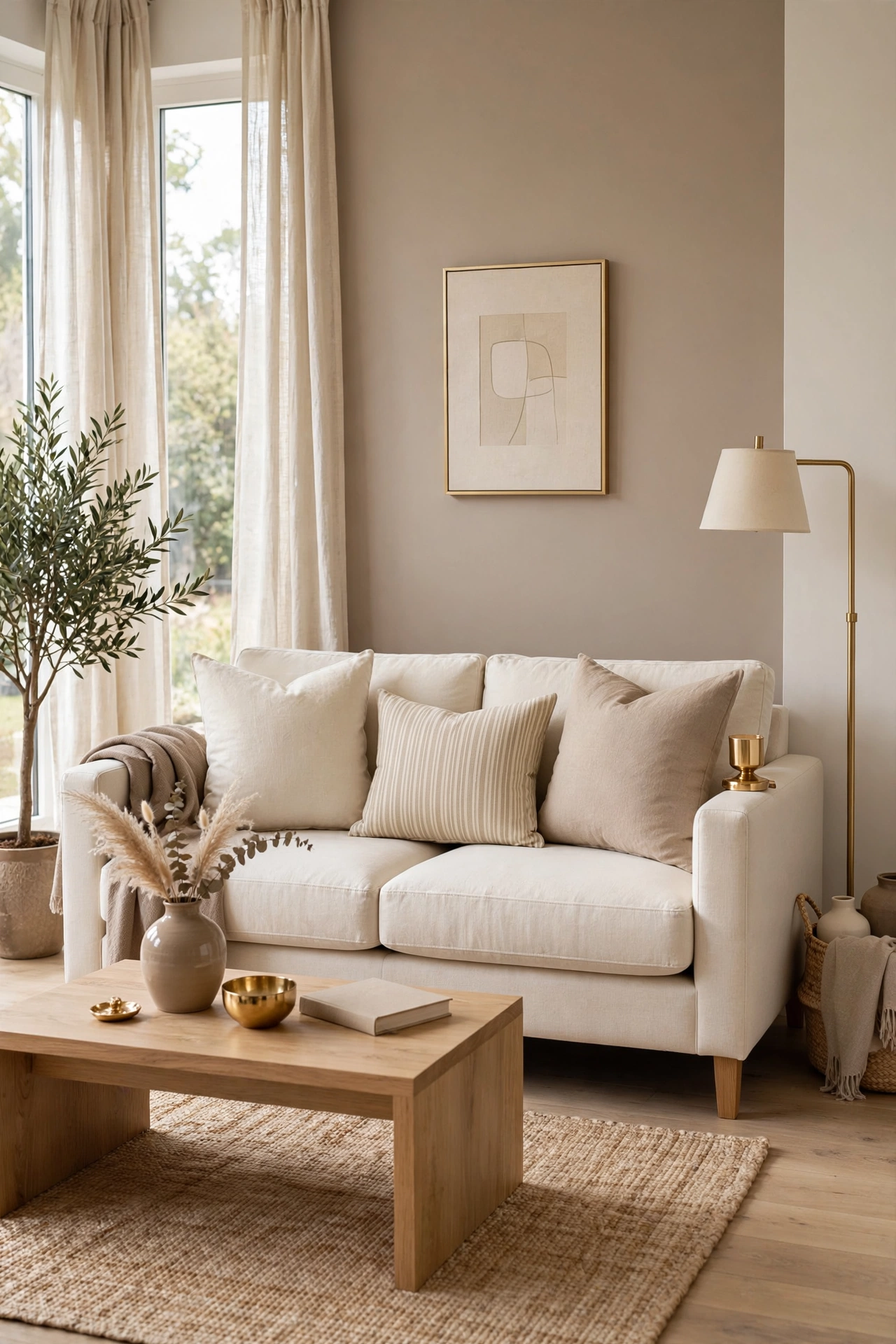
A neutral sofa with no pattern at all can feel like a waiting room. One quiet pattern, a tone-on-tone stripe, a subtle geometric, a faint botanical in beige on cream, gives the eye somewhere to rest without breaking the calm. One is the rule; two patterns start an argument.
How to do it: Choose the pattern in the same tones as the solids, so it reads as texture from across the room and only reveals itself up close. Place it in the middle of the arrangement, not at the edge where it looks like an afterthought. Pro Tip: Stripes are the safest first pattern for a neutral sofa. They are orderly, they photograph well, and they never fight with the rug. Common mistake: A bold patterned cushion, a floral cushion, and a geometric cushion all at once. Each one is lovely alone, together they are three different rooms.
8. Balance the Sides Without Mirroring Them
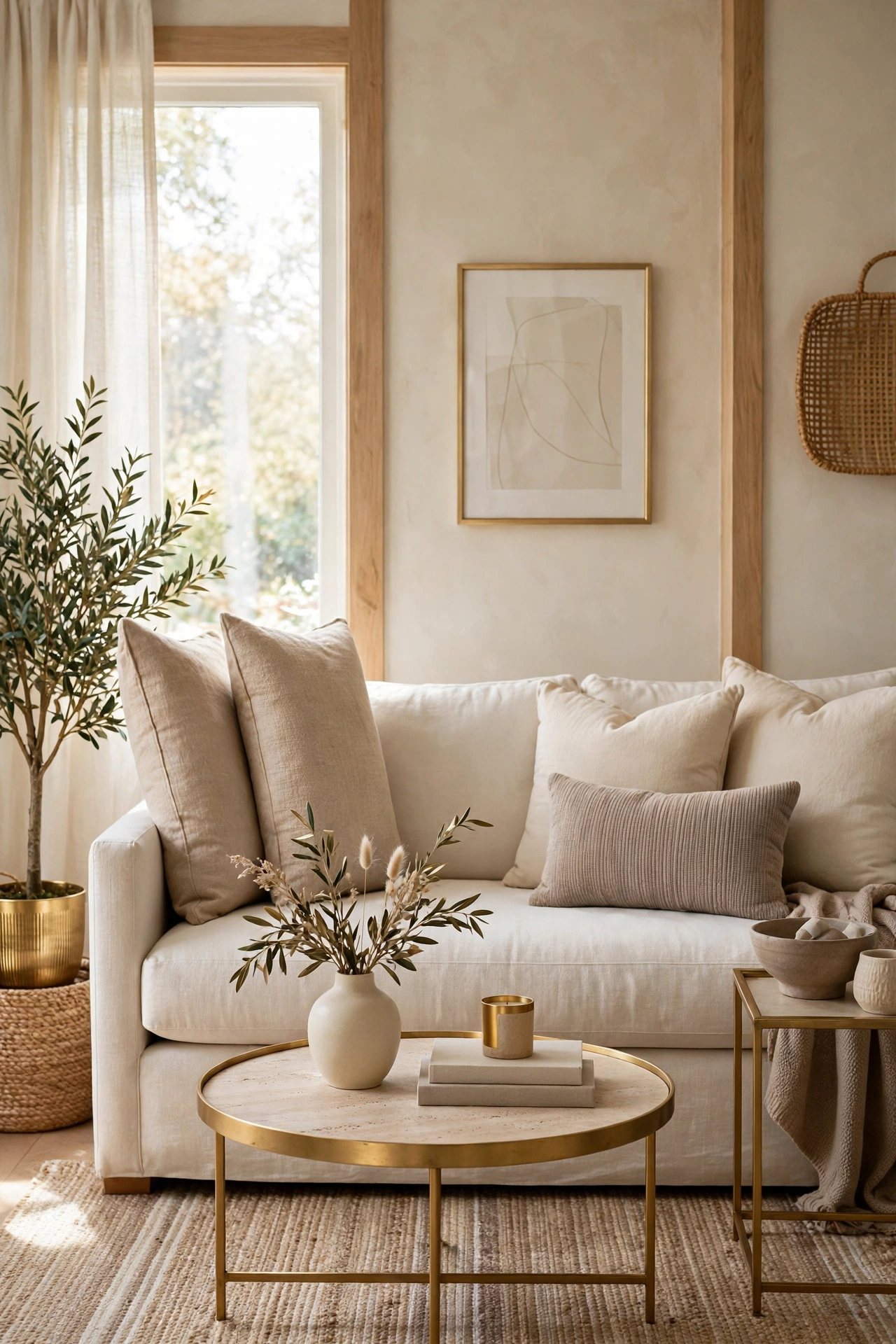
Perfect mirror symmetry on a sofa looks formal and a little frozen. Balance without mirroring looks lived in and still calm: one side a little taller, the other a little softer, both sides carrying the same visual weight. The sofa feels arranged by a person, not by a formula.
How to do it: Put the tallest cushion group on one side and the lumbar on the other, then check the balance from the doorway, not from directly in front. If one side feels heavy, move the texture hero, not another cushion, to the light side. Pro Tip: Take a quick phone photo from the room entrance. Imbalance shows instantly in a photo, while standing in the room your eye forgives it. Common mistake: Copying the left side exactly onto the right. It looks correct for a second, then it looks like nobody ever sits there.
9. Add One Deep Note So the Neutrals Do Not Wash Out
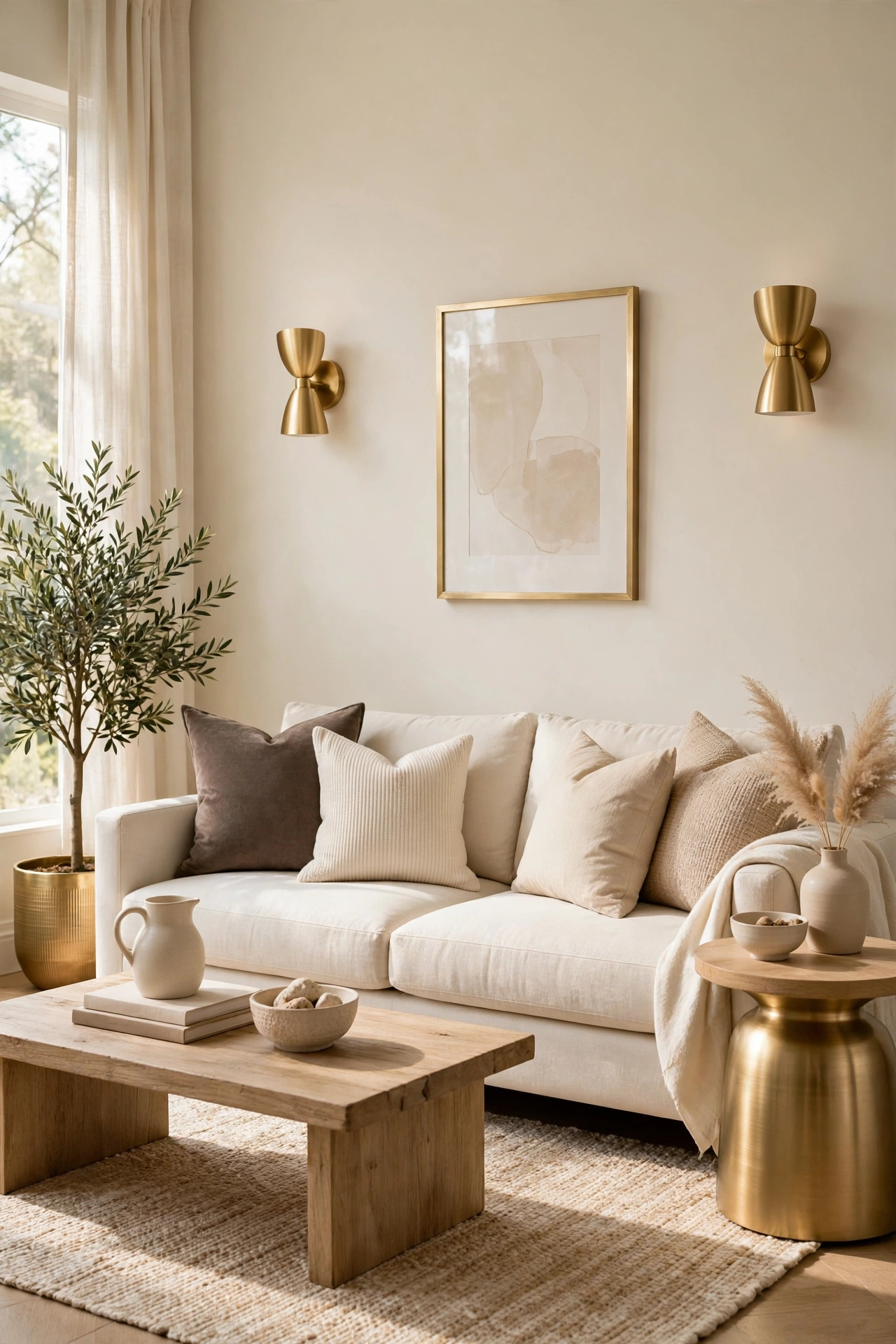
All-light neutrals in a bright room can wash out into one pale blur, especially in photographs. One deep note, a charcoal cushion, a deep taupe lumbar, or a dark wood tray on the coffee table in front, anchors the whole arrangement and makes the light tones look intentional instead of faded.
How to do it: Choose the deep note in a colour already present in the room, the dark frame of a mirror, the wood of the coffee table, the charcoal in a rug border. Keep it to one item on the sofa itself, never a whole dark side. Pro Tip: In a glam room, a deep bronze or antique gold cushion does the same job as charcoal, with warmth instead of weight. Common mistake: Adding three dark cushions to “add contrast”. Three dark cushions are not a note, they are a new colour scheme, and the neutrals lose.
10. Plump, Angle, and Chop the Cushions
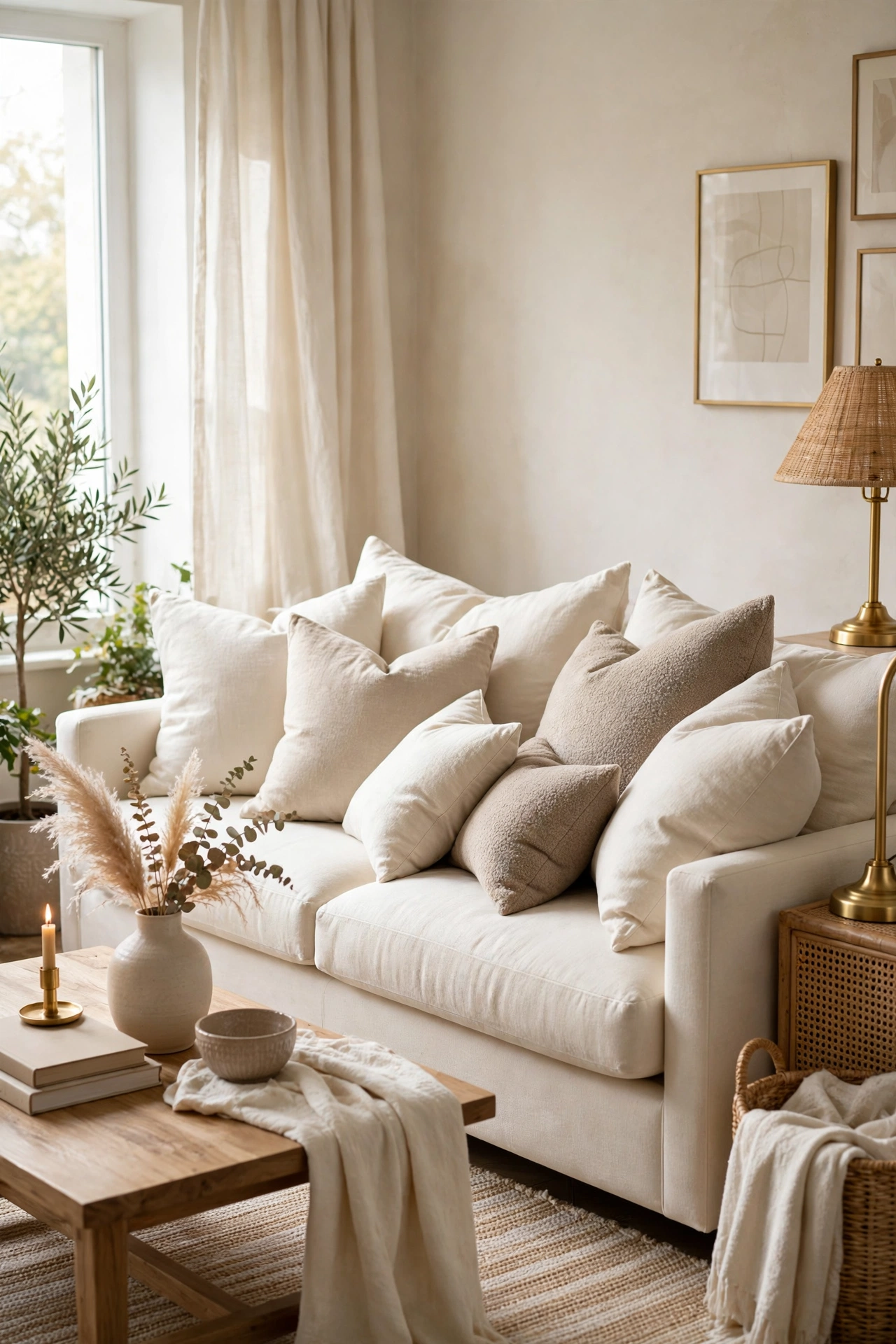
The same cushions look designer-approved or tired depending on five minutes of handling. Plumped cushions hold their shape, angled cushions create depth, and a gentle chop across the top of a soft cushion gives it the relaxed dent that stylists use in photographs. Flat, square, unplumped cushions look like they have given up.
How to do it: Plump each cushion by squeezing the sides and pulling the corners out. Lean back cushions at a slight angle, not flat against the sofa back, and turn front cushions a few degrees so their edges catch the light differently. For feather or soft-fill cushions, press a light chop into the top centre. Pro Tip: Do this after vacuuming the sofa, not before, so the whole seat looks freshly done in one pass. Common mistake: Chopping a firm foam cushion. It springs straight back and looks dented, not styled, so save the chop for soft fills only.
11. Frame the Sofa From the Floor Up
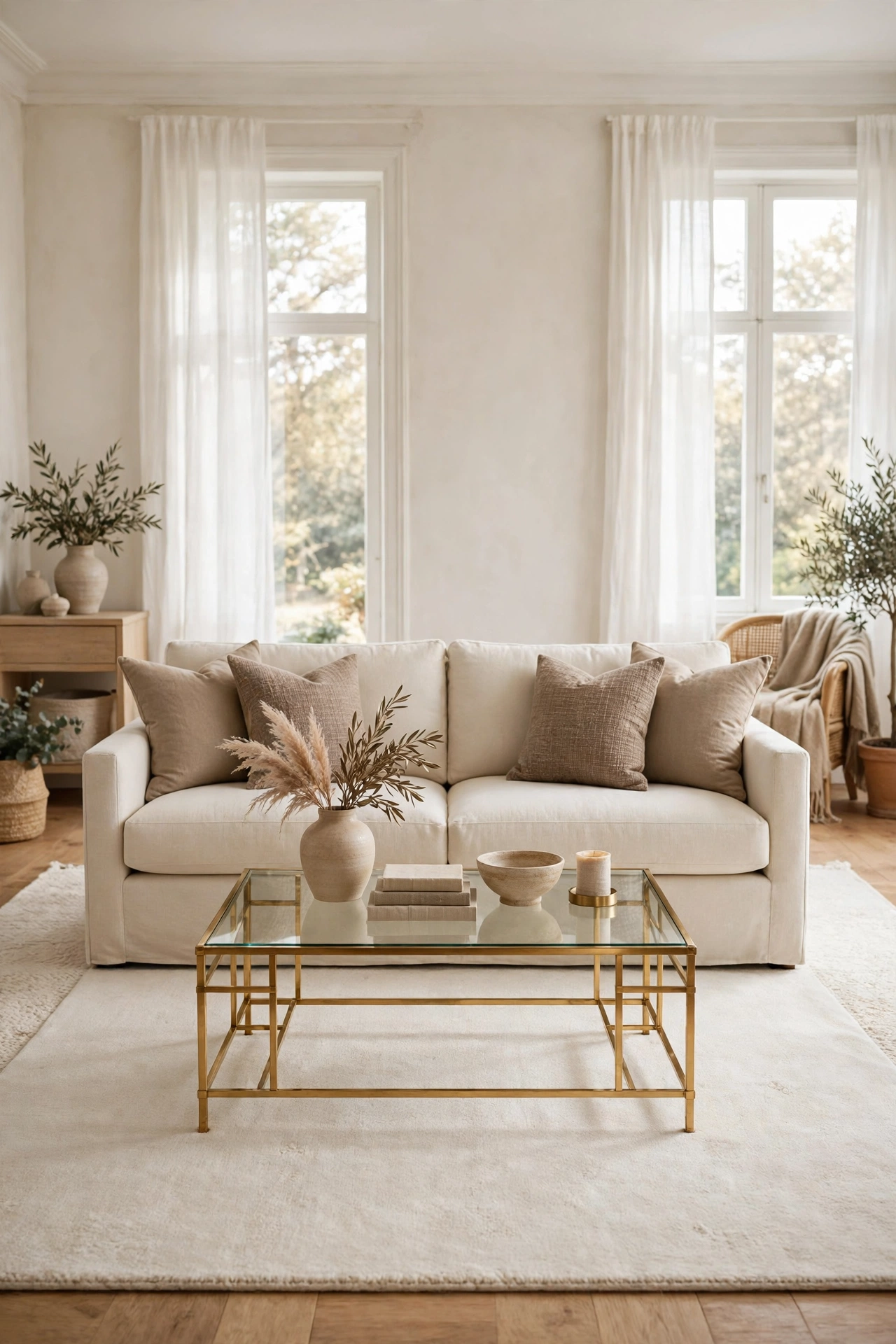
Sofa styling does not stop at the sofa. A rug that is too small makes even a perfect cushion arrangement look stranded, and a coffee table pushed off-centre pulls the whole sofa out of alignment. The floor frame, rug plus table, is what makes the sofa look placed, not parked.
How to do it: Choose a rug that extends at least 15 to 20 cm beyond each sofa arm and reaches under the front legs. Centre the coffee table on the sofa, about 40 to 45 cm from the seat edge, so a cup is reachable without leaning. Keep the rug in the same neutral family, with at most one quiet pattern. Pro Tip: If a new rug is not possible, layer a smaller neutral rug over the existing one, centred on the sofa. It reads as a deliberate frame, not a cover-up. Common mistake: A small rug floating in front of the sofa with bare floor on both sides. It shrinks the sofa and the room together.
12. Change Only One Throw and One Cover With the Seasons
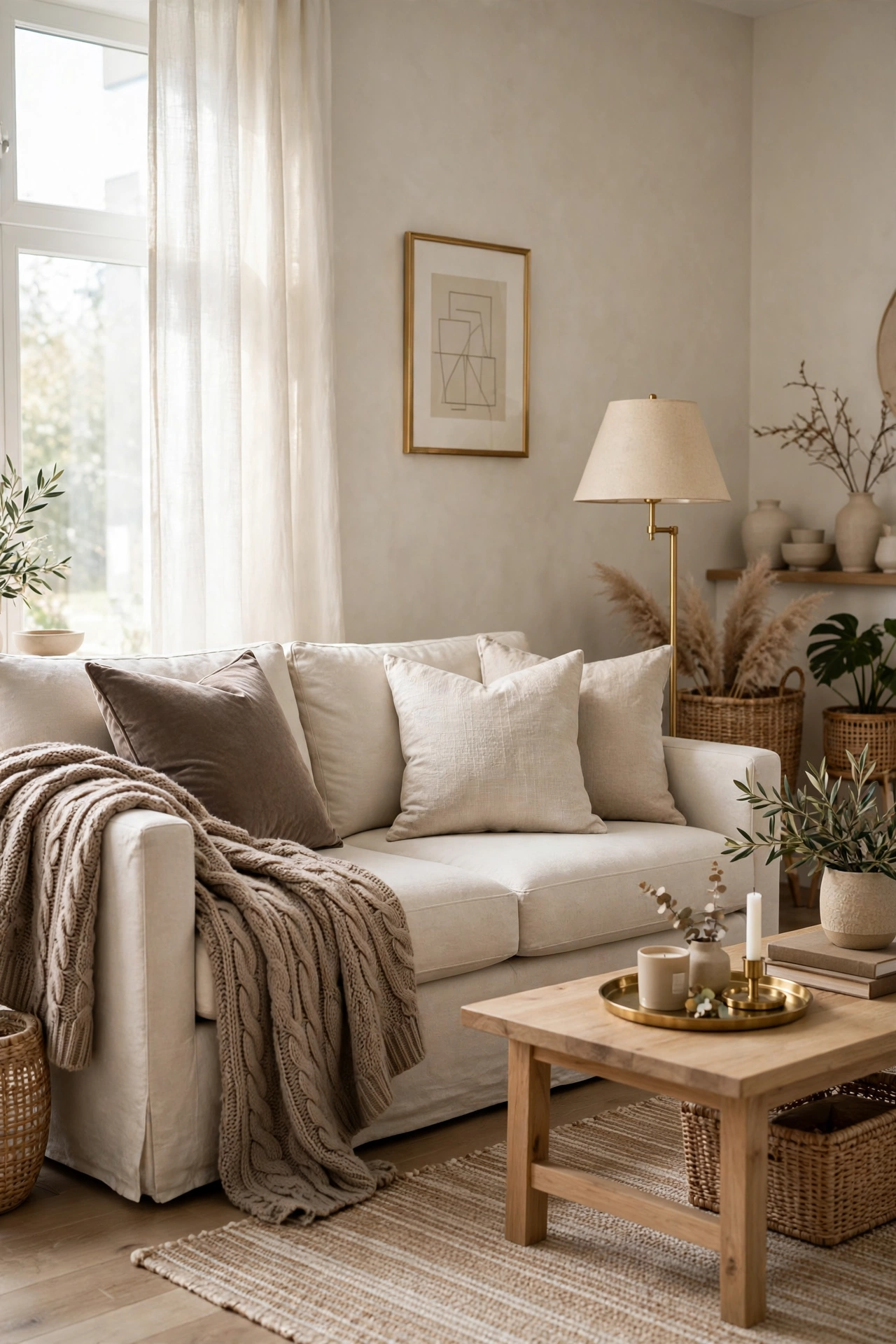
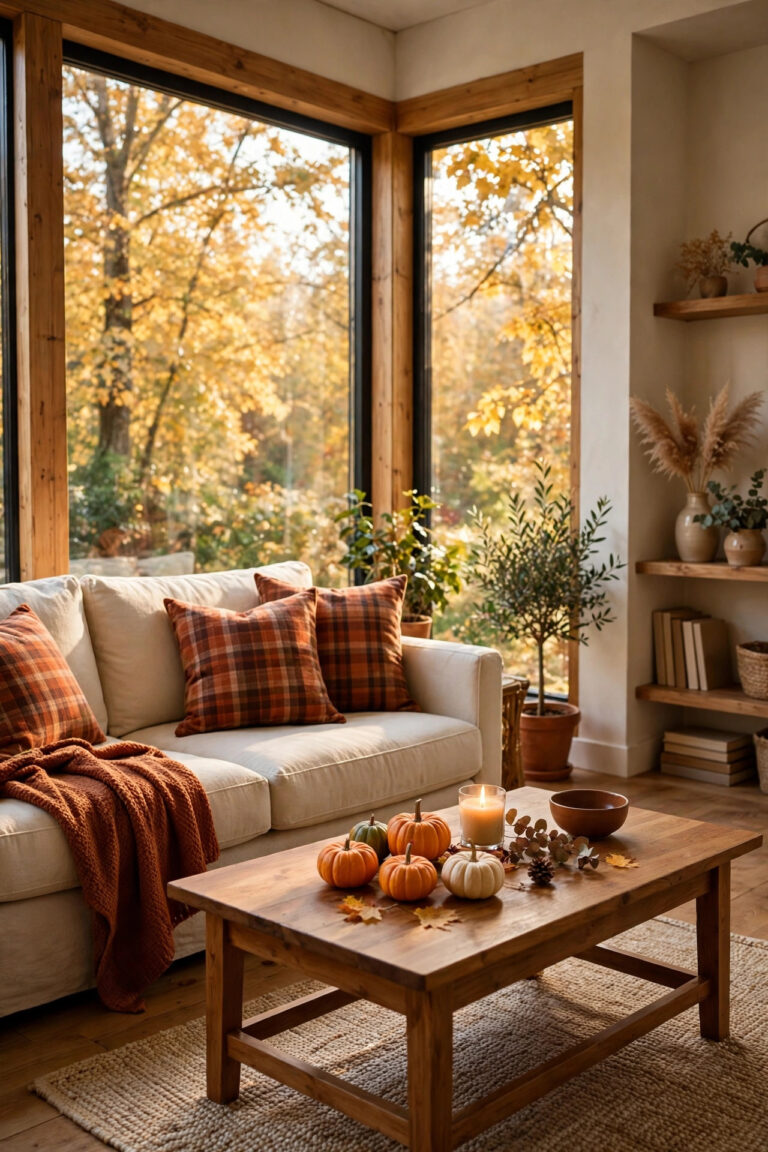
A neutral sofa earns its keep by changing with the seasons for almost no money: a chunky knit throw and one velvet cover in winter, a light linen throw and one pale cover in summer, while the structure, cushion count, sizes and tones, stays exactly the same. One swap feels fresh; a full restyle every season feels exhausting and expensive.
How to do it: Pick the throw and one cushion cover as the seasonal slots, and store each season’s pair together in one bag so the swap takes five minutes. Keep every seasonal choice inside the palette, warm cream and taupe for winter, pale ivory and soft grey for summer, never a novelty colour. Pro Tip: Photograph each season’s version once. Next year, copy the photograph, and the sofa improves slightly every year instead of starting from scratch. Common mistake: Changing every cushion for the season. It costs a fortune, fills a cupboard, and the sofa loses the arrangement that was working.
13. Run the Photograph Test, Then the Daily Reset
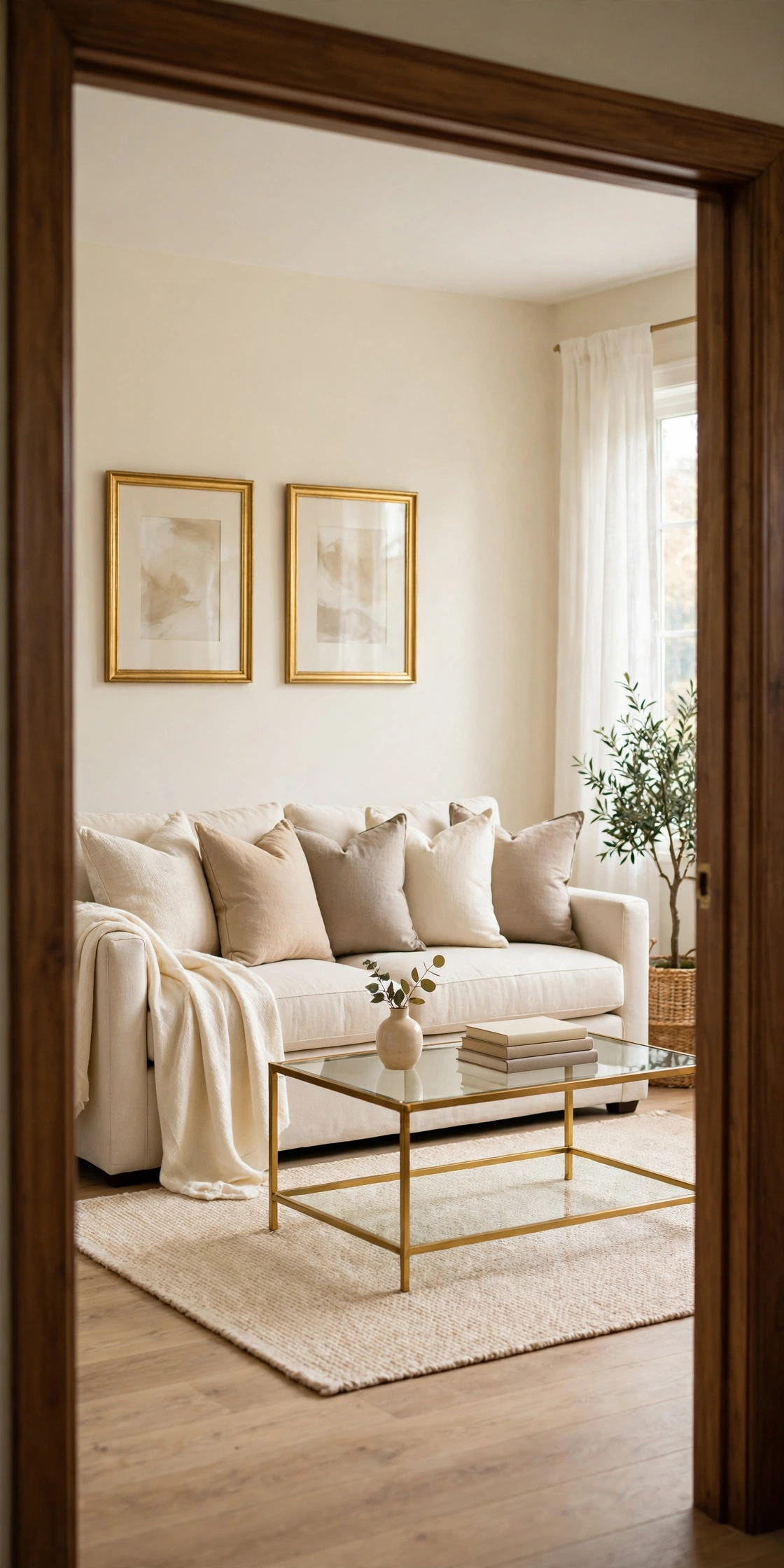
Designers do not judge a sofa by standing next to it. They photograph it from the doorway, because a photograph shows what the room actually presents: crooked cushions, a throw that slid, one side heavier than the other. The photograph test is the final idea because it checks the other twelve in ten seconds.
How to do it: Stand in the doorway and take one photo of the whole sofa. Fix only what the photo shows, usually one cushion angle and the throw edge, then photograph again. For daily life, keep a two-minute reset: plump, straighten the throw, remove anything that does not belong on the sofa, and stop. Pro Tip: Keep the reset to two minutes and do it at the same time each evening. A sofa that is reset daily stays styled; a sofa that is restyled monthly never does. Common mistake: Restyling from scratch every time the sofa looks messy. It teaches everyone in the house that the sofa is a display, and displays are the first thing people stop using.
Sofa Styling Checklist
- One neutral leads, the rest support it
- Odd cushion count: 3, 5, or 7 by sofa length
- Tones layered light to dark, no flat beige
- Three sizes: large back, medium front, one lumbar
- One texture hero per group of three
- Throw draped in thirds on one side only
- Exactly one quiet pattern
- Sides balanced, not mirrored
- One deep note, nothing more
- Cushions plumped, angled, chopped where soft
- Rug extends past the arms, table centred
- One throw and one cover swapped per season
- Photograph test passed from the doorway
Frequently Asked Questions
How many cushions should a neutral sofa have?
Fewer than most people buy. Three for a two-seater, five for a standard three-seater, seven only for a very long sofa. The exact count matters less than the structure: odd numbers, three sizes, and enough bare sofa left to sit on. If you have to move cushions to sit down, there are too many, however beautiful they look.
My sofa is leather, not fabric. Do these ideas still work?
Yes, with one change: lean harder on texture, because leather is already smooth and reflective. A bouclé cushion, a chunky knit throw and a linen lumbar give a leather sofa the softness it cannot give itself. Keep the deep note idea, but choose it in fabric, not leather, so the sofa does not become one shiny surface.
What if my sofa is small?
Use the small-sofa formula from Ideas 2, 4 and 6: three cushions only, one large, one medium, one lumbar, and one throw draped over one arm. Small sofas fail by attempting the full five-cushion system at miniature scale. One confident group, plus bare seat, styles a small sofa completely.
Conclusion
A neutral sofa looks designer-approved when one neutral leads, cushions come in odd numbers and three sizes, tones layer instead of matching flatly, texture does the work colour usually does, one quiet pattern and one deep note keep it from washing out, and the throw falls in thirds on one side only. Frame it with a rug and a centred table, change one throw and one cover with the seasons, and check it with a photograph from the doorway. Build it once, reset it in two minutes each evening, and the sofa will hold its composition every day, not only on the day you styled it.