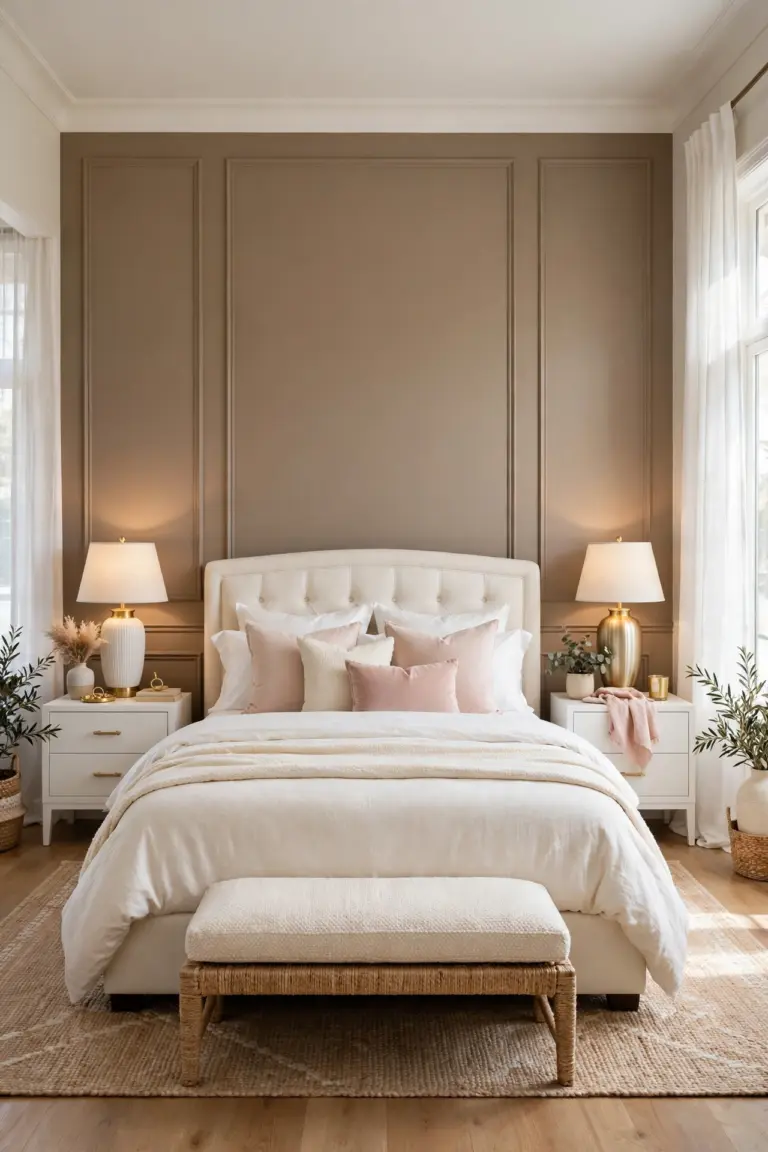
11 Simple Ways to Make Your Bedroom Feel More Luxurious
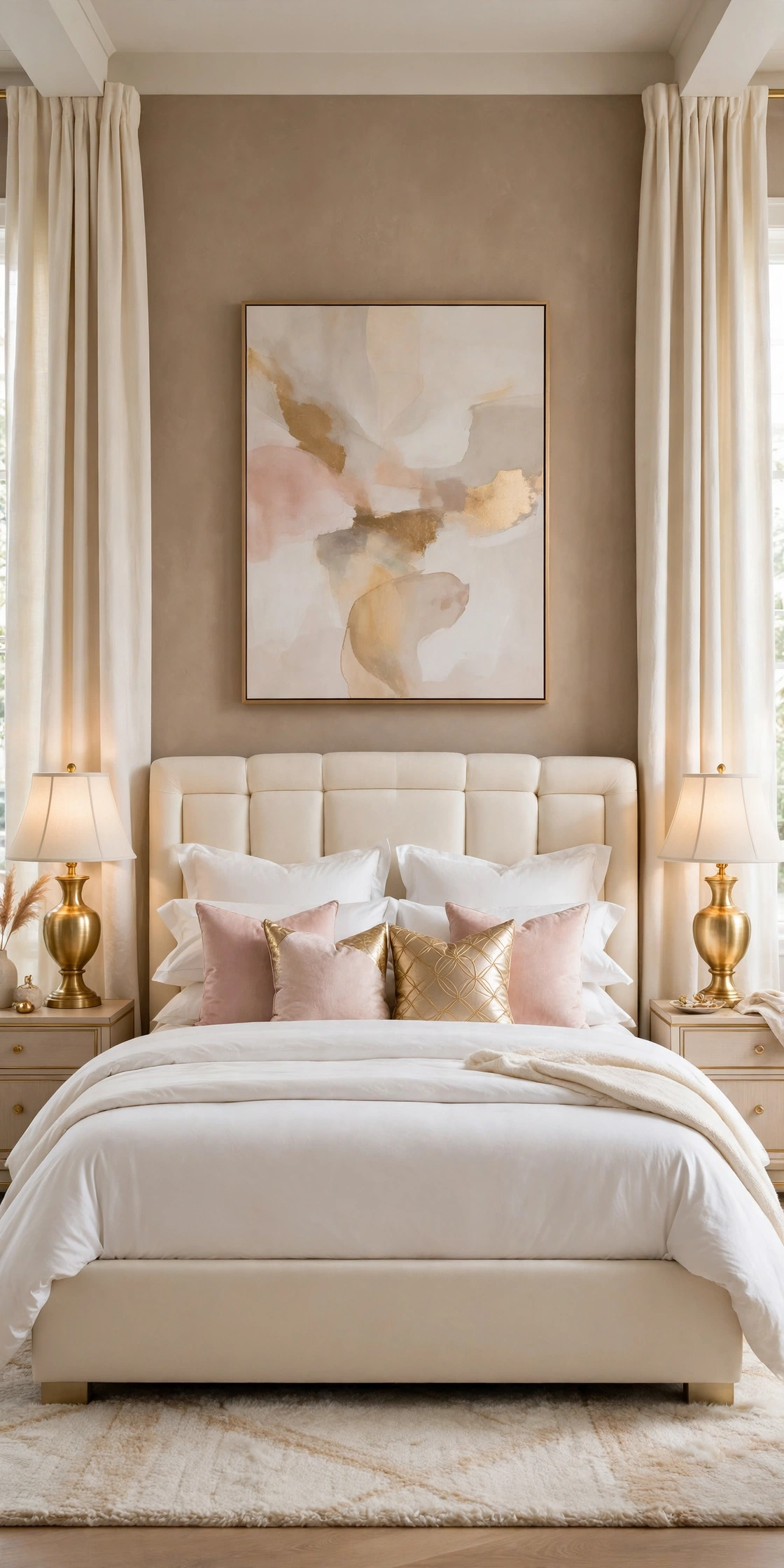
11 Simple Ways to Make Your Bedroom Feel More Luxurious
Luxury in a bedroom is rarely about the price of the furniture. Walk into any calm, expensive feeling bedroom and the same quiet decisions repeat: the bed is layered and white, the surfaces are almost empty, both lamps match, the curtains hang high, and nothing glows, buzzes, or clutters at the edges. Every one of those decisions is simple, most cost nothing, and together they are the fastest way to make your bedroom feel more luxurious without replacing a single large piece.
These eleven ways are quick upgrades only, each one a single change you can finish in an afternoon or less. They work in the same bright glam palette throughout, white, cream, and warm taupe warmed with blush pink and brushed gold, so doing three or four of them in one weekend gives you one calm, finished room instead of eleven small efforts pulling in different directions.
1. Layer Crisp White Bedding in Three Layers
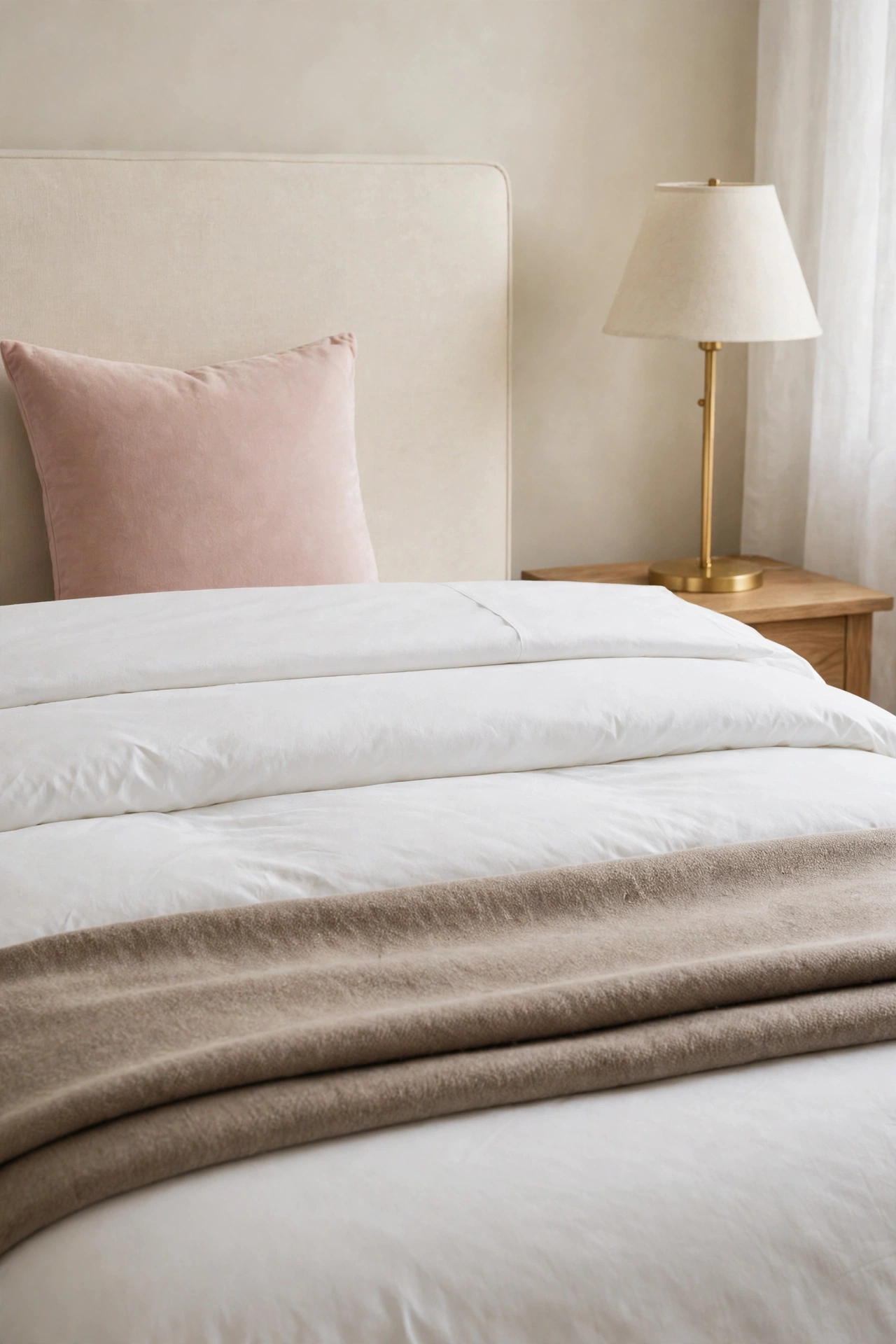
White bedding reads as luxury for one plain reason: it cannot hide. Hotels use white because it proves the bed is clean, and your eye learned that signal years ago. At home, white does the same work, and it also removes every color argument from the bed, so the cushions, the throw, and the art above the bed become the only color story in the room.
The luxury part is the layering, not the color alone. One flat duvet pulled tight looks like a bed that was made in a hurry. Three visible layers, sheet, duvet, and a folded coverlet or throw across the foot, give the bed the built, deep look of a styled room, because each layer adds a shadow line and a change of texture the eye can read from the door.
How to do it: Strip the bed back to the fitted sheet. Add the flat sheet with its top edge folded back over the duvet once, so a clean white band shows. Let the duvet sit two thirds down its full length, then fold a coverlet or lightweight throw in thirds across the foot of the bed. Smooth each layer with your palm as you place it, and tuck the duvet sides loosely instead of hospital tight, so the layers look soft, not shrink wrapped. Pro Tip: If your white pieces are slightly different whites, put the brightest white closest to the pillows, where the eye lands first, and the warmer whites lower down. The gradient looks deliberate. Common mistake: Buying one expensive white duvet and stopping there. A single layer, however good, still reads flat. Two modest layers over it will look richer than the one perfect piece alone.
2. Use the Four Pillow Formula
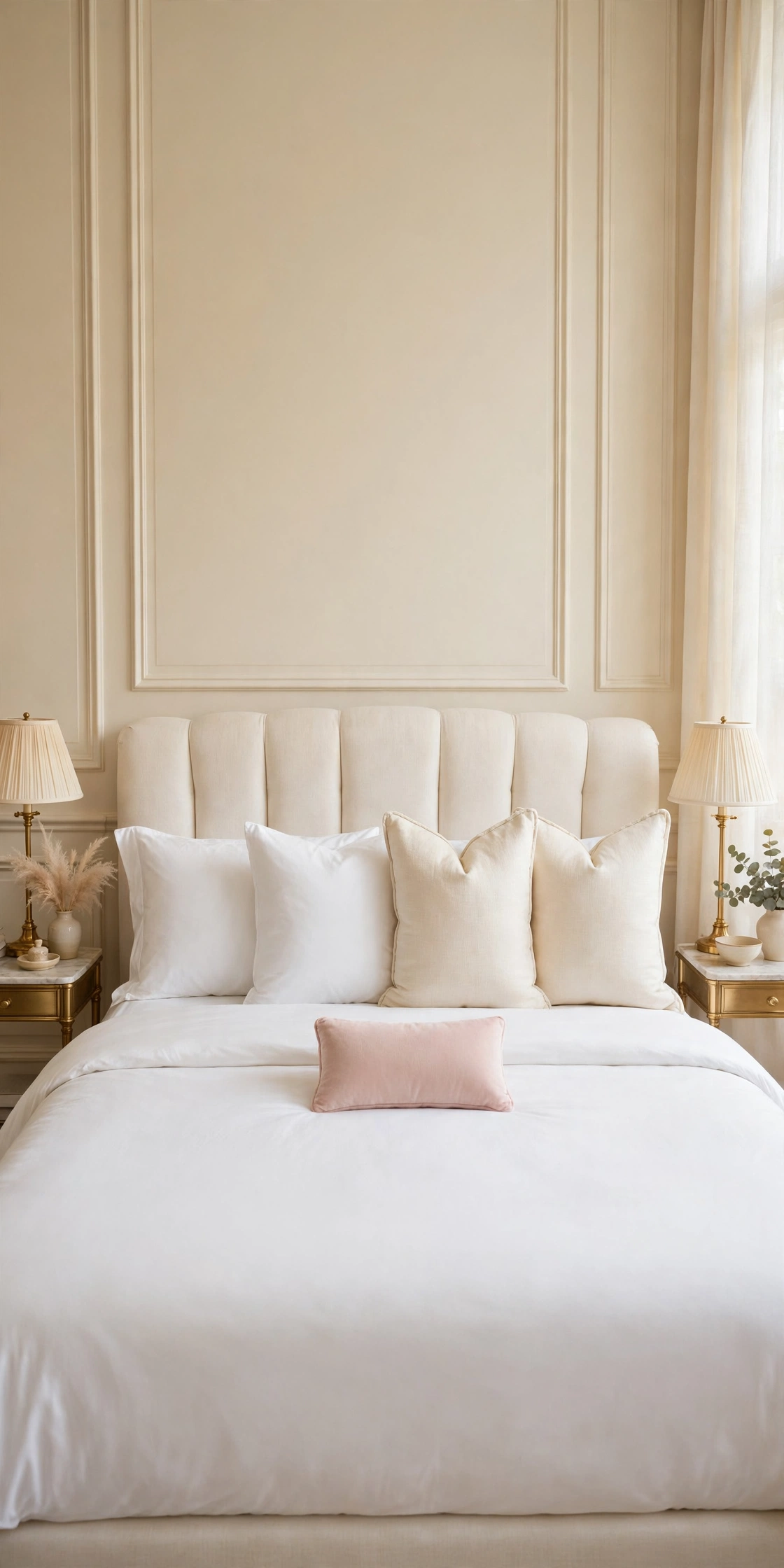
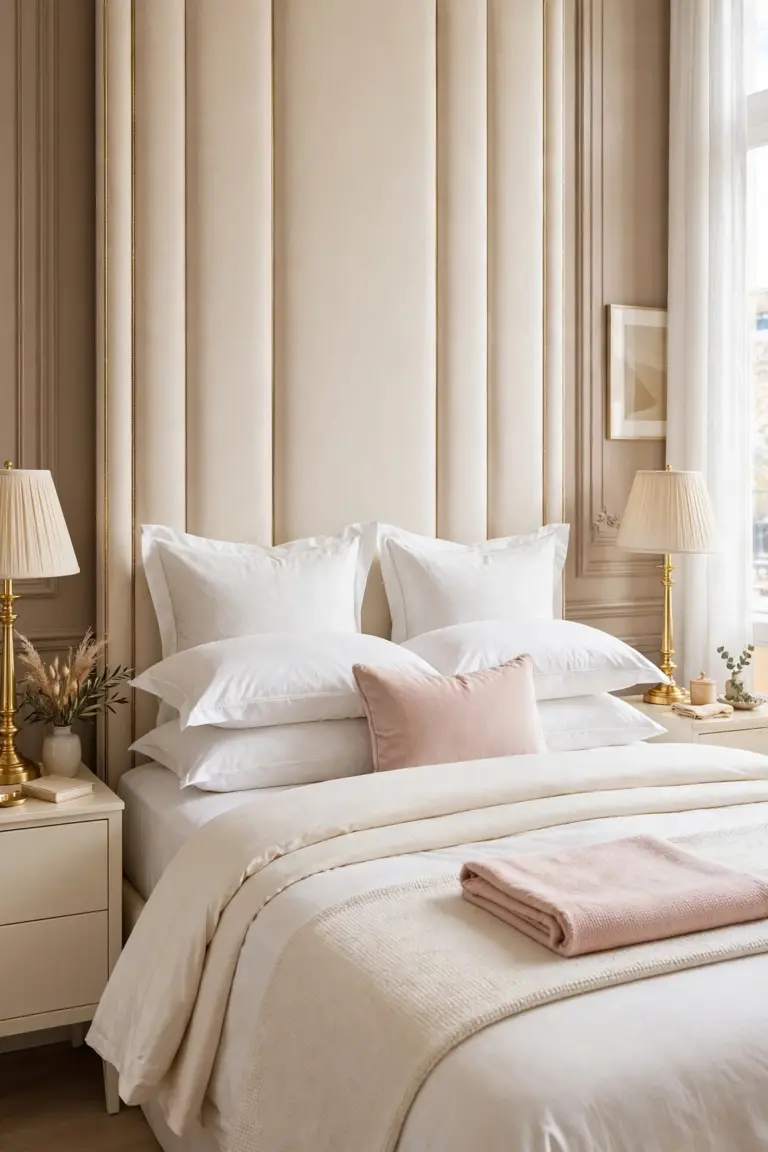
Pillows are where most bedrooms quietly lose their luxury. Too few and the bed looks unfinished, like a room still being moved into. Too many and the bed becomes a cushion shop you have to unload every night. Stylists settle on a formula because a formula removes the guesswork: two sleeping pillows, two shams standing behind or in front of them, and one smaller cushion as the single accent.
The order matters as much as the count. The eye reads the bed from the headboard down, so the tallest, plainest pillows belong at the back and the smallest, most decorative one at the front, like a headline shrinking to a full stop. Keep the whole stack inside the palette, white and cream for the four large pillows, blush or gold only on the front cushion, and the bed gains one clear focal point instead of five competing ones.
How to do it: Stand the two shams upright against the headboard. Place the two sleeping pillows in front of them, plumped and karate chopped lightly at the top center for the soft crease stylists use. Set one smaller cushion, rectangular if you have it, centered in front. Step to the doorway and check the stack reads as three clear steps down. Pro Tip: If you sleep on all four large pillows, store the shams on the bed only in the day and lean them against the headboard at night rather than throwing them on the floor. Floor pillows undo the luxury in one glance. Common mistake: Five or six mixed cushions in different sizes and patterns. Each one may be pretty, but together they read as storage, not styling.
3. Clear Every Surface Down to Three Things
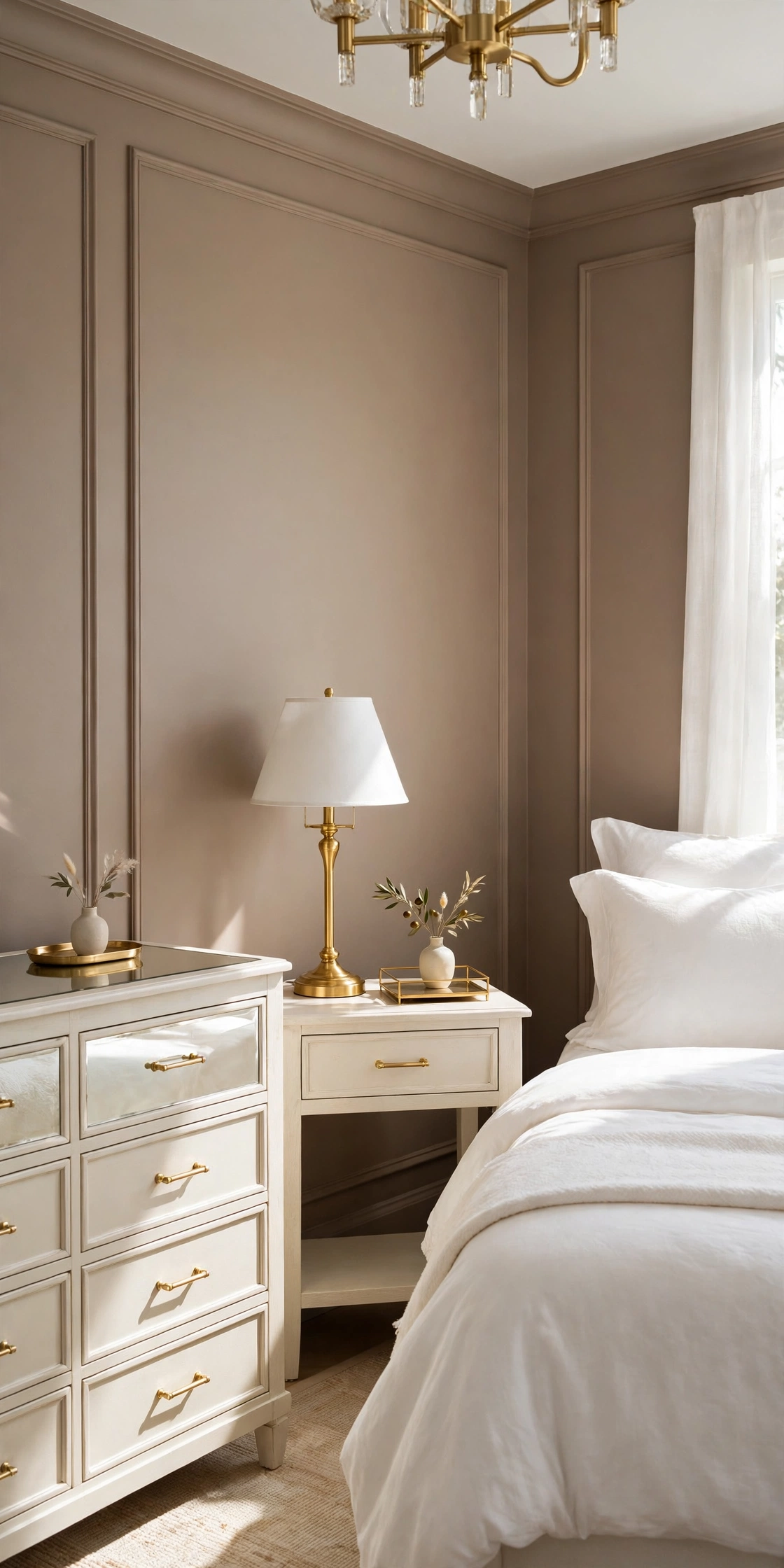
Nothing lowers a bedroom faster than its surfaces, because the bedroom collects what the rest of the home rejects: chargers, cups, loose change, half read books, bottles, and yesterday’s clothes. Luxury rooms are not bigger; their surfaces are emptier. A nightstand holding a lamp, a carafe or a book, and one small beautiful object tells the eye the room is finished. The same nightstand holding eleven useful things tells it the room is a drawer.
The three thing rule works because it forces a ranking. Everything currently on each surface gets sorted into keep here, live elsewhere, or leave the room. Most bedroom clutter is not loved or needed at the bed; it is simply homeless. Give it a home in a drawer, a basket in the closet, or another room, and the surface stays clear because the rule, three things, is easy to check at a glance each night.
How to do it: Empty one surface completely and clean it. Return only three things: the lamp, one useful item, and one beautiful item. Repeat for the dresser, allowing it one tray group from Way 6 instead of a single object if the dresser is wide. Put everything removed into a box outside the room and only bring back what you truly missed after a week. Pro Tip: Photograph each cleared surface. When clutter creeps back, and it will, the photograph is a thirty second reset guide. Common mistake: Hiding the clutter in prettier piles on the same surface. A stack of clutter is still read as clutter. The count, not the neatness of the pile, is what changes the feeling.
4. Match the Two Bedside Lamps
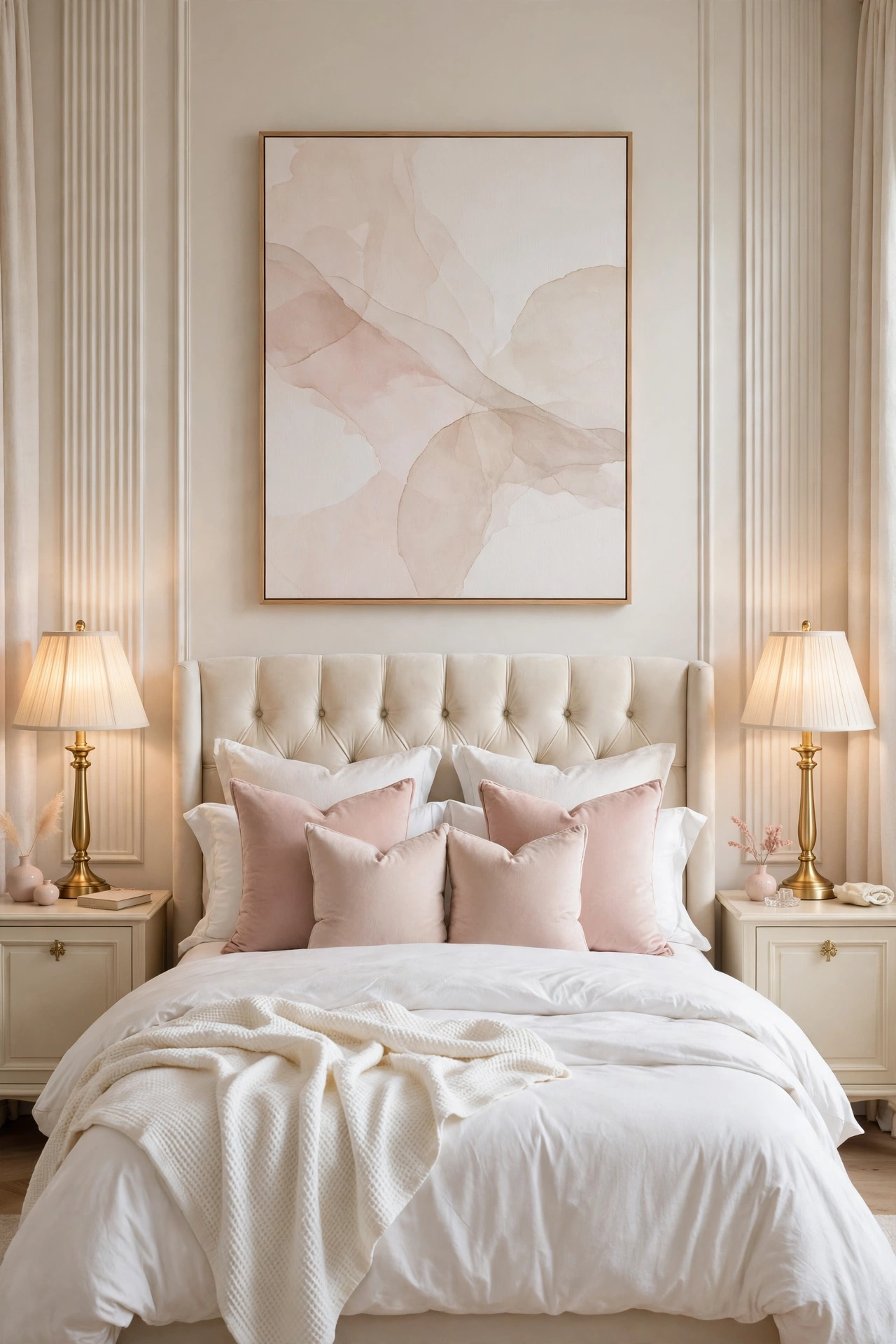
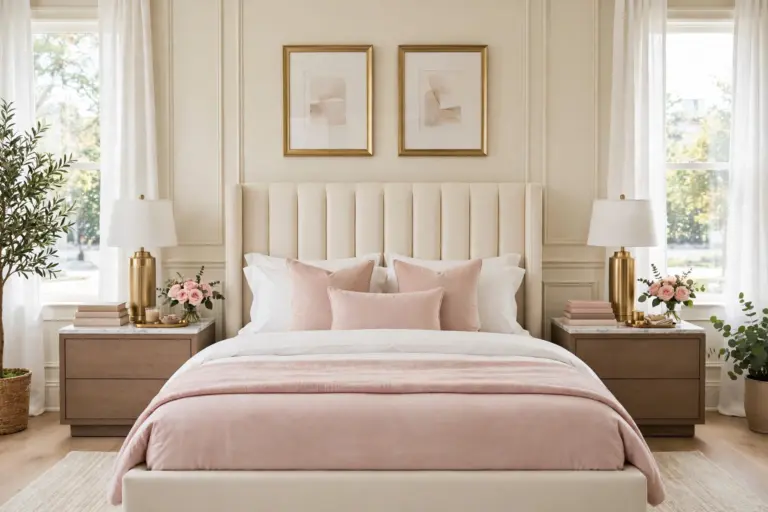
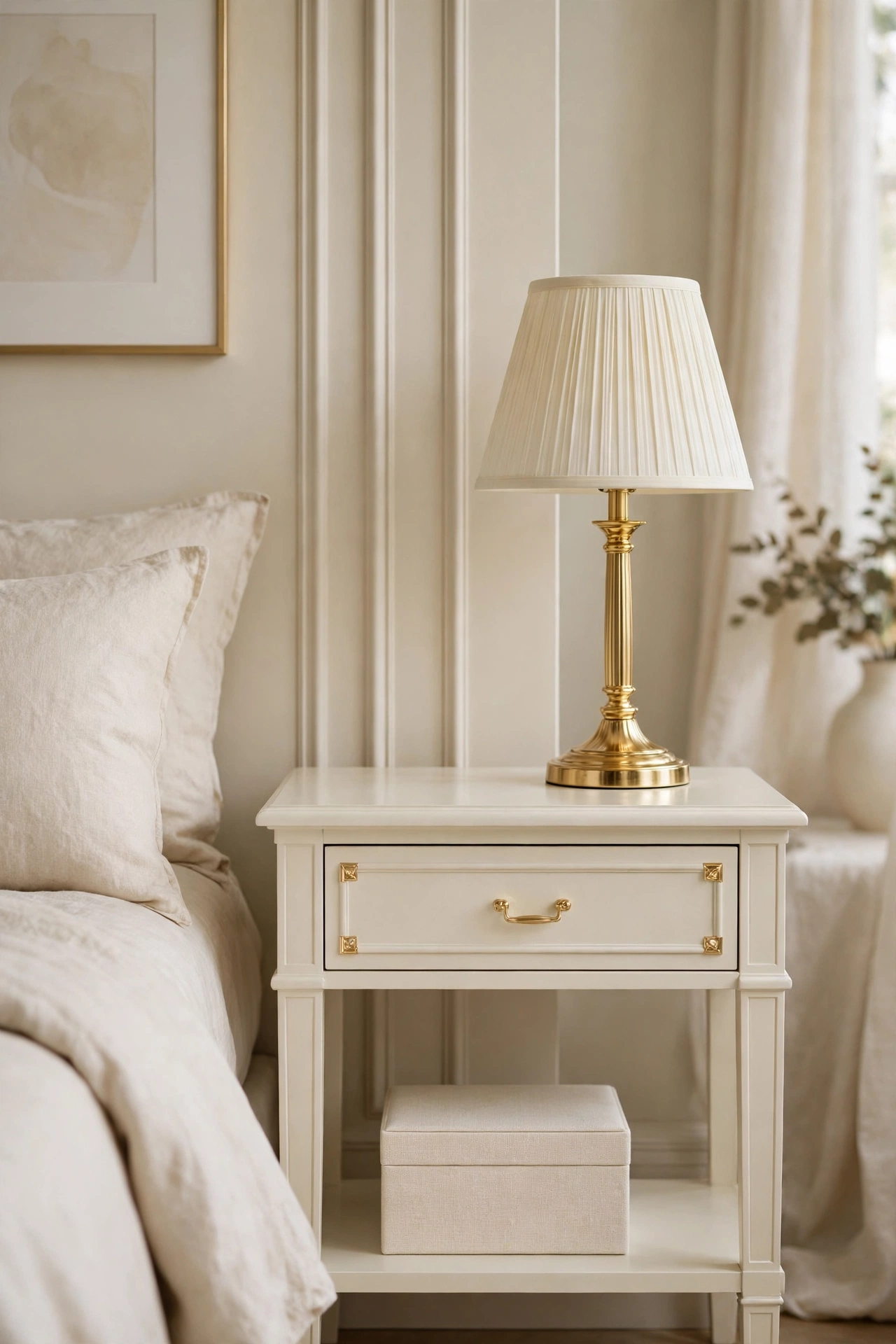
Two different bedside lamps make even a beautiful bed look accidental, as if the room was finished with whatever was left over. A matched pair does the opposite: it frames the bed like a picture frame, tells the eye the bed is the planned center of the room, and gives the whole wall the calm symmetry that expensive bedrooms almost always have.
Matching does not have to mean buying two new lamps today. The pair must agree in height and shade color more than in exact design, because height is what the eye compares across the bed. If you own two lamps of similar height in different finishes, matching cream shades from either set can pull them together. But when you do buy, buy the true pair: one decision, and the bed wall is solved for years.
How to do it: Measure from the nightstand top and aim for the lamp’s total height to bring the shade roughly level with your shoulder when you sit up in bed. Place the pair at the same distance from the bed on both sides. Swap both shades to the same cream color if they differ. Check from the doorway: the two shades should form one level line across the bed. Pro Tip: If a true pair is out of reach this month, match the shades first and the heights with a book or a small box under the shorter lamp, hidden behind the nightstand’s styling. Symmetry now, the perfect pair later. Common mistake: One tall lamp and one short lamp balanced by stacking objects on the lower side. The fuss shows. Level the lamps themselves and keep the surfaces simple.
5. Add One Scent Moment, Not Five
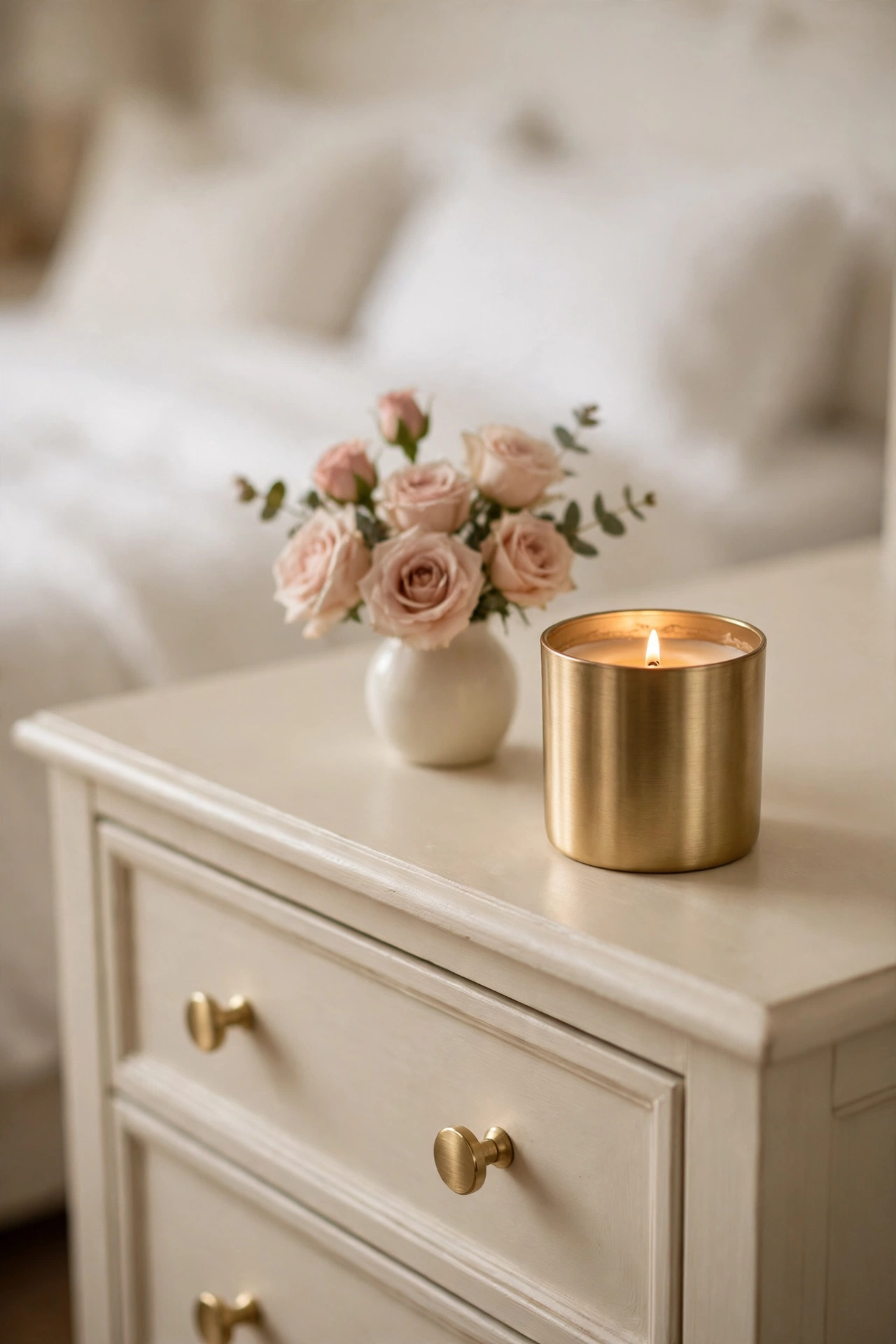
Luxury hotels are remembered by the nose as much as by the eye, and they always use one scent, repeated in the same place, until it becomes the room’s signature. Bedrooms at home usually go wrong in one of two directions: no scent at all, so the room smells of laundry and sleep, or five competing products, candle, diffuser, spray, sachet, and plug in, fighting in a small warm room.
One scent moment means choosing a single source and a single place for it. A candle on the dresser, lit for the last hour of the evening, is the classic choice because the small ritual of lighting it marks the day ending. A reed diffuser on the dresser suits homes that prefer never to think about it. Either works. What matters is that it is the only added scent in the room, gentle enough to sit near, and always in the same spot, so your brain links that one smell with rest.
How to do it: Remove every other scented product from the bedroom, including scented drawer liners and laundry sprays used on bedding. Choose one calm scent family, soft floral, warm vanilla, or clean cotton, and place its single source on the dresser or a shelf, away from the pillows. If it is a candle, light it only while you are awake in the room and set it on a tray or coaster, never on bare wood. Pro Tip: Keep the bedroom scent different from the bathroom and living room scents. Crossing the doorway into a slightly different smell is a small, real signal that this room is for rest. Common mistake: A strong plug in beside the bed. Scent that close, all night, turns from luxury to headache, and it flattens the one gentle scent you chose for the room.
6. Corral the Dresser With One Styled Tray
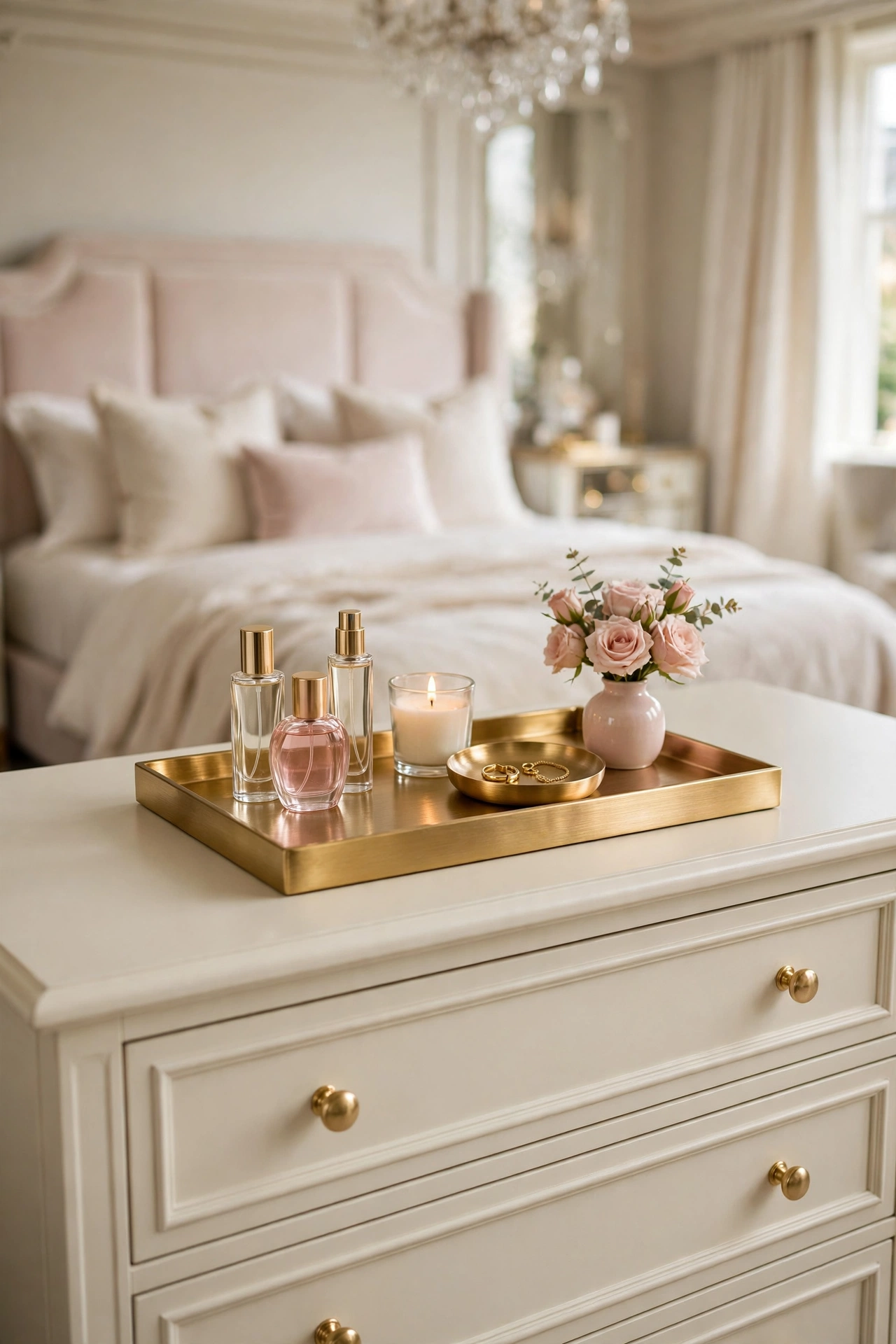
A dresser without a boundary becomes a landing strip, and everything from keys to hair ties spreads across it within days. One tray changes the dresser’s job. It draws a border the eye understands, everything inside the border is the display, everything outside it does not belong, and it groups the few beautiful objects a bedroom dresser should hold: scent, a candle, a small vase, perhaps a jewelry dish.
The tray also protects the luxury feeling when real life arrives. A tray can be lifted off in one hand for dusting, moved for a project, and set back exactly as it was, so the styling survives ordinary weeks. Choose it in the room’s metal, brushed gold for this palette, or in marble or warm wood, with a low edge that shows intention without looking like a serving tray borrowed from the kitchen.
How to do it: Size the tray to hold three to five objects with breathing room, roughly a third of the dresser’s top. Place it off center, not in the middle, and arrange the tallest item, a vase or a perfume bottle, at the back. Keep the rest of the dresser empty except, at most, one stack of two books or a small plant at the far end. Pro Tip: The tray is the only place new small pretty things may land. When it looks full, something must leave before anything new joins. That one rule keeps the dresser styled forever. Common mistake: A tray so large it becomes the whole dresser top. The border stops meaning anything, and clutter simply moves inside a bigger fence.
7. Hang Curtains High, Wide, and to the Floor
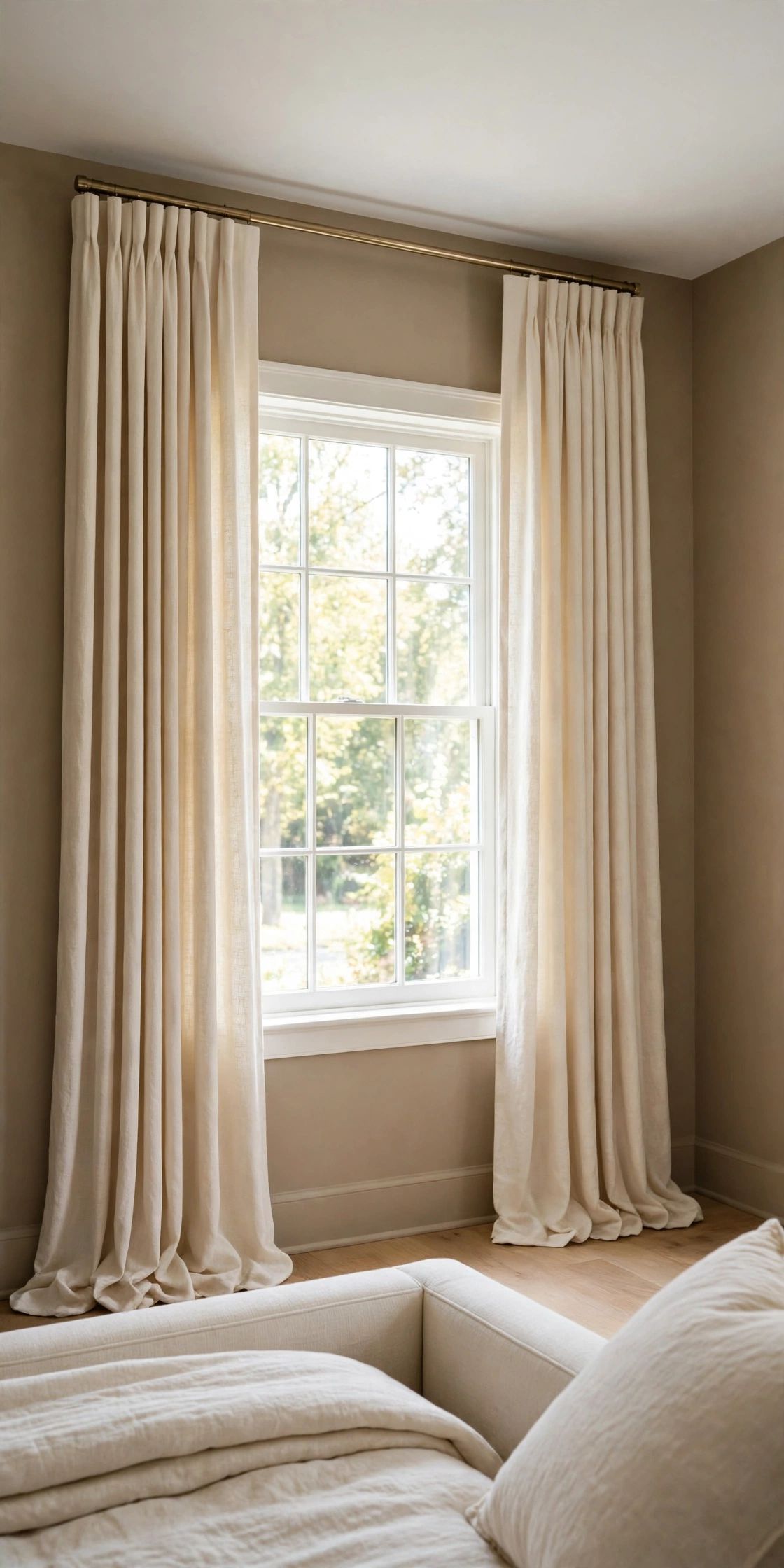
Curtains hung just above the window frame, ending at the sill, make a ceiling feel lower and a room feel rented. The same window, dressed with curtains hung close to the ceiling, wider than the frame, and falling all the way to the floor, suddenly has the proportions of a designed room. It is the largest visual change on this list, and it is mostly free, because in many bedrooms the curtains you own are simply hanging in the wrong place.
Height works on the eye like a lifted horizon: the fabric draws one long line from near the ceiling to the floor, and the brain reads that line as ceiling height. Width matters just as much. When the rod extends past the frame, the open curtains rest mostly on the wall, not on the glass, so the window looks bigger and the room keeps its daylight, which is half of the bright glam look.
How to do it: Move the rod to a few inches below the ceiling or crown molding, and extend it well beyond both sides of the frame. Rehang the curtains so the hem just touches the floor or breaks on it slightly. If your current curtains come up short in the new position, let down the hem if there is one, or add a band of plain cream fabric at the bottom. Pro Tip: Keep the fabric inside the palette, cream or warm white, with the blush and gold carried by the bed instead. Curtains are the room’s backdrop, not its headline. Common mistake: Raising the rod but leaving short curtains floating above the floor. A floating hem announces the shortcut louder than the old low rod ever did.
8. Give the Wall Above the Bed One Large Piece
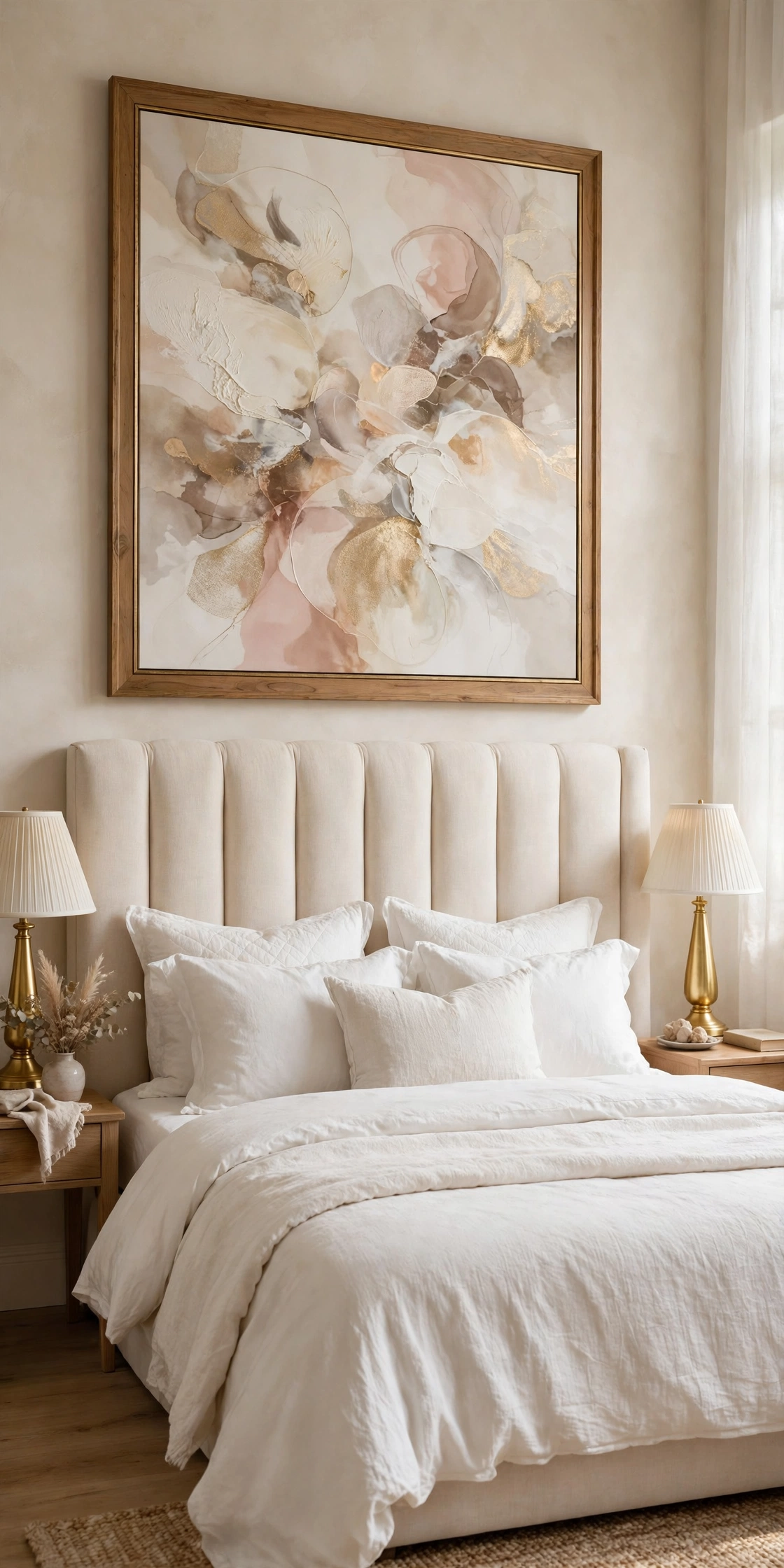
The wall above the headboard is the room’s main picture wall, and it usually holds either nothing or a scatter of small frames that never add up. One large piece changes the math completely. A single, generously sized artwork gives the bed a crown, anchors the whole wall, and reads instantly as a decision, which is why styled and luxury bedrooms almost always choose one big piece over a gallery of small ones.
Scale is the whole secret. As a working guide, the piece should span roughly two thirds of the headboard’s width and hang with its bottom edge a hand’s span or so above the headboard, close enough to belong to the bed, not floating up near the ceiling. Inside the palette, soft abstract pieces in cream, blush, taupe, and gold lines sit calmly above white bedding and let the bed stay the softest thing in the room.
How to do it: Measure the headboard width and choose or make a piece about two thirds as wide. Hang it centered on the bed, not on the wall, if the two differ, and set the bottom edge just above the headboard. If one large piece is not possible now, hang two matching frames side by side, tight together, so they read as one wide piece. Pro Tip: A large canvas or a framed print you already own in another room is the free version of this way. Shop your own walls first; the hallway often holds the bedroom’s missing crown. Common mistake: A small frame centered alone above a wide bed. It looks lost, and it makes the bed below it look unfinished no matter how well it is made.
9. Hide Every Cord and Move the Clutter Out of Sight
Cords are the modern clutter nobody notices in their own room and everybody sees in a photograph. A charger cable sliding down the nightstand, a lamp cord crossing the wall, an extension lead glowing under the bed: each one is a thin black line that breaks the soft, finished feeling every other way on this list builds. Hiding them is free, takes twenty minutes, and the room instantly looks calmer, because the eye stops tracing wires.
The same pass should catch the visible clutter that is not cords: the fan that lives by the bed all year, the stack of boxes in the corner, the exercise gear leaning by the dresser. Luxury is largely the absence of visual noise. Items you use daily can earn a hidden home, inside a nightstand drawer, a closed box on the shelf, or a basket inside the closet. Items you rarely use belong in another room entirely, where they can be as visible as they like.
How to do it: Unplug each bedside item, run its cord down behind the nightstand leg or the bed, and plug it into one strip hidden behind the nightstand or under the bed. Clip or tape the cord run to the back of the furniture so nothing dangles. Set one small lidded box on each nightstand shelf or inside the drawer for chargers and loose ends. Then do one slow lap of the room and remove anything that does not sleep, dress, or calm. Pro Tip: Put the charging strip on a simple timer or switch you can reach, and charge phones in the lidded box overnight. The nightstand top stays clear and the last screen of the day is out of sight. Common mistake: Hiding cords by bunching them into one thick visible bundle along the baseboard. One fat snake is not hidden. Run them behind furniture where the eye never goes.
10. Swap Every Bulb to the Same Warm White
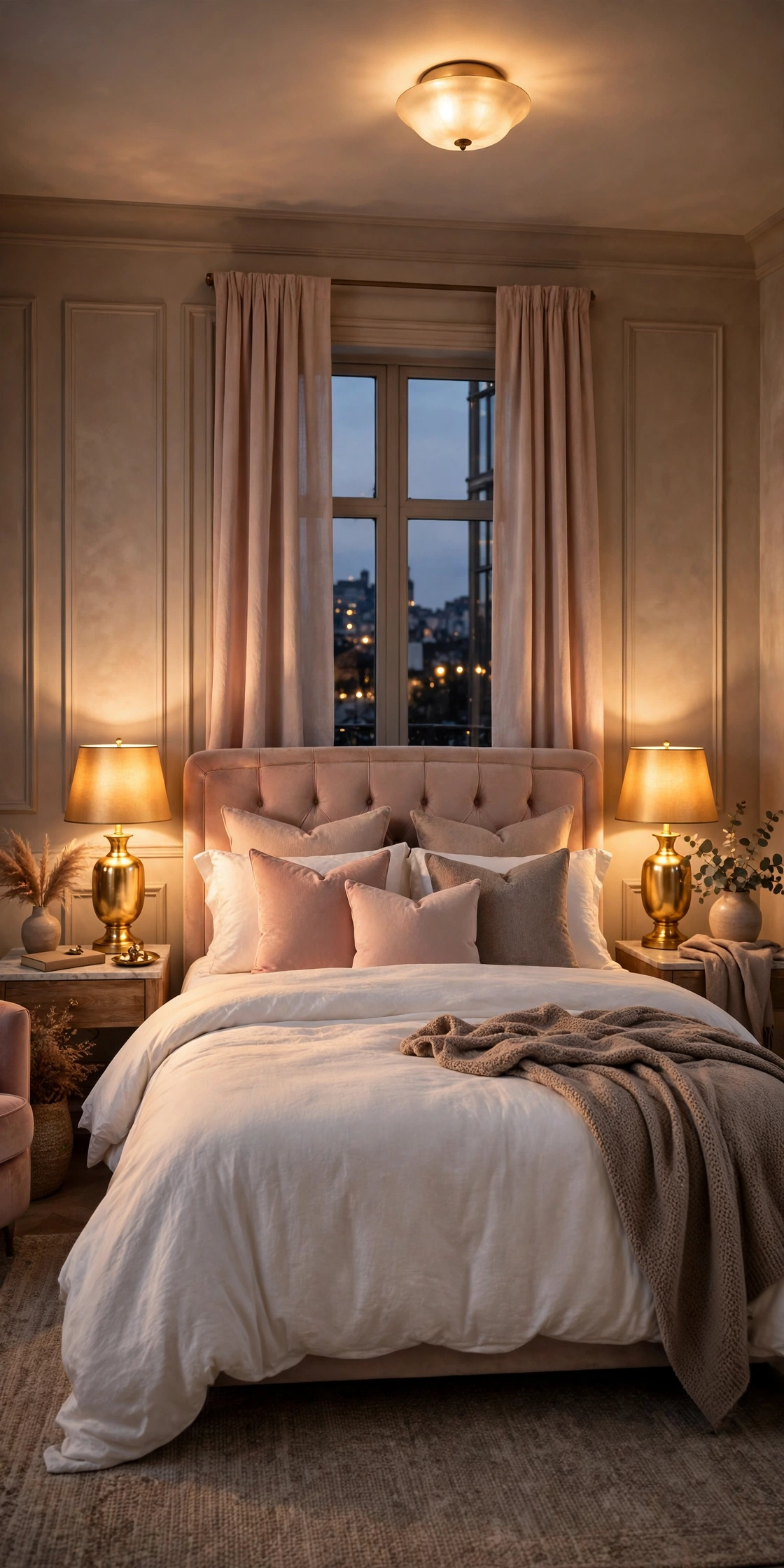
Light is the cheapest luxury in any room and the one most homes get wrong by accident. Bedrooms collect bulbs over the years, a leftover cool white in one lamp, a warm one in the other, a bright daylight bulb overhead, and the result is a room lit in three competing colors, where white bedding turns faintly blue on one side and yellow on the other, and every photograph looks slightly off without anyone knowing why.
One warm temperature everywhere fixes it in minutes. Warm white, the soft golden end of the scale, flatters cream, taupe, blush, and gold, softens skin at the mirror, and makes white bedding glow instead of glare. Just as important is that every bulb agrees: two lamps and a ceiling light all in the same warm temperature blend into one calm wash of light, and the room feels evening ready the moment you switch it on.
How to do it: Check the temperature printed on each bulb in the bedroom, including the ceiling light and any vanity lights. Replace anything outside the warm white range with warm white bulbs, and keep the brightness similar across the two lamps so one side of the bed is not a spotlight and the other a cave. Keep one spare warm bulb in the nightstand drawer so a future replacement never breaks the match. Pro Tip: Put the overhead light on the warmest, dimmest bulb and let the lamps do the real lighting. Luxury bedrooms are lit from the sides at bed height, not from a bright ceiling. Common mistake: Matching the temperature but not the brightness, so one lamp blazes and one glows. The pair should read as twins in color and in strength.
11. Finish the Day With a Five Minute Nightly Reset
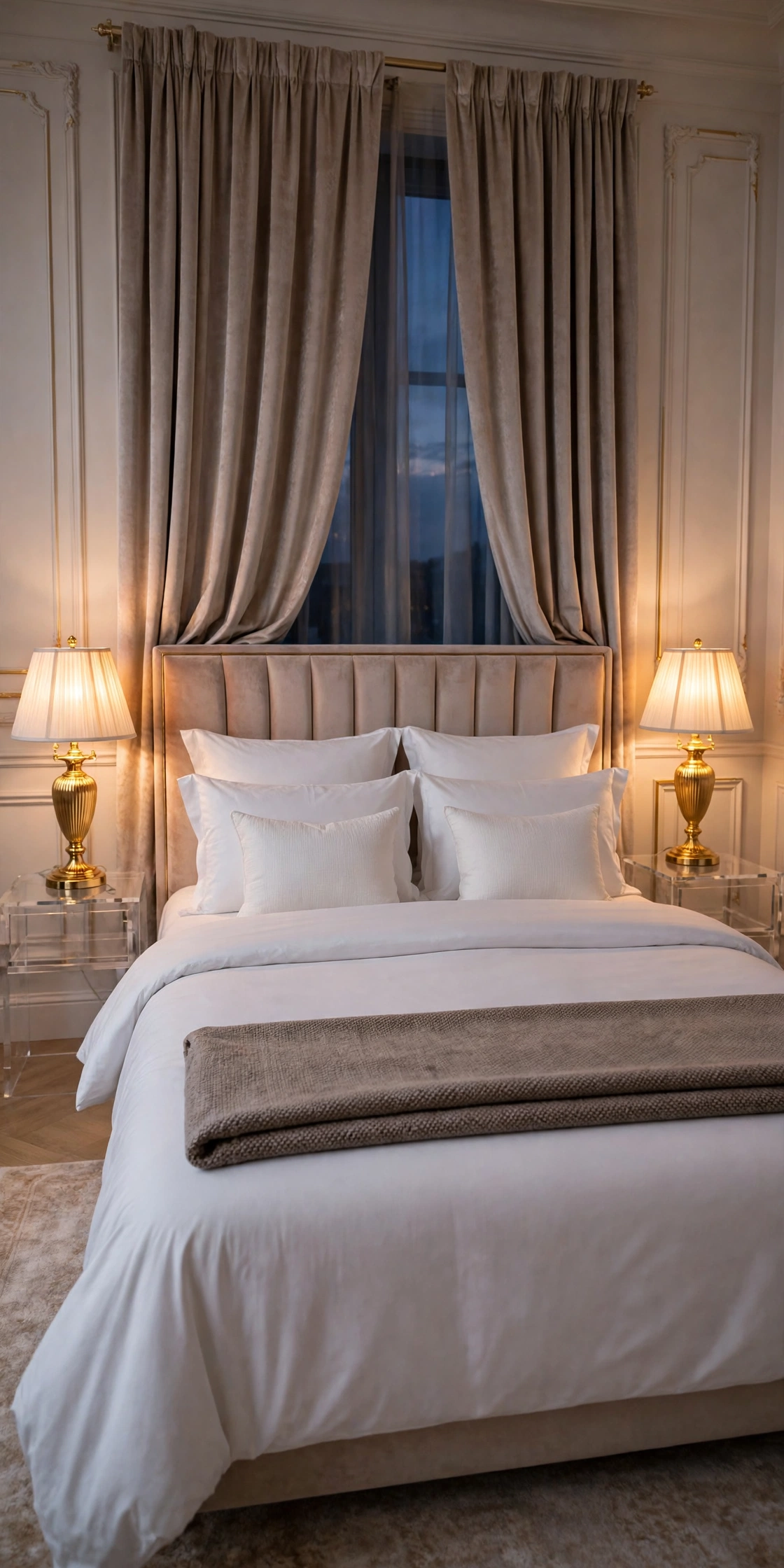
Every way on this list can be undone by one ordinary week, because bedrooms are lived in at the two tiredest moments of the day. The nightly reset is the habit that protects all the others: five unhurried minutes each evening that return the room to the state the other ten ways created, so you wake up inside the luxury instead of inside yesterday’s pile of clothes and cups.
A reset is not cleaning. It is a fixed, short circuit of the room with a small set of moves that never change, which is why it survives tiredness: clothes to the hamper or back on their hangers, cups and glasses out, nightstand back to its three things, chargers into their box, pillows in their formula, and the throw folded once across the foot of the bed. Done nightly, mess never reaches the size where it needs a weekend, and the room’s calm becomes the default, not the exception.
How to do it: Set the same order every night so you can do it half asleep: door to dresser, dresser to nightstands, nightstands to bed. Carry one small basket or use both arms for everything leaving the room, so it is one trip, not six. End by standing at the doorway for five seconds. Whatever your eye catches is tomorrow’s first fix, and it is always smaller than you feared. Pro Tip: Pair the reset with the candle from Way 5. Light it when you begin, blow it out when the room is done, and the small ritual turns a chore into the most peaceful five minutes of the day. Common mistake: Saving the reset for the weekend and doing an hour instead. An hour feels like punishment and gets skipped. Five minutes nightly is the whole system, and it is non negotiable on tired days, when it matters most.
Quick Reference Table
| Simple Way | What It Adds | Key Rule |
|---|---|---|
| White bedding layers | Clean, built bed | Three visible layers |
| Four pillow formula | Finished bed wall | Two, two, and one accent |
| Clear surfaces | Calm | Three things per surface |
| Matched lamps | Symmetry | Same height, same shade |
| One scent moment | Signature smell | One source, one place |
| Styled tray | A border for beauty | One tray, rest empty |
| Curtain height | Taller room | High, wide, to the floor |
| One large art piece | A crown for the bed | Two thirds of headboard width |
| Hidden cords | Quiet edges | Behind furniture, never dangling |
| Same warm bulbs | One calm light | Every bulb warm and equal |
| Nightly reset | Luxury that lasts | Five minutes, same order |
The More Luxurious Bedroom Checklist
- Bed dressed in three white layers
- Pillows in the two, two, and one formula
- Every surface down to three things
- Both lamps matched in height and shade
- One scent only, in one place
- Dresser corralled by one tray
- Curtains high, wide, and touching the floor
- One large piece above the bed
- No cord visible from the doorway
- Every bulb the same warm white
- Five minute reset done tonight
Frequently Asked Questions
How can I make my bedroom feel luxurious without spending much?
Start with the free ways on this list: layer the white bedding you already own in three layers, clear every surface to three things, hide the cords behind the nightstands, and begin the five minute nightly reset. Those four alone change how the room photographs and how it feels at bedtime. Then add the low cost steps in order: matching warm bulbs, one scent, and a tray for the dresser.
Which of these ways makes the biggest difference?
The bed, because it is most of what you see. Crisp white layers (Way 1) with the four pillow formula (Way 2) transform the room in one making of the bed, and the matched lamps (Way 4) finish the same wall. If you can only do three ways this weekend, do those three and judge the rest afterward.
My bedroom is small. Will these ideas still work?
Yes, and several work harder in a small room. Clear surfaces, hidden cords, and curtains hung high and wide make a small bedroom feel larger and calmer at the same time. Keep the art to one piece at the right scale rather than skipping it; a small room with one confident piece above the bed feels designed, while bare walls feel unfinished at any size.
Conclusion
A more luxurious bedroom is a set of small, repeatable decisions, not a renovation: white layers and a pillow formula on the bed, three things on every surface, matched lamps, one scent, one tray, curtains lifted to the ceiling, one large piece above the headboard, cords out of sight, warm bulbs that agree, and five quiet minutes each night to hold it all in place. Choose three ways for this weekend and the whole list by the end of the month. The room will feel different every single night, not only on the day you styled it.