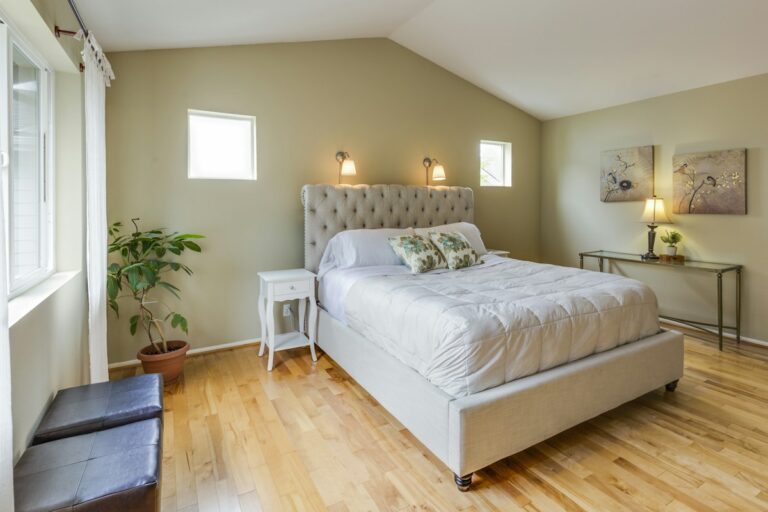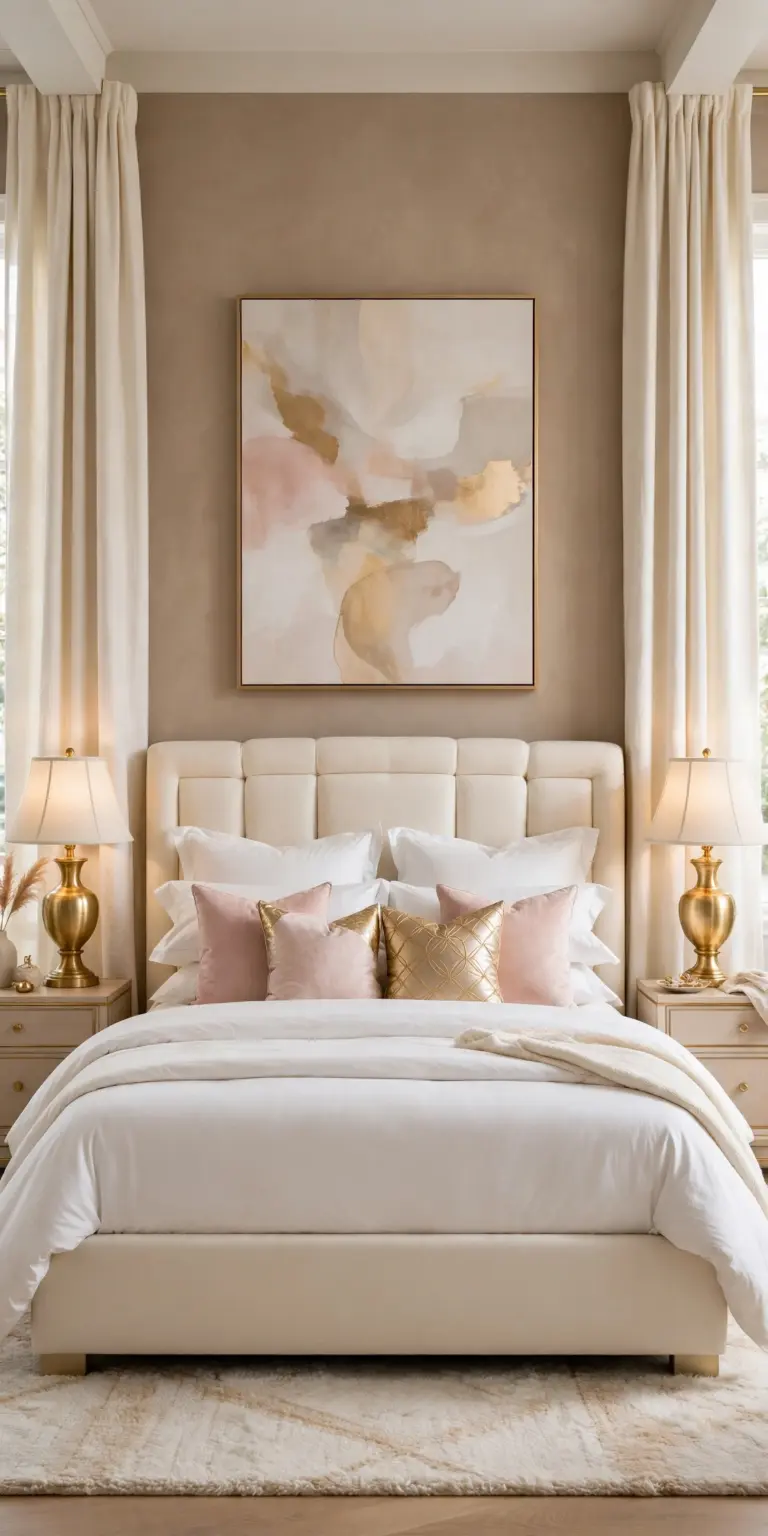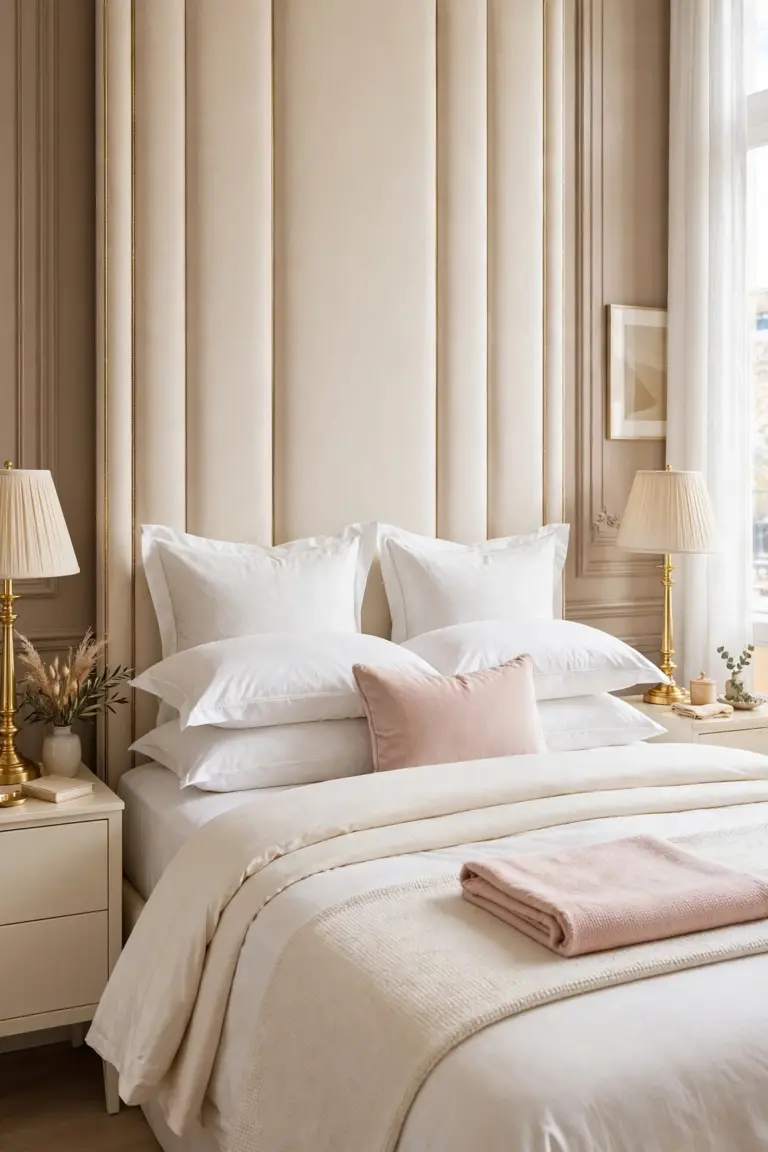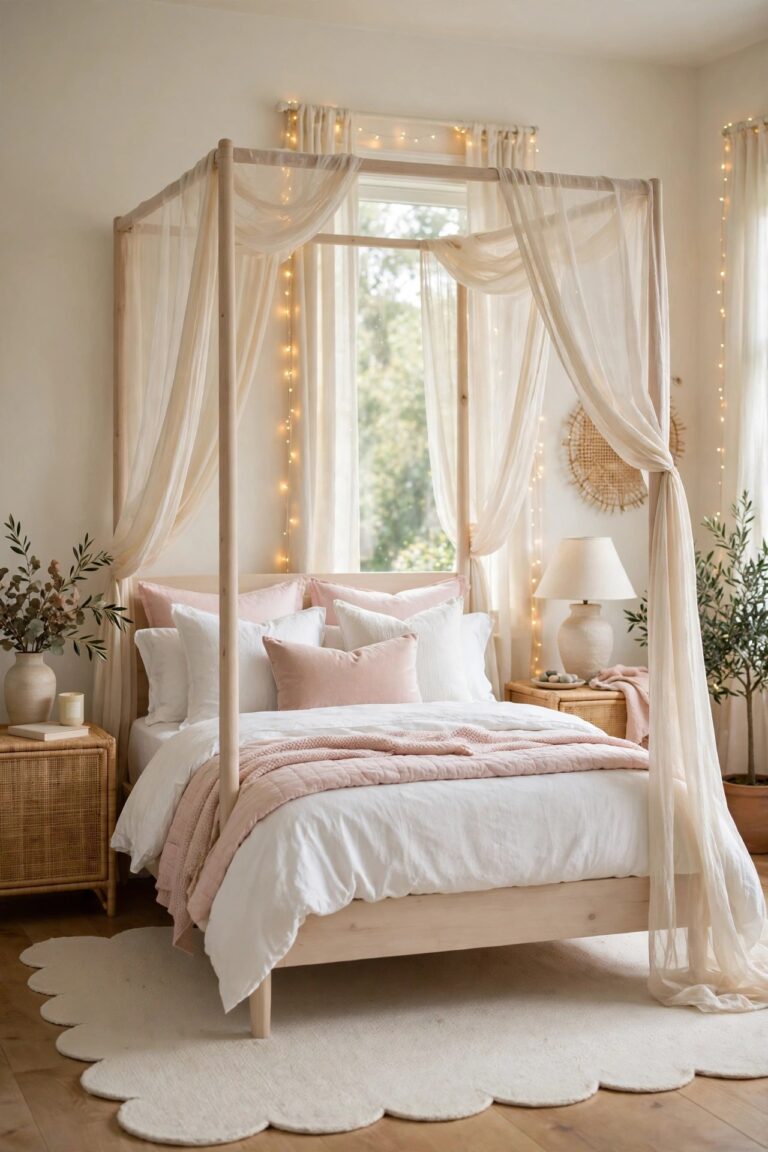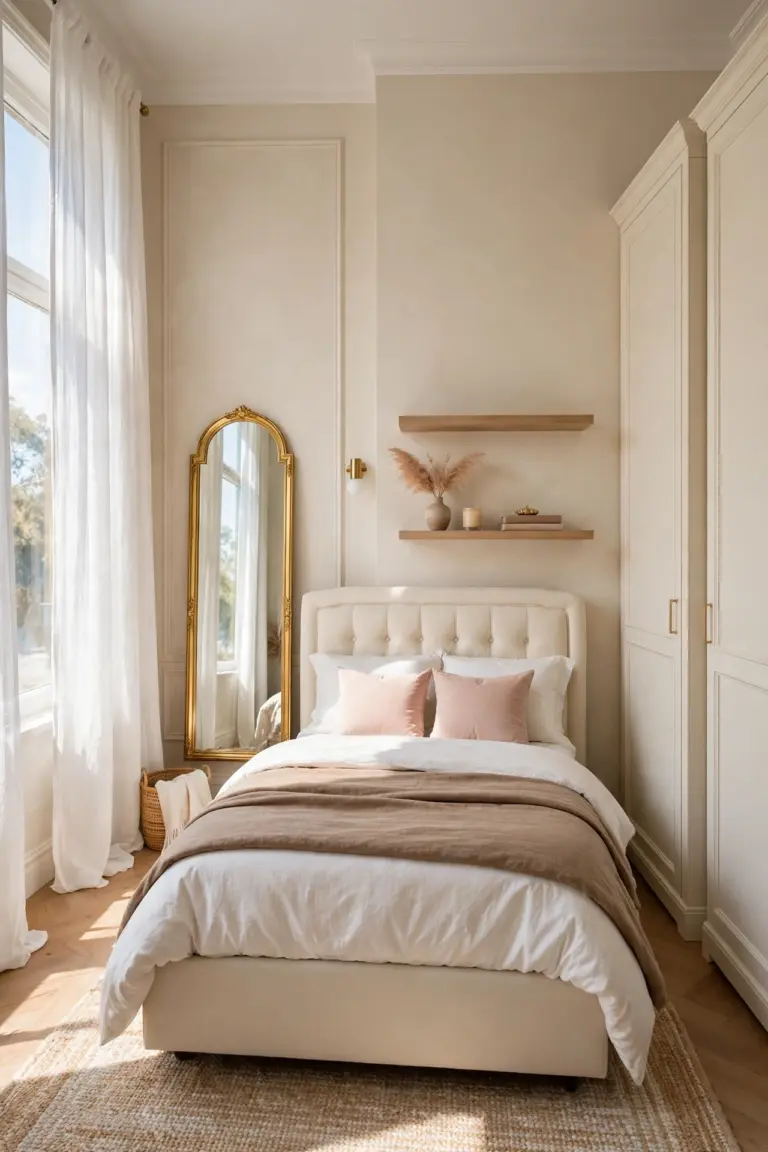
15 Japandi Bedroom Ideas for a Calm, Uncluttered Room
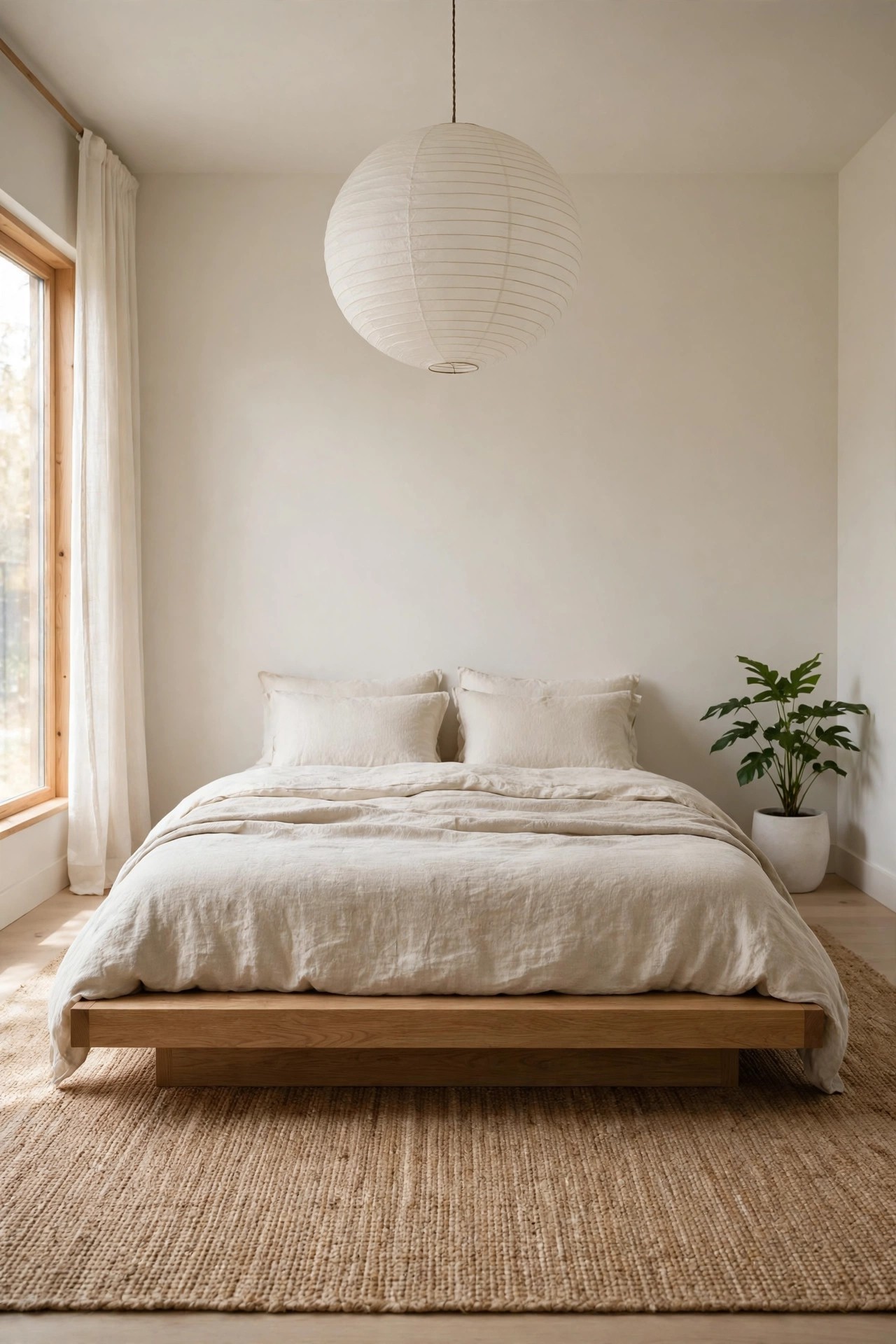
Japandi bedroom photos look simple, yet a real room has chargers, laundry, spare bedding and a bed frame that sits too high for the look. A japandi bedroom works when the basics are low, natural and closed away, not when more decor is added on top. This collection builds the room piece by piece: a low solid wood bed, undyed linen, one paper light, flatweave texture underfoot, storage with drawers, and a single plant. Each idea gives what you need, clear steps, an honest cost estimate and a renter note, so you can start with one change instead of a full refit. For other directions alongside this one, the wider list of bedroom ideas covers modern, cozy and glam looks too. Begin with the bed height, because almost every other choice follows from it.
1. Start With a Low Solid Wood Platform Bed
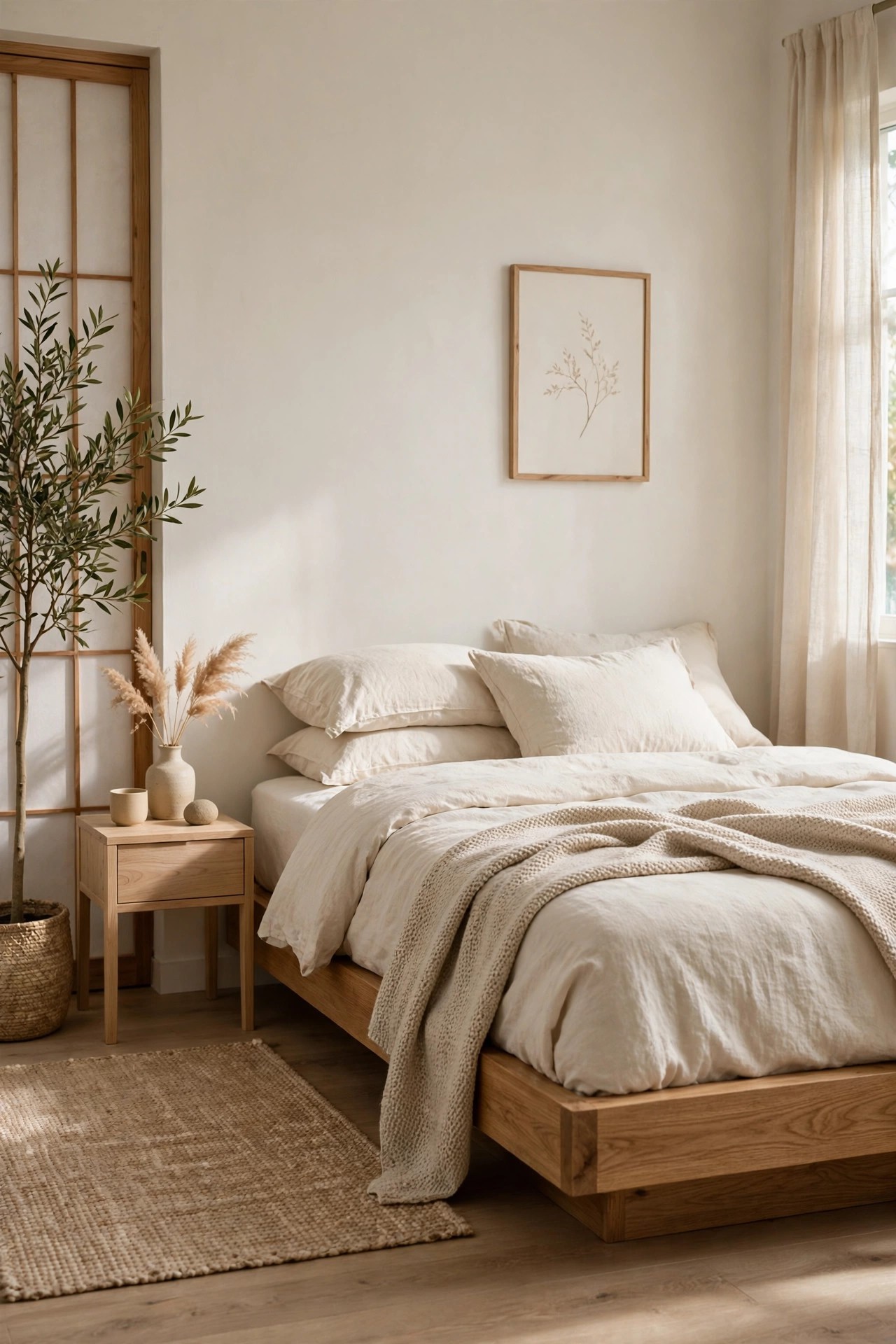
Description: Bed height sets the whole mood of a Japandi room. A low platform frame in pale solid wood keeps the bed close to the floor, so walls look taller and the room feels settled rather than stacked. Choose plain rails and a low or absent headboard, then dress it in cream linen so the wood stays the main feature. The trade off is practical: a low bed is harder for anyone with knee or back trouble, so check the frame height against whoever sleeps there before buying.
Best For: Main bedrooms being rebuilt around one calm focal piece, and rooms with low ceilings that feel crowded by tall furniture.
Not Ideal For: Anyone who struggles to get up from a low seat, and sleepers who need a tall bed for under bed storage access.
Estimated Cost: $280-$420 (estimate) for a solid wood platform frame in queen size.
Budget Note: The frame is the one large purchase in this style, so spend here and keep every later layer simple and cheap.
Renter Friendly: Yes
Renter Note: The frame is freestanding with no wall fixings; felt pads under the legs protect a rented floor from marks.
What You Need
Low solid wood platform bed frame in a natural finish, your existing mattress, cream or oatmeal linen bedding, felt floor pads.
Product recommendation (partially verified): Bme Chalipa 14 Inch Solid Wood Bed Frame, Japanese Joinery Platform Bed, Natural, Queen
Why it fits: The frame is solid rubberwood with Japanese style joinery and wood slat support, so no box spring is needed and the mattress sits low on a clean profile. It comes in Twin, Full, Queen and King in a natural finish that matches the pale wood palette.
Retailer/product page: https://www.amazon.com/dp/B0B3MRX12W/ref=cm_sw_r_cso_cp_apin_dp_37CRE2R8YP3XHAFDBG31
How To Do It
- Measure your mattress and the room, and confirm the low frame height suits everyone who uses the bed.
- Build the frame following the maker instructions and fit felt pads under every leg.
- Lay the mattress straight on the slats, with no box spring, so the bed keeps its low line.
- Dress the bed in cream linen with a single folded throw, and leave the floor around the bed clear.
Pro Tip
Sit on the edge of a similar height sofa or step before ordering; if that height is hard to rise from, choose a taller frame and get the Japandi feel from the bedding and light instead.
2. Dress the Bed in Undyed Natural Linen
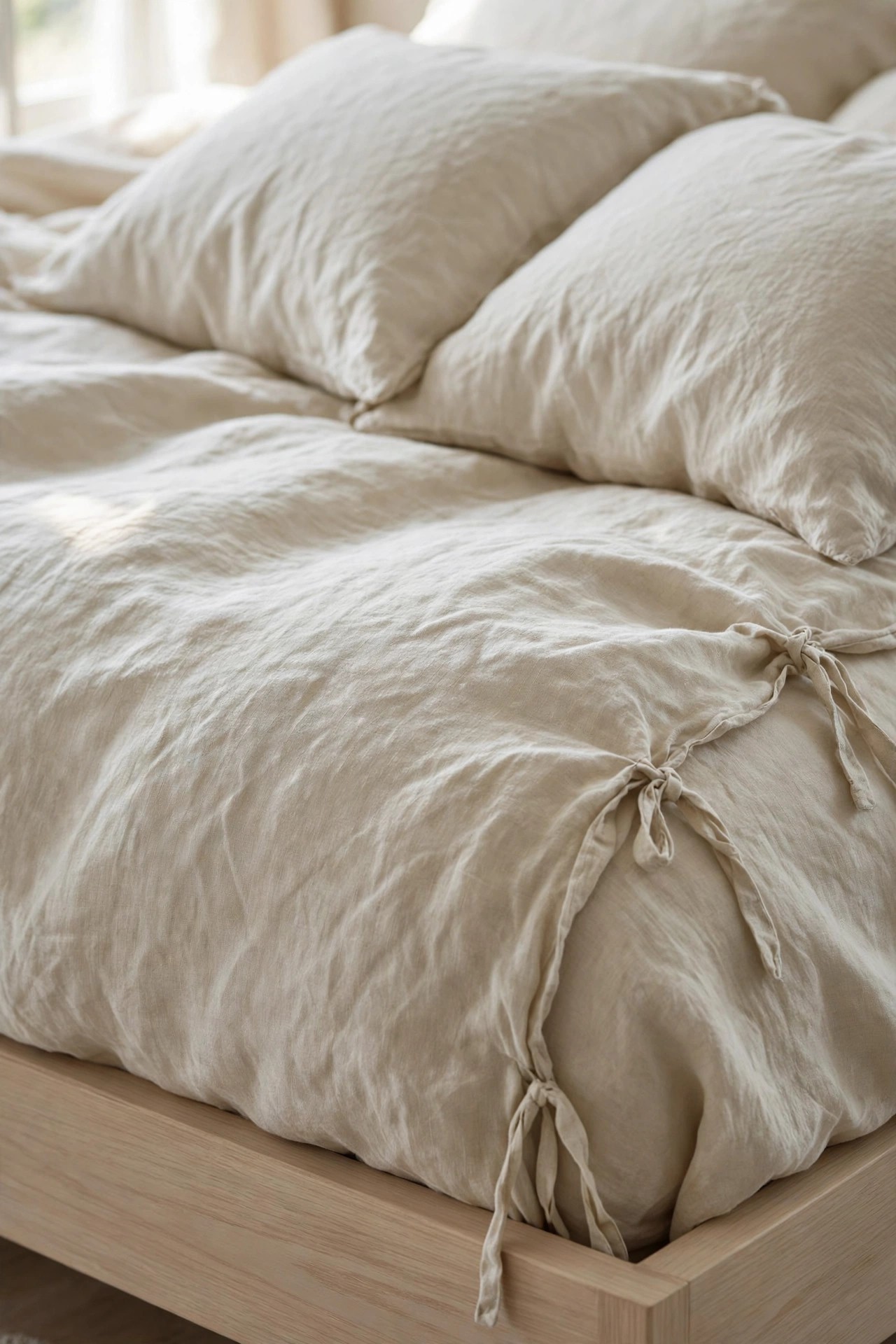
Description: Dyed, patterned bedding fights the calm this style depends on. Undyed or natural toned linen in cream and oatmeal brings texture without colour noise, and the natural creases of washed flax suit the relaxed side of Japandi. Layer a plain duvet cover over white or cream sheets, then stop; two tones are enough. Linen costs more than cotton and feels slightly rough at first, though it softens with washing and breathes well in warm rooms.
Best For: Warm bedrooms and hot sleepers, and anyone whose current bedding has patterns that clash with a calm scheme.
Not Ideal For: People who like a crisp, ironed hotel finish, because washed linen always keeps some creases.
Estimated Cost: $85-$130 (estimate) for a pure linen duvet cover set with two shams in queen size.
Budget Note: Buy the duvet set first in a natural tone; plain cotton sheets underneath do not show and can stay budget.
Renter Friendly: Yes
Renter Note: Bedding only, so it suits any rental and moves with you.
What You Need
Pure linen duvet cover set in a natural or cream tone, plain cotton sheet set, your existing duvet insert and pillows.
Product recommendation (partially verified): Simple&Opulence 100% Linen Duvet Cover Set, Belgian Flax, Tie Closure, Queen, Linen colour
Why it fits: The set is 100 percent stone washed linen with a queen duvet cover at 88 x 92 inches plus two pillow shams, in the undyed looking Linen colour this idea needs. The tie closure keeps the look soft and hardware free.
Retailer/product page: https://www.amazon.com/dp/B093BWWSKJ/ref=aipsfphoto_asin
How To Do It
- Wash the linen set once before first use to soften the fibres and settle the fit.
- Fit the duvet insert, close the ties, and shake the cover down so it sits evenly.
- Dress the bed with plain sheets and the two linen shams only, with no extra cushions.
- Fold the top edge of the duvet back once to show the sheet line, and leave the surface un-ironed.
Pro Tip
Check the colour name on the listing before ordering; on linen sets, the shade called Linen is the undyed natural tone, while White and Cream are dyed lighter.
3. Hang a Paper Lantern Pendant for Soft Light
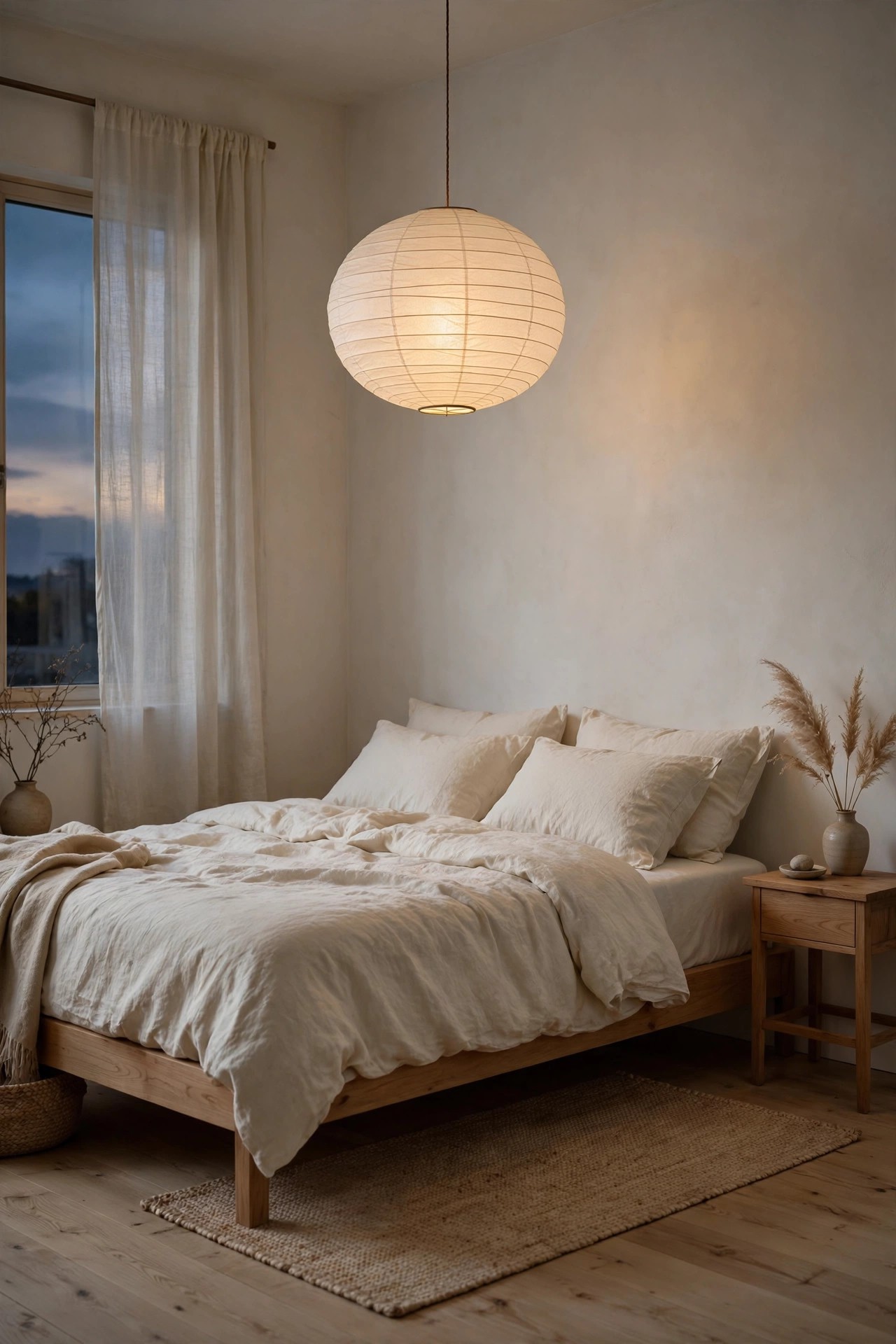
Description: Bare bulbs and bright ceiling spots undo a calm room faster than any furniture choice. A round paper lantern pendant spreads light evenly and softly, so the whole ceiling glows instead of one harsh point. Hang it centred over the room or slightly toward the bed, and use a warm bulb so the paper reads cream, not grey. Paper shades are fragile and cannot be wiped hard, so this light suits a bedroom better than a steamy bathroom or a kitchen.
Best For: Rooms with one central ceiling fitting and harsh overhead light, where evenings feel bright and restless.
Not Ideal For: Low ceilings where a hanging globe would crowd head height, and homes where a shade within reach of children or pets could be grabbed.
Estimated Cost: $35-$60 (estimate) for a paper pendant shade and fitting, bulb bought separately.
Budget Note: The shade itself is inexpensive; the cost rises only if you pay an electrician to move the ceiling point.
Renter Friendly: With Conditions
Renter Note: Swapping a shade on the existing fitting is usually fine, but hardwiring changes and moving a ceiling point need the landlord’s written permission first.
What You Need
Round rice paper pendant shade around 20 inches, pendant fitting or your existing ceiling fitting, warm white LED bulb, step ladder.
Product recommendation (partially verified): Fivemengo Large Rice Paper Pendant Light, 20 Inch White Globe, E26 Base
Why it fits: The 20 inch rice paper globe diffuses light across the room and fits a standard E26 bulb up to 60W, so a warm LED gives the soft cream glow this style needs. The hanging height adjusts, which helps centre the globe over the bed.
Retailer/product page: https://www.amazon.com/dp/B0DS2TNYVT/ref=cm_sw_r_as_gl_api_gl_i_6KRYFBP34TBDFY2HTTFZ
How To Do It
- Turn the power off at the breaker before touching the existing fitting.
- Remove the old shade and fit the pendant at a height that clears head room when you stand on the bed to change bedding.
- Fit a warm white LED bulb, never a bare high wattage bulb against paper.
- Turn the power back on and check the light from the bed; it should feel even, with no bright spot in your eyeline.
Pro Tip
Keep the paper shade at least a hand’s width from the bulb on all sides and dust it with a dry feather duster only; water marks rice paper permanently.
4. Keep Nightstands Low With One Closed Drawer
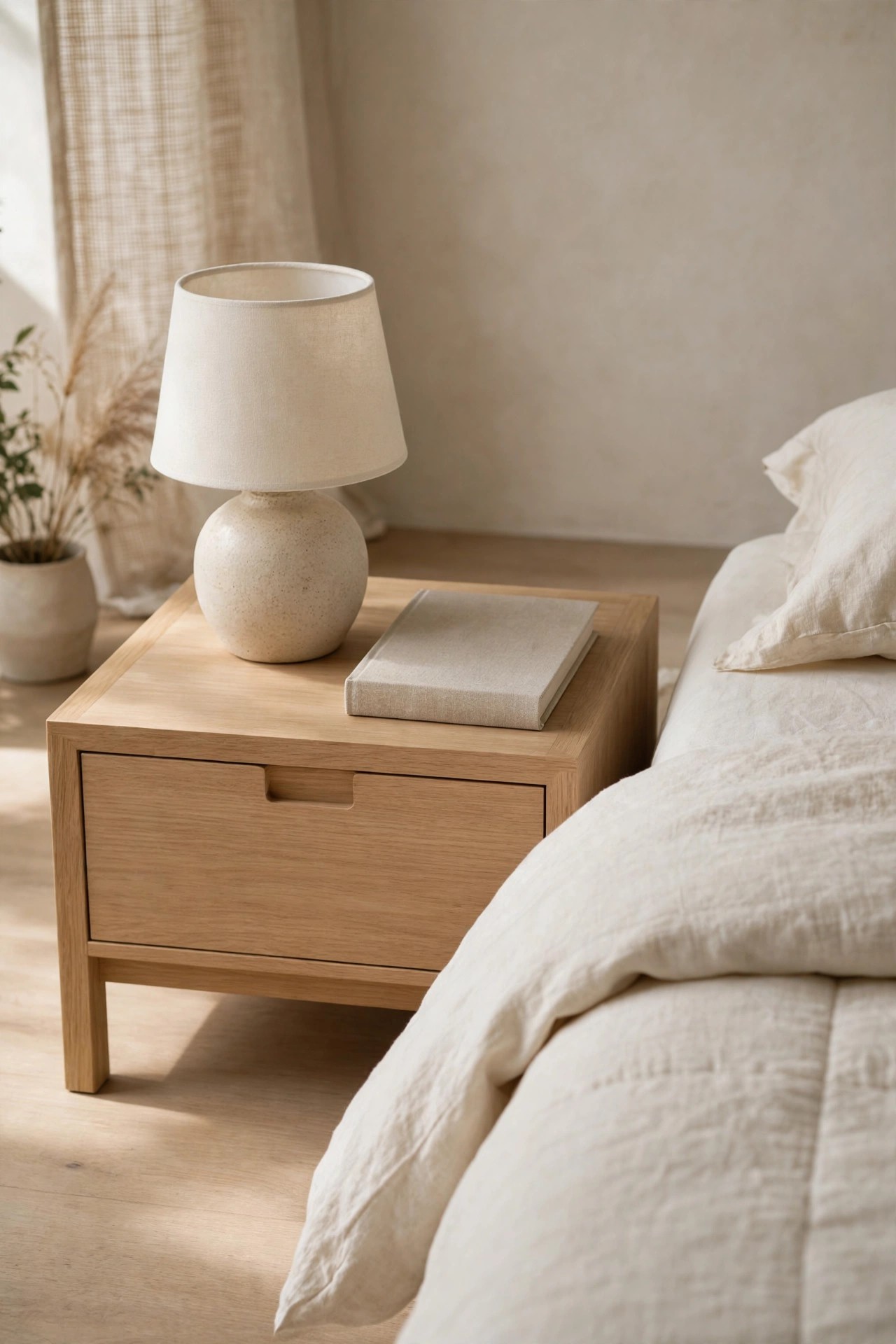
Description: A tall nightstand beside a low bed looks wrong and is awkward to use, because everything sits above mattress level. Match the nightstand top to roughly the height of the mattress, and choose one closed drawer over open shelves, so chargers, medicines and cables disappear. The top then holds only a lamp, a book and a glass of water. Buy the pair at the same time if you can; mismatched heights on each side break the symmetry this style relies on.
Best For: Low platform beds, and anyone whose open bedside shelves have become a visible clutter shelf.
Not Ideal For: Readers who keep a tall stack of books and devices by the bed and need several open shelves within reach.
Estimated Cost: $110-$170 (estimate) for one light wood nightstand with a drawer.
Budget Note: A single drawer model costs less than cabinet styles and is all this layout needs, so skip charging stations and extra features.
Renter Friendly: Yes
Renter Note: Freestanding furniture with no fixings; use felt pads if the floor is wood or laminate.
What You Need
Low nightstand in light wood with one drawer, bedside lamp, small tray or coaster for a water glass, felt pads.
Product recommendation (partially verified): Nathan James Iris Nightstand with Drawer, Light Oak
Why it fits: The Iris stands 22 inches high with a 22 inch wide top, which lines up well with a low platform bed and mattress. Its single drawer and open lower shelf give one closed space for clutter and one space for a book, in a light oak finish that matches pale Japandi wood.
Retailer/product page: https://www.amazon.com/dp/B0DR7F48J9/ref=as_li_ss_tl_btn_assoc_p-instagram_o-1_srctok-2cf61c00877451cf_ht-t
How To Do It
- Measure from the floor to the top of your mattress, and pick a nightstand within about two inches of that height.
- Build the nightstand and fit felt pads under the legs.
- Put chargers, cables and small clutter inside the drawer, and only a lamp, book and water glass on top.
- Run the lamp cable down the back leg and into the drawer gap or a cable clip so no wire crosses the top.
Pro Tip
If the nightstand sits slightly low, a thick book or a wooden tray under the lamp evens the height without buying new furniture.
5. Lay a Flatweave Jute Rug Under the Bed
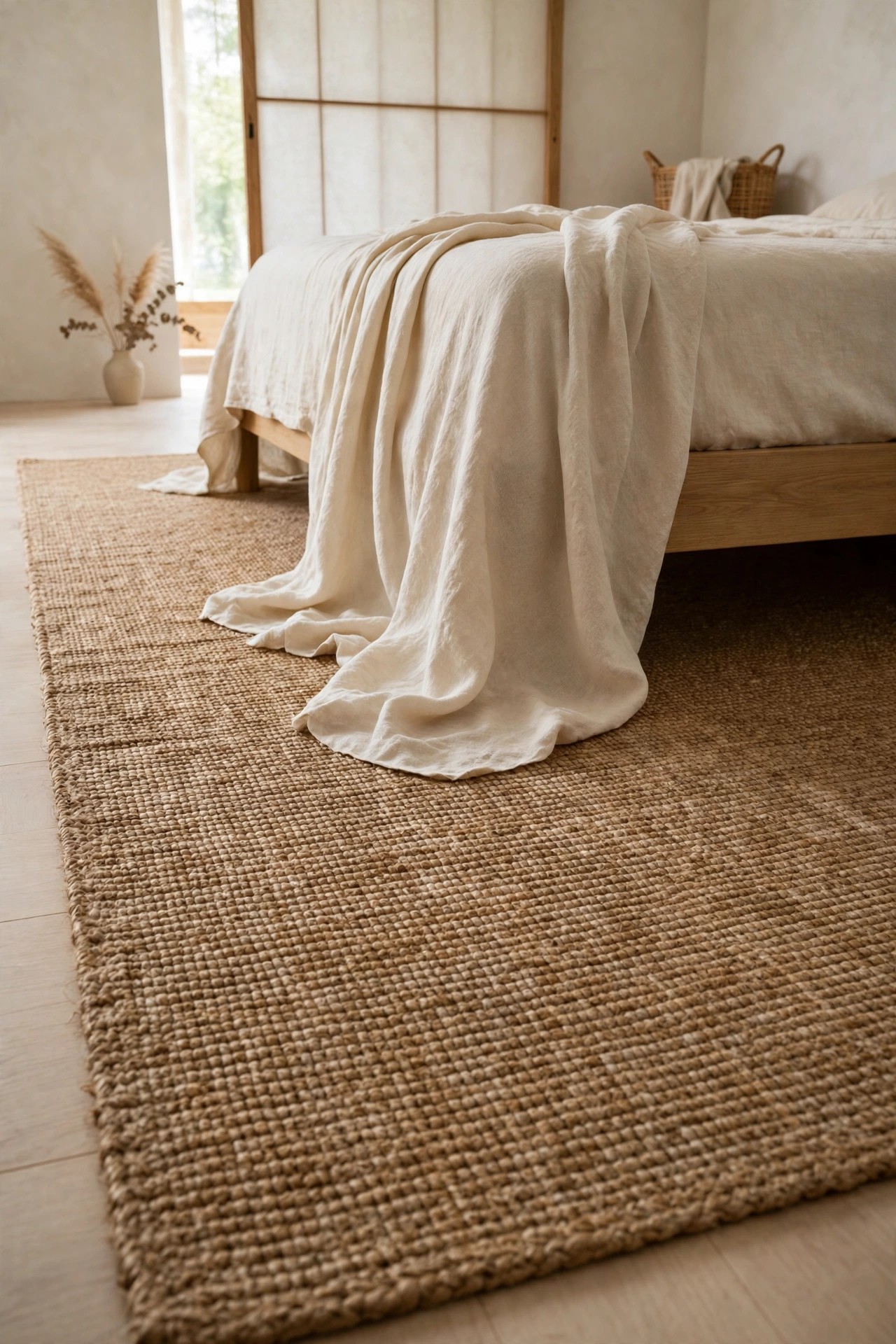
Description: Pale wood floors can feel cold and echo in a quiet room. A flatweave jute rug under the bed adds warmth and texture while staying low in profile, so the bed still looks grounded. Run it wider than the bed on both sides and past the foot, in the natural undyed tone. Jute is not soft like wool and it sheds fibres for the first weeks, so it suits the sides of the bed better than a play area on the floor.
Best For: Wood or tile floors that feel cold in the morning, and rooms where sound carries and softens badly.
Not Ideal For: Homes with indoor pets that scratch or chew natural fibres, and anyone who wants a plush feel underfoot.
Estimated Cost: $90-$160 (estimate) for a hand woven jute rug around 5 x 8 feet, plus a rug pad.
Budget Note: Jute is one of the cheapest natural rug fibres; spend the saving on a good non slip pad instead of a larger size.
Renter Friendly: Yes
Renter Note: A rug protects the rented floor beneath it; always use a pad so the rough backing cannot scuff the boards.
What You Need
Flatweave jute rug sized wider than the bed, non slip rug pad, vacuum with suction only setting.
Product recommendation (partially verified): nuLOOM Rigo Jute Hand Woven Area Rug, 5 x 8, Natural
Why it fits: The Rigo is hand woven from 100 percent jute in a flat weave only 0.35 inches thick, so it slides under a low bed frame without lifting it and keeps the grounded profile this style needs. The natural colour is undyed and varies slightly, which suits the palette.
Retailer/product page: https://www.amazon.com/dp/B009RDOJL2/ref=sspa_dk_offsite_search_5185
How To Do It
- Measure the bed and choose a rug at least 18 inches wider on each side and at the foot.
- Lay the rug pad first, trimmed slightly smaller than the rug so the edges stay hidden.
- With help, lift each side of the bed and slide the rug under, keeping the exposed borders even.
- Vacuum with suction only for the first weeks to lift loose fibres without pulling the weave.
Pro Tip
Photograph the rug borders from the doorway after laying it; uneven borders are hard to see from above but obvious in a photo.
6. Add One Cane or Rattan Piece for Texture
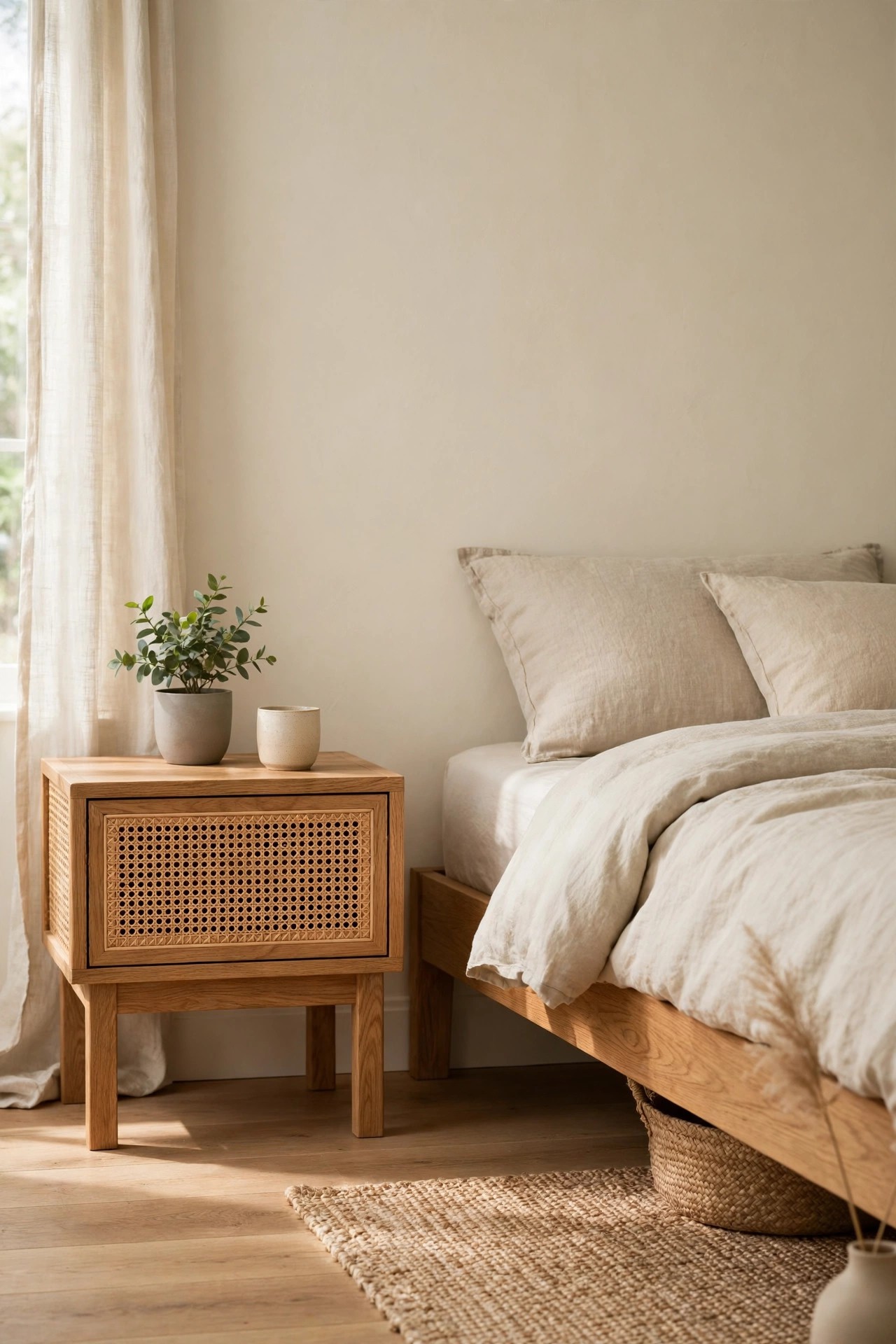
Description: A room of plain wood and linen can feel flat, because every surface is smooth. One woven piece fixes that: a cane front nightstand or rattan side table adds a visible weave that catches light and shadow. Keep it to one piece, in a natural tone close to the bed wood, so the texture reads as a deliberate accent. Woven cane is light but not load bearing, so it works for bedside items rather than heavy storage.
Best For: Plain rooms that feel smooth and featureless, and bedsides that need a lighter visual weight than solid wood.
Not Ideal For: Households where cats scratch woven panels, and anyone who stacks heavy books on a nightstand.
Estimated Cost: $120-$180 (estimate) for a pair of cane front nightstands.
Budget Note: These are often sold as a pair for less than two singles, so price the pair before buying one statement piece.
Renter Friendly: Yes
Renter Note: Freestanding and light to move, with no wall fixings needed.
What You Need
Cane or rattan front nightstand or side table in a natural finish, felt pads, a small plant or cup for the top.
Product recommendation (partially verified): Lerliuo Rattan Nightstands, Set of 2, Cane Accent Bedside Tables with Drawer and Open Shelf, Natural
Why it fits: Each nightstand measures about 16 x 12 x 23 inches with a woven cane drawer front and solid beech wood legs, so a pair frames a low bed without visual weight. The drawer keeps small items closed away while the cane brings the one texture this idea is about.
Retailer/product page: https://www.amazon.com/dp/B0C78216RK/ref=cm_sw_r_cso_fm_apin_dp_WZBF9D1AV1D9BED7GQ6M
How To Do It
- Place one nightstand each side of the bed, or a single piece if the room only fits one.
- Fit felt pads under the legs before sliding them into place on wood floors.
- Keep the tops nearly clear: one small plant, a cup or a lamp, nothing stacked.
- Leave every other surface in the room smooth, so the weave stays the single texture accent.
Pro Tip
Check cane panels monthly for sagging in humid rooms; a night in a dry, ventilated space tightens the weave again without any treatment.
7. Hide Clutter Behind Closed Dresser Drawers
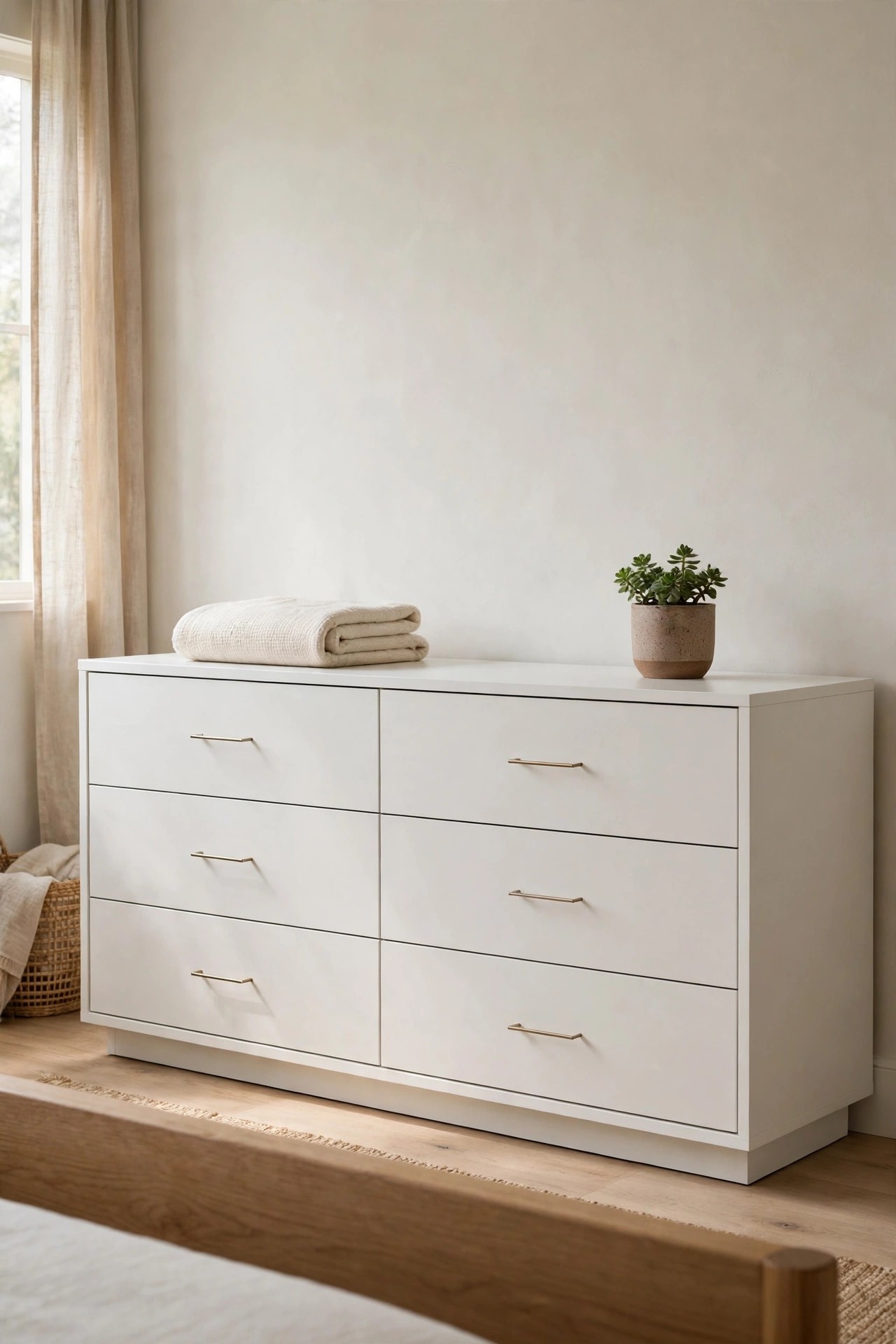
Description: Open shelving is where calm rooms go to fail, because every object shows. A low, wide dresser with closed drawers swallows clothes, spare bedding and chargers behind plain fronts, and its top becomes the one display surface in the room. Keep the top to two or three items at most. Low and wide also matters for safety: any dresser can tip if a child climbs the drawers, so anchor it to the wall where the maker advises, whatever the room style.
Best For: Bedrooms where clothes and bedding currently live on chairs and open shelves.
Not Ideal For: Very small rooms where a 47 inch wide dresser would block the walkway around the bed.
Estimated Cost: $130-$190 (estimate) for a six drawer double dresser around 47 inches wide.
Budget Note: Flat pack double dressers are the cheapest closed storage per drawer; measure your doorway and stairs before ordering one.
Renter Friendly: With Conditions
Renter Note: The dresser itself is freestanding, but wall anchoring for tip safety may need landlord permission; ask before drilling, and never skip the anchor in a home with small children.
What You Need
Low six drawer dresser in white or pale wood, anti tip anchor kit, drawer organisers or folded storage boxes, felt pads.
Product recommendation (partially verified): LYNSOM White 6 Drawer Double Dresser, 47.2 Inch Wide
Why it fits: The dresser measures 15.8 x 47.2 x 30.5 inches, low and wide rather than tall, with six deep drawers behind plain white fronts and slim metal handles. That closed, low profile is exactly the storage shape a Japandi room needs.
Retailer/product page: https://www.amazon.com/dp/B0DM1TPSGD/ref=cm_sw_r_cso_fm_apin_dp_JNQZHSRVFEXTNHFR7Z7M
How To Do It
- Build the dresser on a blanket in the room where it will stand, because a finished double dresser is awkward to carry.
- Fit the anti tip anchor to a wall stud following the maker instructions.
- Sort clothes and bedding into the drawers by type, with the heaviest items in the lowest drawers.
- Style the top with a maximum of three items, such as one plant and a folded throw, and keep the rest clear.
Pro Tip
Open only one drawer at a time when dressing; dressers are most likely to tip when several loaded drawers are pulled out together.
8. Style One Plant in a Matte Stoneware Pot
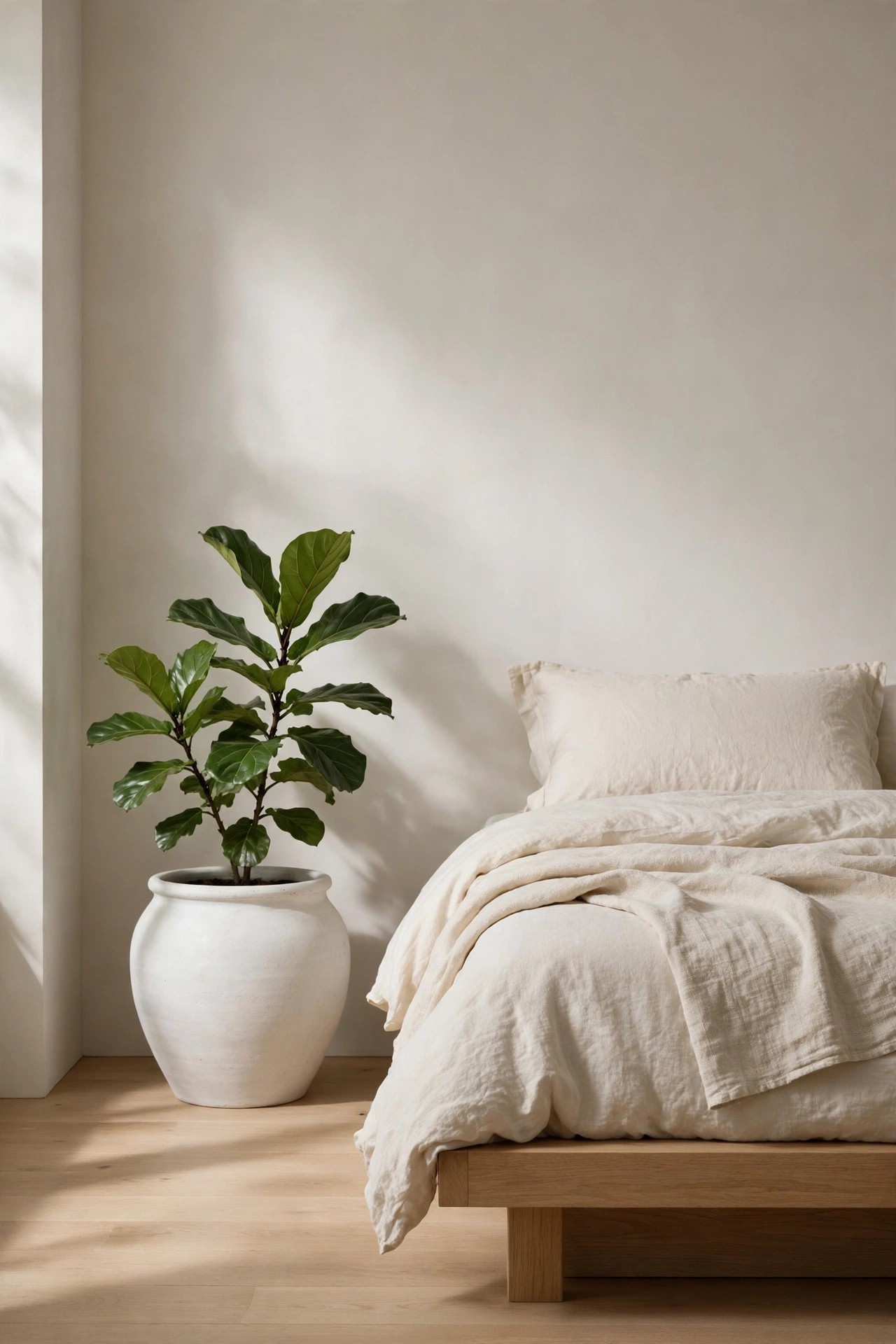
Description: Japandi rooms use one plant as the living accent, not a shelf of small pots. Choose one healthy plant with a simple leaf shape, set it in a matte stoneware pot, and give it an empty corner near the light. A larger plant in one place looks calmer than five small ones scattered around, and it is easier to keep alive. Keep the pot plain and unglazed looking; a shiny or patterned pot becomes a second accent competing with the plant.
Best For: Rooms that feel finished but lifeless, and corners near a window that currently hold nothing.
Not Ideal For: Dark bedrooms with no natural light, and homes with pets that chew houseplants, unless the plant is checked as non toxic and placed out of reach.
Estimated Cost: $45-$75 (estimate) for a large matte stoneware pot, plant bought separately.
Budget Note: Spend on the pot, which you see every day, and start with a small, cheap plant that will grow into it.
Renter Friendly: Yes
Renter Note: Stand the pot on a saucer or mat so watering cannot mark a rented floor.
What You Need
Matte stoneware planter around 12 inches, one leafy houseplant in a 10 inch nursery pot, saucer or floor mat, watering can.
Product recommendation (partially verified): Creative Co-Op Large Matte White Embossed Stoneware Planter
Why it fits: The planter is stoneware with a matte white finish and a subtle embossed texture, measuring 12 inches across and 12.25 inches high, and it holds a 10 inch nursery pot. That plain, soft finish is the quiet backdrop a single plant needs.
Retailer/product page: https://www.amazon.com/dp/B07NC75L8R/ref=mp_s_a_1_32
How To Do It
- Choose the corner with the best indirect light and place the saucer or mat first.
- Keep the plant in its nursery pot and set it inside the stoneware planter, so watering and drainage stay simple.
- Turn the plant a quarter turn each week so it grows evenly toward the light.
- Remove any other small plants from the room, or group them elsewhere, so this one stays the single accent.
Pro Tip
Water into the nursery pot at the sink and let it drain fully before returning it; stoneware planters without drainage holes rot roots if you water in place.
9. Soften a Corner With a Shoji Screen
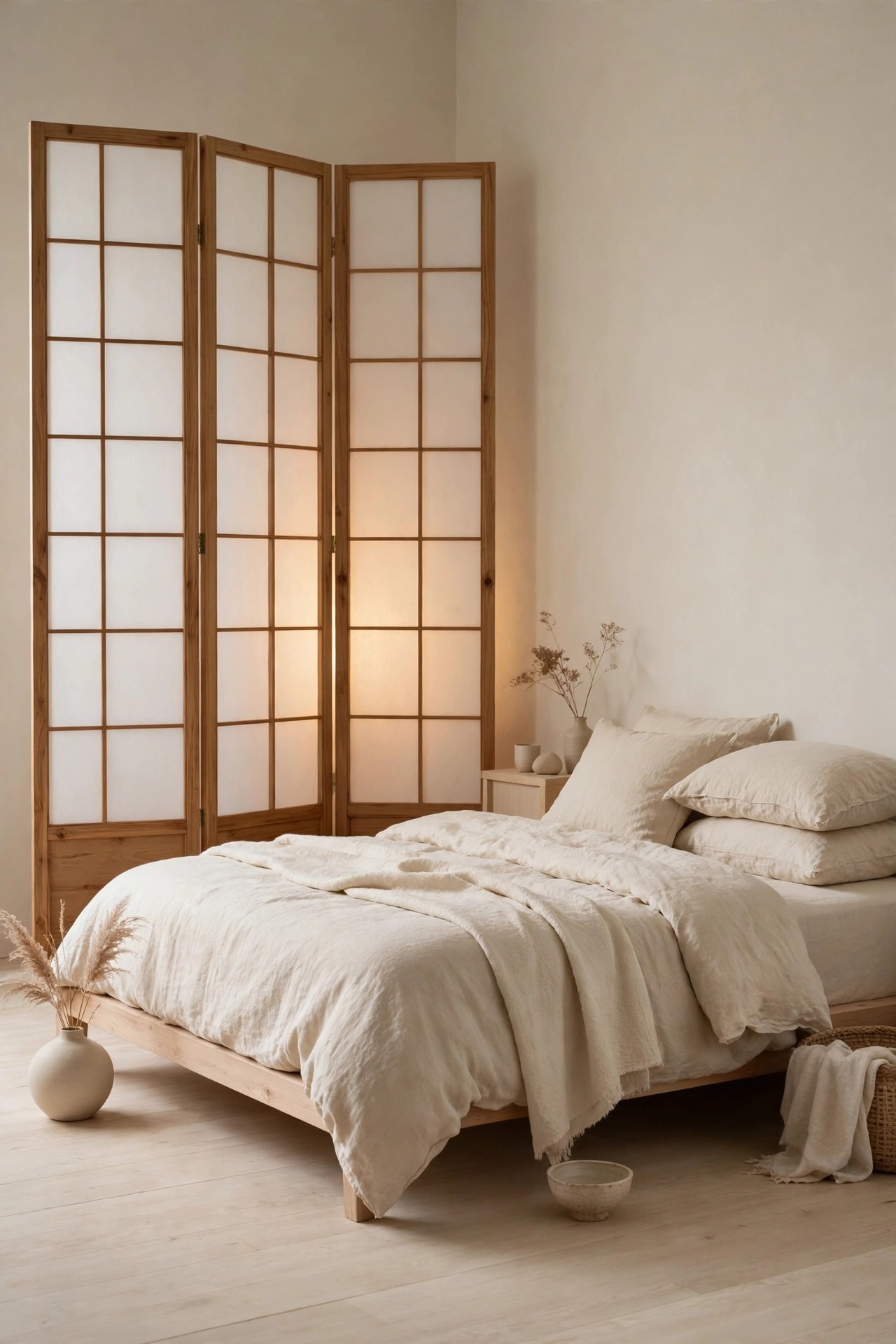
Description: A folding shoji screen does three quiet jobs in a bedroom: it hides a laundry basket or work corner, softens a bare corner, and filters window light into a glow. The wood lattice and translucent panels are the most recognisably Japanese element in the style, so one screen is enough. Place it angled, never flat against the wall, and keep the frame in a natural finish close to your bed wood. Screens are light and can tip, so keep them out of walkways and away from small children climbing.
Best For: Studio style bedrooms and rooms with a corner that collects clutter, such as a chair of clothes or a desk.
Not Ideal For: Busy family walkways where a freestanding screen would be knocked, and very small rooms where it would eat floor space.
Estimated Cost: $110-$160 (estimate) for a four panel wood shoji screen around six feet tall.
Budget Note: A three panel screen costs less and is enough for a corner; pay for the fourth panel only if you need to divide a room.
Renter Friendly: Yes
Renter Note: Fully freestanding with no fixings, and it folds flat for storage or moving out.
What You Need
Wood shoji screen with translucent panels in a natural finish, felt pads for hard floors.
Product recommendation (partially verified): Roundhill Furniture Oriental Shoji 4 Panel Screen Room Divider, Natural
Why it fits: The four panel screen measures 68 inches wide and 71 inches high in a natural wood finish, with the lattice grid on one side and rice paper panels that let light pass while blocking the view. At about 15 pounds it is easy to fold and move.
Retailer/product page: https://www.amazon.com/dp/B01NAHZ4T8/ref=cm_sw_r_cp_ud_dp_S8Q33ZQEEFYJBBTX0JBS
How To Do It
- Unfold the screen and stand it in a zigzag so it balances on its own feet.
- Angle it across the corner you want to soften, leaving a gap at the wall so it does not look pushed there.
- Check it from the doorway and from the bed; adjust the angle until the lattice shadow falls across the floor, not the bed.
- Keep the floor space in front of it empty so the screen reads as the feature.
Pro Tip
Place the screen where morning light passes through it at least once in the day; the glowing panels are the effect you are paying for.
10. Filter Daylight With Natural Linen Curtains
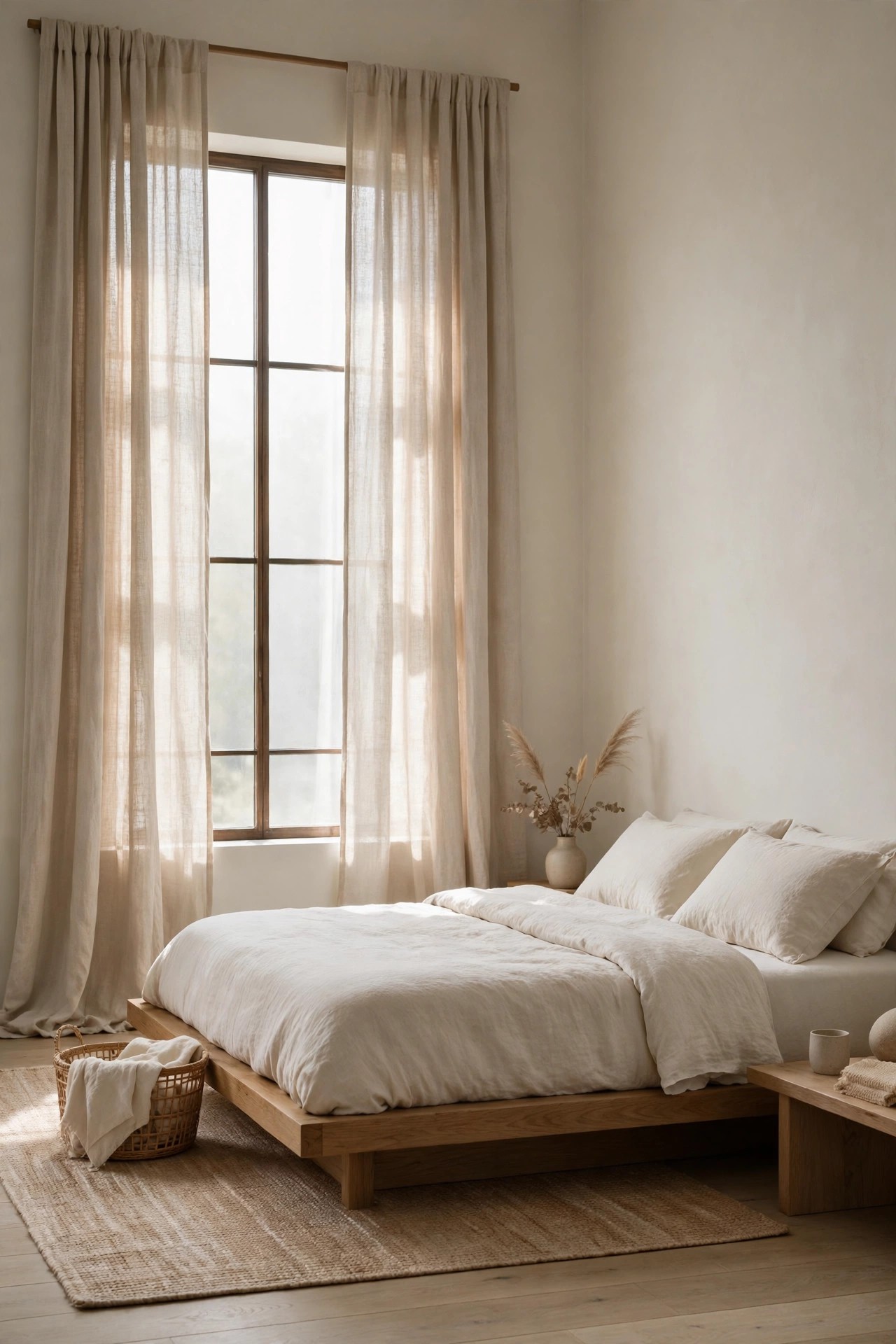
Description: Heavy blackout drapes and bare blinds both fight this style, one with weight and the other with hard lines. Natural linen or linen blend curtains hang in soft folds, filter glare, and keep privacy in the daytime without darkening the room. Choose an undyed beige or angora tone and hang them from just under the ceiling to the floor, which makes the window look taller. They are semi sheer, so a separate blind or liner is still needed for full darkness at night.
Best For: Bedrooms with harsh direct sun or overlooked windows, where light needs softening rather than blocking.
Not Ideal For: Night shift sleepers who need full blackout in the day, unless paired with a blackout liner behind.
Estimated Cost: $35-$55 (estimate) for a pair of linen blend curtains at 96 inches long.
Budget Note: Most natural look curtains at this price are a linen and polyester blend, which is fine; the blend actually creases less than pure linen.
Renter Friendly: With Conditions
Renter Note: Use the existing rod where possible; fitting a new rod needs landlord permission, and tension rods work for lighter panels without drilling.
What You Need
Pair of natural linen blend curtains, floor length, curtain rod or tension rod, tape measure, lint roller.
Product recommendation (partially verified): NICETOWN Thick Flax Linen Curtains, Angora, 55 x 96 Inches, Pair
Why it fits: The pair measures 55 x 96 inches per panel set in a natural angora tone, made from a 30 percent linen and 70 percent polyester flax blend that hangs with a visible linen texture but resists creasing. The semi sheer weave filters light instead of blocking it, which is the effect this idea needs.
Retailer/product page: https://www.amazon.com/dp/B0B95ZVFKB/ref=cm_sw_r_as_gl_api_gl_i_1BYY4AVGK595YFWET0F9
How To Do It
- Measure from just under the ceiling to the floor and choose a length that just touches or slightly pools.
- Fit or reuse the rod wider than the window frame so the curtains can stack clear of the glass.
- Hang the panels and steam or hang them for a day so packing creases fall out.
- Check the light at midday; the room should glow softly with no direct sun patch on the bed.
Pro Tip
Buy the pair one width wider than you think you need; linen curtains look calm only when the folds stay full with the curtains closed. The same window treatment suits a calm bathroom refresh, as shown in these bathroom decor ideas with natural texture.
11. Build a Floor Cushion Reading Corner
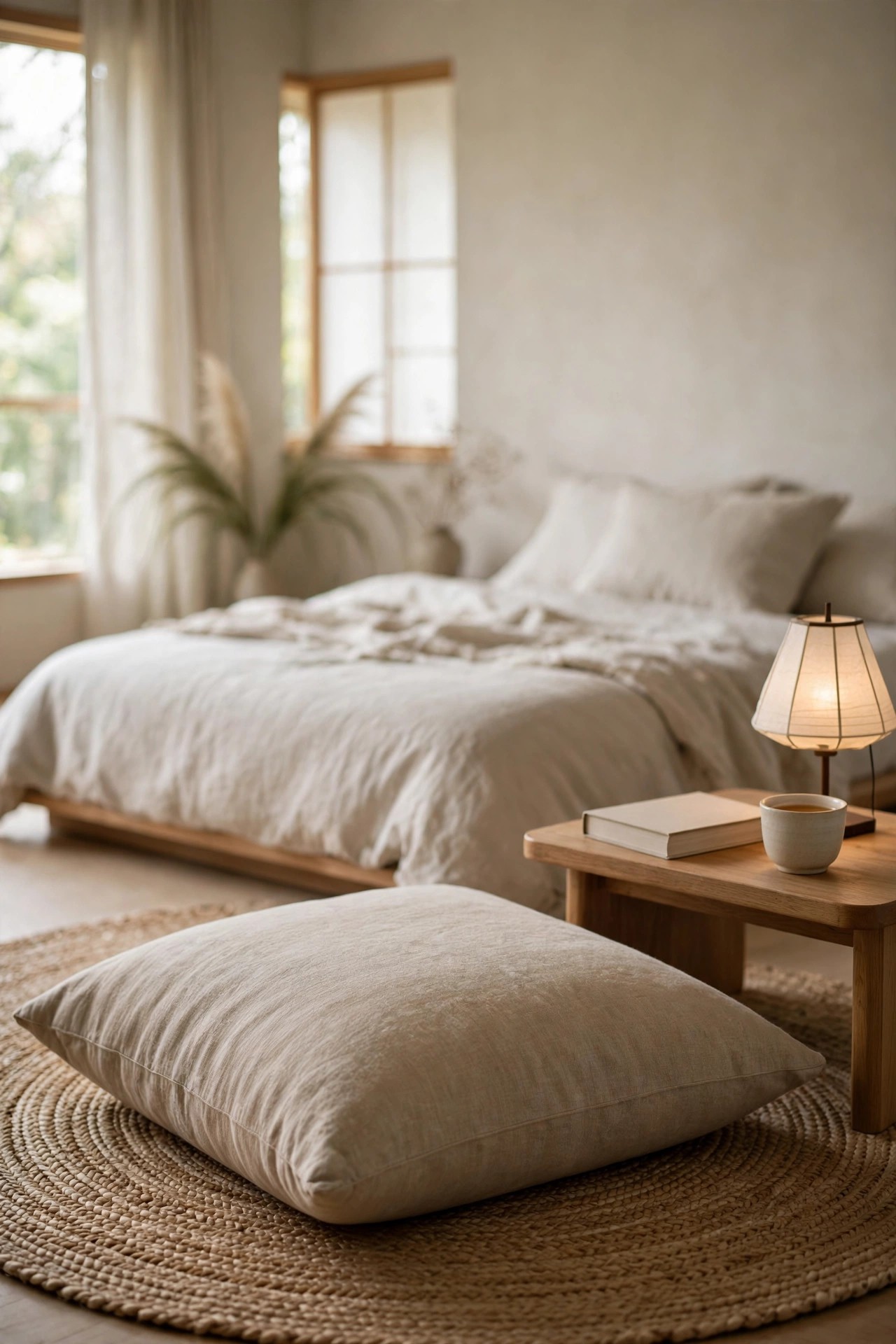
Description: Japandi rooms are used at floor level, not just looked at. One large square floor cushion on a mat, a low side table and a small lamp make a reading or tea corner that takes no extra furniture and folds away when not used. It gives the room a second purpose beyond sleeping, which matters in small homes. Floor sitting is not for everyone, so test the height with cushions you own before buying; sore knees end the habit quickly.
Best For: Small bedrooms and studio rooms that need a sitting spot beyond the bed, and readers who like a set place.
Not Ideal For: Anyone with knee, hip or back problems that make floor sitting painful.
Estimated Cost: $55-$85 (estimate) for a large cotton filled floor cushion around 32 inches square.
Budget Note: One large zabuton style cushion costs less than a chair and stores flat in a closet, so it is the cheapest extra seat in this list.
Renter Friendly: Yes
Renter Note: Nothing is fixed and the whole corner packs away before an inspection or a move.
What You Need
Large square floor cushion, woven mat or small rug for underneath, low side table, small lamp with a warm bulb.
Product recommendation (partially verified): Florensi Meditation Mat Zabuton, Floor Cushion, 32 x 32 Inches
Why it fits: The cushion is a traditional square zabuton shape at 32 x 32 inches with about 3 inches of cotton padding, a size that works as a reading seat for one adult rather than a small meditation pad. It ships from Amazon in several cover colours, so a warm neutral keeps the palette.
Retailer/product page: https://www.amazon.com/dp/B08CZZ2Y8D/ref=cm_sw_r_as_gl_api_gl_i_Z3DS91FFX9R1VZHKE59Z
How To Do It
- Lay the mat in the corner with the best natural light, away from the door swing.
- Set the cushion on the mat and the low table within arm’s reach for a book and a drink.
- Place the lamp so the light falls over your shoulder onto the page, not into your eyes.
- Store the cushion upright against the wall or in a closet when the corner is not in use.
Pro Tip
Sit on the cushion for a full chapter before judging it; floor cushions settle in the first week and feel firmer after that point.
12. Set a Low Wooden Bench at the Foot of the Bed
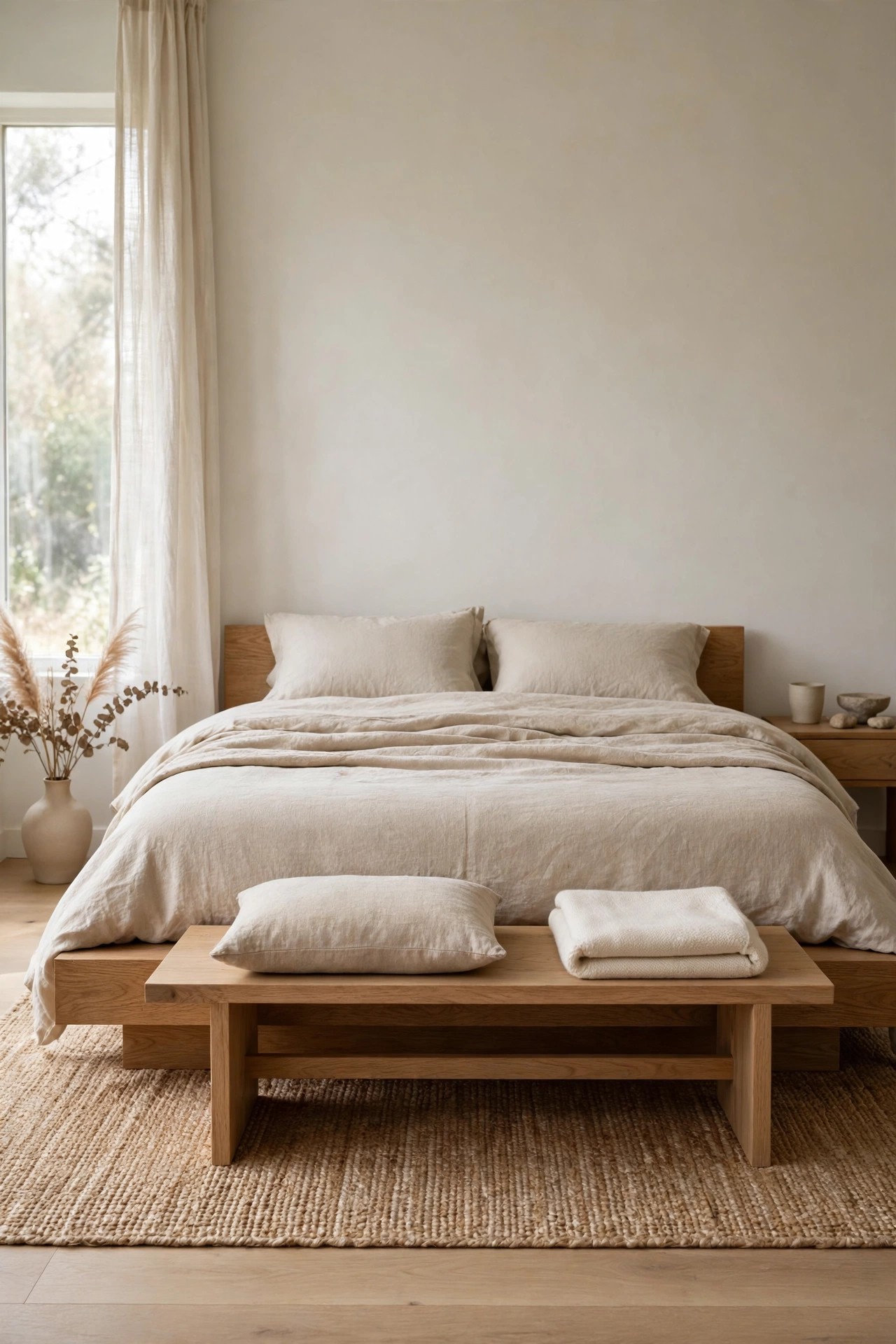
Description: The foot of the bed is where the laundry chair habit starts. A low bench in wood, with or without a thin linen cushion, gives clothes and a folded throw a set place and gives you a seat for shoes and dressing. Keep it narrower than the bed and low enough to see over from the pillow, so the room keeps its long, low lines. Check the walkway first: a bench needs about two feet of clear floor beyond it to work.
Best For: Rooms with at least two feet of clear space past the foot of the bed, and anyone fighting a clothes chair habit.
Not Ideal For: Tight rooms where the bench would block the path to a door or closet.
Estimated Cost: $120-$180 (estimate) for a solid wood base bench around 47 inches wide.
Budget Note: A plain wood bench without upholstery costs less and ages better; add a folded throw instead of a cushion.
Renter Friendly: Yes
Renter Note: Freestanding; felt pads protect the floor when you slide it out to sit.
What You Need
Low bench around 47 inches wide with a wood base, folded throw, felt pads, tape measure.
Product recommendation (partially verified): Ya-Home Modern Bedroom Bench, 47 Inch, Linen Beige Cushion with Solid Natural Wood Base
Why it fits: The bench measures 47.25 x 17.75 x 18 inches with a linen beige cushion on a solid wood base, rated to 300 pounds, and the open space under the seat fits shoes or a basket. The beige linen and natural wood keep it inside the palette.
Retailer/product page: https://www.amazon.com/dp/B0DBHH898M/ref=tsm_1_fb_lk
How To Do It
- Measure the space at the foot of the bed and confirm at least two feet of walkway will remain.
- Build the bench and fit felt pads under the base.
- Centre it on the bed width, leaving equal gaps at both sides.
- Rest one folded throw on it, and keep the rest of the surface clear so it does not become a shelf.
Pro Tip
Use the bench as the one allowed landing place for tomorrow’s clothes; a named spot stops the pile spreading to the floor.
13. Try a Floor Futon in a Small or Guest Room
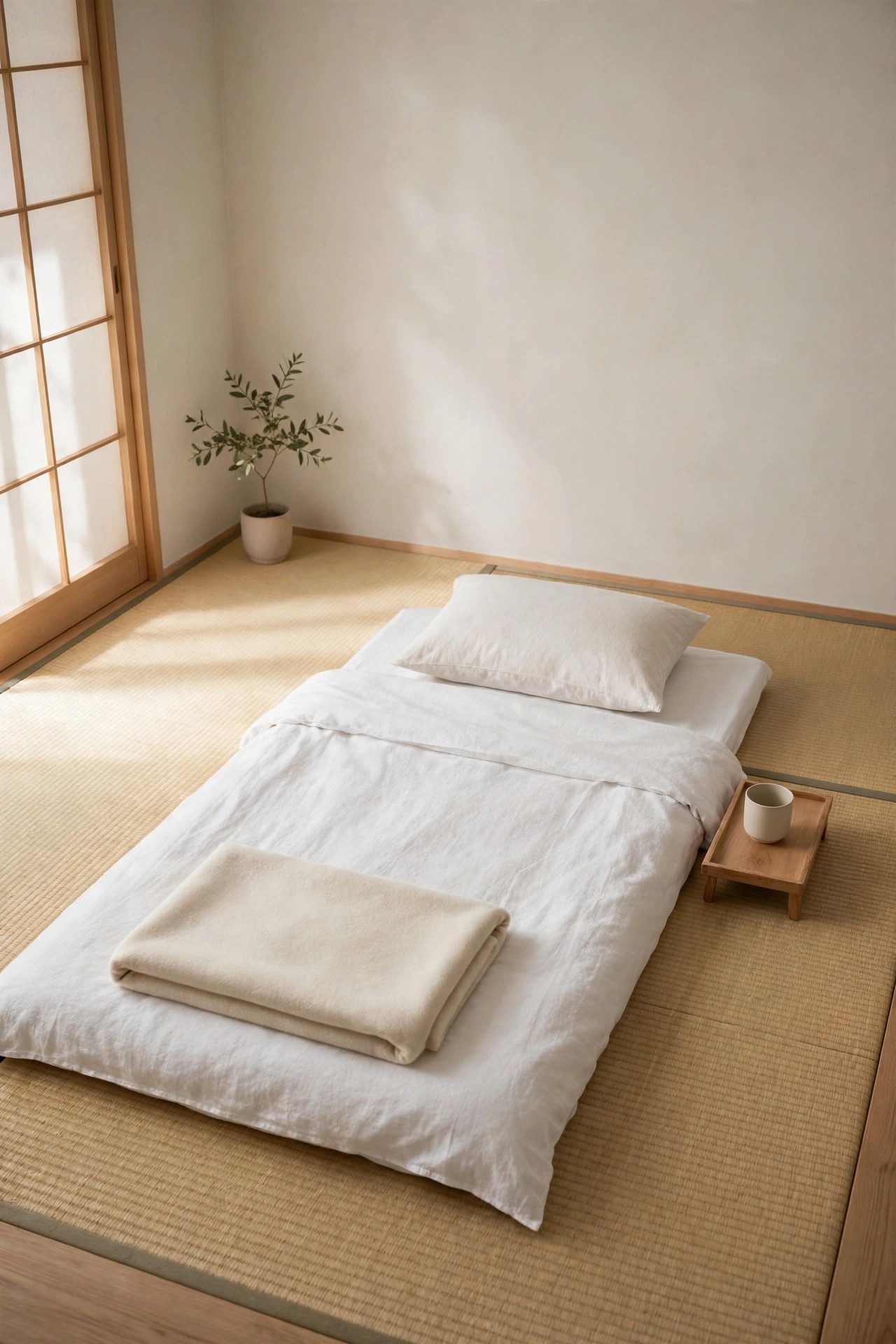
Description: In a small or guest room, a traditional floor futon gives a real bed that folds away each morning, so the room works as a study or sitting room by day. A shikibuton style futon is thin and medium firm, quilted so the filling stays even, and it lies straight on the floor or a tatami mat. The routine is part of the deal: fold and air it daily, or it traps moisture underneath and feels flat within months.
Best For: Guest rooms, studio apartments and small bedrooms where the bed cannot stay out all day.
Not Ideal For: Anyone who finds firm, thin mattresses uncomfortable, and homes where daily folding and airing will not happen.
Estimated Cost: $180-$260 (estimate) for a Japanese made cotton surface futon in full size.
Budget Note: A futon costs far less than a bed frame plus mattress, and it removes the need for a guest bed entirely.
Renter Friendly: Yes
Renter Note: Nothing is fixed, it stores in a closet, and it leaves the room exactly as rented.
What You Need
Japanese floor futon in your guest size, cotton futon cover, tatami mat or breathable underlay, storage space in a closet.
Product recommendation (partially verified): FULI Japanese Futon, Shikibuton Floor Bed, Full Size, White
Why it fits: The FULI futon is made in Japan with a 100 percent cotton sleeping surface and diamond quilting that keeps the medium firm filling even, and it folds and rolls for storage. Full size suits one guest or a slim double in a small room.
Retailer/product page: https://www.amazon.com/dp/B07JWH9G7F/ref=cm_sw_r_apin_dp_R9AYS5Y3A9VVAAEB73E4
How To Do It
- Lay the tatami mat or underlay first, so the futon never sits directly on a cold or sealed floor.
- Unroll the futon, fit the cover, and add one plain pillow and a folded blanket.
- Each morning, fold the futon in thirds and stand it to air before storing or leaving it open on the mat.
- Sun or air the futon outside on a dry day every few weeks to keep it fresh and lofted.
Pro Tip
Never store a futon in a sealed plastic bag; cotton filling needs airflow, and a breathable cotton storage bag prevents the flat, musty result.
14. Add a Wood Slat Headboard Wall
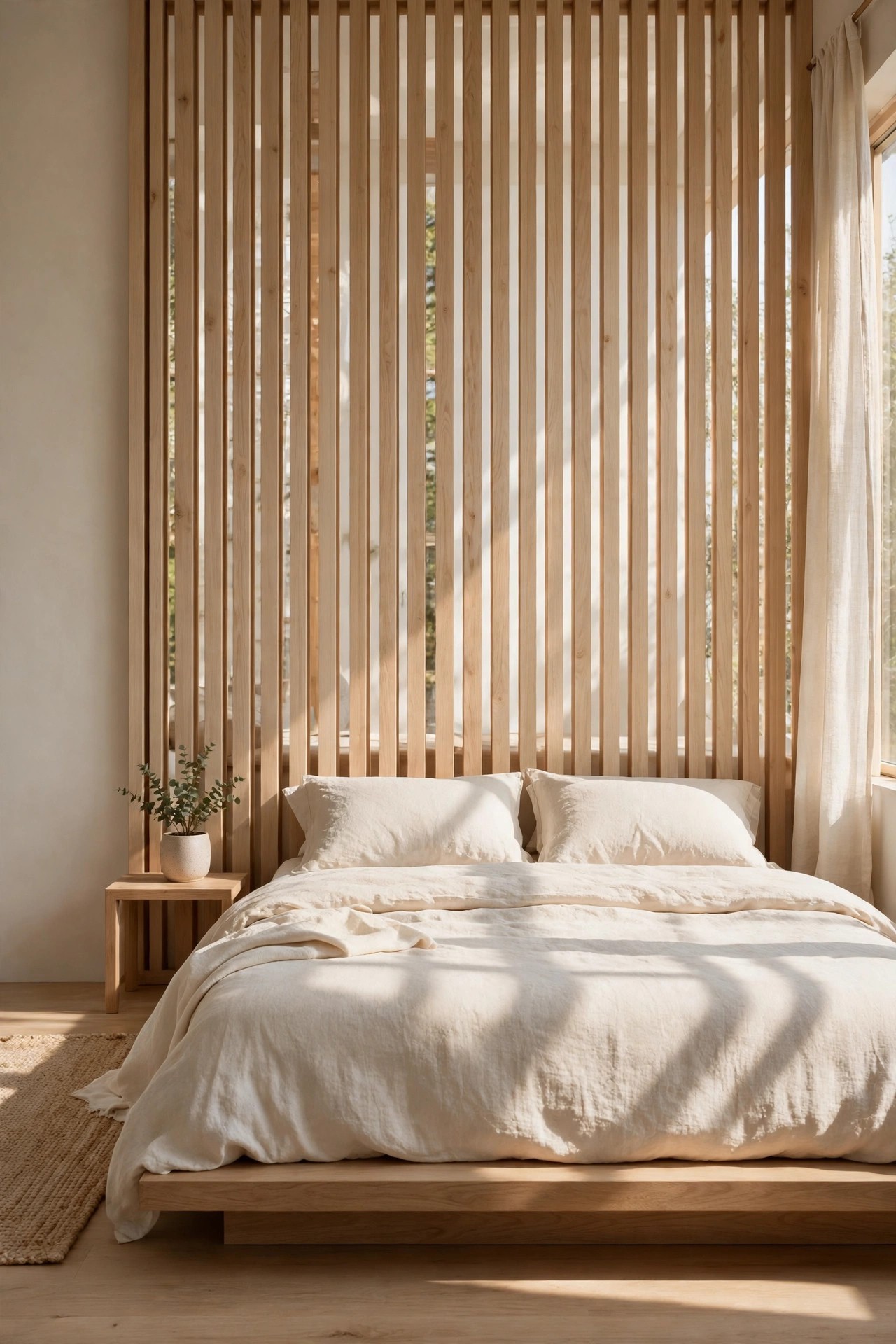
Description: If there is no headboard at all, the bed wall can look unfinished, yet a padded headboard adds bulk this style avoids. Vertical wood slats solve it: a run of pale oak slats behind the bed gives the wall rhythm and shadow while staying flat and low. Run the slats the width of the bed, or across the whole wall for a fitted look. It is the most permanent idea in this list, so it suits owners, or renters only with a frame mounted kit that leaves the wall untouched.
Best For: Main bedrooms with a plain bed wall that needs definition without a bulky headboard.
Not Ideal For: Renters without written permission for wall fixings, and rooms where the bed wall already carries windows or doors.
Estimated Cost: $180-$350 (estimate) for slat panels or battens covering a queen bed width, depending on material.
Budget Note: Covering only the bed width instead of the full wall roughly halves the material cost and looks just as deliberate.
Renter Friendly: With Conditions
Renter Note: Wall mounted slats need fixings and landlord permission; a bed frame mounted slat headboard gives a similar look with no wall damage.
What You Need
Wood slats or slat panels in pale oak, level, stud finder, fixings matched to your wall type, wood oil or clear matte finish.
Product type to look for: A wall mounted or frame mounted wood slat headboard in solid oak or rubberwood slats, sized to your bed width (about 60 to 62 inches for a queen), with slat gaps under 2 inches and a matte, unstained looking finish. Prefer kits that include a mounting cleat or frame brackets so no adhesive touches the wall.
How To Do It
- Mark the run of slats centred on the bed, using a level and painter’s tape to preview the edges.
- Find the studs or choose fixings rated for your wall type before drilling anything.
- Fit the mounting cleat or the first panel plumb, then work outward, checking the level as you go.
- Finish raw wood with a clear matte oil, and push the bed back so the mattress just meets the slats.
Pro Tip
Preview the full slat run in painter’s tape for a day before fixing; slat walls look narrower in real rooms than in photos, and most people end up adding one more slat each side.
15. Finish With One Earth Tone Cotton Throw
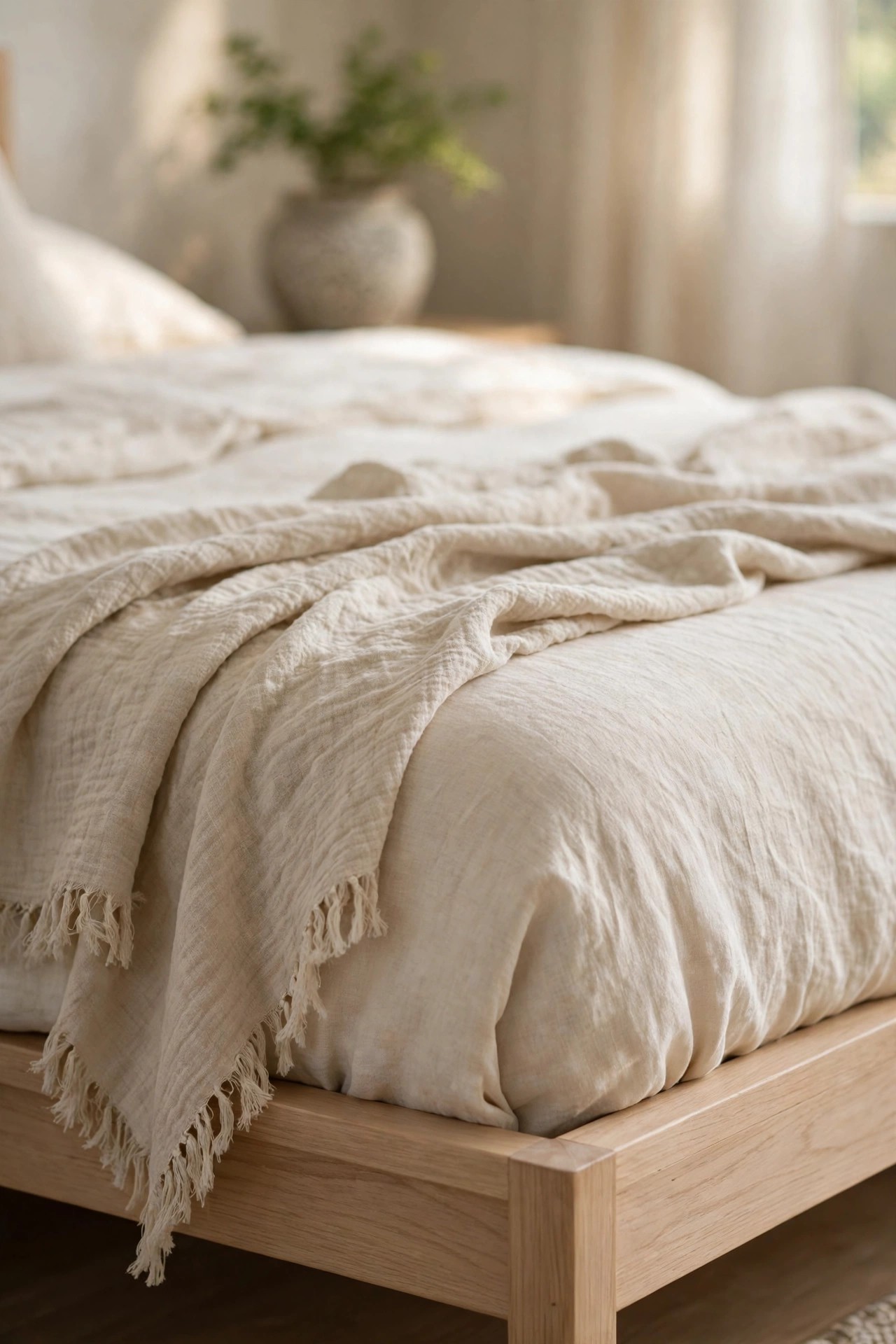
Description: The last layer is the one people overdo, stacking throws and cushions until the bed looks dressed rather than calm. One cotton throw in an earth tone, oatmeal, clay or soft khaki, laid across the foot of the bed is enough. Cotton muslin or waffle weave gives texture that sits well next to linen, and it is light enough to use as a summer cover. Pick the tone from something already in the room, like the rug or the wood, so it ties in instead of starting a new colour.
Best For: Beds that look plain after the linen goes on, and anyone who wants the finished look without buying cushions.
Not Ideal For: Minimalists who prefer the bed completely bare, and hot sleepers who will kick any extra layer off.
Estimated Cost: $40-$65 (estimate) for a cotton muslin or waffle throw around 50 x 60 inches.
Budget Note: One good cotton throw replaces the usual stack of two or three cheap ones, so the total spend is lower.
Renter Friendly: Yes
Renter Note: A soft furnishing only, with nothing to fix or remove later.
What You Need
One cotton throw in an earth tone, around 50 x 60 inches, laid over your finished bed.
Product recommendation (partially verified): KyraHome Muslin Throw Blanket, 100% Organic Cotton, Oatmeal Khaki Tan, 50 x 60 Inches
Why it fits: The throw is 100 percent organic cotton muslin in an oatmeal khaki tone at 50 x 60 inches, light and breathable with a soft crinkled texture that layers over linen without bulk. The plant dyed earth tone is the single warm accent this idea calls for.
Retailer/product page: https://www.amazon.com/dp/B07PVXPFCT/ref=cm_sw_r_apin_dp_8PJ10XKGJPKP1WSC1CAB_1
How To Do It
- Make the bed fully with the linen set first, so you judge the throw against the finished base.
- Fold the throw lengthways into thirds for a neat band, or shake it out loose for a softer edge.
- Lay it across the foot third of the bed, over the duvet, not over the pillows.
- Stop there: no extra cushions, and if the bed still looks plain, the fix is texture, not more items.
Pro Tip
Wash cotton muslin before first use and expect it to soften and crinkle more; that texture is what separates it from a flat fleece throw.
Practical Tips for Japandi Bedrooms
Match heights before matching colours. A low bed with a tall nightstand still looks wrong after every other fix. Keep nightstand tops within about two inches of the mattress top, and keep lamps and benches low too.
Hold the palette to three families. Pale wood, cream and oatmeal textiles, and one green from a plant. If a new item falls outside those three, it needs a reason to be there. The same discipline carries into a living room, as these minimalist living room ideas show.
Choose closed storage before open storage. Drawers and doors hide the objects that make calm rooms look busy. Open shelves should be the last resort, not the default.
Use warm light bulbs everywhere. A 2700K warm bulb makes paper shades glow cream and pale wood look warm. One cool white bulb in a bedside lamp is enough to make the whole scheme look grey.
Edit one item out each week. Japandi rooms drift as objects land and stay. A weekly two minute edit, one item removed or put away, holds the empty space that makes the style work.
Frequently Asked Questions
What is a Japandi bedroom?
A Japandi bedroom mixes Japanese and Scandinavian design: low furniture, natural materials such as pale wood, linen and jute, a small number of objects, and closed storage so surfaces stay clear. The result is a room that looks warm rather than bare, because texture replaces decoration.
Can a Japandi bedroom work in a small room?
Yes, and it often works better there. Low furniture makes ceilings feel higher, closed storage hides clutter that small rooms cannot absorb, and a floor futon or a folding shoji screen can appear and disappear as the room changes use during the day.
Is Japandi expensive to copy?
The bed frame is the one real cost. Most of the rest, linen, a paper shade, a jute rug, curtains and a throw, are mid priced or cheap, and the style asks for fewer objects overall, so the total is often lower than a decorated scheme with many accessories.
Can renters create a Japandi bedroom?
Mostly yes. The bed, bedding, rug, curtains on an existing rod, a screen, a plant and floor cushions are all freestanding or removable. The two ideas to check first are hardwiring a pendant and fixing a slat headboard, which need the landlord’s permission in writing.
What is the difference between Japandi and Scandinavian style?
Scandinavian rooms lean brighter and can carry more objects, pattern and pale colour. Japandi takes the same pale wood and light base, then lowers the furniture, reduces the object count further, and adds Japanese elements such as shoji screens, floor cushions and futons.
Conclusion
A calm Japandi bedroom is built in order: lower the bed, dress it in natural linen, soften the light, then close the clutter away and add one plant and one throw. You do not need all fifteen ideas. Start with the one that fixes your biggest problem, whether that is a bed that sits too high, light that feels harsh, or clutter with nowhere to go, and let the room settle before adding the next piece.