13 Nightstand Styling Ideas for an Elegant Bedroom
13 Nightstand Styling Ideas for an Elegant Bedroom
The nightstand is the hardest working surface in the bedroom and the least styled, because it has to hold real life, a lamp, a book, a glass of water, a phone, and still look calm at seven in the morning. Stylists treat it like a coffee table in miniature, with tighter rules: get the lamp height right first, group what stays, hide what charges, and always leave a clear landing strip, because a nightstand with nowhere to put a cup is a display, not a bedside.
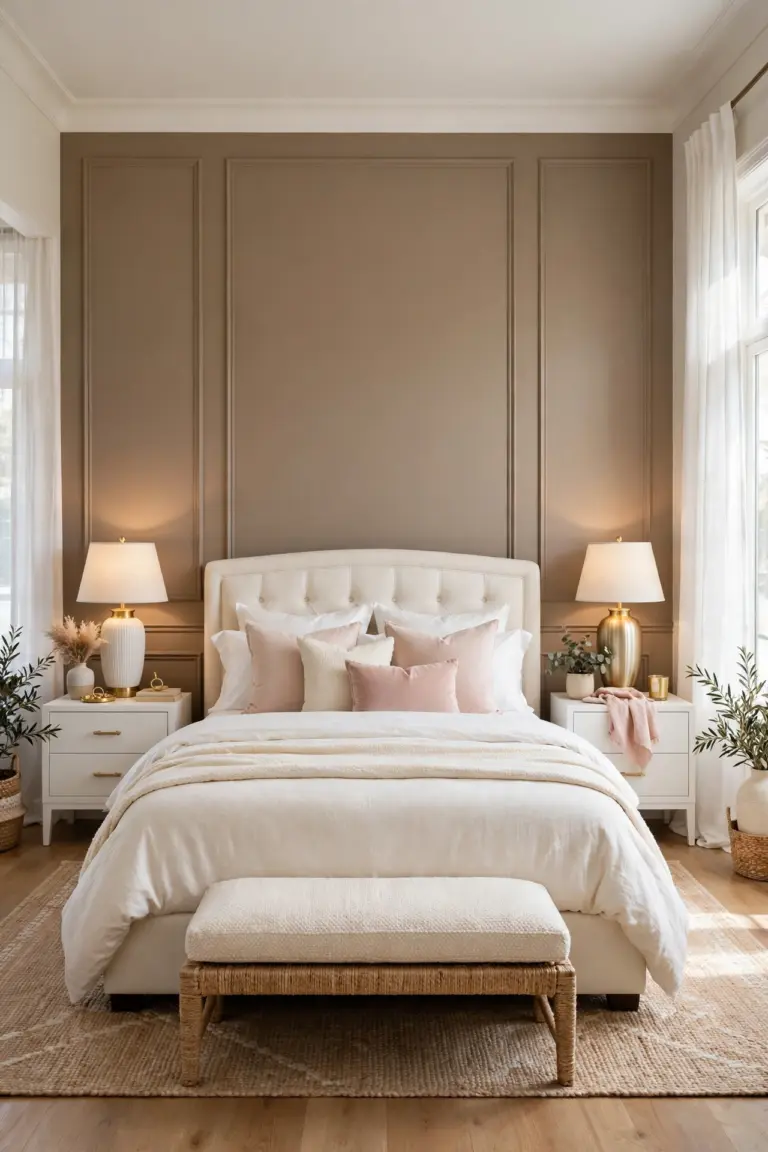
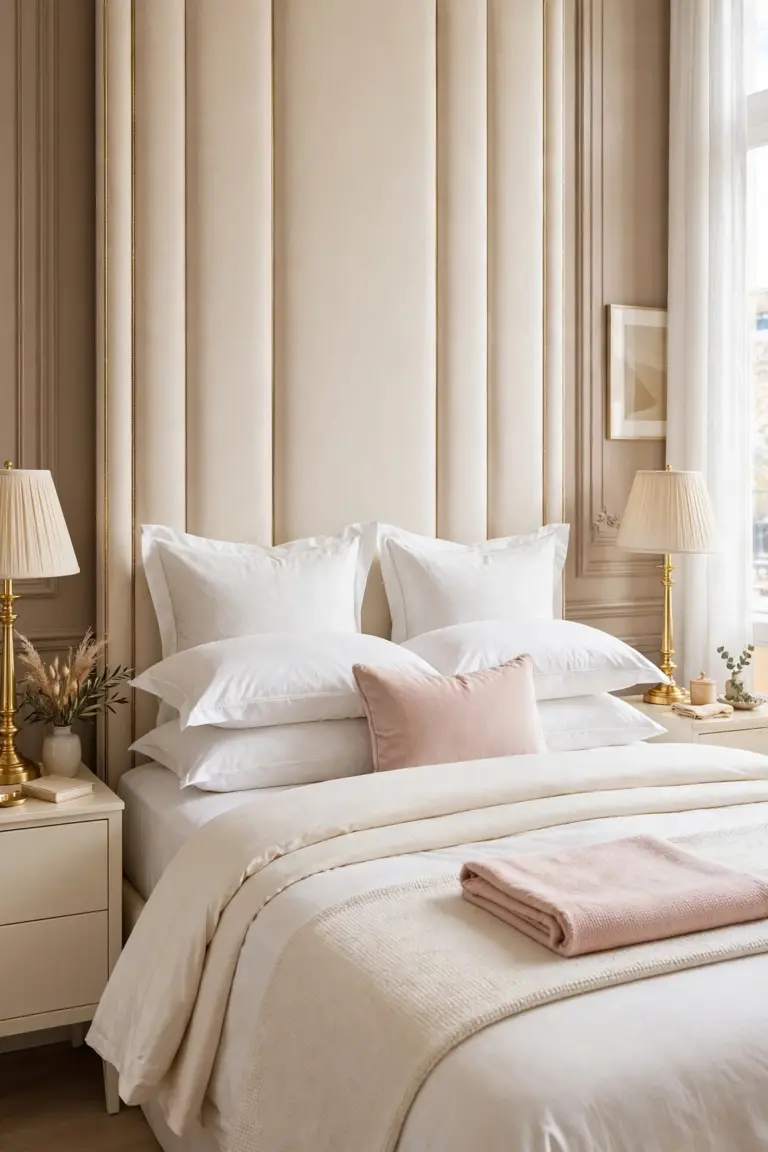
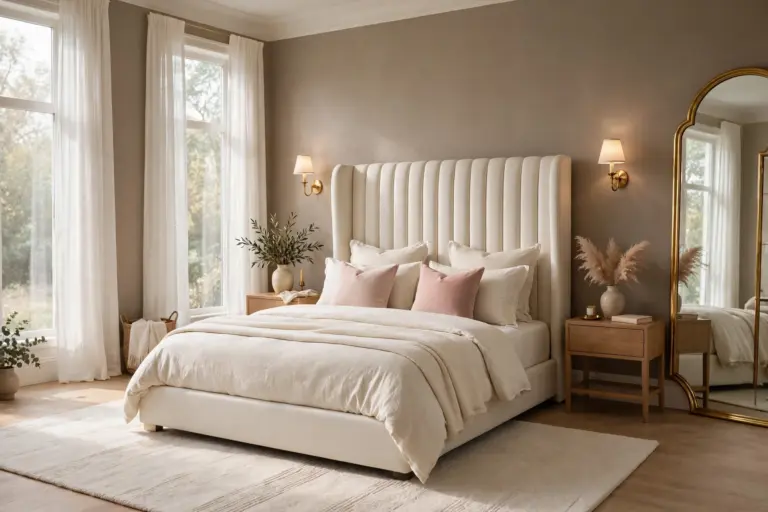
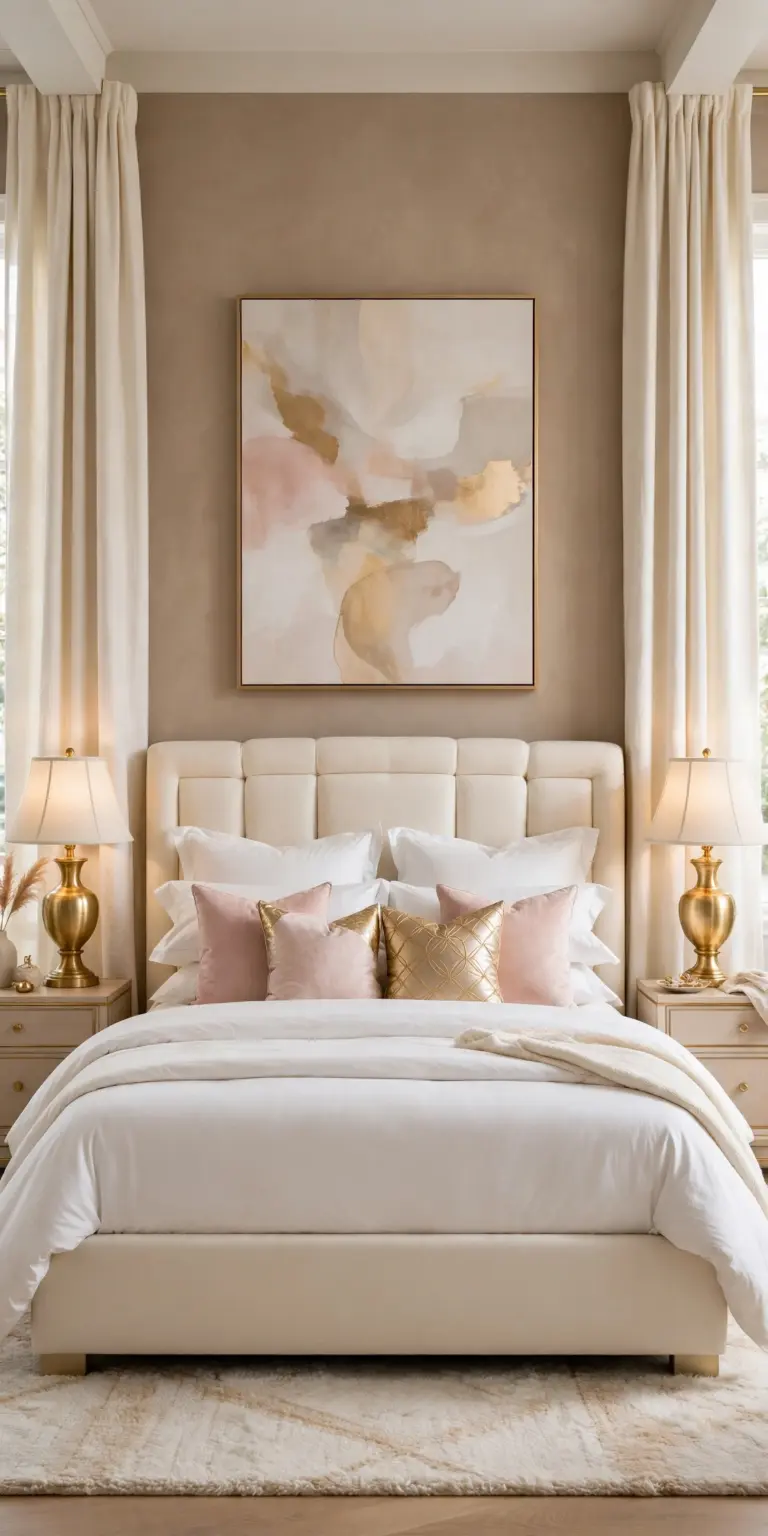
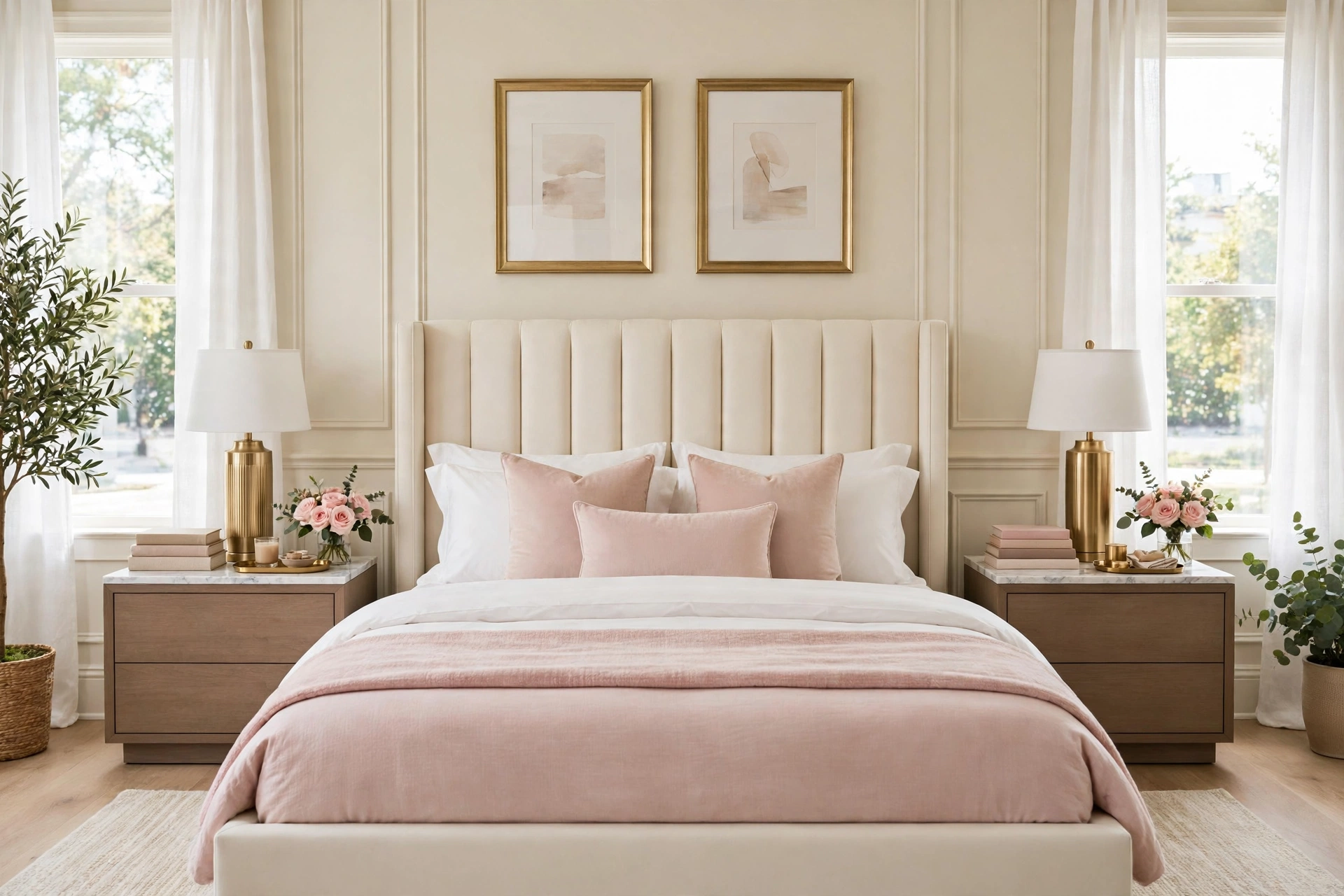
These thirteen ideas start with the structure, the lamp, the tray, the book stack, move through the pretty middle layer of flowers, candles, clocks, and art, and finish with the honest checks, hidden cables, a water carafe, and one seasonal swap. Every idea uses the same glam bedroom, cream bed, warm taupe nightstands, white and blush bedding, and gold accents, so the ideas layer onto one pair of nightstands without fighting.
1. Get the Lamp Height Right First
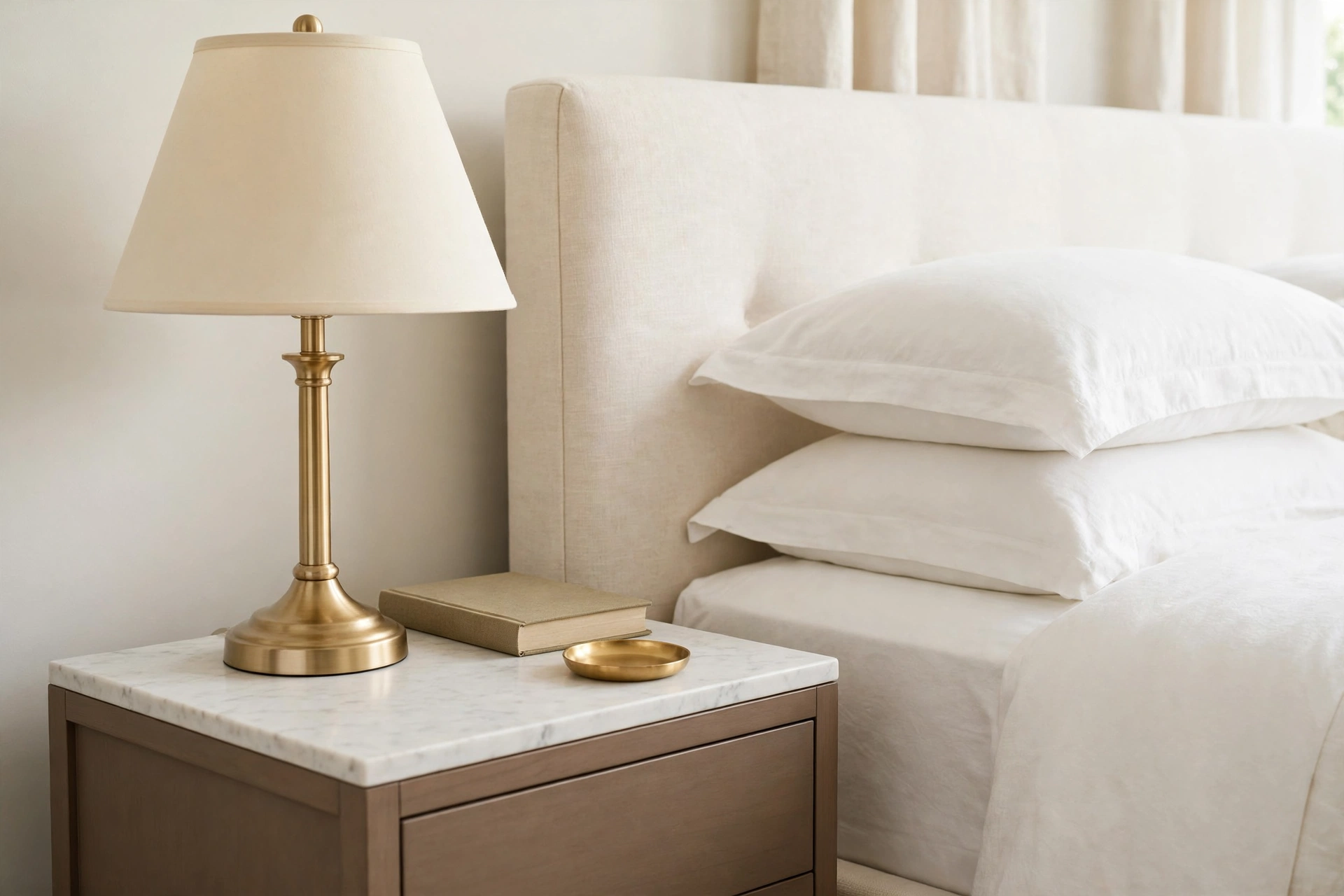
Every elegant nightstand starts with the lamp, because the lamp is the tallest thing on it and the light it throws decides whether the whole corner feels warm or harsh. The rule stylists use is simple: nightstand plus lamp should stand about level with the top of the mattress plus the pillows, so the bottom of the shade sits near shoulder height for a person sitting up in bed. Light then falls down onto the book page instead of shining sideways into the reader’s eyes.
How to do it: Measure your nightstand, then add lamp heights until the pair reaches roughly 8 to 12 cm above the mattress top. Choose a warm white bulb, never a blue daylight one, and a shade in cream linen that glows instead of glaring. Keep the lamp at the back corner of the nightstand so the front half stays free for the tray and the book. Pro Tip: If the lamp you love is too short, stand it on two large plain covered books. The stack raises the light, looks deliberate, and costs nothing. Common mistake: A tiny lamp lost beside a tall headboard. Wrong height is read as wrong scale, and no amount of small decor fixes it.
2. Anchor the Surface With a Book Stack
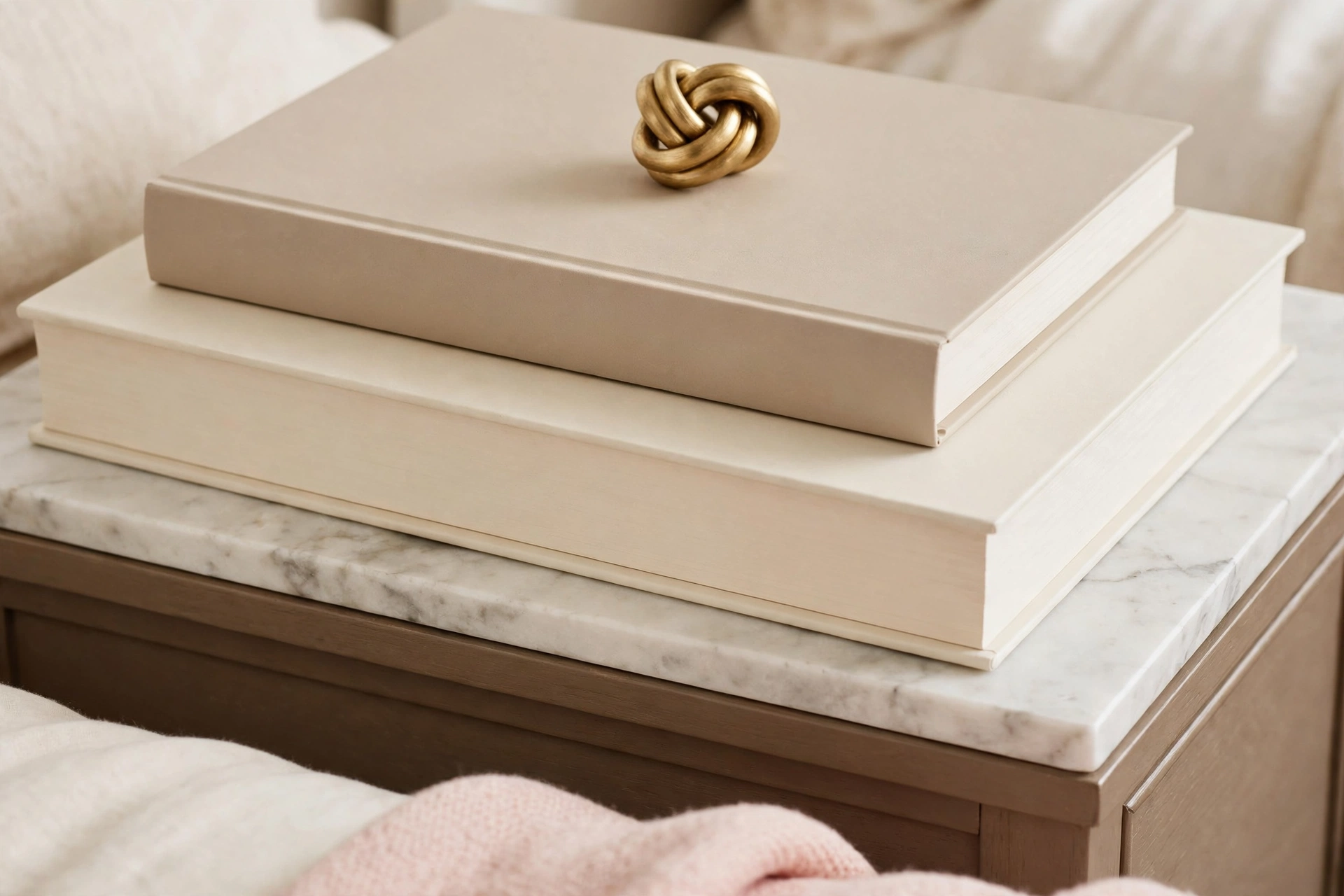
A low stack of two large books is the nightstand’s plinth. It gives small objects a stage, adds the room’s colours in one controlled block, and quietly tells a guest what the person who sleeps here loves. On a nightstand the stack stays lower than on a coffee table, two books at most, because everything at the bedside must stay below the lamp’s glow line and within easy reach of a sleepy arm.
How to do it: Choose the largest books first and stack them biggest at the bottom, covers in cream, warm beige, soft gold, or one blush tone, with plain covers or spines turned inward if a jacket shouts. Rest one small object on top, a gold knot, a smooth stone, a tiny dish for rings. Keep the stack on the outer third of the surface, away from the pillow edge where books get knocked at night. Pro Tip: Make the top book the one actually being read. The stack stays honest, the current book is always at hand, and the styling never has to be dismantled to live with. Common mistake: A tower of five paperbacks. It reads as storage, wobbles when the alarm is grabbed, and steals the space the water glass needs.
3. Corral the Small Things on One Small Tray
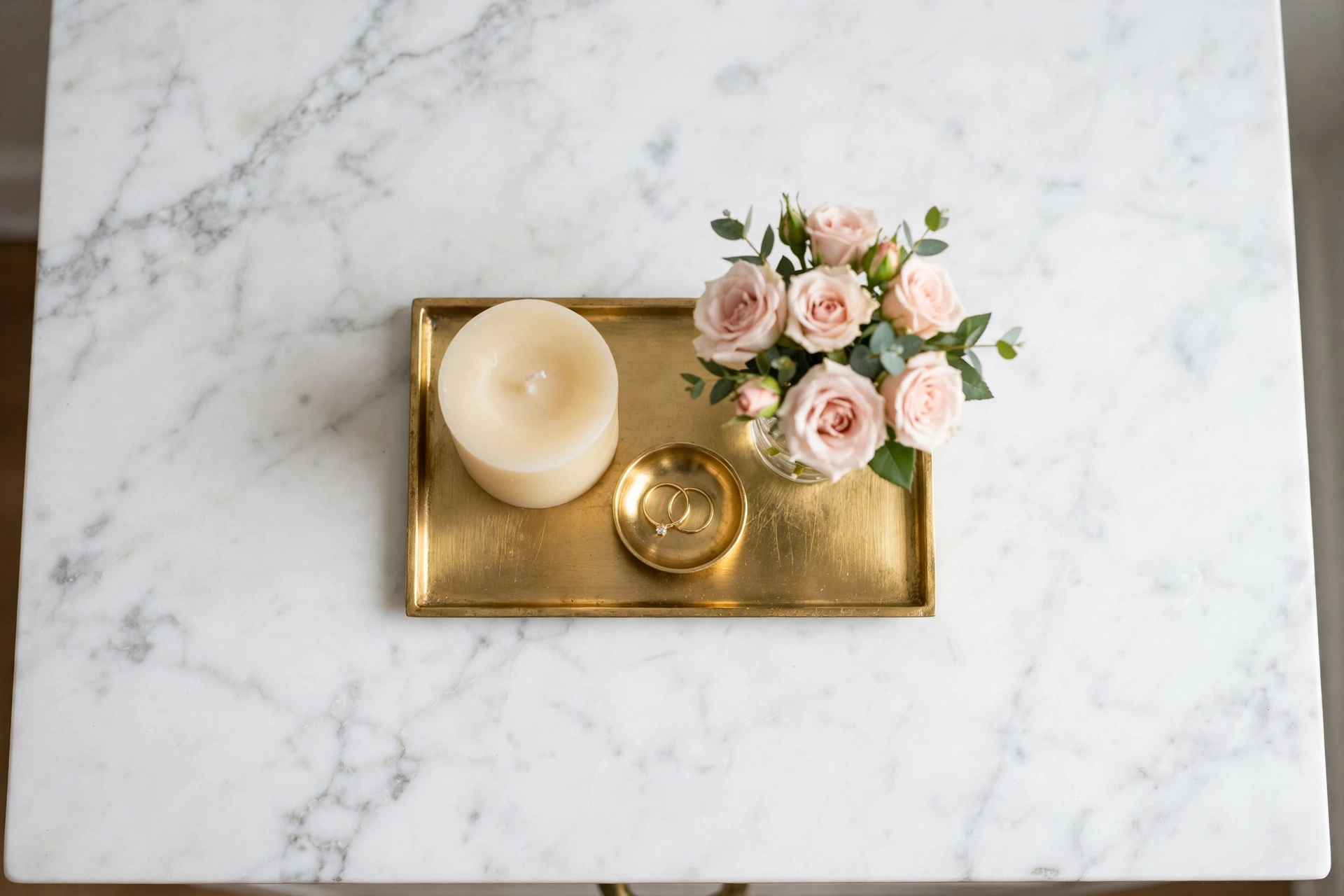
Lip balm, hand cream, rings, a hair tie, the small honest clutter of the bedside: a nightstand looks styled when these things live inside one border instead of roaming the whole surface. A small tray, gold, marble, or warm wood, turns five scattered items into one decision, exactly as a big tray does on a coffee table, only at a scale that leaves most of the marble top bare.
How to do it: Pick a tray about a third of the nightstand’s depth, no bigger, and place it in the front corner nearest the bed. Inside it, group only what is used every night: one candle or small vase, one dish for jewellery, one tube or jar. Everything that does not earn nightly use goes in the drawer. Check the tray from above, the stylist’s view: each item should have air around it inside the border. Pro Tip: A mirrored tray doubles the candlelight at night and makes even plain jars look chosen. Common mistake: A tray so large it becomes the surface. If the tray covers more than half the top, it is a lid, not a styling tool, and the nightstand disappears under it.
4. Keep Fresh Flowers Small, Low, and One Colour
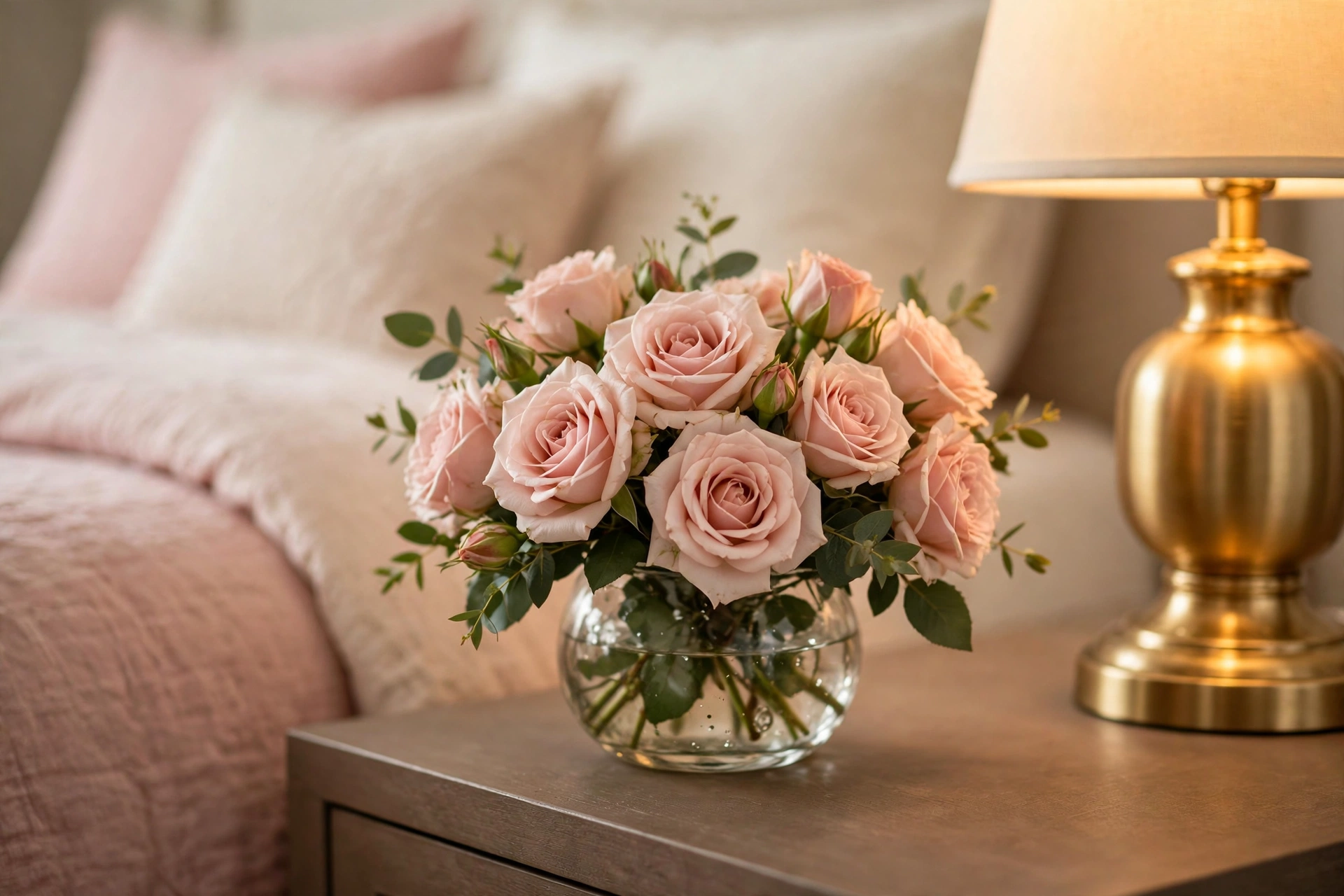
Flowers at the bedside work at a different scale from flowers anywhere else, because the viewer is lying down, close, and half asleep. A small, low arrangement in one soft colour, blush roses, cream tulips, white hydrangea heads packed tight, reads as luxury at pillow distance. A tall arrangement reads as a wall, drops petals on the book, and perfumes the whole night, which strong scented blooms will do whether they are welcome or not.
How to do it: Choose a vase no taller than a water glass and cut the stems so the flower heads cluster just above its rim. Keep to one flower type in one colour inside the room palette, blush or cream here, and remove any leaf that would sit below the waterline so the water stays clean. Place the vase on the tray or at the back corner opposite the lamp, never between the sleeper and the light. Pro Tip: Three stems in a small vase look fuller than ten stems in a big one, because the heads touch and read as one lush dome. Common mistake: The supermarket bunch dropped in whole. Tall, mixed, and shedding, it overwhelms a surface that only has room for one quiet gesture.
5. Add One Candle, on a Plate, Away From the Pillows
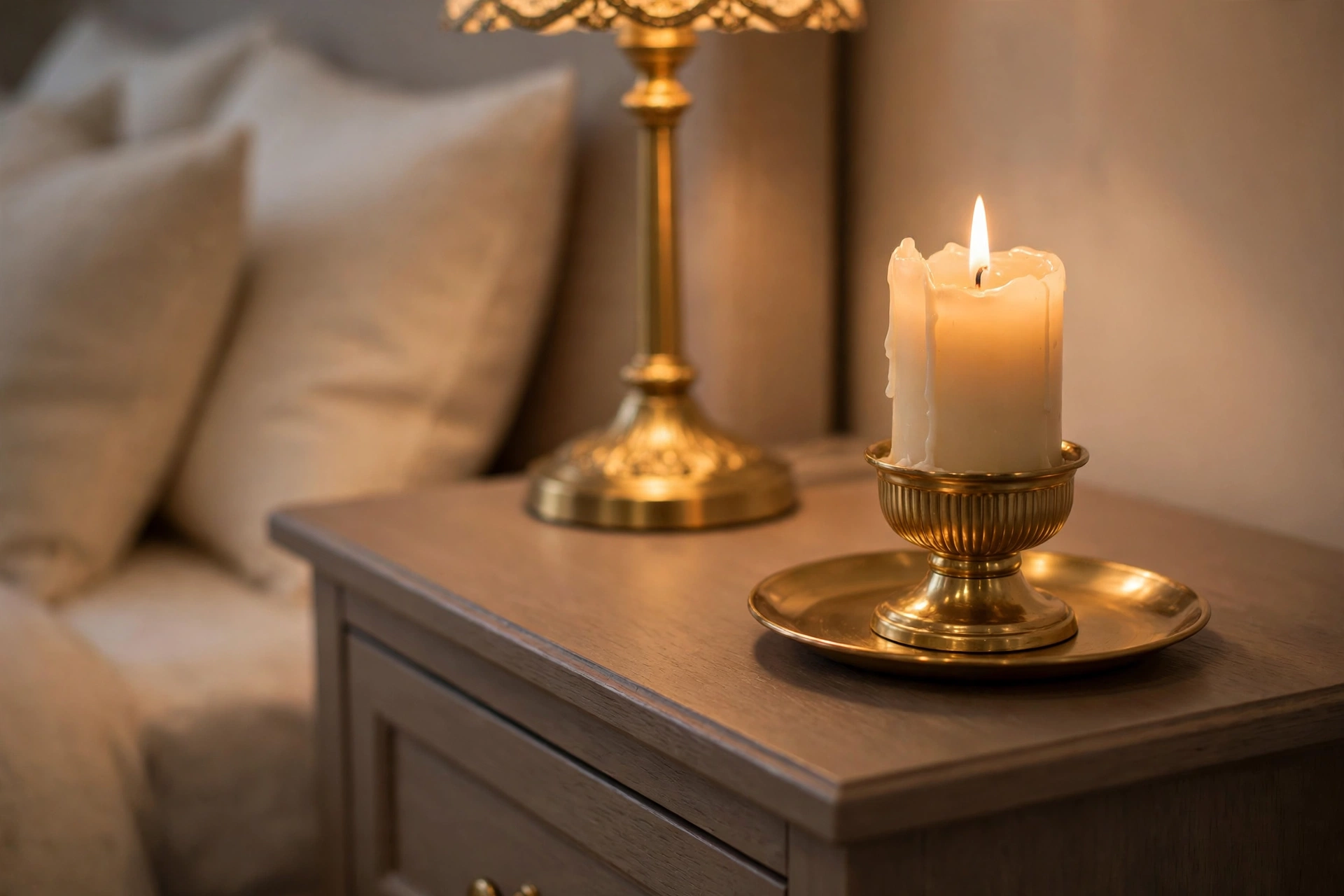
A single candle is the nightstand’s evening layer. Lit for the last hour of the day, it warms the gold, softens the lamp’s job, and marks the difference between the bright bedroom and the sleeping one. The styling rule is restraint and safety together: one candle, in a holder, standing on a small plate or coaster that can catch wax, placed on the far side of the nightstand, well away from pillows, curtains, and the book stack’s paper edges.
How to do it: Choose a cream or white candle in a glass or gold holder, one scent for the whole bedroom, kept gentle rather than sweet. Set it on its plate on the tray or the back corner, and keep the wick trimmed so the flame stays small and clean. Blow it out before sleep, every night, without exception; the styled look is the unlit candle and its holder by day. Pro Tip: An unlit candle still works visually all day if the holder is beautiful, so buy the holder like decor, not like packaging. Common mistake: A bare candle standing directly on the marble or wood top, dripping wax into the grain and leaving a ring that no styling survives.
6. Bring Back a Real Clock
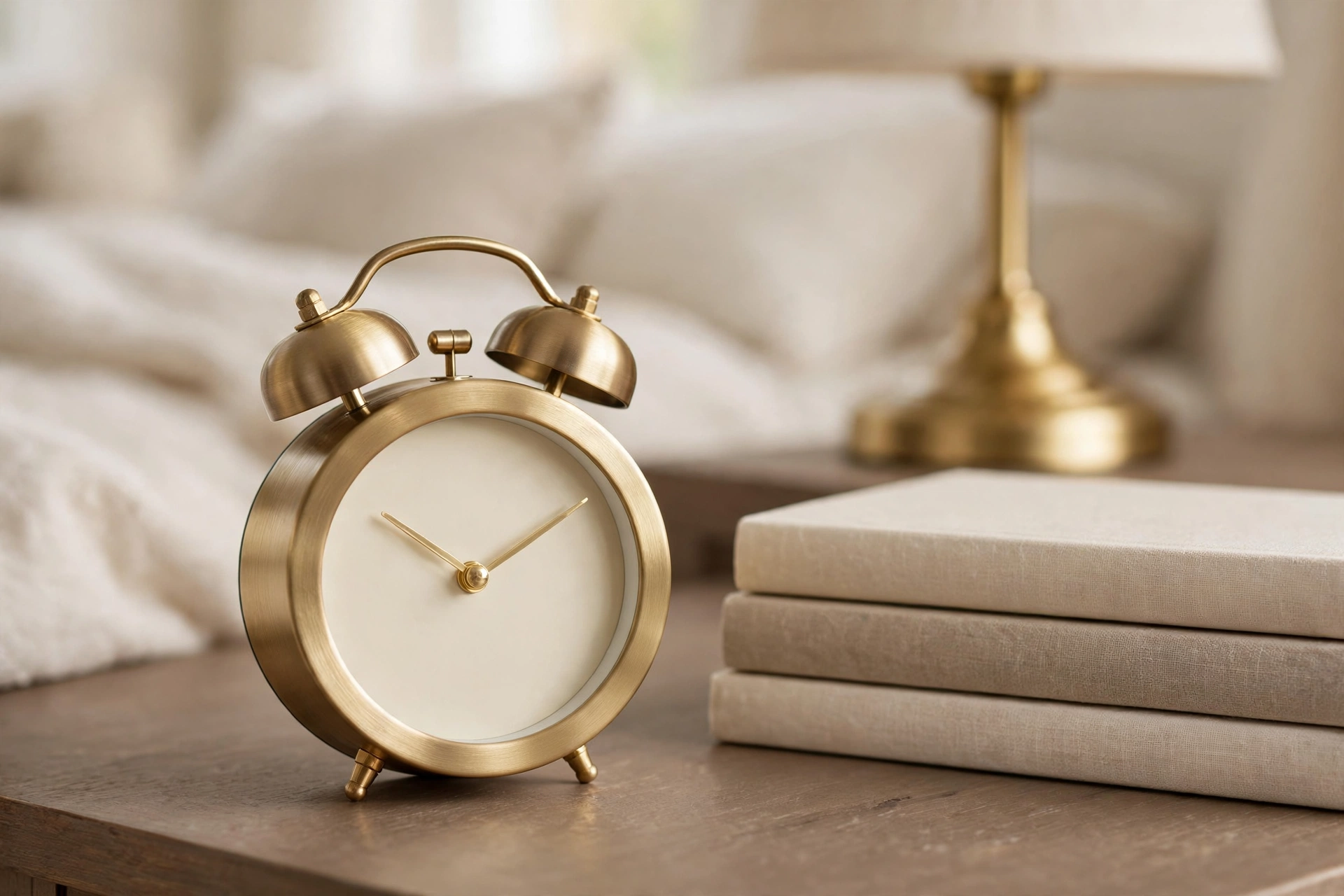
A small clock is the most useful styling swap on this list: it gives the nightstand a classic, finished object, and it gives the phone permission to charge in another room. Stylists have always used clocks as the nightstand’s round shape, the one circle among the books’ rectangles and the lamp’s column, and the right size matters, large enough to read from the bed, small enough to leave the surface calm.
How to do it: Choose a simple clock with a plain face and no glowing digital numbers, in brushed gold or cream to quote the room. Set it at the front edge of the nightstand, angled a few degrees toward the pillow, so a half asleep glance finds it without sitting up. If a phone must stay in the room, the clock still earns its place, because the eye checks the clock at night instead of waking the screen. Pro Tip: A clock with a soft, silent sweep hand suits light sleepers, and its movement is a small living detail photographs love. Common mistake: A big digital clock radio with a bright red display. It lights the room all night, fights the palette, and turns the bedside into an office desk.
7. Hang One Small Artwork Above Each Nightstand
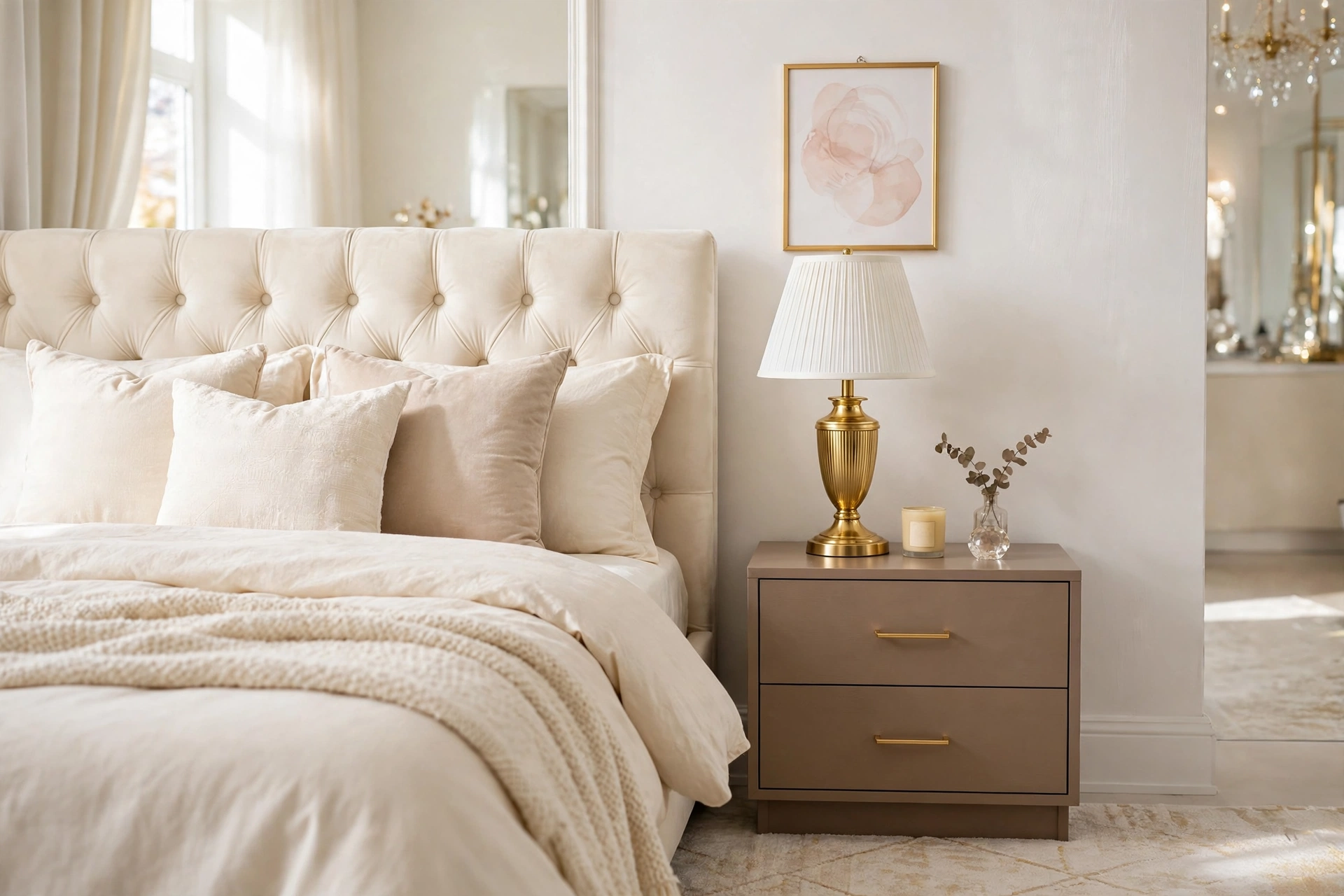
The wall space above a nightstand is where most bedrooms stop too early. One small framed piece, hung low enough to belong to the nightstand instead of floating near the ceiling, completes the column that the lamp starts, ties the bedside to the bed’s height, and gives each side of the bed its own quiet picture. The art itself stays calm: a line drawing, a soft landscape, a piece of textile in a frame, colours taken from the bedding.
How to do it: Choose a frame that quotes the room’s metal, a thin gold frame here, at about the width of the nightstand or a little narrower. Hang its centre roughly at the height of a person sitting up in bed, which means lower than most people first guess, with the frame’s bottom edge a hand’s width above the lamp’s midpoint. Keep the pair matched in frame and size, even when the two pictures differ. Pro Tip: Paper the back wall inside the frame’s story only, that is, let the art carry the blush if the bedding is mostly cream, one soft colour note per side. Common mistake: Hanging the art at standing eye level. From the bed it floats disconnected, and the nightstand below it looks unfinished, like a table with no picture at home above it.
8. Style the Drawer and the Open Shelf, Not Just the Top
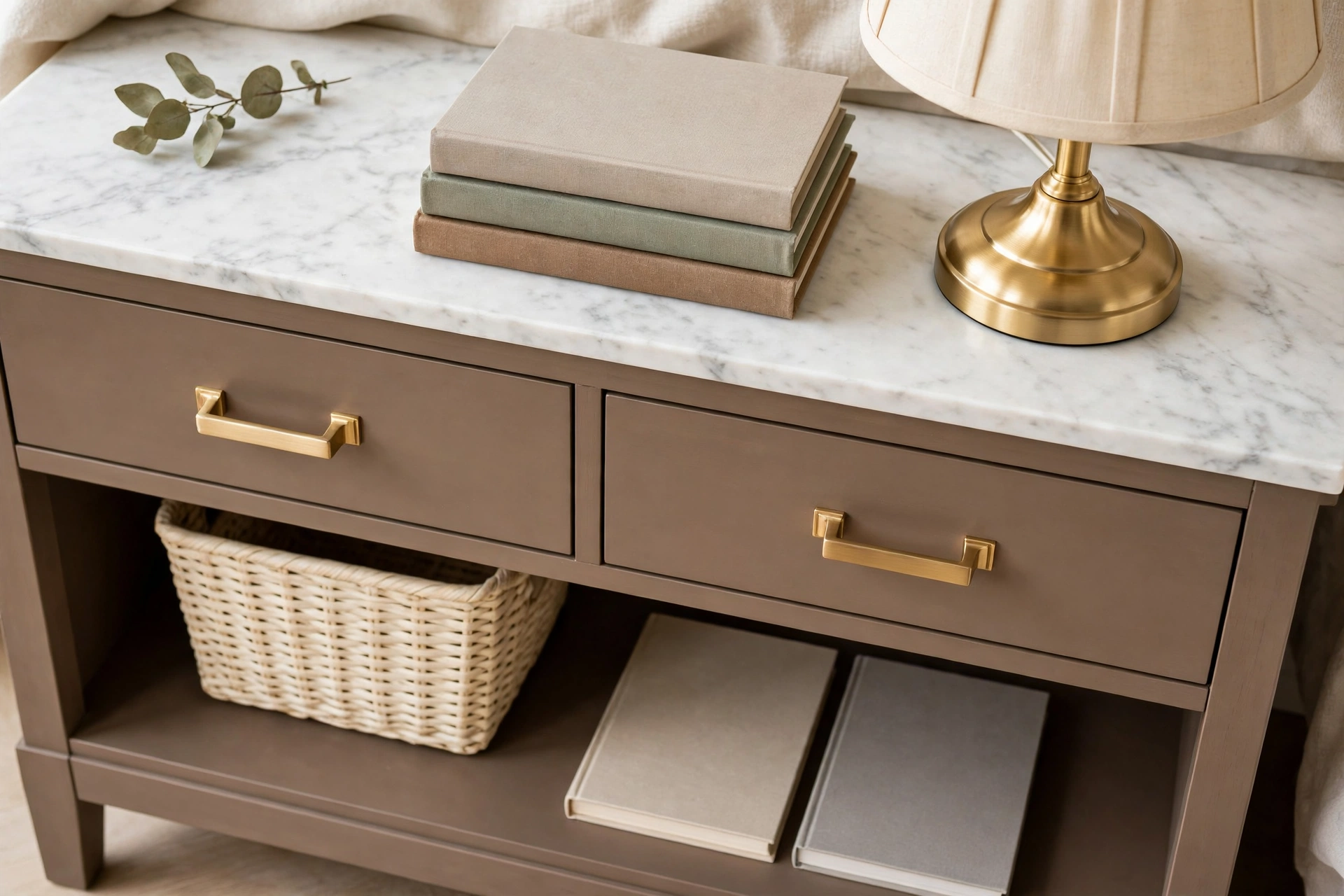
A nightstand is read as a whole piece of furniture, not a floating top. When the lower shelf holds a jumble of chargers, old magazines, and a tangle of cables, the eye drops there and the styled top loses. One basket or one neat horizontal stack below, chosen in the same palette, finishes the furniture the way a hem finishes a dress, and it hides the bedside’s second wave of real life without a drawer even being opened.
How to do it: Give the lower shelf one job and one container: a woven or cream fabric basket for the overflow, spare glasses, tissues, a notebook, or a low stack of large books laid flat with nothing on top. Keep the container’s front edge in line with the nightstand’s front legs so the shelf looks planned, not pushed in. Polish the drawer handles while styling; gold that is dulled by fingerprints quietly cheapens everything above it. Pro Tip: Leave the drawer itself for true clutter, closed storage should stay unstyled and honest, and style only what the eye can reach. Common mistake: Stacking the shelf with upright paperbacks and loose cables in full view. The shelf is at pillow eye level, so its mess is seen closer and longer than any mess in the room.
9. Style the Pair Together, Then Let Them Breathe
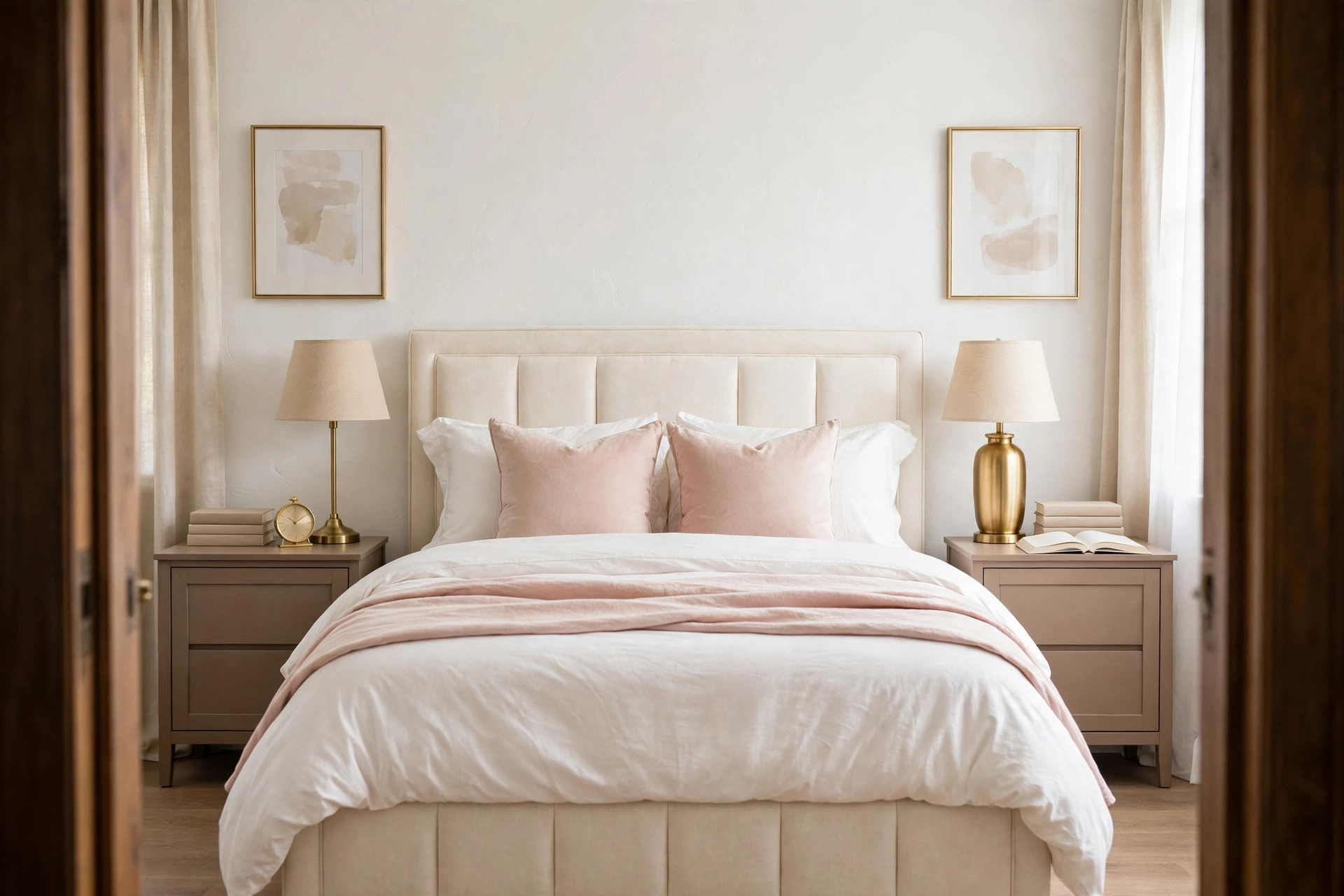
Two nightstands flanking a bed are one composition seen in a single glance, and the glam look is built on their match: same lamps, same stacks, same small vase shape, a mirror image across the pillows. Symmetry is what makes a bedroom feel like a hotel suite instead of two separate corners, but the match should stop at the main pieces. When every small object is also twinned, the room turns into a showroom and stops feeling slept in.
How to do it: Match the anchors exactly on both sides, lamp, book stack height, tray or vase, and let the personal layer differ: a clock on one side, the current book open on the other, the water carafe where the thirstier sleeper sleeps. Stand at the bedroom door, the composition’s true viewpoint, and compare the two sides’ silhouettes; the outlines should rhyme even when the details do not. Pro Tip: Buy the lamps and trays as true pairs at the same time. Near matches bought a year apart read as a mistake, while exact pairs read as a decision. Common mistake: Mirroring absolutely everything, two candles, two clocks, two identical flower domes. The room reads as a shop display and the personal, lived layer never appears.
10. Break the Symmetry on Purpose, in One Place Only
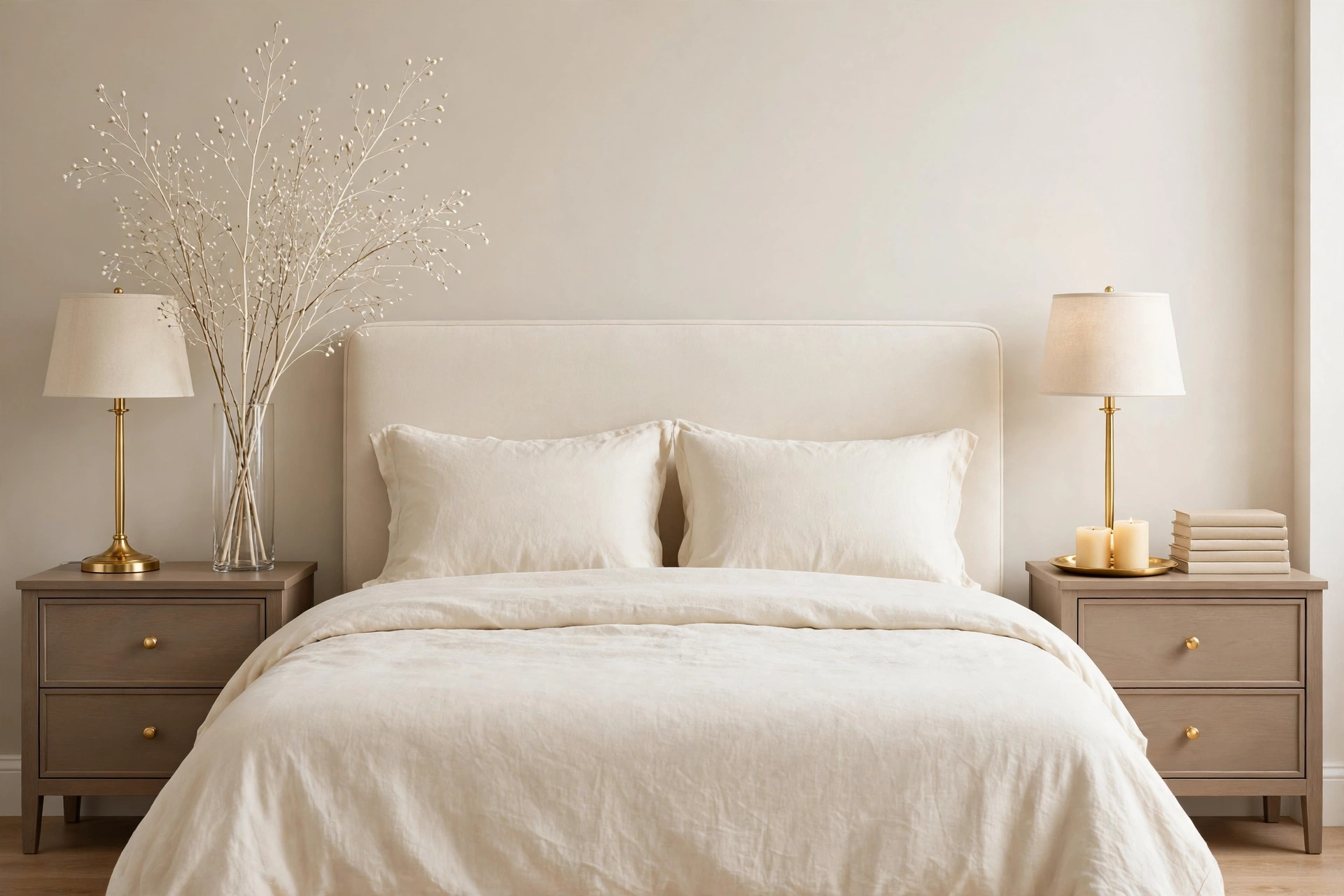
Some bedrooms look better with one deliberate imbalance: a tall vase of branches on the left nightstand answered by a low, wide candle group on the right. Done inside the shared palette, gold, cream, blush, taupe, asymmetry gives a glam room its designed feeling, the sense that a person composed it rather than a catalogue pairing it. The trick is that only the heights break ranks; the colours, metals, and lamp pair stay loyal.
How to do it: Choose one side for the tall moment, airy stems in a heavy vase reaching no higher than the lamp shade’s top, and balance it on the other side with extra width, a longer book stack and a cluster of two candles on a plate. Check the pair from the door: the total visual weight on each side should feel equal even though the shapes are not. Keep both lamps identical, they are the frame that lets the middle play. Pro Tip: Photograph both versions, symmetric and asymmetric, and live with the photo for a day before deciding. The camera is honest about weight in a way the standing eye is not. Common mistake: Letting both sides drift into different styles, modern on one side, vintage on the other. One shared palette is the licence that makes asymmetry read as design, not accident.
11. Hide the Charging Inside the Nightstand
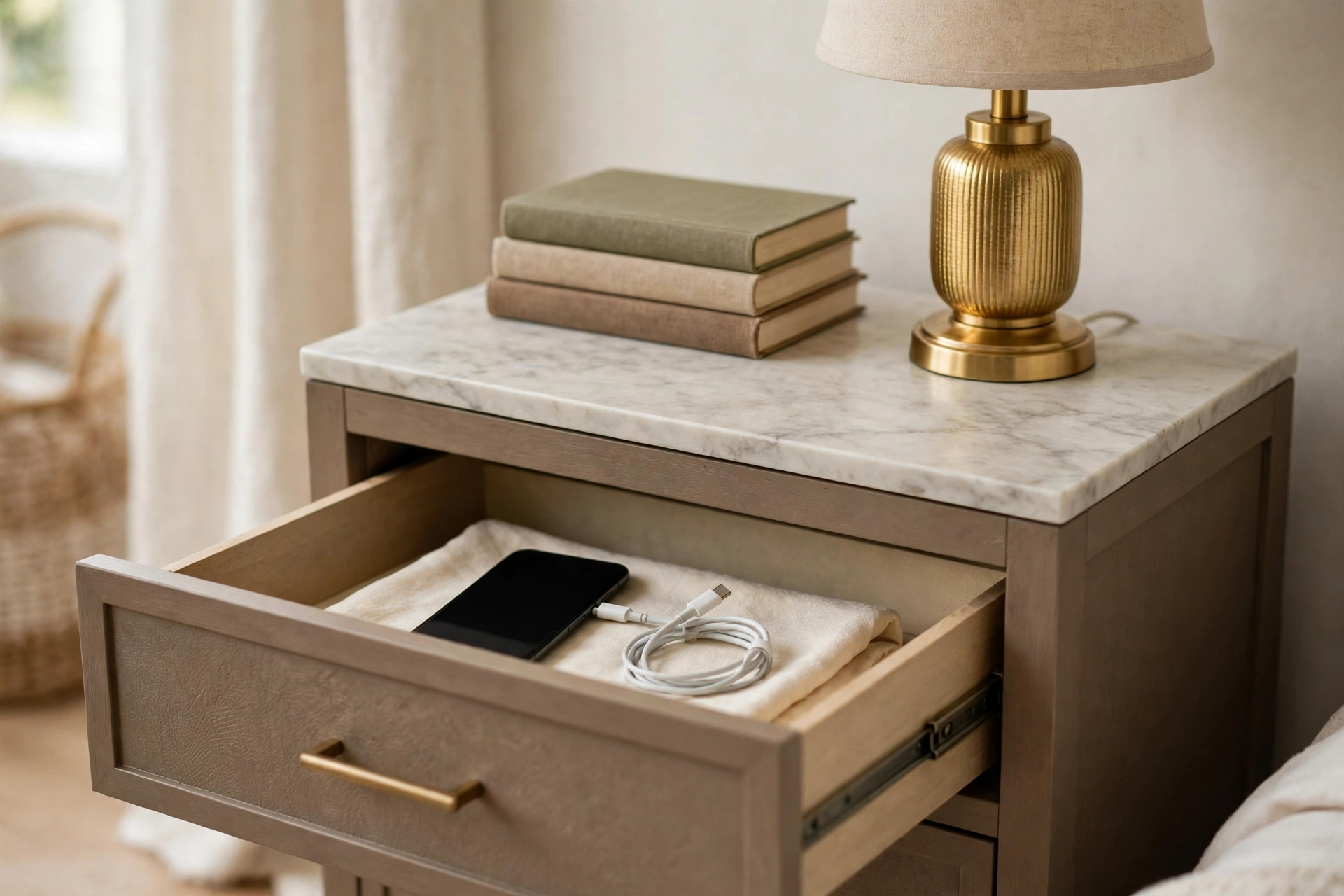
Nothing breaks a styled nightstand faster than a white cable snaking across the marble to a phone face up in the middle of the composition. The elegant fix is to move the charging out of sight while keeping it one reach away: inside the drawer, or in a small covered box behind the books. Phones still charge, alarms still work, and the surface the eye rests on stays clear, which is the entire point of styling a bedside.
How to do it: Feed one charging lead through the back gap of the drawer, or from a socket behind the nightstand into a lidded box in the room’s finishes, marble, woven, or gold toned. Rest the phone inside the drawer on top of a small cloth so it does not slide and rattle on the wood. Keep the lead short, because a long coiled cable fills the hiding place and finds its way back out. Pro Tip: Give guests the visible kindness instead: one neat lead clipped to the back edge of the nightstand, reachable but out of the photograph. Home nights stay hidden; guest nights stay easy. Common mistake: Charging the phone on top of the book stack. It slides, it lights up at every message, and it demotes the styled stack to a phone shelf.
12. Set Out a Carafe and Glass for the Night
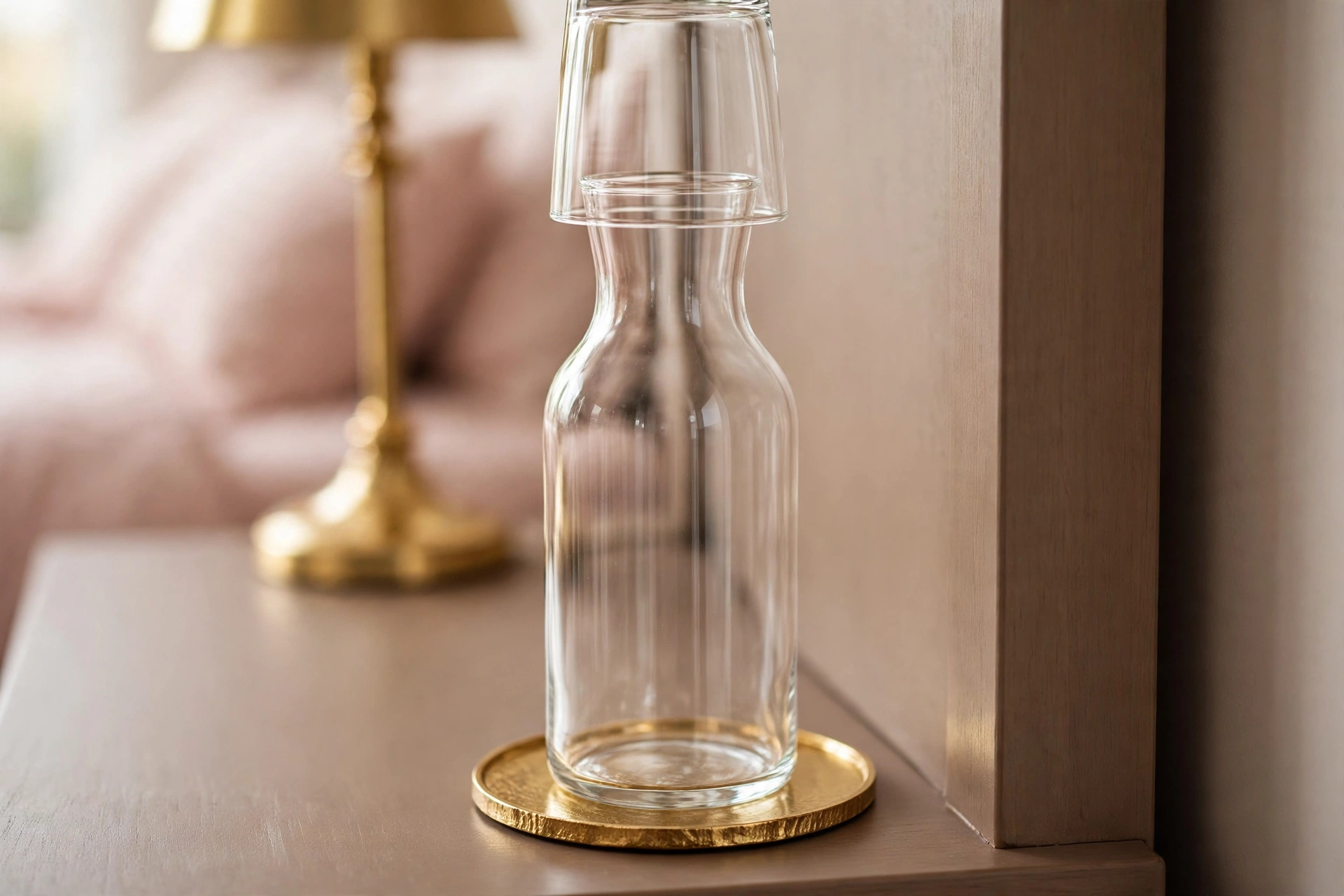
A carafe of water with its glass resting on top is the oldest hotel gesture there is, and on a home nightstand it does three jobs at once: it ends the midnight trip to the kitchen, it gives the surface a clear glass shape that catches the lamp light beautifully, and it signals that the bedroom is finished, cared for, ready. In the glam palette it should be plain clear glass on a gold or marble coaster, nothing tinted, nothing labelled.
How to do it: Choose a carafe sized for one night, about half a litre, so the water is fresh daily rather than topped up for a week. Set it at the back corner on the side of the person who drinks at night, on its coaster, always, because a wet ring on wood or marble undoes the elegance in one night. Wash and refill it in the morning when the bed is made, as part of the same reset. Pro Tip: A chilled carafe from the fridge in summer, set on the coaster just before bed, beads with condensation and photographs like a boutique hotel. Common mistake: A plastic sports bottle living on the nightstand full time. It is honest, but its colour and shape fight every styled object around it, all day, every day.
13. Change One Small Thing With the Season
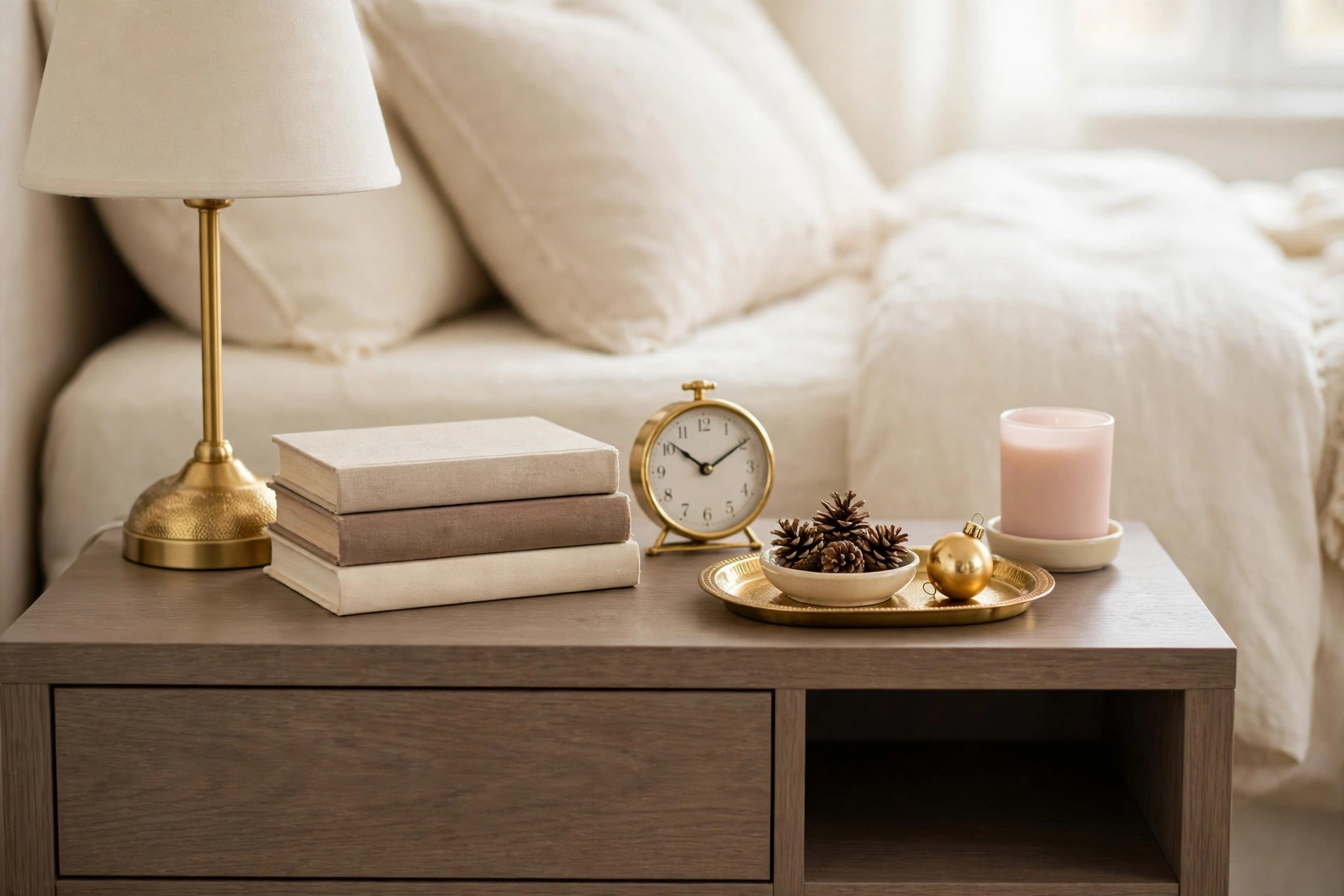
A nightstand stays loved when one small element turns with the year while the structure, lamp, tray, stack, clock, holds steady. Blossom stems in the small vase in spring, a shell on the tray in summer, a warmer blush candle and a tiny pumpkin toned dish in autumn, pinecones or a gold bauble in the tray in winter: one swap, two minutes, and the bedside feels newly done in the room where a person starts and ends every day.
How to do it: Pick the tray as the seasonal slot, because it already has a border that keeps the swap contained, and change only what sits in its front corner. Keep the seasonal piece inside the palette, cream, blush, gold, warm taupe, never novelty colours or themed ornaments with words. Store each season’s small piece together in one labelled box in the wardrobe so the change stays a pleasure instead of a search. Pro Tip: Swap on the same day the bedding changes for the season. Two small changes landing together make the whole bed feel remade for almost no money. Common mistake: A full seasonal takeover of both nightstands, garlands, themed cushions, and ornaments competing with the lamps. At the bedside, one gesture is styling; a theme is a shop window you sleep next to.
Quick Reference Table
| Styling Idea | What It Adds | Key Rule |
|---|---|---|
| Lamp height rule | Warm, useful light | Shade near shoulder height in bed |
| Book stack | Stage and colour | Two books, object on top |
| Small tray | One border for clutter | A third of the surface, no more |
| Small flowers | Soft life | Low, one colour, pillow distance |
| One candle | Evening layer | On a plate, away from pillows |
| Real clock | Classic finish | Plain face, no bright display |
| Art above | Completed column | Hung low, frame quotes the metal |
| Drawer and shelf | Finished furniture | One basket or one flat stack below |
| Symmetric pair | Hotel calm | Match anchors, free the details |
| One asymmetry | Designed feeling | Only heights break ranks |
| Hidden charging | Clear surface | Lead inside the drawer or a box |
| Water carafe | Hotel gesture | Fresh daily, always on a coaster |
| Seasonal swap | Freshness | One small piece, inside the palette |
The Elegant Nightstand Checklist
- Lamp shade near shoulder height for reading in bed
- Book stack of two, largest first, object on top
- One small tray holding only the nightly items
- Flowers low, one colour, in a small vase
- One candle on a plate, away from pillows, out before sleep
- Real clock with a plain face instead of a lit screen
- One small artwork hung low above each nightstand
- Lower shelf with one basket or one flat stack
- Pair matched at the anchors, personal in the details
- Any asymmetry balanced in weight and inside the palette
- Charging hidden in the drawer or a lidded box
- Carafe of fresh water on a coaster
- One seasonal piece in the tray, changed on time
Frequently Asked Questions
How many things should be on a nightstand?
Fewer than the drawer wants: a lamp, a low book stack, one small tray, and one soft layer, flowers or a candle, is a complete nightstand. The test is the landing strip: if there is still a clear space the size of a water glass and a paperback, the count is right. Everything beyond that list should earn its place by being used every single night.
What if my nightstand is very small?
Shrink the system, do not drop it: one correctly sized lamp, one book with a small object on it, and a tray the size of a saucer holding only the true nightly items. Move the carafe to a small wall shelf or the floor on a stand beside the bed if needed. A tiny nightstand styled in layers still reads elegant; a tiny nightstand used as storage never does.
How do two different sleepers share one styling?
Style the shared structure once, lamps, stacks, trays as a pair, then let each side’s top layer belong to its sleeper: clock and carafe where they are needed, the current book open where it is being read. The room keeps its composed photograph from the door, and each person still finds their own night within reach.
Conclusion
An elegant nightstand is a small system that respects the night: the lamp at reading height, two books as a stage, one tray corralling the small things, flowers kept low, one candle on a plate, a real clock, art hung low, the shelf below finished, cables hidden, fresh water waiting, and one seasonal piece turning quietly in the tray. Build it once, reset it when the bed is made, and the first and last surface seen each day will hold its calm.