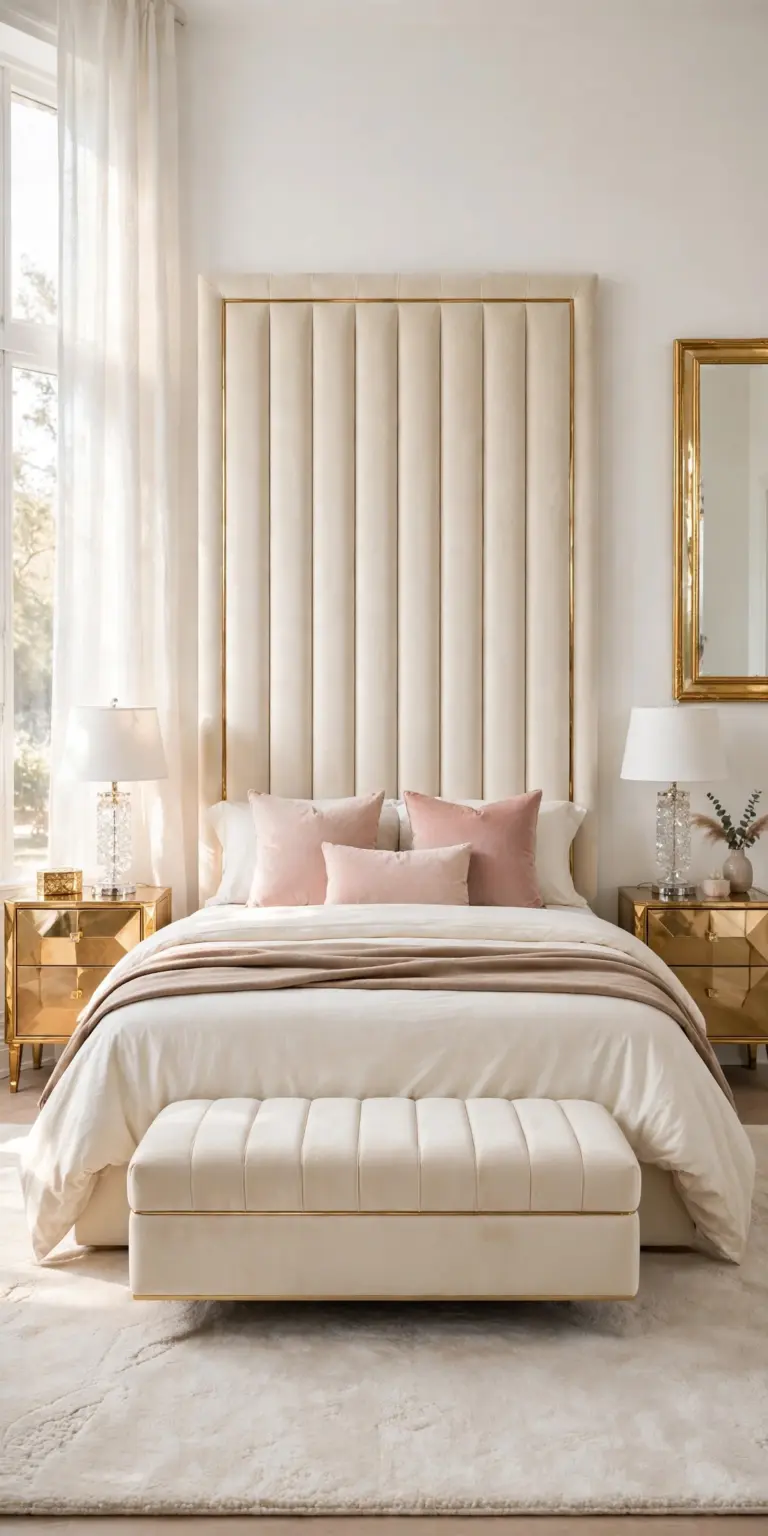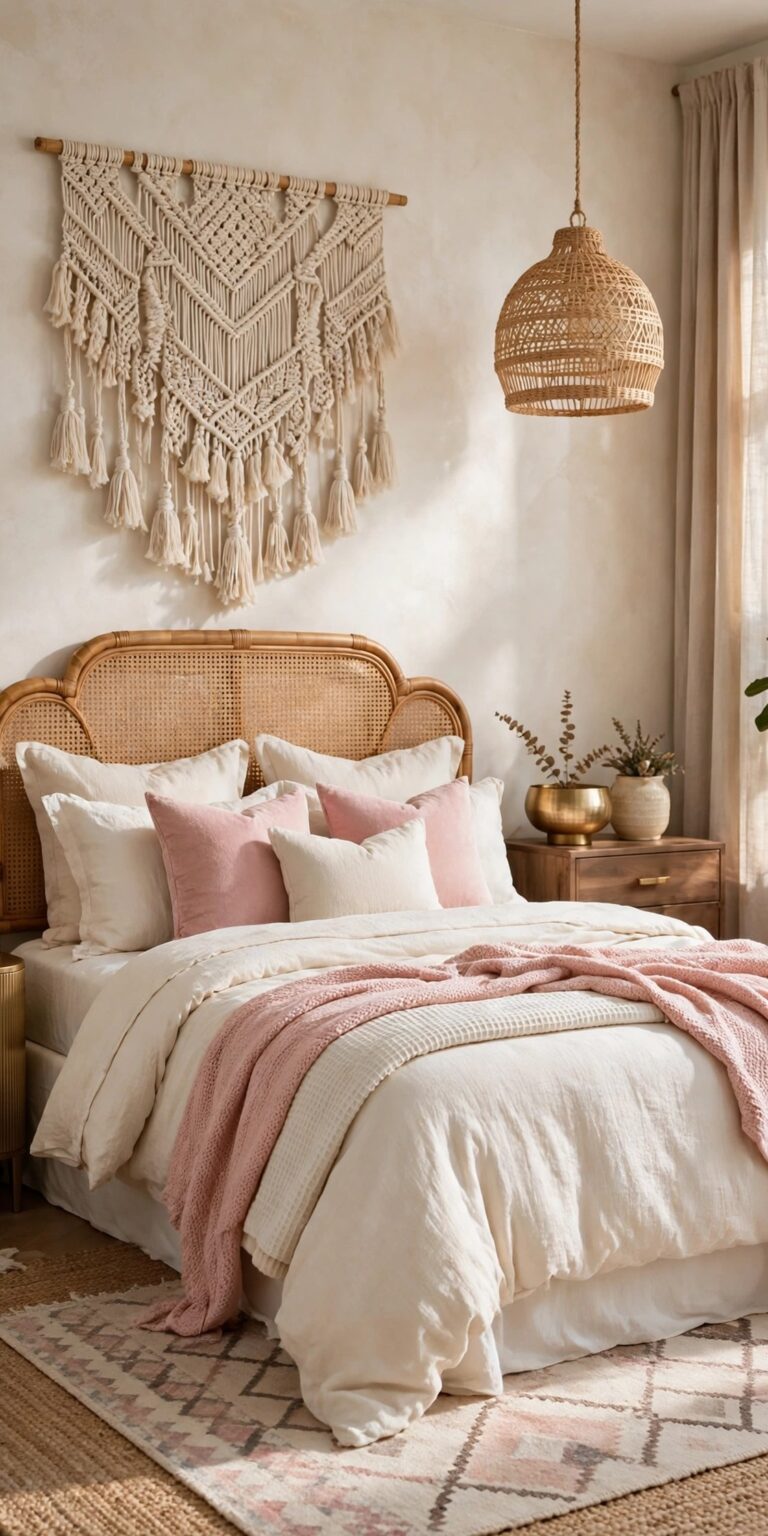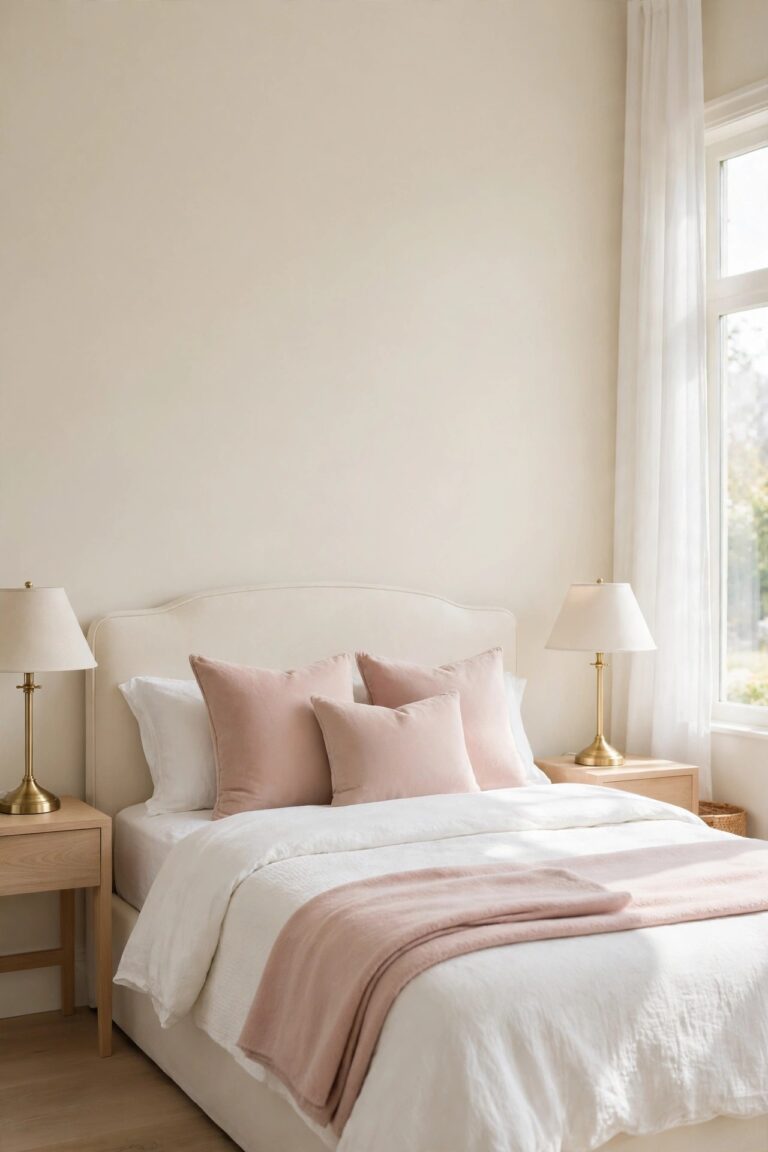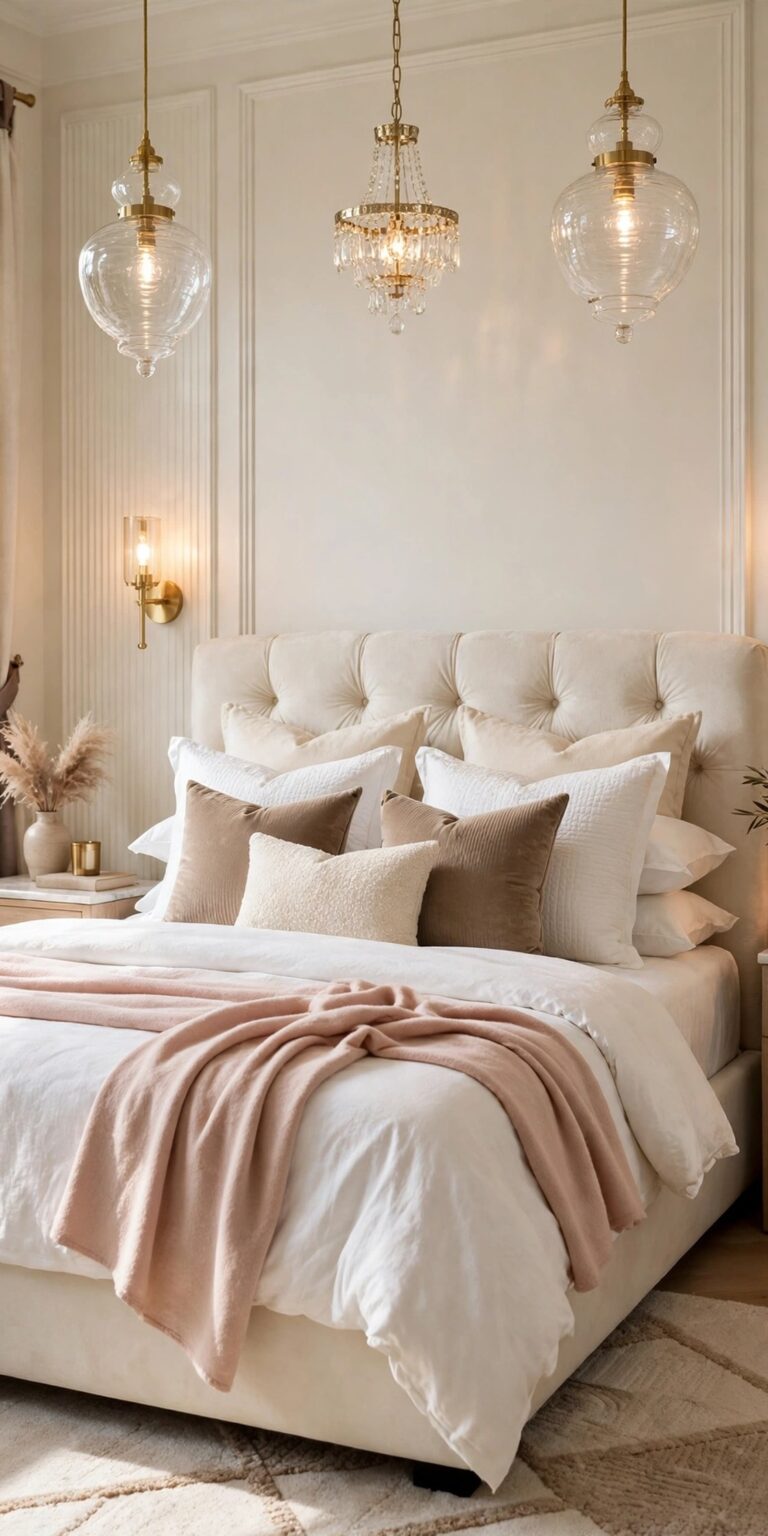
15 Teen Bedroom Designs That Feel Grown-Up and Glam
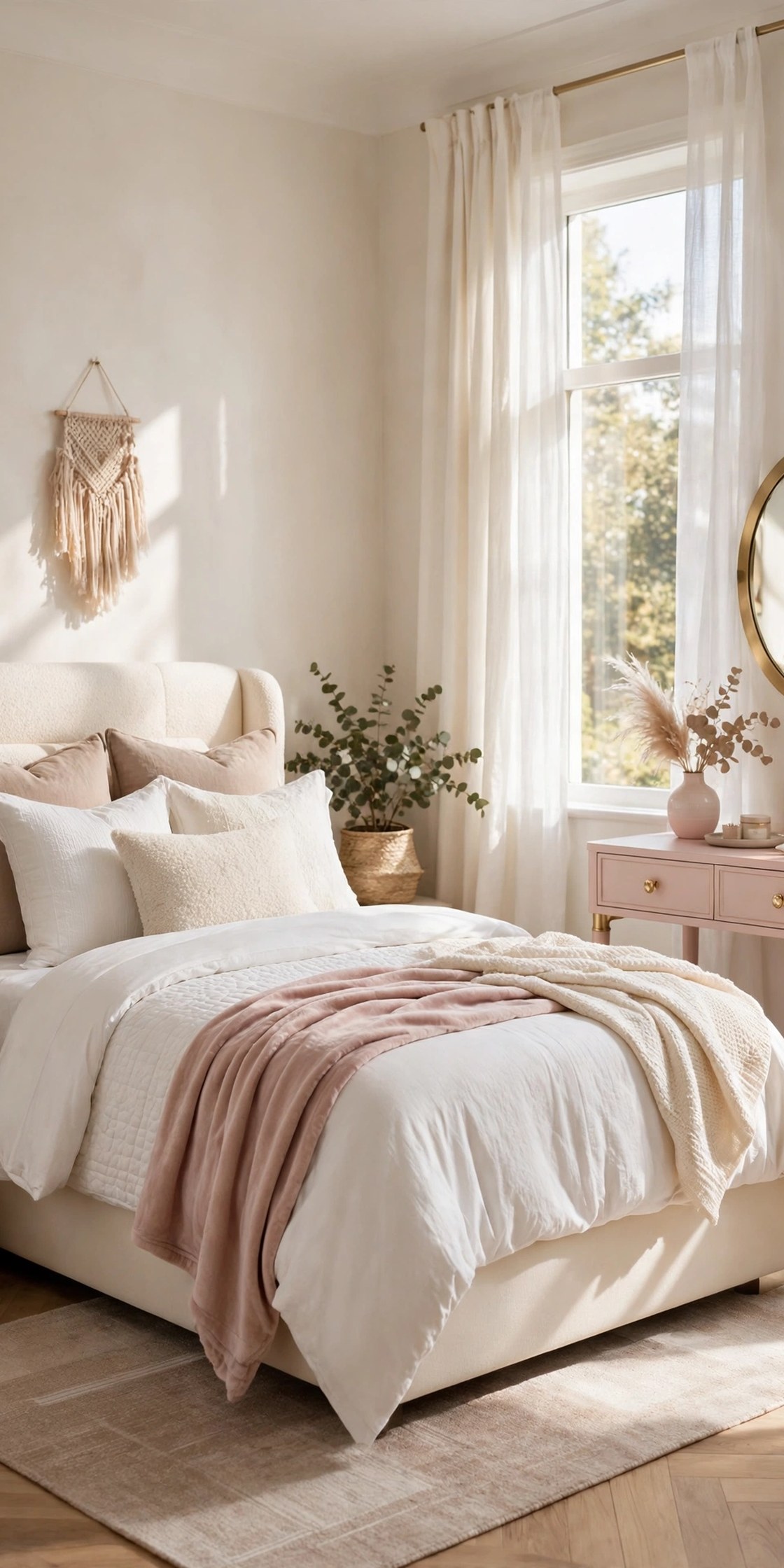
A teen bedroom has to do two jobs at once. It has to feel grown-up to the teenager who lives in it, and it still has to work for the parent who wants homework done, sleepovers hosted and the floor visible. Childish themes fail the first test within a year, and a plain adult scheme can fail the second by leaving nowhere for study, music, sport and chargers. These teen bedroom designs solve both sides together. Every design starts from the same bright glam base, white, cream and warm taupe with blush pink and brushed gold, then adds one clear job: a vanity, a study desk, safe light layers, storage that closes, and walls that can change. If you are starting from a blank room, our broader guide to planning the whole room first will help you set the budget and the order of work. See our bedroom ideas for the full guide.
Disclosure: This article may contain affiliate links. If you buy through a link on this page, GlamNStyle may earn a small commission at no extra cost to you. Product links in this article are plain links; each one is checked on the retailer’s own page before it is added.
1. Build a Blush Glam Vanity That Earns Its Space
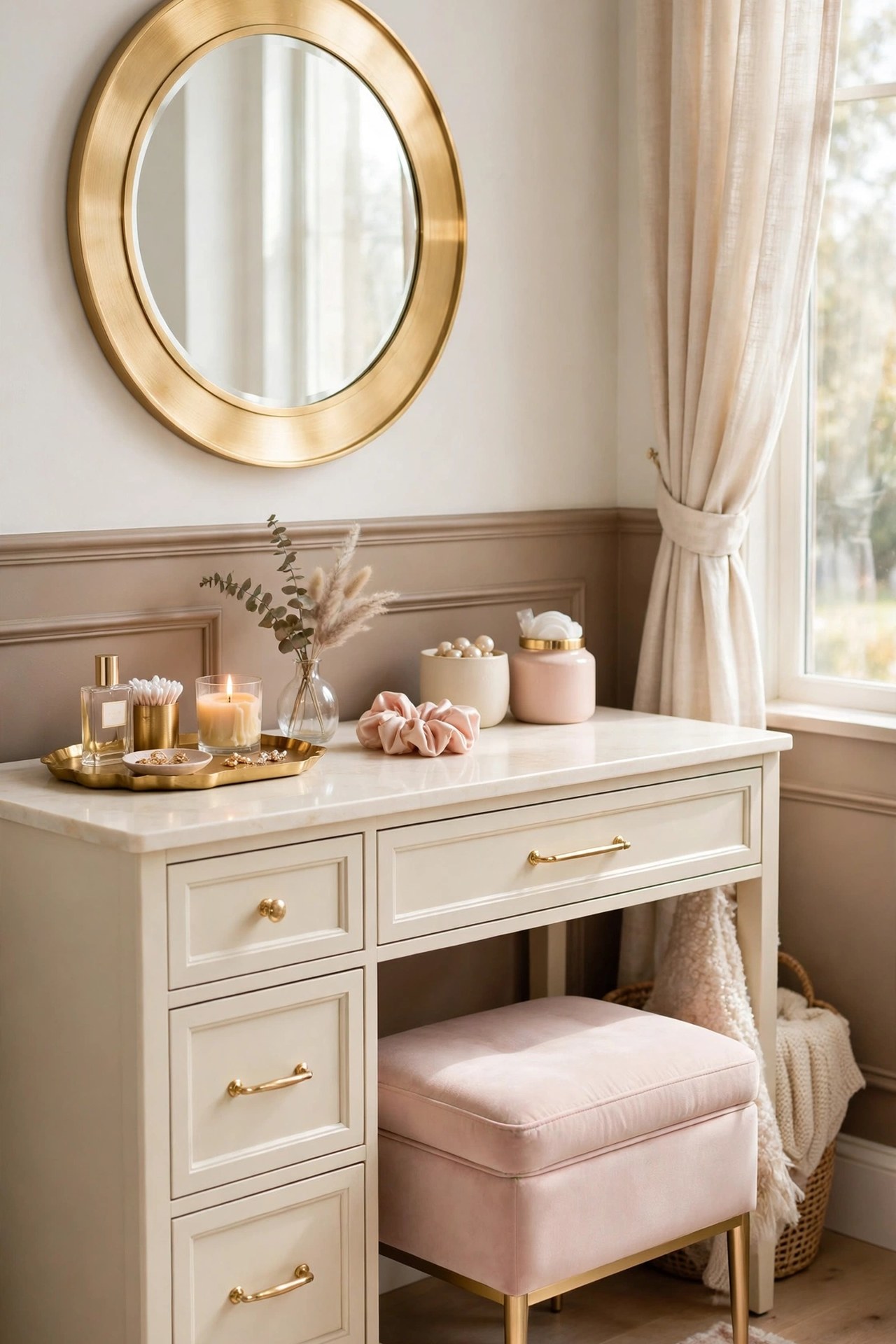
A vanity is often the first piece a teenager asks for by name, and it is also the piece most likely to become a clutter shelf if it is bought for looks alone. One that earns its space has drawers that close, a mirror placed in real daylight, and a top kept mostly clear so it can double as a small writing surface. A cream table, a blush cushioned stool and one round brushed gold mirror give the glam note without turning the corner pink. Keep everyday products in the drawer and only a small tray of daily items on top, so the corner tidies in under a minute. See our aesthetic bedroom ideas for more calm, grown-up rooms.
Best For: Teens who want a dedicated getting-ready corner that feels grown-up rather than themed.
Not Ideal For: Very small rooms where a vanity would block the only desk position; combine vanity and desk into one surface instead.
Estimated Cost: $120-$320 (estimate) for a small vanity table with drawers, a stool and a round mirror.
Budget Note: Spend on the drawers and the mirror; closed storage stays tidy, while an open table usually needs extra boxes within a month.
Renter Friendly: Yes
Renter Note: Freestanding; a leaning or table mirror secured with a removable strap needs no wall fixing.
What You Need
Small vanity table with a closing drawer, blush or cream stool, round brushed gold mirror, small tray, drawer dividers.
Product type to look for: A vanity 36 to 44 inches wide with a drawer deep enough for daily products to lie flat, and a mirror large enough to see hair and shoulders.
How To Do It
- Place the vanity on the wall nearest the window so the mirror uses daylight first.
- Fit drawer dividers before anything goes in, one section each for hair, skin and makeup.
- Set one small tray on top for daily items only and keep the rest of the surface empty.
- Check the stool tucks fully under the table so the walkway stays clear.
Pro Tip
Choose the mirror before the table. A generous round mirror makes a simple table look deliberate and grown-up.
2. Make the Study Desk Work Like a Real Desk
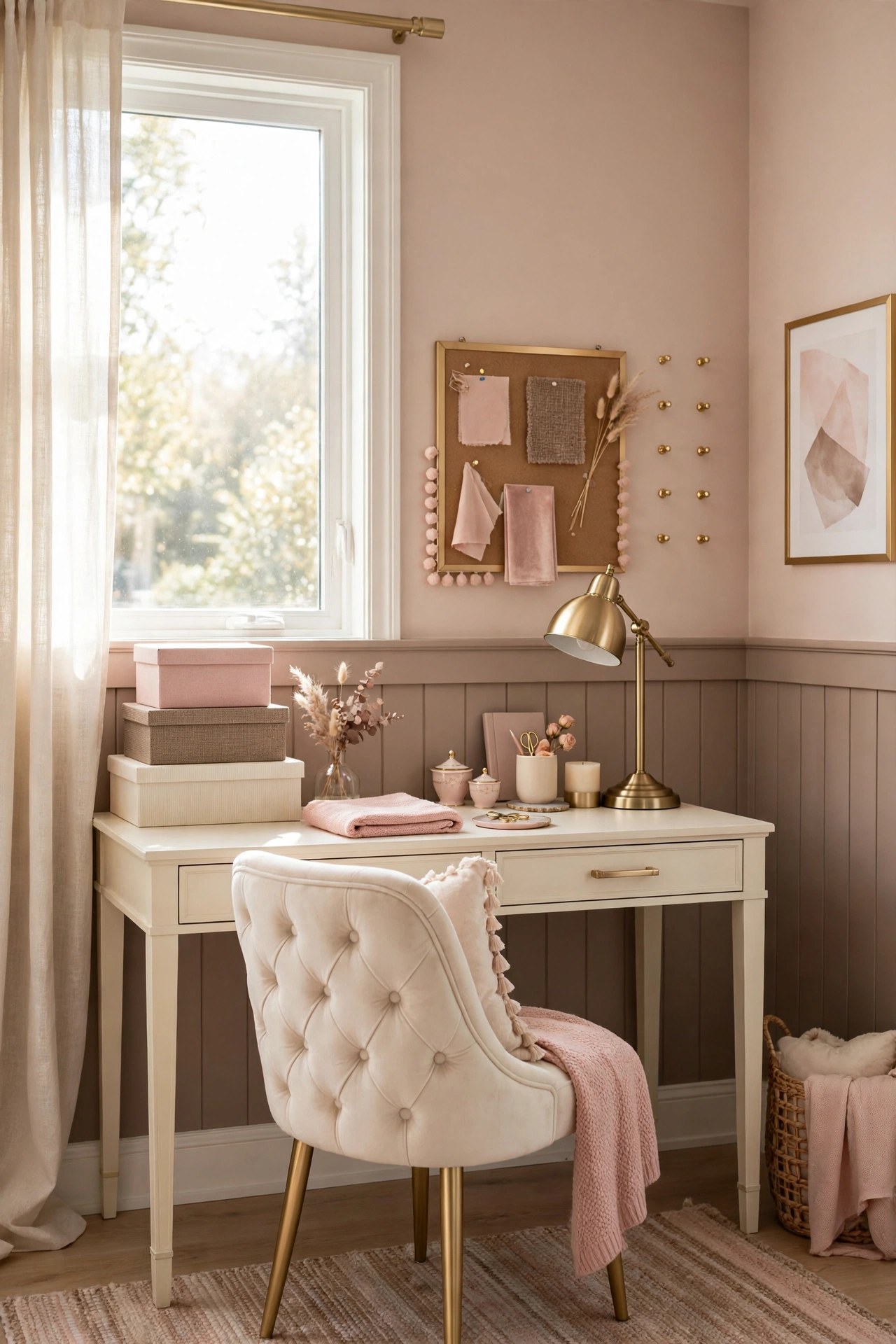
A teen desk fails in predictable ways. It is too shallow for a laptop and books together, it has no closed storage so paper spreads, and the chair is chosen for looks until homework lasts an hour. A desk that works starts with size: enough depth for a laptop, an open book and a lamp without stacking, plus one drawer or a lidded box set for paper, pens and chargers. The glam thread stays light, a cream desk, a brushed gold lamp and blush or taupe boxes, so the corner still belongs to the bedroom.
Best For: Teens with daily homework, exam study or laptop-based schoolwork at home.
Not Ideal For: Rooms where the only desk wall sits under a sloping ceiling or in front of a radiator; move the desk and use that wall for low storage.
Estimated Cost: $150-$380 (estimate) for a desk with a drawer, a supportive chair and a desk lamp.
Budget Note: Put the money into the chair and desk depth; boxes and a pinboard can be added later for very little.
Renter Friendly: Yes
Renter Note: Freestanding only; a pinboard can hang from removable hooks if the lease limits screws.
What You Need
Desk at least 24 inches deep with a drawer, supportive adjustable chair, desk lamp, lidded boxes, cable box, pinboard.
Product type to look for: A chair with lumbar support and a seat height that lets feet rest flat, and a lamp with an adjustable arm aimed at the page, not the screen.
How To Do It
- Measure the wall and choose the deepest desk that still leaves a clear walkway.
- Set the chair height first, then place the lamp opposite the writing hand.
- Give paper, pens and chargers one closed home each before the first study session.
- Route all cables into the cable box under the desk and label the desk charger.
Pro Tip
Keep the desk rule simple: laptop, current book, lamp, nothing else overnight. A clear desk makes the whole room feel organised.
3. Layer LED and Fairy Lights Safely
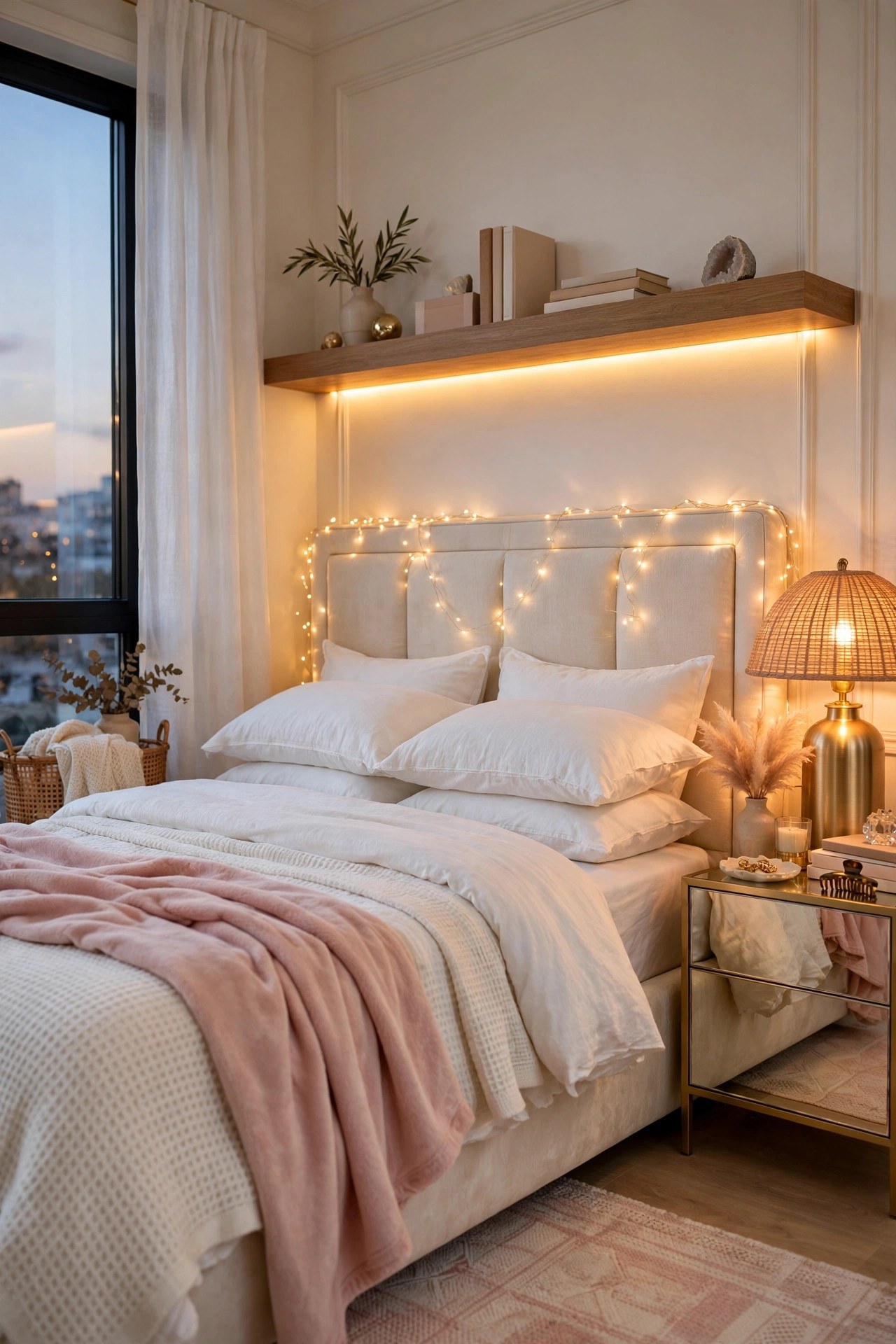
Teenagers love light layers, and this is the design where parents are right to ask questions first. Done well, layered light makes a plain room feel special at night: a warm main light, a soft glow along the headboard or shelf, and one lamp for reading. The safe version is specific. Use LED fairy lights only, because LED stays cool, and keep any string clear of direct contact with bedding, curtains and paper. Fix strings to the wall, the headboard frame or a shelf edge with removable clips, never draped loosely over fabric. Keep one warm colour temperature across every layer and put the layer on one switch or timer.
Best For: Teens who want an evening glow for reading, music and winding down.
Not Ideal For: Bunk beds and canopy drapes where a string could rest on fabric; use a lamp and battery candles there instead.
Estimated Cost: $25-$80 (estimate) for LED fairy lights, removable clips and one battery candle set.
Budget Note: Battery sets cost a little more and save the cables, clips and wall marks that plug-in sets often need.
Renter Friendly: Yes
Renter Note: Removable clips and battery sets need no screws and leave no marks.
What You Need
LED fairy lights or a warm LED strip, removable adhesive clips, battery candles, bedside lamp with a warm white bulb.
Product type to look for: LED lights labelled cool to the touch with a timer or remote, and battery candles with a hard outer shell, not real wax near fabric.
How To Do It
- Plan three layers only: main light, one fairy or LED glow line, one reading lamp.
- Fix fairy lights to the frame, wall or shelf edge with clips, clear of bedding and curtains.
- Place battery candles on a tray or shelf on a hard surface, never on the bed.
- Set the timer, or agree one switch-off point, so no light stays on all night.
Pro Tip
Check the layers with the main light off. If one layer looks harsh or blue, change that bulb or string first.
4. Style a Gallery Wall That Can Grow Up
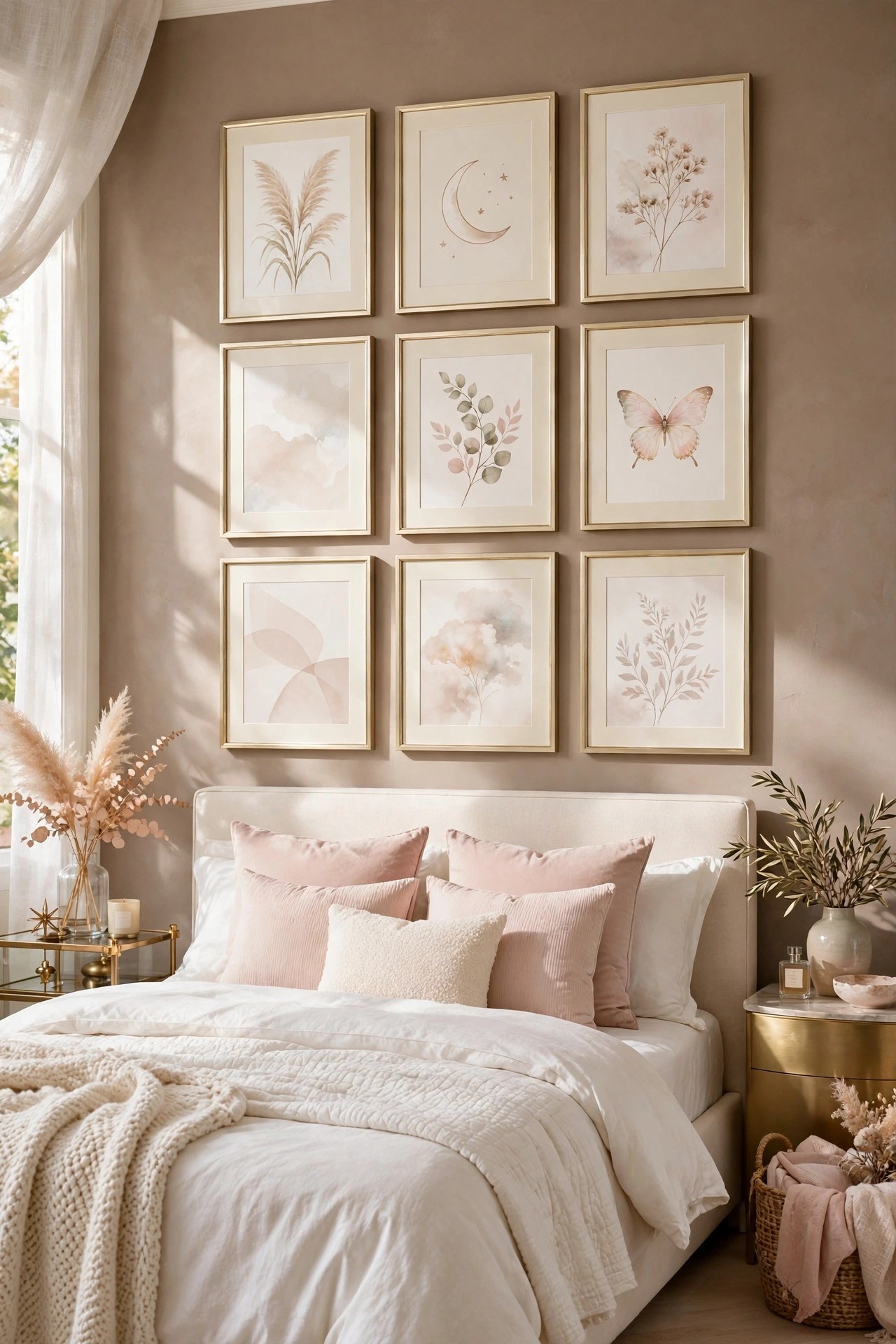
Posters taped straight to the wall are the fastest route to a room that looks temporary, and the tape usually takes paint with it when taste changes. A gallery wall in light frames solves the same urge in a grown-up way. A neat grid of cream and brushed gold frames above the bed or desk holds art prints and photos, and every print can be swapped in minutes without touching the wall. The frame does the growing up: the same photo looks casual taped up and deliberate behind glass in a gold frame. Keep prints inside the room scheme, blush, taupe, cream and muted gold, with black and white photos for contrast.
Best For: Teens with photos and art prints they want on show in a tidy way.
Not Ideal For: Walls that cannot take fixings and leases that ban hooks; use a picture ledge on a dresser instead.
Estimated Cost: $50-$150 (estimate) for six to eight frames and a set of art prints.
Budget Note: Buy matching frames in one set; a matched set costs less per frame and keeps the grid calm.
Renter Friendly: With Conditions
Renter Note: Removable strips rated for the frame weight avoid holes; check the limit per pair before hanging.
What You Need
Six to eight matching frames in cream or brushed gold, art prints and photos in the room palette, paper templates, level, picture strips or hooks.
Product type to look for: Lightweight frames with acrylic glazing rather than glass above a bed, for safety if a frame is knocked.
How To Do It
- Lay the full arrangement on the floor and photograph it before hanging anything.
- Tape paper templates to the wall and live with them for a day to check the height.
- Hang the centre frames first, then work outward, checking each row with a level.
- Keep one frame as the personal slot that can change often; keep the rest as long-term art.
Pro Tip
Use fixings rated well above the frame weight above a bed, and hang the lowest frame clear of anyone sitting up.
5. Carve Out a Cosy Reading Corner
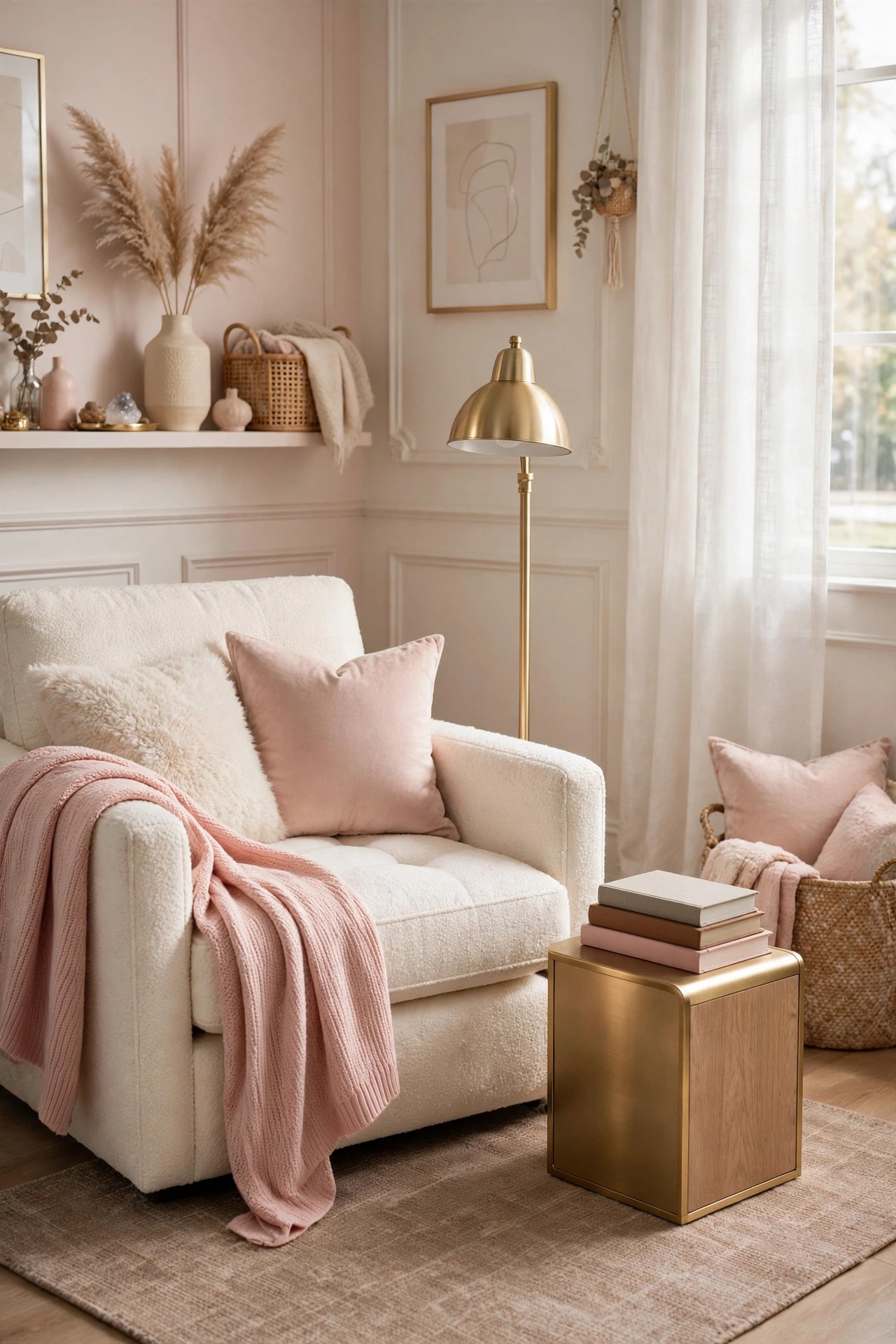
A reading corner gives a teen bedroom a second mood. The bed is for sleep, the desk is for work, and one comfortable chair in the corner is for reading, music and quiet time. It needs little space: a cushioned chair or a generous floor cushion, a small side surface for a drink and a book, a warm lamp at shoulder height, and a throw in blush or warm taupe. A small rug under the chair helps more than any decoration, because it draws a soft boundary that makes the corner feel separate even in a small room.
Best For: Teens who read, journal or need a calm corner away from the desk and bed.
Not Ideal For: Rooms where the only corner is needed for a wardrobe or desk; use a cushioned window seat instead.
Estimated Cost: $90-$260 (estimate) for a small cushioned chair, a lamp and a throw.
Budget Note: A floor cushion set and a lamp create the same corner for far less while the layout is tested.
Renter Friendly: Yes
Renter Note: Entirely freestanding; felt pads under the chair and lamp protect the floor.
What You Need
Small cushioned chair or large floor cushion, blush or taupe throw, lamp with a warm bulb, small side table, small rug.
Product type to look for: A chair deep enough to sit cross-legged in, in a wipeable or washable cover fabric for everyday use.
How To Do It
- Choose the corner with the best daylight and space for the chair plus a side surface.
- Lay the rug first, then angle the chair slightly into the room, not flat to the wall.
- Set the lamp so light falls over the shoulder onto the book, and test it seated.
- Add the throw and current books only, and keep chargers out of the corner on purpose.
Pro Tip
Keep one rule for the corner: no school bag and no laundry. Once storage creeps in, the calm corner stops working.
6. Choose a Daybed or Trundle for Sleepovers
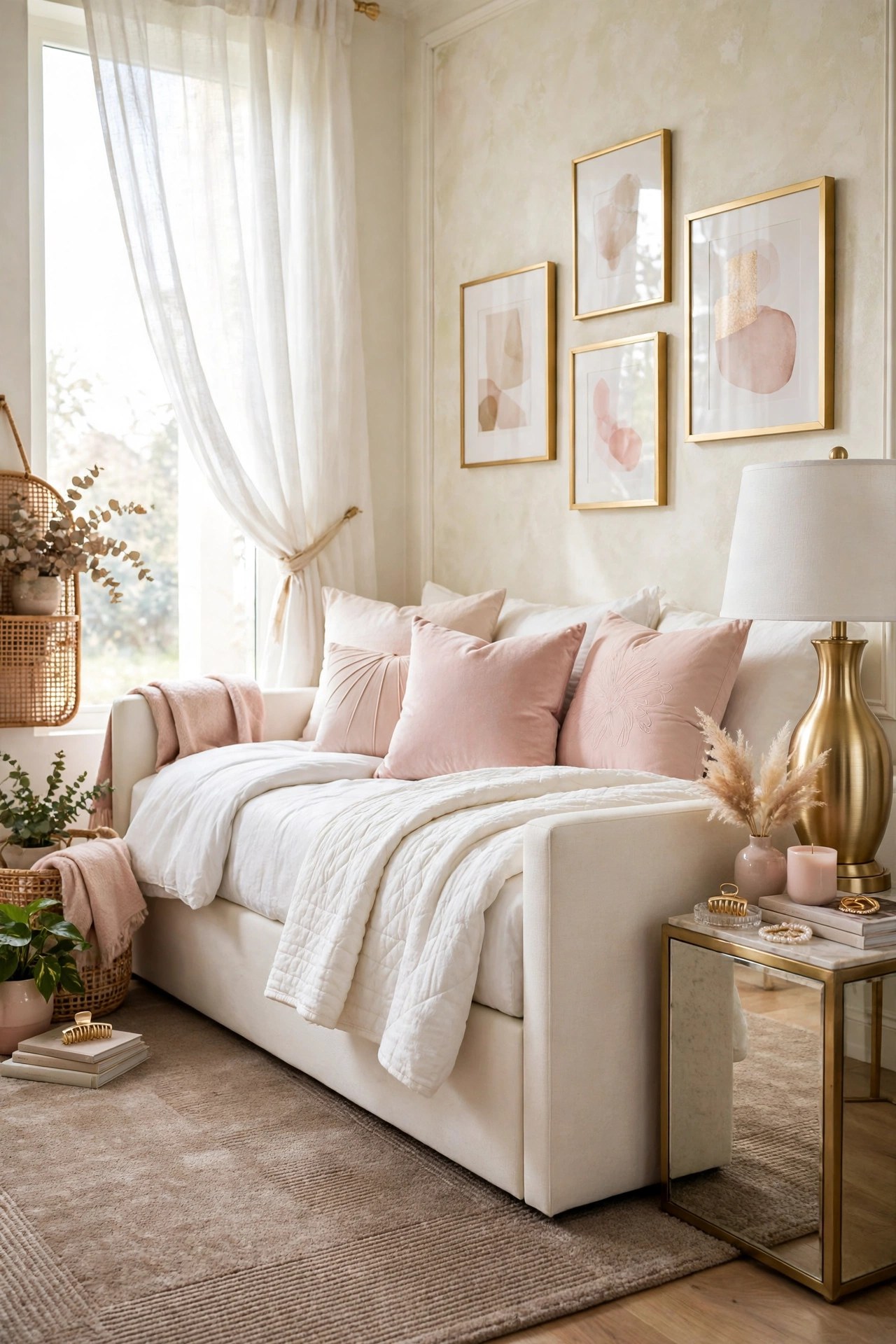
Sleepovers are a fixed part of teen life, and the floor is a poor answer to them. A daybed solves two problems in one piece: dressed with cushions along the back it reads as a sofa for daytime sitting and reading, and at night it is a proper bed. A trundle underneath adds a second full sleeping place that disappears completely in the morning, which no air mattress can match for tidiness. In cream upholstery with white bedding and blush cushions, it keeps the glam palette while making the room feel like a small sitting and sleeping room a teenager can host in.
Best For: Teens who host sleepovers often and rooms that need daytime seating as well as a bed.
Not Ideal For: Teens who need under-bed storage more than a second sleeping place.
Estimated Cost: $300-$650 (estimate) for a daybed frame, with a trundle adding to the total by model.
Budget Note: Compare daybed plus trundle against a standard bed plus a good guest mattress; the totals are often close.
Renter Friendly: Yes
Renter Note: Freestanding; measure doors and corners on the delivery route, as frames arrive in large panels.
What You Need
Daybed frame in cream or warm wood, trundle if needed, two mattress sets at the correct depth, day cushions, spare bedding stored in one place.
Product type to look for: A daybed with a solid base and a trundle rated for a standard single mattress, on castors that roll on hard floors and low-pile rugs.
How To Do It
- Measure the wall and the trundle pull-out space with the rug in place.
- Dress the daybed with a fitted base layer, then line cushions along the wall side.
- Make the trundle once as a test, with its own bedding, before it is needed.
- Store spare pillows in one cushion cover or ottoman so day and night bedding stay apart.
Pro Tip
Keep daybed cushions in the room palette. The sofa illusion makes the room feel grown-up, and it depends on calm colours.
7. Plan a Wardrobe and Storage Wall That Closes
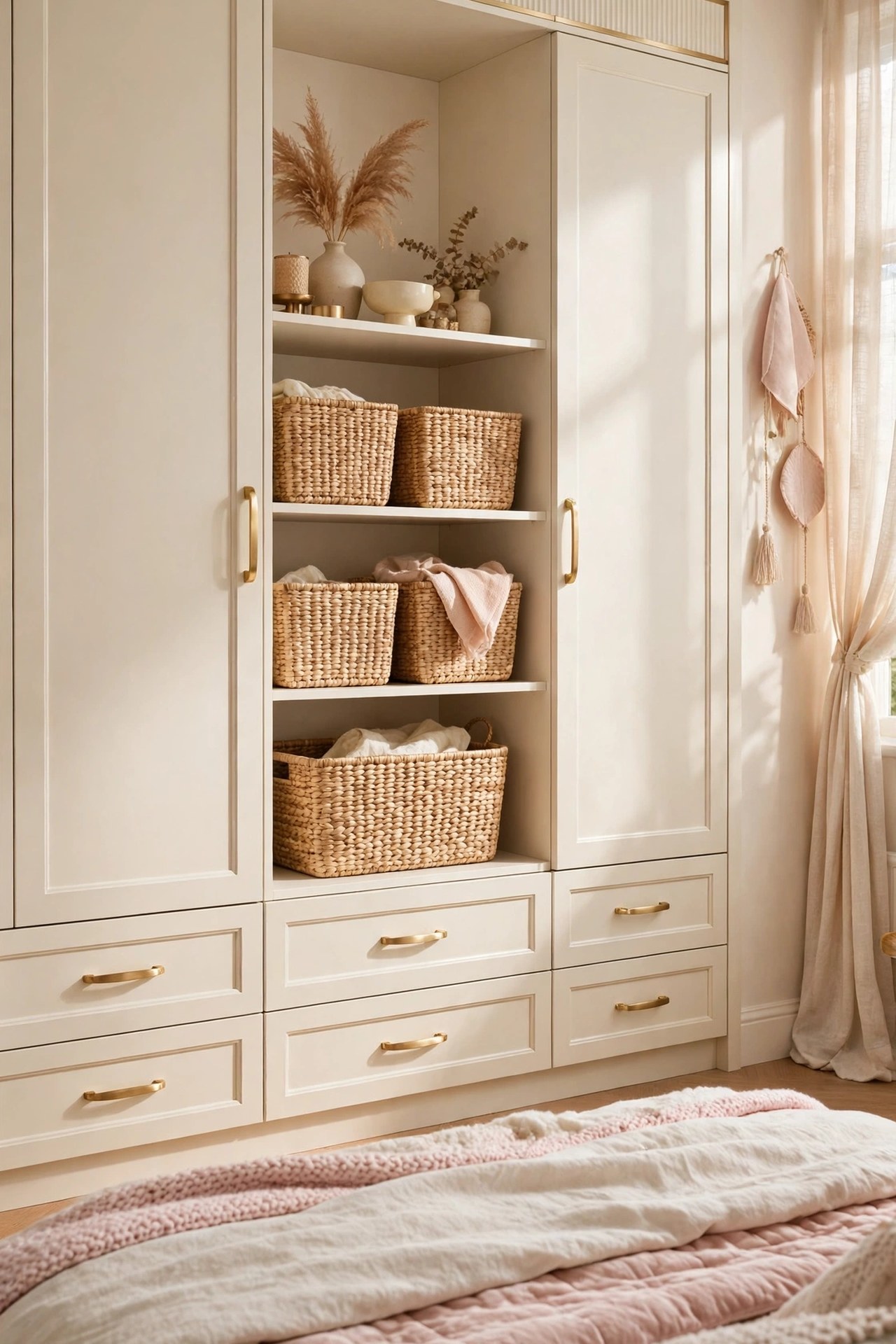
Teen clutter is not a character flaw, it is a volume problem: clothes, shoes, bags, sports kit and books arrive faster than most bedrooms add storage. Open rails and shelves show all of it, all of the time. A storage wall that closes, one run of cream wardrobe doors and drawers along a single wall, hides the volume and leaves the rest of the room calm. Brushed gold handles keep the wall inside the glam palette. Safety is not optional here: any tall unit must be anchored to the wall with its anti-tip kit before it is loaded.
Best For: Teens with more clothes and kit than one small wardrobe can hold.
Not Ideal For: Rooms where the only full wall is needed for the bed and desk; split storage into a smaller wardrobe plus under-bed drawers.
Estimated Cost: $350-$800 (estimate) for a wardrobe run with drawers and handles, by size and build type.
Budget Note: One planned wall costs less over time than small storage pieces bought one crisis at a time.
Renter Friendly: With Conditions
Renter Note: Freestanding units are fine, but each tall unit still needs its anti-tip wall fixing; agree it in writing.
What You Need
Wardrobe units with doors and drawers, brushed gold handles, anti-tip kits for every tall unit, drawer dividers, lidded baskets.
Product type to look for: Units with soft-close doors, adjustable shelves and a supplied anti-tip kit, in a cream finish close to the wall colour.
How To Do It
- Measure the full wall, including skirting and sockets, and plan the run on paper first.
- Anchor every tall unit to the wall first, then load it, heaviest items at the bottom.
- Assign each section one job only: hanging, folded, bags, kit.
- Leave one drawer or basket half empty for new term and new season overflow.
Pro Tip
Photograph the wall closed from the doorway. If the room still looks busy, clear the tops of the units first.
8. Use a Mirror Wall to Lift Light and Finish
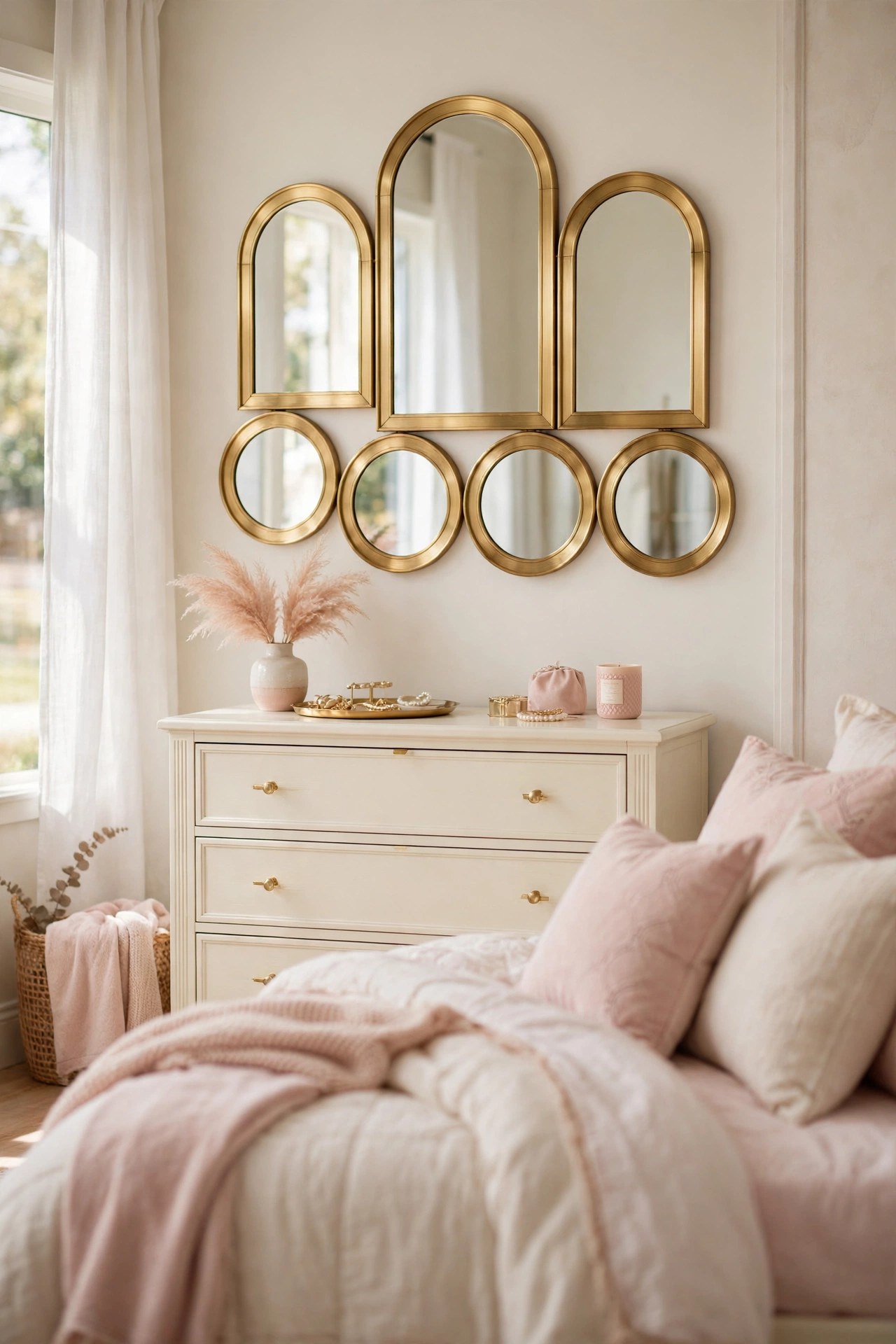
One mirror is useful. A small, planned group of mirrors is a design. A mirror wall usually sits above a dresser or beside the vanity, where it lifts light across the room, gives a practical check before leaving, and adds the brushed gold note that ties the palette together. The grown-up version is restrained: two or three mirrors in related shapes, frames in the same brushed gold finish, hung as one composition rather than scattered. Plan the group on the floor first, keep gaps even, and hang the centre at eye level for the teenager. Mirrors should face light or a calm part of the room, never a cluttered corner, because whatever they face is what the room shows twice. See our modern luxury bedroom for more gold-and-mirror looks.
Best For: Darker teen bedrooms, rooms with one small window, and plain dresser or vanity walls.
Not Ideal For: Walls opposite a cluttered desk or open storage; the reflection will double the busiest view.
Estimated Cost: $80-$220 (estimate) for two or three framed mirrors in brushed gold finishes.
Budget Note: Two good mirrors in one finish look more expensive than four mixed mirrors bought separately.
Renter Friendly: With Conditions
Renter Note: Use fixings rated for each mirror weight; removable strips only for lightweight mirrors within their limit.
What You Need
Two or three mirrors in brushed gold frames, paper templates, level, fixings rated for the weight, microfibre cloth.
Product type to look for: Mirrors with safety-backed glass and sealed frame edges, in one consistent brushed gold tone across the set.
How To Do It
- Arrange the mirrors on the floor and photograph two or three layouts before choosing.
- Tape paper templates to the wall and check the reflection from the bed and doorway.
- Hang the largest mirror first at eye level, then place the smaller ones with even gaps.
- Clean the glass last and keep the surface below the mirrors clear.
Pro Tip
Check the mirror wall at night too. If it reflects a harsh ceiling light, move a lamp, not the mirror.
9. Drape a Canopy-Lite Bed Without the Fairytale Look
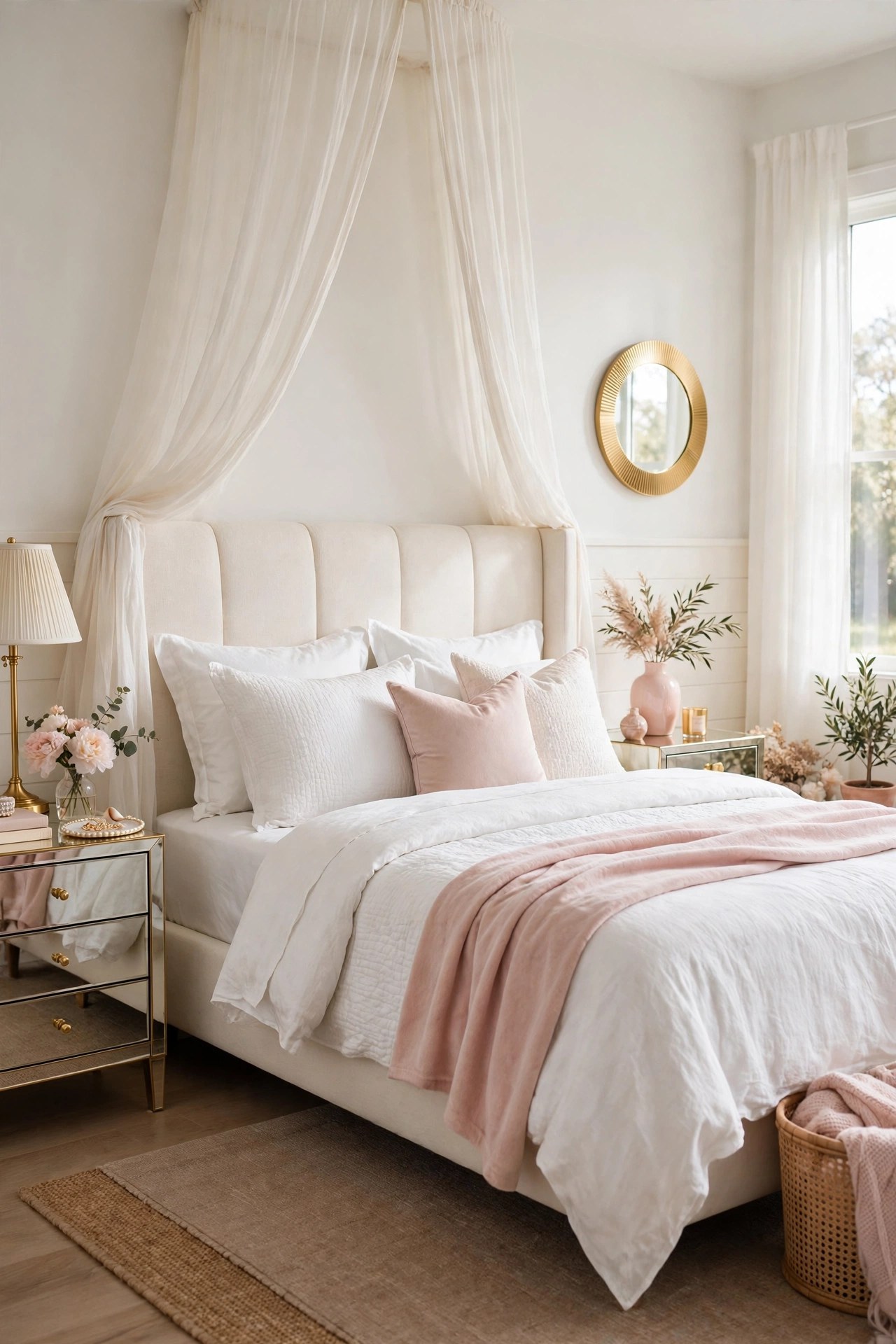
A full canopy can tip a teen room into fairytale territory fast, and heavy drapes collect dust and block light. Canopy-lite keeps the softness and drops the costume: one light sheer panel or a pair of narrow sheer lengths fixed high at the headboard end only, falling behind or just beside the pillows, so the bed gains a soft backdrop without a tent effect. In white or warm cream sheer, the drape softens a plain wall and still washes easily. Fixings stay simple and safe: a lightweight rod, rated hooks or headboard clips, with fabric kept completely clear of any light string, lamp or battery candle. Never drape fabric over lights of any kind.
Best For: Teens who want a soft, calm bed backdrop and rooms with a plain wall behind the bed.
Not Ideal For: Bunk beds, ceiling fans, or any layout where fabric could reach a lamp or light string.
Estimated Cost: $30-$90 (estimate) for sheer panels and lightweight fixings.
Budget Note: One sheer bought as two narrow lengths looks better than a wide heavy drape and costs less to replace.
Renter Friendly: With Conditions
Renter Note: Headboard clips and removable hooks avoid ceiling fixings and are the renter-safe route.
What You Need
One or two lightweight sheer panels in white or warm cream, lightweight rod or headboard clips or rated hooks, tape measure.
Product type to look for: A washable sheer with a soft fall and no stiff coating, light enough to hang from clips or a slim rod.
How To Do It
- Measure from the fixing height to the headboard and buy sheers that end behind it.
- Fit the rod, hooks or clips at the headboard end only and test them with a gentle pull.
- Drape the sheer behind or beside the pillows, clear of lamps and light strings.
- Check from the doorway and adjust until it reads as a backdrop, not a curtain.
Pro Tip
Wash the sheers with the monthly bedding change. Dust turns a soft drape grey faster than anything else.
10. Try a Colour-Blocked Accent in Blush and Taupe
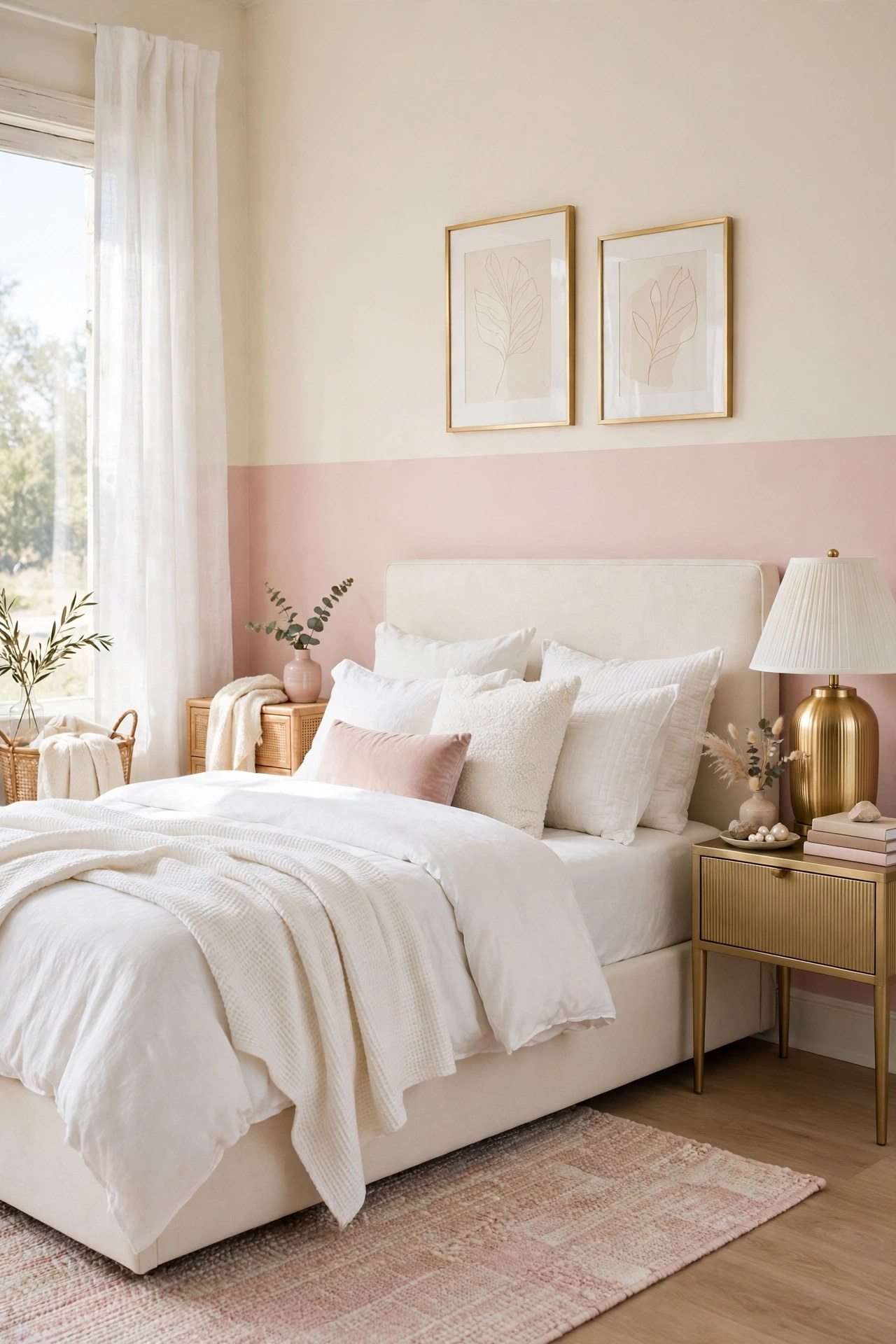
Paint is the strongest change in a teen room and the one most likely to be regretted in a strong colour. A colour-blocked accent keeps the impact and limits the risk. Instead of one full wall in a saturated shade, paint a defined block: the lower half of the bed wall in soft blush with warm cream above, an arch behind the headboard, or a wide panel behind the desk in warm taupe. The block frames the furniture, adds the personal colour a teenager wants, and can be repainted in an afternoon when taste moves on. Keep the block inside the room palette so bedding and gold accents still work. Paint a large test patch first and check it morning and evening, because blush can turn sugary under warm bulbs.
Best For: Teens who want real colour input and parents who want the change to stay reversible.
Not Ideal For: Heavily textured walls where taped edges will not give a clean line; use removable panels instead.
Estimated Cost: $40-$110 (estimate) for paint, tape and tools for one block, or a similar range for removable panels.
Budget Note: A block uses a fraction of the paint of a full wall, so better paint in the right tone is affordable.
Renter Friendly: With Conditions
Renter Note: Paint needs landlord permission in most leases; the removable panel version needs none.
What You Need
Paint in blush or warm taupe, or removable wallpaper panels, painter tape, level, roller and tray, test pot.
Product type to look for: A washable matt paint in a muted blush with a taupe undertone, tested on the wall in daylight and lamplight first.
How To Do It
- Choose the block shape and mark it in pencil, with a level or a string guide for an arch.
- Paint a large test patch inside the shape and check it morning and evening.
- Tape the edges, paint two thin coats, and remove tape while the second coat is still wet.
- Style the furniture against the block before adding any art.
Pro Tip
Store the paint code with household records. A five-minute touch-up keeps a scuffed block looking intentional.
11. Use a Small-Room Layout That Protects the Walkway
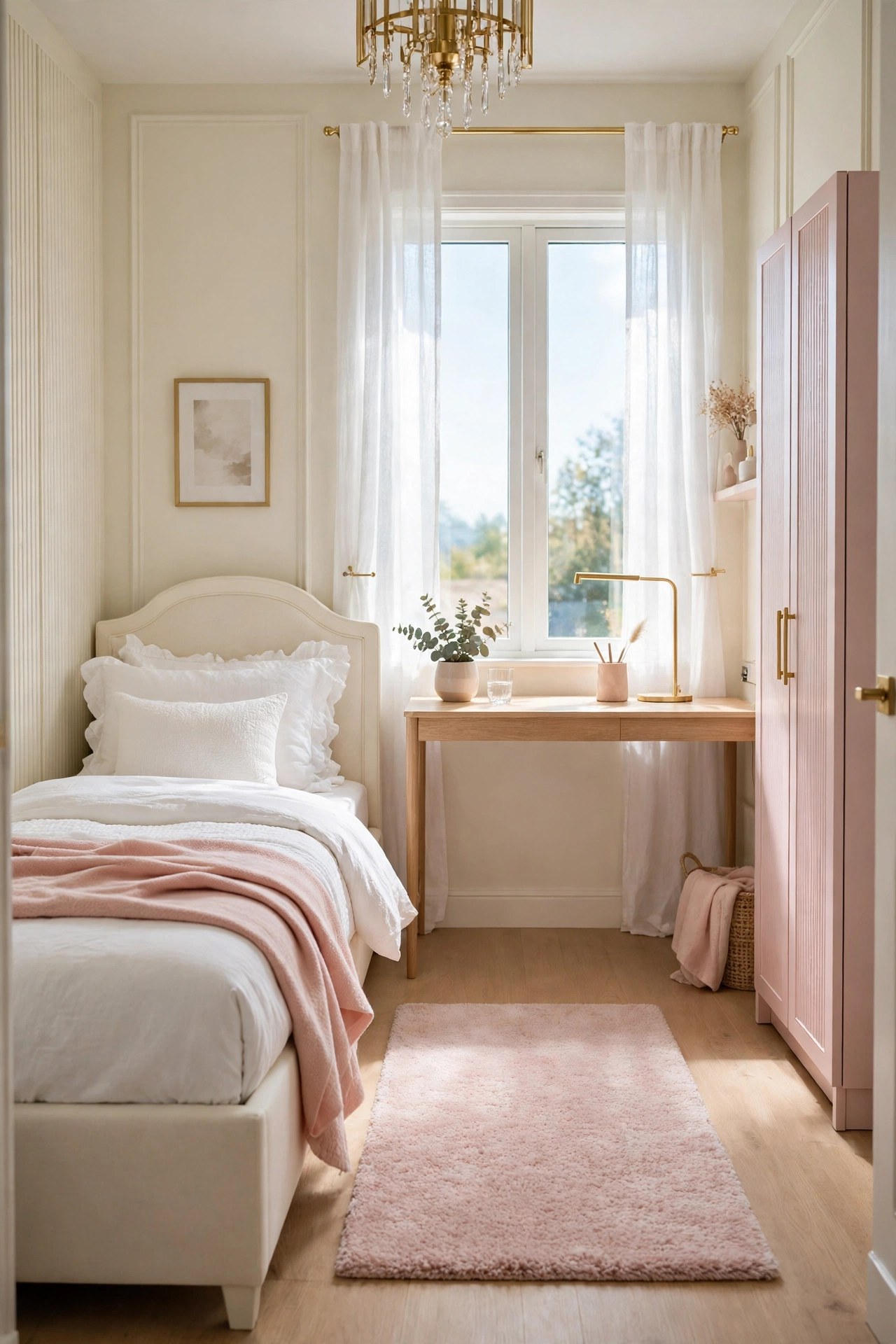
Most teen bedrooms are small, and most small teen rooms fail on layout rather than size. A bed placed diagonally, a desk blocking window light and a wardrobe door that cannot open fully will make even a tidy room feel chaotic. A small-room layout starts with the walkway: one clear path from door to window to wardrobe, kept empty on purpose. Place the bed along the longest wall, the desk beside the window for study light, and storage as one slim run on the remaining wall, following idea 7 at a smaller scale. Choose slim pieces and a bed without a footboard so the path stays open, and use height, shelves above the desk and the gallery wall above the bed, instead of floor. See our very small bedroom ideas for more compact layouts.
Best For: Teen bedrooms under about 10 by 11 feet and shared rooms with two layouts.
Not Ideal For: Rooms with sloping ceilings or a fireplace breaking every wall; sketch layouts on paper first.
Estimated Cost: $0-$150 (estimate) for a layout change alone, rising only if a slimmer piece is bought.
Budget Note: Layout is the only free design here; removing one piece often beats any purchase.
Renter Friendly: Yes
Renter Note: No fixings for the layout itself; anchored tall furniture still needs its anti-tip fixing.
What You Need
Tape measure, painter tape, furniture sliders, a floor sketch, slim desk or wardrobe only if current pieces block the room.
Product type to look for: Furniture under 24 inches deep for wardrobes and under 22 inches for desks, with a raised base that lets floor show.
How To Do It
- Measure the room, door swing and every large piece, and sketch the room to scale.
- Mark the walkway on the floor with painter tape and treat it as fixed space.
- Place the bed on the longest wall, the desk at the window and storage as one slim run.
- Test every door, drawer and wardrobe opening fully before calling the layout finished.
Pro Tip
Take one piece out before buying anything slimmer. Small rooms are more often over-filled than under-sized.
12. Keep a Gaming and Media Corner Tidy by Design
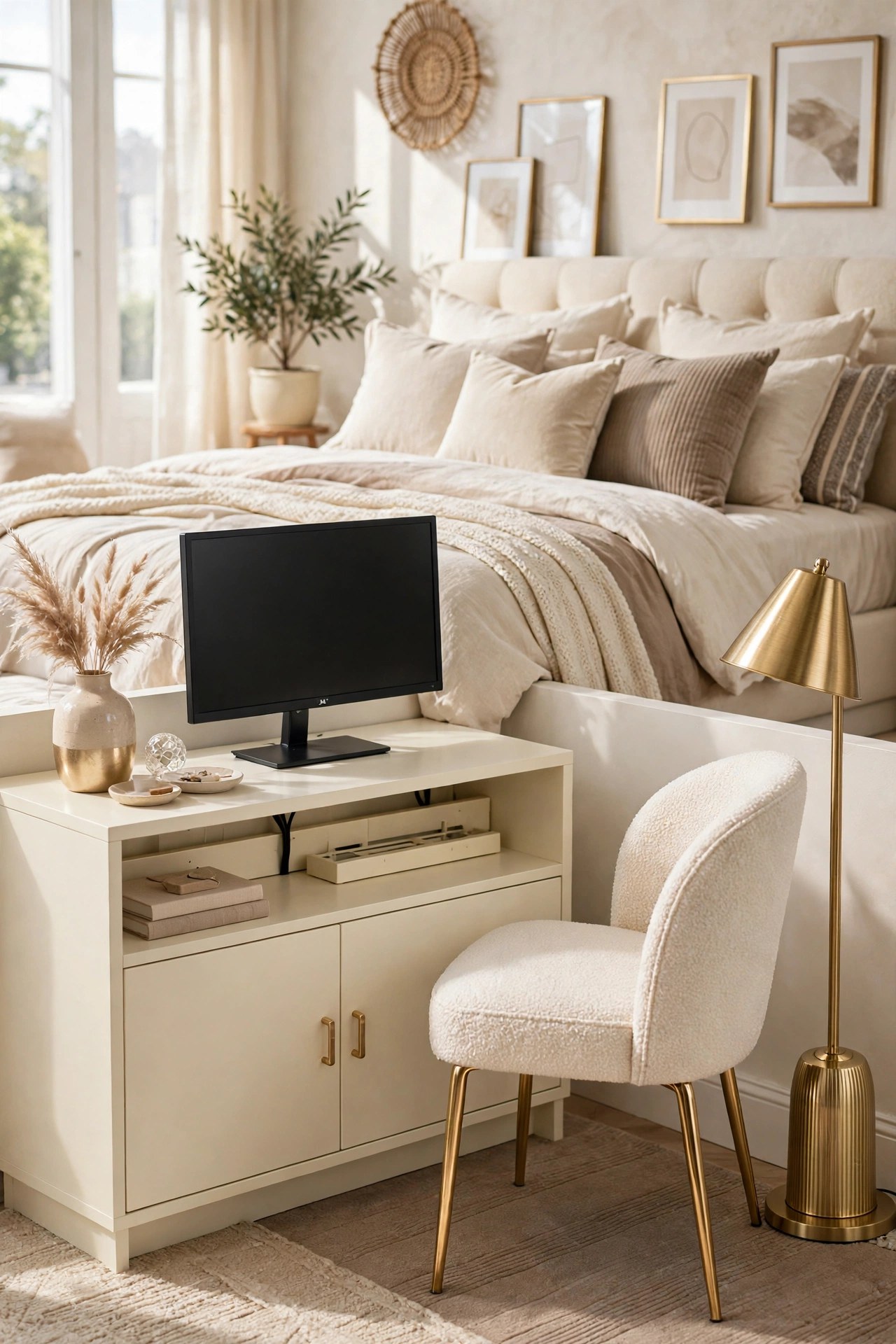
A gaming or media corner is part of most teen rooms now, and pretending otherwise just means it grows without a plan, as a tangle of cables and controllers spread across the bed. A tidy-by-design corner gives it one defined place: a low cream media unit, a screen at seated eye height, and closed storage for controllers, headsets and games. Cable management is the whole design: one cable box or tray under the unit, Velcro ties behind furniture, and a power strip fixed to the unit rather than trailing across the floor. Keep the corner separate from the study desk where space allows, and add a small lamp beside the screen for evening use.
Best For: Teens with a console, a small screen or a laptop gaming setup in the bedroom.
Not Ideal For: Rooms where a media corner would replace the only study desk; study space comes first.
Estimated Cost: $80-$280 (estimate) for a low media unit, cable management and a headset stand, excluding screen and console.
Budget Note: Cable management and one closed unit transform an existing setup for very little.
Renter Friendly: Yes
Renter Note: Freestanding units and adhesive cable trays need no fixings; keep power strips off bedding at all times.
What You Need
Low media unit with a door or drawer, cable box or tray, Velcro ties, headset stand, surge-protected power strip, small lamp.
Product type to look for: A unit with a back panel or cable holes so wires stay hidden, and a power strip with surge protection and one switch.
How To Do It
- Choose one corner and measure the screen and unit together before buying either.
- Set the screen at seated eye height and fix the power strip to the unit, off the floor.
- Route every cable through the tray or box with ties, leaving one charging cable on top.
- Give controllers, games and the headset one closed home each and test the two-minute reset.
Pro Tip
Keep food and drinks out of the media corner by rule. It protects the kit and the bedding at the same time.
13. Mix Boho-Teen Texture Without Losing the Glam Base
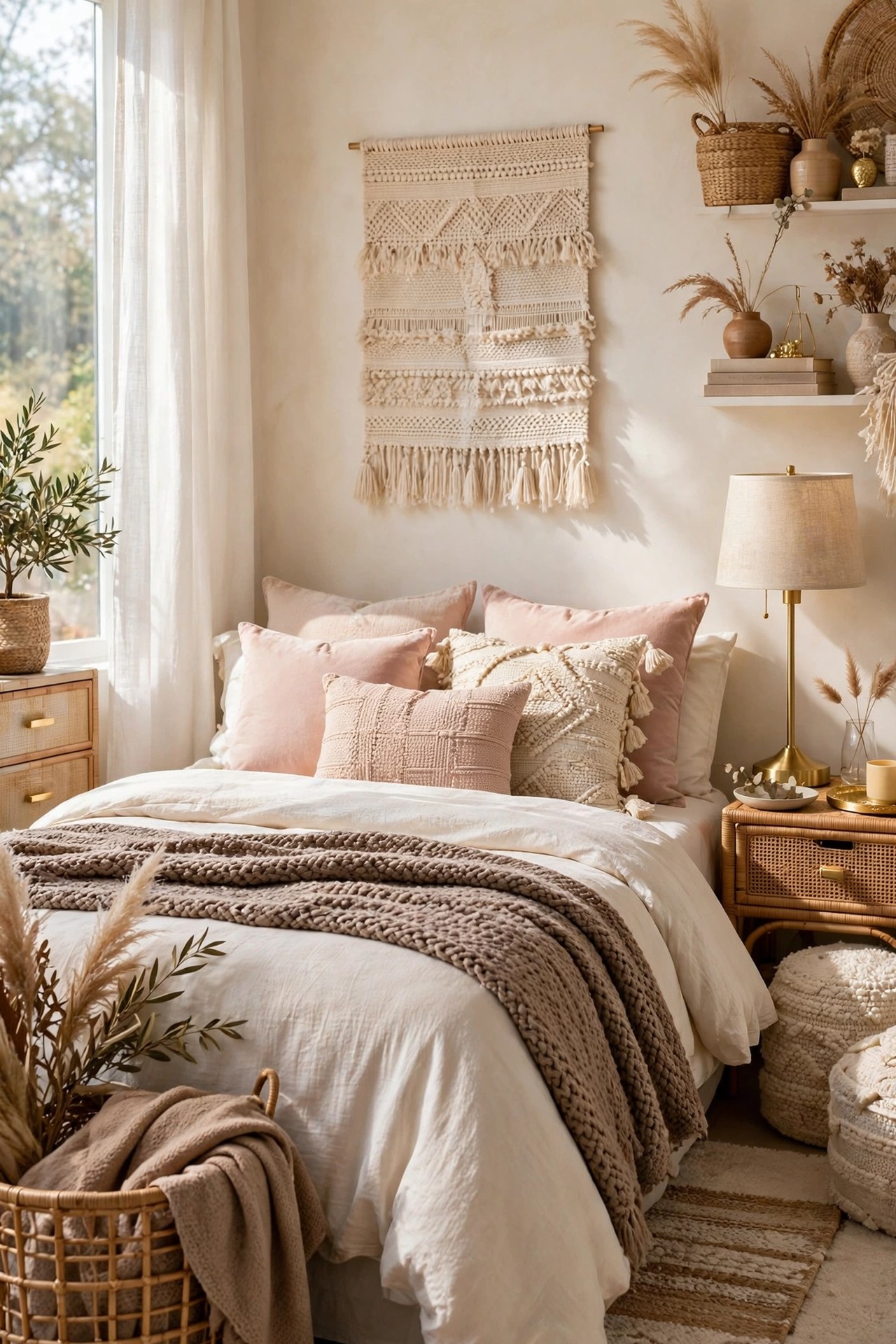
Many teenagers lean towards a softer, collected boho look, and parents often worry it will fight the calm base the room already has. It does not have to. Boho-teen texture works as a layer over the glam base: keep the white, cream and warm taupe palette and the brushed gold lamp or mirror, then add texture in natural tones, a woven throw at the foot of the bed, a rattan-style basket for blankets, a soft cream wall hanging, and cushions in mixed weaves with one blush cushion tying the layer back to the palette. The rule that keeps it grown-up is restraint with pattern and colour. Texture can be rich while colour stays quiet, and that reads as calm and personal rather than busy.
Best For: Teens who want a softer, personal and collected feel within a calm, bright room.
Not Ideal For: Teens who prefer a sharp, minimal finish; texture always reads as relaxed rather than precise.
Estimated Cost: $60-$180 (estimate) for a woven throw, a basket, cushions and a wall hanging.
Budget Note: One woven throw and one basket change the feel of a bed corner for less than one furniture piece.
Renter Friendly: Yes
Renter Note: Wall hangings can use removable hooks; every other piece is freestanding or textile only.
What You Need
Woven throw in taupe or cream, rattan-style basket, cushions in mixed weaves with one blush cushion, cream wall hanging.
Product type to look for: Textiles in natural fibres or natural-look weaves in the room palette, with removable covers where possible for washing.
How To Do It
- Keep base bedding white and cream, then add the woven throw across the foot of the bed.
- Place the basket where blankets and cushions actually land, beside the bed or chair.
- Hang the wall hanging with removable hooks, clear of any light layer.
- Add cushions last, three to five at most, keeping colour inside blush, taupe and cream.
Pro Tip
Judge the corner from the doorway, not beside the bed. Boho layers fail by accumulation, one basket at a time.
14. Display Sport or Music Neatly on One Wall
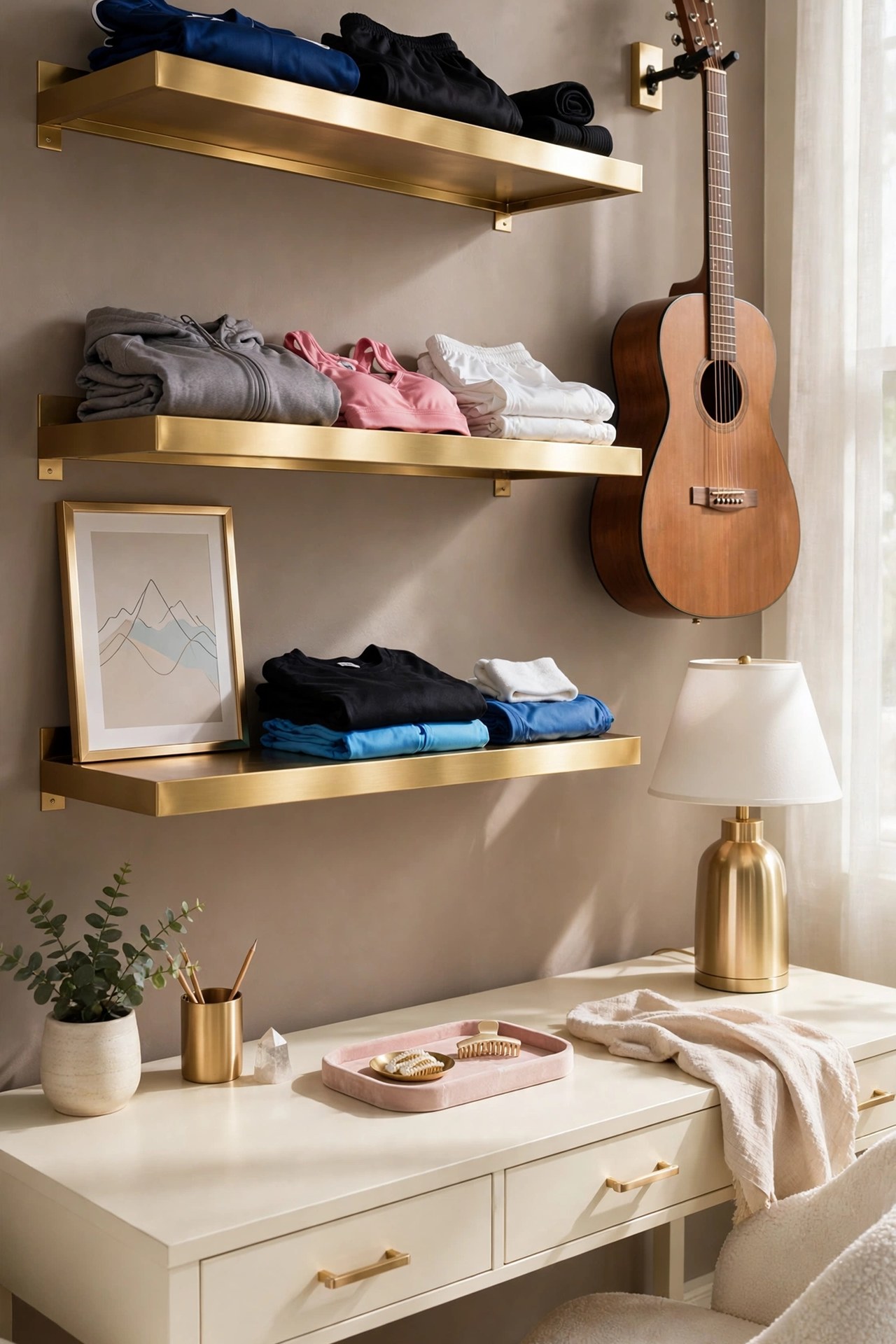
A teenager with a serious sport or music interest will display it somewhere, and the choice is between a planned wall and a spread across every surface. One display wall keeps the identity and contains it: cream or gold floating shelves for trophies, folded kit and framed photos, a secure wall mount for a guitar or similar instrument, and one framed print or shirt frame as the centrepiece. Planned this way, the wall looks like a small exhibition rather than storage that escaped. The safety points matter. Instruments need proper mounts rated for their weight, fixed into studs or solid wall, never adhesive hooks. Heavy trophies belong on the lowest shelf, and nothing heavy should sit on a shelf directly above the bed or desk chair.
Best For: Teens with a sport, music or collecting interest they want visible in their room.
Not Ideal For: Rooms where the only free wall is above the bed; use the desk wall instead.
Estimated Cost: $60-$200 (estimate) for shelves, one instrument mount and one frame, by what is displayed.
Budget Note: Buy the centrepiece frame first; plain shelves can be added around it later.
Renter Friendly: With Conditions
Renter Note: Mounts and shelves need solid fixings and usually permission; a dresser-top display is the no-fix option.
What You Need
Two or three floating shelves in cream or gold, instrument mount rated for the weight if needed, one large frame, smaller photo frames, level and fixings.
Product type to look for: Shelves and mounts with a stated weight rating well above what they will hold, and frames with acrylic glazing.
How To Do It
- Choose one wall, away from above the bed, and plan the layout on the floor first.
- Fix the centrepiece frame or instrument mount first, into studs or solid wall, and test it.
- Add shelves with the heaviest items lowest and clear space left on every shelf.
- Set a seasonal rotation: one item in, one item into storage.
Pro Tip
Light the display with the room lamp, not novelty strips. Calm light separates a display from a shop window.
15. Pick a Quick-Refresh Design That Changes With Taste
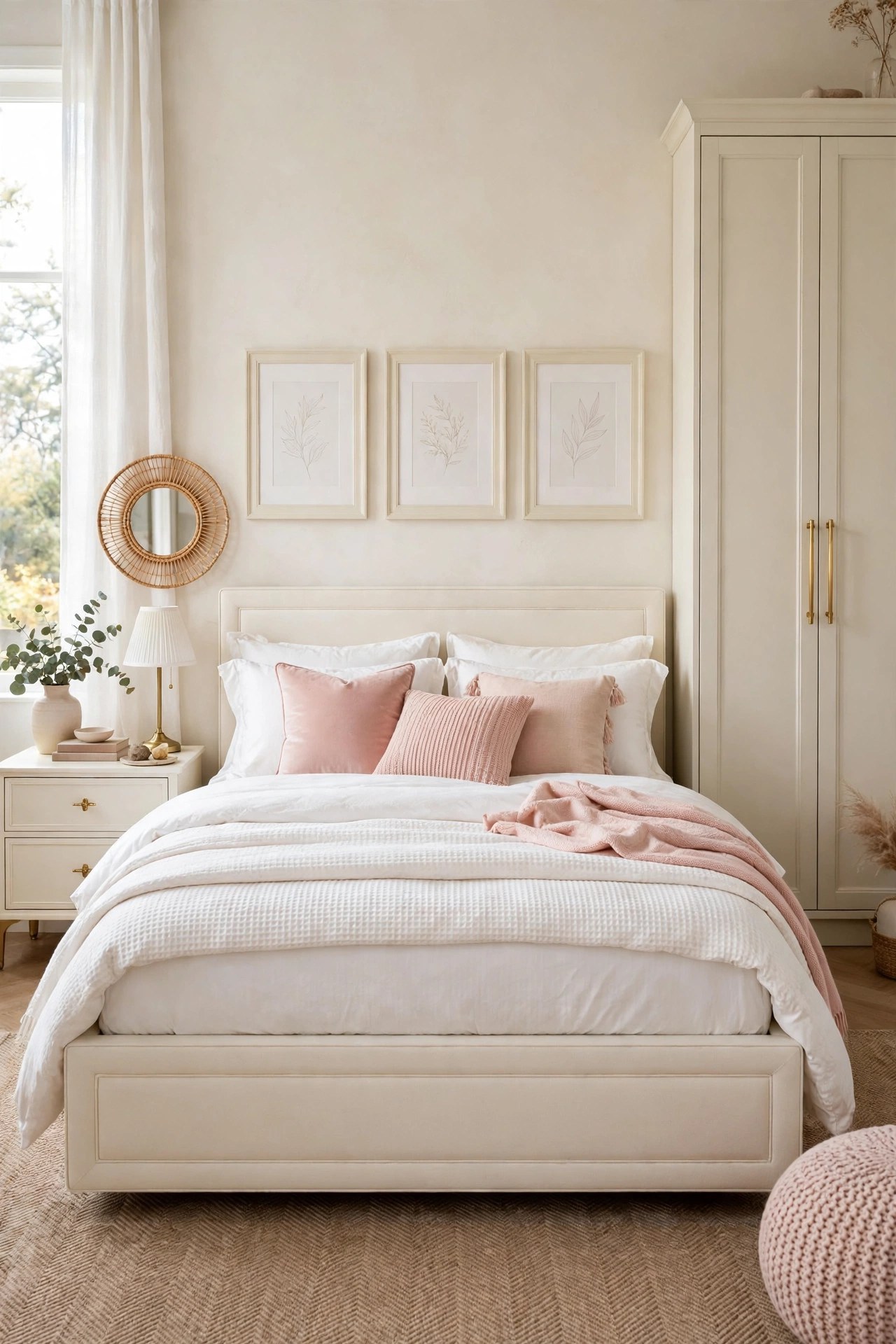
Teen taste changes fast, and the smartest teen bedroom design is the one that expects it. A quick-refresh design puts all the personality into the cheap, swappable layers and keeps every expensive piece neutral and calm. The bed, wardrobe, desk and curtains stay in cream, white and warm taupe with brushed gold hardware. The changeable layers carry the mood: cushion covers, a throw, the prints inside the gallery frames from idea 4, the pinboard cover and one small rug. A full refresh then costs the price of covers and prints, takes an afternoon, and needs no paint and no furniture.
Best For: Younger teens whose taste is still changing, and families who want one room to last the whole teen period.
Not Ideal For: A one-time themed room where the theme itself is the point; this system avoids themes in fixed pieces.
Estimated Cost: $50-$140 (estimate) for one refresh set of cushion covers, a throw and new prints.
Budget Note: Every furniture refresh avoided pays for many refreshes of the textile and print layers.
Renter Friendly: Yes
Renter Note: No fixings or paint are involved in a refresh, which makes it the safest system in a rental.
What You Need
Neutral base furniture and curtains, two sets of cushion covers, two throws, spare prints for the frames, one lidded storage box.
Product type to look for: Cushion covers and throws in washable fabrics sized to the cushions and bed you already own, so a refresh needs no new inserts.
How To Do It
- Audit the room and move every strong colour or theme into a swappable layer.
- Choose two layer moods in advance, for example blush glam and calm taupe.
- Store the off-duty set washed and folded in one lidded box in the wardrobe.
- Refresh on a set rhythm, term breaks or birthdays, changing covers, throw and prints together.
Pro Tip
Let the teenager lead refresh choices inside the agreed palette. Control over the layers makes the fixed base acceptable.
Practical Tips for Teen Bedrooms
Decide the base and the layers separately. The base should be calm and neutral enough to last the whole teen period, while the layers, cushions, throws and prints, carry the personality and change cheaply. Give each job a defined place before buying any decor. Put safety into the plan: anchor every tall unit, keep LED lights only and off fabrics, use battery candles instead of real candles, and keep heavy items off the wall above the bed. Agree two or three reset rules, desk clear at night, controllers in the drawer, floor path empty. Spend first on sleep, study light and closed storage.
Frequently Asked Questions
How do you make a teen bedroom feel grown-up without making it boring?
Keep the base calm in white, cream and warm taupe with gold accents, then put personality into swappable layers: prints, cushions, a throw and one display wall.
What should a teen bedroom include for homework?
A desk deep enough for a laptop and an open book together, a supportive chair with feet flat on the floor, a lamp opposite the writing hand, and one closed home each for paper, pens and chargers.
Are LED fairy lights safe in a teen bedroom?
LED lights are the safer choice because they stay cool, but they still need care: fix them with clips to the wall, headboard frame or shelf, keep them off bedding, curtains and paper, and use battery candles instead of real candles. No light should be draped under fabric.
How can a small teen bedroom fit a bed, a desk and storage?
Protect one clear walkway, put the bed on the longest wall, the desk at the window and storage as one slim run. Use height for shelves and frames, and take one piece out before buying anything new.
How do sleepovers work in a small teen bedroom?
A daybed dressed as a sofa by day, with a trundle underneath for the night, gives two proper sleeping places and daytime seating in one footprint. Keep spare bedding in one labelled place so the second bed can be made in about five minutes.
How often should a teen bedroom be refreshed?
Refresh the layers, not the room. Cushion covers, throws and frame prints can change each term for a small cost, while the neutral base should last the whole teen period without repainting.
Conclusion
A good teen bedroom is a small system, not a theme. Set a calm glam base, white, cream and warm taupe warmed with blush and brushed gold, then give each real job its own place: a vanity that closes, a desk that supports study, lights layered safely and storage that shuts. Keep personality in the swappable layers, the walkway clear and tall furniture anchored, and the room will still work when taste has changed twice more.