
15 Dark Bedroom Ideas That Feel Rich, Warm and Glam
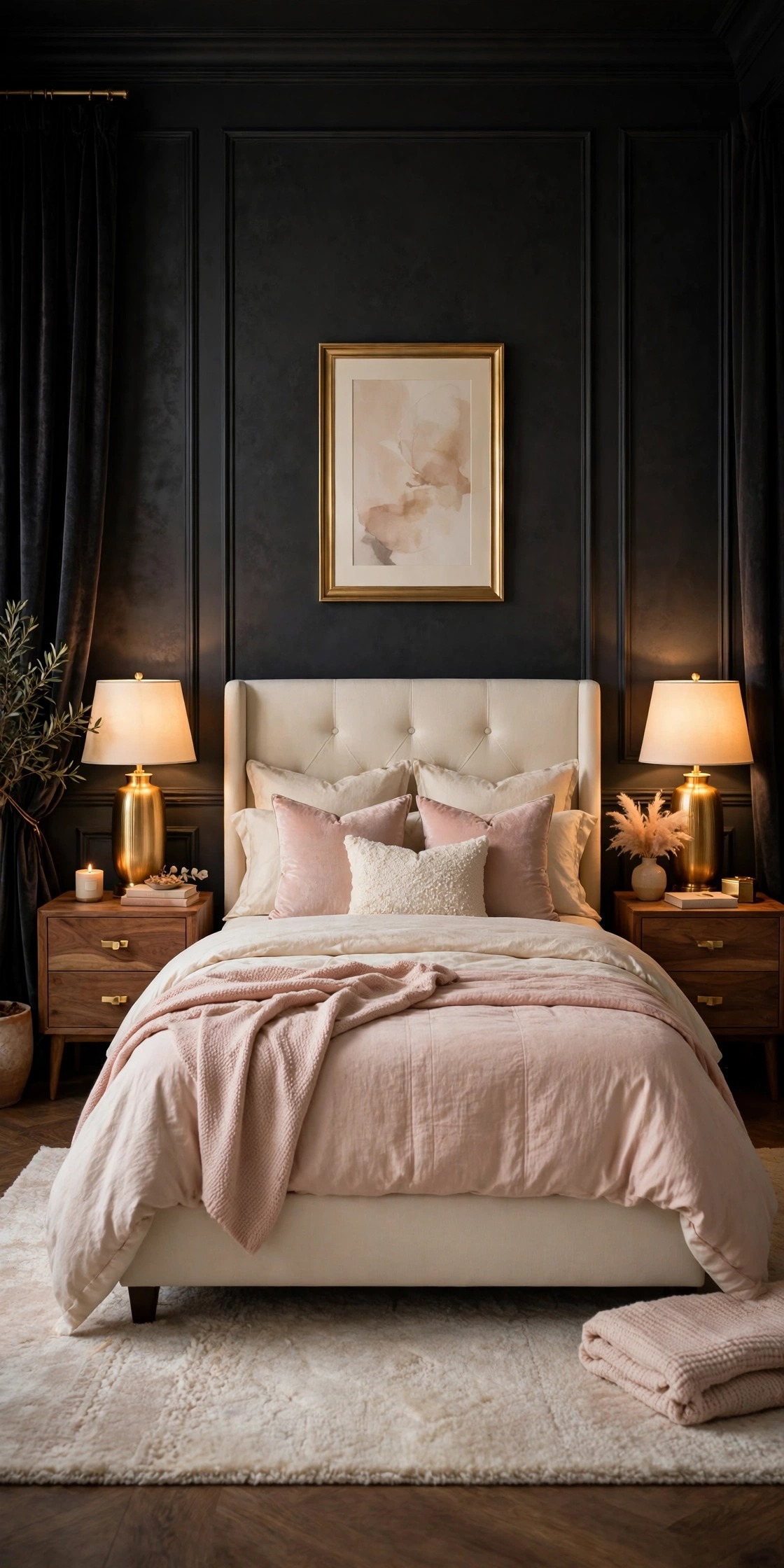
Dark bedroom ideas work when the room feels rich and warm, not heavy or gloomy. The difference is contrast and light: deep charcoal, navy or plum walls behind cream and blush bedding, brushed gold that catches the glow, and lamps placed low so the room reads soft at night and clear in the morning. A dark wall on its own can look flat, but the same wall with a pale upholstered bed, warm wood and two or three light sources becomes the calmest room in the house. These fifteen ideas vary the wall colour, the bed, the lighting and the storage so you can build the look in a large suite, a small room or a rental. Start with the wall and bedding ideas, then add the lighting and finishing layers. For wider layouts and paler schemes, see the full collection in our main guide
Disclosure: This article may contain affiliate links. If you buy through a link on this page, GlamNStyle may earn a small commission at no extra cost to you. Product links in this article are plain links; each one is checked on the retailer’s own page before it is added.
1. Paint the Walls Deep Charcoal and Let Cream Bedding Do the Contrast
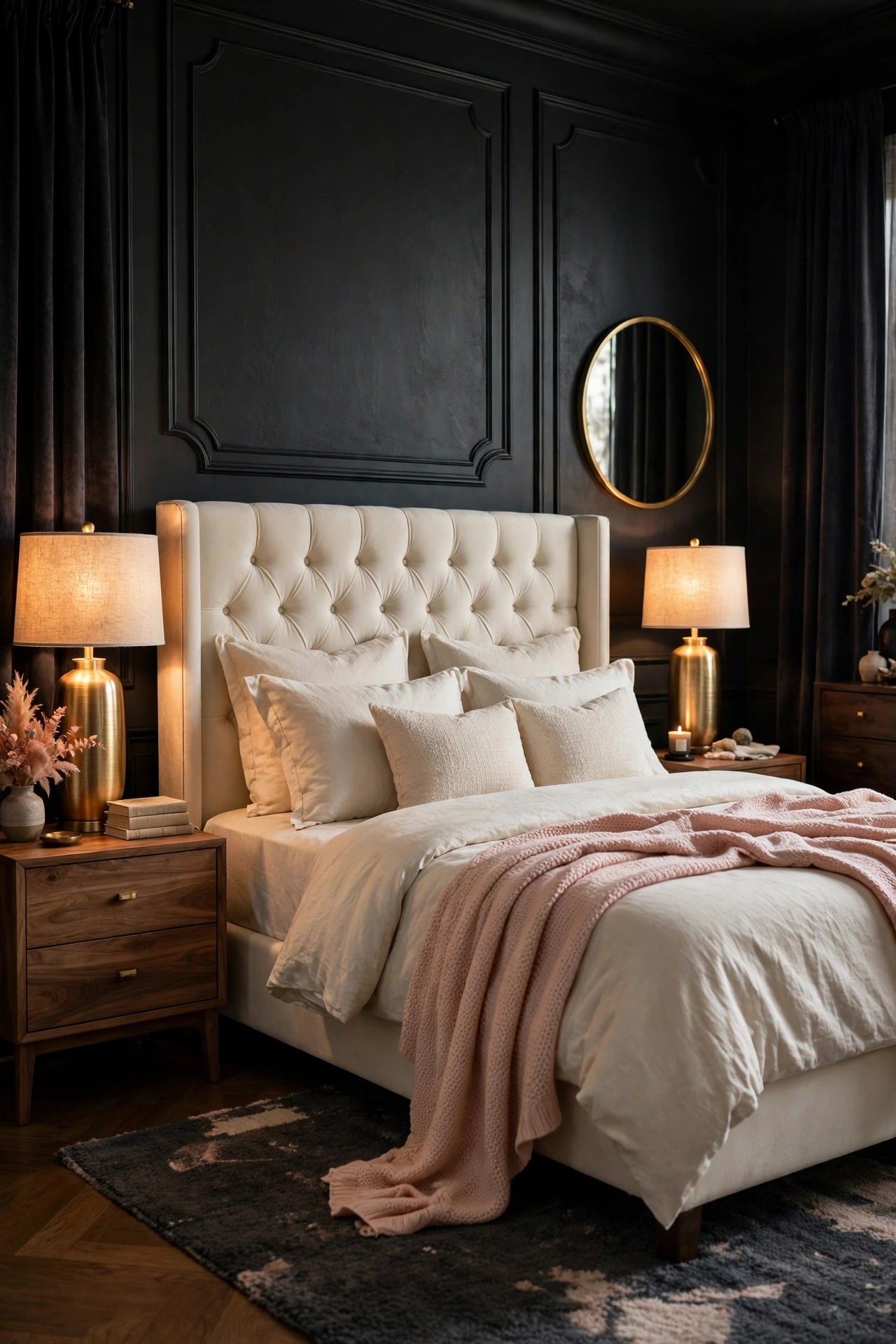
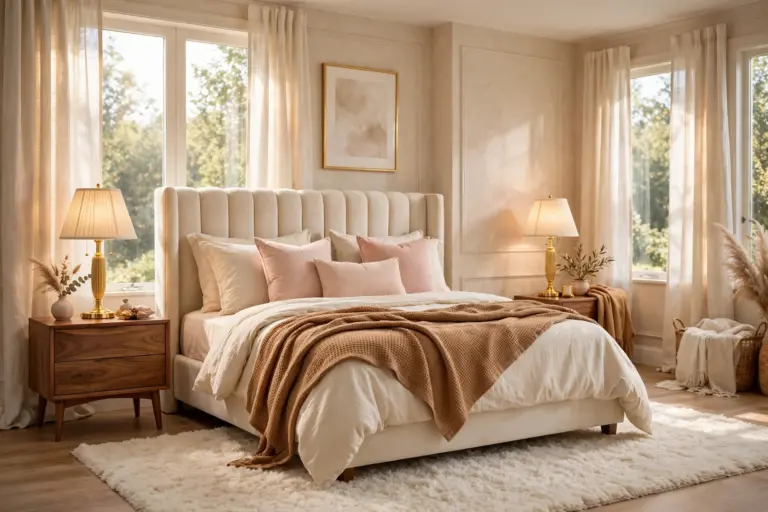
Deep charcoal is the safest starting point for a dark bedroom because it sits between black and grey and changes with the light through the day. Paint all four walls for a wrapped, calm feel, or paint three walls and leave the ceiling pale so the room keeps some height. The glam contrast comes from the bed: a cream upholstered frame, cream bedding and one blush throw placed across the foot. Brushed gold lamps on warm wood nightstands keep the corners from going flat. Test the paint on two walls first and check it at night under your real bulbs, because charcoal can read blue or brown depending on the light. Open windows and ventilate the room well while painting and while the paint dries.
Best For: Main bedrooms that feel bright and restless at night and anyone trying a dark scheme for the first time.
Not Ideal For: Rooms with one small north-facing window and no lamp points; add the lighting in idea 5 first.
Estimated Cost: $120-$350 (estimate) for paint, primer, rollers and a cream bedding set.
Budget Note: Paint is the cheapest large change in the room; spend on the bedding contrast next.
Renter Friendly: No
Renter Note: Wall painting needs written permission in most leases; see idea 14 for a no-paint route.
What You Need
Deep charcoal paint with a matte or low-sheen finish, primer, rollers and brushes, painter’s tape, cream bedding set, blush throw, two brushed gold table lamps.
Product type to look for: A washable matte paint made for bedrooms, tested as a sample pot on two walls before the full tin is bought.
How To Do It
- Paint sample squares on two walls and check them in daylight and under warm lamplight at night.
- Move the bed out, tape the trim and ceiling line, and ventilate the room before the first coat.
- Apply primer if the old colour is pale, then two coats of charcoal, letting each coat dry fully.
- Dress the bed in cream, add the blush throw, and place gold lamps on both nightstands.
Pro Tip
Keep the ceiling and one rug pale. That single light frame stops charcoal from closing the room in.
2. Choose Deep Navy Walls for a Calmer, Cooler Kind of Glam
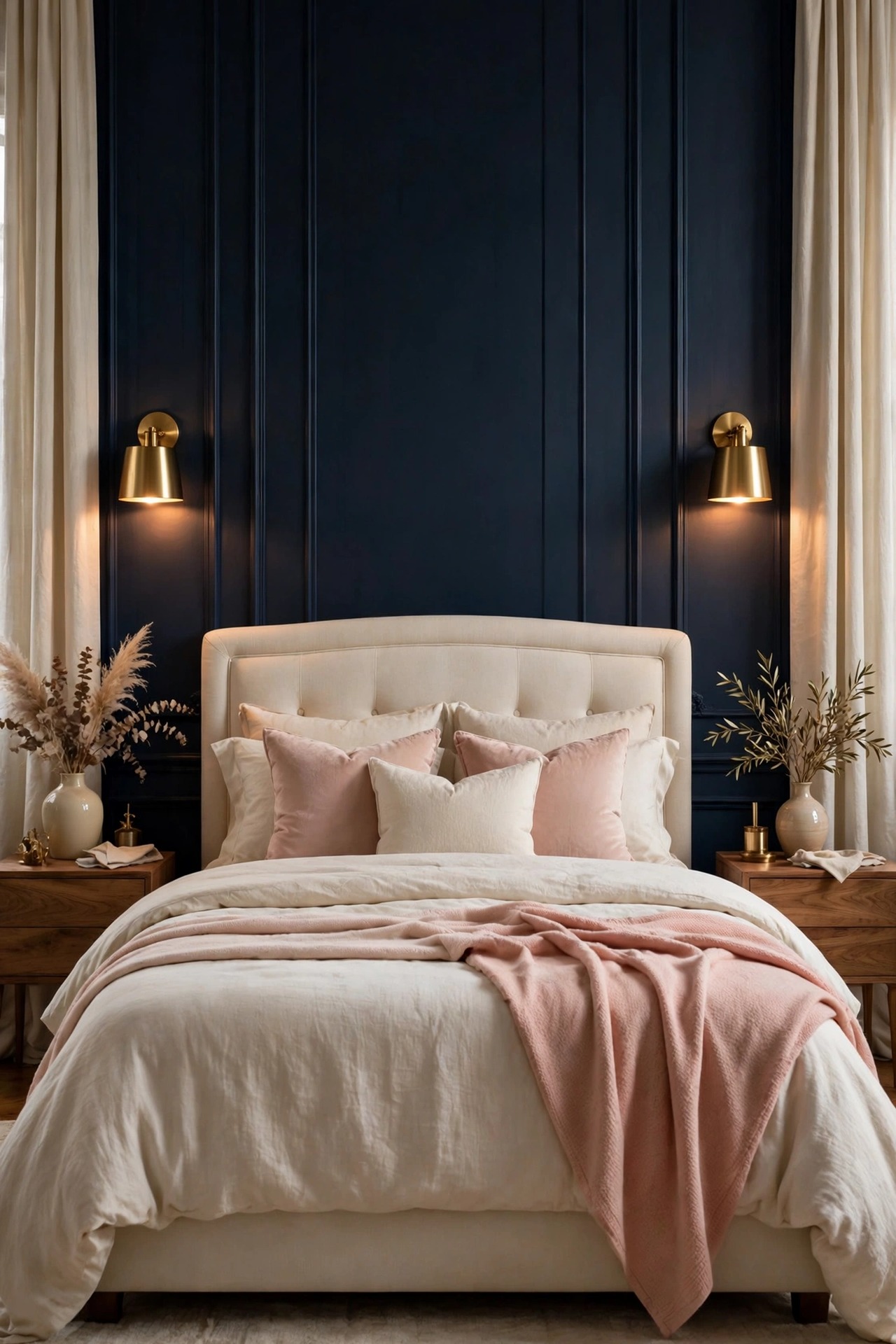
Deep navy gives a dark bedroom a calmer, cooler base than charcoal, and it pairs naturally with cream, blush and brushed gold. It suits rooms that get strong sun, because the colour holds its depth instead of washing out at midday. Keep the bedding mostly cream with blush in the cushions only, so the bed stays the lightest thing in the room and the eye lands there first. Cream curtains, not navy ones, keep the window wall soft. Warm bulbs matter more with navy than with any other dark colour: cool white light turns it harsh, while warm light brings out the rich, almost inky tone that makes the room feel settled for sleep.
Best For: Sunny bedrooms, coastal homes that want a deeper scheme, and anyone who finds grey cold.
Not Ideal For: Very small rooms with no natural light; navy needs at least one good light source to read rich.
Estimated Cost: $120-$380 (estimate) for paint, primer and cream curtain panels.
Budget Note: If the budget is tight, paint the navy and reuse existing cream bedding before buying anything else.
Renter Friendly: No
Renter Note: Full wall colour is owner work or needs written permission.
What You Need
Deep navy paint, primer, cream bedding, blush cushions, cream curtain panels, warm bulbs for all lamps, brushed gold sconces or table lamps.
Product type to look for: A navy paint with a warm undertone, checked in warm lamplight, and curtains lined well enough to soften morning light.
How To Do It
- Test the navy beside your bedding fabric, not on its own, and check the pair at night.
- Ventilate the room, tape trim, and paint two coats over primer.
- Hang cream curtains high and wide so the window reads larger against the dark wall.
- Fit warm bulbs everywhere and dress the bed cream first, blush second.
Pro Tip
Add one warm wood piece, a bench or nightstand. Wood stops navy and gold from feeling formal.
3. Use a Plum Accent Wall Behind the Bed Only
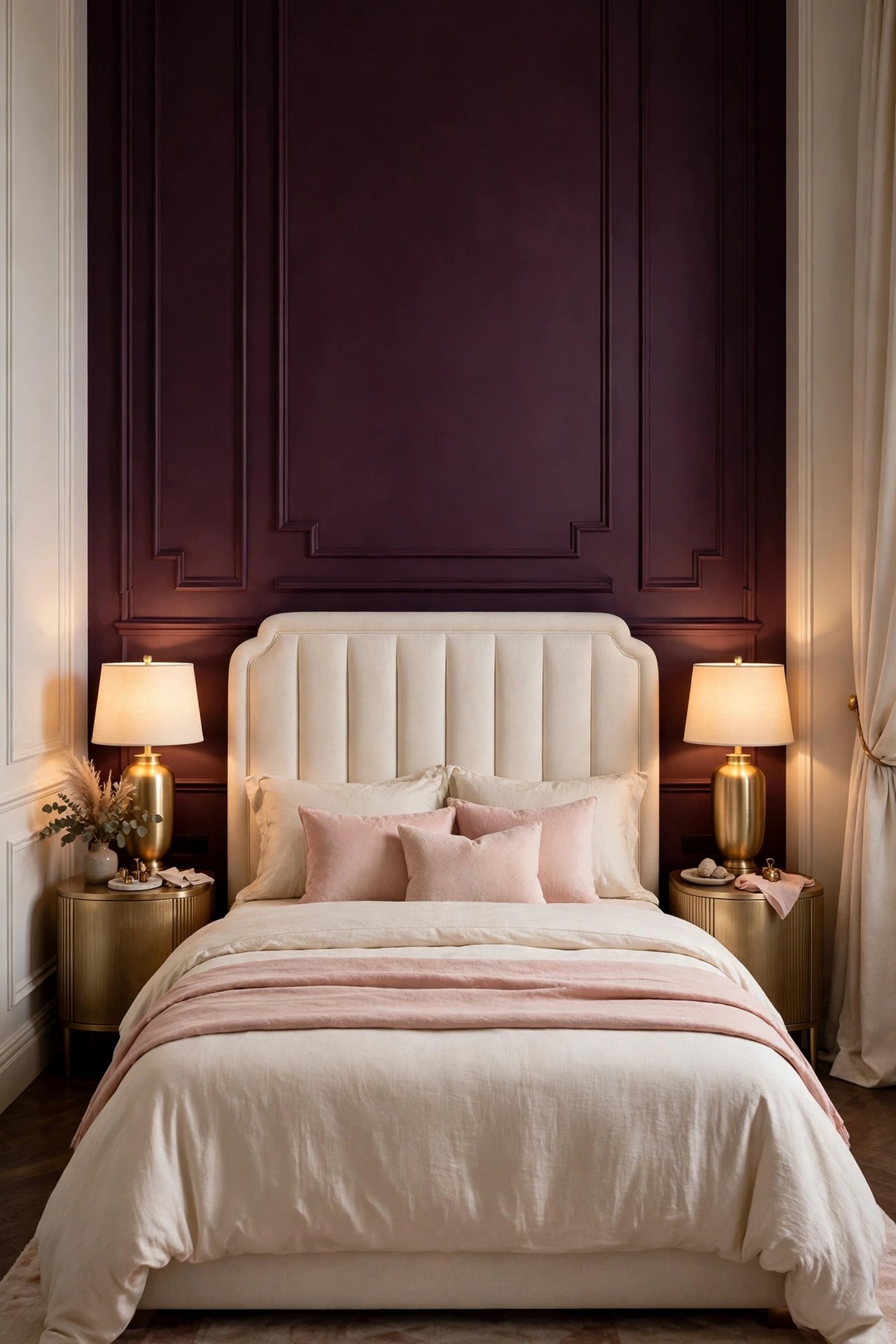
A plum accent wall gives the colour and drama of a dark bedroom without committing every wall. Deep plum, somewhere between wine and aubergine, sits behind the bed and makes a cream headboard look sculpted, while the other walls stay pale and keep daylight moving around the room. Blush bedding is the natural partner here because it sits in the same colour family a few shades lighter, so the bed blends softly instead of fighting the wall. Keep art minimal on the plum wall; the colour is the feature. This is also the easiest dark idea to reverse, since only one wall needs repainting when tastes change.
Best For: Rooms that feel too bright for all-dark walls and anyone who wants one strong feature wall.
Not Ideal For: Walls with doors, windows or uneven corners that break the single colour field.
Estimated Cost: $60-$180 (estimate) for paint and primer for one wall.
Budget Note: One wall uses one tin in most rooms, which makes this the lowest cost dark wall option.
Renter Friendly: No
Renter Note: One wall still needs permission; a large plum fabric panel is the removable stand-in.
What You Need
Deep plum paint for one wall, primer, cream or blush bedding, brushed gold lamps, pale paint for the remaining walls if they need refreshing.
Product type to look for: A plum with a brown or grey base rather than a bright purple base, so it reads rich and not playful.
How To Do It
- Choose the wall the bed already sits against and clear it of shelves and art.
- Tape the two side corners carefully; a clean edge is what makes one wall look planned.
- Ventilate, prime if needed, and paint two coats of plum.
- Centre the cream bed on the wall and keep both nightstands and lamps level and matching.
Pro Tip
Repeat a small touch of plum on the far side of the room, one cushion on a chair, so the wall does not sit alone.
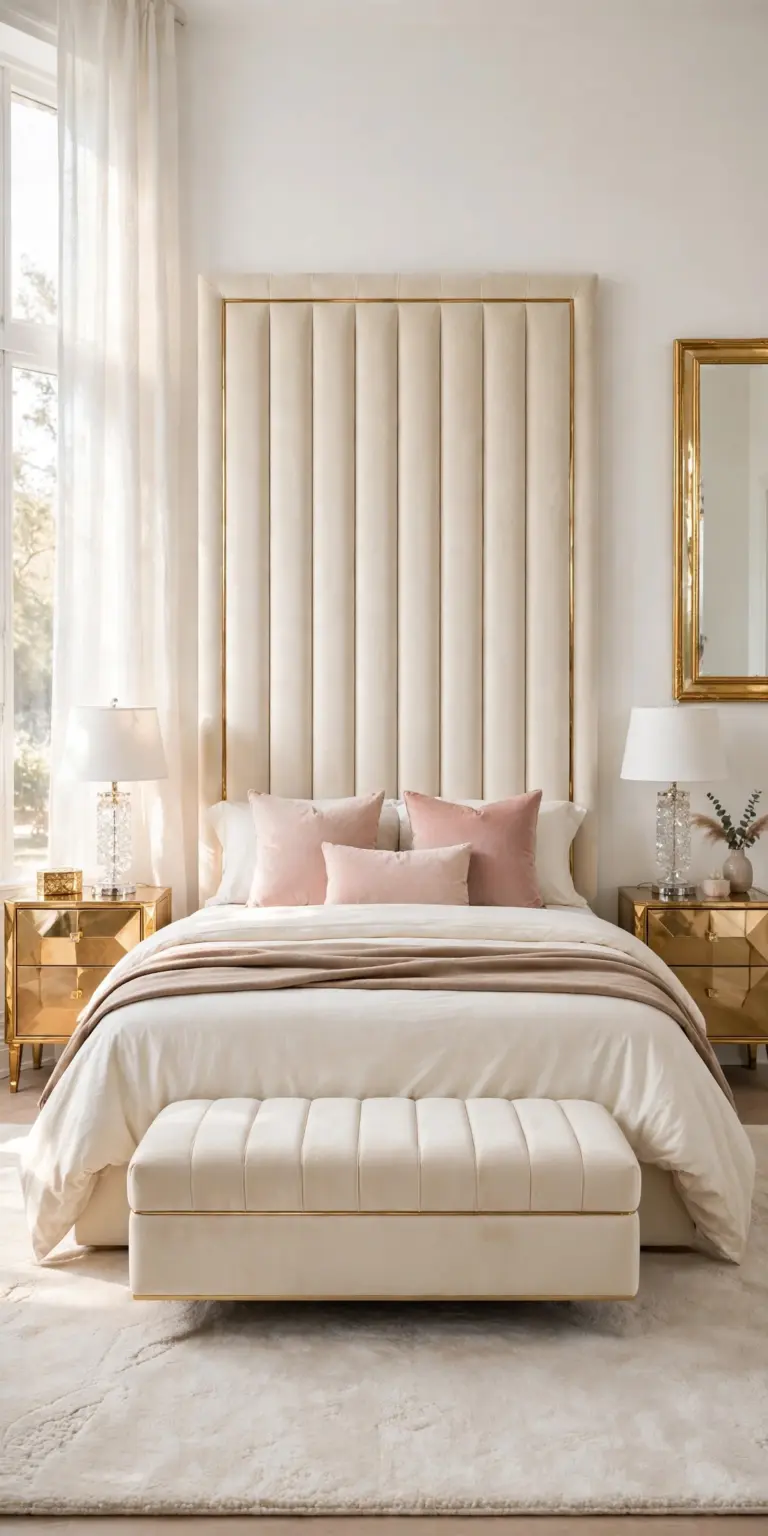
4. Set a Tall Cream Velvet Headboard Against the Dark Wall
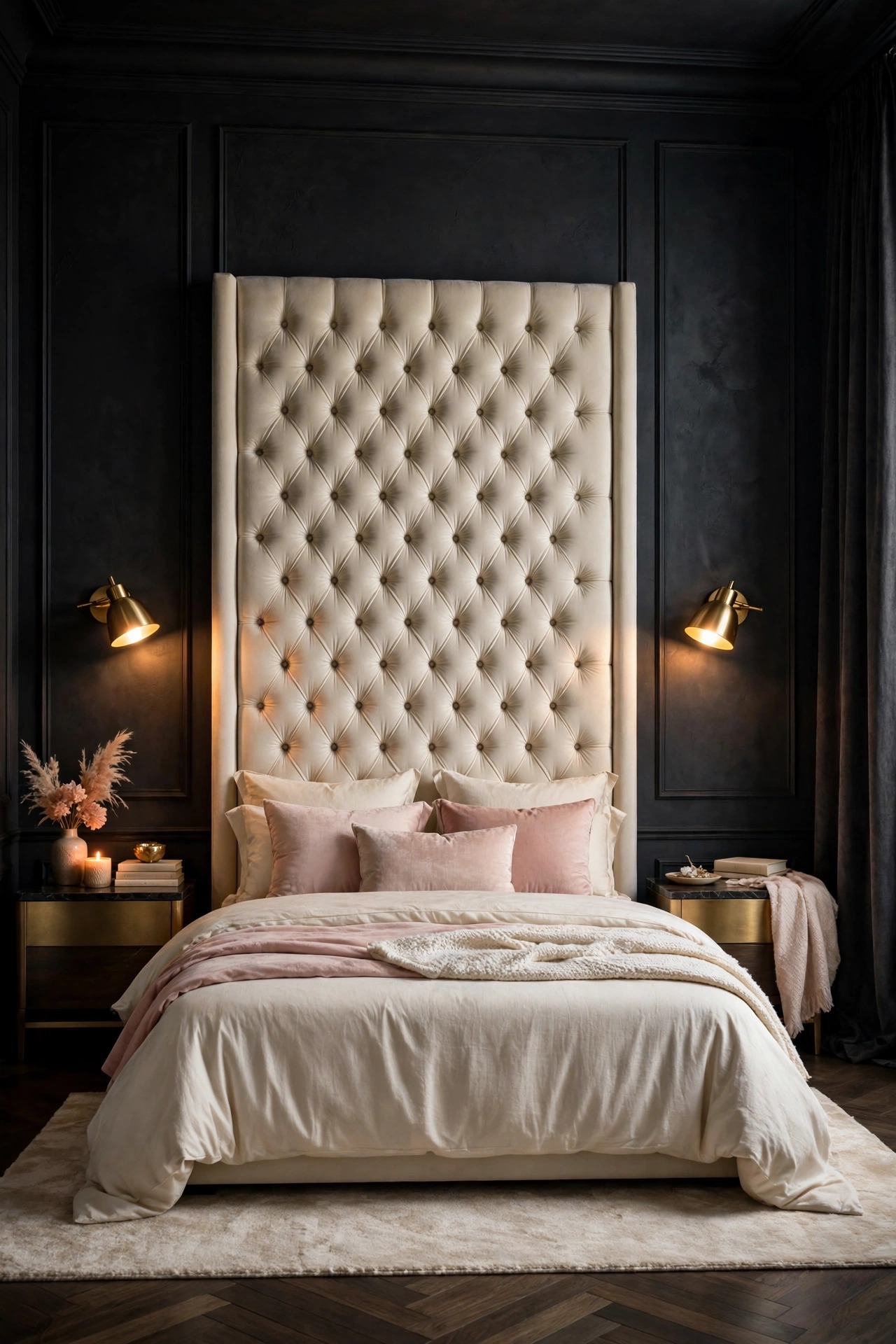
If the walls cannot change, a tall cream velvet headboard creates the dark and light contrast on its own. Height is the point: a headboard that rises well above the pillows becomes the pale centre of a dark wall, and velvet catches lamplight in a soft sheen that flat fabric cannot match. Choose cream or warm ivory rather than bright white, which can look stark against charcoal or navy. Pair it with plain cream bedding and one blush layer so the textures, not patterns, carry the interest. Check the headboard fixing carefully; tall upholstered panels are heavy and should be secured to the bed frame or wall as the maker directs. The same tall, soft bed shape anchors the paler schemes in our guide to calm, layered sleeping spaces
Best For: Painted dark rooms that still feel flat, and beds that sit low and plain.
Not Ideal For: Rooms with low ceilings, where a very tall panel can crowd the wall.
Estimated Cost: $300-$900 (estimate) for a tall upholstered velvet headboard.
Budget Note: A headboard costs less than a full new bed frame and changes the wall more.
Renter Friendly: With Conditions
Renter Note: Choose a frame-mounted headboard, not a wall-fixed one, so no holes are needed.
What You Need
Tall cream velvet headboard, fixings matched to the bed frame or wall type, cream bedding, blush throw or cushions, soft brush for velvet care.
Product type to look for: A headboard at least 55 inches tall with a dense foam fill and fixings rated for its weight.
How To Do It
- Measure the bed width and the wall height, and mark where the top of the headboard will sit.
- Fix the headboard to the frame or wall exactly as the maker directs and check it does not move.
- Make the bed with cream bedding pulled smooth, so the velvet texture stays the focus.
- Add blush in one layer only, a throw or two cushions, and brush the velvet pile one way.
Pro Tip
Leave a hand’s width of dark wall visible on each side of the headboard; the dark frame is what makes it read glam.
5. Layer Warm Light in Three Levels So Dark Never Means Gloomy
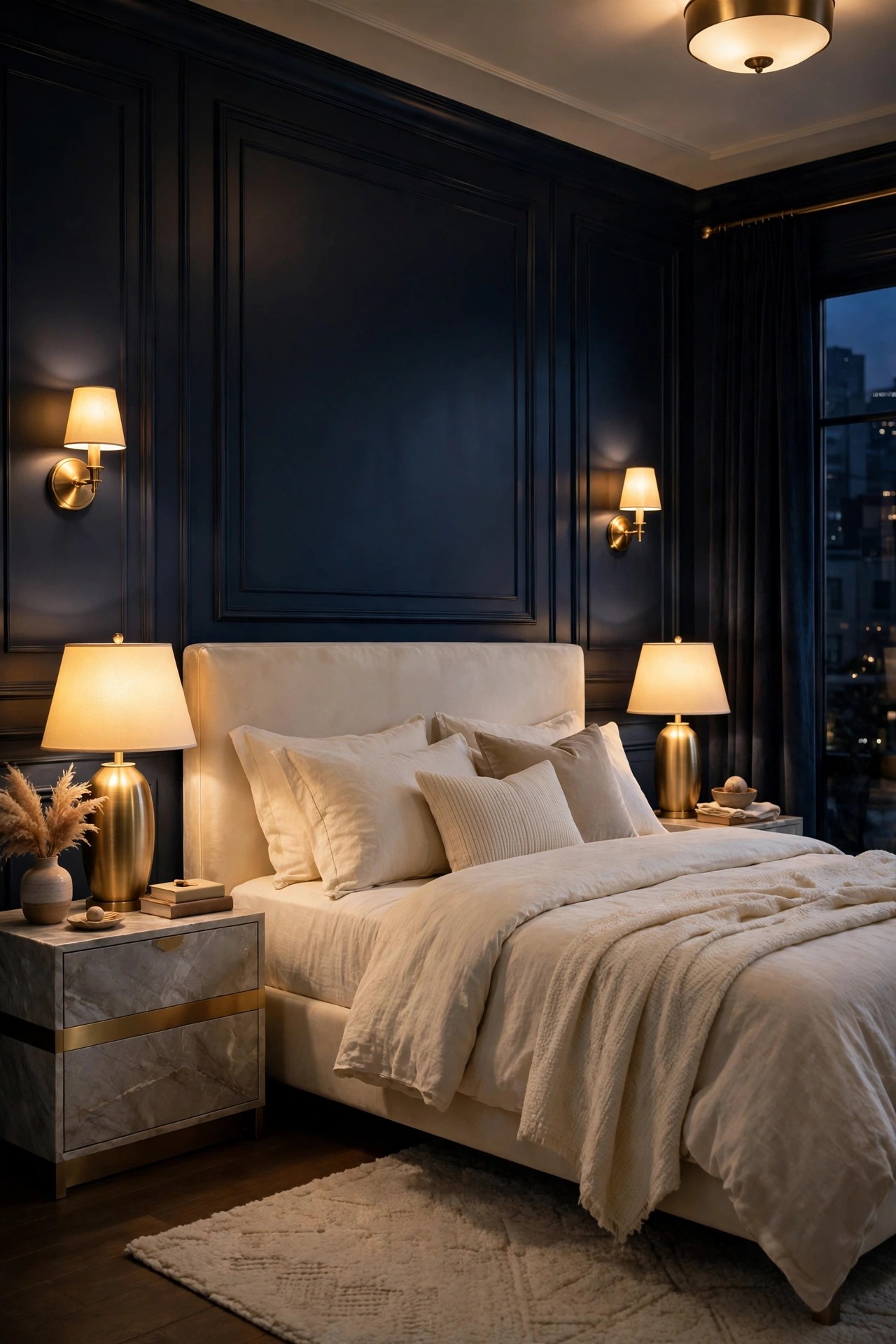
Lighting decides whether a dark bedroom feels glam or gloomy, more than the paint colour does. Build it in three levels: a soft ceiling light for general use, lamps or sconces at bed height for reading, and one low warm accent, a small lamp on a dresser or a shaded light near the floor, that keeps the room gentle at night. Every bulb should share the same warm temperature, because one cool bulb in a dark room looks like an office. Brushed gold fittings bounce a little of that warmth back into the room. Any new fixed wiring or dimmer fitting is work for a qualified electrician. More fitting shapes and switch plans are covered in our dedicated guide
Best For: Every dark bedroom, especially windowless rooms and rooms used for reading in bed.
Not Ideal For: Anyone planning to rely on a single bright ceiling light; that is the gloomy version.
Estimated Cost: $200-$650 (estimate) for two table lamps or sconces, bulbs and one accent lamp.
Budget Note: Matching warm bulbs in existing lamps is the cheapest first step and changes the room the same evening.
Renter Friendly: With Conditions
Renter Note: Plug-in lamps and sconces are renter safe; hardwired fittings and dimmers need permission and an electrician.
What You Need
Two brushed gold table lamps or plug-in sconces, warm bulbs in one shared temperature, soft ceiling shade, one small accent lamp, electrician for any fixed wiring.
Product type to look for: Warm bulbs around 2700K, fabric shades that soften light, and lamps tall enough to clear the pillows.
How To Do It
- List every light in the room and change all bulbs to the same warm temperature.
- Place one lamp on each nightstand at seated eye level for reading.
- Add one low accent lamp away from the bed and test the room with the ceiling light off.
- Have an electrician fit any dimmer or hardwired sconce, then test all three levels at night.
Pro Tip
Judge the lighting from the doorway at night. If the corners glow softly and the bed is brightest, the layers are right.
6. Hang a Large Brushed Gold Mirror to Bounce Lamplight Back
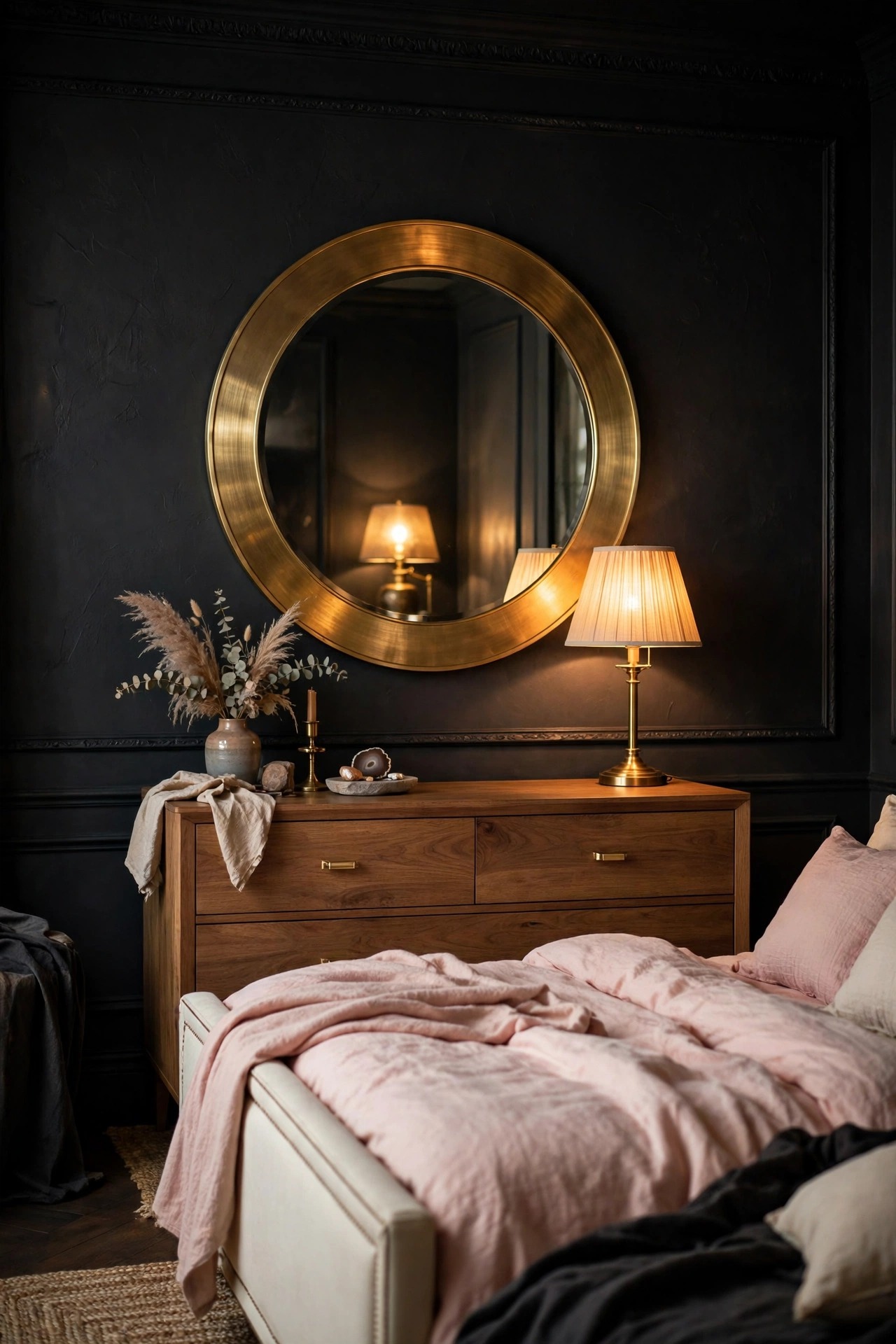
A dark room needs one surface that gives light back, and a large brushed gold mirror does that while adding the main metal accent at eye level. Hang it above a dresser or on the wall opposite a lamp, where it can catch and return warm light instead of reflecting a dark corner. Round or arched shapes soften a room that is mostly straight lines from the bed and nightstands. Keep the frame brushed, not polished, so it glows rather than glares. Large mirrors are heavy: use fixings rated for the weight and the wall type, and check the fixing holds before styling anything beneath it.
Best For: Dark bedrooms with one good lamp wall and dressers that need a finished look.
Not Ideal For: Walls opposite the bed for light sleepers who dislike reflected movement at night.
Estimated Cost: $120-$400 (estimate) for a large gold-framed mirror and rated fixings.
Budget Note: One large mirror costs less and works harder than several small ones.
Renter Friendly: With Conditions
Renter Note: Only hang a heavy mirror if the lease allows strong fixings; a leaning floor mirror needs a safety strap.
What You Need
Large round or arched mirror with a brushed gold frame, tape measure, level, fixings rated for the mirror weight and wall type, microfibre cloth.
Product type to look for: A mirror with a stated weight, a solid hanging rail on the back, and a brushed finish that matches your lamps.
How To Do It
- Hold the mirror in place at lamp height and check what it reflects from the bed and doorway.
- Mark the fixing points with a level and confirm the wall type before drilling.
- Fit rated fixings, hang the mirror, and check it sits flat and still.
- Style the dresser below with one lamp and one tray, leaving the reflected view calm.
Pro Tip
Angle the nearest lamp slightly toward the mirror in the evening; the doubled glow is the cheapest warmth in the room.
7. Balance the Room With Espresso Wood Furniture
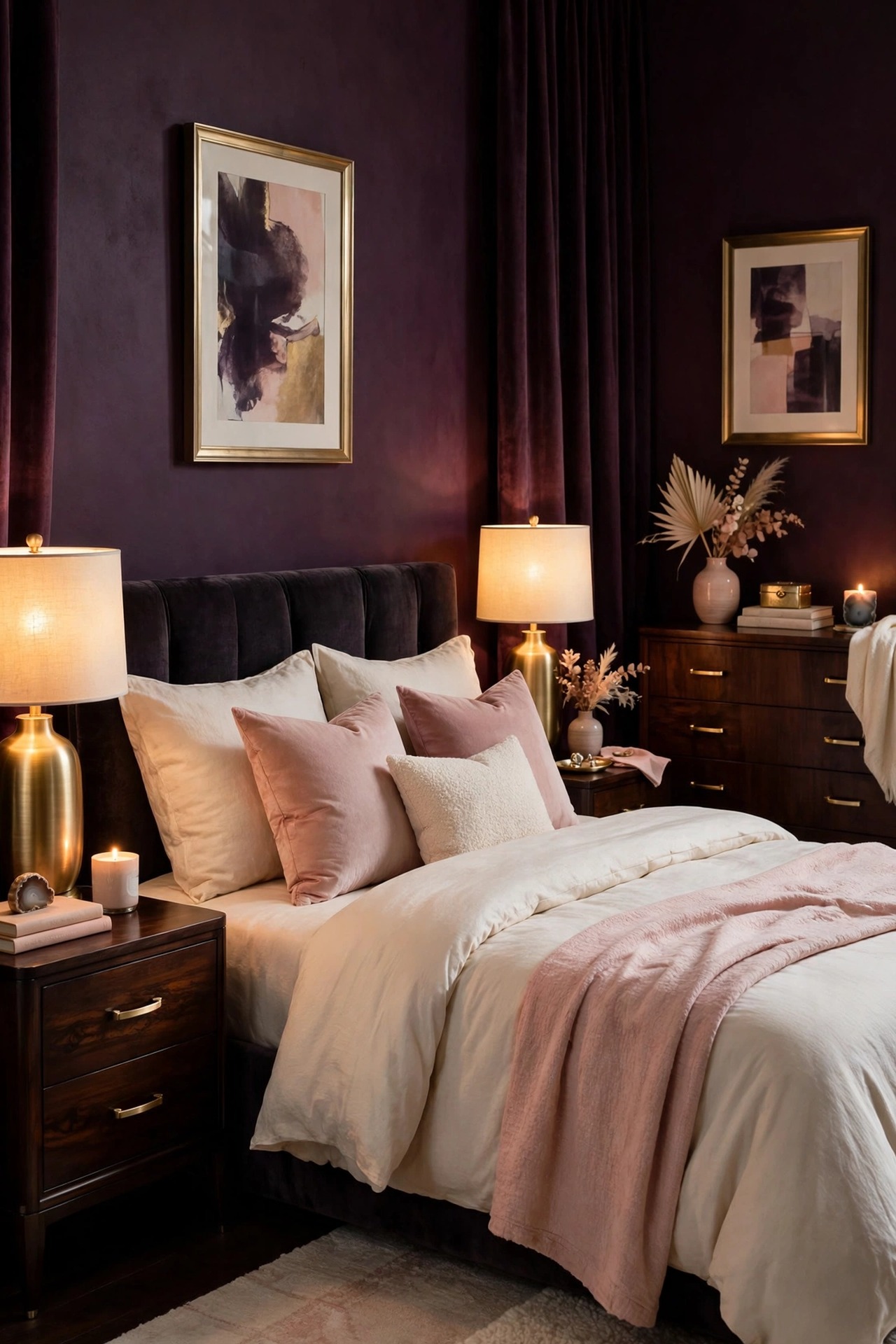
Dark walls with pale furniture can feel unfinished, while espresso wood furniture gives a dark bedroom weight and warmth in the right places. The tone sits between the wall colour and the cream bedding, so the room reads in layers rather than two blocks. Choose two or three pieces only, usually both nightstands and a dresser, and link them with brushed gold handles or knobs if the originals are plain. Keep the floor lighter than the furniture, with a cream or blush rug under the bed, so the dark pieces do not merge into one heavy base. Wood with a visible grain reads richer in lamplight than a flat black finish.
Best For: Larger dark bedrooms and anyone whose pale furniture looks lost against a deep wall.
Not Ideal For: Very small rooms, where one espresso piece is enough and three can crowd the floor.
Estimated Cost: $400-$1,200 (estimate) for two nightstands and a dresser, or less for handles and stain on existing pieces.
Budget Note: Changing handles to brushed gold updates existing wood for a fraction of new furniture.
Renter Friendly: Yes
Renter Note: Furniture is freestanding; felt pads protect the floor when pieces are moved.
What You Need
Espresso wood nightstands and dresser, brushed gold handles or knobs, cream or blush rug, felt floor pads, wood polish or wax.
Product type to look for: Solid or veneered wood with a warm brown tone and grain, not blue-black stain, sized to leave clear walking space.
How To Do It
- Measure the wall runs and confirm clear space in front of drawers and doors.
- Place the dresser on the longest wall and one nightstand each side of the bed.
- Swap plain handles for brushed gold and polish the wood so it catches lamplight.
- Lay the pale rug under the lower two thirds of the bed to separate furniture from floor.
Pro Tip
Keep one wood tone only. Two different dark woods side by side read as a mismatch, not a layer.
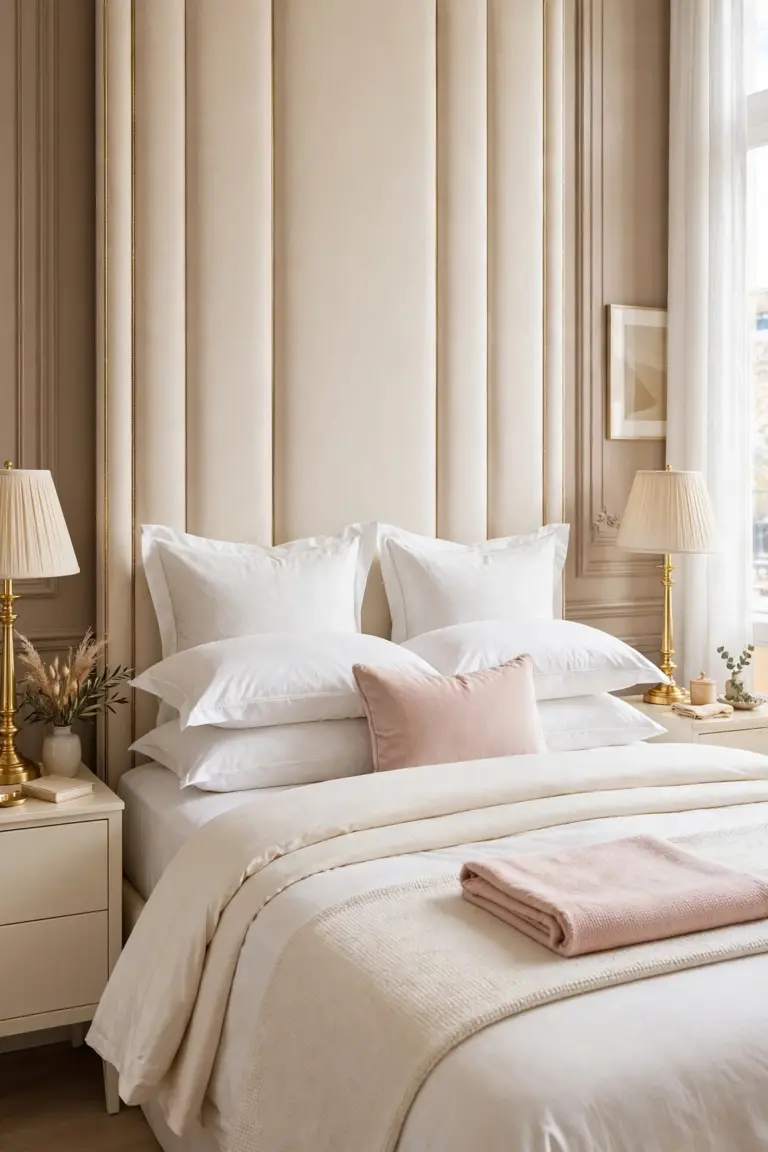
8. Layer Blush Bedding Over Cream So the Bed Stays the Light Point
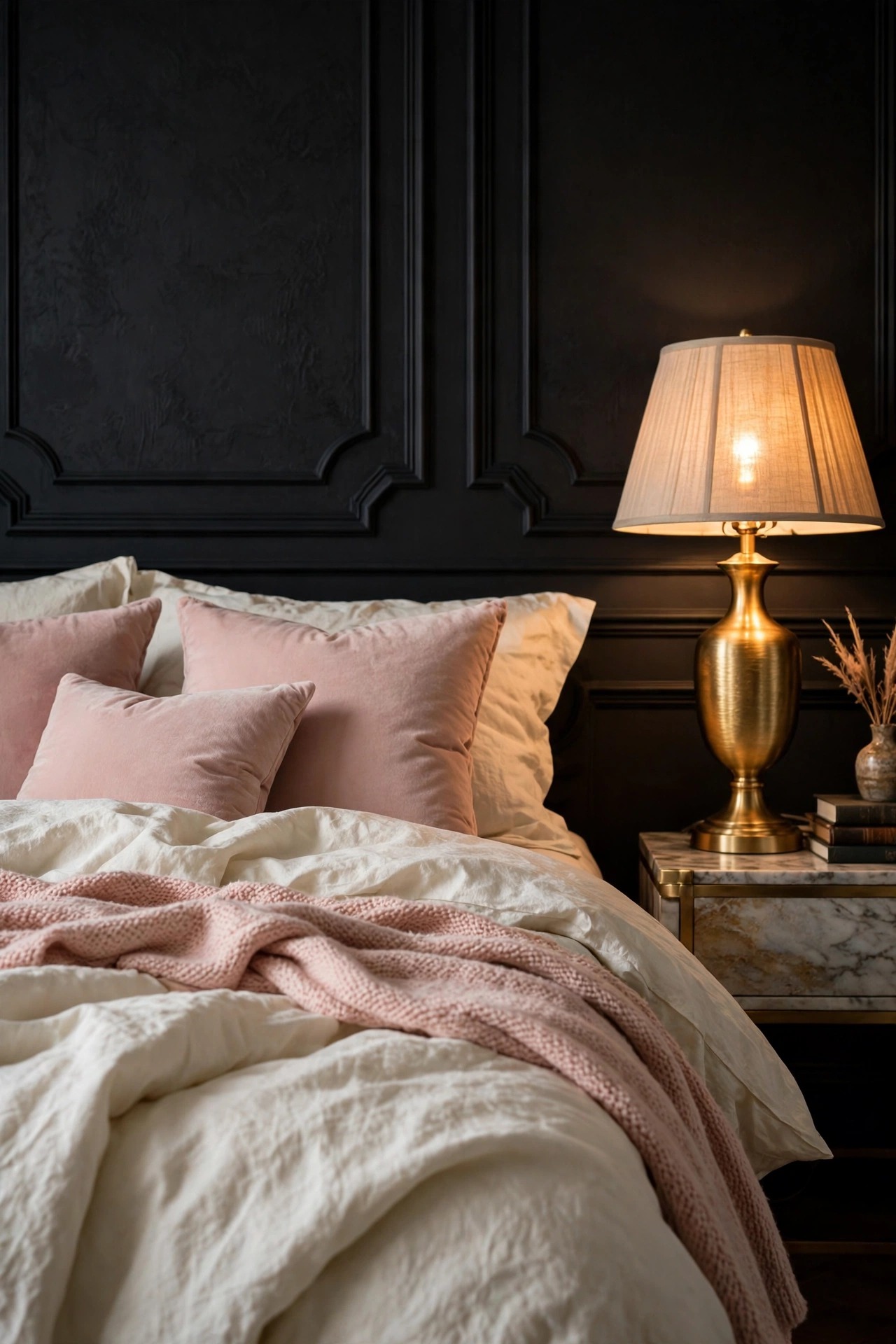
In a dark bedroom the bed is the light point, and layering is how it earns that place. Start with a full cream base: sheets, duvet and the two sleeping pillows in warm cream. Add blush in controlled layers, two cushions and one throw folded across the foot, so the pink reads as a glow against the dark wall rather than a full colour change. Fabrics matter here: a matte cotton base, one velvet or knitted throw, and smooth cushion covers give three soft textures that lamplight can play on. Keep the layers symmetrical in a glam scheme; a neat bed is what separates a rich dark room from a simply dark one.
Best For: Any dark wall colour, and renters who want the look from textiles alone.
Not Ideal For: Hot sleepers if the layers are heavy; choose a light throw and keep spare layers off the bed at night.
Estimated Cost: $80-$280 (estimate) for a cream bedding set, two blush cushions and a throw.
Budget Note: The cream base does most of the work; blush pieces can be added one at a time.
Renter Friendly: Yes
Renter Note: Textiles only, nothing fixed, and everything moves with you.
What You Need
Cream bedding set in cotton, two blush cushions with covers, one blush throw in velvet or a soft knit, spare cream pillowcases.
Product type to look for: Bedding in warm cream rather than blue white, and cushion covers that zip off for washing.
How To Do It
- Strip the bed fully and remake it in cream only, pulling the duvet smooth and even on both sides.
- Stand sleeping pillows upright and place the two blush cushions in front, centred.
- Fold the throw into a band across the foot of the bed, level on both sides.
- Check the bed from the doorway; it should be the brightest shape in the room.
Pro Tip
Wash cream and blush together only with colour care; greyed cream bedding dulls the whole contrast.
9. Frame the Windows With Deep Velvet Blackout Curtains
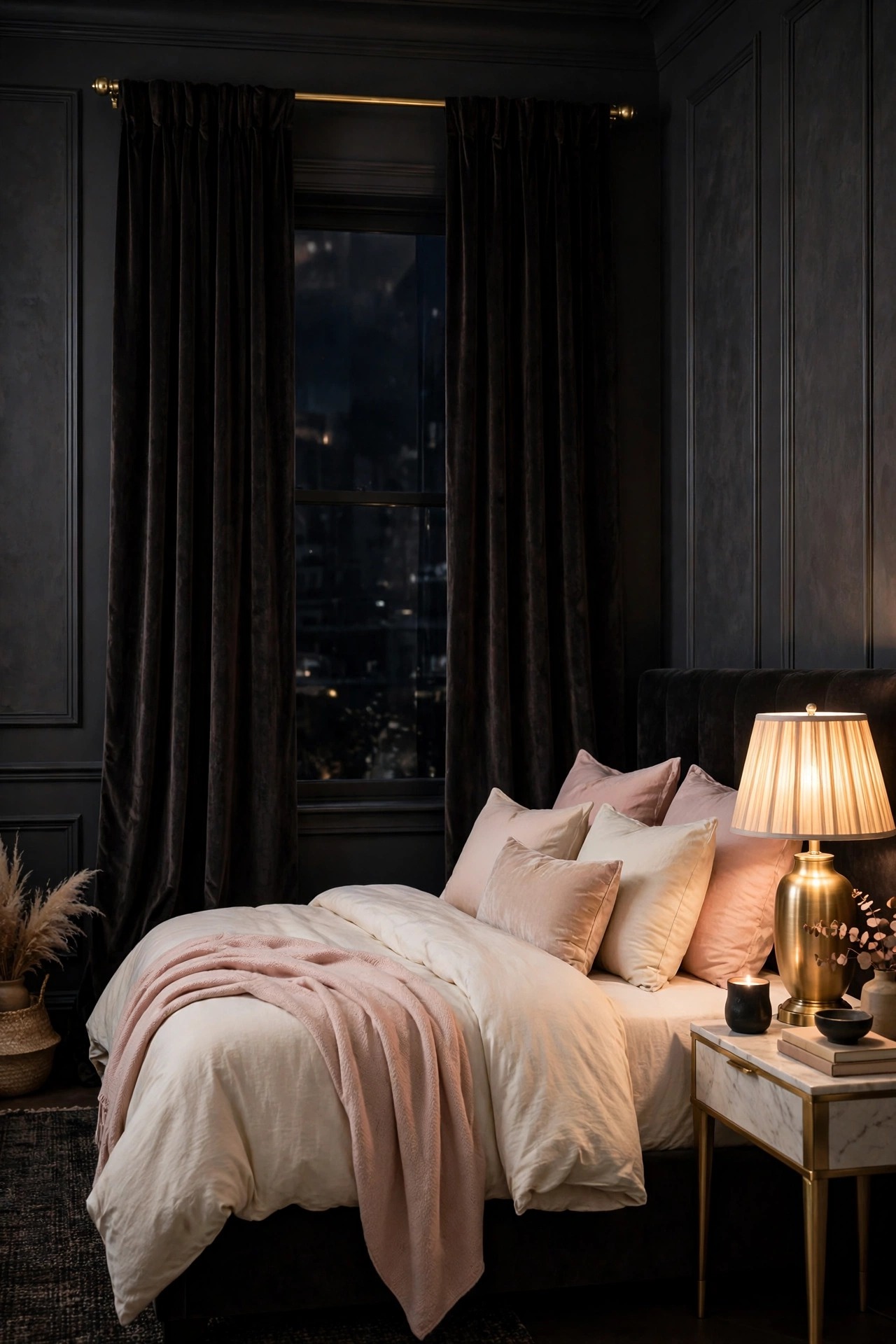
Curtains decide how a dark bedroom handles morning light, and deep velvet blackout panels do two jobs at once: they block early light for better sleep and they extend the dark, rich feeling to the window wall. Choose espresso, deep plum or charcoal velvet, hung on a brushed gold rod placed high and wide so the panels stack mostly off the glass and the window looks larger in the day. Velvet also softens sound a little, which suits a calm room. The honest trade-off is dust: velvet panels need a regular shake outside and a gentle vacuum with an upholstery tool. Fit the rod into solid fixing points, because long lined curtains are heavy.
Best For: Light-sensitive sleepers, bedrooms facing east, and street-facing rooms that need privacy.
Not Ideal For: Anyone with dust allergies who will not keep up a simple cleaning routine.
Estimated Cost: $150-$450 (estimate) for two lined velvet blackout panels and a gold rod with fixings.
Budget Note: Ready-made lined panels cost far less than made-to-measure and hang the same evening.
Renter Friendly: With Conditions
Renter Note: A rod needs fixings and permission; tension rods only suit light panels, not heavy velvet.
What You Need
Two velvet blackout curtain panels, brushed gold curtain rod and rated fixings, tape measure, level, curtain rings or eyelets to match the rod.
Product type to look for: Lined blackout panels long enough to just clear the floor, with a rod rated for their combined weight.
How To Do It
- Measure from above the frame to the floor and choose a rod width that lets panels stack off the glass.
- Fix the rod high and wide into solid points and check it is level.
- Hang the panels, dress the folds evenly by hand, and let them settle overnight.
- Test at sunrise with the panels closed; add a liner only if light still leaks at the edges.
Pro Tip
Steam velvet gently from the back if creases show; never press the pile flat from the front.
10. Build a Gold-Frame Gallery Wall That Glows on a Dark Ground
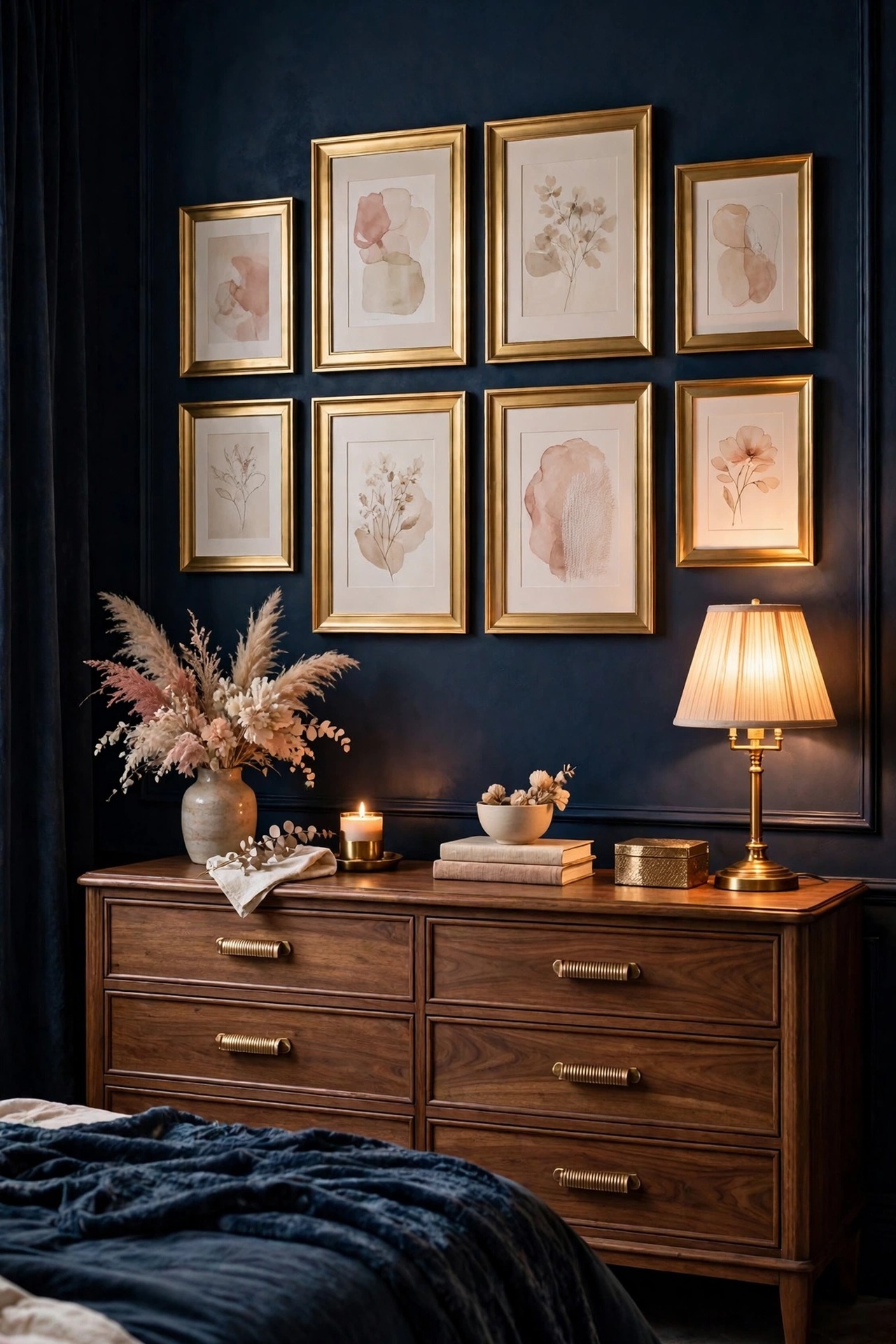
Art that disappears on a pale wall glows on a dark one, provided the frames and mounts do the contrast work. A gallery in brushed gold frames with wide cream mounts gives each piece its own pale border, so even soft blush and cream prints read clearly against charcoal or navy. Plan the group on the floor first, keep spacing even, and hang the centre of the group at eye level. Six to eight frames in two sizes look planned; a scatter of many small frames looks busy. Use fixings rated for each frame and check heavier pieces are secured properly, especially above a dresser or seating.
Best For: Blank dark walls above dressers and anyone with prints that looked washed out in a pale room.
Not Ideal For: The wall directly above pillows if frames are heavy; keep heavy pieces off the bed wall.
Estimated Cost: $90-$300 (estimate) for six gold frames with mounts and prints.
Budget Note: Downloadable prints in standard frames cost a fraction of framed shop art.
Renter Friendly: With Conditions
Renter Note: Use rated picture hooks where allowed, or a leaning arrangement on a dresser where they are not.
What You Need
Six to eight brushed gold frames in two sizes, cream mounts, prints in cream, blush and warm neutral tones, paper template and tape, rated picture fixings, level.
Product type to look for: Frames with real mounts included and fixings matched to the frame weight and wall type.
How To Do It
- Lay the full arrangement on the floor and photograph it before touching the wall.
- Tape paper templates in the same sizes to the wall and live with them for a day.
- Hang the largest frame first at the centre, then work outward keeping gaps even.
- Step back to the doorway in lamplight and adjust any frame that does not sit level.
Pro Tip
Keep every mount the same cream. Matching mounts are what make different prints read as one set.
11. Make a Very Small Bedroom Feel Cocooned, Not Cramped
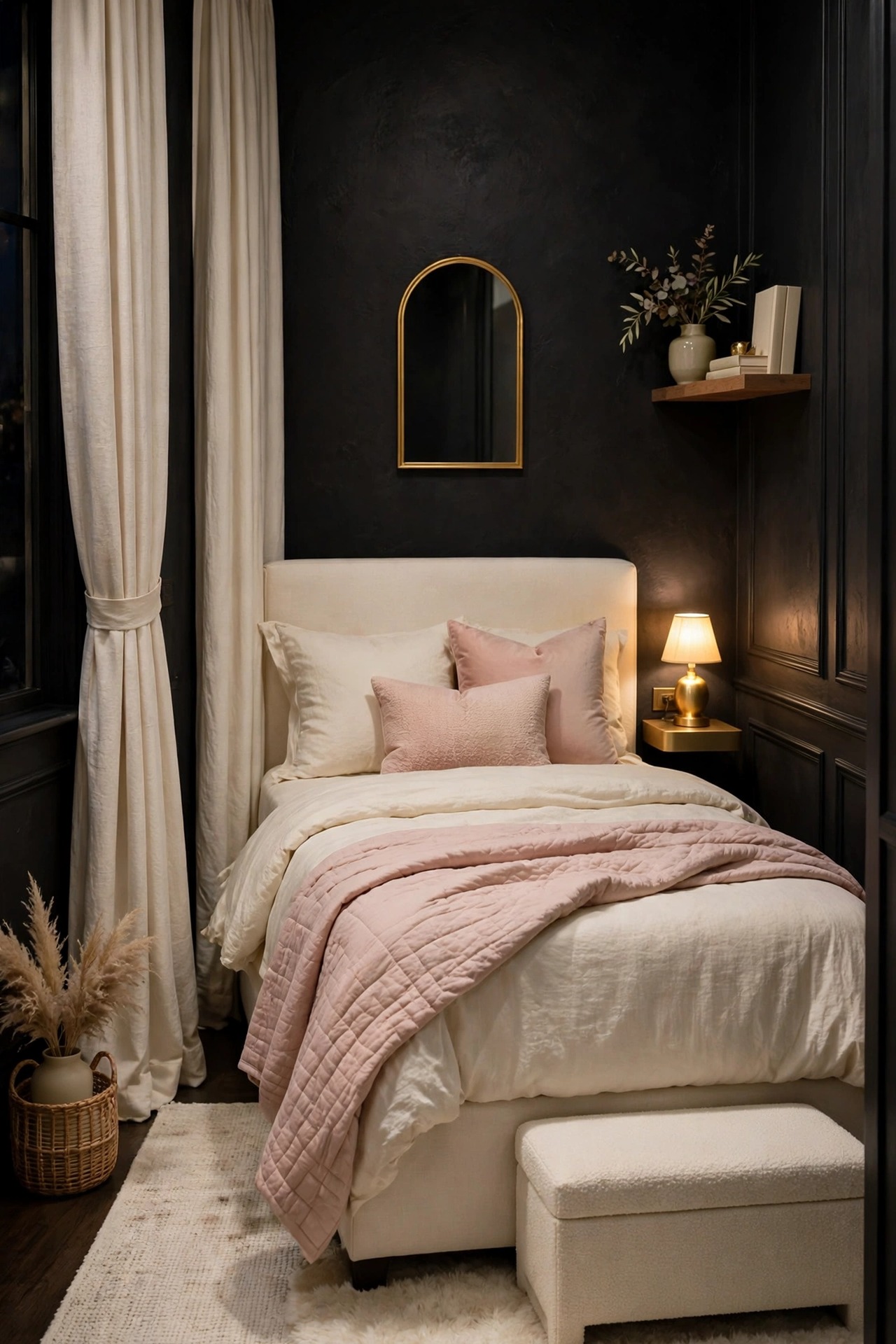
A small bedroom is where dark walls earn their keep, because the colour blurs the corners and the room feels cocooned rather than boxed in. The rules that make it work are strict: one dark colour on all walls, a pale rug that defines the floor, cream bedding as the single light centre, and furniture kept low and few. Wall lamps free the nightstand surface, and a mirror on the wardrobe door or opposite wall returns light. Skip a gallery wall and heavy curtains here; one framed print and a simple lined curtain keep the small room calm. Compact layouts with the same one-centre thinking are planned in our small-room guide
Best For: Box rooms, guest rooms and small main bedrooms that feel stark in pale colours.
Not Ideal For: Rooms that must also hold a desk and full wardrobe wall; storage needs may outrank the look.
Estimated Cost: $200-$550 (estimate) for paint, a pale rug, one wall lamp and bedding.
Budget Note: Paint plus bedding delivers most of the effect; the rug can follow later.
Renter Friendly: With Conditions
Renter Note: Paint needs permission; the bedding, rug and plug-in lamp version does not.
What You Need
Dark paint in one colour, pale rug, cream bedding with one blush layer, plug-in wall lamp or small table lamp in brushed gold, one framed print.
Product type to look for: A low-pile pale rug sized to sit under the bed and show on three sides, and a lamp that does not need hardwiring.
How To Do It
- Clear the room to bed, one storage piece and one lamp before painting anything.
- Paint all walls one dark colour with the room ventilated, and keep the ceiling pale.
- Lay the rug, centre the bed on it, and dress the bed cream with one blush layer.
- Fit the lamp at bed height and hang one print only, then stop adding.
Pro Tip
In a small dark room, every extra object shows. A clear floor edge around the rug is the luxury detail.
12. Try a Textured Dark Wallpaper Accent for Depth Without Shine
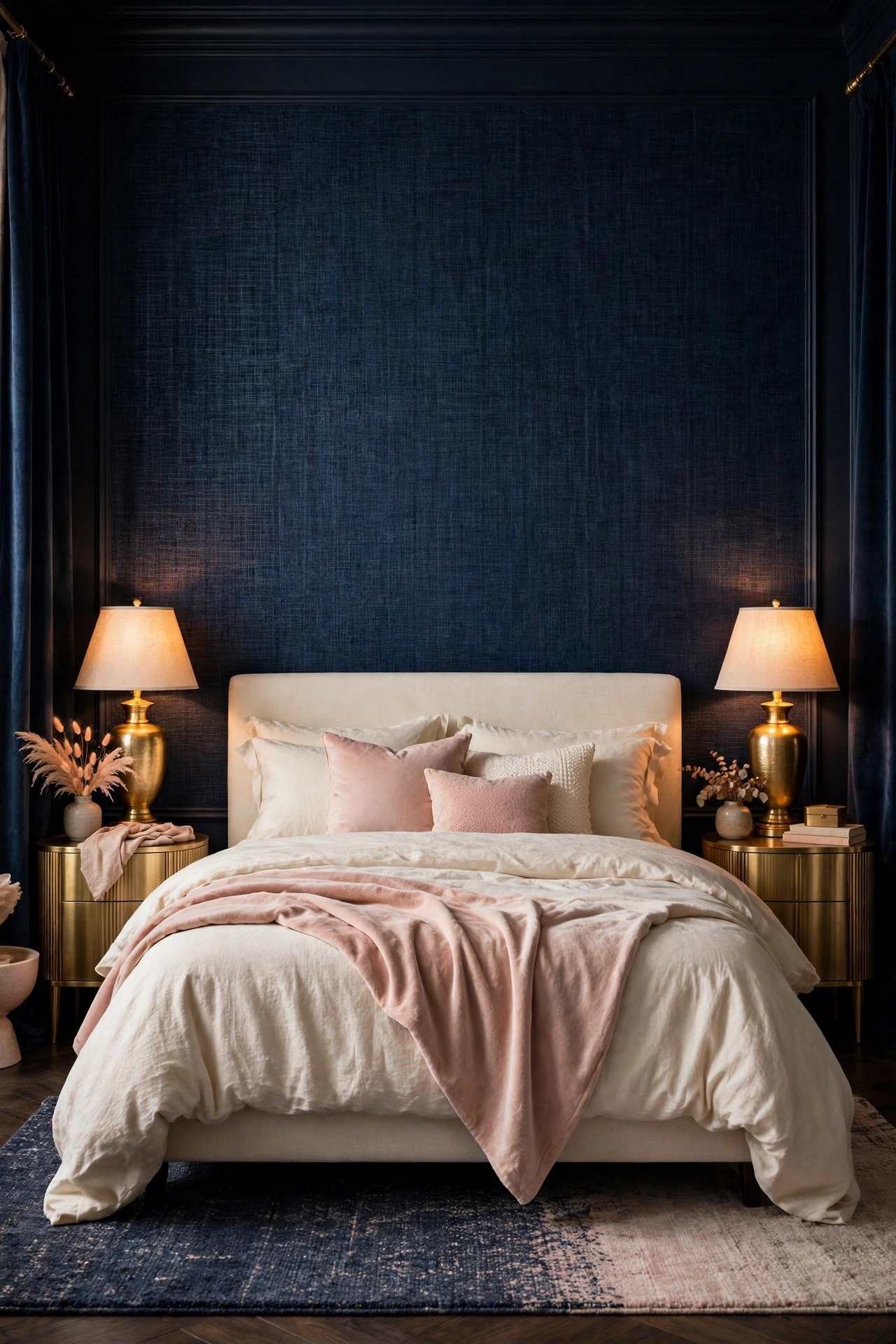
Flat paint is not the only dark finish. A textured wallpaper in deep navy, charcoal or plum, with a woven, grasscloth-look or soft damask pattern, adds depth that changes as lamplight moves across it, which is exactly what a glam bedroom wants in the evening. Use it on the bed wall only and keep the other walls in a matching flat colour taken from the paper’s background. Texture also hides minor wall marks better than flat paint. The costs and effort are higher than paint, seams must be matched carefully, and removal later takes time, so this is an owner decision, not a quick weekend swap.
Best For: Bed walls with minor surface flaws and anyone who wants the richest evening texture.
Not Ideal For: Damp-prone walls, where paper can lift; fix the moisture cause first.
Estimated Cost: $250-$700 (estimate) for textured wallpaper, paste and tools for one wall.
Budget Note: One wall keeps the paper cost contained while giving the full effect where it is seen most.
Renter Friendly: No
Renter Note: Pasted paper is permanent work; peel-and-stick versions are the renter test, checked on a small area first.
What You Need
Textured dark wallpaper for one wall, wallpaper paste and tools, matching flat paint for other walls, seam roller, sharp trimming knife, drop cloths.
Product type to look for: A paste-the-wall textured paper with a stated pattern repeat, ordered with one spare roll from the same batch.
How To Do It
- Measure the wall, work out the repeat, and order all rolls from one batch.
- Prepare the wall smooth and clean, and plan the first drop so the pattern centres behind the bed.
- Hang drops plumb, match seams carefully, and roll each seam once without squeezing paste onto the texture.
- Paint the side walls in the paper’s background colour and dress the bed cream and blush.
Pro Tip
Check a full roll under lamplight before hanging. Some textures sparkle in daylight and go flat at night; the evening read is the one that counts.
13. Style Both Nightstands Symmetrically for a Hotel-Calm Finish
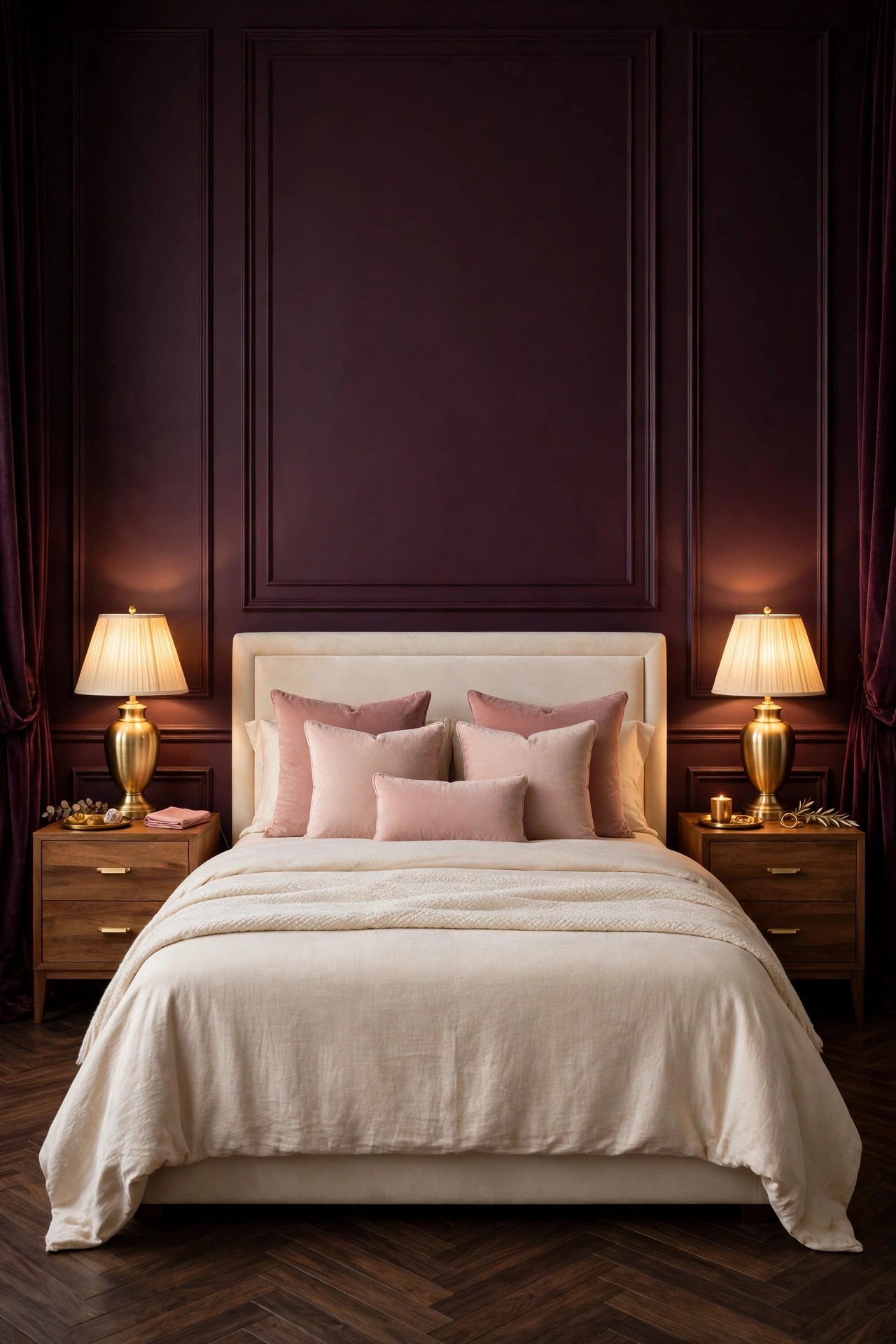
Symmetry is the fastest styling signal in a glam bedroom, and the nightstands are where it is won or lost. Matching nightstands, matching brushed gold lamps and one small tray on each side make a dark room feel calm and finished, even when the rest of the scheme is simple. Each tray holds only the nightly items: a book, a glass of water space, and one small dish. Anything else belongs in the drawer. Keep lamp heights equal, because uneven lamps are the detail the eye catches from the doorway. This styling works over charcoal, navy or plum, and it is the cheapest idea in the list to test for one evening before buying anything.
Best For: Couples with mismatched bedside clutter and dark rooms that feel restless rather than calm.
Not Ideal For: Rooms where one side of the bed sits against a wall and cannot take a nightstand.
Estimated Cost: $60-$220 (estimate) for two small trays, a matching lamp pair if needed, and drawer organisers.
Budget Note: Trays and a clear-out cost almost nothing; matching lamps are the only real spend.
Renter Friendly: Yes
Renter Note: Styling only, nothing fixed.
What You Need
Two matching nightstands or a close pair, two matching brushed gold lamps, two small trays in gold, stone or warm wood, drawer organisers.
Product type to look for: Lamps sold as a pair with fabric shades, and trays sized for nightly items only.
How To Do It
- Empty both nightstands fully, drawers included, and sort what truly belongs there.
- Place matching lamps centred at the back of each nightstand.
- Set one tray on each side with the same categories: book, dish, water space.
- Return only those items, organise the drawers, and check the pair from the doorway.
Pro Tip
Photograph the finished pair. A phone photo shows uneven lamp heights and lopsided trays faster than the eye does.
14. Build the Dark Look Without Paint for Renters
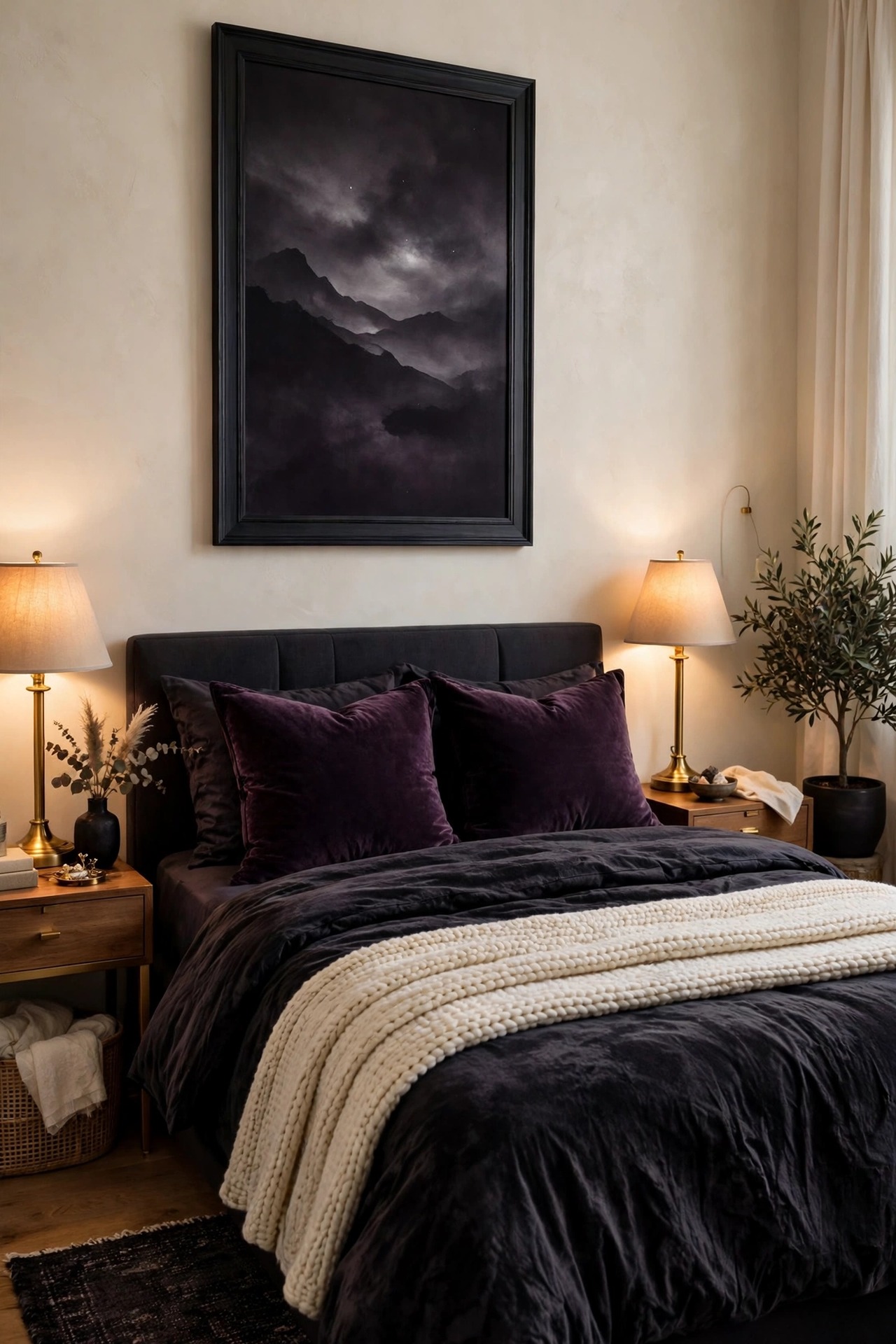
Renters can still sleep in a dark, glam room; the colour just has to live in the movable layers instead of the walls. Build it in this order: a deep charcoal or navy duvet set used as the base with a cream throw folded over the foot to keep the light point, one very large dark-framed print or fabric panel leaning or hung where fixings allow, deep-toned curtains on an existing rod, and warm gold lamps doing the evening work. A dark rug under the bed grounds the scheme. Each piece leaves with you, and the pale walls behind actually help, because the dark layers read as deliberate blocks of colour. Softer textile-led schemes in the same spirit sit in our relaxed styling guide
Best For: Renters and anyone testing the dark look before committing to paint.
Not Ideal For: Rooms where even curtain changes are barred; bedding and lamps alone still give a partial version.
Estimated Cost: $180-$500 (estimate) for a dark duvet set, cream throw, large print, dark rug and curtains.
Budget Note: Buy the duvet set and lamps first; they carry the evening look on their own.
Renter Friendly: Yes
Renter Note: Everything is movable or uses existing fixings; check the lease before adding any new hook.
What You Need
Dark duvet set in charcoal, navy or plum, cream throw, large dark-framed print or fabric panel, dark rug, deep-toned curtains for the existing rod, two gold lamps with warm bulbs.
Product type to look for: A reversible duvet set, dark on one side and cream on the other, so the scheme can change with the season.
How To Do It
- Make the bed in the dark duvet set and fold the cream throw across the foot.
- Place the dark rug under the lower two thirds of the bed.
- Hang or lean the large dark print on the bed wall using only fixings the lease allows.
- Swap curtains on the existing rod, fit warm bulbs, and judge the room at night.
Pro Tip
Keep the dark layers in big blocks. Small dark accessories scattered on pale walls read as clutter, not as a scheme.
15. Finish With a Draped Bed Frame for Full Moody Glam
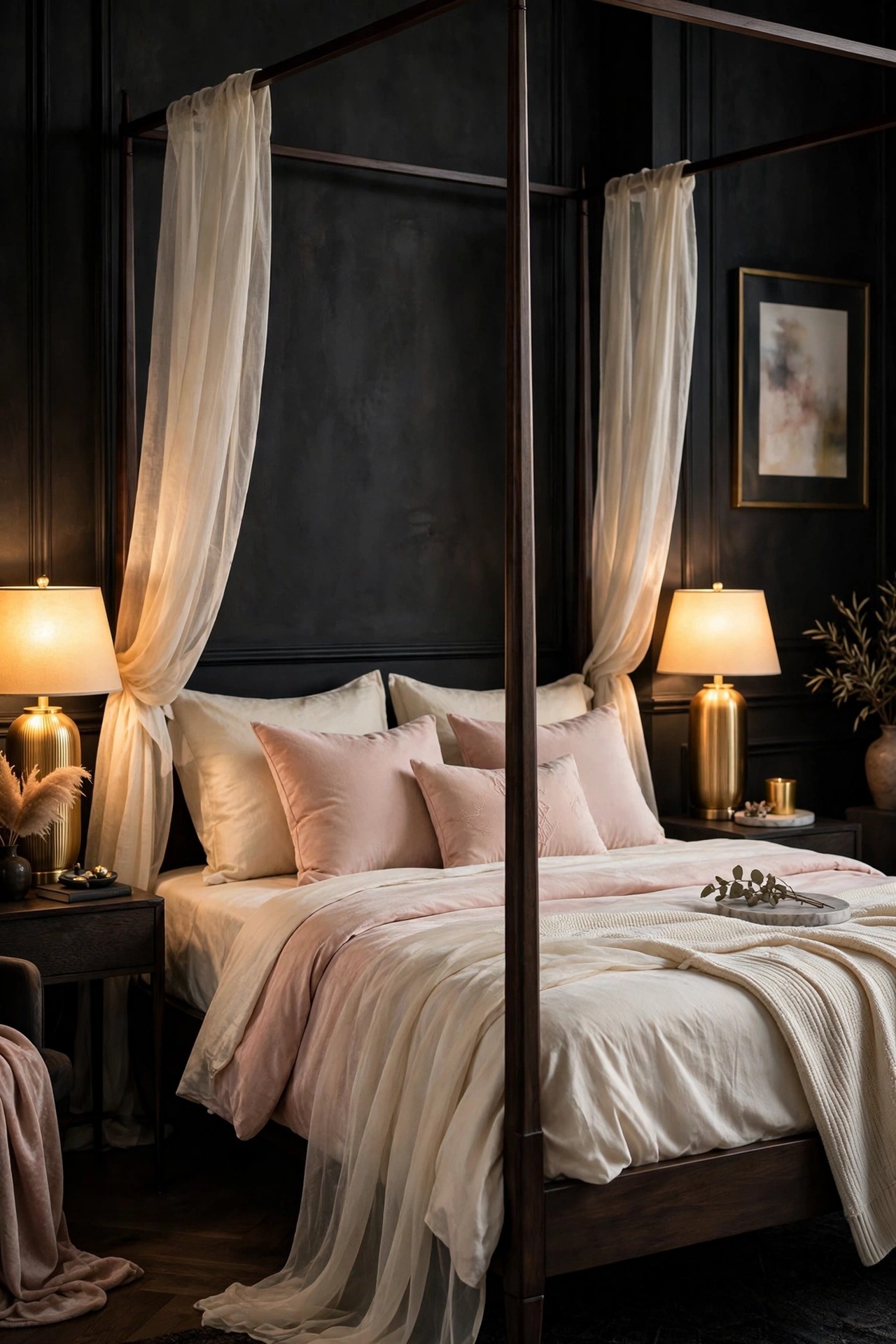
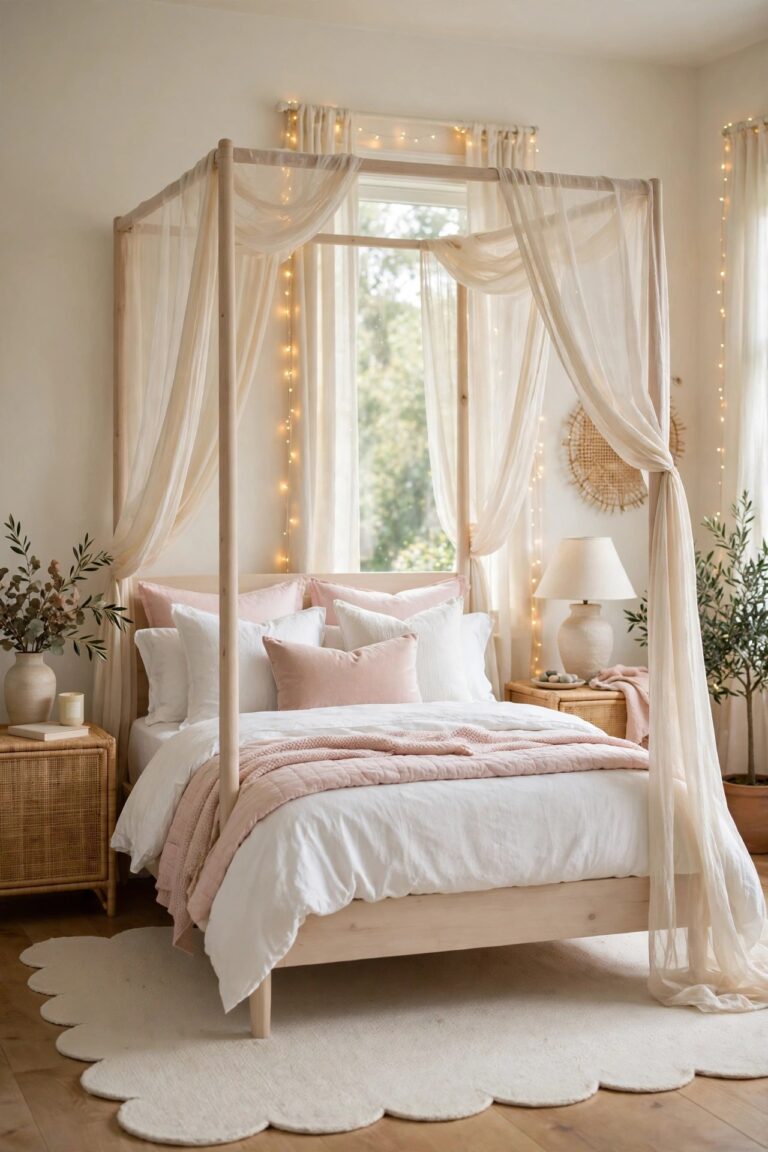
A slim four poster or canopy frame is the fullest version of the dark glam idea: a dark wood or blackened metal frame against deep walls, with sheer cream drapes softening two corners and the cream and blush bed glowing inside it. The frame gives the room architecture, so walls can stay plain and art can stay minimal. Keep the posts slim; heavy carved frames crowd all but the largest rooms, and check ceiling height before ordering, because the frame plus drapes need clear space above. Drapes should be washable sheers tied back in the day, not heavy panels. This is a considered purchase, best made after the wall colour and lighting are already settled.
Best For: Large main bedrooms with good ceiling height and a settled dark wall colour.
Not Ideal For: Low ceilings, small rooms, and anyone who dislikes making a bed inside a frame.
Estimated Cost: $700-$1,800 (estimate) for a slim four poster frame and sheer drapes.
Budget Note: The frame is the spend of the room; keep every other piece simple if you choose it.
Renter Friendly: No
Renter Note: The frame is freestanding, but its size makes it a poor fit for short tenancies and small lifts or stairs.
What You Need
Slim four poster bed frame in dark wood or blackened metal, two sheer cream drape panels, cream and blush bedding, tape measure for ceiling and access checks.
Product type to look for: A frame with slim posts, a stated ceiling clearance, and removable washable sheers, checked against your door and stair widths.
How To Do It
- Measure ceiling height, door widths and the stair turn before ordering the frame.
- Assemble the frame centred on the main wall and check it stands level and still.
- Hang sheers at the two head corners only and tie them back evenly.
- Dress the bed cream and blush, place gold lamps outside the frame lines, and check the view from the door.
Pro Tip
Drape only the head end. Full draping looks heavy in photos and traps warmth around sleepers in real rooms.
Practical Tips for Dark Bedrooms
Test every dark colour twice, once in daylight and once at night under the bulbs you actually use, because warm lamplight is the light the room will mostly be seen in. Keep one clear light point in the room, usually the bed, and let everything else sit a shade deeper. Match all bulbs to one warm temperature, and put the brightest light where faces need it, at the bedside and mirror, not in the ceiling centre. Ventilate well while painting and let paint cure before bedding goes back against a fresh wall. Finally, dust shows more on dark surfaces and dark wood, so a weekly quick wipe of nightstands and headboard keeps the rich look from turning dull.
Frequently Asked Questions
Will a dark bedroom make the room feel smaller?
Not if the bed stays pale and the floor keeps one light layer, such as a cream rug. Dark walls blur corners, which can make a small room feel cocooned rather than smaller. The shrinking effect comes from dark walls plus dark bedding plus dark furniture with no contrast.
Which dark colour is easiest to live with?
Deep charcoal is the easiest starting point because it pairs with almost every wood tone and metal. Navy suits sunny rooms, and plum works best as one accent wall behind the bed. Test samples under warm lamplight before deciding.
How do I stop a dark bedroom looking gloomy?
Layer warm light in three levels, keep bedding cream with a blush layer, and add one reflective surface such as a brushed gold mirror. Gloom comes from a single ceiling light and no contrast, not from the wall colour itself.
Can renters do a dark bedroom without painting?
Yes. Put the dark colour in a duvet set, a large rug, curtains on the existing rod and one large dark-framed print, then use warm gold lamps in the evening. Idea 14 builds the full scheme from movable pieces only.
What bedding colour works best on dark walls?
Warm cream is the most reliable base because it reads soft in lamplight where bright white can look stark. Blush is the best single accent layer over cream. Keep patterns small or absent so the contrast stays calm.
Is a dark bedroom good for sleep?
Many people find a dark room easier to settle in, especially with blackout curtains and low warm light in the last hour. The wall colour alone does not change sleep; light control, temperature and a clear bedside matter more.
Conclusion
A dark bedroom feels glam when three things work together: a deep wall colour chosen in real lamplight, a cream and blush bed kept as the light point of the room, and warm layered lighting with brushed gold to carry the glow into the corners. Start with the lowest commitment version, paint one wall or build the renter scheme from bedding and lamps, live with it for a week of evenings, and then decide whether the room earns the bigger pieces, the tall headboard, the espresso furniture or the draped frame.
One Comment
Comments are closed.