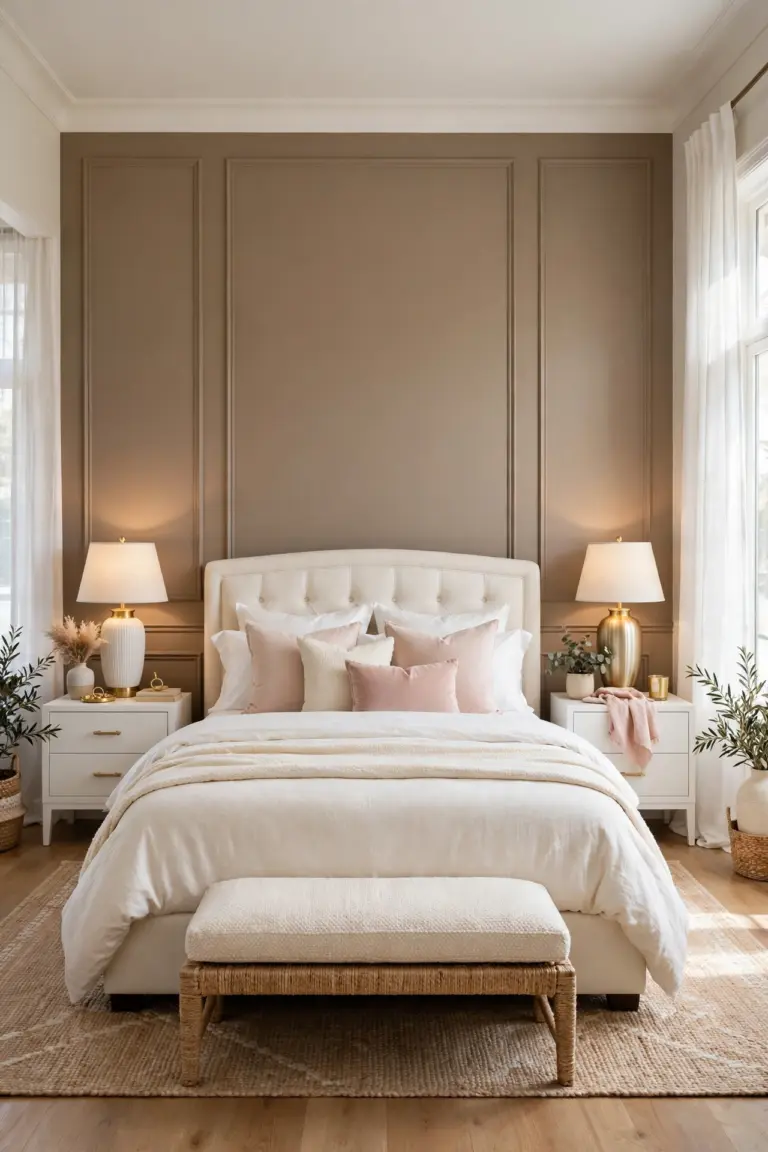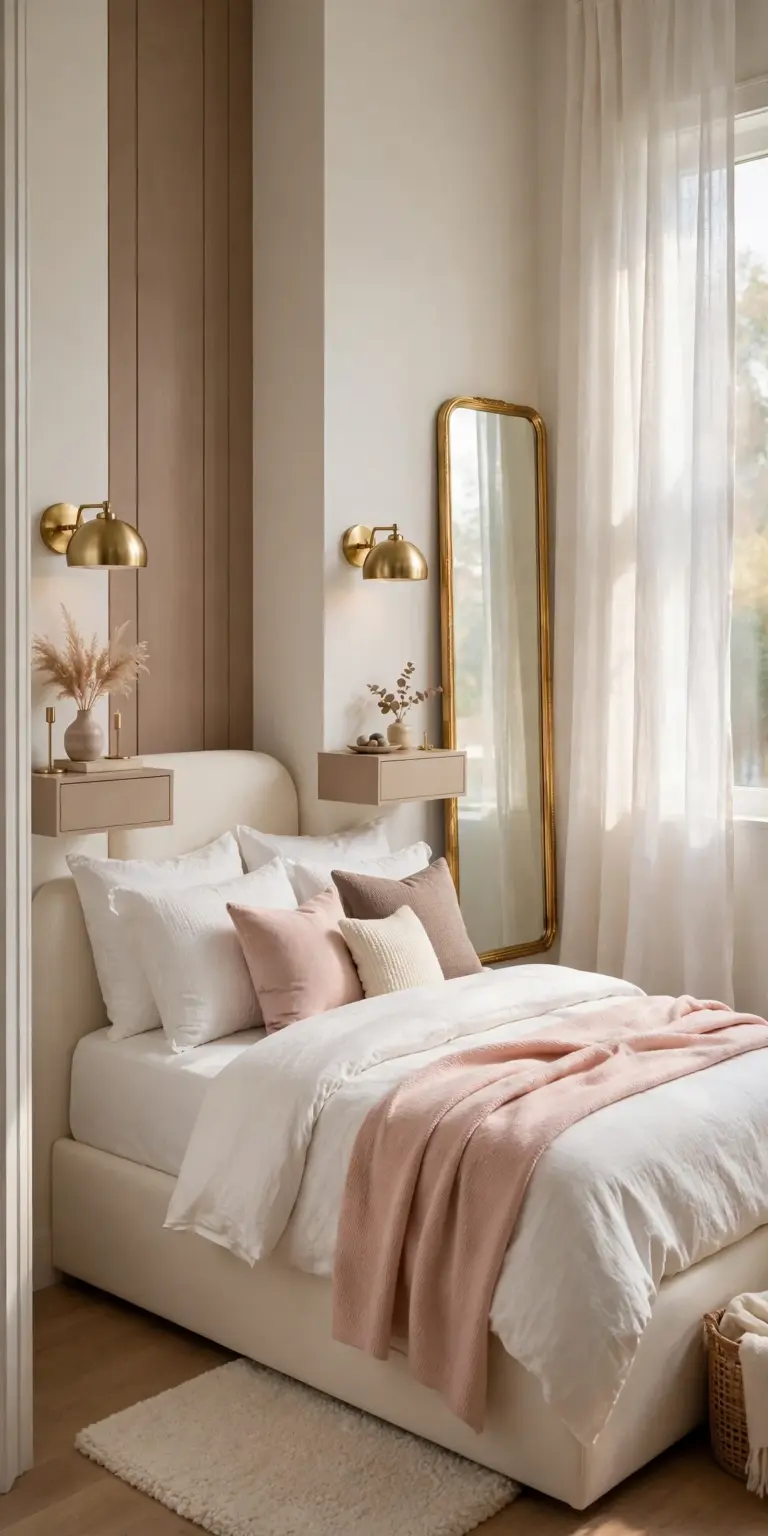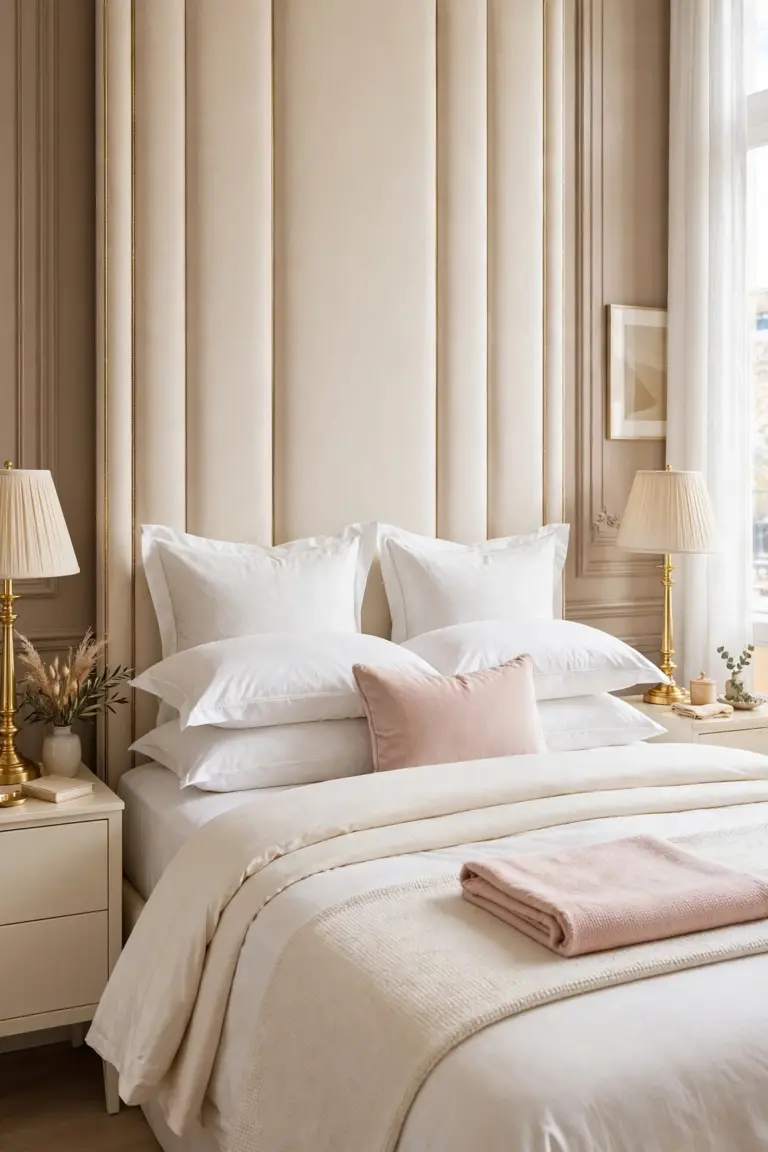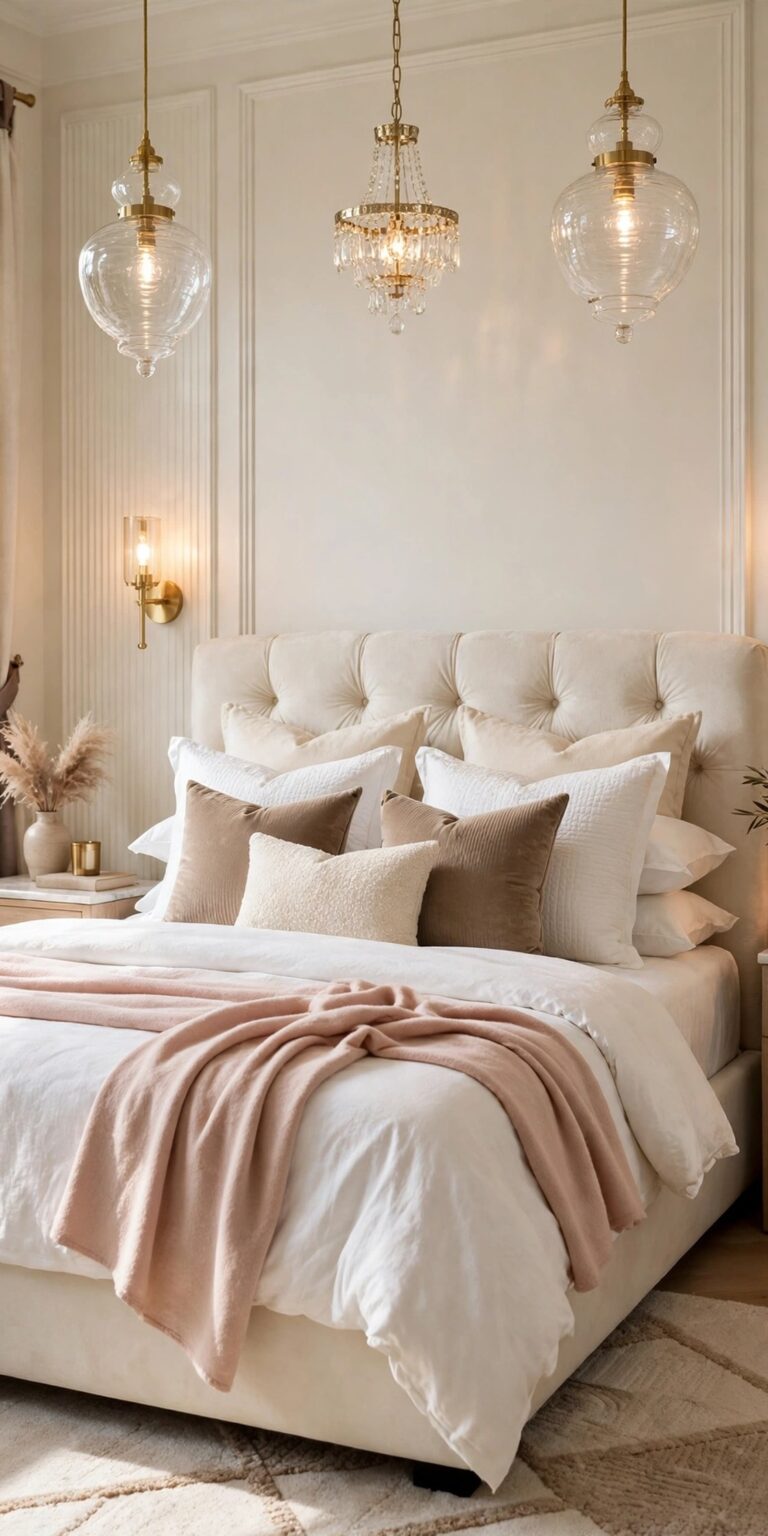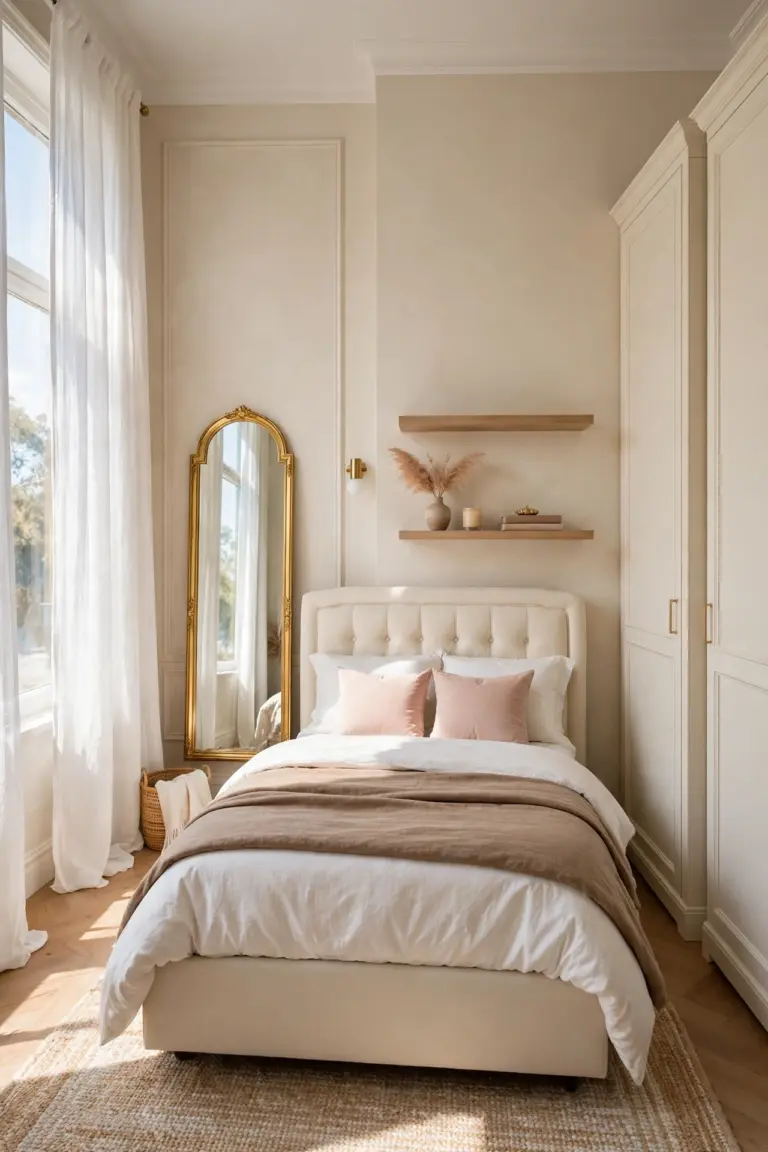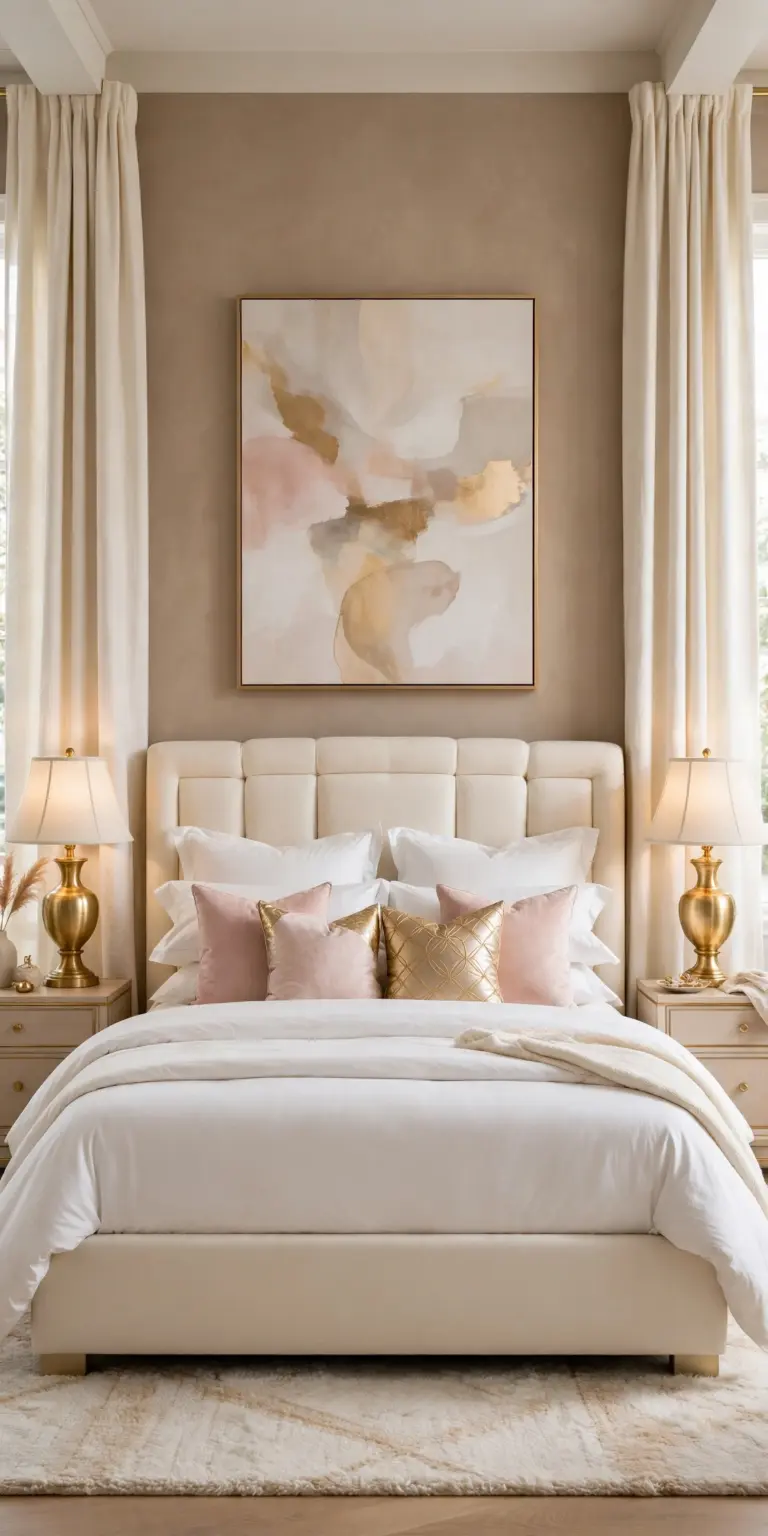
15 Indian Bedroom Decor Ideas That Feel Bright and Glam
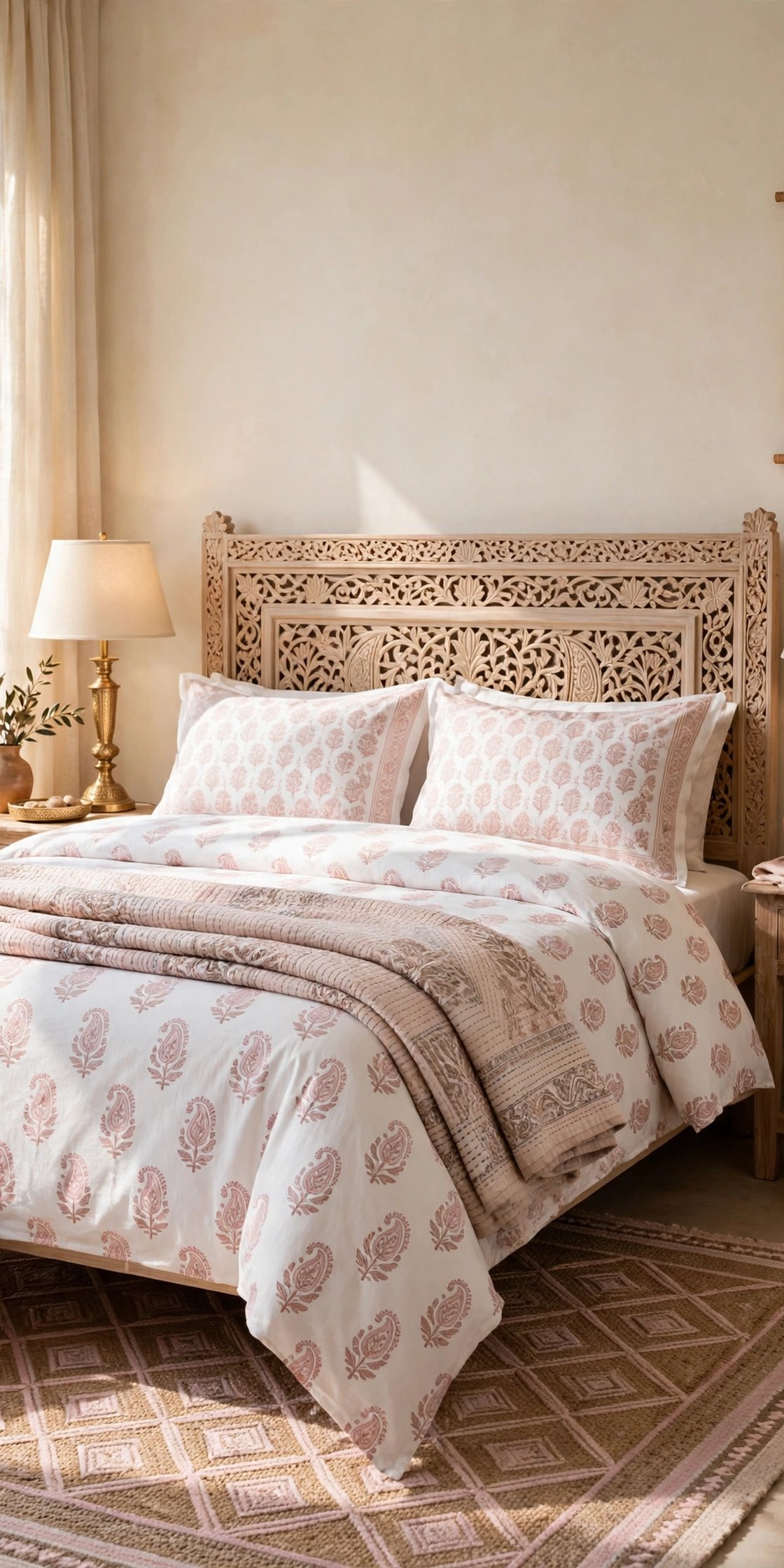
Indian bedroom decor is known for rich craft: hand-carved wood, block-printed cotton, kantha stitching, solid brass and patterns with real history behind them. Done without a plan, those pieces can crowd a room and pull it dark. Done in a bright glam frame, they do the opposite. Keep the base pale in white, cream and warm taupe, let brass stand in for gold, use blush as the soft color bridge, and give each craft one clear job instead of using all of them everywhere. The room still reads unmistakably Indian, but it stays daylight-bright, calm and finished. Start with the bed wall, then work outward, and use the broader layouts in our main bedroom guide to place each piece. See the full layout in our bedroom ideas.
Disclosure: This article may contain affiliate links. If you buy through a link on this page, GlamNStyle may earn a small commission at no extra cost to you. Product links in this article are plain links; each one is checked on the retailer’s own page before it is added.
1. Make a Light Carved Wood Headboard the Centerpiece
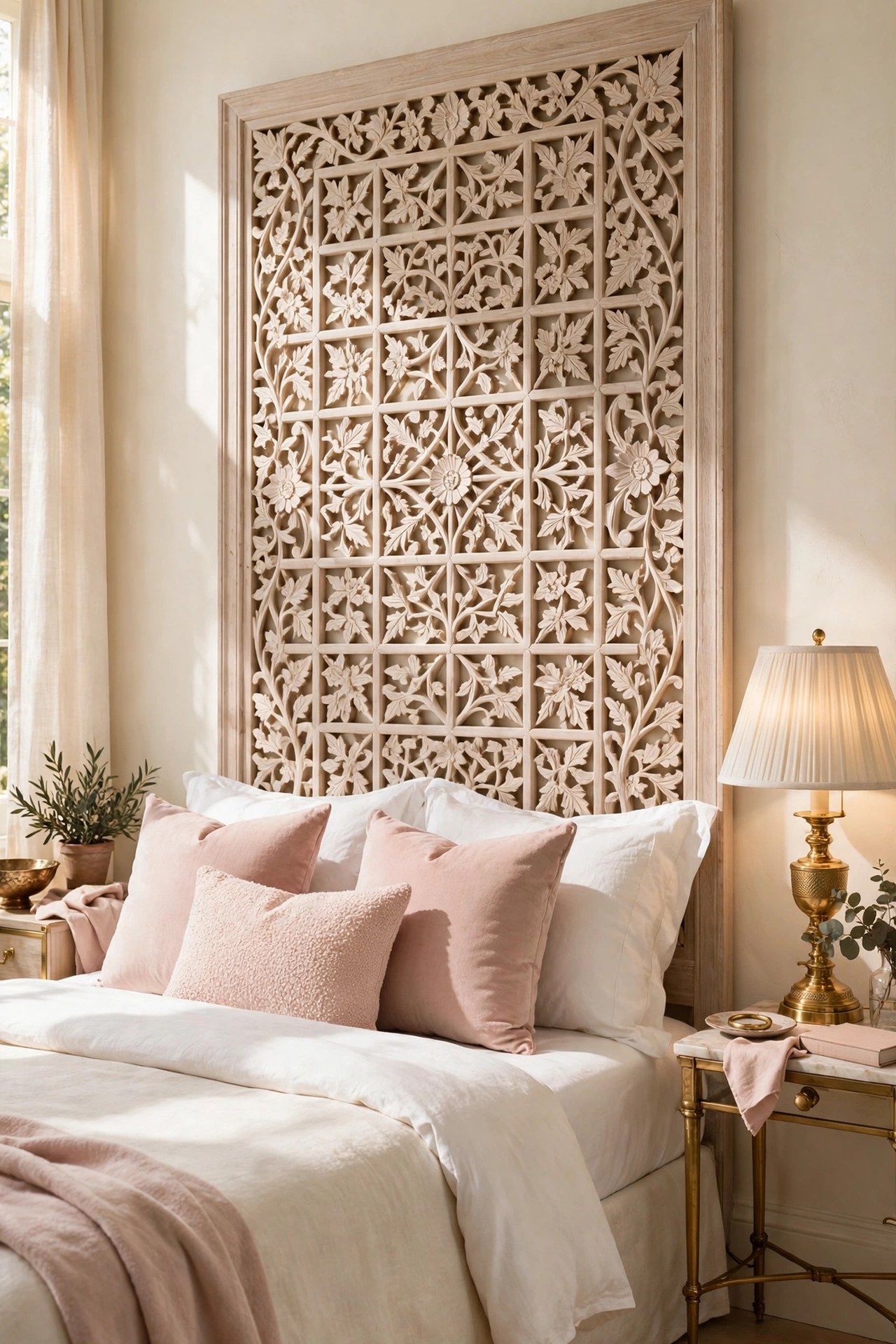
A carved wood headboard is the strongest single piece in Indian bedroom decor, so buy it first and let nothing compete with it. Traditional carving from regions such as Rajasthan and Saharanpur can be deep and detailed, with floral vines, lattice work and arched tops, but the finish decides whether it brightens or darkens the room. Choose mango wood or a similar light timber in a whitewashed, natural or pale honey finish rather than a dark stain, and the carving reads as texture and shadow play in daylight.
Best For: Main bedrooms where the bed wall is plain and needs one lasting focal point.
Not Ideal For: Very low ceilings with an oversized arched headboard.
Estimated Cost: $350-$900 (estimate) for a carved mango wood headboard in queen size with a light finish.
Budget Note: This is the anchor purchase of the room.
Renter Friendly: Yes
Renter Note: A freestanding headboard that fixes to the bed frame touches nothing on the wall.
What You Need
Carved wood headboard in a light finish, bed frame fixings or wall fixings, plain white bedding, two blush cushions, soft brush for dusting.
Product type to look for: A headboard in solid mango wood or sheesham with a light, matte finish, hand-carved or clearly carved detail, and a height that leaves wall visible above it.
How To Do It
- Measure the bed width and the wall height, and choose a headboard no more than a few inches wider than the mattress on each side.
- Fix the headboard firmly to the frame or the wall so it cannot shift or knock when the bed is made.
- Dress the bed in plain white layers so the carving stays the only pattern on the wall.
- Add blush cushions in front and stop there; leave the carved surface itself completely clear.
Pro Tip
Dust carving with a soft, dry brush once a week and keep it out of harsh direct sun, so the light finish keeps looking fresh instead of gray.
2. Layer Block-Print Bedding in Cream and Blush
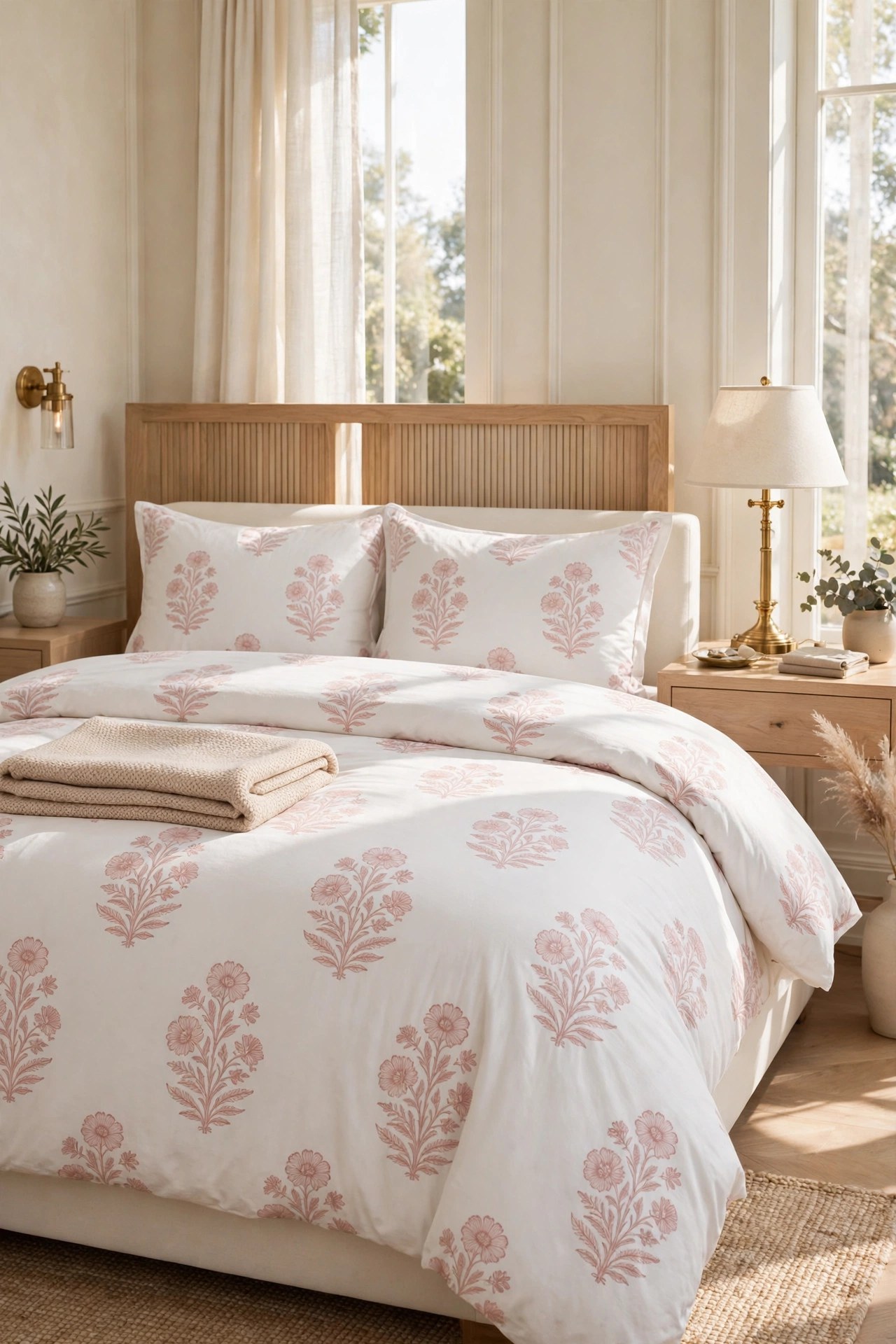
Block printing is a hand-stamping craft, long associated with centers such as Jaipur and Bagru, where carved wooden blocks press one motif at a time onto cotton. That slight, human irregularity makes block-print bedding feel warm next to plain glam layers. For a bright room, choose a white or cream ground with a small, spaced motif in blush, soft sage or pale gold rather than a dense, dark print, and let the duvet cover carry the pattern while sheets and pillow shams stay plain.
Best For: Anyone who wants the clearest Indian textile signal with the lowest risk of darkening the room.
Not Ideal For: Rooms that already have a patterned rug and patterned curtains.
Estimated Cost: $60-$160 (estimate) for a cotton block-print duvet cover set in queen size.
Budget Note: A duvet cover changes the whole bed for the price of one piece; buy the cover first and add matching cushions later.
Renter Friendly: Yes
Renter Note: Fully removable and washable.
What You Need
Block-print cotton duvet cover set in a pale colorway, plain white sheets, plain pillow shams, two matching cushion covers, duvet insert.
Product type to look for: A duvet set in 100 percent cotton with a small, evenly spaced hand block-print motif on a white or cream ground, with hidden buttons or a zip closure.
How To Do It
- Choose the palest colorway in the print you love, with blush, sage or gold motifs on white or cream.
- Fit the insert, shake the duvet flat on the bed, and align the motif rows so they run straight across the bed.
- Layer plain white sheets and shams underneath so the printed layer is the top, visible one.
- Repeat the print on two cushions only, and keep every other textile on the bed plain.
Pro Tip
Photograph the bedding in daylight before buying a second printed piece. Block-print colors soften in bright light, and the doorway view shows honestly whether the room can take more pattern.
3. Fold a Kantha Quilt Across the Foot of the Bed
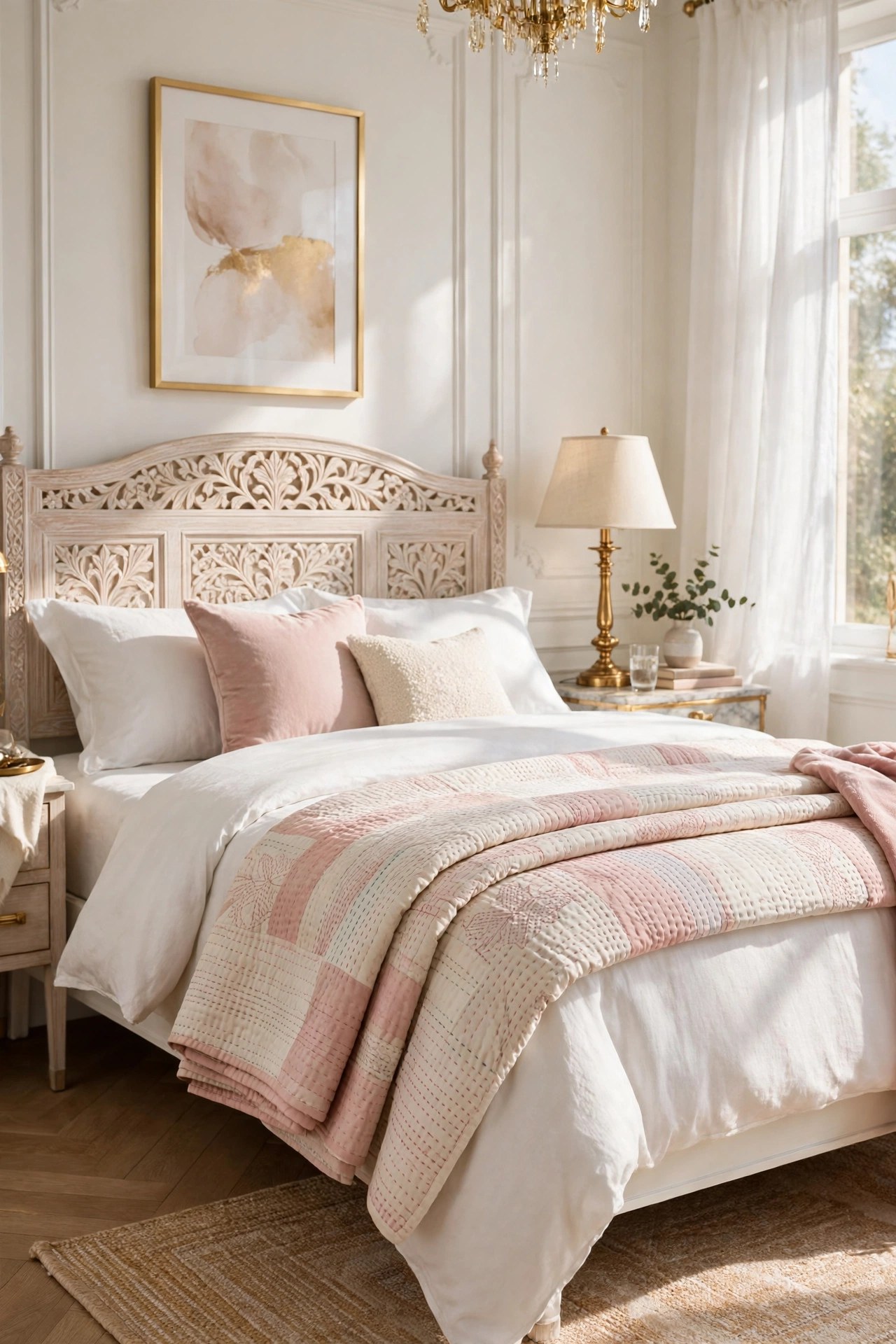
A kantha quilt is made by layering soft, often reclaimed cotton cloth and stitching it together with rows of small running stitches, a tradition closely linked with Bengal. The stitching gives the surface a fine, rippled texture that photographs beautifully and feels far lighter than a heavy throw, which makes kantha ideal for the foot of the bed. Choose a quilt in cream, ivory or blush on at least one side, since many kantha quilts are reversible, and fold it into a neat band across the lower third of the bed.
Best For: Beds that need texture and a handmade layer without extra warmth or bulk.
Not Ideal For: Anyone who wants a thick winter blanket.
Estimated Cost: $45-$120 (estimate) for a cotton kantha quilt or throw in queen-friendly dimensions.
Budget Note: One reversible quilt gives two looks for one price; check both sides before choosing the rest of the bedding.
Renter Friendly: Yes
Renter Note: Nothing is fixed and nothing is marked.
What You Need
Cotton kantha quilt in a pale or reversible colorway, plain or block-print bedding underneath, lint brush.
Product type to look for: A quilt with even running-stitch rows, soft layered cotton rather than synthetic fill, and finished edges that will survive regular folding.
How To Do It
- Lay the quilt flat and choose the paler side as the face for the bright palette.
- Fold it lengthwise into a band about 18 to 24 inches wide.
- Place the band across the lower third of the made bed, with the fold lines straight and even.
- Smooth the stitching rows with your hands so the rippled texture catches the light evenly.
Pro Tip
Rotate the fold every week or two. Kantha cotton softens with use, and rotating stops one crease line from wearing pale while the rest stays rich.
4. Use Brass Table Lamps as the Gold Note
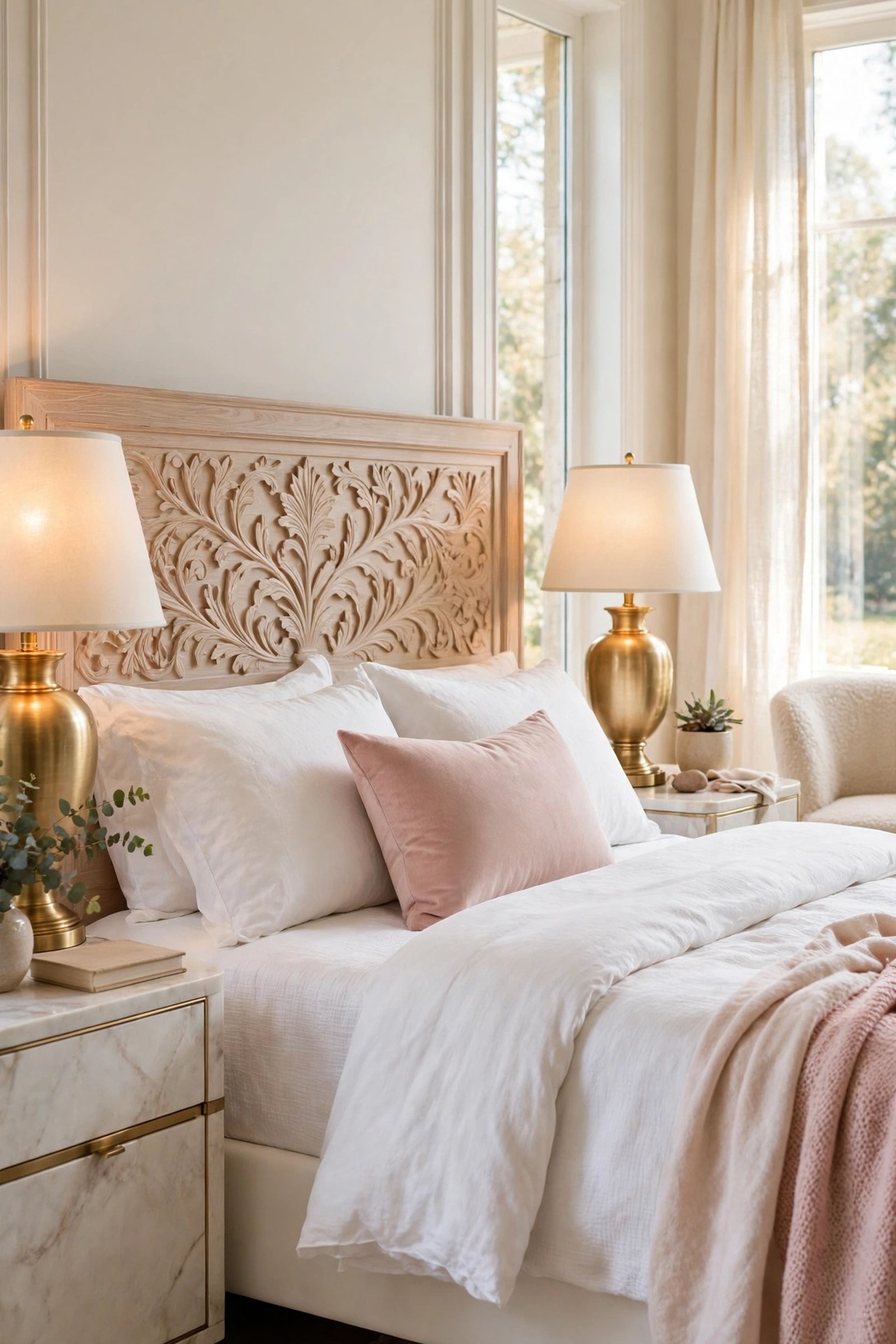
In this palette, brass does the work that gold does in a standard glam bedroom, with more warmth and history. A pair of brass table lamps gives the room its metallic shine, frames the carved headboard with two points of light, and suits Indian decor honestly, because brass has been a working and decorative metal in Indian homes for centuries. Choose brushed or satin brass rather than a mirror-polished finish, with simple turned or hammered bases and plain cream linen shades.
Best For: Rooms that feel flat or cold and need warm light and one clear metallic accent.
Not Ideal For: Rooms with chrome or silver hardware everywhere.
Estimated Cost: $90-$240 (estimate) for a matched pair of brass table lamps with shades.
Budget Note: Buy the pair together from the same batch so the finish matches exactly; single lamps bought months apart rarely match.
Renter Friendly: Yes
Renter Note: Table lamps need no fixings at all.
What You Need
Pair of brushed brass table lamps, cream linen shades, two warm white bulbs of the same type, microfiber cloth.
Product type to look for: Lamps with a solid-feeling brass or brass-finish base, a shade wide enough to soften glare at pillow height, and an inline or base switch reachable from the bed.
How To Do It
- Measure the nightstand depth and choose lamp bases that leave room for a book and a glass in front.
- Fit both lamps with identical warm white bulbs from the same pack.
- Place each lamp toward the back third of the nightstand, centered on the bed side of the surface.
- Check the pair from the doorway at dusk; the two shades should glow as one even line of light.
Pro Tip
Wipe brass with a dry microfiber cloth only, and polish rarely. A soft satin glow suits this palette better than a hard shine.
5. Hang a Jharokha-Style Arched Mirror
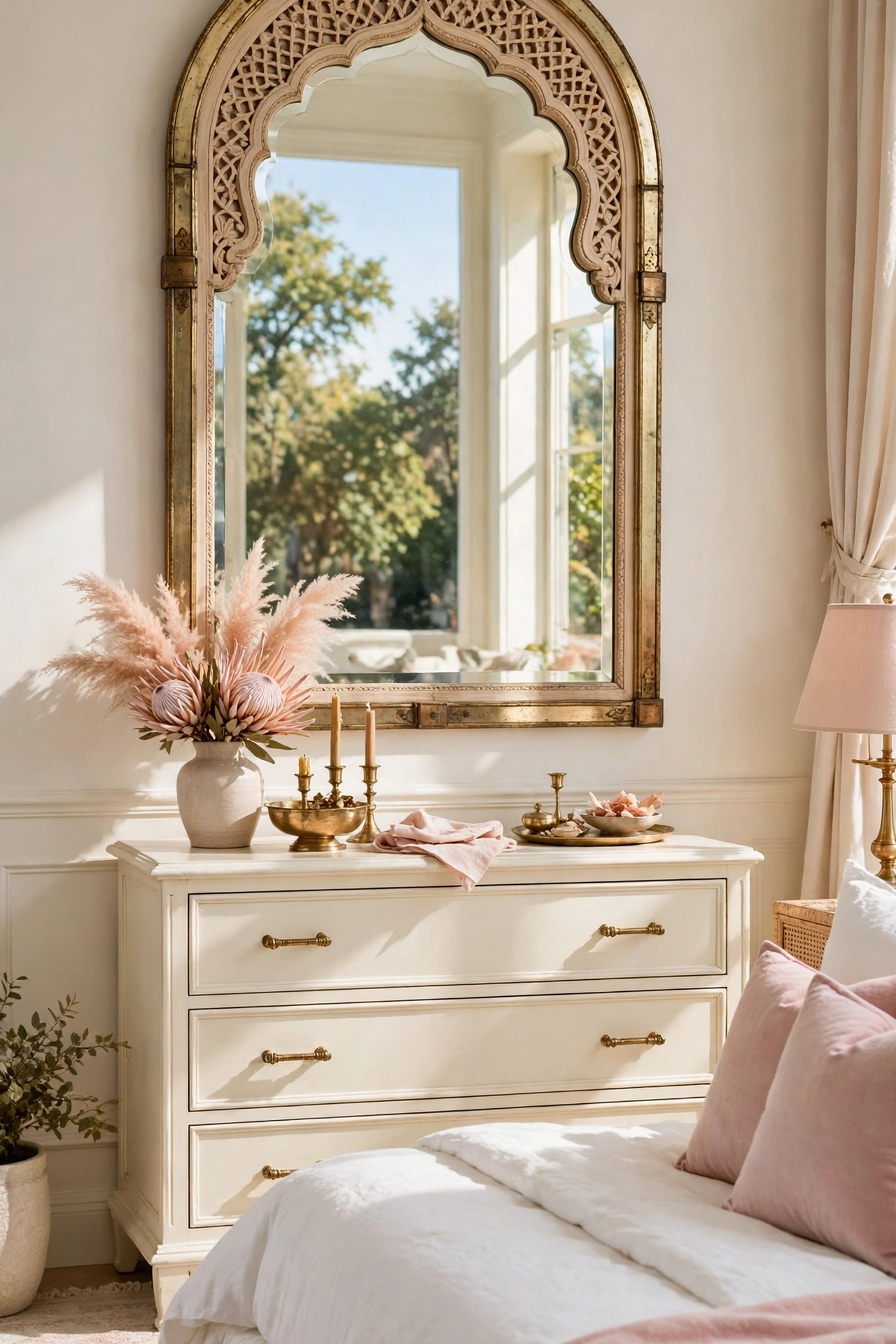
A jharokha is an ornate overhanging balcony window in historic Indian architecture, famous for its arch and carved frame, and a jharokha-style mirror borrows that arch to give a bedroom wall both shape and light. Hang one above a dresser or lean a larger one where it catches the window, and it will bounce daylight deeper into the room while its carved arch repeats the language of the headboard. Choose a light-washed wood frame, a soft brass frame, or a combination of the two, with carving medium in depth so the piece feels crafted rather than heavy.
Best For: Dresser walls and blank wall sections that need shape, light and one crafted feature.
Not Ideal For: Walls already holding an arched headboard in direct view.
Estimated Cost: $80-$260 (estimate) for a jharokha-style arched mirror in a medium to large size.
Budget Note: One well-placed mirror replaces both wall art and a second light source on that wall, so judge its price against the pair.
Renter Friendly: With Conditions
Renter Note: Hanging needs one or two solid fixings.
What You Need
Jharokha-style arched mirror, wall fixings rated for its weight, level, stud finder, microfiber cloth.
Product type to look for: A mirror with safety-backed glass, a frame in light wood or brushed brass, and hanging hardware rated well above the mirror weight.
How To Do It
- Hold the mirror above the dresser or on the wall section and check from the doorway what it will reflect; aim for window light and the bed.
- Mark the fixing points with the level so the arch sits perfectly upright.
- Fix into studs or solid wall anchors, hang the mirror, and step back to confirm the arch is straight.
- Style the surface below it with one brass tray or a small plant only, so the reflection stays calm.
Pro Tip
Keep the reflection styled, not just the mirror. Whatever the mirror faces appears twice, so a tidy bed and a clear dresser matter more with this piece than with any other. The same pairing suits a modern luxury bedroom.
6. Ground the Room With a Light Woven Rug With a Spice Border
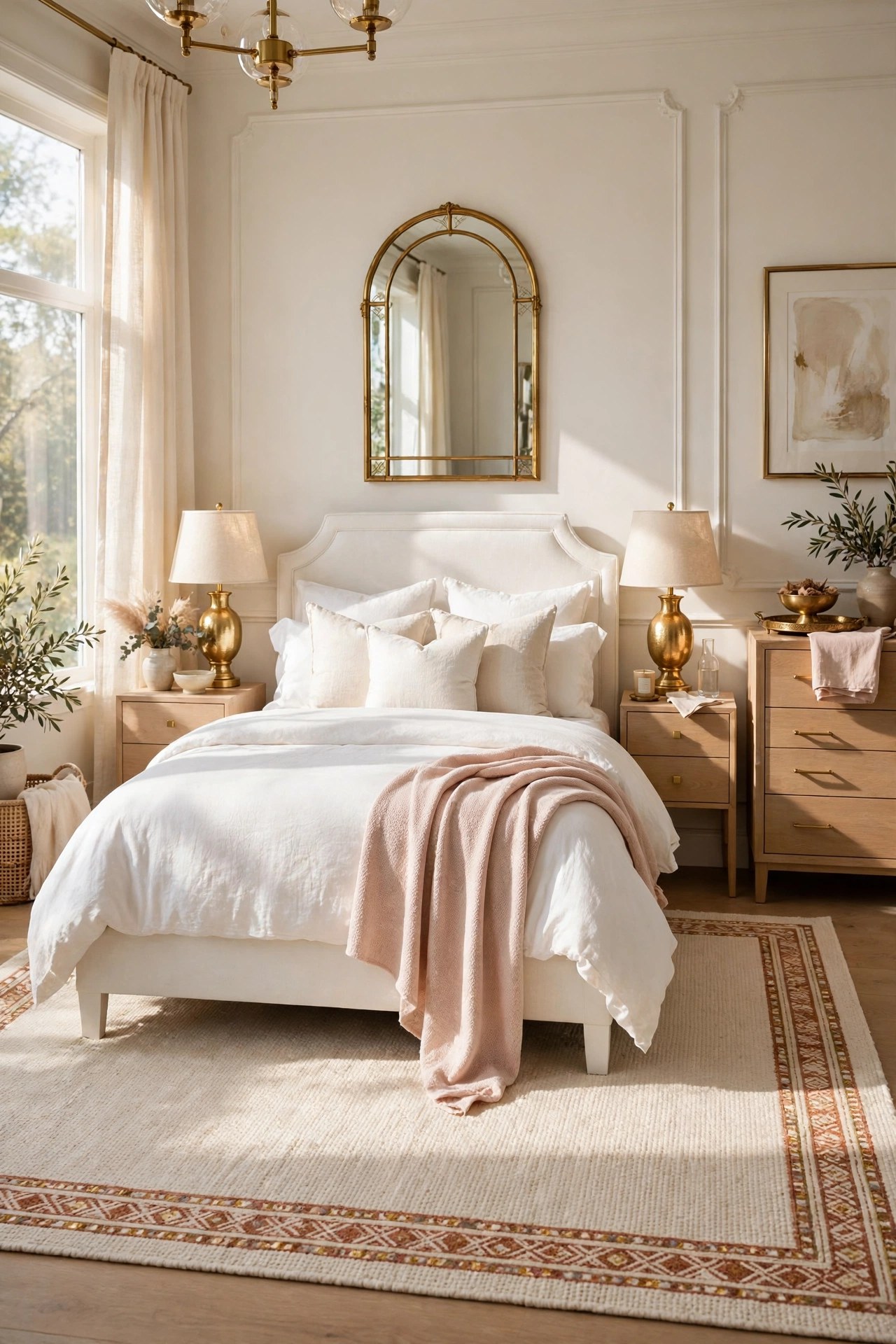
A woven rug is where a little honest color is welcome, because the floor can carry warmth without darkening the walls or the bed. Look for a flatweave dhurrie-style rug, a flat woven cotton or wool rug long made in India, in an ivory or cream field with a defined border in soft rust, muted turmeric gold or blush. The pale center keeps the room bright, while the border frames the bed and brings warm spice tones in at ground level, where they feel grounded rather than loud.
Best For: Rooms with cold, plain or worn flooring that need warmth and a defined bed zone.
Not Ideal For: Homes where a flatweave will shift on polished floors without an underlay.
Estimated Cost: $90-$280 (estimate) for a flatweave woven rug around 5 by 8 or 6 by 9 feet.
Budget Note: A flatweave in this size usually costs less than a thick pile rug and is easier to shake clean, which suits a bedroom.
Renter Friendly: Yes
Renter Note: Lay a non-slip underlay beneath the rug to protect the floor and stop the weave creeping as the bed is made.
What You Need
Flatweave dhurrie-style rug with a pale field and spice-toned border, non-slip underlay, furniture sliders.
Product type to look for: A rug in cotton or a cotton and wool blend with a tight flat weave, a clear border design, and colors in rust, gold or blush on an ivory ground.
How To Do It
- Measure the bed zone and choose a rug that leaves an even, visible border on both open sides of the bed.
- Lay the underlay first, then the rug, with the border pattern running parallel to the bed.
- Lift the bed onto the rug with sliders rather than dragging it, and settle the rug flat.
- Check that the door clears the rug edge and that the border shows evenly at the foot of the bed.
Pro Tip
Let the rug border set the accent colors. Pull one border tone, usually the rust or the gold, into a cushion or the kantha quilt, and floor and bed feel planned together.
7. Keep Paisley Cushions to a Tight Color Limit
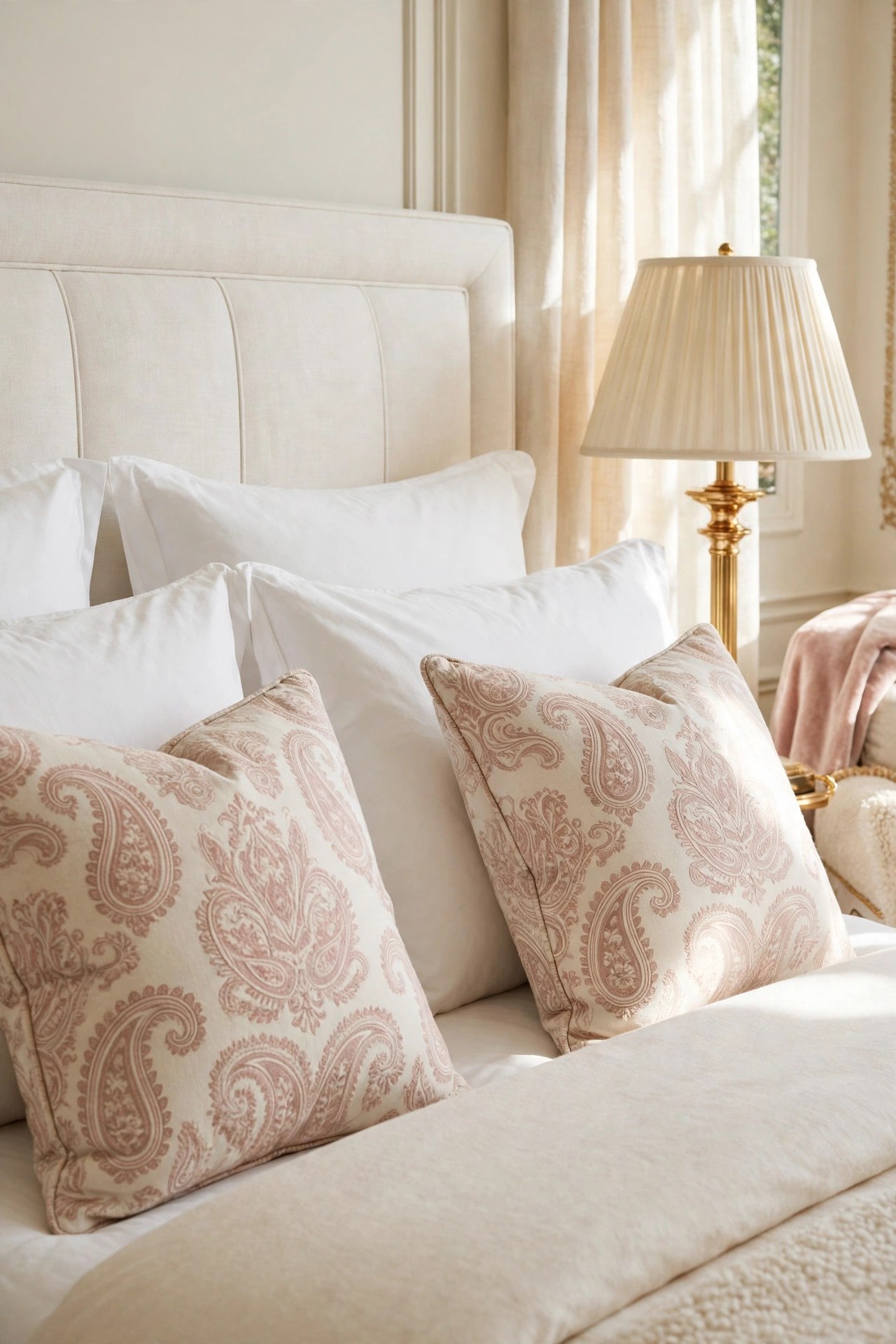
The paisley motif, known as buti or ambi in its Indian textile roots and shaped like a stylized mango or leaf, is one of the most recognizable patterns in Indian fabric. On cushions it gives a bedroom instant character, and cushions are the safest place for it because they can be changed in minutes. The bright glam rule is a tight color limit: choose paisley in blush, cream and soft gold only, at a medium scale that reads as pattern from the door without turning noisy up close.
Best For: Plain beds that need pattern and personality with almost no commitment or cost.
Not Ideal For: Beds already dressed in block-print bedding with a large motif.
Estimated Cost: $35-$90 (estimate) for two to three paisley cushion covers with inserts.
Budget Note: Covers alone cost very little and reuse existing inserts; this is the cheapest pattern change in the whole list.
Renter Friendly: Yes
Renter Note: No fixings, no marks.
What You Need
Two paisley cushion covers in blush, cream and gold tones, one plain blush or cream cushion, cushion inserts, plain white pillow shams.
Product type to look for: Covers in cotton with a clear paisley motif at medium scale, a hidden zip, and colors limited to the room palette of cream, blush and soft gold.
How To Do It
- Dress the bed with plain white pillows and shams first, as the quiet base layer.
- Place the plain cushion in the center front as a rest for the eye.
- Set one paisley cushion on each side of it, motif facing straight and seams aligned.
- Step to the doorway and remove one cushion if the bed reads busy; two patterned cushions are usually enough.
Pro Tip
Match paisley scale to the bedding print. With block-print bedding, keep paisley small and sparse; with plain bedding, cushions can carry a larger, bolder motif.
8. Place a Pale Mandala Panel Above the Bed
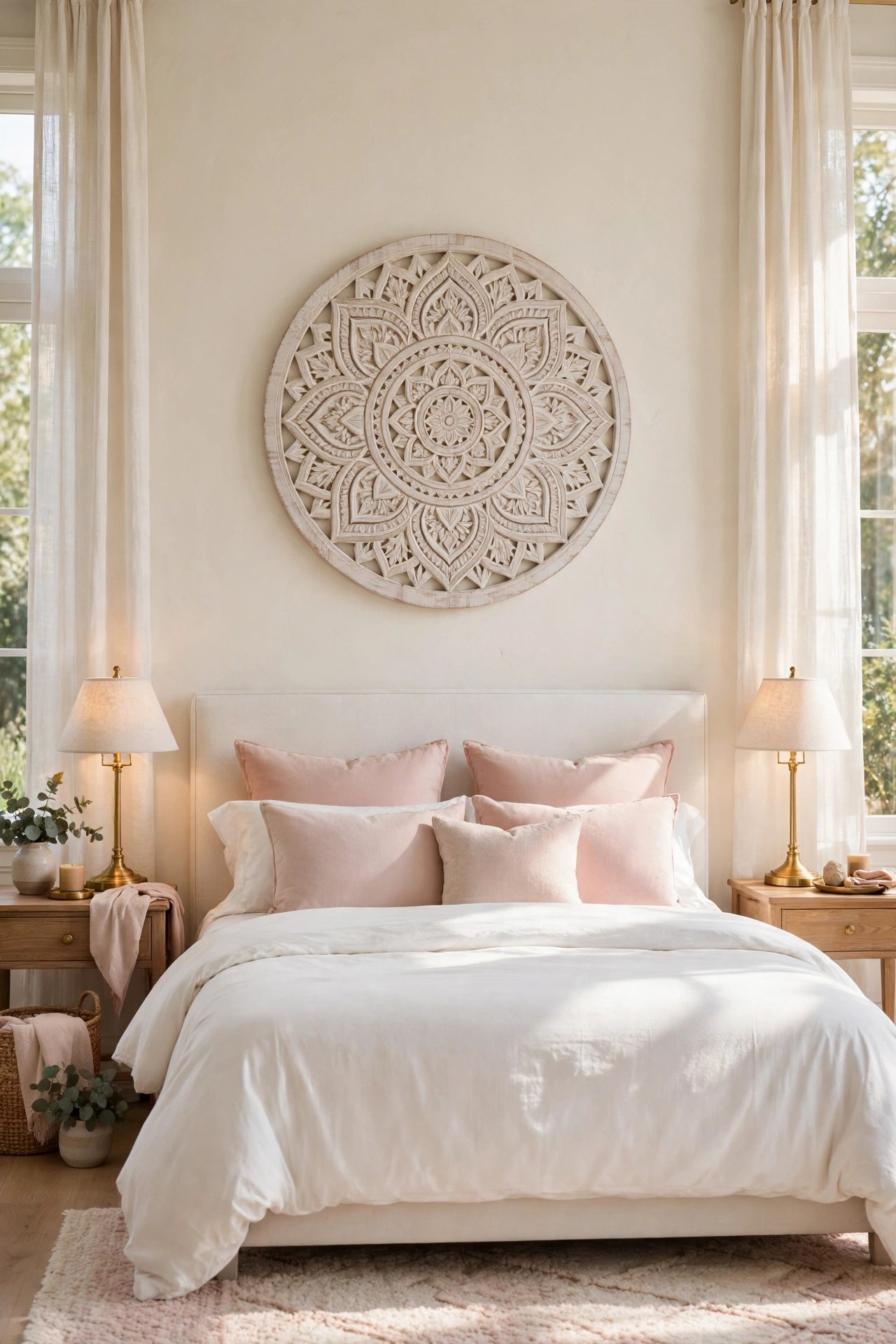
A mandala is a circular, symmetrical design used for centuries in Indian art and spiritual practice, and as a carved wall panel it gives the bed wall a calm, centered focus that suits a bedroom especially well. Choose a round panel in whitewashed or pale natural wood above a plain or low headboard, or two smaller half-round panels flanking the bed if one large piece feels too strong. The symmetry centers the bed visually and fills the tall space above the headboard, repeating the carved wood language without copying the headboard.
Best For: Bed walls with a low or plain headboard and a tall blank space above it.
Not Ideal For: Rooms where a carved headboard already fills the wall.
Estimated Cost: $70-$220 (estimate) for a carved mandala wood panel around 24 to 36 inches across.
Budget Note: One panel covers the wall space that would otherwise need two or three framed prints, so compare it against a small gallery wall.
Renter Friendly: With Conditions
Renter Note: Panels hang from one or two fixings.
What You Need
Carved mandala panel in a pale finish, wall fixings rated for its weight, level, tape measure, soft brush.
Product type to look for: A panel in light mango wood or similar with clean, even carving, a matte whitewash or natural finish, and fitted hanging hardware on the back.
How To Do It
- Measure the space above the headboard and choose a panel that leaves clear wall on both sides.
- Mark the center of the bed on the wall and align the panel center exactly on that line.
- Fix the panel securely, check it with the level, and confirm it cannot shift.
- Clear the headboard top and the wall around it completely, so the circle stands alone.
Pro Tip
Center the panel on the bed, not on the wall, if the two differ. The eye reads bed and panel as one composition, and an off-center circle looks like a mistake every day.
9. Add Low Seating With a Small Daybed Corner
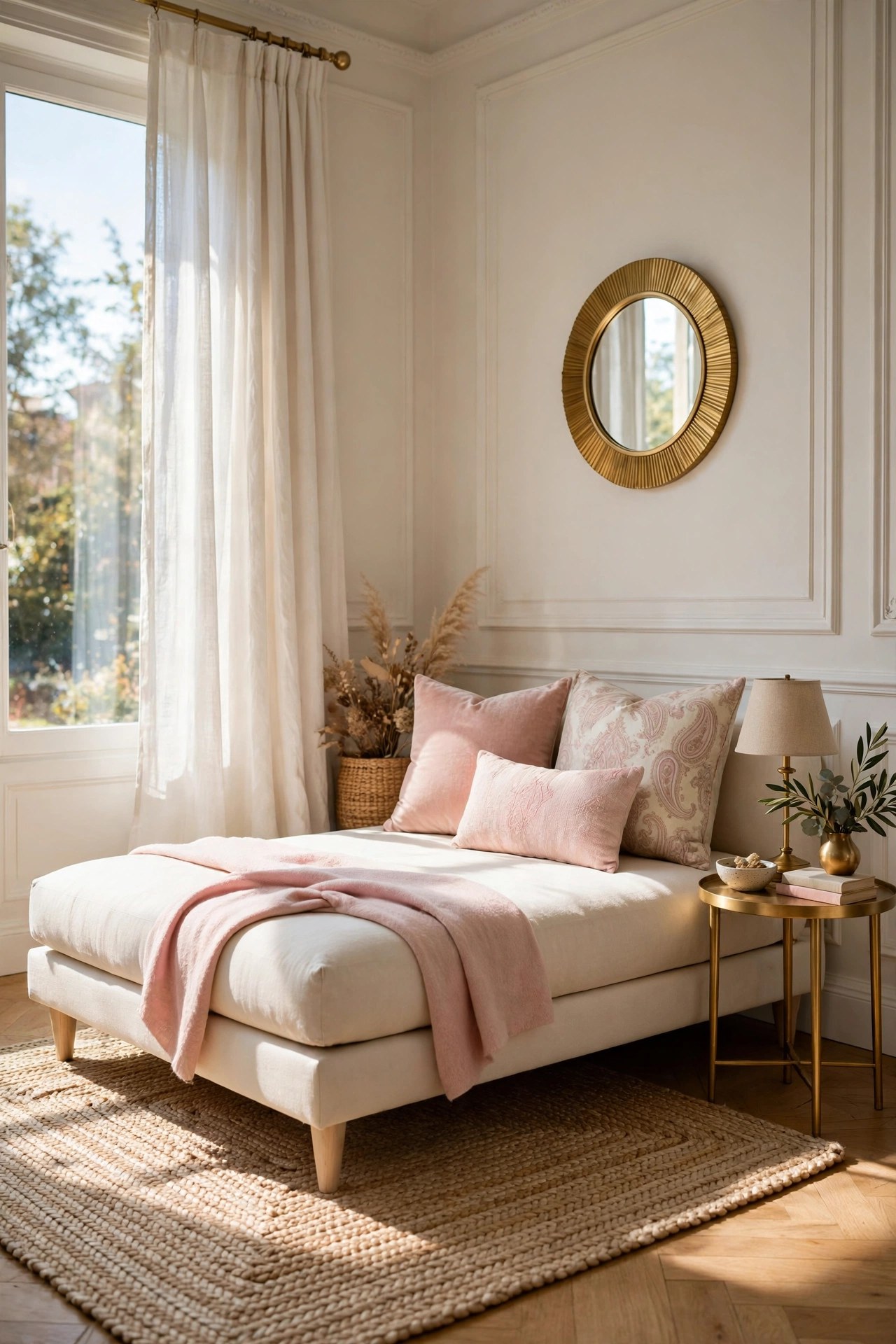
Low seating has deep roots in Indian homes, from floor cushions and bolstered daybeds to the simple charpai, and a low seating corner gives a bedroom a second resting place that feels relaxed in a way a standard armchair does not. Use a low daybed, a firm floor mattress on a low wooden base, or two large floor cushions with bolsters, placed by the window or at the foot wall and dressed in cream with blush and paisley cushions. Add one small brass side table, and the corner becomes the reading and dressing spot of the room.
Best For: Larger bedrooms with an empty corner, and anyone who reads or dresses sitting down.
Not Ideal For: Anyone with knee or mobility difficulty who needs a higher seat.
Estimated Cost: $120-$380 (estimate) for a low daybed base with mattress, or $50-$130 (estimate) for floor cushions with bolsters.
Budget Note: Start with cushions and bolsters on the rug to test the corner; buy the daybed base only once the spot proves itself.
Renter Friendly: Yes
Renter Note: Everything is freestanding.
What You Need
Low daybed or large floor cushions with bolsters, cream throw, blush and paisley cushions, small brass side table, felt pads.
Product type to look for: Seating with a firm, supportive base at a comfortable low height, washable covers in cream cotton, and bolsters that hold their shape.
How To Do It
- Choose the corner with the best natural light that does not block the walkway to the bed or the door.
- Set the daybed or cushions on the rug edge so the corner feels connected to the room.
- Dress it in cream first, then add blush and one paisley cushion to link it to the bed.
- Place the brass side table within easy reach and keep its top to a book and one small object.
Pro Tip
Keep the seating textiles in the same palette as the bed but plainer. The corner should feel like part of the same room at a lower height, not a second, competing bed. The same low approach fits very small bedroom ideas.
10. Hang a Swing Seat Only Where the Structure Allows It
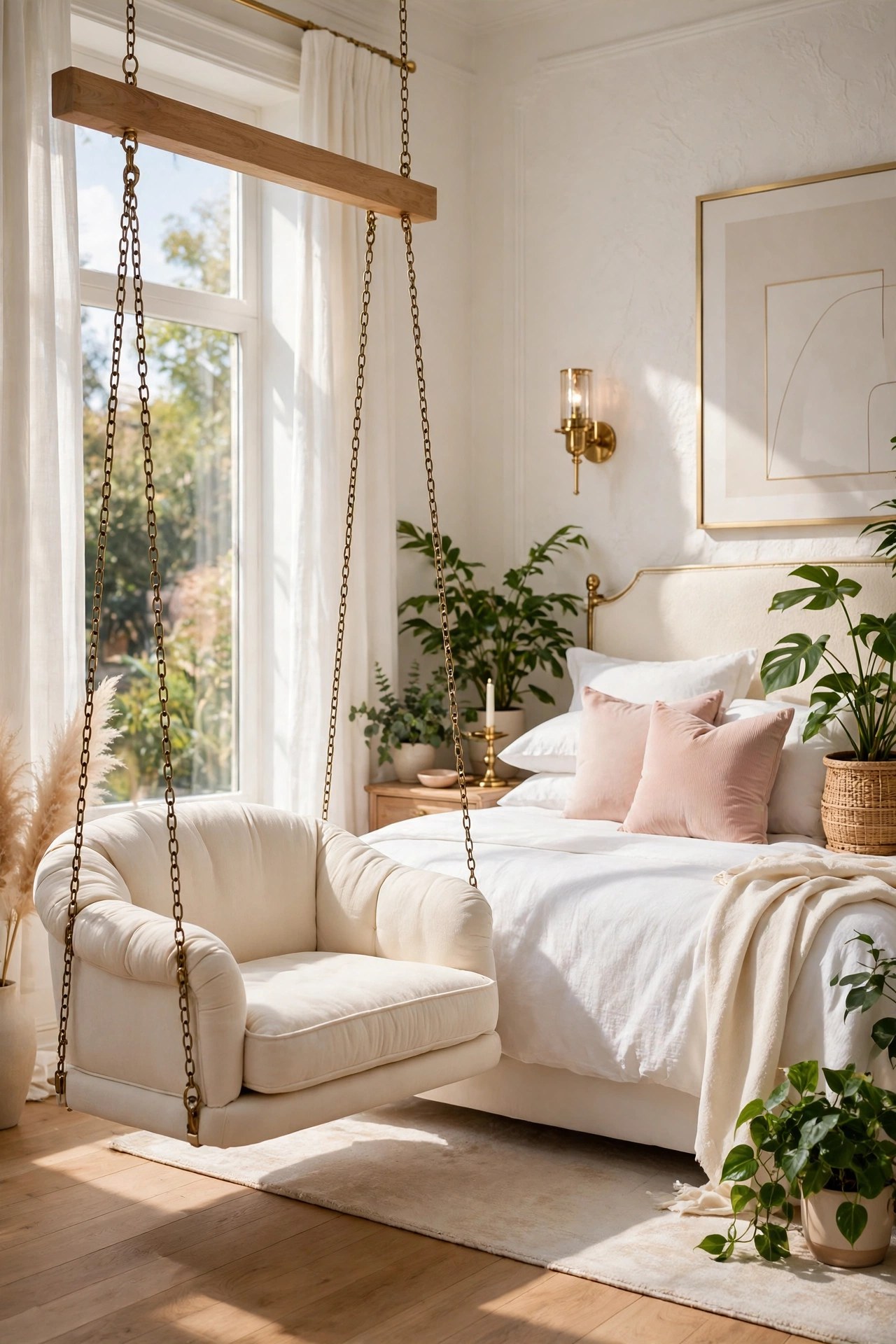
A jhula, a hanging swing seat, is a beloved feature in many Indian homes, and in a bedroom a single cushioned swing seat by the window brings gentle movement and a clear sense of ease. This is the one idea where honesty matters most: a swing is only a good idea where the ceiling structure can truly carry it, fixed into a joist or beam by a qualified installer, with clear floor space for its arc. Where that is possible, choose light wood or cane with a cream cushion and brass-finish chains.
Best For: Bedrooms with a confirmed solid ceiling joist or beam and a clear corner by the window.
Not Ideal For: Any ceiling of unknown structure, and most rentals.
Estimated Cost: $180-$500 (estimate) for a swing seat with rated hardware and professional fixing, or $150-$350 (estimate) for a freestanding swing chair.
Budget Note: Professional fixing is part of the product cost here, not an extra; a swing bought cheaply and fixed badly is the most expensive version.
Renter Friendly: No
Renter Note: A ceiling-fixed swing is not a rental change. The freestanding frame version is the only renter-safe route, and it needs floor space for its base.
What You Need
Swing seat or freestanding swing chair, rated ceiling hardware and professional installer for the fixed version, cream cushion, blush pillow, stud and joist finder.
Product type to look for: A seat with a stated weight rating, hardware rated above that limit, clear fixing instructions, and a frame or chains in light wood, cane or brass finish.
How To Do It
- Have the ceiling checked first and confirm a joist or beam in the exact spot before buying anything.
- Mark the swing position so its full arc clears walls, the bed and any glass by a wide margin.
- Have the hardware fixed professionally into the structure and load-tested before the seat is used.
- Dress the seat with the cream cushion and one blush pillow, and keep the floor beneath it completely clear.
Pro Tip
Test the arc with the room arranged exactly as it will stay. A swing that clears an empty corner but clips a moved nightstand is a layout problem to fix before the first real sit.
11. Warm One Alcove or Panel in a Soft Spice Tone
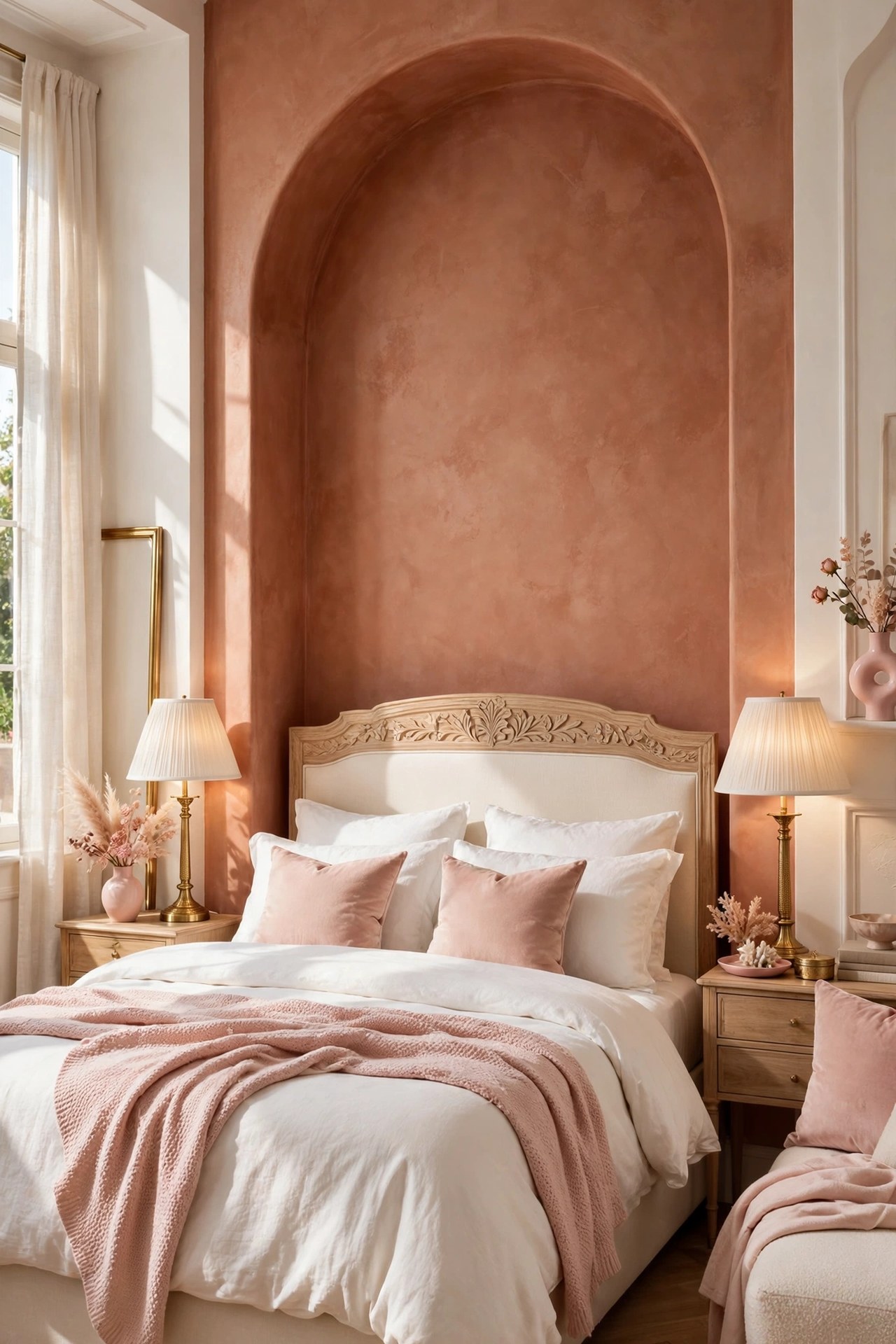
Warm spice colors, turmeric gold, gentle terracotta, soft chili and cinnamon, are the heart of many Indian interiors, and they can stay in a bright glam room if they are used in one place at a pale, softened strength. Paint one alcove, the panel behind the bed, or the inside of an arch in a muted terracotta or a warm golden cream, and keep every other wall warm white. The single warm surface makes white bedding look brighter by contrast and makes brass glow. Choose a matte finish and test the color large, because spice tones deepen in low light.
Best For: All-white bedrooms that feel cold or flat and need one warm anchor.
Not Ideal For: Small, dark rooms where even one deeper wall can close the space.
Estimated Cost: $40-$110 (estimate) for paint and supplies for one alcove or bed panel wall.
Budget Note: One wall uses a single small tin in most cases; spend the saving on a proper test pot and paint a large board first.
Renter Friendly: With Conditions
Renter Note: Paint needs landlord permission in most leases.
What You Need
Matte paint in a muted terracotta or warm golden cream, test pot and large board, painter tape, roller and tray, warm white paint for surrounding walls if refreshing.
Product type to look for: A matte or low-sheen paint in a softened spice tone with warm undertones, sampled and checked in both daylight and evening light.
How To Do It
- Paint a large test board and live with it against the bed wall for a full day and evening.
- Tape the edges of the alcove or panel area cleanly so the warm color ends in one sharp, deliberate line.
- Apply two thin coats, letting the first dry fully so the true depth of the color shows.
- Dress the bed in white and blush and check the contrast from the doorway before adding any more warm color.
Pro Tip
Judge the test board at night under the brass lamps. Spice tones are chosen for their evening glow, and a color that only works at noon will disappoint every night.
12. Frame the Window With Block-Print Curtains in a Pale Ground
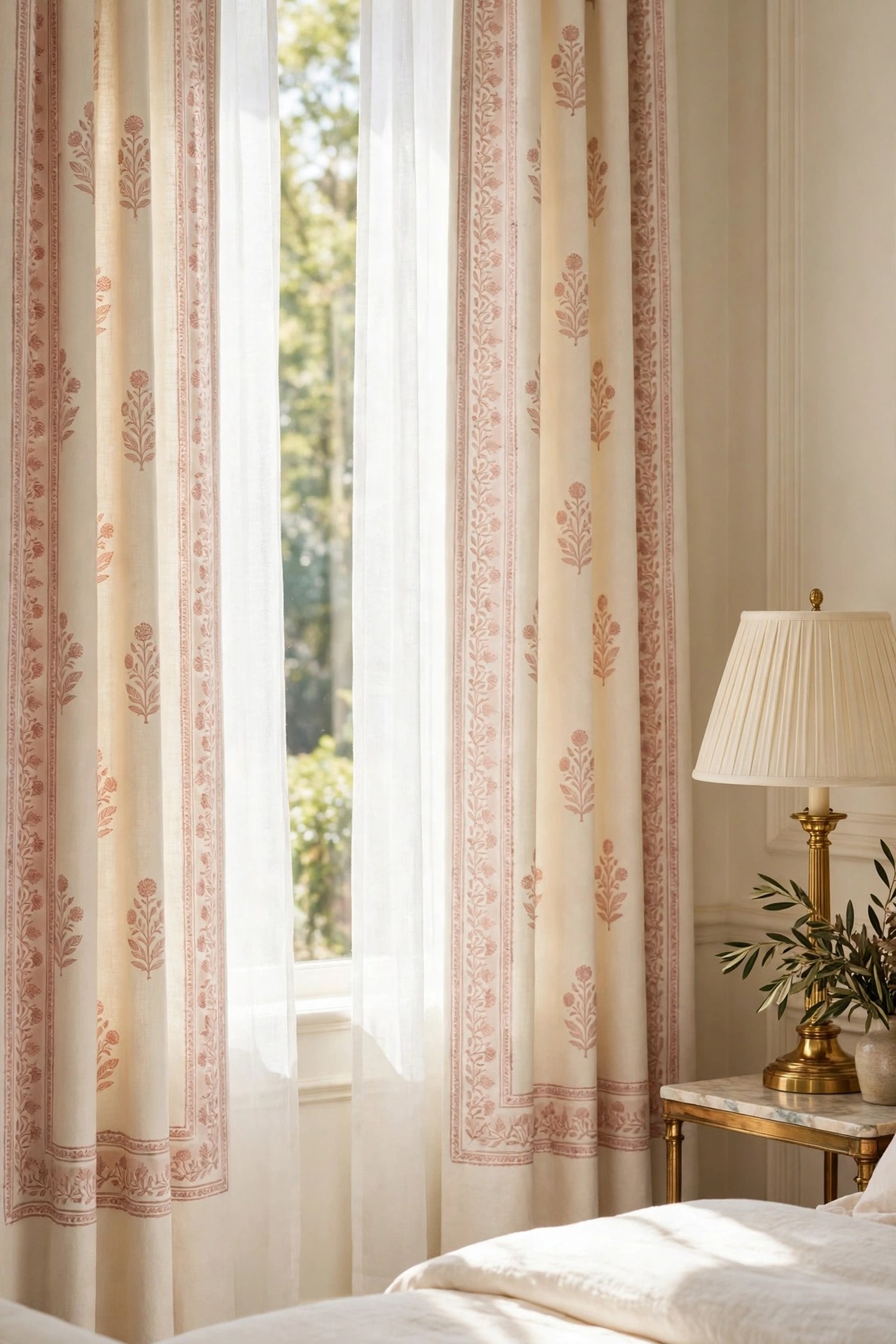
Curtains are the largest textile surface after the bed, so a block-print curtain can carry the Indian pattern of the room when the bedding is plain, or rest quietly when the bedding already prints. The bright version uses a cream or white ground with the print kept to a border along the inner edge and hem, or a very small, spaced motif in blush or pale gold. Hung high and wide, with a sheer behind them for daytime privacy, the curtains frame the window like the rug border frames the bed, and the room gains pattern at its edges while the center stays calm.
Best For: Bedrooms with plain bedding that need pattern, and windows that need softening and height.
Not Ideal For: Rooms where block-print bedding and a patterned rug are both already in use.
Estimated Cost: $55-$150 (estimate) for two block-print cotton curtain panels with a sheer panel and rod.
Budget Note: Border-print panels give the crafted look with less visual weight and often cost less than full-print lined curtains.
Renter Friendly: With Conditions
Renter Note: The rod needs screws above the window.
What You Need
Two block-print cotton curtain panels in a pale colorway, sheer panel, brushed brass curtain rod and brackets, steamer.
Product type to look for: Panels in cotton with the motif on a white or cream ground, long enough to reach the floor from a high rod, with a header that slides or hangs cleanly.
How To Do It
- Mark the rod high, close to the ceiling, and wide beyond the frame so open curtains cover wall, not glass.
- Hang the sheer first, then the printed panels, and steam the cotton in place.
- Arrange the border edge so the printed trim runs down the inner opening of each curtain where it is seen.
- Check the window wall from the bed; print, brass and daylight should balance without any one taking over.
Pro Tip
If the bedding is block-printed, flip this idea to plain curtains with only a printed tieback or trim. One printed hero per room keeps Indian pattern glamorous instead of busy.
13. Style Brass Diya-Style Accents on a Tray
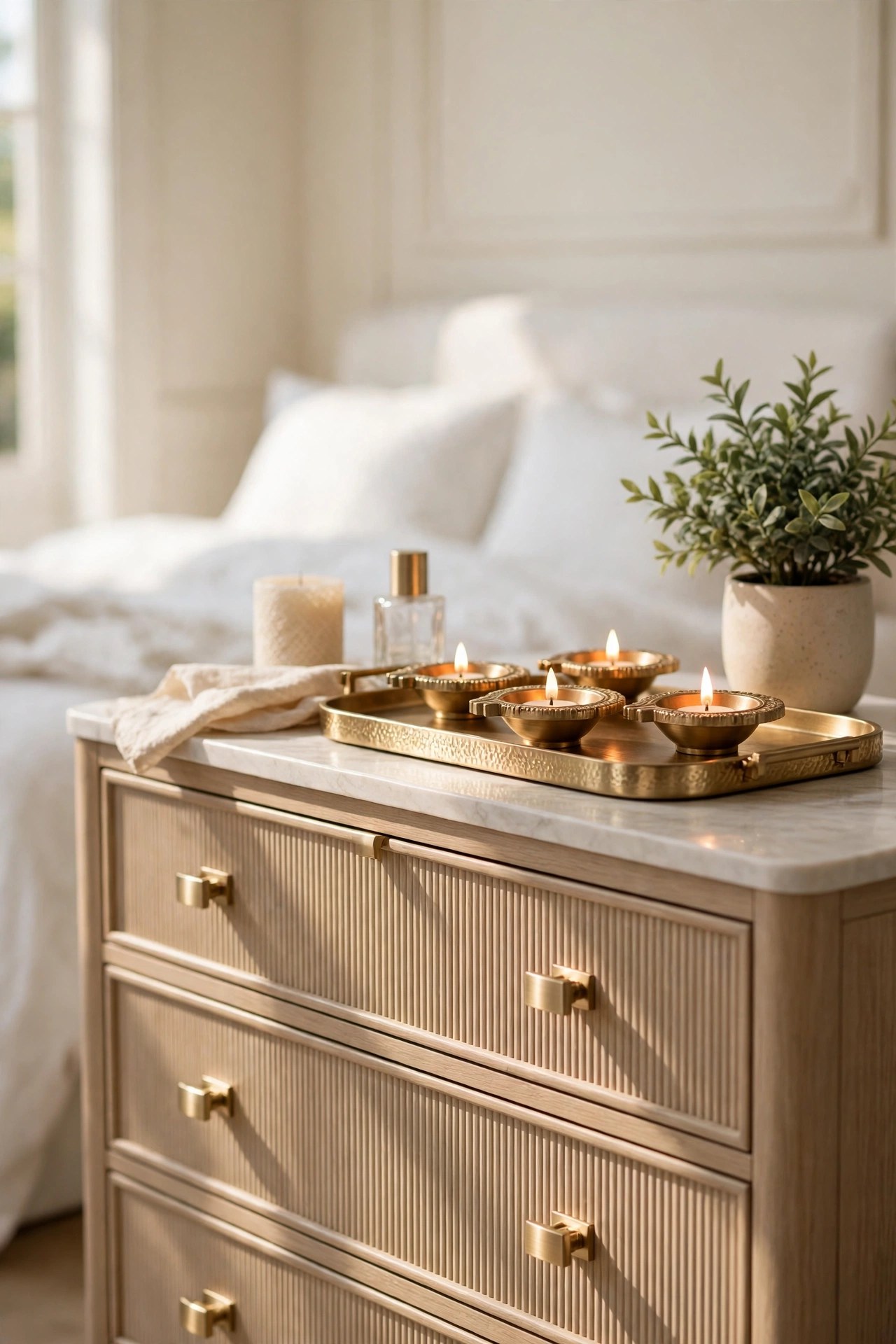
A diya is a small oil lamp, traditionally clay and lit for festivals such as Diwali, and its low, rounded shape makes a beautiful accent even when it is used purely as decor. Group three to five small brass diya-style holders, urli-style shallow bowls, or a mix of the two on one brass tray on the dresser or a nightstand, and the group reads as a single styled moment rather than scattered clutter. For a bedroom, the safe fill is a flameless LED tealight in each holder, giving warm flicker with no open flame near bedding.
Best For: Dressers and nightstands that need one warm, crafted finishing touch.
Not Ideal For: Homes where small loose objects get knocked over daily.
Estimated Cost: $25-$75 (estimate) for a brass tray with three to five diya-style holders and LED tealights.
Budget Note: This is the lowest-cost brass idea in the list and a good first buy to test how brass sits in the room.
Renter Friendly: Yes
Renter Note: Fully freestanding with no fixings.
What You Need
Brass tray, three to five brass diya-style holders or a shallow urli bowl, flameless LED tealights, small plant or petals for daytime styling.
Product type to look for: Holders in brass or brass finish with a stable flat base, sized for standard LED tealights, and a tray large enough to hold the group with space around it.
How To Do It
- Place the tray on the dresser or nightstand where it will not be moved daily, toward the back of the surface.
- Arrange the holders in a loose triangle or arc on the tray, tallest or largest in the center.
- Fit an LED tealight in each holder and switch them on together at dusk to check the grouped glow.
- Add one small plant or a few petals beside the group and stop; the tray should stay mostly open.
Pro Tip
Never use real flame diyas or candles beside a bed. The LED version keeps the shape, the brass and the glow, and removes the one risk a bedroom should never carry.
14. Add Cane and Woven Detail for Light Texture
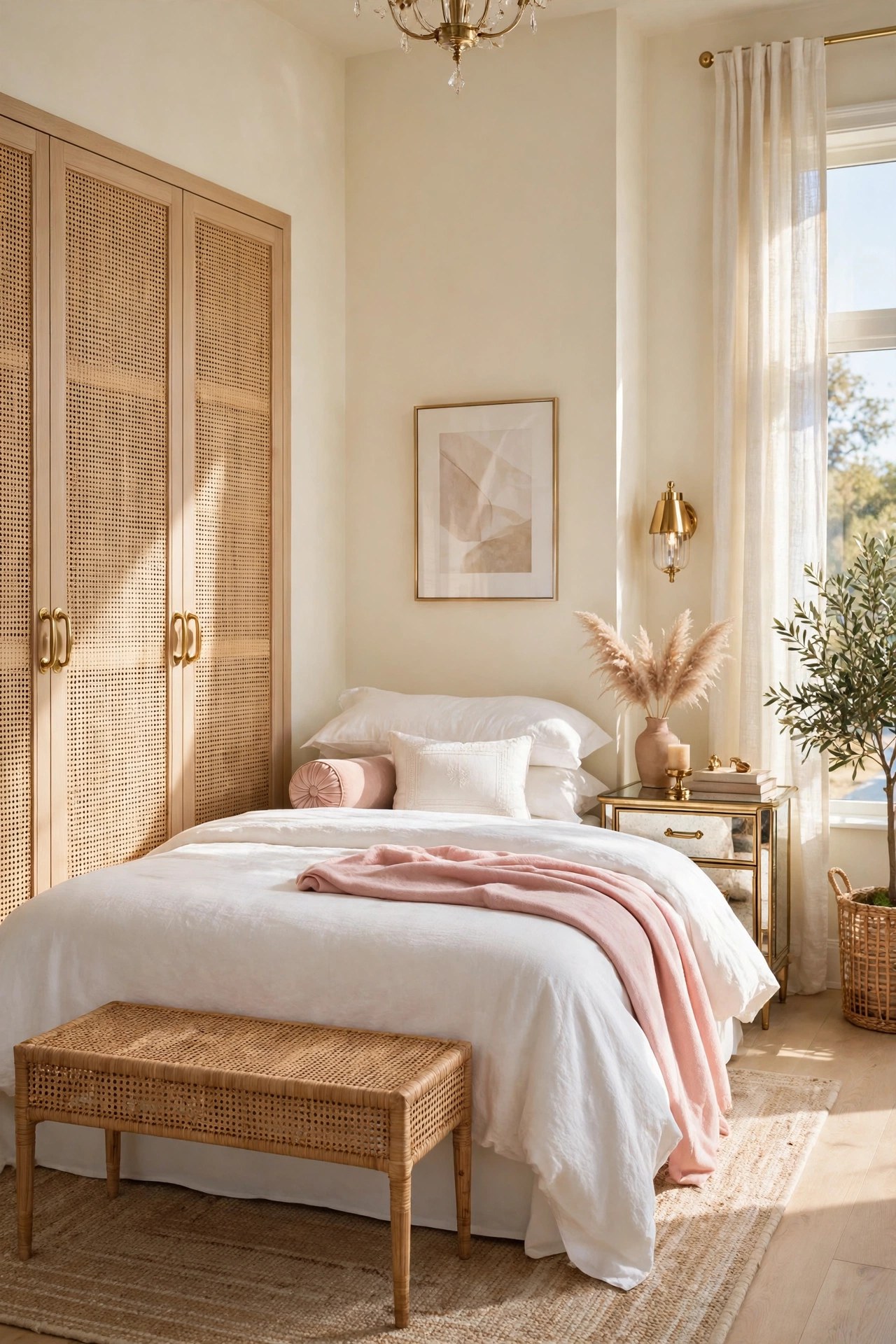
Cane webbing and woven rattan have a long craft history in Indian furniture, and they bring something this palette needs: warm, natural texture that stays light in color and light in feel. A wardrobe or dresser with cane panel doors, a cane bench at the foot of the bed, or two woven bedside baskets will soften the shine of brass and the smoothness of carved wood with an open, airy weave. Choose natural or honey-toned cane rather than dark stained pieces, and limit cane to one furniture piece plus one small accessory, so the weave reads as a deliberate texture note rather than a theme.
Best For: Rooms that feel too smooth or shiny and need one natural, matte texture.
Not Ideal For: Homes where cane will be leaned on or loaded heavily.
Estimated Cost: $90-$320 (estimate) for a cane bench or a cane-front dresser, or $20-$50 (estimate) for woven baskets as a starter version.
Budget Note: Baskets are the low-cost test of this texture; a cane furniture piece is worth buying only once the palette is settled.
Renter Friendly: Yes
Renter Note: Freestanding furniture and baskets need no fixings.
What You Need
One cane-front furniture piece or cane bench, two woven storage baskets, soft cloth, felt pads.
Product type to look for: Furniture with real cane webbing or a convincing woven panel in a natural honey tone, a solid frame, and smooth edges where hands and bedding will touch it.
How To Do It
- Choose the single furniture position for cane, usually the bench or the dresser, and clear that spot fully.
- Set the piece in place, check doors or drawers open freely, and add felt pads beneath it.
- Repeat the texture once only, with woven baskets on the opposite side of the room.
- Style the cane surface plainly; the weave itself is the decoration and needs nothing on top of it.
Pro Tip
Keep cane out of the strongest direct sun patch. Natural cane dries and can turn brittle in harsh sun, and a slightly shaded position keeps its honey tone even.
15. Finish the Bedside With Light Inlay-Style Nightstands
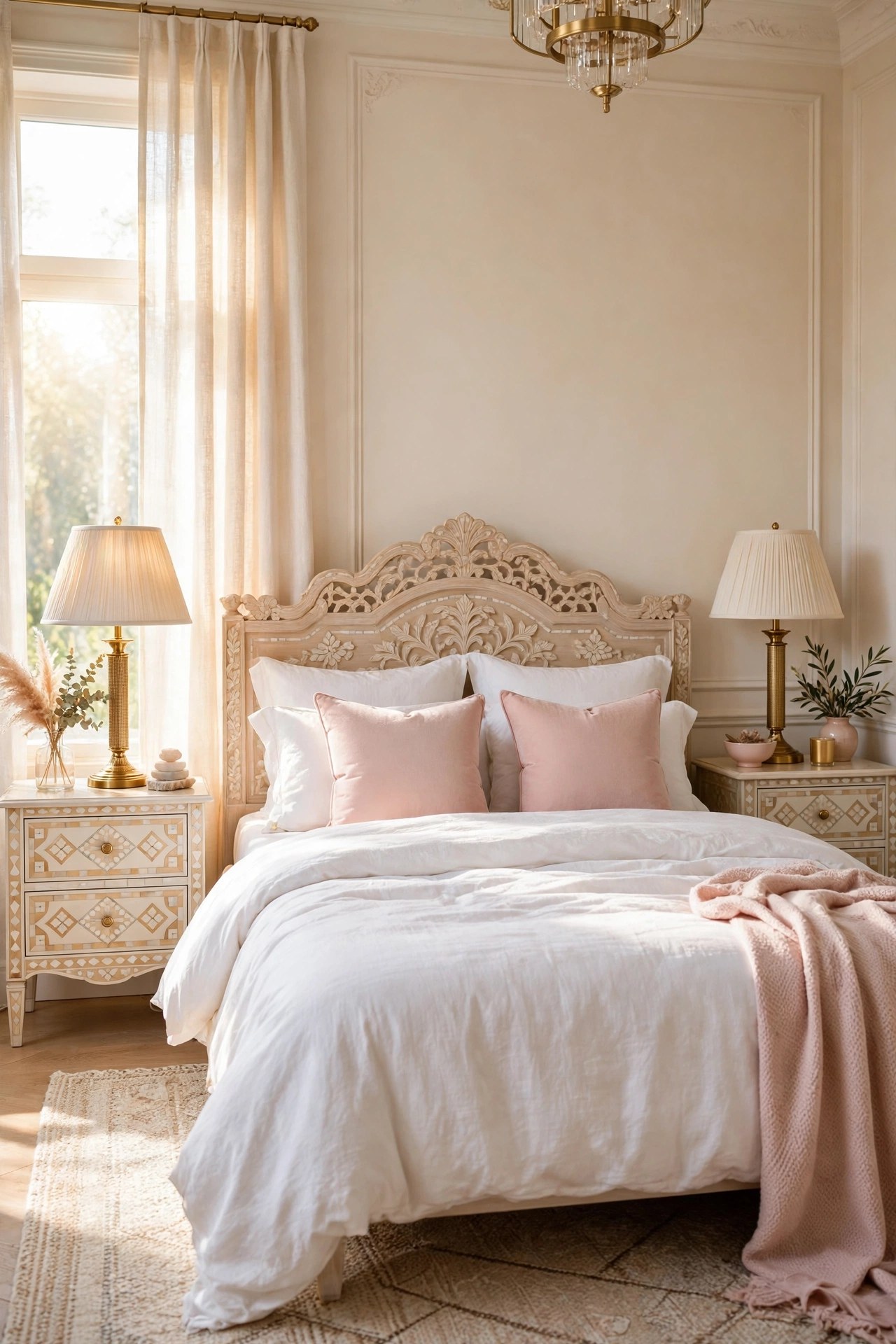
Inlay work, where bone, mother of pearl or resin pieces are set by hand into a patterned surface, is one of the finest crafts linked with regions such as Rajasthan, and a pair of inlay-style nightstands in pale cream, ivory and soft gold brings that craft to the spot the eye visits twice a day. The fine floral pattern reads as delicate texture from across the room and as detailed craft up close, the same double effect that makes the carved headboard work.
Best For: Settled bedrooms ready for one fine, detailed finishing piece at the bedside.
Not Ideal For: High-traffic family bedrooms where nightstand tops take daily knocks and spills.
Estimated Cost: $220-$550 (estimate) for a pair of inlay-style nightstands in cream and soft gold tones.
Budget Note: Buy the pair last, after the headboard, bedding and lamps are in place, so the pattern and scale can be judged against the finished bed.
Renter Friendly: Yes
Renter Note: Fully freestanding.
What You Need
Pair of inlay-style nightstands, brass table lamps from idea 4, coasters, soft cloth for dusting.
Product type to look for: Nightstands with a hand-set or well-finished inlay-style pattern in ivory, cream and soft gold, a smooth sealed top, and a drawer that runs cleanly.
How To Do It
- Measure the space on both sides of the bed and the height against the mattress; the nightstand top should sit level with or just below the mattress top.
- Place the pair symmetrically and check the pattern alignment from the doorway.
- Set one brass lamp toward the back of each top, with a coaster in front of it as a standing habit.
- Keep each top to the lamp, a book and a glass only, so the inlay stays visible and does its work.
Pro Tip
Dust inlay with a soft, dry cloth and wipe spills at once. The fine pattern hides everyday dust well, but a drink ring left overnight is the one mark this surface cannot hide.
Practical Tips
Build the room in the order of this list: anchor furniture first, then large textiles, then light, then small accents. Keep the base honest: white, cream and warm taupe should cover roughly three quarters of what the eye sees, with pattern and spice color sharing the last quarter. Repeat each craft at most twice, once large and once small, such as carving on the headboard and the mirror frame. Test every warm color at night under warm bulbs, because brass light deepens spice tones. For a calmer, simpler version of the same layering, the quiet approach in our japandi guide shows how few pieces a bedroom actually needs Finally, edit from the doorway. That single view shows whether the room reads as bright and crafted or busy and dark, and it is the view worth trusting. See the quieter take in our japandi bedroom.
Frequently Asked Questions
How do I use Indian bedroom decor without the room feeling dark?
Keep the large surfaces pale and the craft light in finish: whitewashed carved wood, block print on a white ground, cream walls and a pale rug field, with brass and one spice accent for warmth. Dark finishes and dense prints on several surfaces at once are what pull a room down.
Which Indian textile should I buy first, block print or kantha?
Buy block-print bedding first, because it covers the largest surface and sets the pattern and color story of the bed. Add a kantha quilt second, folded at the foot, with colors chosen from the bedding palette so the two handmade textiles support rather than compete with each other.
Is brass hard to look after in a bedroom?
No, if the finish is brushed or satin and care stays simple: dust with a dry microfiber cloth, wipe marks promptly, and polish rarely. A bedroom has no steam or cooking grease, so brass holds its warm tone with little effort.
Can Indian bedroom decor work in a small bedroom?
Yes, with fewer and lighter pieces. Choose the carved headboard or the mandala panel, not both, keep prints to one surface, and keep the palette pale. The craft is in the finish and the pattern, not the number of objects, so a small room loses nothing by editing.
What colors go with Indian decor in a bright glam palette?
Warm white and cream as the base, warm taupe for grounding textiles, blush as the soft bridge color, brushed brass as the metal, and softened spice tones such as muted terracotta or turmeric gold as the single warm accent. Keep blue-toned whites and cool grays out, because they fight the warmth.
How can renters get this look without painting or fixing?
Use the no-fix versions: freestanding carved headboard, block-print bedding, kantha quilts, brass table lamps, cushions, a rug with underlay, cane furniture and tray accents all need no permission. Save painted alcoves, hanging panels and any swing seat for a home where paint and fixings are allowed.
Conclusion
Indian bedroom decor does not need a dark or crowded room to feel true to its craft. A light carved headboard, block-print bedding in cream and blush, a kantha layer, brass light and one warm spice accent, each given space to be seen, build a bedroom that is bright in daylight, warm at night and clearly Indian in every detail. The restraint is the design: one pale base and a handful of handmade pieces chosen well will always look more glamorous than a room filled to its edges.