15 Nancy Meyers Living Room Ideas for Bright Coastal Luxury
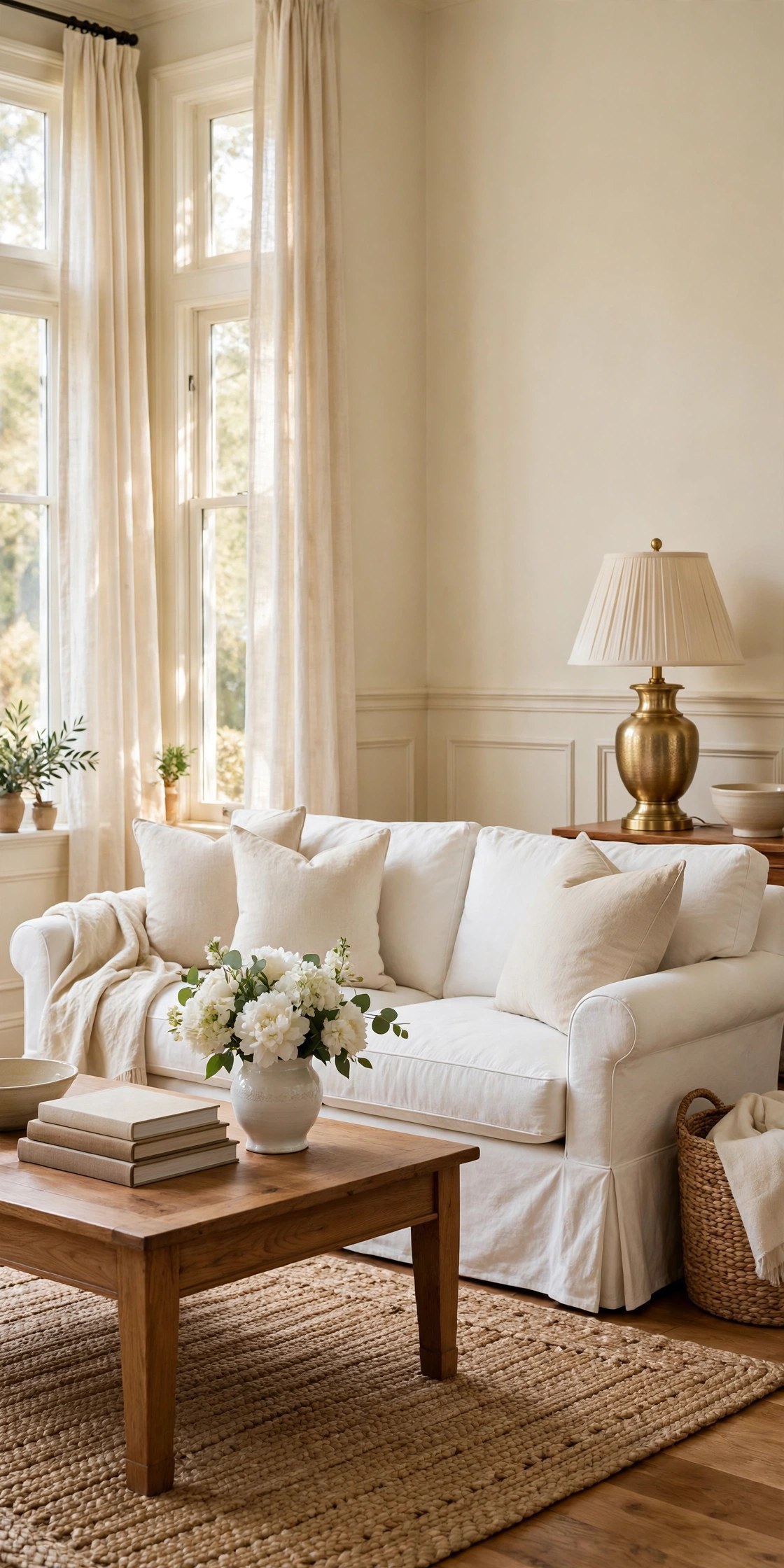
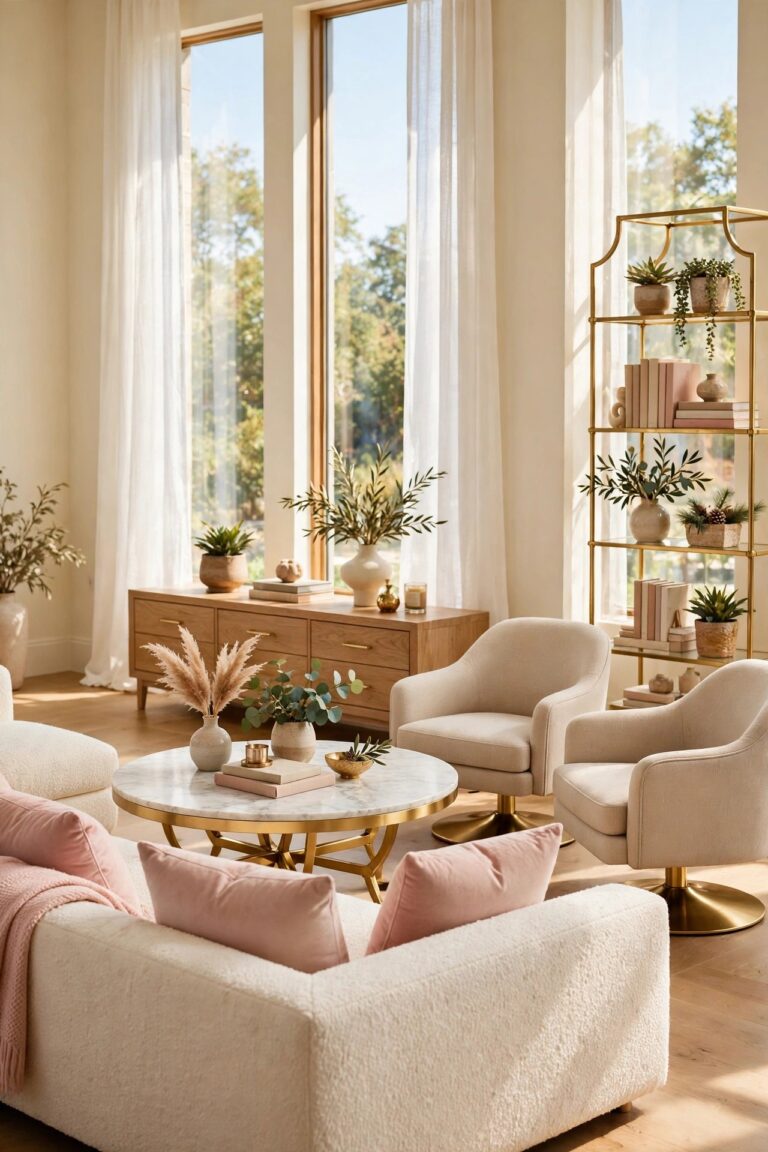
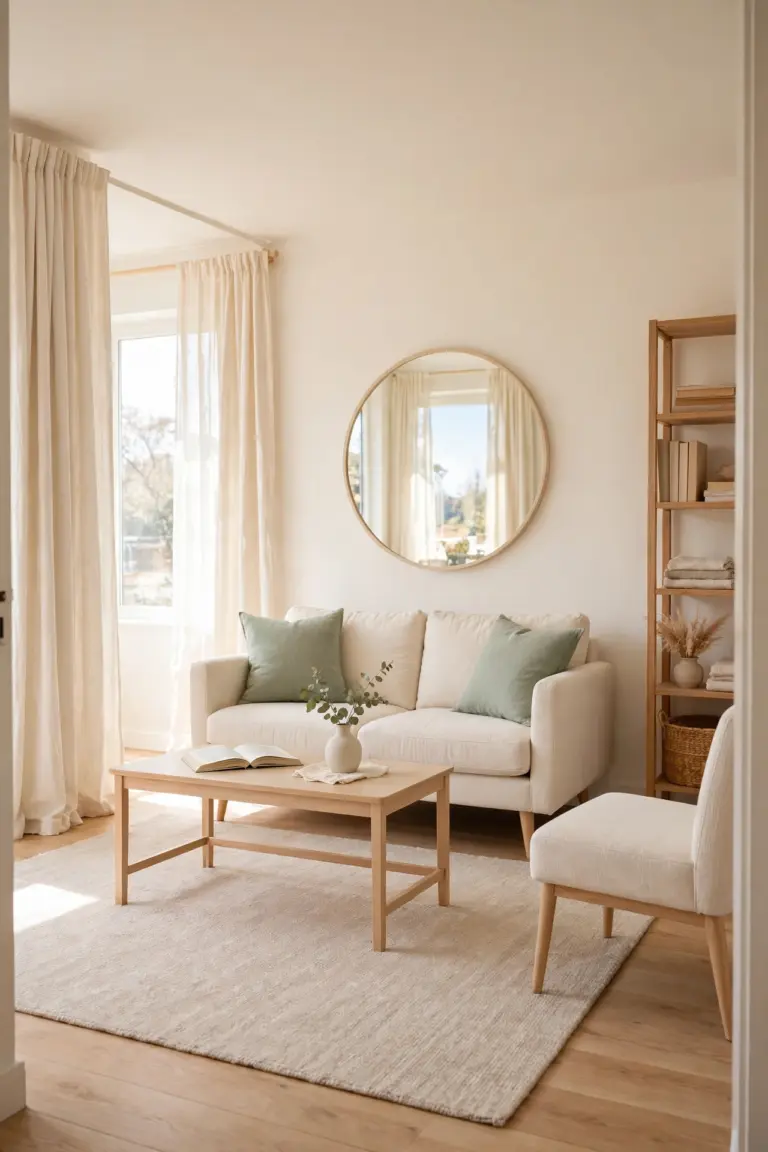
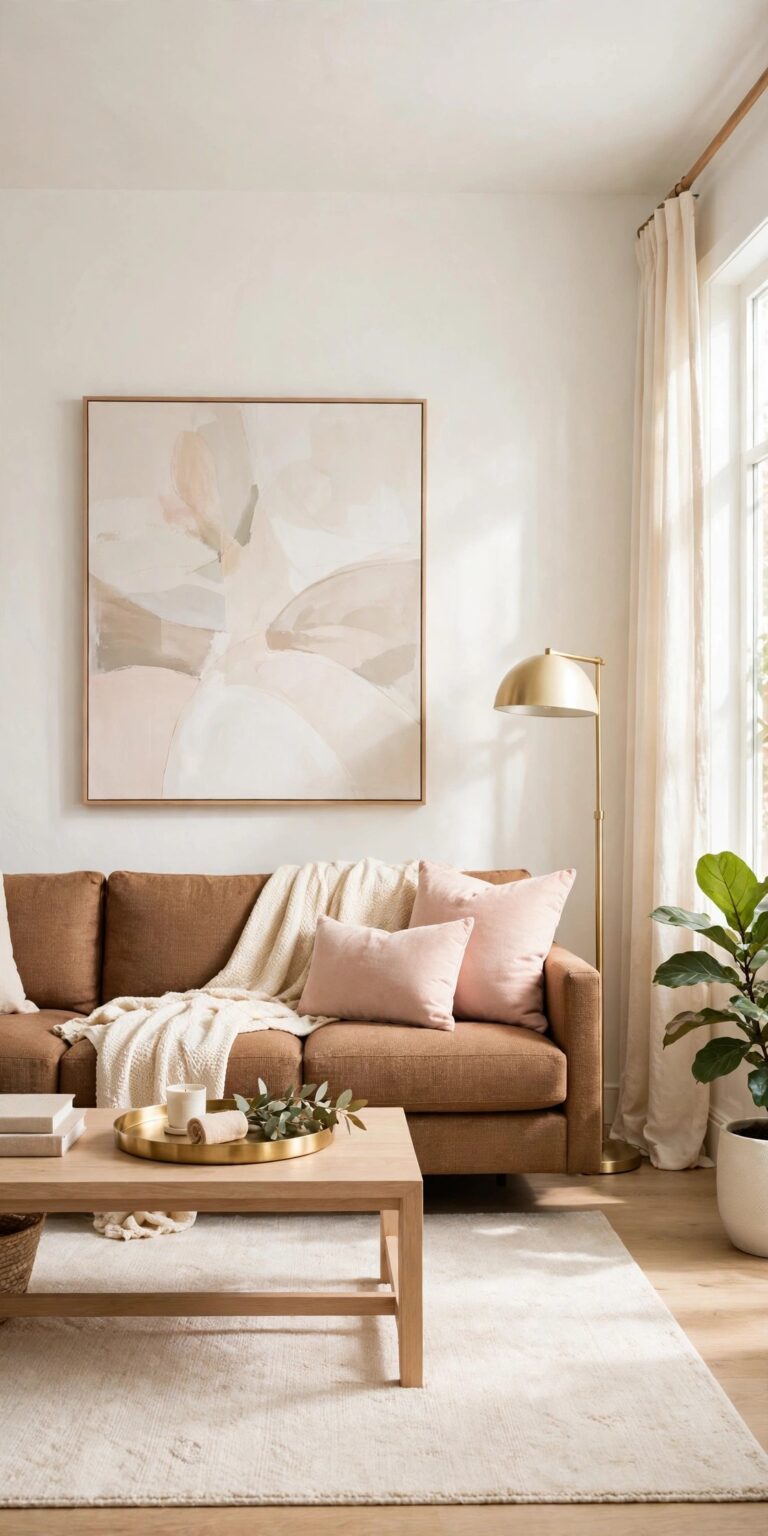
The Nancy Meyers living room is not about showing off. It is about a room that looks generous, calm and ready for people, the kind of bright coastal space seen in films like Something’s Gotta Give, It’s Complicated and The Holiday, where the sofa is deep, the linen is soft, the wood is warm and there is always a vase of fresh flowers on the table. Nothing in these rooms is stiff. Slipcovers wrinkle a little, books sit in real stacks, and the palette stays close to white, cream and warm natural tones. These fifteen ideas rebuild that feeling in a real home, in the GlamNStyle bright glam palette of white, cream and warm taupe with light blush and brushed brass touches. Start with the seating and the palette, then layer texture, shelves and light. If you are choosing the main pieces first, our guide to the core pieces helps you set the order. See our living room furniture for the pieces that suit it.
Disclosure: This article may contain affiliate links. If you buy through a link on this page, GlamNStyle may earn a small commission at no extra cost to you. Product links in this article are plain links; each one is checked on the retailer’s own page before it is added.
1. Start With a White Slipcovered Sofa
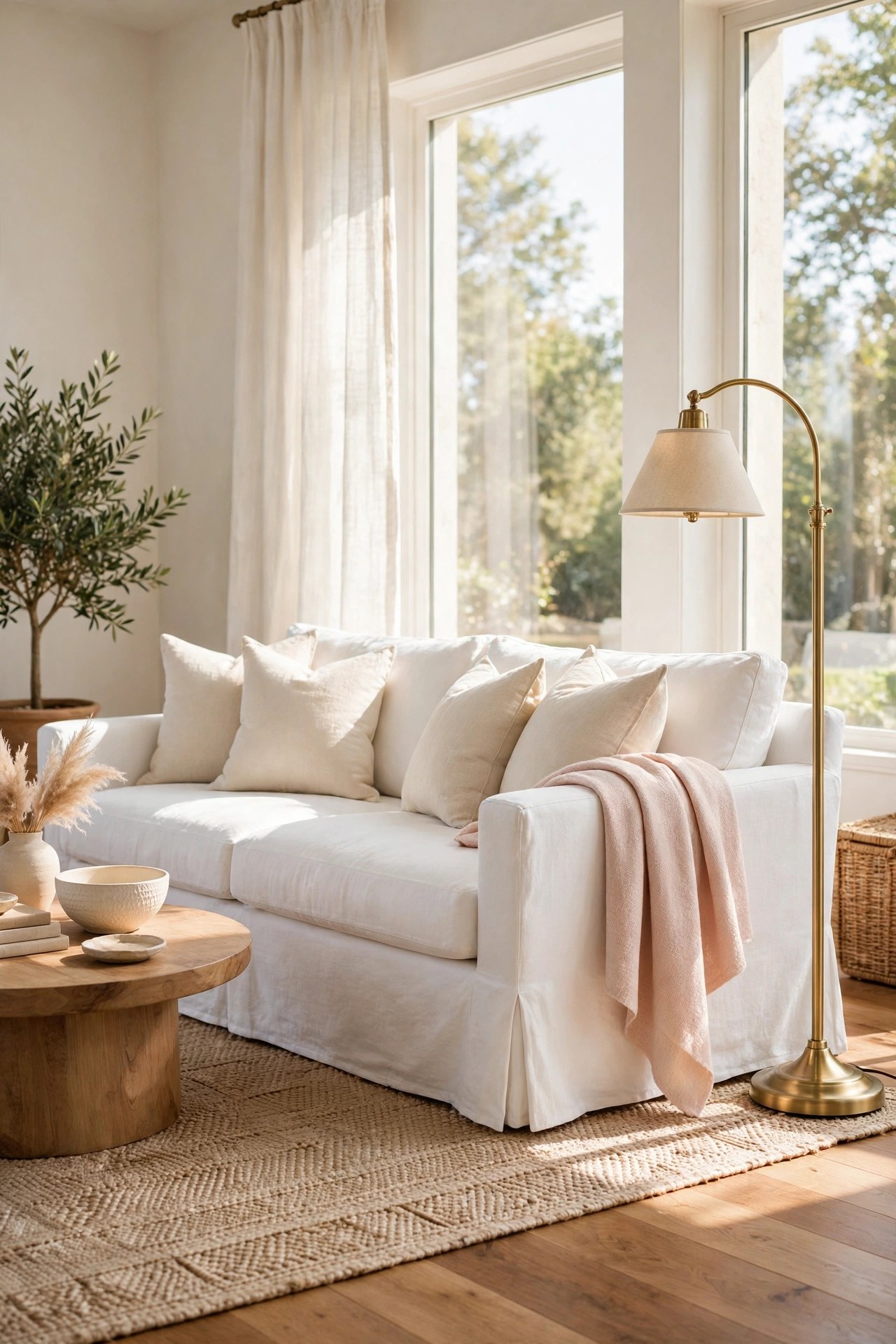
Every Nancy Meyers living room starts with the same anchor: a deep, low, white slipcovered sofa that looks like it was made for long conversations. Dress it simply, with cream cushions in two sizes and one light throw, so the sofa reads as calm rather than decorated.
Best For: Living rooms that need one clear anchor piece and a relaxed, welcoming centre.
Not Ideal For: Homes where white fabric near pets or small children would cause daily stress; choose a warm cream performance linen instead and keep the same shape.
Estimated Cost: $900-$2,200 (estimate) for a slipcovered sofa, or $180-$420 (estimate) for a custom linen slipcover over an existing sofa.
Budget Note: A good slipcover over a sound existing frame gives most of the look for a fraction of a new sofa, so check the frame and cushions first.
Renter Friendly: Yes
Renter Note: Fully freestanding and removable; a slipcover is one of the safest large changes in a rental.
What You Need
Slipcovered sofa or a washable linen slipcover to fit your current sofa, cream linen cushion covers in two sizes, one light throw, fabric steamer.
Product type to look for: A removable, machine washable cover in linen or a linen blend, with separate cushion covers and a fit that is relaxed rather than skin tight.
How To Do It
- Measure your sofa length, depth and arm height, then choose a cover or sofa with deep seats, at least 24 inches of seat depth.
- Wash or steam the cover before fitting so the fabric relaxes and drapes instead of pulling at the seams.
- Fit the cover, tuck the excess into the seat creases, and let the hem sit just above the floor.
- Add cream cushions, two large at the back and one smaller in front, and fold the throw over one arm only.
Pro Tip
Keep one spare set of cushion covers for quick swaps after a spill.
2. Hang Natural Linen Curtains From Ceiling to Floor
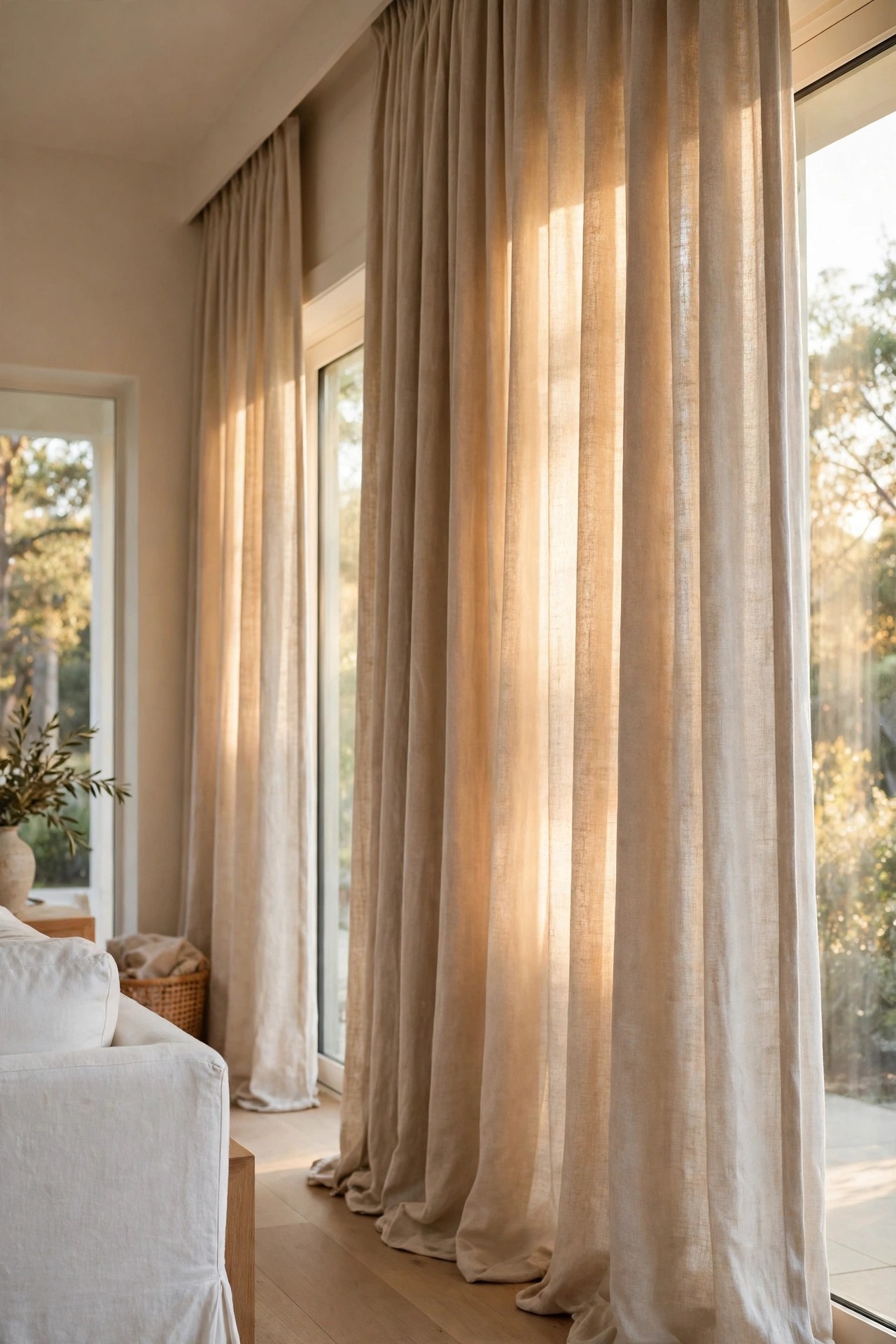
Panels hung close to the ceiling and falling to the floor draw a long, soft line on both sides of the glass, while natural linen filters daylight into a warm glow instead of blocking it. Keep the colour close to the walls, warm white, flax or pale oatmeal, so the curtains read as part of the architecture rather than a pattern moment. A brushed brass or warm wood rod, set wide so the open panels cover wall and not glass, finishes the effect.
Best For: Rooms with standard windows that feel short or plain, and anyone who wants soft daylight without glare.
Not Ideal For: Windows with radiators directly below that would trap long fabric; use a sill-length linen in that spot instead.
Estimated Cost: $120-$380 (estimate) for two long linen panels, rod and brackets per window.
Budget Note: Linen blend panels give the same drape and texture as pure linen at a lower cost and crease less after washing.
Renter Friendly: With Conditions
Renter Note: The rod needs screws high on the wall; use existing holes where possible and confirm before adding new ones.
What You Need
Two floor-length natural linen panels per window, curtain rod in brushed brass or warm wood, brackets, tape measure, steamer.
Product type to look for: Panels at least 12 inches longer than the window height, in a linen or linen blend with a soft, open weave that lets light pass.
How To Do It
- Mark the rod line 3 to 5 inches below the ceiling and at least 8 inches wider than the frame on each side.
- Fit the brackets into solid fixing points and hang the rod level.
- Hang the panels so they just touch the floor, then steam them in place to settle the folds.
- Open them fully and check that the fabric stacks on the wall, leaving the whole window clear for light.
Pro Tip
Buy panels one width wider than the usual measure. The extra fullness is what makes linen look expensive when it hangs; flat panels always look thin.
3. Lay a Woven Natural Rug Under the Seating
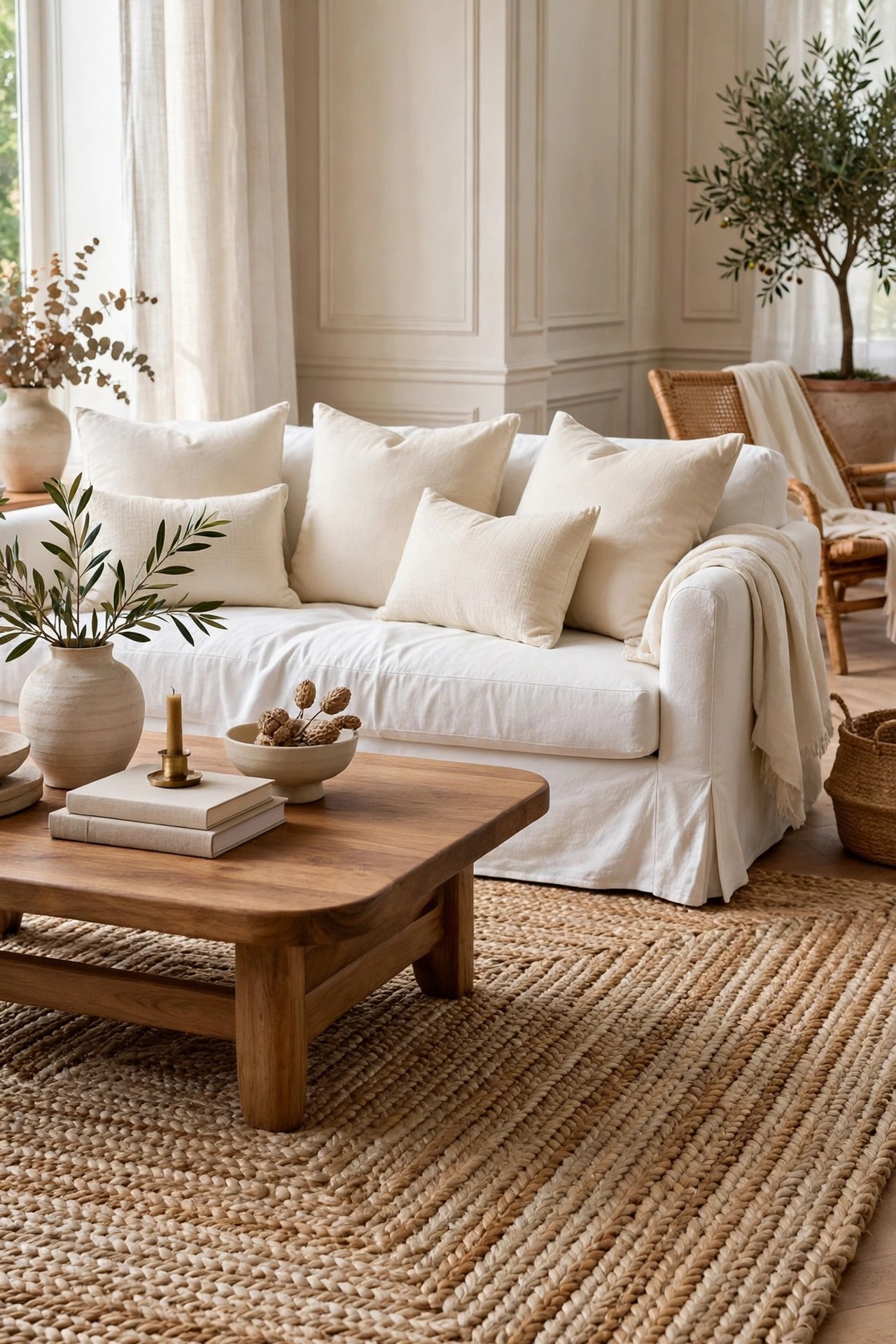
A woven rug is the texture that stops a pale room from feeling flat. In the Nancy Meyers look the rug is almost always natural, jute, sisal, wool or a blend, in a warm sandy tone that sits between the white sofa and the wood floor. Its rough weave contrasts with smooth linen and polished wood, which makes the room feel collected rather than staged.
Best For: Open seating groups that need grounding, and pale rooms that feel cold or echoing.
Not Ideal For: Dining areas where chairs drag daily; a flat woven rug under a living room group wears far better than under a table.
Estimated Cost: $180-$650 (estimate) for a woven natural rug around 8 by 10 feet.
Budget Note: A jute and wool blend costs less than pure wool, feels softer underfoot, and hides everyday dust better than a pale flatweave.
Renter Friendly: Yes
Renter Note: Use a non-slip underlay to protect the floor and stop the rug creeping under the sofa legs.
What You Need
Woven natural rug sized to the seating group, non-slip underlay, tape measure, furniture sliders.
Product type to look for: A rug large enough for the front legs of all seating, with a low, tight weave and a warm natural tone rather than a grey one.
How To Do It
- Measure the seating group and choose a rug that extends at least 8 inches beyond the sofa on each side.
- Lay the underlay first, trimmed 1 inch inside the rug edges.
- Roll the rug out, lift the sofa front legs onto it with sliders, and set the chairs the same way.
- Check the border of bare floor is even on the open sides before placing the coffee table.
Pro Tip
Vacuum a natural weave with suction only; a rotating brush frays the fibres.
4. Style the Coffee Table With Books, a Tray and One Vase
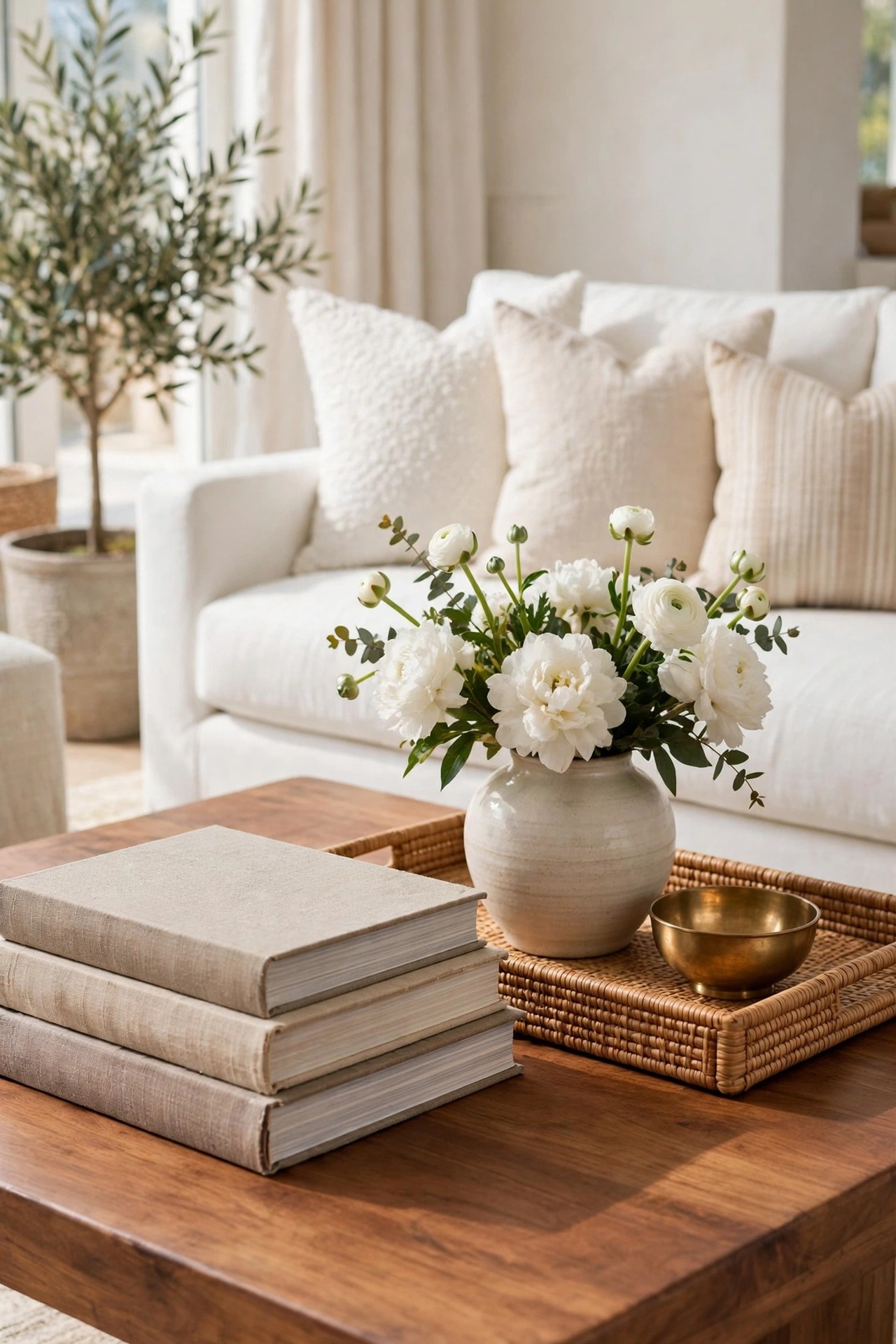
The coffee table in these rooms is always styled, but never crowded. The formula is simple and repeatable: a warm wood table, one stack of large books, a tray that gathers the small things, and one vase with fresh flowers or green stems.
Best For: Any living room where the coffee table has become either bare or a dumping ground.
Not Ideal For: Very small rooms where a solid wood table would block the walkway; use an open-legged version in the same warm tone.
Estimated Cost: $250-$800 (estimate) for a warm wood coffee table, or $60-$160 (estimate) for styling pieces only.
Budget Note: Styling first. Books you own, one tray and one vase transform an existing table before any furniture money is spent.
Renter Friendly: Yes
Renter Note: Everything is freestanding and moves with you; felt pads under the table legs protect rental floors.
What You Need
Warm wood coffee table, two or three large hardcover books, a woven or wood tray, a ceramic vase, fresh flowers or green stems, coasters.
Product type to look for: A table in a warm mid-tone wood with simple lines and a lower shelf or open base, so the styling stays light.
How To Do It
- Clear the table fully, then place the book stack off-centre, largest book at the bottom.
- Set the tray opposite the books and gather coasters, a small bowl and the remote inside it.
- Add the vase with flowers at the third point of the triangle, tall enough to be seen over the sofa back.
- Step back and remove one item; the table should still have clear surface on every side.
Pro Tip
Change only the flowers each week. A stable base with one changing element is what gives these rooms their calm, lived-in rhythm.
5. Fill Built-In Shelves With Books and Ceramics
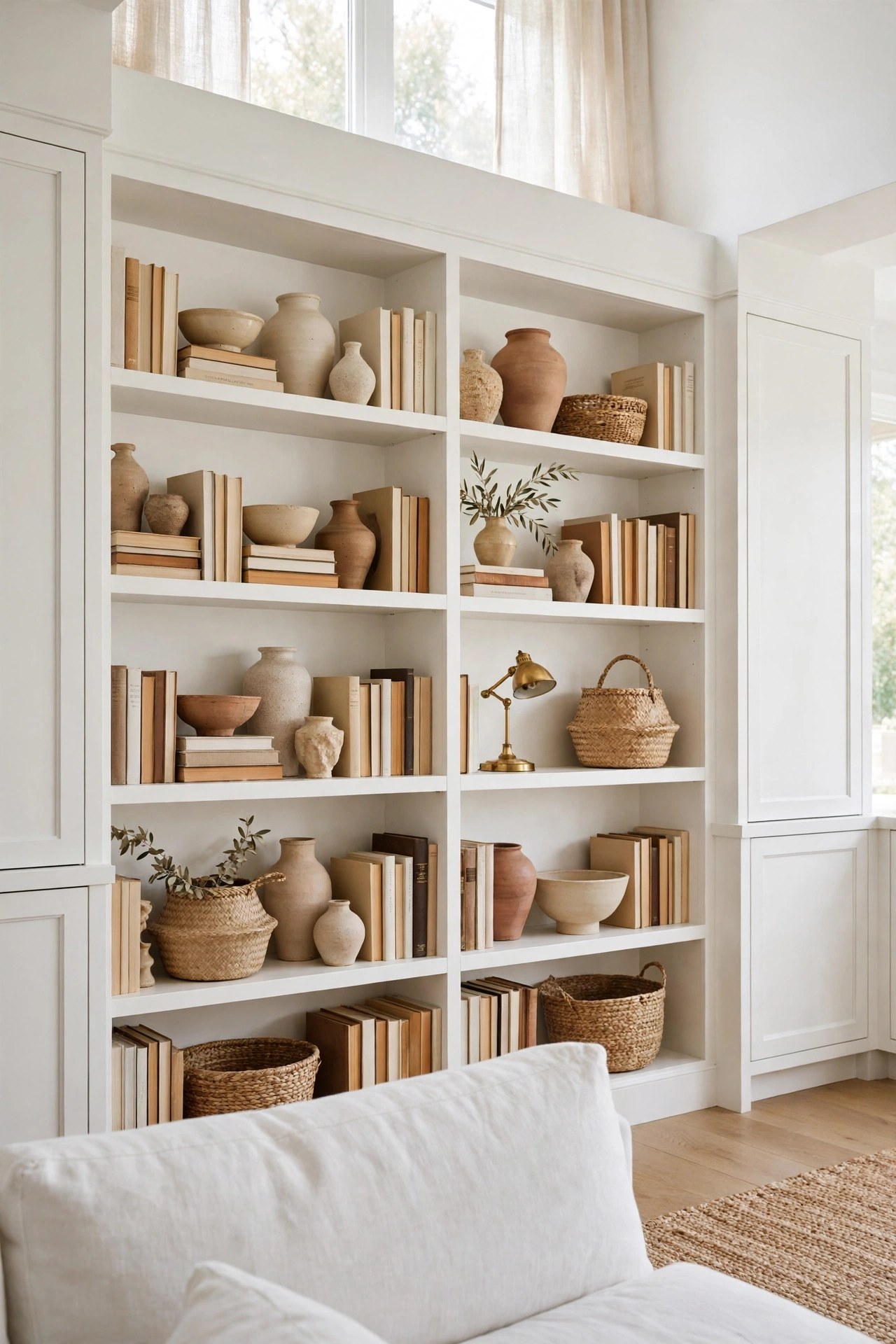
Built-in shelves are the backdrop of almost every Nancy Meyers living room, and they work because they are filled like a home, not a shop. If your room has no built-ins, a tall open bookcase in the same colour gives the same effect. For a softer take on the same wall, the approach in our guide to layered walls shows how panelling and shelves work together. See our wall paneling ideas for more panelled looks.
Best For: Rooms with an alcove, a fireplace wall or one long blank wall that needs purpose.
Not Ideal For: Anyone who dislikes dusting open shelves; closed cabinets below with open shelves above are the practical compromise.
Estimated Cost: $400-$1,800 (estimate) for a tall bookcase styled as built-in, or $60-$200 (estimate) for styling pieces on existing shelves.
Budget Note: Styling existing shelves costs little; spend on ceramics and baskets slowly, collected over time, rather than in one matched set.
Renter Friendly: With Conditions
Renter Note: Freestanding bookcases are rental safe when anchored with a strap; fixed built-ins need landlord permission.
What You Need
Built-in shelves or a tall bookcase in warm white, books in warm tones, handmade ceramics, woven baskets, one small lamp or framed photo per run of shelves.
Product type to look for: Shelves at least 12 inches deep for books and baskets, with adjustable heights so tall ceramics and short stacks both fit.
How To Do It
- Empty the shelves fully and group your books by warm colour family, creams, tans and faded blues together.
- Fill about two thirds of each shelf: books upright on one side, a short stack and a ceramic piece on the other.
- Add one basket per run for the unsightly essentials, remotes, chargers and blankets.
- Leave one shelf in three noticeably emptier than the rest; the gaps are what keep the wall calm.
Pro Tip
Turn the brightest book spines to the back or cover a few keepers in plain linen paper. The shelf should read warm and quiet from the sofa, not like a bookshop display.
6. Keep the Fireplace Mantel Simple and Symmetrical
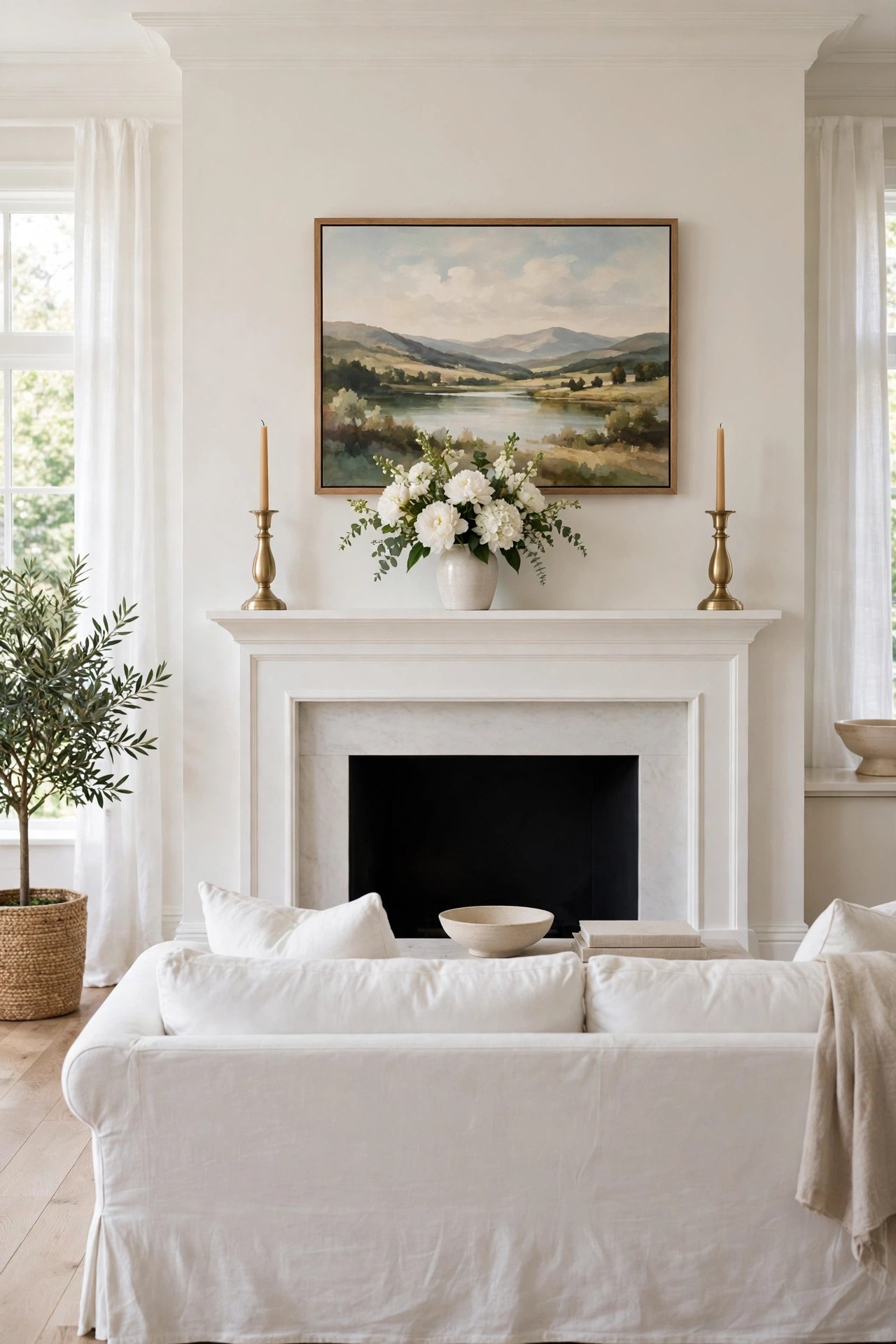
When a Nancy Meyers room has a fireplace, the mantel is styled with restraint: a calm painting or mirror above it, a pair of candlesticks or lamps for balance, and one vase of flowers or greenery in the middle ground. Nothing competes. A simple wood mantel shelf adds the warm note the white mantel needs. Keep the hearth clear or hold one woven basket of logs or blankets, never a row of small ornaments.
Best For: Rooms with a fireplace that currently fights the pale palette or collects clutter.
Not Ideal For: Working fireplaces where candles and vases would sit too close to heat; style the ends of the mantel only and keep the centre clear.
Estimated Cost: $90-$320 (estimate) for candlesticks, a vase and art for the mantel, excluding any paint work.
Budget Note: Symmetry is free. A matching pair placed well does more than five single pieces bought at once.
Renter Friendly: With Conditions
Renter Note: Styling is fully reversible; painting a fireplace is not, so renters should style only and skip the paint.
What You Need
One painting or mirror for above the mantel, a pair of brushed brass candlesticks or small lamps, a ceramic vase, fresh flowers or greenery, woven log basket.
Product type to look for: Mantel pieces in odd, calm proportions, art that is wider than half the mantel but narrower than the full width, and candlesticks tall enough to balance it.
How To Do It
- Clear the mantel fully and hang the art or mirror centred, its bottom edge 4 to 6 inches above the mantel shelf.
- Place the candlestick pair at equal distances from the centre, checking the balance from the sofa.
- Set the vase slightly off-centre with flowers, so the arrangement feels grown rather than mirrored.
- Add nothing else for a week; add a piece only if the mantel still feels bare from the seating.
Pro Tip
Light the candles on ordinary evenings, not just for guests.
7. Add a Reading Chair With a Side Table and Lamp
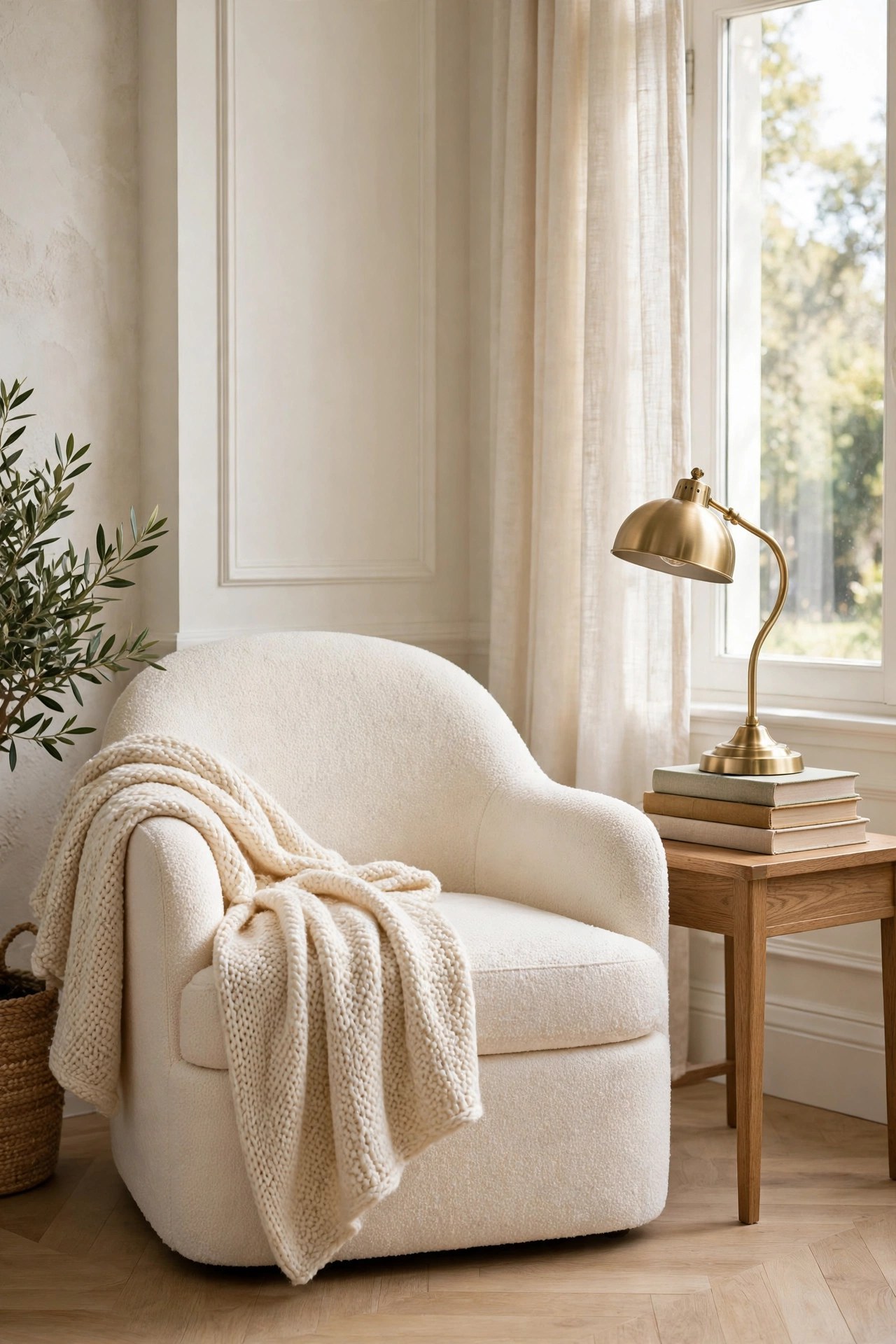
A Nancy Meyers living room always has a second place to sit that is not the sofa: a deep reading chair in a corner, angled toward the room, with its own small table and lamp. The chair is usually upholstered in cream linen or a soft stripe, wide enough to curl into, and it turns an empty corner into the most used seat in the house. Set the chair at 45 degrees to the walls and the corner stops looking like leftover space.
Best For: Empty corners, bay areas and rooms where guests always end up perched on the sofa arm.
Not Ideal For: Rooms where the only corner is the main walkway; a chair needs a calm spot out of the traffic line.
Estimated Cost: $300-$850 (estimate) for an upholstered reading chair, side table and lamp together.
Budget Note: Buy the chair first and borrow the table and lamp from elsewhere in the house until the corner proves itself.
Renter Friendly: Yes
Renter Note: All freestanding; the corner can be created and removed in an afternoon.
What You Need
Deep upholstered chair in cream linen or soft stripe, small warm wood side table, brushed brass reading lamp, folded throw, two or three books.
Product type to look for: A chair with a seat depth over 22 inches and arms at a height that supports a book, in a fabric close in tone to the sofa.
How To Do It
- Choose the corner with the best natural light and angle the chair toward the room at about 45 degrees.
- Place the side table on the window side of the chair, close enough to reach without leaning.
- Set the lamp so its light falls over the shoulder of a seated reader, and run the cord along the wall.
- Add the throw on one arm and the books on the table, then leave the rest of the corner empty.
Pro Tip
Sit in the chair before removing any tags. A reading chair is judged after twenty minutes, not twenty seconds, and comfort is the whole point of the corner.
8. Use Warm Table Lamps Instead of Harsh Overhead Light
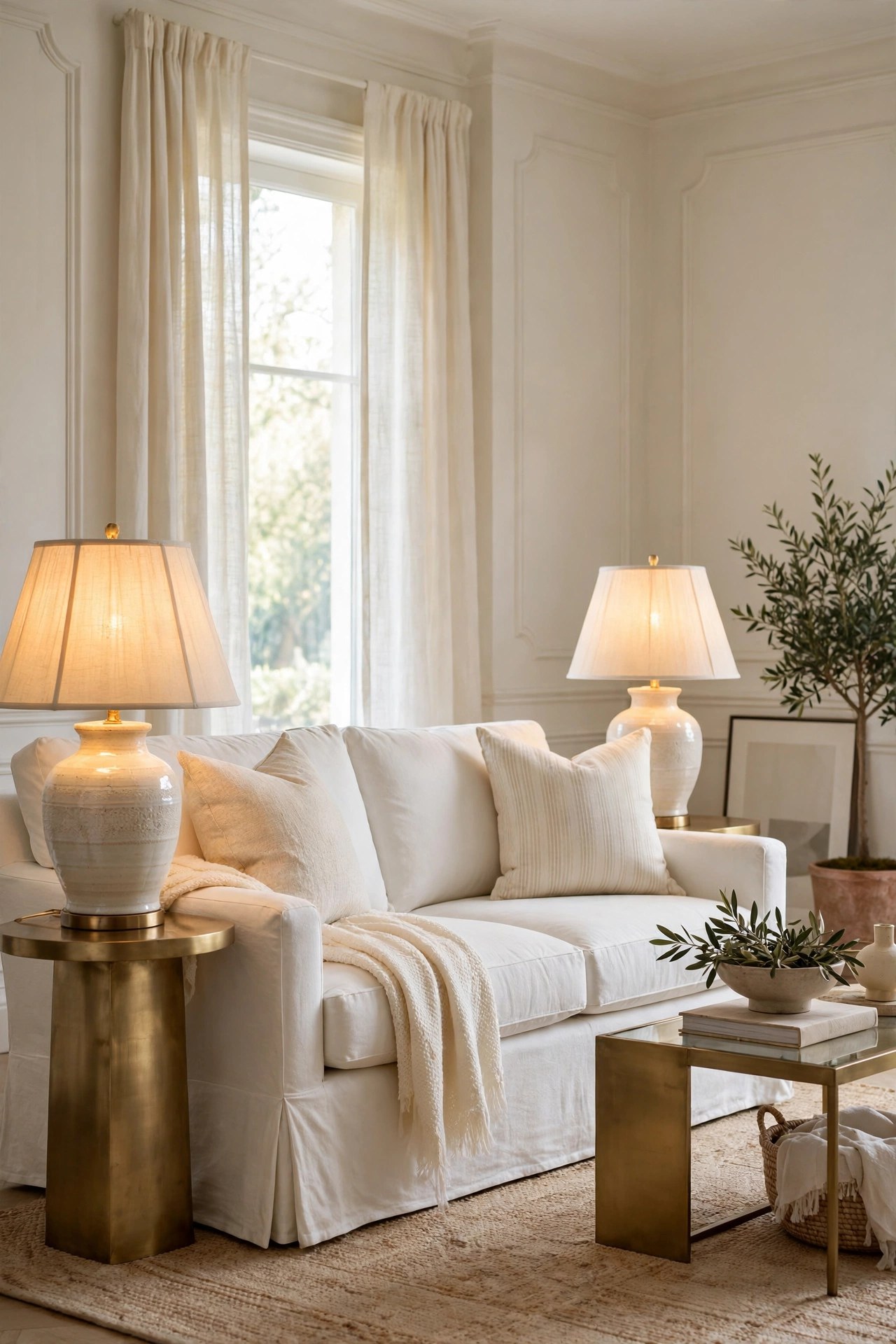
The light in these rooms never comes from the ceiling. It comes from table lamps with ceramic or glass bases and cream linen shades, placed at sofa height so faces and books are lit warmly and the corners of the room fall soft. A pair of lamps flanking the sofa gives the same quiet symmetry as the mantel, and one more lamp on a side table or the shelves evens the room out.
Best For: Rooms lit by a single harsh ceiling light, and pale rooms that feel flat in the evening.
Not Ideal For: Rooms with no side tables or surfaces at lamp height; add the surfaces first, in ideas 4 and 7, then the lamps.
Estimated Cost: $80-$260 (estimate) per ceramic or brass table lamp with a linen shade.
Budget Note: New linen shades refresh lamps you already own for a small cost and unify lamps that do not match.
Renter Friendly: Yes
Renter Note: Fully plug-in and portable; choose lamps with inline switches if the sockets are hard to reach.
What You Need
Two or three table lamps with ceramic, glass or brushed brass bases, cream linen shades, warm white bulbs all of the same warmth, side tables at sofa arm height.
Product type to look for: Lamps where the bottom of the shade sits near eye level when seated, about 48 to 52 inches total height on the table, with a shade that diffuses rather than directs.
How To Do It
- Place one lamp on each side of the sofa, matched in height even if the bases differ slightly.
- Add a third lamp at the far end of the room, on the shelves or the reading chair table, to balance the light.
- Fit warm white bulbs of identical warmth in every lamp and test the room after dark.
- Turn off the ceiling light for a full evening and adjust positions before buying anything else.
Pro Tip
Put the lamps on one simple timer or smart plug. A room that lights itself warmly at dusk feels cared for with no daily effort.
9. Follow the Fresh Flower Rule
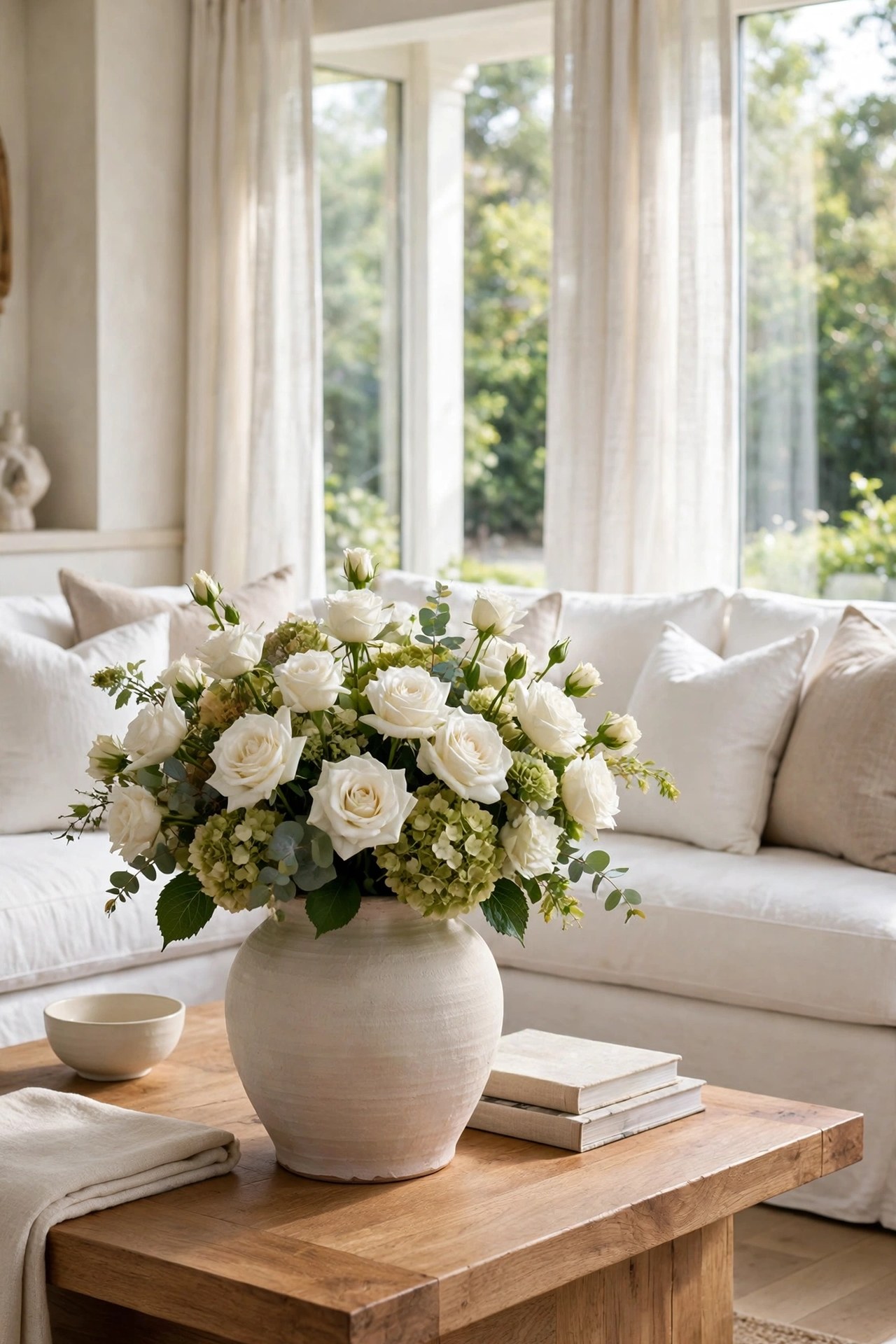
If one habit defines the Nancy Meyers look, it is fresh flowers, in real vases, changed often. White roses, hydrangeas, peonies when in season, or simple green stems fill the large ceramic and glass vases that sit on coffee tables, mantels and kitchen counters in these rooms.
Best For: Rooms that feel finished but lifeless, and anyone who wants a weekly refresh without redecorating.
Not Ideal For: Households with strong pollen allergies; use green stems and branches, which give the shape and life with far less pollen.
Estimated Cost: $15-$45 (estimate) per arrangement, depending on season and flower choice.
Budget Note: Grocery store flowers, split and arranged loosely in a good vase, read far above their cost; the vase is the investment, the flowers are the routine.
Renter Friendly: Yes
Renter Note: No fixings or changes at all; use a mat under vases on wood surfaces to prevent water rings.
What You Need
One large ceramic or glass vase, fresh white or blush flowers or green stems, floral scissors, a jug for green stems between arrangements.
Product type to look for: A vase with a wide body and a narrower neck, at least 10 inches tall, so loose stems stand full without flopping.
How To Do It
- Choose one main spot, usually the coffee table or mantel, and one vase that suits its scale.
- Trim stems at an angle, remove leaves below the water line, and arrange loosely, tallest stems in the centre.
- Change the water every two days and re-trim once midweek to stretch the arrangement to a full week.
- On the week you skip flowers, fill the same vase with green stems so the spot never sits empty.
Pro Tip
Photograph your best arrangement so you can repeat what worked.
10. Build the Palette on White, Cream and Warm Wood
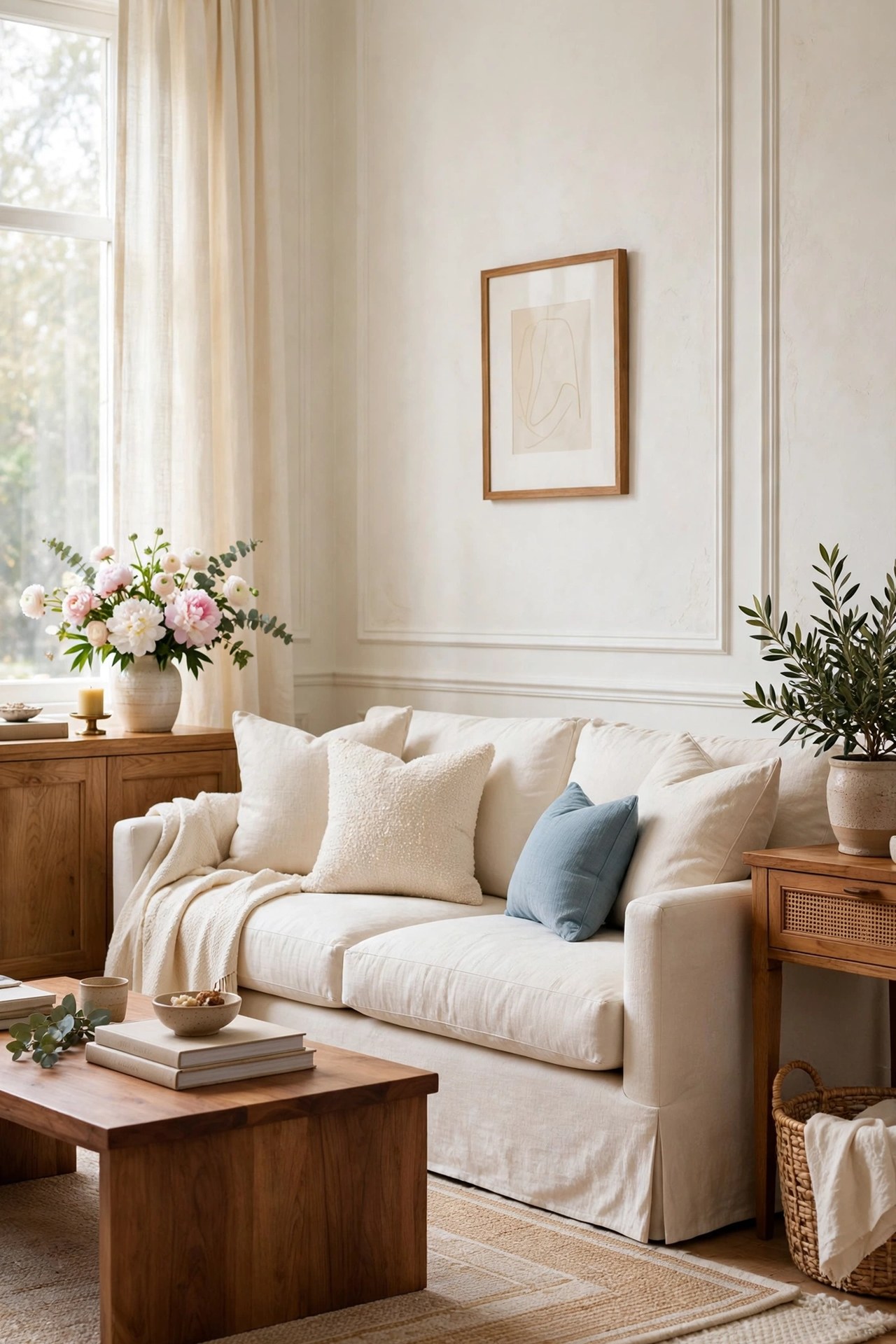
The colour palette is the discipline behind the whole look. Walls in a warm white, upholstery in cream and natural linen, wood in warm mid tones, and then very little else: a soft blue cushion, a sage green stem, a faded stripe. Test your white beside your wood and fabric in daylight before committing, because blue-toned whites make cream linen look dirty. If you love the softer village version of this palette, the rooms in our look at relaxed country styling use many of the same tones. The same soft, village palette shapes a farmhouse living room.
Best For: Anyone starting from a mixed room of unrelated colours who wants one calm scheme.
Not Ideal For: Lovers of strong contrast and dark drama; this palette trades punch for calm, on purpose.
Estimated Cost: $60-$240 (estimate) for paint in a warm white for one room, or $80-$200 (estimate) for cushion covers and throws to reset the palette in textiles only.
Budget Note: Textiles first. Cushion covers, a throw and curtains in the palette prove the scheme for the cost of one tin of paint.
Renter Friendly: Yes
Renter Note: The full palette works in textiles and furniture alone, with no paint permission needed.
What You Need
Warm white paint sample pots or textile swatches, cream cushion covers, one or two soft blue or sage accents, warm wood pieces already in the room.
Product type to look for: Warm whites with a cream or soft beige undertone, checked against your wood in both daylight and lamplight before buying a full tin.
How To Do It
- Gather everything pale you own, covers, throws, curtains, into one pile and remove anything with a blue or grey cast.
- Choose the warm white from the pile that suits your wood best, and use it as the reference for new pieces.
- Spread the palette in layers: walls lightest, sofa cream, wood warmest, accents last and fewest.
- Add one soft blue or sage piece only, then live with it a week before adding another.
Pro Tip
Keep a small swatch card of your chosen whites and wood tone in your bag. Every future purchase can be checked against it in the shop, which is how the palette stays disciplined for years.
11. Layer Textures So the Pale Palette Stays Interesting
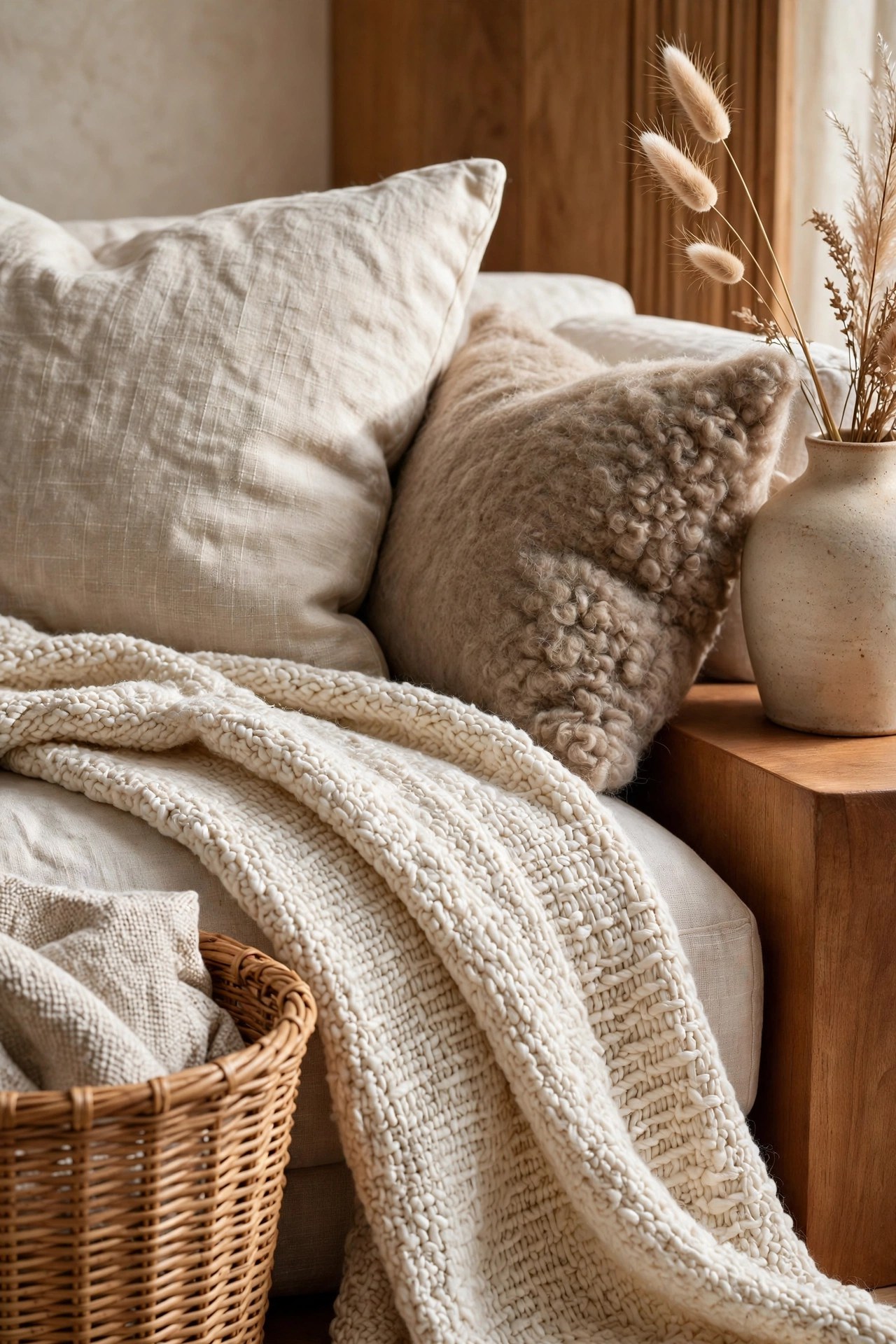
A room in one colour family lives or dies on texture. The Nancy Meyers rooms mix at least five in every view: smooth linen upholstery, a woven rug, rattan or wicker baskets, grainy warm wood, and handmade ceramics with a matte finish. Each surface catches light differently, so the eye reads richness where a flat room would read blank. Add texture in the order you touch it: rug, throw, basket, ceramic. One brushed brass piece is enough metal in a view.
Best For: Pale rooms that feel flat, cold or unfinished despite having all the main furniture.
Not Ideal For: Rooms already heavy with pattern; texture layering works best on a quiet base, so calm the patterns first.
Estimated Cost: $70-$240 (estimate) for a woven throw, two rattan baskets and one handmade ceramic piece.
Budget Note: Texture is the cheapest richness there is; one woven throw changes a sofa corner more than a new cushion in a new colour.
Renter Friendly: Yes
Renter Note: Every textural piece is portable decor; nothing is fixed to the room.
What You Need
Woven throw in cream or warm taupe, two rattan or wicker baskets, one matte ceramic vase or bowl, a linen cushion cover with a visible weave.
Product type to look for: Natural materials with a hand-made feel, visible weave, slight irregularity and matte finishes, rather than glossy or metallic surfaces.
How To Do It
- Count the textures in the main view from the doorway; most flat rooms have only two, usually fabric and painted wall.
- Add the woven layer first, the rug or throw, where the eye and hand meet it daily.
- Place rattan baskets where storage is needed, beside the chair and by the sofa, so texture also works.
- Finish with one ceramic piece on the coffee table and check the view again; stop at five or six textures per view.
Pro Tip
Run your hand across a piece before buying. In this style, if it feels interesting, it will look interesting; smooth plastic finishes fail both tests.
12. Let the Living Room Flow Into the Dining and Kitchen Space
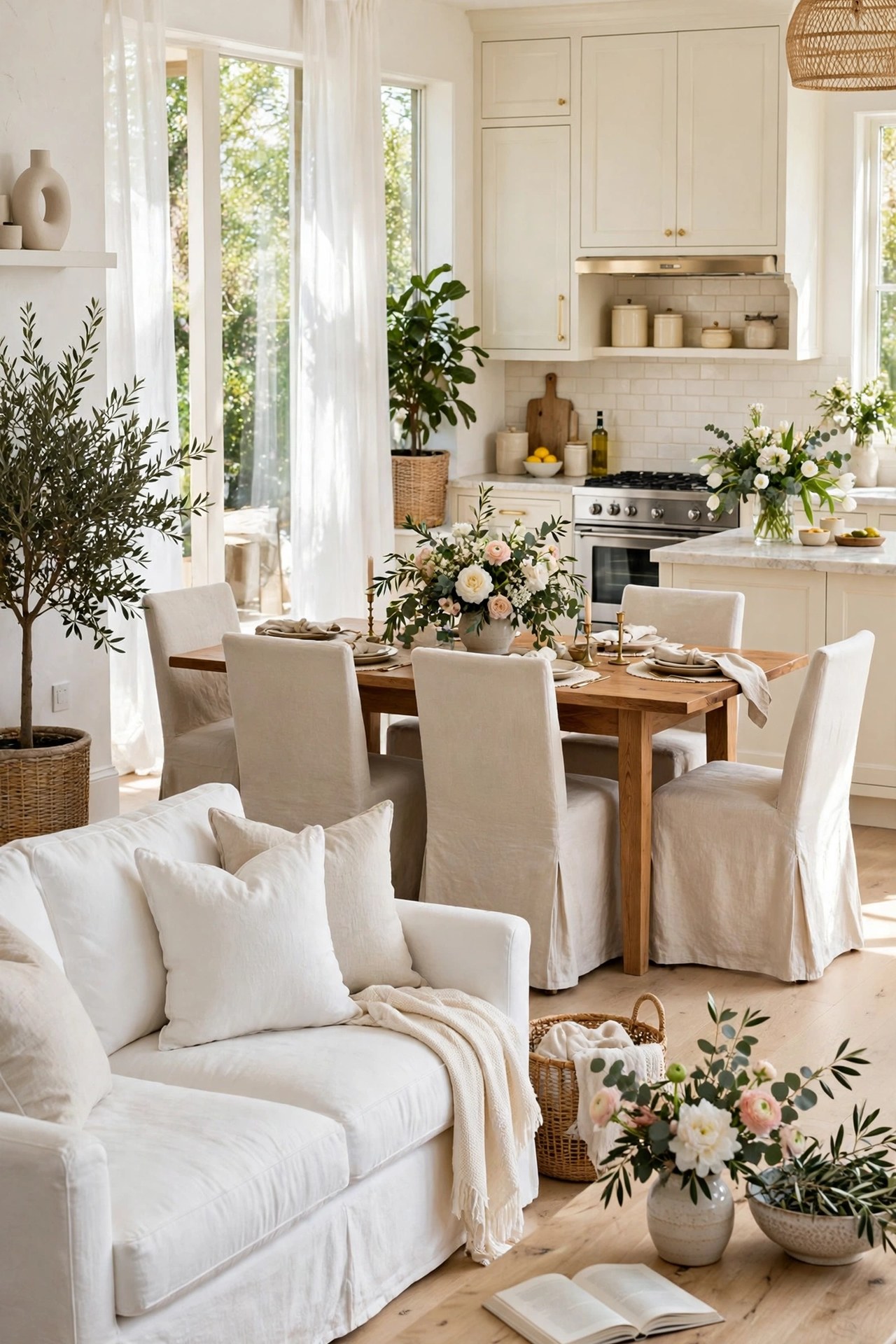
In the films, the living room is rarely a closed box. It opens to a dining table and a generous kitchen, and people move between them with a glass in hand while food is still cooking. You can borrow that feeling in a modest open plan by treating the spaces as one room with zones: the same warm white on the walls, the same wood tones in the dining table and the coffee table, and the rug marking where living begins. Keep the sight line from sofa to kitchen clear and low. The open layouts in our guide to connected kitchen living show the same principle at kitchen scale. The same open approach shapes an open kitchen design.
Best For: Open plan homes where the living, dining and kitchen areas currently feel like three unrelated corners.
Not Ideal For: Closed, separate rooms; use matching palette and repeated materials at the doorways instead of forcing an open feel.
Estimated Cost: $0-$300 (estimate) if the furniture exists, spent on matching linen, ceramics and a rug to zone the space.
Budget Note: Repetition is the trick, and repetition of things you own costs nothing; move pieces between zones before buying new ones.
Renter Friendly: Yes
Renter Note: Zoning with rugs and furniture placement is fully reversible and needs no structural change.
What You Need
One palette carried across all zones, a rug to mark the living zone, warm wood repeated in both areas, matching linen and ceramics for the dining table.
Product type to look for: Dining chairs and a table in a wood tone within one shade of the coffee table, so the eye reads one material story across the space.
How To Do It
- Stand at the kitchen and look toward the sofa; note every colour or wood tone that appears in only one zone.
- Move or swap pieces so each zone holds at least one item from the shared palette, wood, linen and ceramic.
- Place the rug fully under the living group, leaving the dining zone on bare floor, to draw the boundary without a wall.
- Style the dining table simply, a runner, one vase, low ceramics, so nothing tall blocks the view between zones.
Pro Tip
Keep one scent and one flower type across both zones on hosting days. Small continuities like that are what make an open space feel like one home rather than two sets.
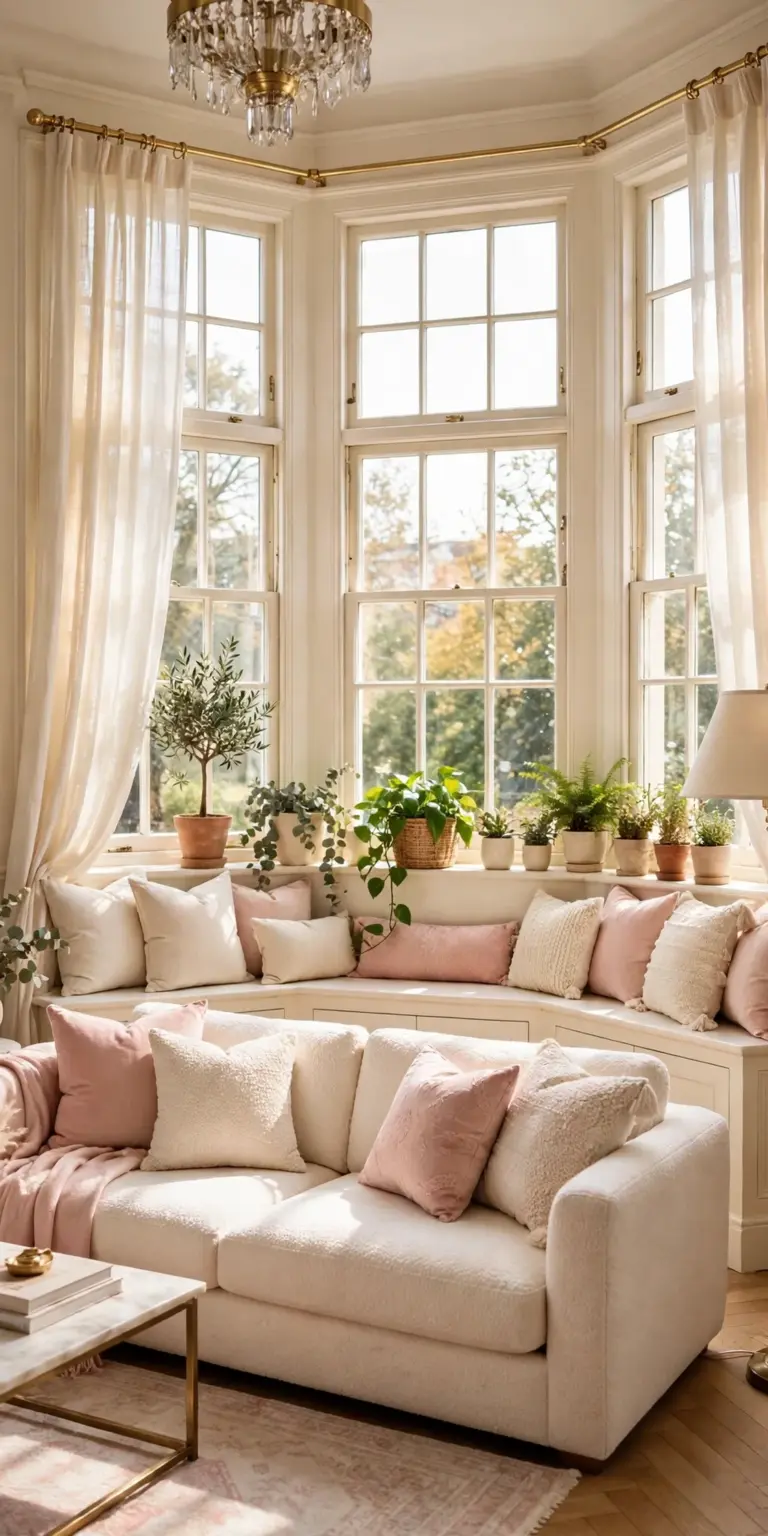
13. Turn a Bay or Wide Window Into a Window Seat
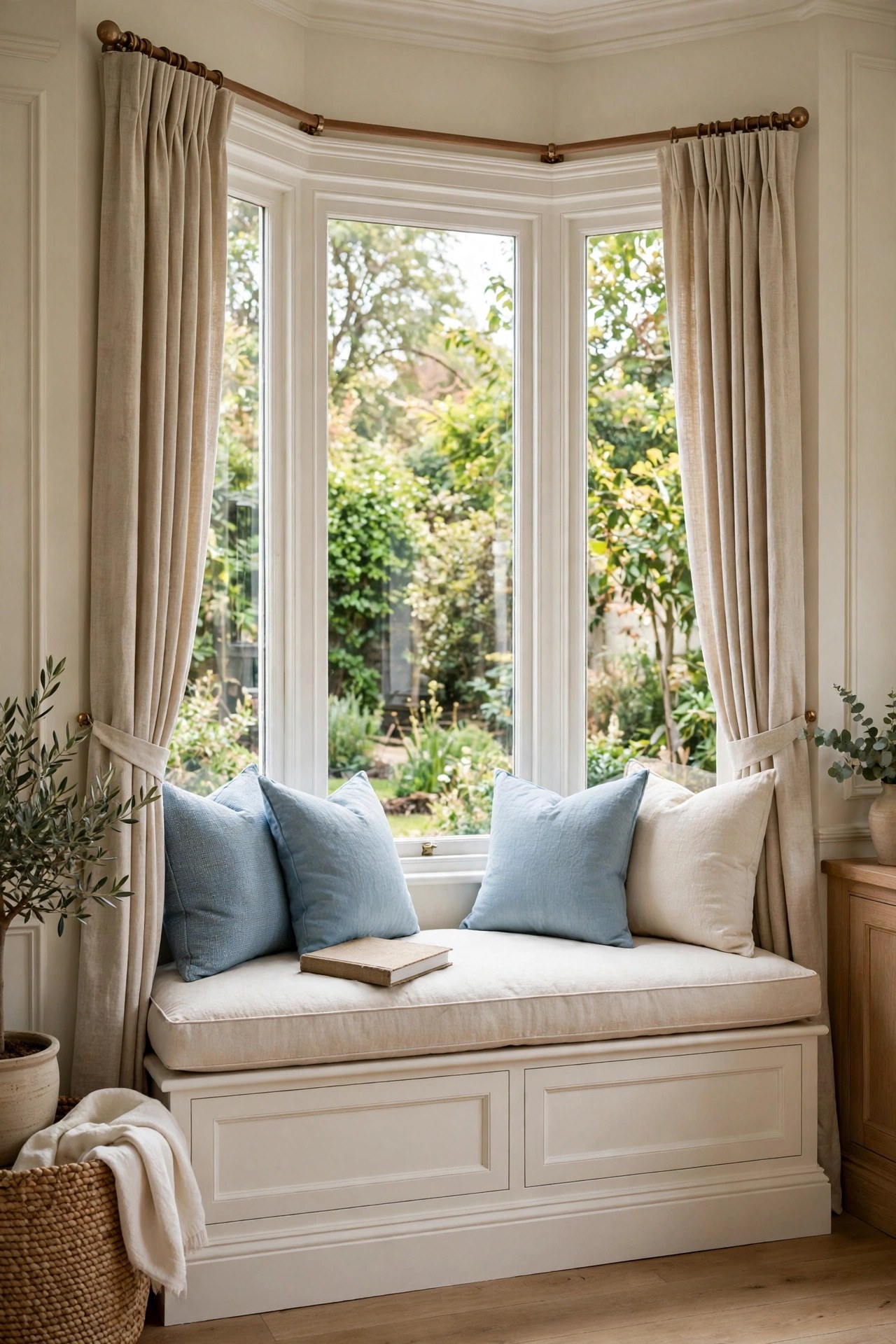
A window seat is the most loved extra seat in these houses, a cushioned bench built into a bay or stretched under a wide window, piled with cream cushions and one or two soft blue pillows. It catches the best light in the room and turns the window from a view into a place. A hinged top hides blankets inside. Our collection of window treatments shows more ways to dress the same glass. See our bay window ideas for more window seat looks.
Best For: Bay windows, wide picture windows and any living room short of one good seat.
Not Ideal For: Windows above radiators that cannot be safely boxed in; a freestanding low bench in front is the safer route.
Estimated Cost: $350-$1,200 (estimate) for a built-in seat with cushion, or $120-$350 (estimate) for a bench version.
Budget Note: The bench version delivers the seat and the look first; a built-in can follow later using the same cushion.
Renter Friendly: With Conditions
Renter Note: A freestanding bench is rental safe; a fixed built-in needs landlord permission and a radiator check.
What You Need
Built-in bench or low freestanding bench, a thick seat cushion in cream linen, four to six cushions in cream with one or two in soft blue, a small throw.
Product type to look for: A seat cushion at least 4 inches thick in a washable linen cover, and a bench depth of 18 to 24 inches so the seat works for sitting sideways with a book.
How To Do It
- Measure the bay or window width and the depth available without blocking heat or walkways.
- Fit or place the bench, level and secure, with storage access kept clear.
- Lay the seat cushion, then arrange back cushions largest first, with the blue pair at the ends.
- Add the throw folded at one end and one book, then stop; a window seat clutters faster than any other seat.
Pro Tip
Keep the seat cushion cover washable and buy a second in the same fabric. Window seats take sun and spills in equal measure, and a faded cushion ages the whole window.
14. Choose Relaxed Art With Calm Subjects
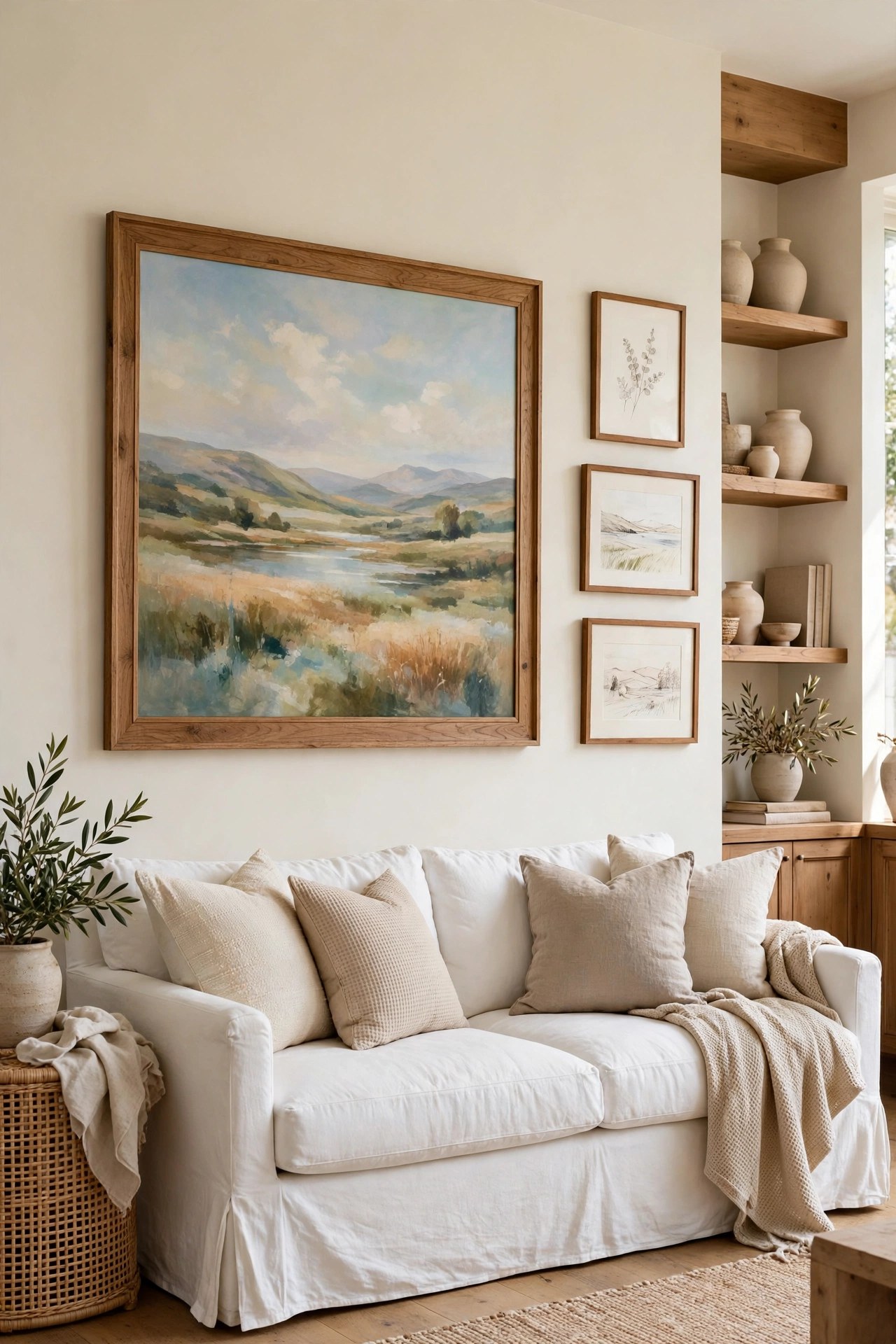
The art in a Nancy Meyers living room never shouts. It is landscapes, soft sketches, coastal scenes and still life paintings in warm wood or slim gold frames, hung a little generously, as if collected over years of travel and family life. Keep the colours inside the room palette, soft greens, faded blues and warm creams. Good prints in real wood frames with a wide mat carry the same quiet effect as originals.
Best For: Blank walls above sofas and mantels, and rooms that feel decorated but impersonal.
Not Ideal For: Anyone building a bold contemporary art wall; that energy fights this calm style, so choose one direction for the room.
Estimated Cost: $80-$400 (estimate) for one large framed landscape print, or $25-$90 (estimate) per smaller framed print.
Budget Note: The frame matters more than the print at this scale; a real wood frame and a wide mat lift an inexpensive print into the palette.
Renter Friendly: With Conditions
Renter Note: Use picture hooks rated for the frame weight; large pieces over a sofa should be secured, and renters can use rated adhesive systems for lighter frames.
What You Need
One large landscape or coastal print in a warm wood frame for the main wall, two or three smaller framed sketches or prints, picture hooks, level, painter’s tape.
Product type to look for: Art with a soft, faded palette and a wide off-white mat, in frames of warm wood or slim brushed gold that match the room metals.
How To Do It
- Tape the outline of the large piece on the wall above the sofa and live with it for a day to check the scale.
- Hang the piece so its centre sits near eye level when standing, and its width is about two thirds of the sofa width.
- Place smaller pieces on the shelves and side wall, leaning rather than hanging where possible, for a collected feel.
- Check the whole wall from the doorway; the art should read as one calm group, not separate events.
Pro Tip
Leave one wall in the room completely free of art. The empty wall is what makes the hung walls look intentional, and it gives the eye the rest this style depends on.
15. Finish With Evening Light, Throws and a Room Ready for People
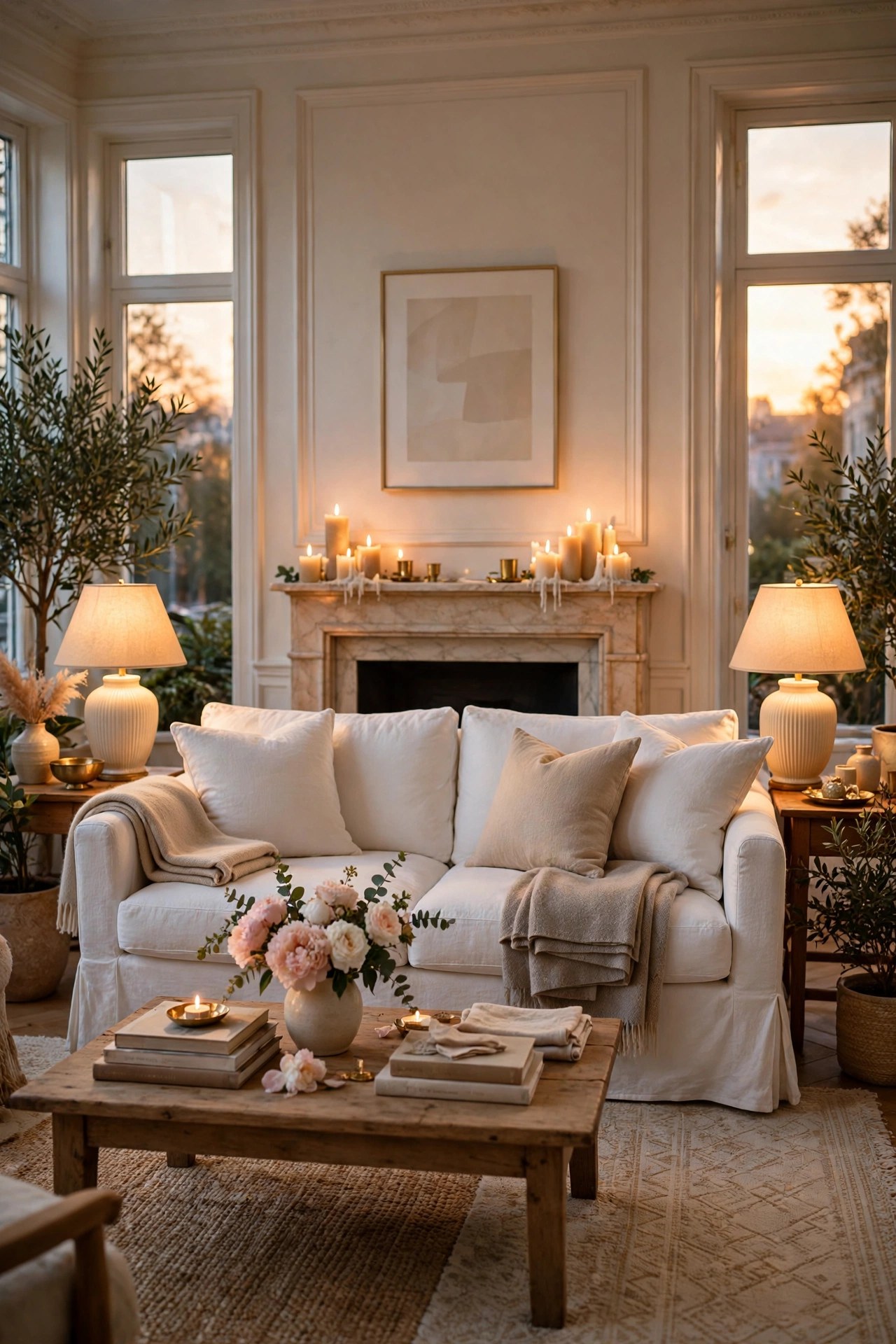
The final idea is the one the films do best: the room at evening, lamps on, throws folded over the sofa arms, candles lit on the mantel, and everything within reach for a long night of talking. Keep two good throws in the room, keep the coffee table holding books and coasters rather than clutter, and set the lamps to come on before the room goes grey.
Best For: Every living room, especially ones that look good by day and flat or harsh by night.
Not Ideal For: No real exception; scale the candles to safe, supervised use and use flameless candles where open flames are not allowed.
Estimated Cost: $50-$180 (estimate) for two woven throws, a blanket basket and candles or flameless candles.
Budget Note: This is the lowest cost idea in the list and the one guests will actually remember; do it before any large purchase.
Renter Friendly: Yes
Renter Note: Everything is portable; flameless candles avoid any lease issues with open flames.
What You Need
Two woven throws in cream and warm taupe, a rattan blanket basket, candles or flameless candles for the mantel and table, lamp timers or smart plugs.
Product type to look for: Throws with a visible weave and enough weight to drape, in the room palette, and candles in simple glass or ceramic holders with no strong scent clash.
How To Do It
- Set the lamps on timers to light half an hour before sunset and walk the room at that hour to check for dark corners.
- Fold one throw over each end of the sofa, loosely, so they look used rather than placed.
- Fill the basket with the spare blankets and set it beside the reading chair or sofa end.
- Light the mantel candles, clear the coffee table to books, tray and flowers, and call the room done.
Pro Tip
Do a ten-minute reset every evening, throws folded, cushions straight, table cleared to its three groups. The Nancy Meyers look is mostly this habit, repeated daily.
Practical Tips for a Nancy Meyers Living Room
Buy in the order the eye reads the room: sofa and palette first, rug and curtains second, tables and lamps third, shelves, art and flowers last. Keep every white warm, and test whites together in daylight. Repeat each material at least twice, wood, brass and linen, so the room reads as one thought. Edit weekly when you change the flowers: carry one thing out each time, and judge the room from the doorway in the evening with the lamps on.
Frequently Asked Questions
What is the Nancy Meyers living room style?
It is a bright, relaxed luxury style inspired by the interiors in films like Something’s Gotta Give, It’s Complicated and The Holiday: white slipcovered sofas, cream and warm white palettes, natural linen, woven textures, warm wood, built-in shelves with books and ceramics, and fresh flowers. All imagery in this article is original and inspired by the look; no film stills are used.
What colours define a Nancy Meyers living room?
Warm white walls, cream and natural linen upholstery, warm mid-tone wood, and small touches of soft blue or sage, with brushed brass used sparingly. The key rule is warmth: blue-toned whites make the creams and woods look wrong, so test every white against your wood in daylight.
How can I get the look on a budget?
Start with textiles and habits, not furniture. Cream cushion covers, linen blend curtains, a woven throw and rug, and fresh flowers weekly give most of the feeling for a modest cost. A slipcover over an existing sofa in good shape is the single biggest budget win.
Is a white sofa practical?
With a washable slipcover, yes. The cover is the practical system: it removes, washes and can be swapped for a spare set while it dries. If white still feels risky, a warm cream performance linen in the same relaxed shape keeps the look with more forgiveness.
What furniture matters most for this style?
The slipcovered sofa first, then a warm wood coffee table, built-in style shelving, a deep reading chair and ceramic table lamps. Together they set the shape, storage, seating and light that every smaller detail then supports.
Can this style work in a small living room?
Yes, if the scale is honest. Keep the palette and textures, choose a smaller slipcovered sofa or loveseat, use one woven rug to zone the seating, and let a bench window seat or a single reading chair provide the extra seat. The calm comes from restraint, which small rooms reward.
Conclusion
A Nancy Meyers living room is built from calm decisions repeated well: a white slipcovered sofa, linen at the windows, a woven rug underfoot, warm wood and brass used with restraint, shelves that hold a real life, and flowers that change with the week. None of it needs a film set or a film budget. Set the palette, place the big pieces, layer the textures, and keep the room ready for people in the evening light. The result is a living room that feels generous every day, not just when guests are expected.