15 Kitchen Cabinet Colors for a Bright Glam Kitchen
A kitchen cabinet colors search usually starts with one fear: the wrong color will date the whole kitchen. It will not, if the color is warm, the counters stay pale and the hardware repeats in one metal. Sage green, deep navy, warm white, walnut and blush pink are the cabinet colors that glow in daylight, and they sit beautifully on a cream base with brushed gold, which is the bright glam style GlamNStyle is known for. These kitchen cabinet colors keep every tone warm and livable, never cold and never muddy, and they keep the walls, the counters and the backsplash pale so the kitchen reads calm and light. Work through the list in order, because the early ideas set the main cabinet color and the hardware, and the later ones add the island, the wood tones and the soft finishing layers. If you are still planning the kitchen around its cabinets, our kitchen ideas show how the cabinets, the counters and the small styling pieces work together first.
Disclosure: This article may contain affiliate links. If you buy through a link on this page, GlamNStyle may earn a small commission at no extra cost to you. Product links in this article are plain links; each one is checked on the retailer’s own page before it is added.
1. Start with Warm White Cabinets and Brushed Gold
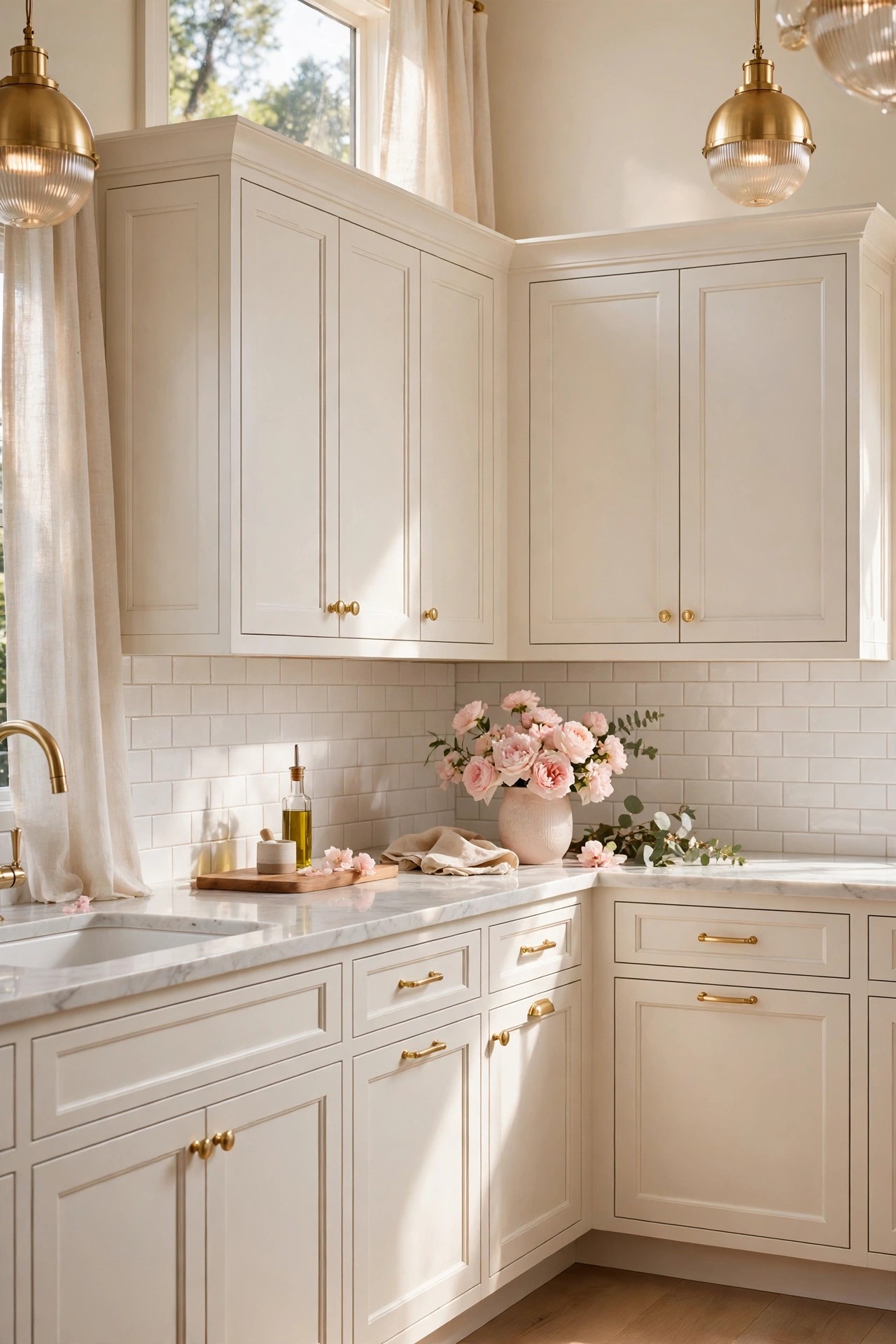
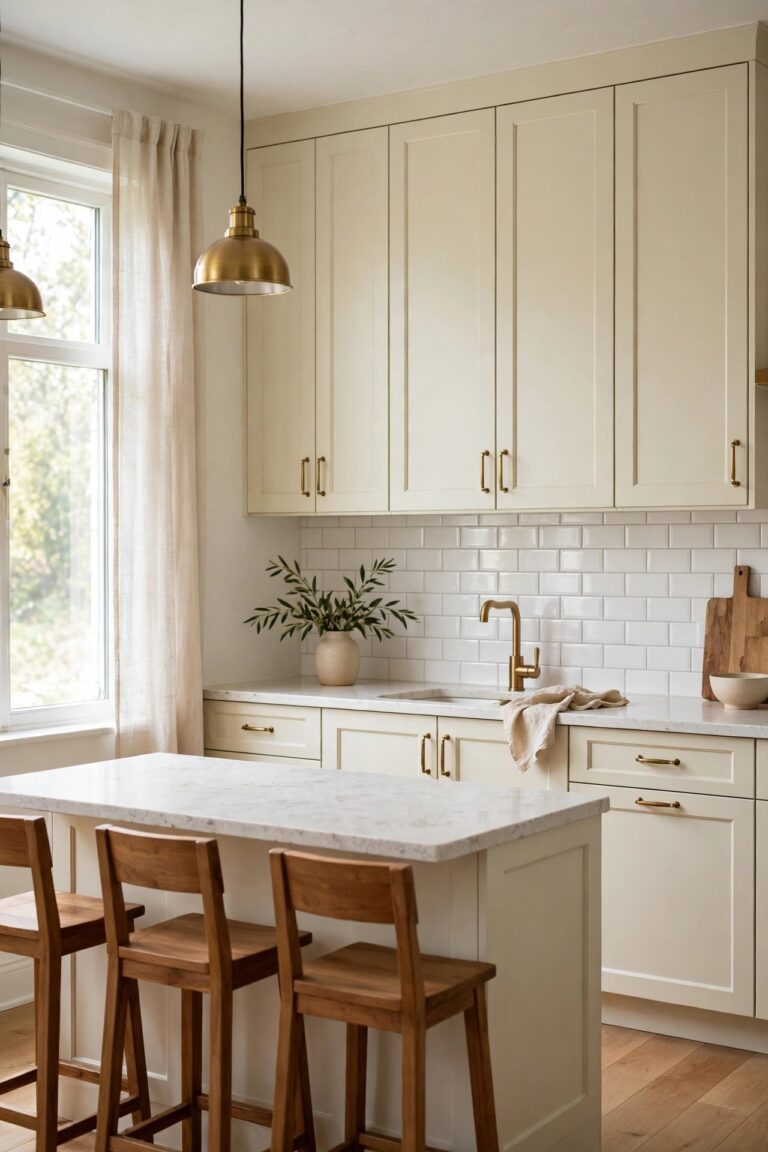
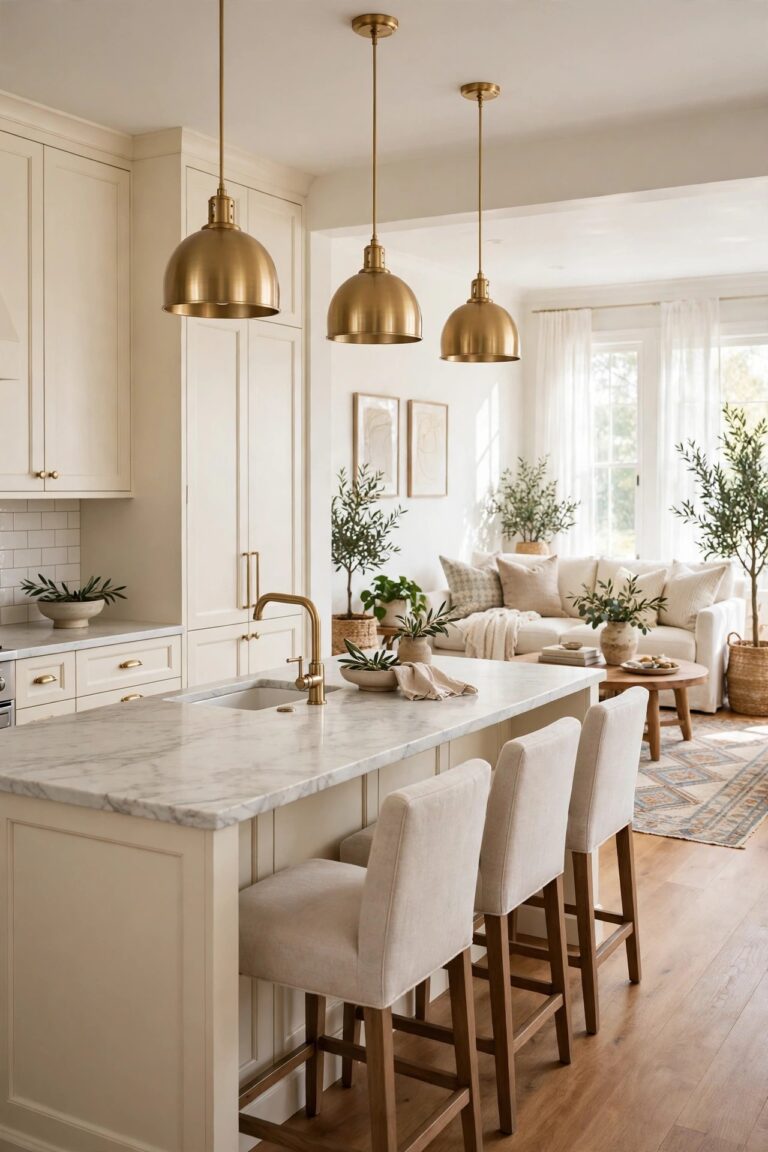
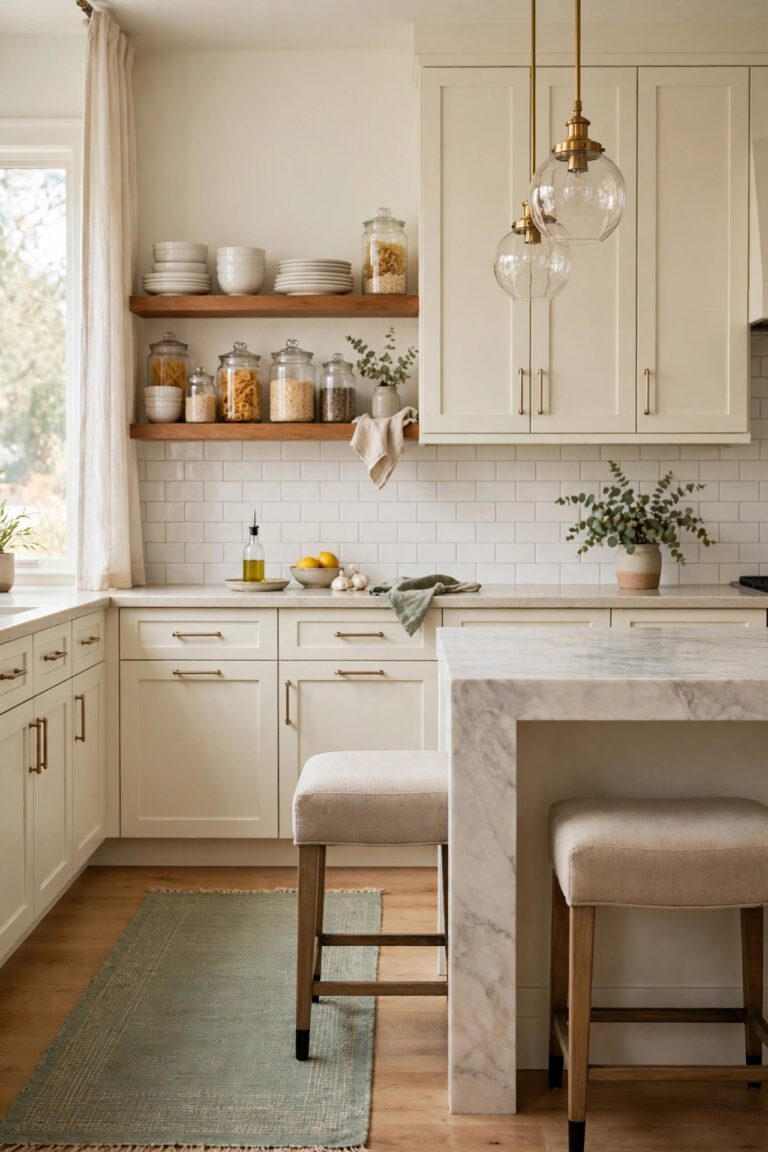
Warm white is the safest cabinet color in this list, and it is the one that makes every other color in the kitchen easier. A warm white with a cream or pale yellow undertone keeps the kitchen bright without the cold glare of a stark white, and it lets a sage island, a walnut shelf or a brass faucet stand out against it. Choose a warm white in a satin finish, because a satin finish wipes clean after cooking and hides small marks better than a flat paint. Repeat brushed gold in the knobs, the pulls and the faucet, so the white cabinets read glam rather than plain. Keep the counters pale marble or quartz, and the whole kitchen stays light from morning to night.
Best For: Kitchens with little daylight, and anyone who wants a bright kitchen that can take a colored island later.
Not Ideal For: Kitchens where the floor and the counters are already stark white; three whites together can look flat, so a warm wood floor or a colored island is the better partner there.
Estimated Cost: $3,000-$9,000 (estimate) for painting or refacing cabinets in warm white with new gold hardware.
Budget Note: Paint is the small spend; new doors and drawer fronts are the real cost, and painting the existing boxes warm white keeps the budget calm.
Renter Friendly: No
Renter Note: Painting cabinets is a landlord decision; renters can borrow the warm white note with cream canisters, a white tray and gold knobs swapped back later.
What You Need
Warm white cabinet paint or refaced doors in a satin finish, brushed gold knobs and pulls, pale marble or quartz counters, painter’s tape and fine sandpaper if painting.
Product type to look for: A washable satin cabinet paint in a warm white with a cream undertone, checked against the counters in daylight before buying.
How To Do It
- Hold warm white samples against the counters and the floor in daylight, and pick the white that stays warm beside both.
- Clean the cabinet doors, sand lightly, and paint two thin coats, letting each coat dry fully.
- Swap the knobs and pulls for matching brushed gold, keeping the originals in a labelled bag.
- Style the counters with one cream canister set and a small vase, and check the white reads warm from the doorway.
Pro Tip
Keep the ceiling and the walls warm cream, never bright white. Cream beside warm white looks rich, while a stark white beside warm white makes the cabinets look yellow.
2. Choose Sage Green Cabinets with Marble
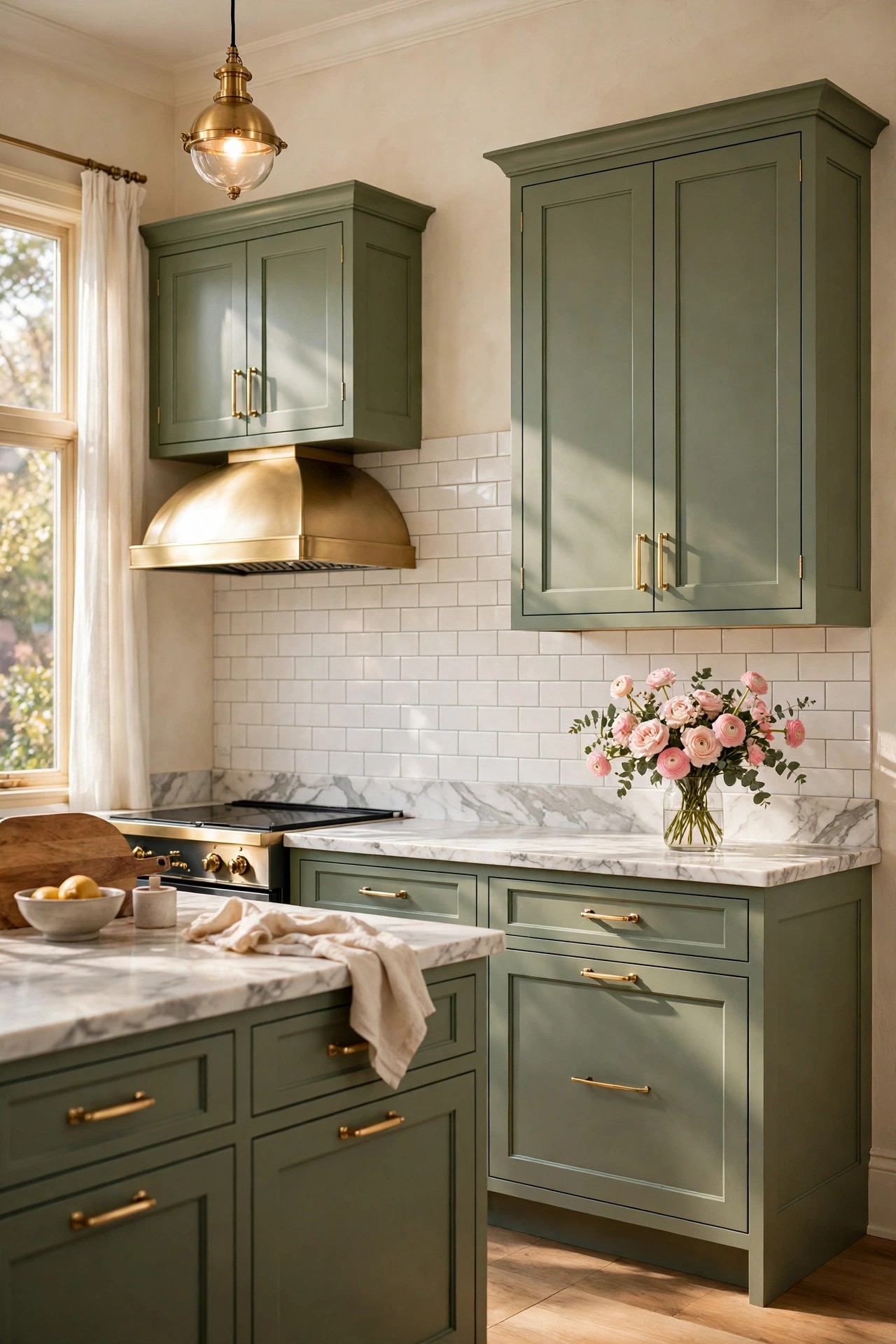
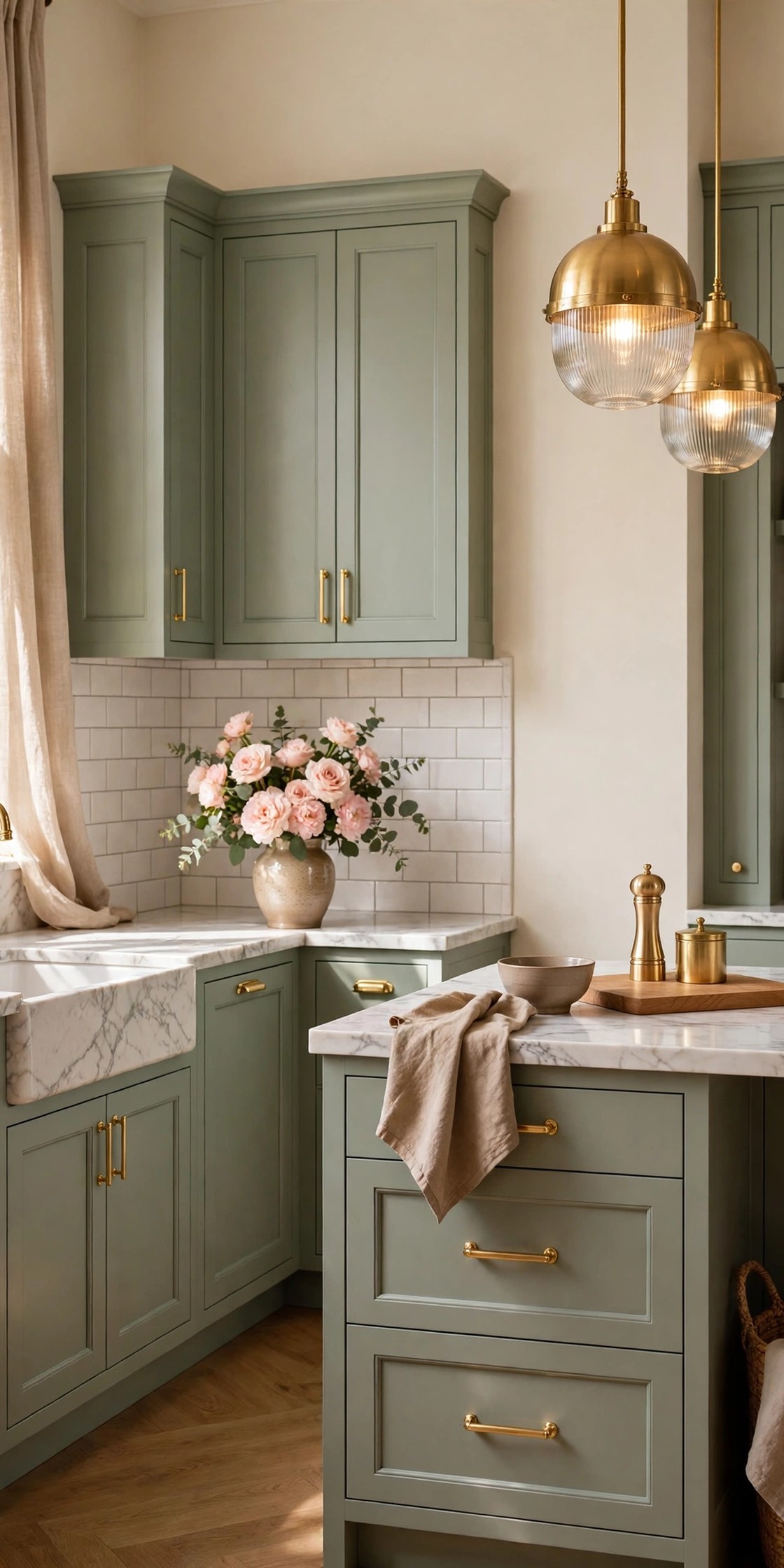
Sage green is the softest color in this list, and it is the one readers ask for most. A muted sage with a grey-green tone sits calmly beside white marble and warm cream walls, and it gives the kitchen a gentle color without making the room feel themed. Choose a sage that leans grey rather than mint, because a mint sage turns cold under kitchen lights and a grey sage stays soft all day. Keep the uppers white or cream and the sage on the lowers and the island, so the color sits low and the light stays high. Our sage green kitchen shows the same sage cabinets with the marble and gold pairing worked out in detail.
Best For: Kitchens that need a gentle color, and anyone who loves green but wants the room to stay bright.
Not Ideal For: Very dark kitchens with one small window; sage on every cabinet there can feel flat, so sage on the island only is the lighter version.
Estimated Cost: $3,500-$10,000 (estimate) for painting or refacing cabinets in sage green with new hardware.
Budget Note: The doors are the spend; a sage island with warm white uppers costs far less than a full sage kitchen and reads calmer.
Renter Friendly: No
Renter Note: Painting cabinets is a landlord decision; renters can borrow the sage note with green canisters, a sage tea towel and a small potted herb.
What You Need
Sage green cabinet paint or refaced doors in a satin finish, pale marble or quartz counters, brushed gold knobs and pulls, painter’s tape and fine sandpaper if painting.
Product type to look for: A washable satin cabinet paint in a muted sage with a grey undertone, checked against the marble in daylight before buying.
How To Do It
- Paint two sage samples on a large board and hold it against the marble and the wall in daylight and at night.
- Clean the cabinet doors, sand lightly, and paint two thin coats, letting each coat dry fully.
- Fit the brushed gold knobs and pulls, matching the tone across every piece.
- Style the counters with cream canisters and one blush flower vase, and check the sage reads soft from the doorway.
Pro Tip
Keep the backsplash white, never sage. A white backsplash gives the eye a bright band between the sage cabinets and the wall, while a sage backsplash makes the whole wall one green block.
3. Go Deep with Navy Blue Cabinets
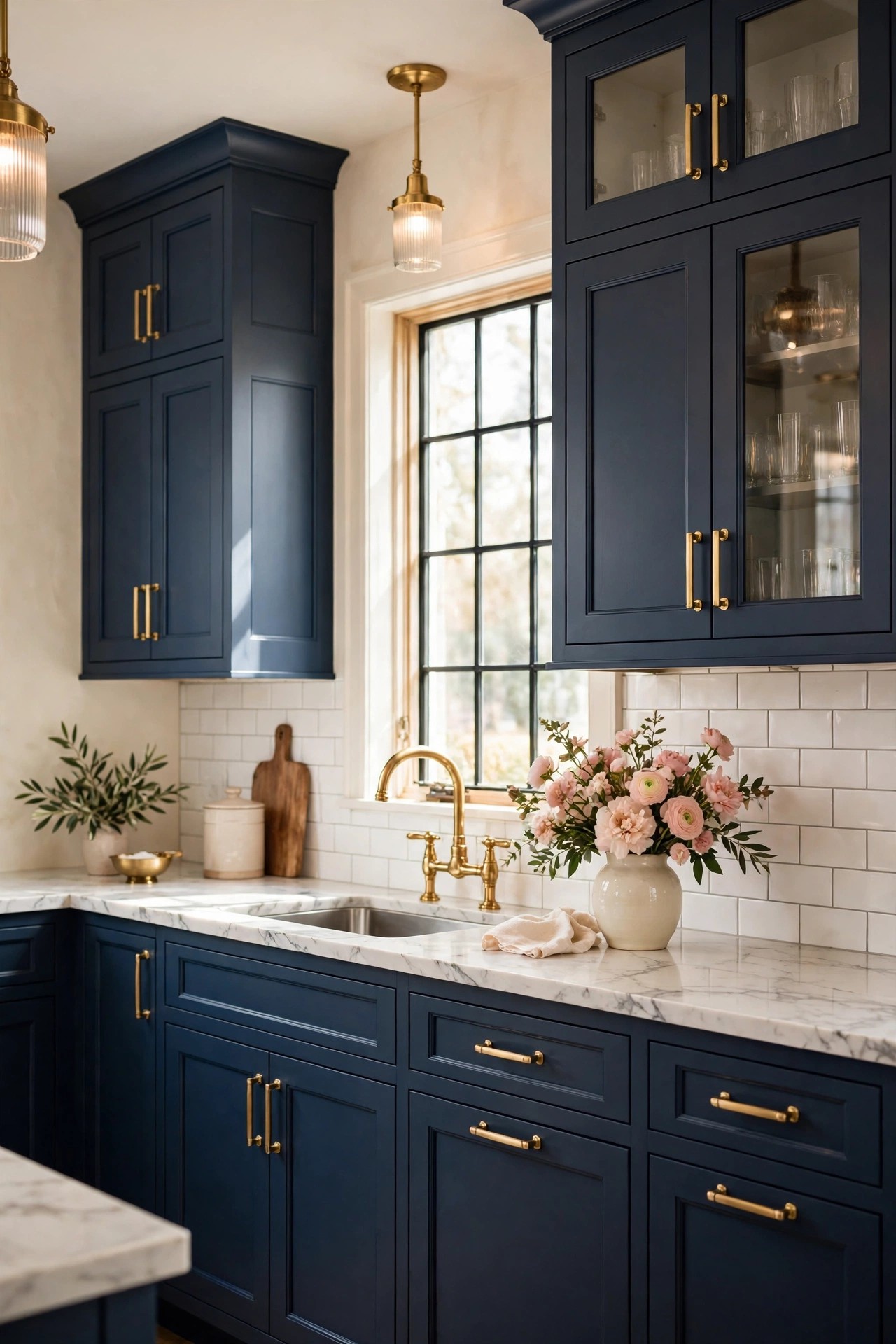
Deep navy is the boldest color in this list, and it works because the rest of the kitchen stays pale. Paint the lower cabinets and the island a deep navy with a warm undertone, keep the uppers warm white, and the navy reads as a rich backdrop while the white uppers keep the room bright. Choose a navy with a hint of warmth, never a cold blue-black, because a warm navy flatters brushed gold and a cold navy fights it. Pair the navy with a white marble counter and a brass faucet, and the kitchen reads like a classic room rather than a dark one. Test the color on a large board first, and look at it in daylight and at night, because navy shifts more with the light than any other color here.
Best For: Large kitchens with good daylight, and anyone who wants one strong color with a classic feel.
Not Ideal For: Small kitchens with weak light; navy on every cabinet there can feel heavy, so navy on the island only is the lighter version.
Estimated Cost: $3,500-$10,000 (estimate) for painting or refacing lower cabinets and an island in deep navy.
Budget Note: Paint is a small spend with the largest effect in this list; sample two navy tones on a board before buying the full cans.
Renter Friendly: No
Renter Note: Painting cabinets is a landlord decision; renters can borrow the navy note with navy canisters, a navy runner and brass knobs swapped back later.
What You Need
Deep navy cabinet paint or refaced doors in a satin finish, pale marble or quartz counters, brushed gold or brass knobs and pulls, painter’s tape and fine sandpaper if painting.
Product type to look for: A washable satin cabinet paint in a deep navy with a warm undertone, checked against the marble in daylight before buying.
How To Do It
- Paint two navy samples on a large board and hold it against the marble and the white uppers in daylight and at night.
- Clean the lower cabinet doors, sand lightly, and paint two thin coats, letting each coat dry fully.
- Fit the brass knobs and pulls, keeping the gold tone consistent across every piece.
- Style the island with a cream tray and a small vase, and check the navy reads rich, not dark, from the doorway.
Pro Tip
Keep the island navy and the perimeter uppers warm white. Navy on every cabinet closes the room in, while navy low and white high keeps the ceiling feeling tall.
4. Keep It Calm with Warm Greige Cabinets
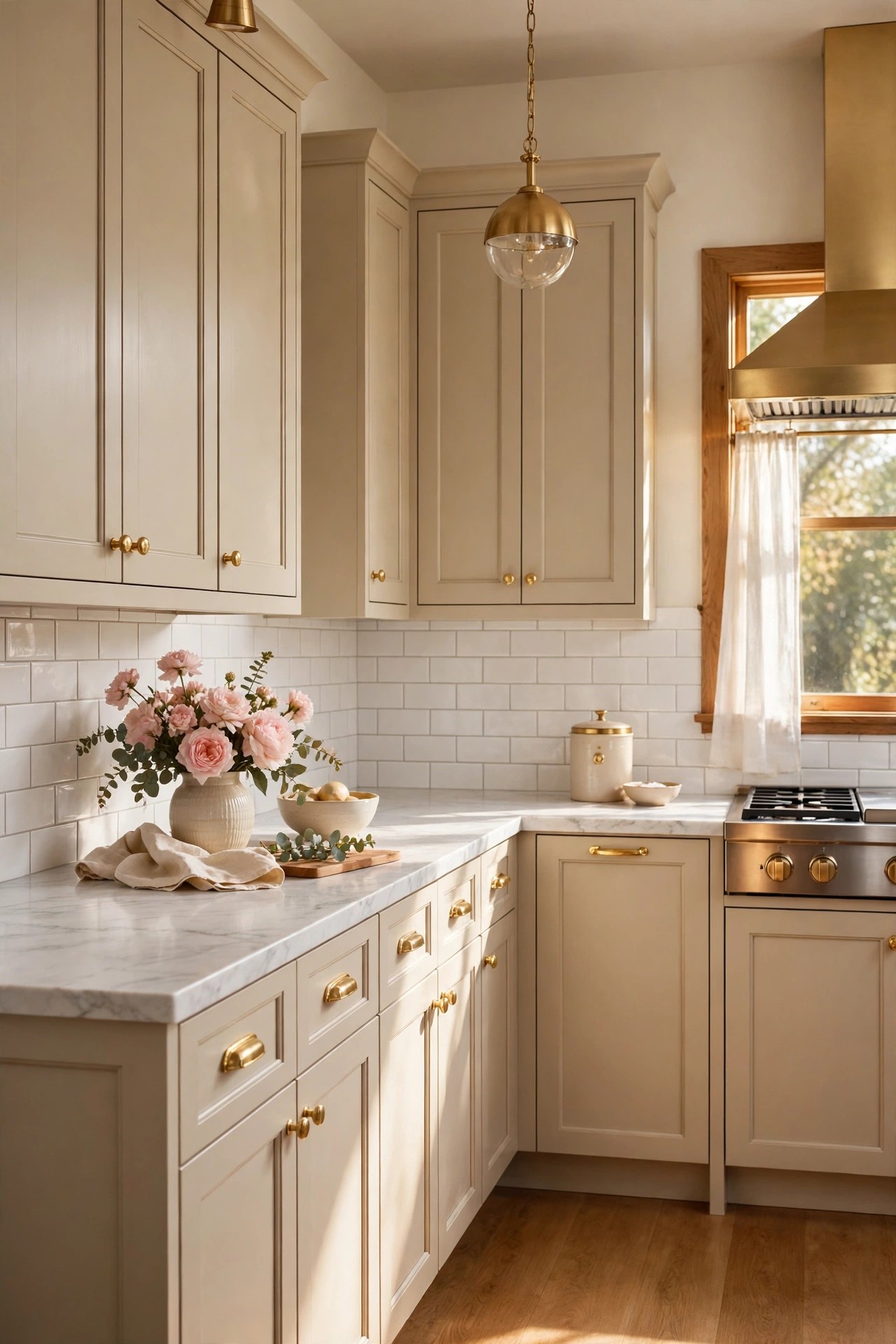
Warm greige is the quietest color in this list, and it is the safest way to add color without committing to green or blue. Greige sits between warm grey and beige, so it flatters both the white marble and the walnut wood, and it keeps the kitchen feeling soft rather than themed. Choose a greige with a warm beige undertone, never a cool grey one, because a cool greige turns flat under kitchen light and the whole point of this palette is warmth. Paint all the cabinets the same greige, keep the counters pale marble and the backsplash white, and let the brushed gold hardware do the brightening. Test the color on every wall of cabinets, because a greige that glows on the window side can look muddy on the side opposite the light.
Best For: Kitchens where the owner wants color everywhere but gently, and rooms that mix marble, wood and gold.
Not Ideal For: Kitchens with very cool lighting; greige under a cool bulb can read grey, so warm bulbs are the honest fix there.
Estimated Cost: $3,000-$9,000 (estimate) for painting or refacing cabinets in warm greige with new hardware.
Budget Note: Paint is a small spend; sample two warm greiges on the cabinet doors before buying the full cans, because greige shifts the most with the light.
Renter Friendly: No
Renter Note: Painting cabinets is a landlord decision; renters can borrow the greige note with taupe canisters, a cream runner and gold knobs swapped back later.
What You Need
Warm greige cabinet paint or refaced doors in a satin finish, pale marble or quartz counters, brushed gold knobs and pulls, painter’s tape and fine sandpaper if painting.
Product type to look for: A washable satin cabinet paint in a warm greige with a beige undertone, checked on the doors in daylight before buying.
How To Do It
- Paint two greige samples on the cabinet doors and look at them in daylight and at night.
- Clean the doors, sand lightly, and paint two thin coats, letting each coat dry fully.
- Fit the brushed gold knobs and pulls, matching the tone across every piece.
- Style the counters with cream canisters and one small plant, and check the greige reads warm from the doorway.
Pro Tip
Keep the towels and the canisters cream and blush against greige cabinets. Grey towels on grey-beige cabinets disappear, while pale towels give the eye a bright place to land.
5. Soften the Room with Blush Pink Cabinets
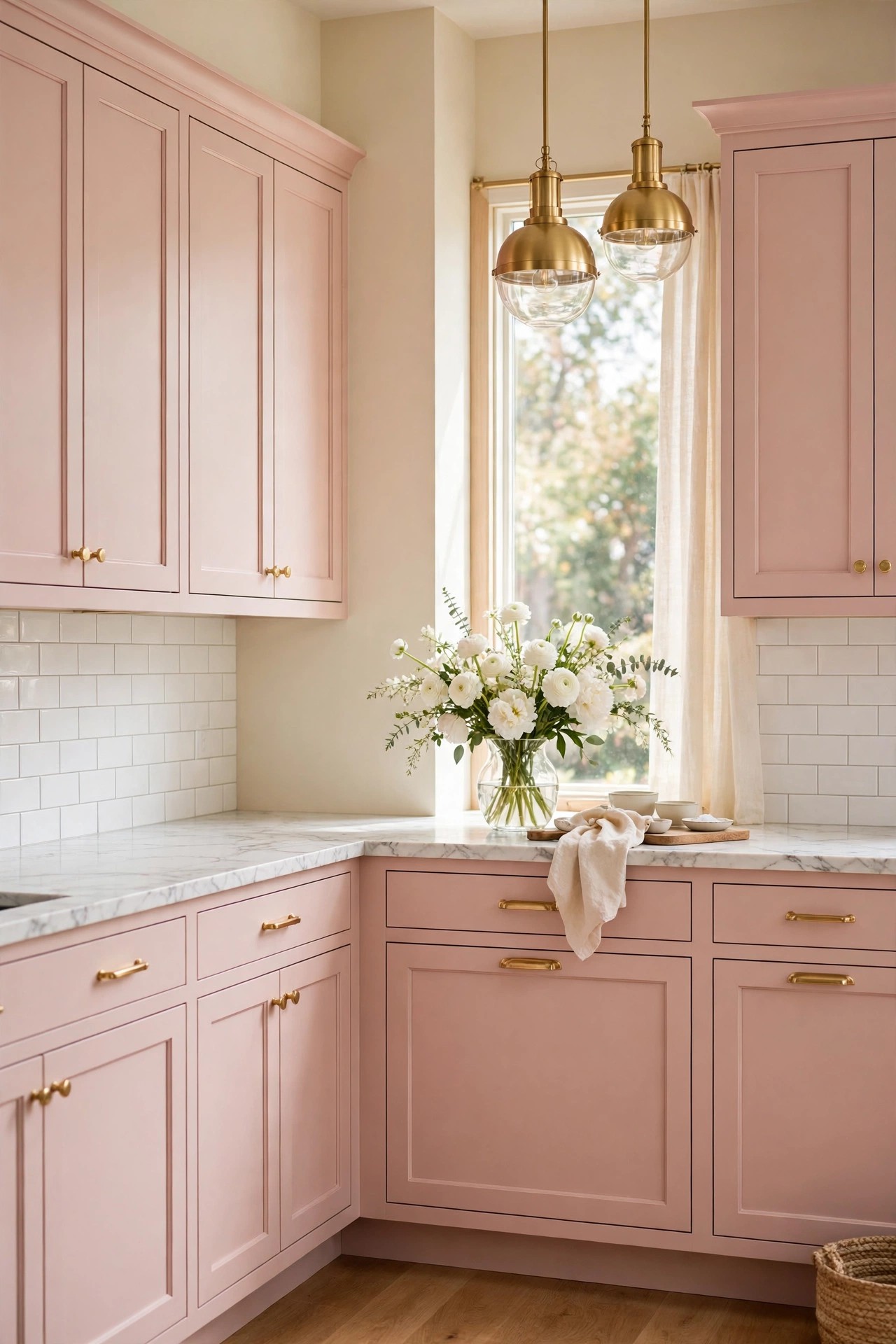
Blush pink is the most glamorous color in this list, and it is softer than most people expect on a cabinet. A pale blush with a warm undertone reads almost like a warm cream in daylight, and it gives the kitchen a gentle pink glow that flatters white marble and brushed gold. Choose a blush that leans warm and dusty, never a bright or bubblegum pink, because a dusty blush sits calmly beside marble while a bright pink fights it. Keep the blush on the lower cabinets or the island only, with warm white uppers, so the pink stays a soft note and the kitchen stays bright. Pair it with a white backsplash and a gold faucet, and the room reads glam, not sweet.
Best For: Kitchens that want a soft glam note, and anyone who loves pink but wants the room to stay grown up.
Not Ideal For: Kitchens where the counters are already a strong pink marble; one pink note per room keeps the story clear.
Estimated Cost: $3,000-$9,000 (estimate) for painting or refacing lower cabinets or an island in blush pink.
Budget Note: The doors are the spend; a blush island with warm white uppers costs far less than a full blush kitchen and reads calmer.
Renter Friendly: No
Renter Note: Painting cabinets is a landlord decision; renters can borrow the blush note with pink canisters, a blush runner and a small vase of white flowers.
What You Need
Soft blush pink cabinet paint or refaced doors in a satin finish, pale marble or quartz counters, brushed gold knobs and pulls, painter’s tape and fine sandpaper if painting.
Product type to look for: A washable satin cabinet paint in a dusty blush with a warm undertone, checked against the marble in daylight before buying.
How To Do It
- Paint two blush samples on a large board and hold it against the marble and the white uppers in daylight and at night.
- Clean the lower cabinet doors, sand lightly, and paint two thin coats, letting each coat dry fully.
- Fit the brushed gold knobs and pulls, matching the tone across every piece.
- Style the counters with cream canisters and fresh white flowers, and check the blush reads soft from the doorway.
Pro Tip
Keep the blush pale, closer to cream than to pink. A blush that reads almost cream in daylight stays glam for years, while a stronger pink can feel dated fast.
6. Make a Statement with Classic Black Cabinets
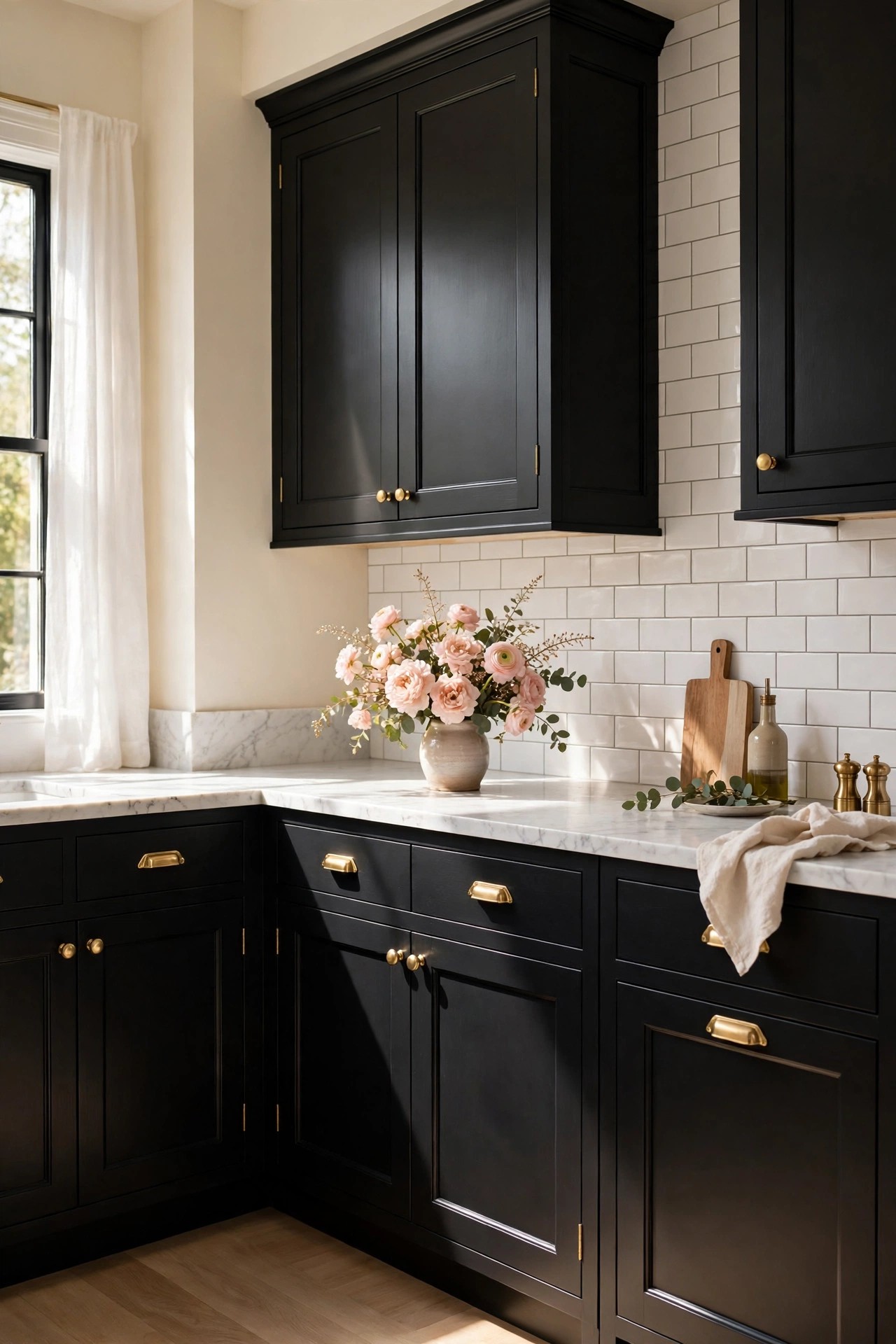
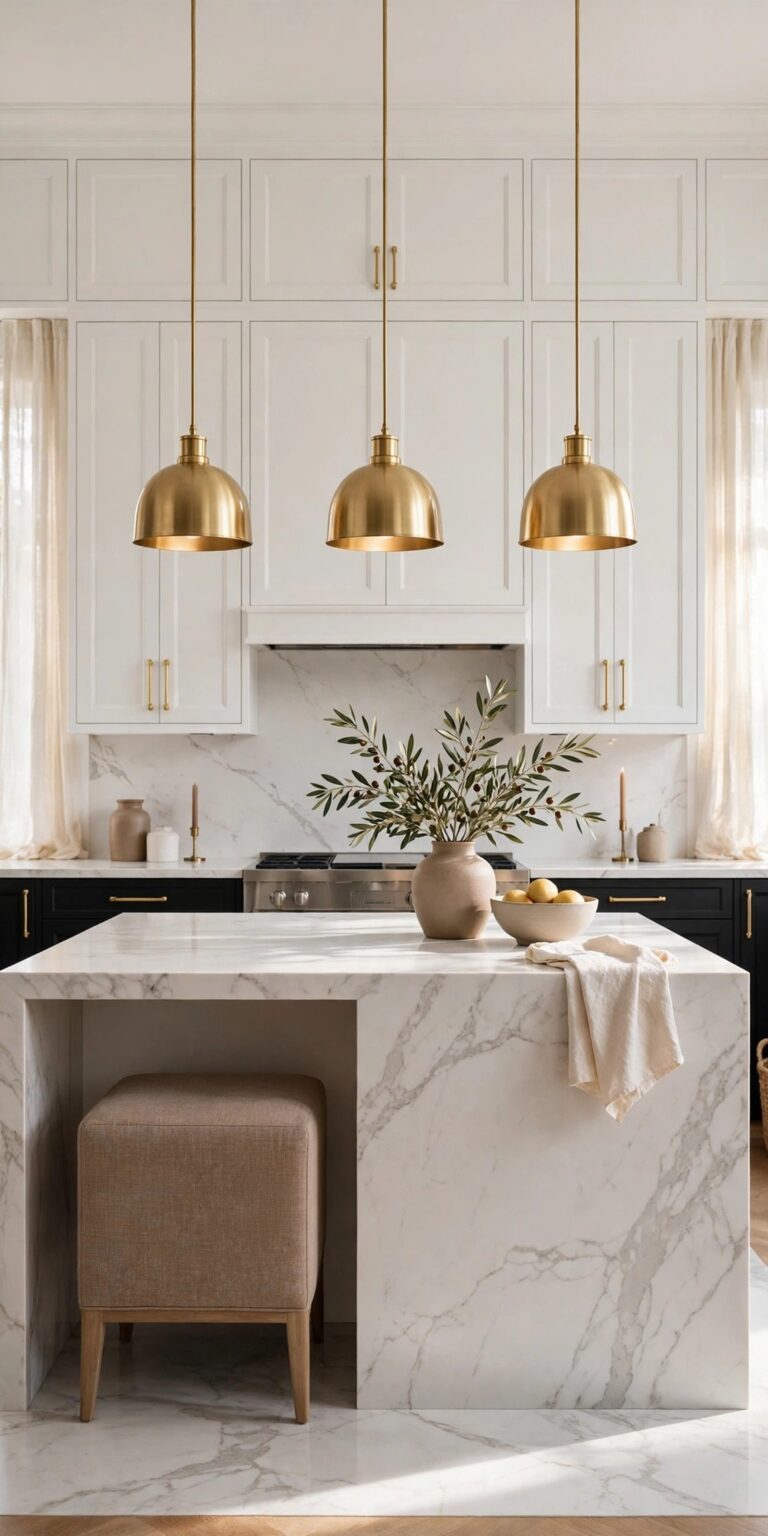
Classic black is the most dramatic color in this list, and it earns its drama by pairing with pale marble and warm brass. Paint the lower cabinets and the island a soft black, keep the uppers warm white, and the black reads as a confident frame while the white uppers keep the room bright. Choose a black with a warm undertone, never a blue-black, because a warm black flatters brass and a cold black fights it. Keep the counters white marble with soft veining, and the black and white contrast does the work that a backsplash pattern would do. Fingerprints show on black doors, so a satin finish and a quick daily wipe keep the cabinets looking new.
Best For: Large kitchens with good daylight, and anyone who wants a bold, classic look that photographs well.
Not Ideal For: Small kitchens with weak light; black on every cabinet there can feel heavy, so black on the island only is the lighter version.
Estimated Cost: $3,500-$10,000 (estimate) for painting or refacing lower cabinets and an island in classic black.
Budget Note: The doors are the spend; a black island with warm white uppers costs far less than a full black kitchen and reads calmer.
Renter Friendly: No
Renter Note: Painting cabinets is a landlord decision; renters can borrow the black note with black canisters, a black tray and brass knobs swapped back later.
What You Need
Classic black cabinet paint or refaced doors in a satin finish, pale marble or quartz counters, brass knobs and pulls, painter’s tape and fine sandpaper if painting.
Product type to look for: A washable satin cabinet paint in a soft black with a warm undertone, checked against the marble in daylight before buying.
How To Do It
- Paint two black samples on a large board and hold it against the marble and the white uppers in daylight and at night.
- Clean the lower cabinet doors, sand lightly, and paint two thin coats, letting each coat dry fully.
- Fit the brass knobs and pulls, keeping the gold tone consistent across every piece.
- Style the island with a cream tray and fresh white flowers, and check the black reads rich, not harsh, from the doorway.
Pro Tip
Keep the backsplash white and the grout pale. A white backsplash is the bright band that stops a black kitchen from reading dark, while a dark backsplash closes the room in.
7. Try Two-Tone Cabinets: White Uppers, Sage Lowers
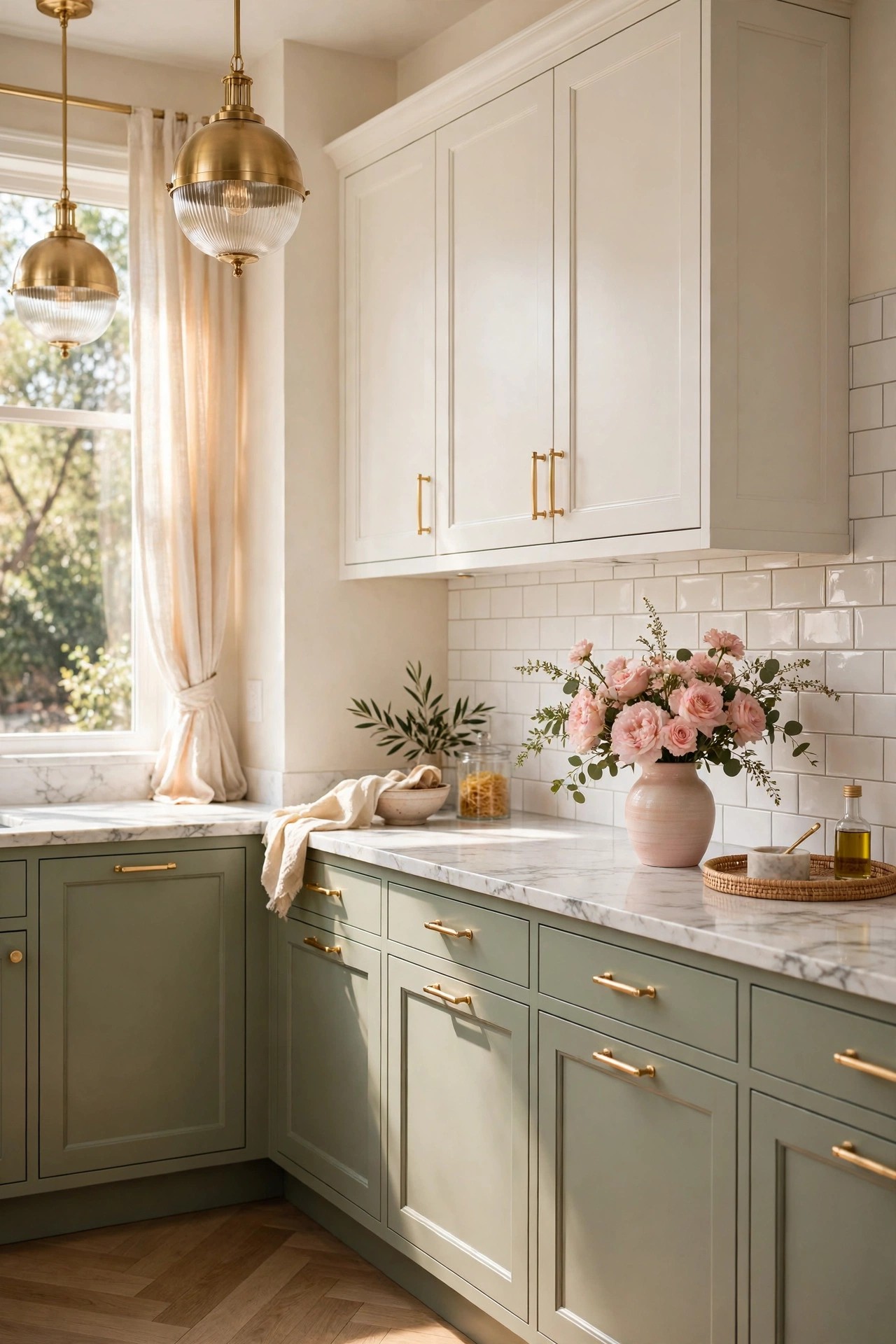
Two-tone cabinets are the easiest way to use a color without committing the whole kitchen to it. Keep the uppers warm white and paint the lowers and the island sage green, so the color sits low where it grounds the room and the white stays high where it keeps the light. Choose a sage that leans grey rather than mint, and keep the hardware the same brushed gold on both colors, so the two tones read as one plan rather than two ideas. Our green kitchen cabinets show the same two-tone pairing with the marble and gold worked out in detail.
Best For: Kitchens where the owner loves color but worries about resale, and anyone who wants the color low and the light high.
Not Ideal For: Kitchens where the uppers and lowers are already different styles; two tones need matching door styles to read as a plan.
Estimated Cost: $3,000-$9,000 (estimate) for painting or refacing uppers in warm white and lowers in sage green.
Budget Note: Paint is a small spend; the two-tone look costs the same as one color, and the white uppers save the cost of painting the hardest doors to reach.
Renter Friendly: No
Renter Note: Painting cabinets is a landlord decision; renters can borrow the two-tone note with sage canisters on the counters and cream towels on the oven handle.
What You Need
Warm white cabinet paint for the uppers, sage green cabinet paint for the lowers, both in a satin finish, brushed gold knobs and pulls, painter’s tape and fine sandpaper if painting.
Product type to look for: Two washable satin cabinet paints in matching finishes, one warm white and one muted sage, checked side by side against the marble in daylight.
How To Do It
- Paint samples of both colors on one board and hold it against the marble in daylight and at night.
- Clean all the doors, sand lightly, and paint two thin coats of each color, letting each coat dry fully.
- Fit the same brushed gold knobs and pulls on both the white and the sage doors.
- Style the counters with cream canisters and one blush flower vase, and check the two tones read as one kitchen from the doorway.
Pro Tip
Keep the island the same sage as the lowers. An island in a third color splits the kitchen in half, while one sage through the lowers and the island reads as a single calm decision.
8. Warm the Room with Walnut Wood Cabinets
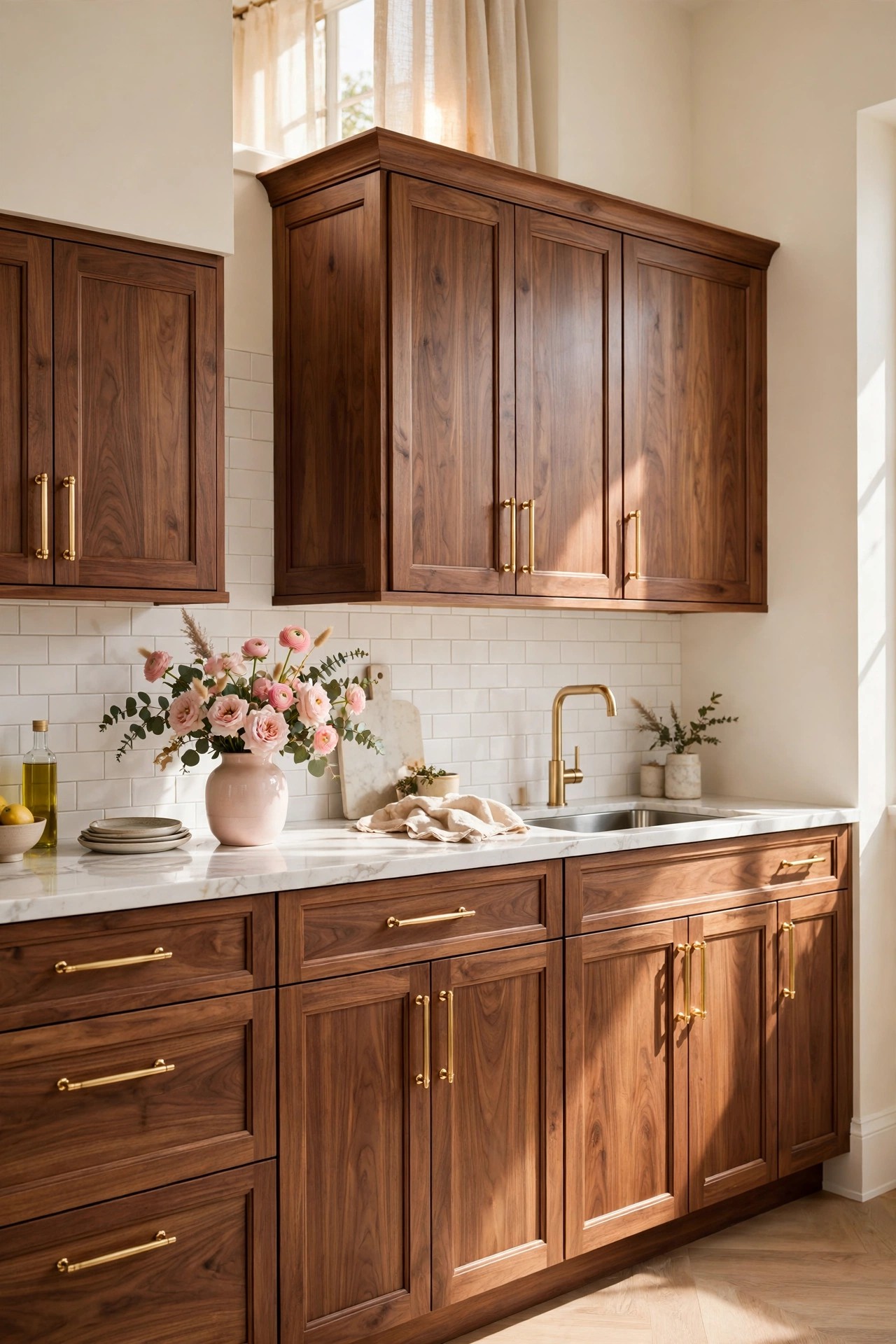
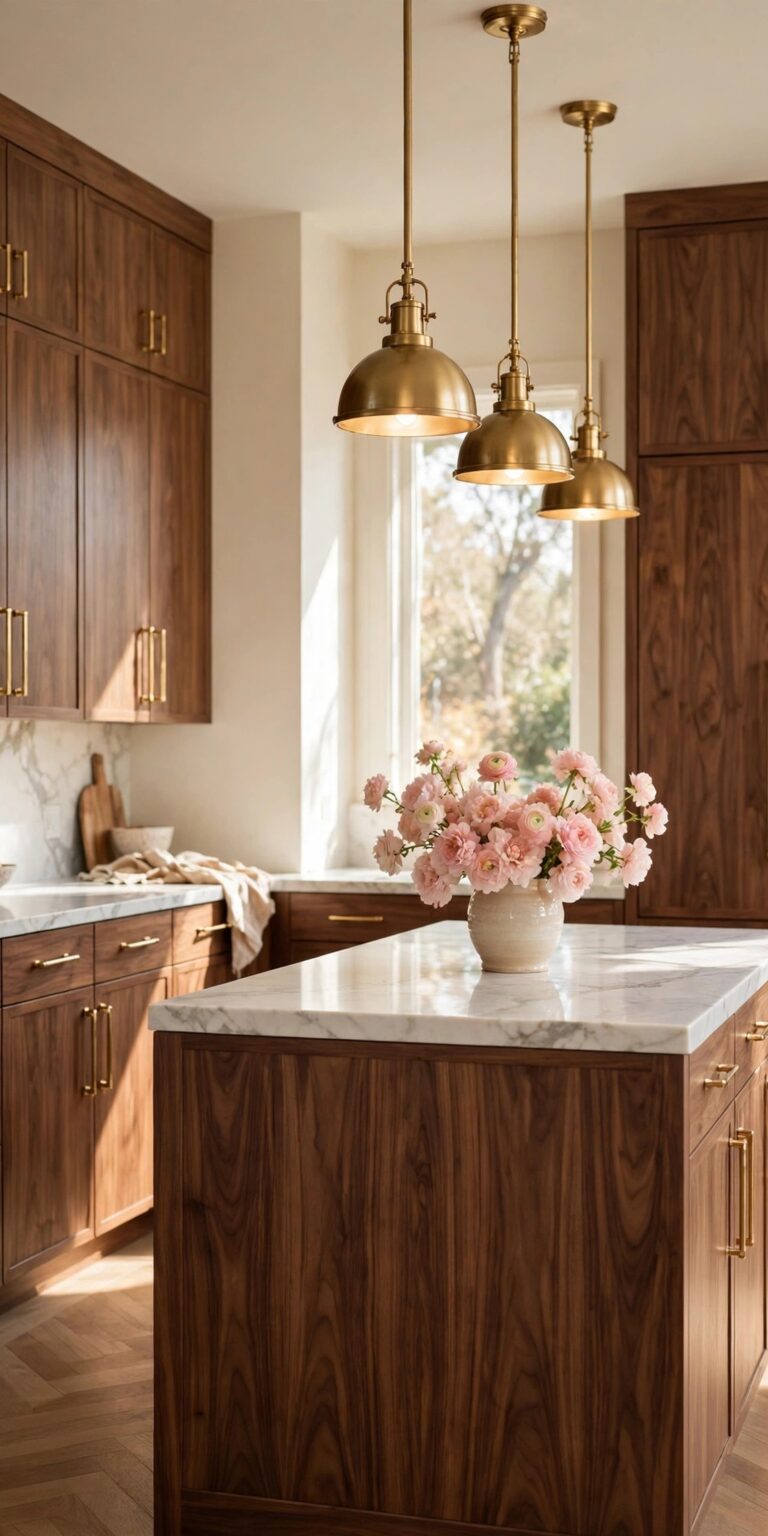
Walnut cabinets are the warmest wood in this list, and they are the best place to put a natural brown in the kitchen. The deep warm grain against cream walls and a pale marble counter gives the kitchen its grounding note, and the wood stops a white kitchen from feeling cold or clinical. Choose a warm mid-tone walnut with a simple flat-front door, so the grain does the work and the shape stays quiet, and keep the counters pale, white marble or quartz, so the contrast stays bright. Seal the wood well on every side, because a kitchen cabinet meets water, steam and cooking splashes daily. Our walnut kitchen cabinets show the same walnut cabinets with the marble and gold pairing worked out in detail.
Best For: All-white kitchens that feel cold, and anyone who wants warmth without adding a paint color.
Not Ideal For: Kitchens where the floor is already a strong dark wood; two dark woods can fight, so a painted cabinet is the calmer version there.
Estimated Cost: $6,000-$18,000 (estimate) for walnut cabinet doors and drawer fronts with a pale stone counter.
Budget Note: Real walnut veneer is the spend; a good walnut-look finish gives the same warmth for less and seals more easily.
Renter Friendly: No
Renter Note: Fixed joinery; a walnut tray, a wood stool and walnut canisters borrow the warm note on existing white cabinets.
What You Need
Walnut cabinet doors and drawer fronts, pale marble or quartz counters, brushed gold knobs and pulls, wood sealant for every exposed edge.
Product type to look for: Doors with a sealed, water-resistant finish on all sides, because a kitchen cabinet meets splashes, steam and cooking grease every day.
How To Do It
- Hold a wood sample against the floor, the counters and the wall in daylight, and pick the walnut that stays warm beside all three.
- Fit the walnut doors level, following the maker instructions, and check every door swings clear.
- Seal the edges and fit the brushed gold knobs and pulls.
- Style the counters with cream canisters and one blush flower vase, and check the wood reads warm, not dark, from the doorway.
Pro Tip
Match the walnut tone to the floor’s warm family, not to the towels. Wood that echoes the floor makes the kitchen feel built, while wood chosen against the towels alone can clash with the floorboards.
9. Pair Cream Cabinets with Butcher Block
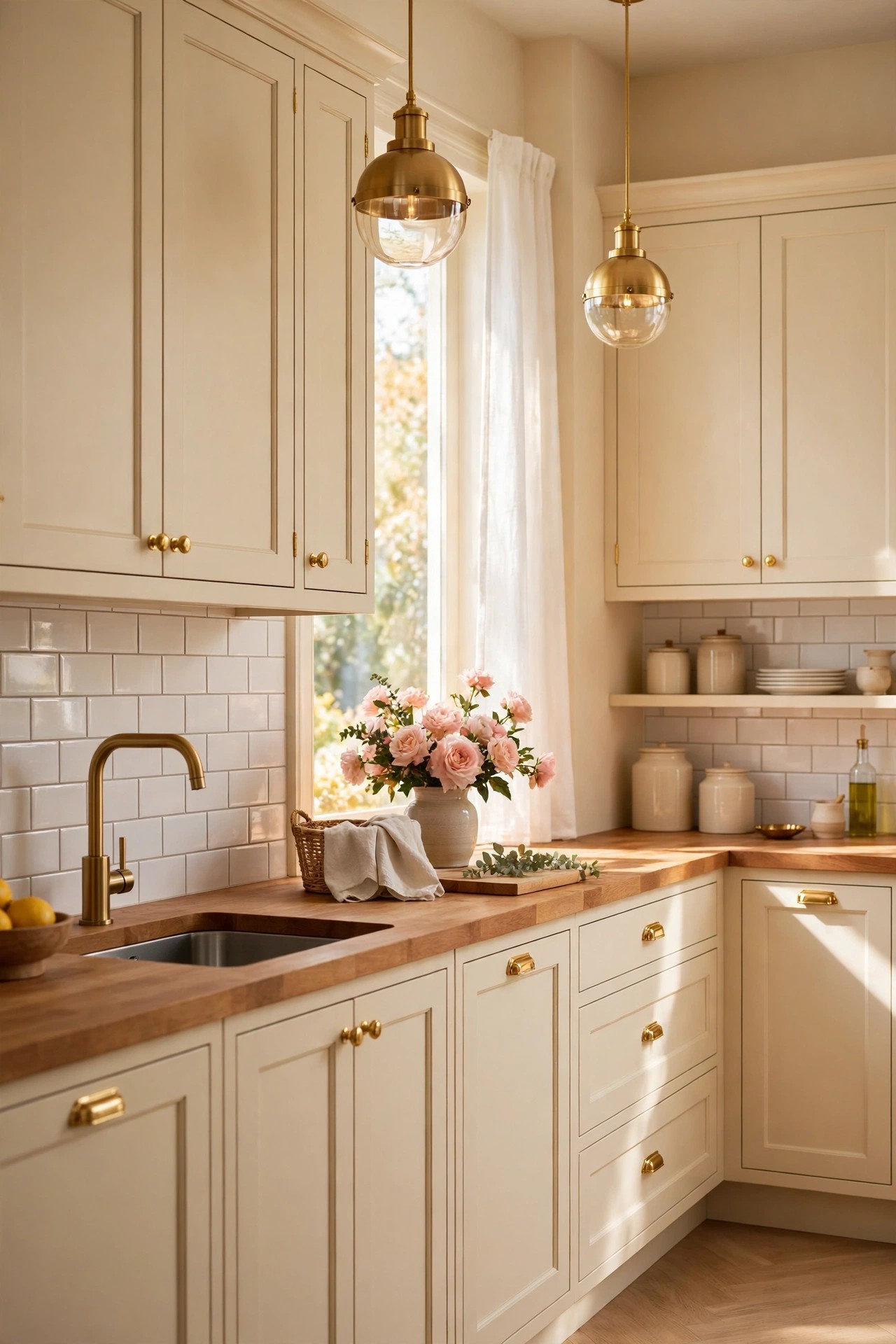
Cream cabinets with butcher block counters are the warmest pale pairing in this list, and they suit a kitchen that should feel like a lived-in room. A warm cream cabinet with a pale yellow undertone sits softly beside a honey wood counter, and the wood brings a natural warmth that a stone counter cannot. Choose a cream that leans warm, never a cool off-white, because a cool cream turns grey beside warm wood. Keep the backsplash white subway tile, so the wall stays bright between the cream cabinets and the wood counters, and repeat brushed gold in the knobs, the pulls and the faucet. Oil the butcher block regularly, because a wood counter meets water daily and an oiled top stays honey-colored for years.
Best For: Cottage and farmhouse kitchens, and anyone who wants a warm pale kitchen with natural wood.
Not Ideal For: Kitchens where the counters take heavy daily water use with no time to oil them; a sealed stone counter is the calmer version there.
Estimated Cost: $4,000-$11,000 (estimate) for painting or refacing cabinets in warm cream with butcher block counters.
Budget Note: The counters are the spend; a butcher block island with cream perimeter cabinets costs far less than wood counters throughout and reads just as warm.
Renter Friendly: No
Renter Note: Counters are fixed work; a wood chopping board and a walnut tray borrow the warm wood note on existing counters.
What You Need
Warm cream cabinet paint or refaced doors in a satin finish, butcher block counters, food-safe wood oil, brushed gold knobs and pulls, painter’s tape and fine sandpaper if painting.
Product type to look for: A food-safe wood oil made for butcher block, because a wood counter needs regular oiling to stay sealed against water.
How To Do It
- Hold cream samples against the butcher block and the wall in daylight, and pick the cream that stays warm beside both.
- Clean the cabinet doors, sand lightly, and paint two thin coats, letting each coat dry fully.
- Oil the butcher block counters following the maker instructions, and let the oil cure before use.
- Style the counters with cream canisters and one small plant, and check the cream and the wood read as one warm family from the doorway.
Pro Tip
Keep the island counter wood and the perimeter counters pale stone. Wood everywhere is a lot to oil and maintain, while one wood island gives the warmth and the stone gives the easy wipe.
10. Cool It Down with Dusty Blue Cabinets
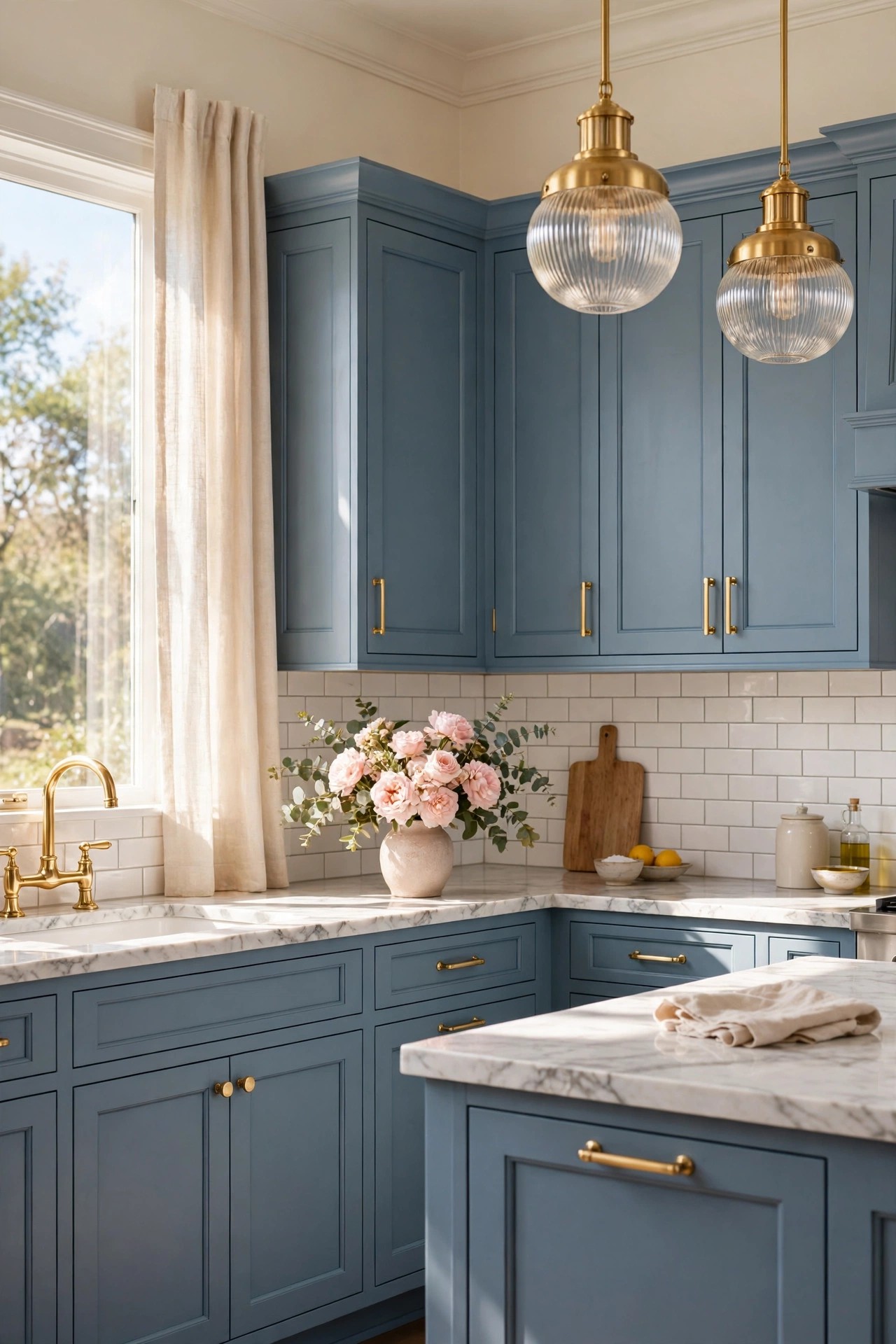
Dusty blue is the calmest blue in this list, and it is the blue that works best with warm cream and gold. A dusty blue with a grey undertone reads soft and lived-in, and it sits beautifully beside white marble counters and a white backsplash, because the blue is muted enough to let the pale surfaces do the brightening. Choose a dusty blue that leans grey rather than bright, because a bright blue turns cold under kitchen lights and a grey blue stays soft all day. Keep the dusty blue on the lowers and the island, with warm white uppers, so the color sits low and the light stays high. Our kitchen backsplash ideas show the same dusty blue cabinets with a white backsplash worked out in detail.
Best For: Kitchens that want a cool note without going cold, and anyone who loves blue but wants the room to stay bright.
Not Ideal For: Kitchens with very cool lighting; dusty blue under a cool bulb can read grey, so warm bulbs are the honest fix there.
Estimated Cost: $3,500-$10,000 (estimate) for painting or refacing lower cabinets and an island in dusty blue.
Budget Note: The doors are the spend; a dusty blue island with warm white uppers costs far less than a full blue kitchen and reads calmer.
Renter Friendly: No
Renter Note: Painting cabinets is a landlord decision; renters can borrow the dusty blue note with blue canisters, a blue runner and gold knobs swapped back later.
What You Need
Dusty blue cabinet paint or refaced doors in a satin finish, pale marble or quartz counters, brushed gold knobs and pulls, painter’s tape and fine sandpaper if painting.
Product type to look for: A washable satin cabinet paint in a dusty blue with a grey undertone, checked against the marble in daylight before buying.
How To Do It
- Paint two dusty blue samples on a large board and hold it against the marble and the white uppers in daylight and at night.
- Clean the lower cabinet doors, sand lightly, and paint two thin coats, letting each coat dry fully.
- Fit the brushed gold knobs and pulls, matching the tone across every piece.
- Style the counters with cream canisters and one blush flower vase, and check the blue reads soft from the doorway.
Pro Tip
Keep the grout pale and the backsplash white. A white backsplash is the bright band that keeps a dusty blue kitchen feeling light, while a blue backsplash makes the whole wall one blue block.
11. Go Rich with Forest Green Cabinets
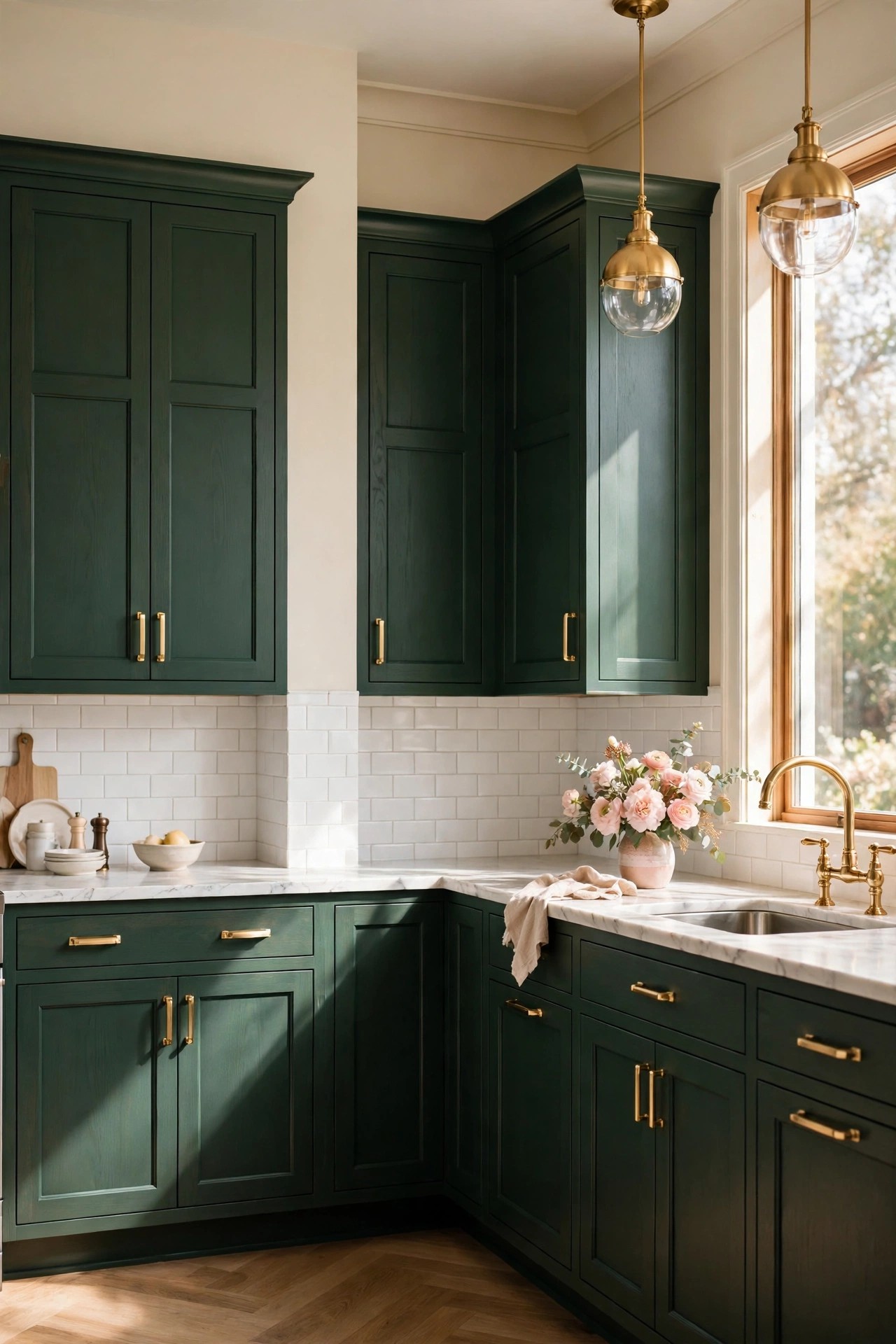
Forest green is the richest green in this list, and it is the one that makes a kitchen feel like a classic room. A deep forest green with a warm undertone sits beautifully beside white marble and brass, and it gives the kitchen a confident color that still reads calm in daylight. Choose a forest green that leans warm, never a cold emerald, because a warm green flatters brass and a cold green fights it. Keep the forest green on the lowers and the island, with warm white uppers, so the color sits low and the light stays high. Pair it with a white marble counter and a brass faucet, and the kitchen reads like a room that was planned, not painted on a whim.
Best For: Large kitchens with good daylight, and anyone who wants a deep green with a classic feel.
Not Ideal For: Small kitchens with weak light; forest green on every cabinet there can feel heavy, so green on the island only is the lighter version.
Estimated Cost: $3,500-$10,000 (estimate) for painting or refacing lower cabinets and an island in forest green.
Budget Note: Paint is a small spend with the largest effect in this list; sample two forest green tones on a board before buying the full cans.
Renter Friendly: No
Renter Note: Painting cabinets is a landlord decision; renters can borrow the forest green note with green canisters, a green runner and brass knobs swapped back later.
What You Need
Forest green cabinet paint or refaced doors in a satin finish, pale marble or quartz counters, brass knobs and pulls, painter’s tape and fine sandpaper if painting.
Product type to look for: A washable satin cabinet paint in a deep forest green with a warm undertone, checked against the marble in daylight before buying.
How To Do It
- Paint two forest green samples on a large board and hold it against the marble and the white uppers in daylight and at night.
- Clean the lower cabinet doors, sand lightly, and paint two thin coats, letting each coat dry fully.
- Fit the brass knobs and pulls, keeping the gold tone consistent across every piece.
- Style the island with a cream tray and fresh white flowers, and check the green reads rich, not dark, from the doorway.
Pro Tip
Keep the ceiling and the walls warm cream, never bright white. Cream beside forest green looks rich, while a stark white beside forest green makes the contrast feel sharp.
12. Choose Warm Taupe Cabinets
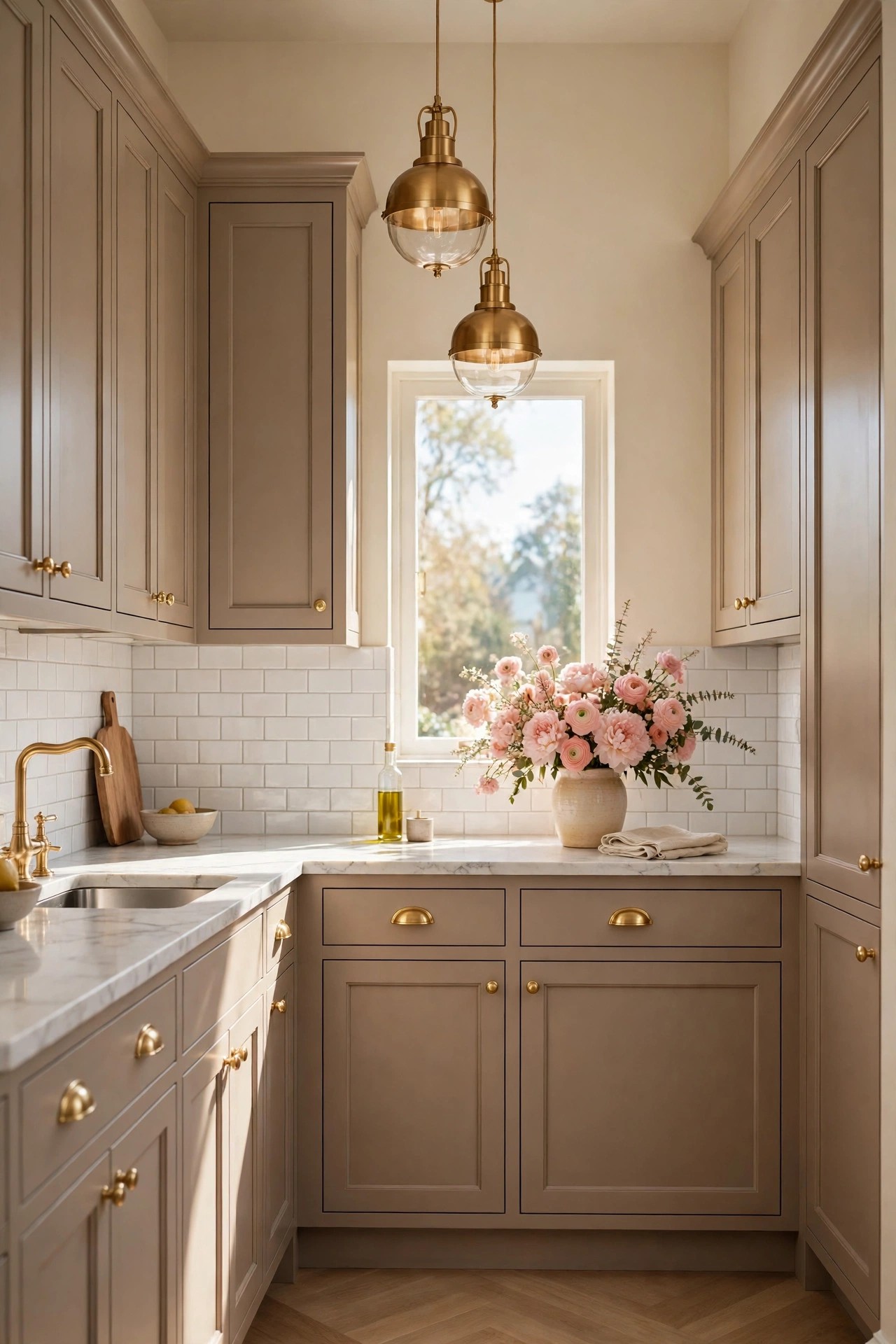
Warm taupe is the gentlest brown-grey in this list, and it is the safest way to make a whole kitchen feel warm without a strong color. Taupe sits between cream and brown, so it flatters both the white marble and the walnut wood, and it keeps the kitchen feeling soft rather than themed. Choose a taupe with a warm caramel or blush undertone, never a grey one, because a grey taupe turns cold under kitchen light and the whole point of this palette is warmth. Paint all the cabinets the same taupe, keep the counters pale marble and the backsplash white, and let the brushed gold hardware do the brightening. Test the color on the doors on every side of the kitchen, because a taupe that glows on the window side can look muddy on the side opposite the light.
Best For: Kitchens where the owner wants warmth everywhere but gently, and rooms that mix marble, wood and gold.
Not Ideal For: Very small kitchens with weak light; taupe on every cabinet there can feel close, so taupe on the island only is the lighter version.
Estimated Cost: $3,000-$9,000 (estimate) for painting or refacing cabinets in warm taupe with new hardware.
Budget Note: Paint is a small spend; sample two warm taupes on the cabinet doors before buying the full cans, because taupe shifts the most with the light.
Renter Friendly: No
Renter Note: Painting cabinets is a landlord decision; renters can borrow the taupe note with taupe canisters, a cream runner and gold knobs swapped back later.
What You Need
Warm taupe cabinet paint or refaced doors in a satin finish, pale marble or quartz counters, brushed gold knobs and pulls, painter’s tape and fine sandpaper if painting.
Product type to look for: A washable satin cabinet paint in a warm taupe with a caramel or blush undertone, checked on the doors in daylight before buying.
How To Do It
- Paint two taupe samples on the cabinet doors and look at them in daylight and at night.
- Clean the doors, sand lightly, and paint two thin coats, letting each coat dry fully.
- Fit the brushed gold knobs and pulls, matching the tone across every piece.
- Style the counters with cream canisters and one small plant, and check the taupe reads warm from the doorway.
Pro Tip
Keep the towels cream and blush against taupe cabinets. Brown towels on taupe cabinets disappear, while pale towels give the eye a bright place to land.
13. Try Charcoal Grey Cabinets with Marble
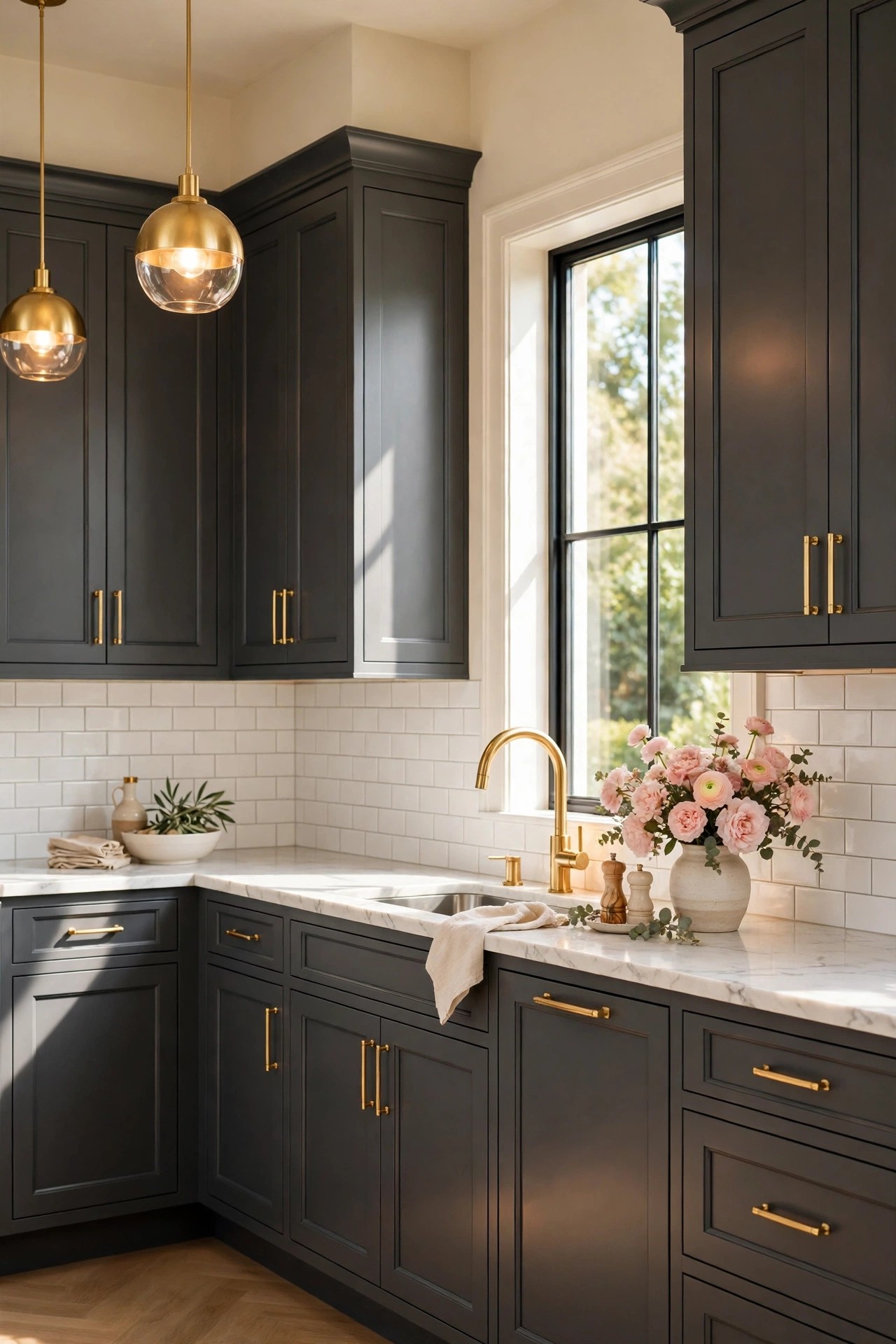
Charcoal grey is the softest dark in this list, and it is the dark that stays livable every day. A warm charcoal with a hint of brown sits calmly beside white marble and brushed gold, and it gives the kitchen a modern note without the stark contrast of black. Choose a charcoal that leans warm, never a cold blue-grey, because a warm charcoal flatters gold and a cold grey fights it. Keep the charcoal on the lowers and the island, with warm white uppers, so the dark sits low and the light stays high. Pair it with a white marble counter and a gold faucet, and the kitchen reads modern and calm rather than industrial.
Best For: Modern kitchens with good daylight, and anyone who wants a dark cabinet without the drama of black.
Not Ideal For: Kitchens with very cool lighting; charcoal under a cool bulb can read blue, so warm bulbs are the honest fix there.
Estimated Cost: $3,500-$10,000 (estimate) for painting or refacing lower cabinets and an island in charcoal grey.
Budget Note: The doors are the spend; a charcoal island with warm white uppers costs far less than a full charcoal kitchen and reads calmer.
Renter Friendly: No
Renter Note: Painting cabinets is a landlord decision; renters can borrow the charcoal note with grey canisters, a charcoal tray and gold knobs swapped back later.
What You Need
Charcoal grey cabinet paint or refaced doors in a satin finish, pale marble or quartz counters, brushed gold knobs and pulls, painter’s tape and fine sandpaper if painting.
Product type to look for: A washable satin cabinet paint in a warm charcoal with a brown undertone, checked against the marble in daylight before buying.
How To Do It
- Paint two charcoal samples on a large board and hold it against the marble and the white uppers in daylight and at night.
- Clean the lower cabinet doors, sand lightly, and paint two thin coats, letting each coat dry fully.
- Fit the brushed gold knobs and pulls, matching the tone across every piece.
- Style the island with a cream tray and fresh white flowers, and check the charcoal reads warm, not cold, from the doorway.
Pro Tip
Keep the grout pale and the backsplash white. A white backsplash is the bright band that stops a charcoal kitchen from reading dark, while a dark backsplash closes the room in.
14. Brighten the Room with Butter Yellow Cabinets
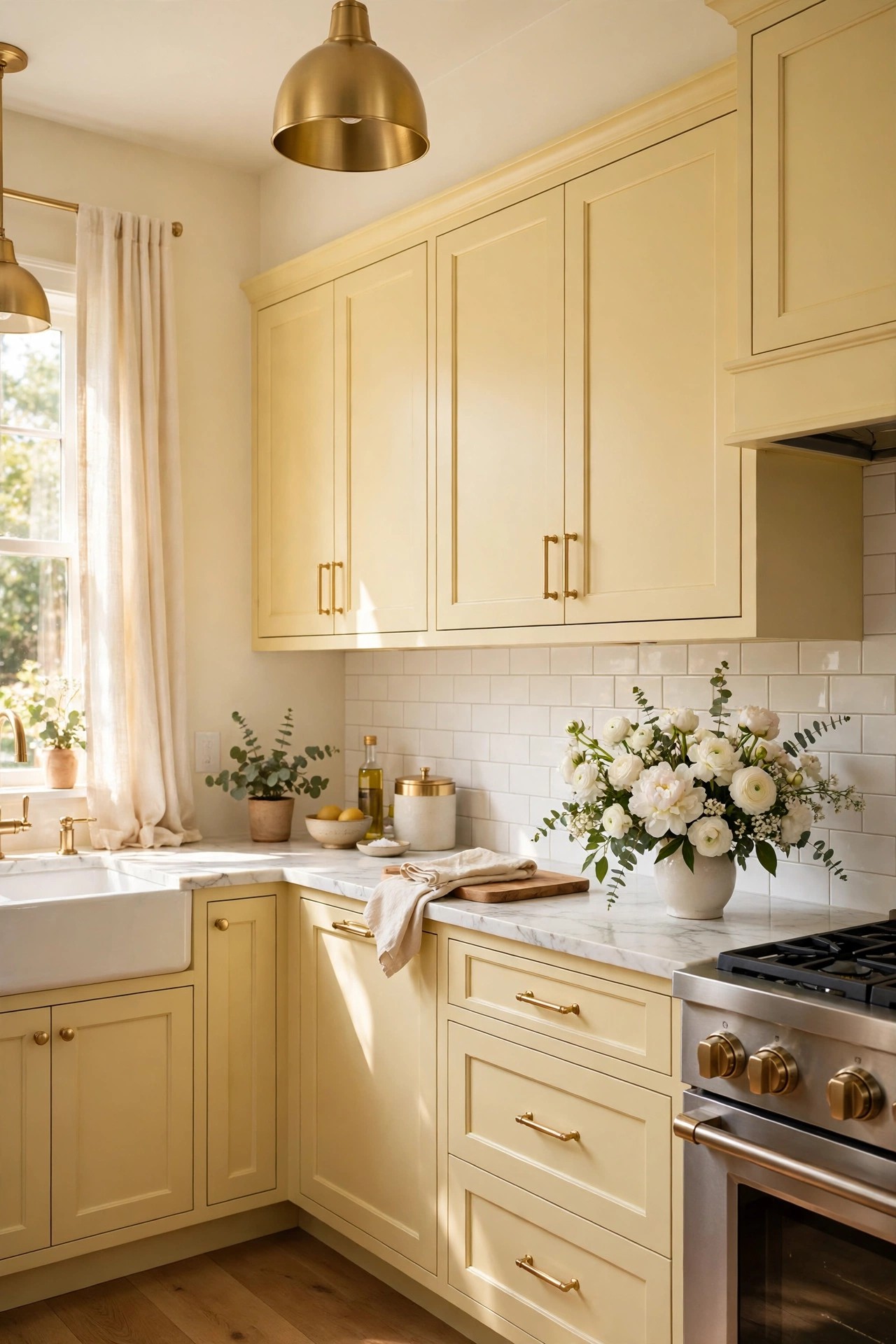
Butter yellow is the sunniest color in this list, and it is the one that makes a kitchen feel cheerful without shouting. A soft butter yellow with a warm cream undertone reads almost like a warm cream in daylight, and it gives the kitchen a gentle sunny glow that flatters white marble and brushed gold. Choose a butter yellow that leans pale and creamy, never a bright or lemon yellow, because a pale butter sits calmly beside marble while a bright yellow fights it. Keep the butter yellow on the lower cabinets or the island only, with warm white uppers, so the yellow stays a soft note and the kitchen stays bright. Pair it with a white backsplash and a gold faucet, and the room reads sunny and glam, not loud.
Best For: Kitchens that need more warmth and light, and anyone who loves yellow but wants the room to stay calm.
Not Ideal For: Kitchens where the counters are already a strong yellow marble; one yellow note per room keeps the story clear.
Estimated Cost: $3,000-$9,000 (estimate) for painting or refacing lower cabinets or an island in butter yellow.
Budget Note: The doors are the spend; a butter yellow island with warm white uppers costs far less than a full yellow kitchen and reads calmer.
Renter Friendly: No
Renter Note: Painting cabinets is a landlord decision; renters can borrow the butter yellow note with yellow canisters, a yellow runner and a small vase of white flowers.
What You Need
Soft butter yellow cabinet paint or refaced doors in a satin finish, pale marble or quartz counters, brushed gold knobs and pulls, painter’s tape and fine sandpaper if painting.
Product type to look for: A washable satin cabinet paint in a pale butter yellow with a cream undertone, checked against the marble in daylight before buying.
How To Do It
- Paint two butter yellow samples on a large board and hold it against the marble and the white uppers in daylight and at night.
- Clean the lower cabinet doors, sand lightly, and paint two thin coats, letting each coat dry fully.
- Fit the brushed gold knobs and pulls, matching the tone across every piece.
- Style the counters with cream canisters and fresh white flowers, and check the yellow reads sunny, not loud, from the doorway.
Pro Tip
Keep the butter yellow pale, closer to cream than to yellow. A butter yellow that reads almost cream in daylight stays fresh for years, while a stronger yellow can feel dated fast.
15. Finish with Warm Terracotta Cabinets
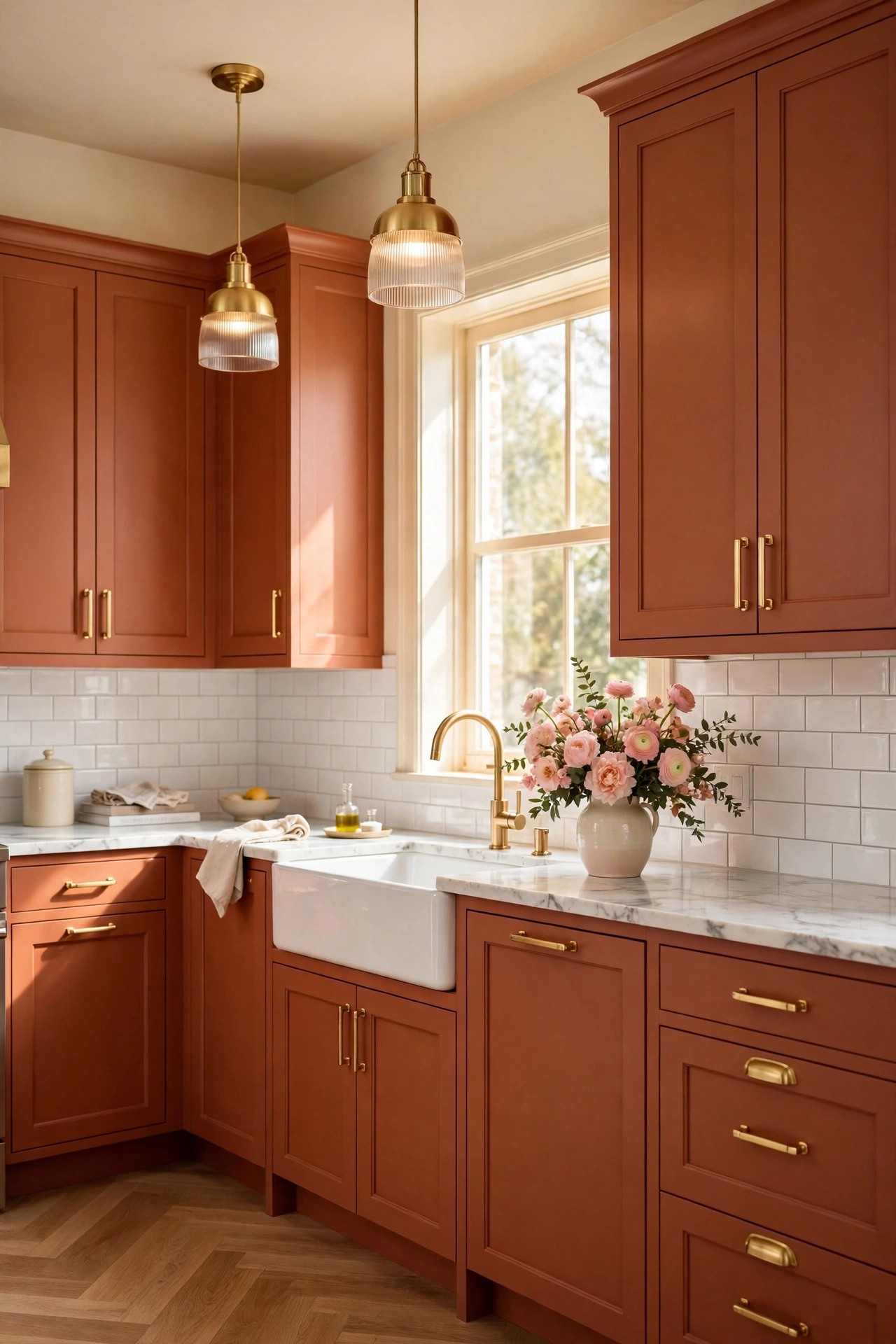
Terracotta is the earthiest color in this list, and it is the one that brings a Mediterranean warmth to the kitchen. A muted terracotta with a warm clay tone sits beautifully beside white marble and brushed gold, and it gives the kitchen a rich, sun-baked feel that still reads calm in daylight. Choose a terracotta that leans muted and dusty, never a bright orange, because a dusty terracotta sits calmly beside marble while a bright orange fights it. Keep the terracotta on the island or one run of lowers only, with warm white uppers, so the color stays a warm note and the kitchen stays bright. Pair it with a white backsplash and a gold faucet, and the room reads warm and glam, not rustic.
Best For: Kitchens that want a warm earthy note, and anyone who loves terracotta but wants the room to stay bright.
Not Ideal For: Kitchens where the floor is already a strong terracotta tile; two terracottas together can fight, so a painted cabinet in a muted tone is the calmer version there.
Estimated Cost: $3,000-$9,000 (estimate) for painting or refacing an island or one run of lowers in warm terracotta.
Budget Note: The doors are the spend; a terracotta island with warm white uppers costs far less than a full terracotta kitchen and reads calmer.
Renter Friendly: No
Renter Note: Painting cabinets is a landlord decision; renters can borrow the terracotta note with clay canisters, a terracotta runner and a small potted herb.
What You Need
Warm terracotta cabinet paint or refaced doors in a satin finish, pale marble or quartz counters, brushed gold knobs and pulls, painter’s tape and fine sandpaper if painting.
Product type to look for: A washable satin cabinet paint in a muted terracotta with a warm clay undertone, checked against the marble in daylight before buying.
How To Do It
- Paint two terracotta samples on a large board and hold it against the marble and the white uppers in daylight and at night.
- Clean the island doors, sand lightly, and paint two thin coats, letting each coat dry fully.
- Fit the brushed gold knobs and pulls, matching the tone across every piece.
- Style the island with a cream tray and a small potted herb, and check the terracotta reads warm, not orange, from the doorway.
Pro Tip
Keep the island terracotta and the perimeter cabinets warm white. Terracotta on every cabinet closes the room in, while terracotta on the island alone gives the warmth and keeps the ceiling feeling tall.
Practical Tips for Kitchen Cabinet Colors
Let the cabinet color be the one warm note and repeat the calm notes until they look planned. The cabinets stay sage, navy, walnut or warm white, the counters stay pale marble, and blush, brushed gold and warm wood do the supporting work, each used at least twice: blush in the flowers and one echo, gold in the hardware, the faucet and one more piece, wood in the island or the butcher block and the tray. One note used once looks like an accident; twice or more it looks like a decision. Keep brushed gold as the only metal and match its tone across every piece, because mixed metals scatter the glam note faster than any other mistake in this palette. Choose every cabinet color by daylight, because a color that glows at noon can turn muddy under a cool bulb at night, and judge the kitchen twice before calling it done, once at midday for the true color and once under the evening light. Start in the order of this list, main cabinets and hardware first, and let the island color and the soft layers arrive slowly; a kitchen painted in a weekend usually has one color too many, and removing a piece is always easier than finding the right one to add.
Frequently Asked Questions
What is the most popular kitchen cabinet color?
Warm white, sage green and deep navy are the most loved cabinet colors right now, because they stay bright, flatter marble and gold, and suit most homes. Warm white is the safest choice, sage green is the softest color choice, and navy is the boldest classic. Pick the one that matches your light, because a color that glows in a bright kitchen can feel flat in a dark one.
What kitchen cabinet colors go with white marble counters?
Almost every color in this list pairs with white marble, because marble is pale and calm. Warm white, sage green, navy, walnut, blush pink and forest green all sit beautifully on white marble with brushed gold hardware. Avoid a second strong pattern beside the marble, because the marble veining is already the pattern in the room.
Are two-tone kitchen cabinets still in style?
Yes, two-tone cabinets are a lasting choice when the two colors are planned as one kitchen. White uppers with sage, navy or forest green lowers is the classic pairing, because the color sits low and the white keeps the light high. Keep the door styles matching and the hardware the same metal on both colors, so the two tones read as one decision.
What color cabinets make a small kitchen look bigger?
Warm white and pale cream make a small kitchen look biggest, because they bounce the light and keep the walls and the cabinets one bright family. If you want color in a small kitchen, put it on the island only and keep the perimeter cabinets warm white, so the room keeps its bright frame and the color stays a single warm note.
How do I choose a cabinet color that will not date?
Choose a color with a warm undertone and a muted tone, and keep it on the lowers or the island with pale counters and one metal. Warm white, sage green, walnut and warm greige age the slowest, because they are soft and natural. A very bright or very trendy color dates fast, while a muted color with a warm undertone stays calm for years.
Should cabinet hardware match the faucet?
Yes, keep the hardware and the faucet in the same metal family. Brushed gold knobs with a brushed gold faucet read as one decision, while two golds that are close but not the same read as a mistake. Hold the knob sample against the faucet in daylight before buying, and keep gold at three heights only: low on the pulls, middle on the faucet, high on the pendant lights.
Conclusion
A kitchen cabinet colors list works when the color is given one clear job: the cabinets lead, and everything else supports. A sage or navy lower cabinet with a pale marble counter keeps the kitchen bright, brushed gold repeated in the hardware, the faucet and the lights gives it the glam note, and blush flowers, warm light and a styled tray keep the kitchen feeling lived in rather than staged. Start with the main cabinets and the hardware, add the island color and the backsplash, keep one metal and one soft accent through the whole kitchen, and the hardest decision in the room becomes the one the kitchen is proud of.